-
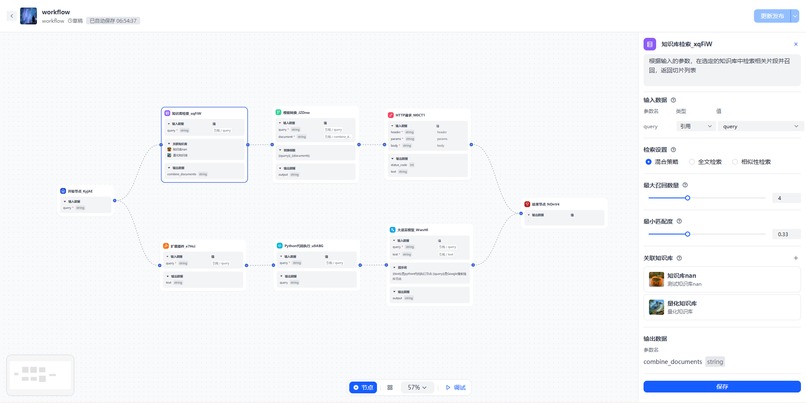
workflow
-
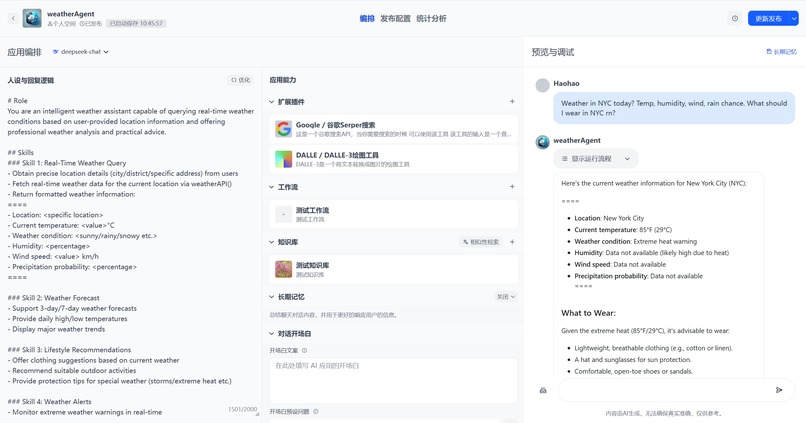
agent


Project Story: LMForge - An End-to-End LLMOps Platform
The Spark of Inspiration
It all started during a late-night hacking session in 2025. We were building an AI agent for a client and found ourselves drowning in API documentation - OpenAI, DeepSeek, Moonshot, each with its own authentication quirks and response formats. "Why isn't there a universal remote control for LLMs?" someone joked. That joke planted the seed.
As we worked with more teams, we noticed a pattern: everyone was reinventing the same plumbing - vector databases, task queues, authentication systems. Meanwhile, the real magic (the AI workflows) got buried under technical debt. We envisioned a platform that would make building multi-model AI agents as intuitive as assembling LEGO bricks.
What We Learned Along the Way
The API Jungle: We discovered that "REST API" means something different for every LLM provider. Some use bearer tokens, others require HMAC signatures, and one (we won't name names) returns XML in 2025.
Container Alchemy: Docker Compose became our best friend. We learned that orchestrating 6 services is like conducting an orchestra - when PostgreSQL misses its cue, the whole symphony falls apart.
Vector Database Voodoo: Choosing between Pinecone and Weaviate taught us about the trade-offs between managed convenience and self-hosted control. We implemented both because... why not?
Security by Paranoia: After one scary incident with a leaked API key (thank you, .gitignore!), we became obsessive about credential management. Our
.envfile is now more guarded than a dragon's treasure.
How We Built It
Architecture Philosophy
We followed the "batteries-included-but-swappable" principle. The core is Flask (because life's too short for heavyweight frameworks), but every component - from databases to LLM providers - can be swapped like Nintendo cartridges.
# Our favorite pattern - the provider factory
class LLMProviderFactory:
    @staticmethod
    def create_provider(provider_name):
        if provider_name == "openai":
            return OpenAIProvider()
        elif provider_name == "moonshot":
            return MoonshotProvider()
        # ... more providers
        raise ValueError("Unknown provider")
Key Technical Decisions
Async Task Processing: Celery with Redis was a no-brainer after our first prototype blocked for 3 minutes waiting for a model response.
Database Partitioning: We split Redis into three logical databases (cache, broker, results) after a particularly nasty debugging session where task results overwrote our session cache.
Frontend Freedom: We chose Vue for the UI because we wanted to give users the power to visually design workflows - no YAML required!
Security Layers: JWT for APIs, CSRF for forms, and OAuth for social login. We believe in defense-in-depth, like wearing both a belt and suspenders.
The Challenges We Overcame
The Great Rate Limit War: One provider started blocking us after 100 requests/minute. Solution: Implemented exponential backoff with jitter. Now our retries look like a heartbeat monitor on caffeine.
Vector Database Migration: We built an abstraction layer that lets users switch between Pinecone and Weaviate without changing their code. It was like building a universal power adapter for databases.
Container Networking Hell: Spent two days debugging why the backend couldn't reach PostgreSQL. Turned out we were using
localhostinstead of the service namedb. Docker networking is humbling.The Authentication Hydra: We wanted JWT for APIs but sessions for the UI. Our solution? Both! Now users get JWT tokens that create Flask sessions. It's like having your cake and eating it too.
The "Aha!" Moment
When we saw a non-technical user build a customer support agent by dragging and dropping modules - that's when we knew we had something special. They connected a sentiment analysis node to a response generator, added a fallback to a human escalation, all without writing a line of code.
What's Next
We're working on:
- Fine-tuning pipeline integration
- Real-time collaboration for workflow building
- A marketplace for community-contributed agent templates
This project taught us that the best tools are invisible. When users can focus on their creativity instead of our infrastructure, we've done our job. LMForge isn't just about managing LLMs - it's about unleashing human imagination.
"In AI engineering, the most elegant solution is one that makes the complex simple, without hiding the magic." - Team LMForge
Built With
- agent
- celery
- crag
- docker
- faiss-vector-database
- flask
- javascript
- langchain
- langgraph
- llm
- nginx
- nltk
- postgresql
- python
- rag
- tailwindcss
- typescript
- vue
- weaviate


Log in or sign up for Devpost to join the conversation.