-
-
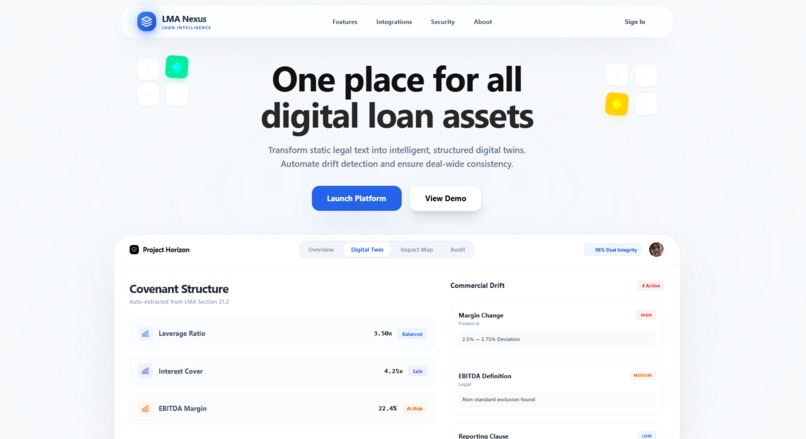
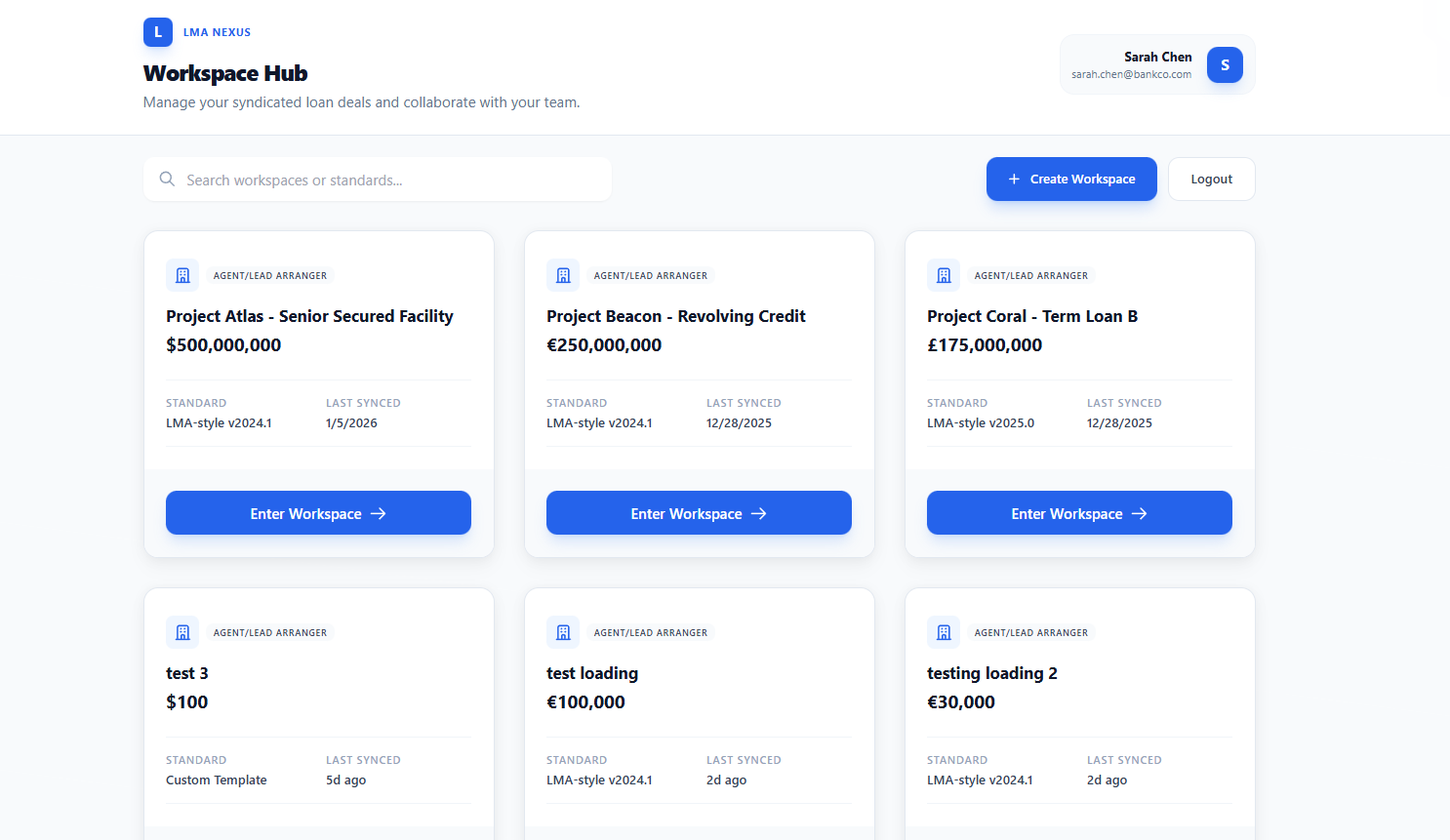
landing page
-
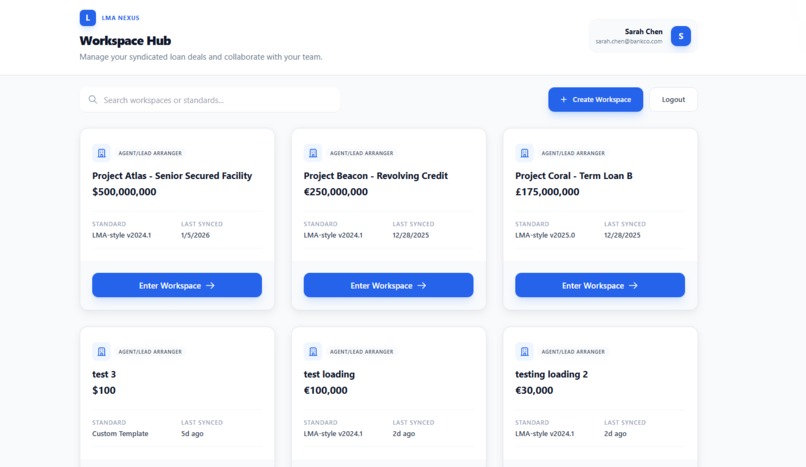
Workspace selection/ creation
-
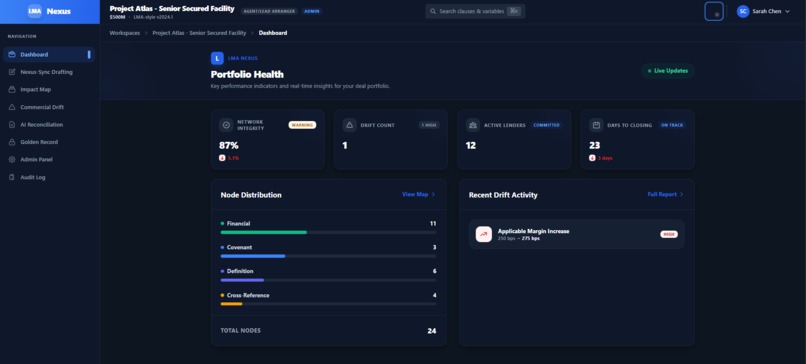
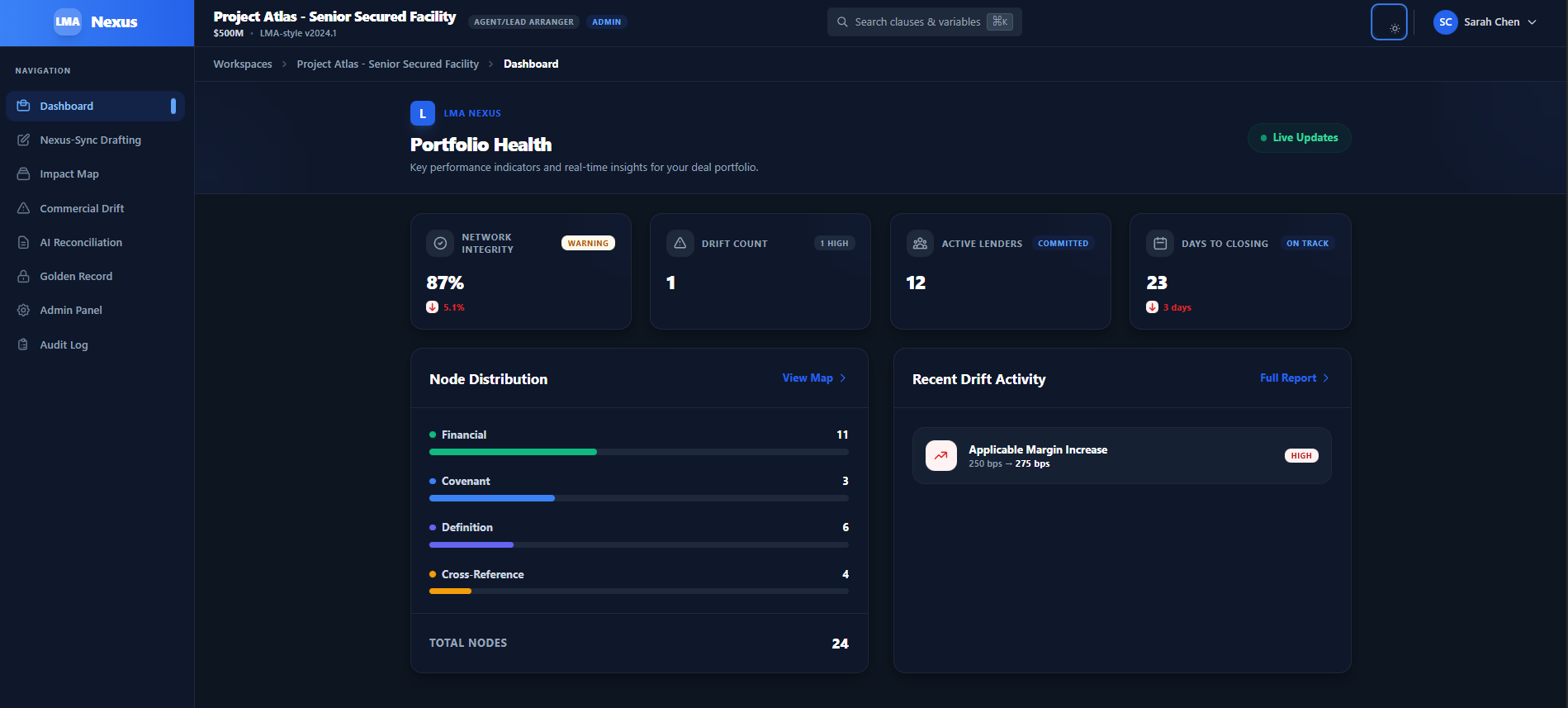
Dark mode/ light mode
-
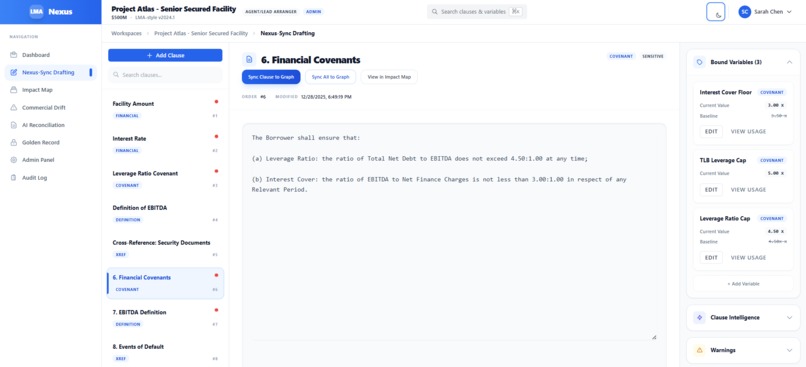
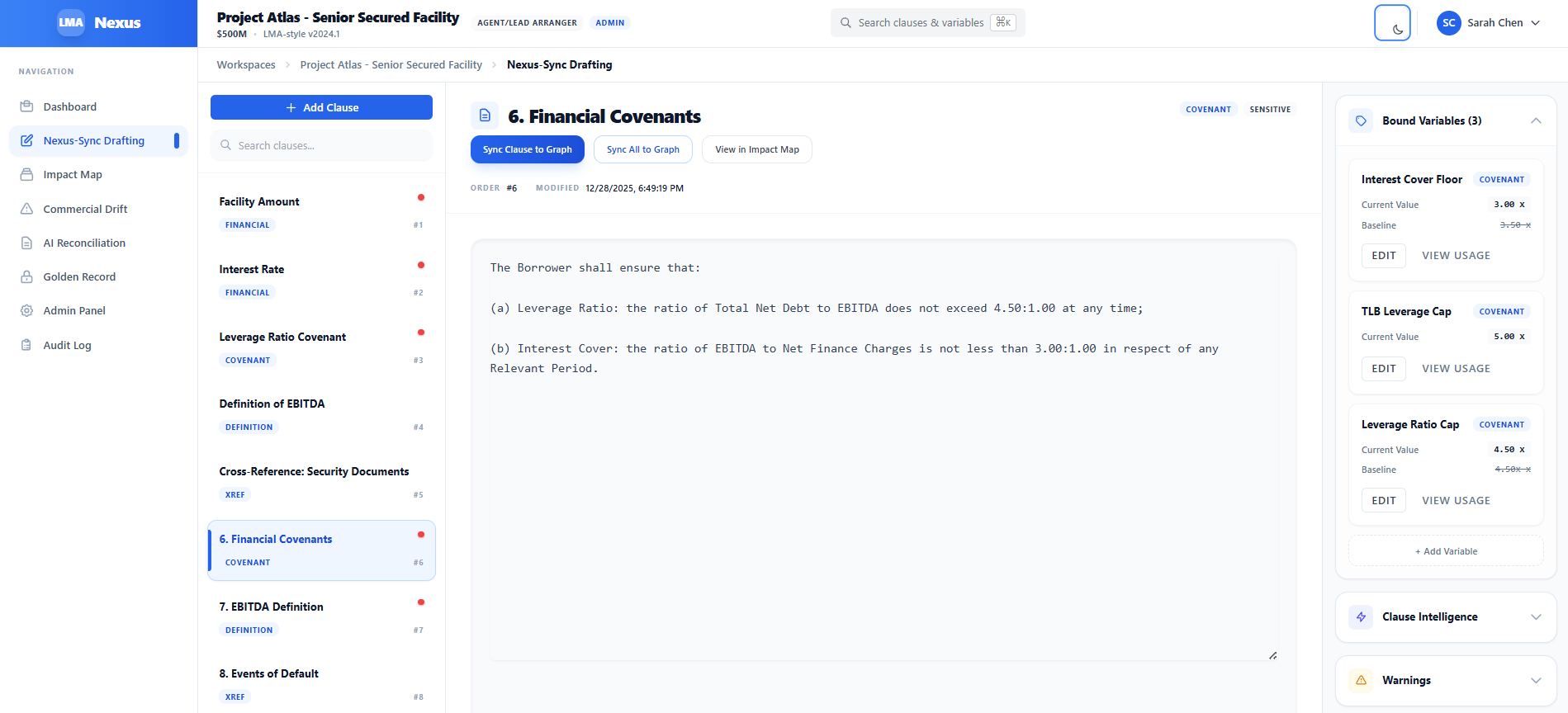
MS word add-in simulation
-
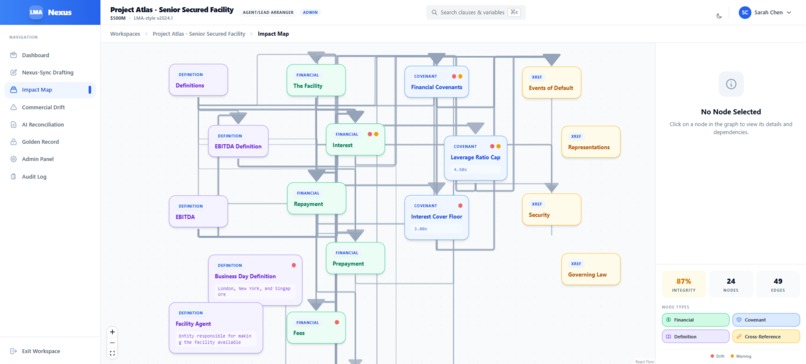
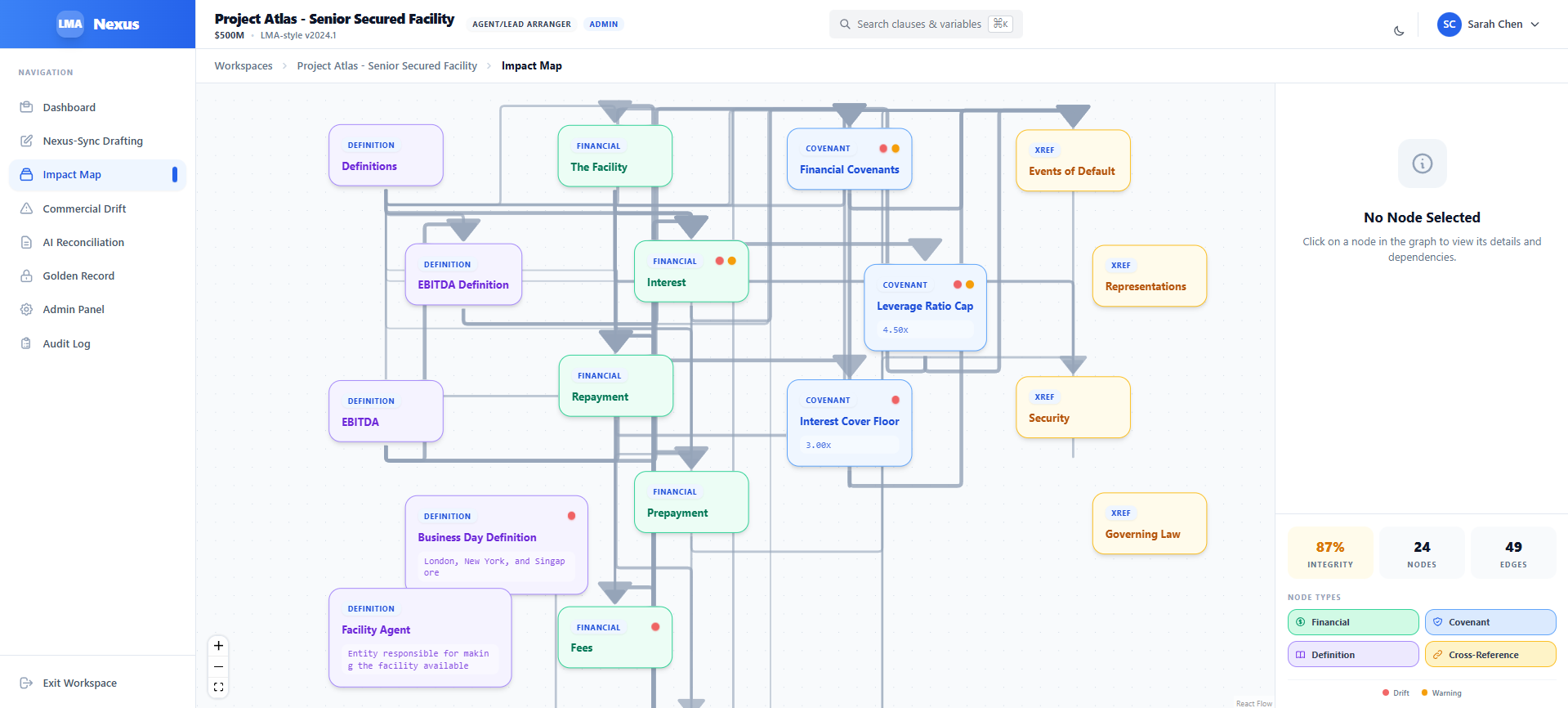
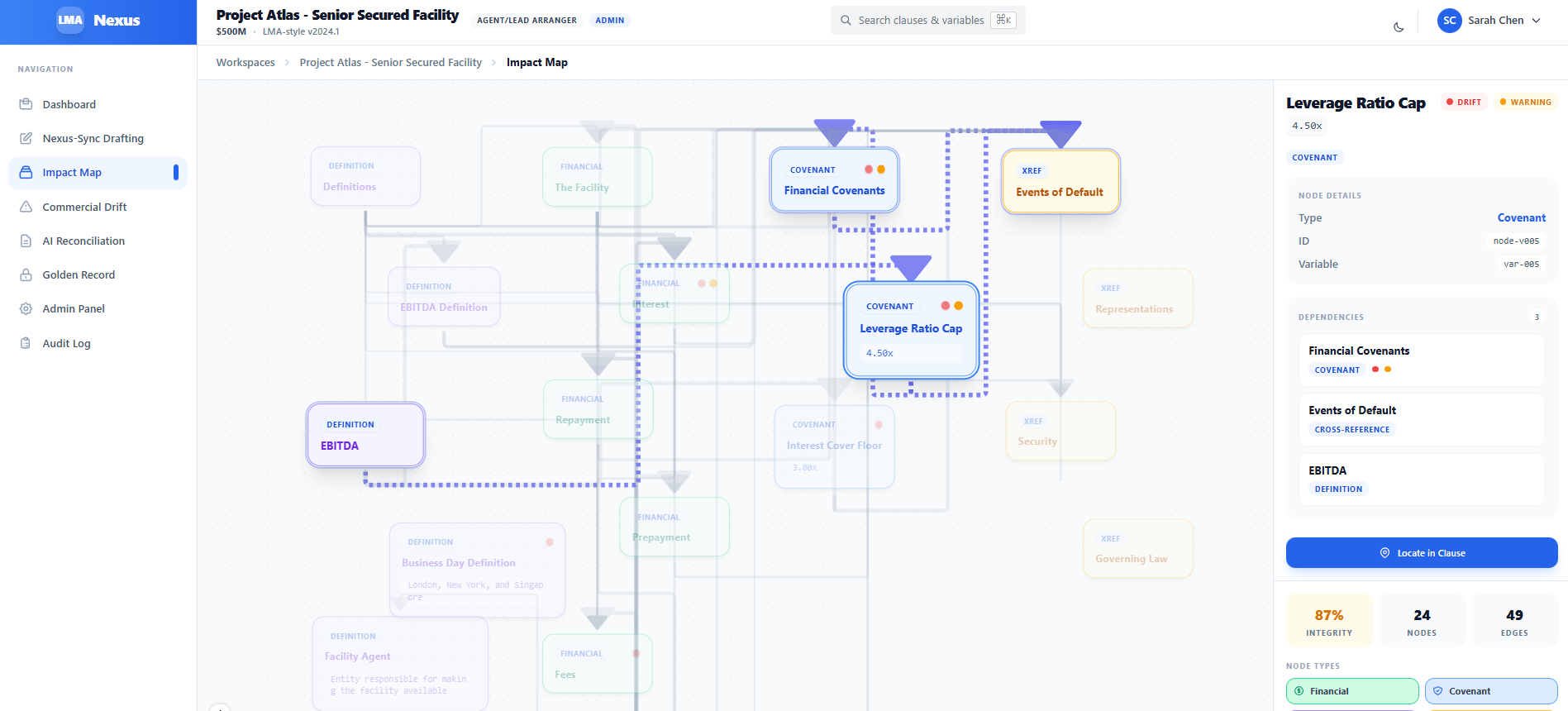
Graphical representation of the document
-
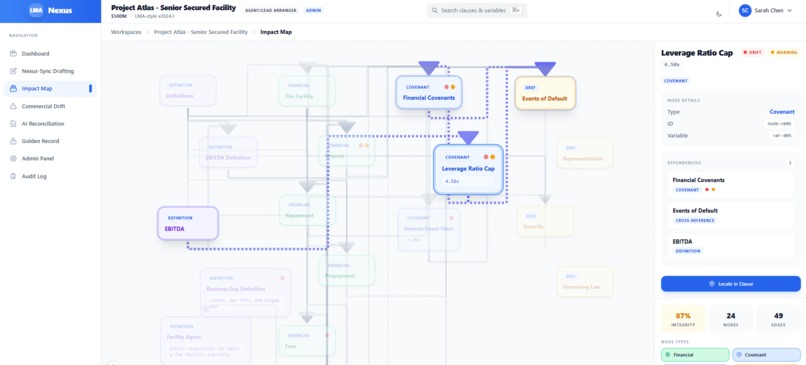
Representation of the dependencies
-
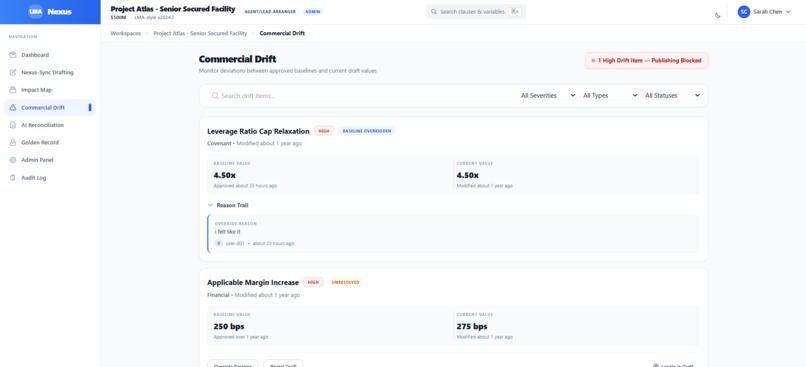
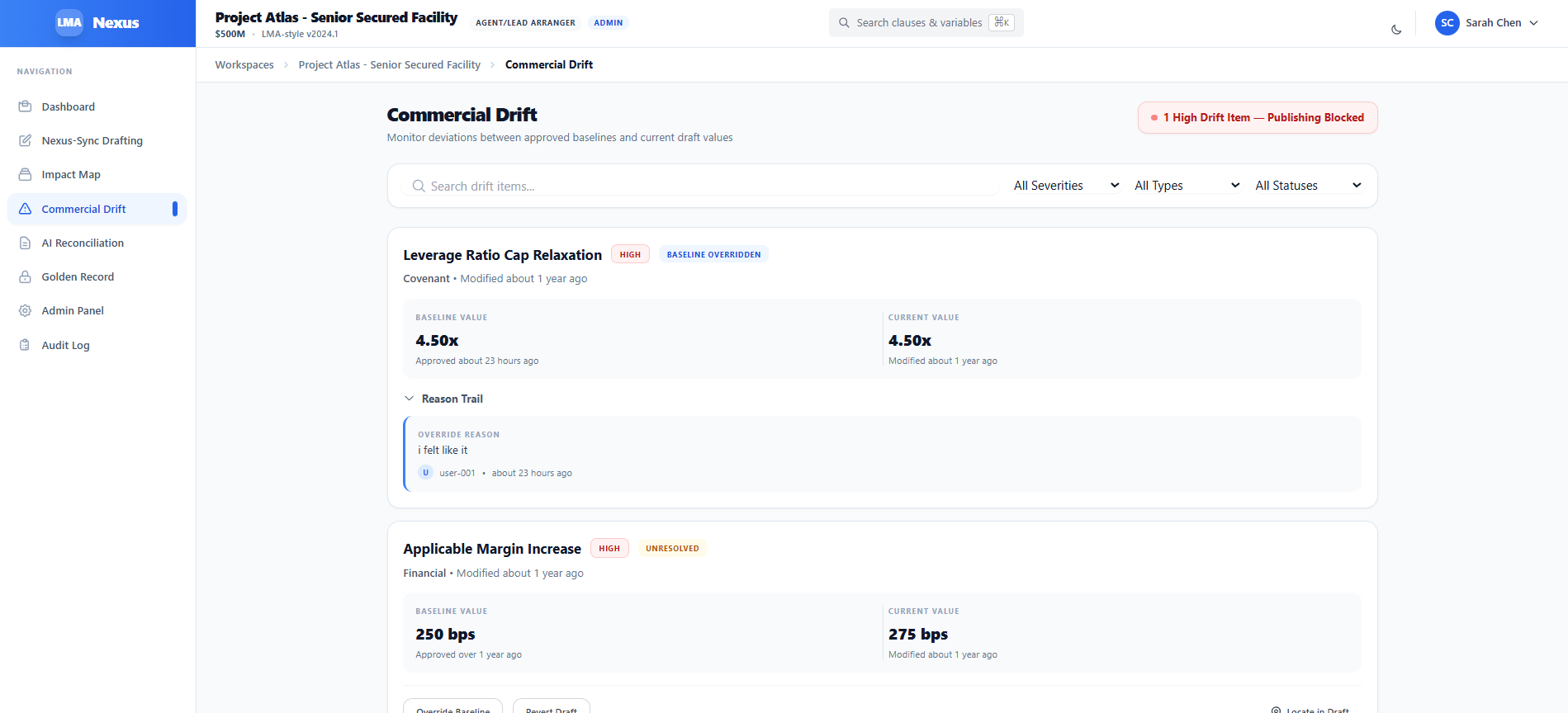
Commercial Drift
-
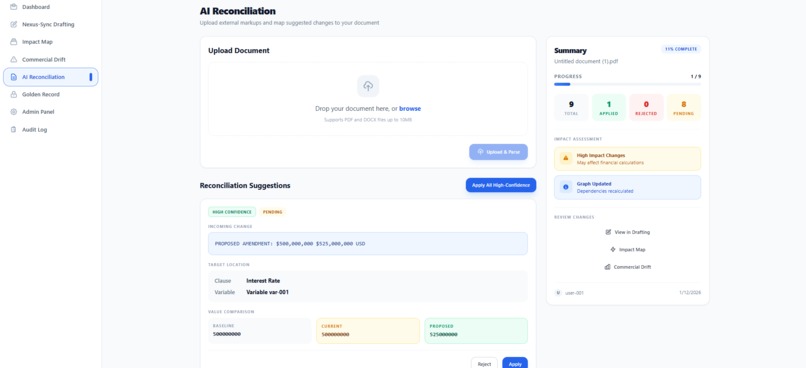
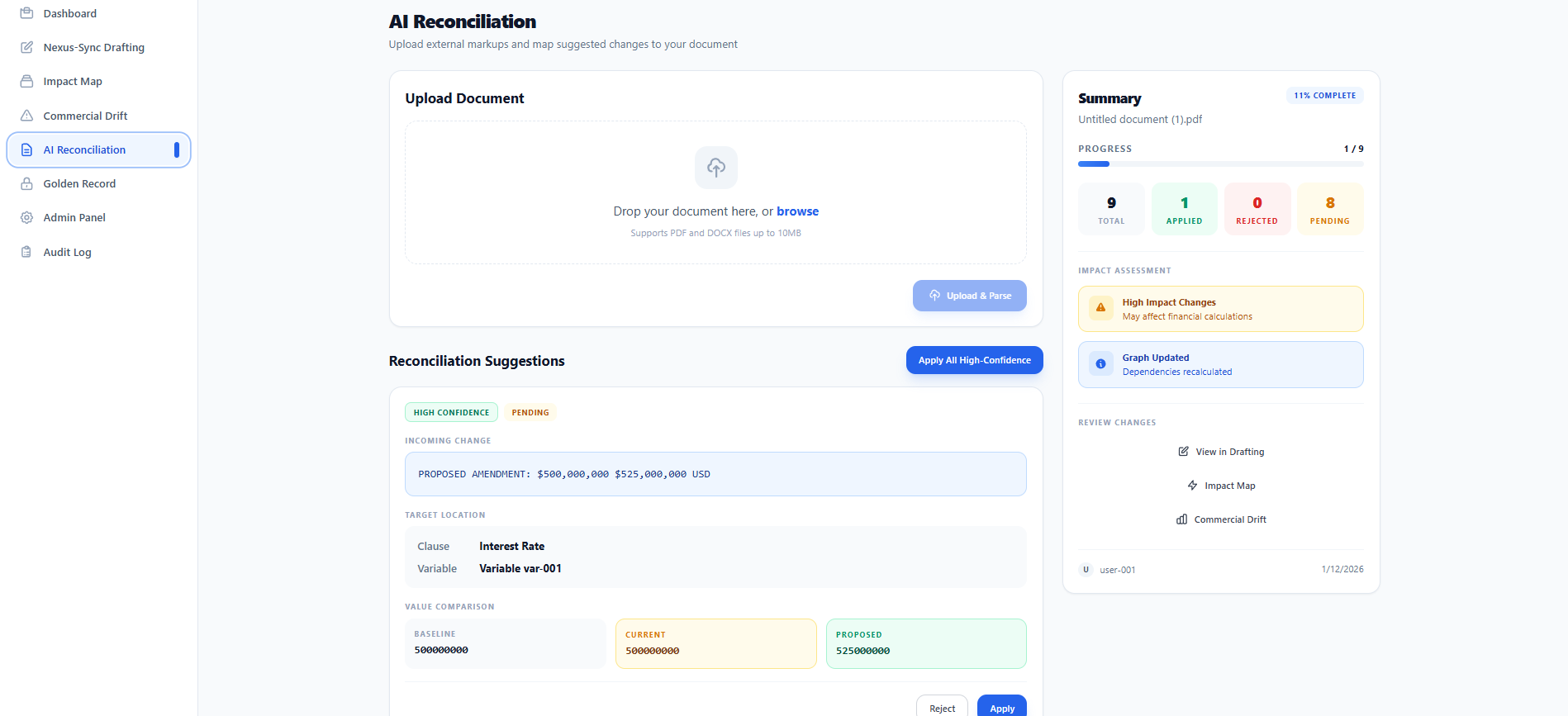
Dirty Document Ai reconciliation
-
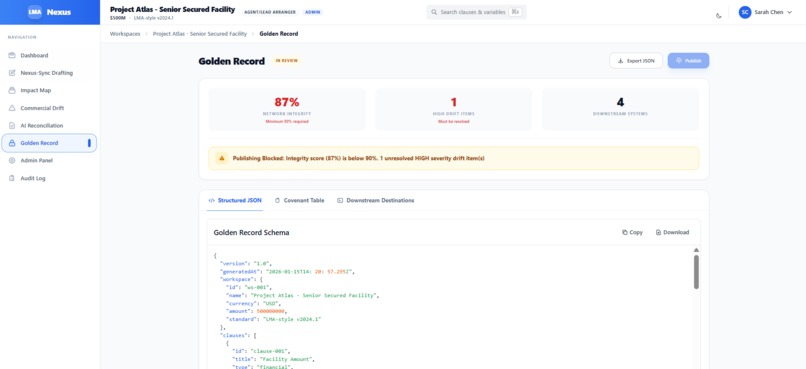
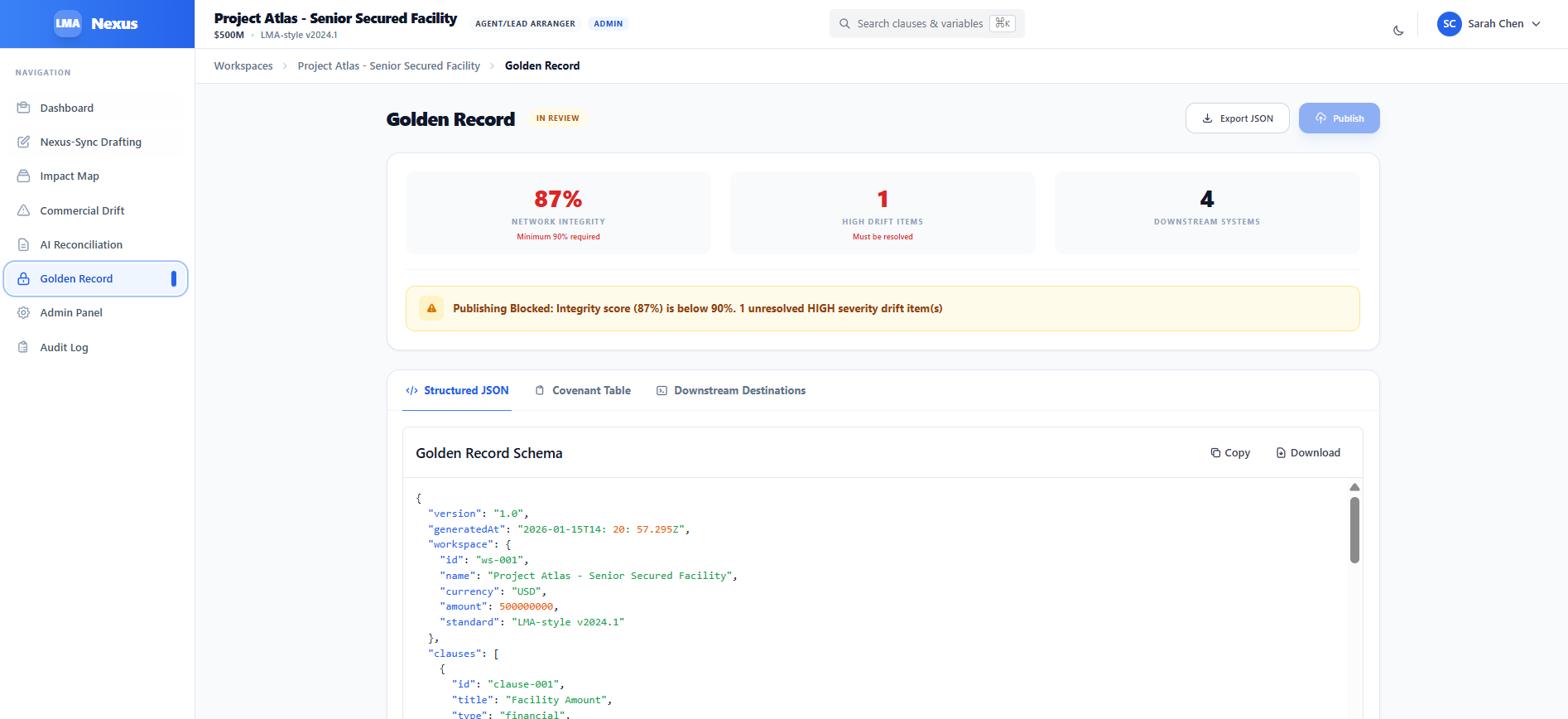
Golden Record
-
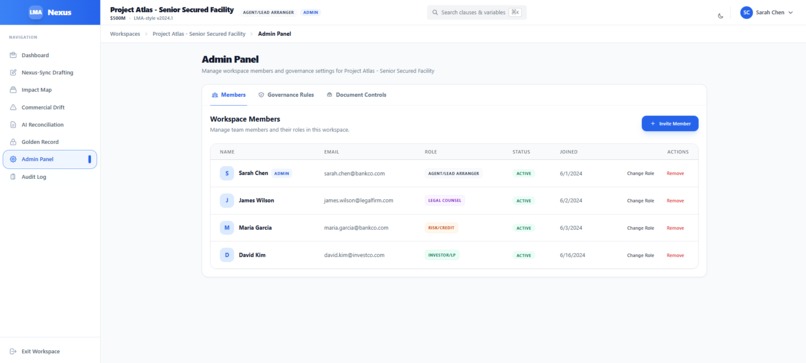
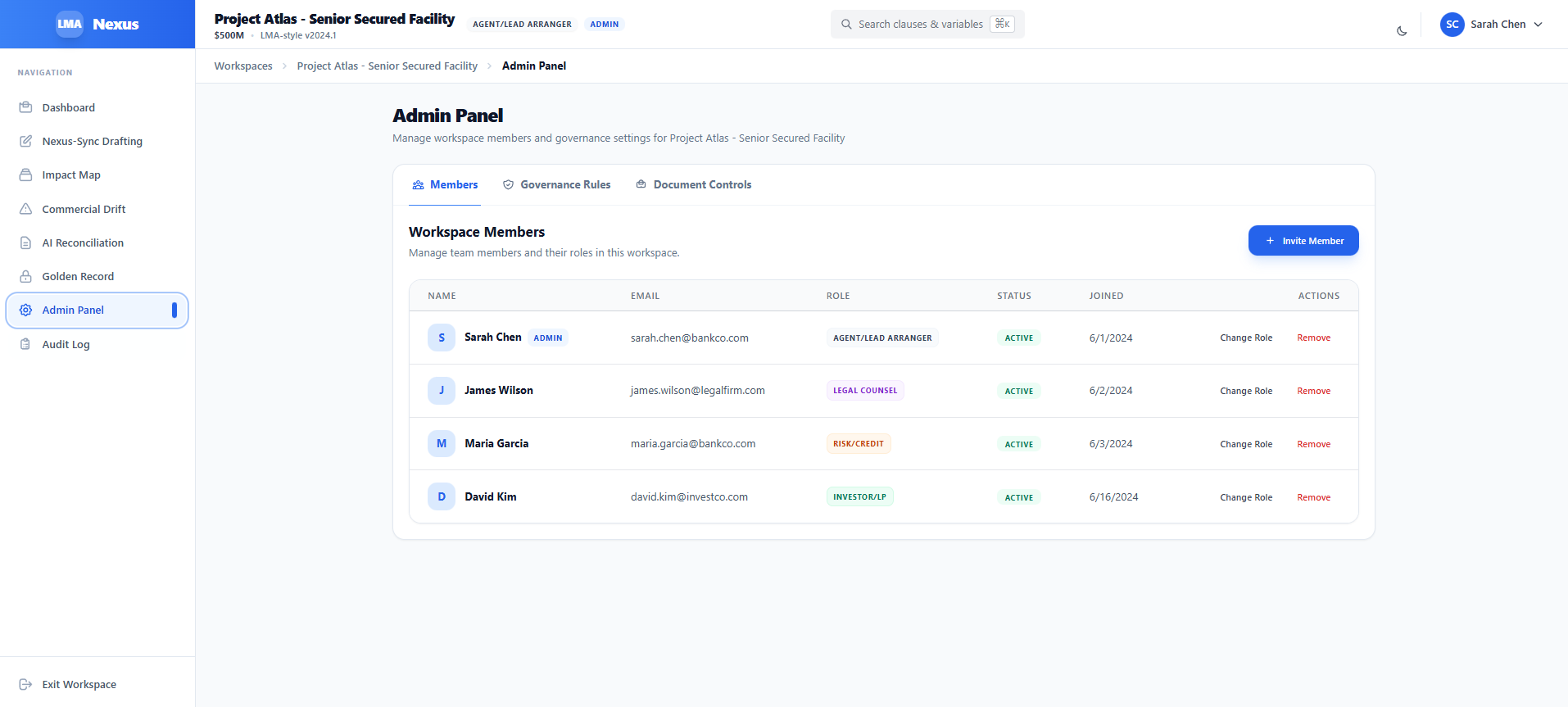
Admin Panel
-
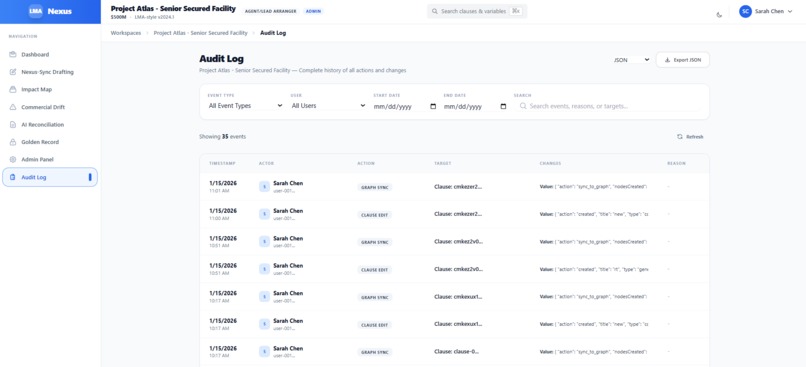
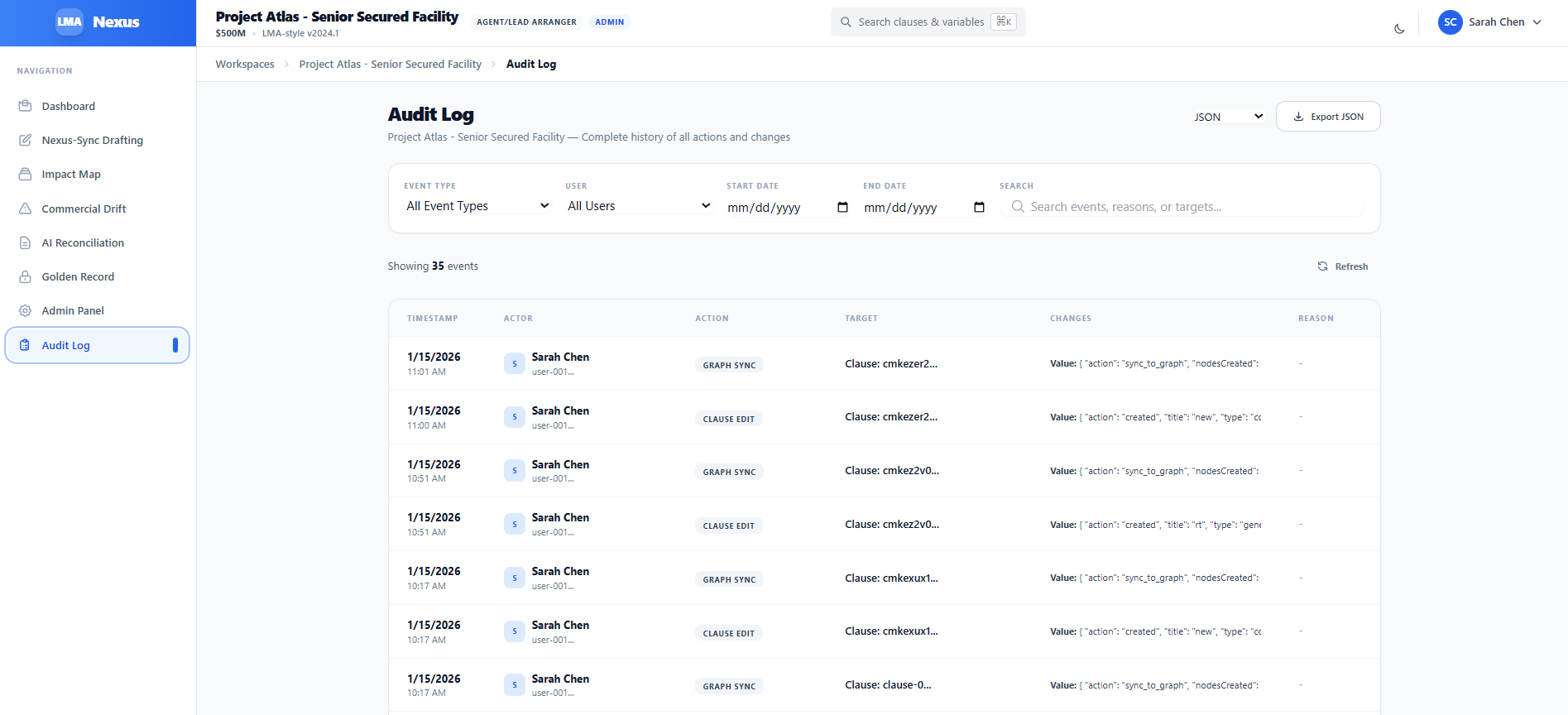
Audit log
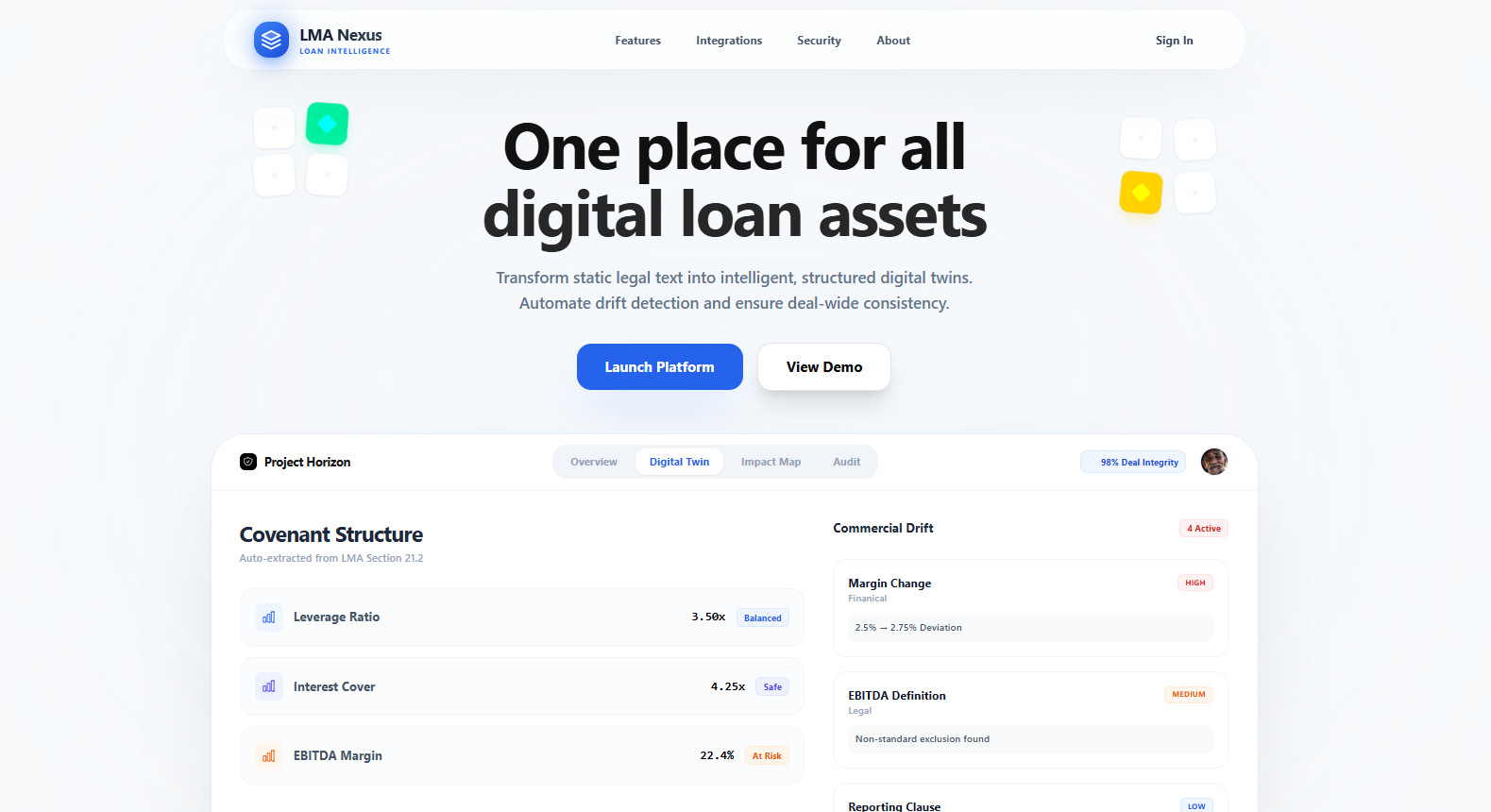
Track : Fintech, DeFi, and payments
Inspiration
Syndicated lending relies on highly complex loan agreements, yet these agreements are still managed as long-form documents. In practice, however, a loan agreement behaves like a system: clauses reference one another, financial terms depend on definitions, and a small change can have wide downstream effects. Because these relationships are implicit in text, inconsistencies and risk often go unnoticed until late in the process.
As computer science students, we recognized this as a familiar problem. In software and networked systems, complexity is managed by making dependencies explicit using structured data and graphs. We applied the same principle to loan agreements by modeling clauses and commercial terms as interconnected nodes, allowing changes to be traced, validated, and governed programmatically.
This approach directly solves the problem:
by turning hidden relationships into visible structures, LMA Nexus makes it easier to spot inconsistencies, prevent last-minute drift, and produce a trusted, machine-readable record that downstream systems can rely on.
.png)
What it does
LMA Nexus is a desktop-based control layer that converts loan agreements into structured, governed digital assets. Unlike standard document management tools that only track words, LMA Nexus tracks logic.
1) The Clause Network (Graph Modeling):
We digitize LMA-style agreements into a network of connected nodes. Every financial term, covenant, and definition is represented as a node, while their relationships (references, calculations, conditions) are mapped as edges.
.png)
In our webapp:
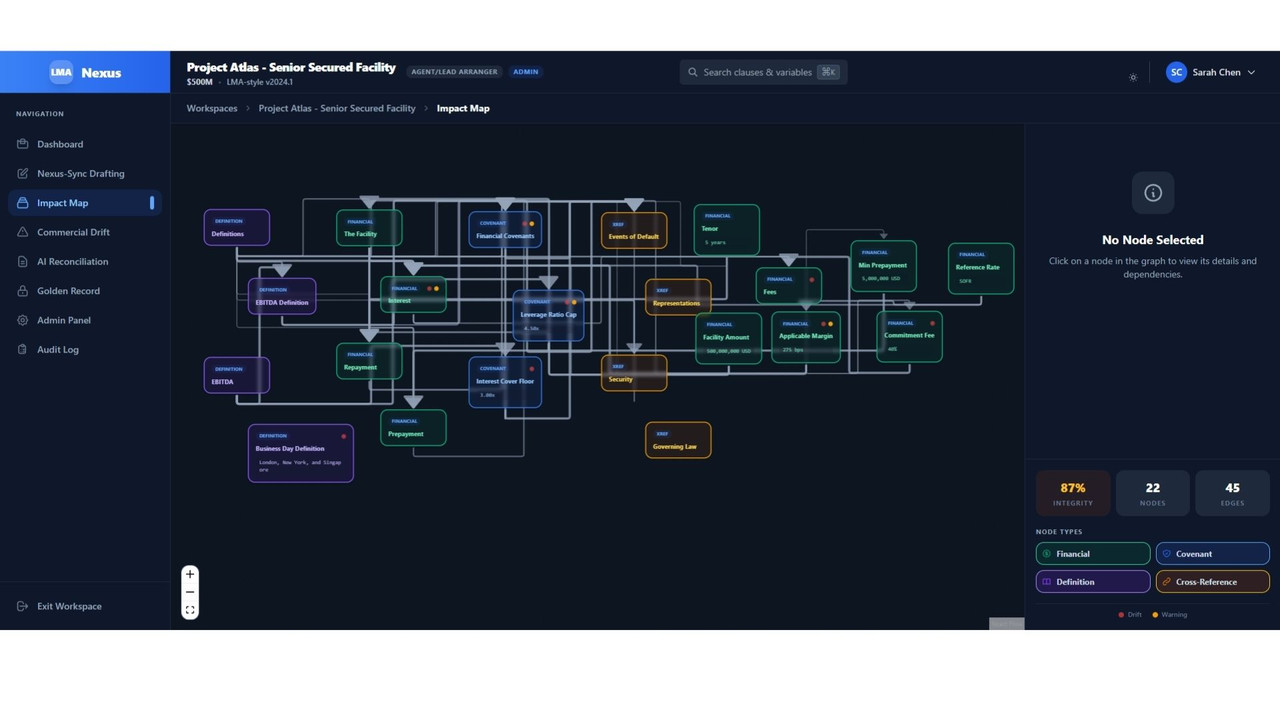
If a "Consolidated EBITDA" definition changes, the system instantly identifies every covenant, reporting trigger, and financial test that relies on it.
2) Interactive Impact Mapping :
Users can visualize the "ripple effect" of any change. Clicking a node highlights its entire dependency tree, showing exactly which covenants or reporting triggers will be affected before the edit is finalized.
.png)
3) Structural Risk Detection:
We apply graph-based algorithms to surface risks that are impossible to detect manually:
Cycle Detection: Identifying "logical deadlocks" where clauses indirectly reference each other in a loop, creating contradictory obligations or legal ambiguity.
Isolated Node Discovery: Automatically flagging "dead wood" — definitions or clauses that are unused, missing, or incorrectly referenced, preventing "dead-end" logic in the contract.
Dependency Chain Validation: Instantly flagging broken chains where a last-minute commercial edit invalidates or "orphans" a required reference elsewhere in the 500-page document.
High-Risk Change Clustering: Identifying "Impact Clusters," where a single change to one node affects a high density of dependent clauses, allowing teams to quantify the severity of a counterparty's request.
4) Real-Time Commercial Drift:
The platform monitors deviations from the approved credit mandate in real-time, alerting Risk and Credit teams before a risky agreement goes live.
.png)
5) The "Golden Record":
The system enforces governance gates, blocking the "Publishing" of a deal if structural integrity thresholds are not met. The final output is a machine-readable Golden Record (JSON) that feeds directly into bank risk and servicing systems, eliminating manual data entry errors.
.png)
6) Solving the Adoption Gap:
We built two features to ensure LMA Nexus works in the real world:
- Microsoft Word Add-In: Lawyers keep their existing workflow. The add-in "listens" to edits in Word and syncs them to the Graph in the background.
.png)
- "Dirty Docs" Ingestion: We handle reality. When a counterparty who doesn't want to use our webapp sends back a scanned PDF or messy Word doc, LMA Nexus ingests the text, extracts the updated logic, and maps the "Drift" back to the system's source of truth.
.png)
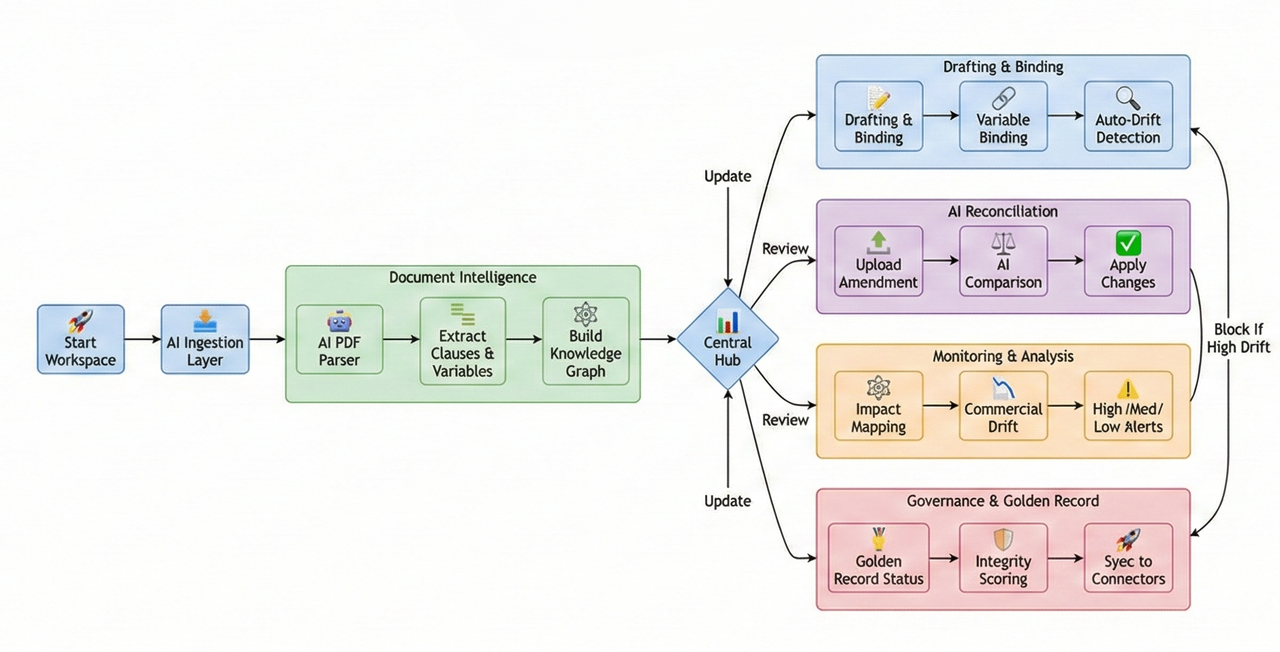
Workflow
The Vision
Loan agreements are the operating system of global credit yet today, they are managed as static documents.
Our vision is to turn loan agreements into governed, living systems that can be trusted, queried, and safely automated across the entire lending lifecycle.
LMA Nexus introduces a new category: a control and governance layer for loan agreements, where risk is surfaced early, changes are measurable, and downstream systems consume data, not interpretation.
Long term, we see a future where:
- Loan agreements are born digital, not retrofitted
- Market standards are machine-readable by default
- Risk, legal, and operations teams work from one shared source of truth
- Manual reconciliation, hidden drift, and post-close surprises disappear
- Lending shifts from document trust to system trust
LMA Nexus is not just a product, it is the foundation for a safer, more transparent, and more scalable global loan market.
How we built it
System Architecture :
The platform uses a modular, layered architecture :
.png)
.png)
Entity Relation Diagram :
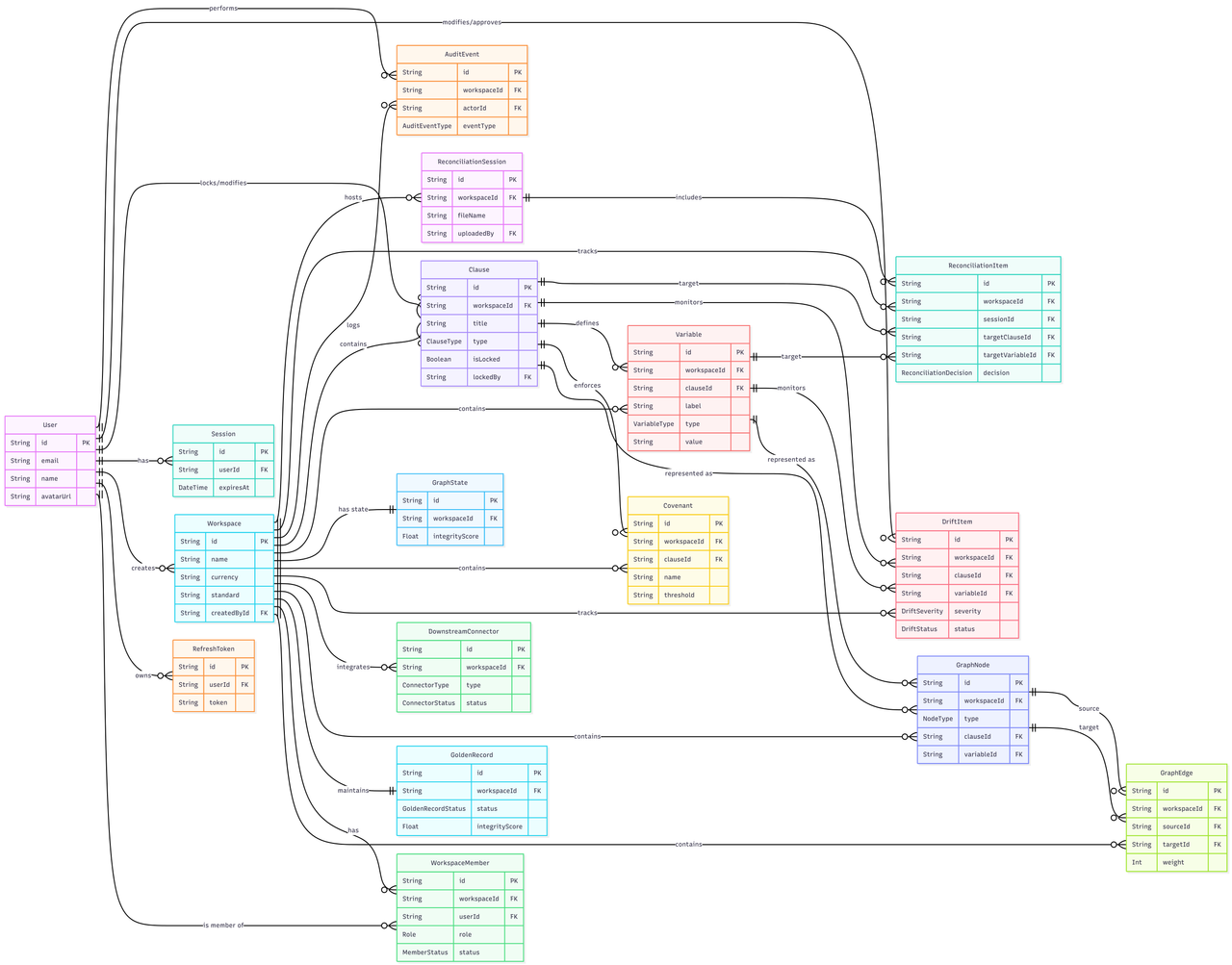
Layered Backend Architecture:
- Routes → Controllers → Services → Prisma ORM → PostgreSQL
This allowed us to build a system that is scalable, auditable, and production-ready.
Key Features & How They Were Built
1. Nexus-Sync Drafting Engine :
- Split-pane layout with clause outline, editor, and inspector panel
- Real-time clause editing with automatic variable extraction
- Financial pattern detection (basis points, ratios, currencies)
- Section locking with role-based permissions
- Sensitive clause edits require reason/category (audit trail)
2. Impact Map Visualization :
- Built with React Flow for interactive node-based graphs
- Nodes represent clauses, variables, covenants, and cross-references
- Edges show dependencies between document elements
- Click-to-navigate from graph nodes to source clauses
- Integrity scoring to identify potential inconsistencies
3. Commercial Drift Detection :
- Compares current draft values against approved baselines
- Severity-based alerting (HIGH/MEDIUM/LOW)
- Actions: Override baseline, Revert draft, Approve drift
- HIGH drift blocks publishing to downstream systems
- All actions require reason/category for audit compliance
4. AI-Powered Reconciliation :
- Upload external counsel markups (PDF/DOCX)
- AI parses and maps proposed changes to structured variables
- Confidence scoring (HIGH/MEDIUM/LOW) for suggestions
- Batch processing with accept/reject workflow
- Cascading impact analysis for accepted changes
5. Golden Record Export :
- Machine-readable JSON schema for downstream integration
- Pre-built connectors for LoanIQ, Finastra, Allvue, CovenantTracker
- Integrity gating prevents export of inconsistent data
- Covenant extraction with calculation formulas
6. State Management :
Frontend uses Context API with dedicated providers:
- AuthProvider - Login/logout, session management
- WorkspaceProvider - Active workspace, workspace selection
- PermissionProvider - Role-based permission checks
- AuditProvider - Audit event logging
- ThemeProvider - Dark/light mode
7. Security & Compliance :
- JWT access tokens (15min) + refresh tokens (7d)
- Role-based access control (RBAC) with granular permissions
- Immutable audit trail for regulatory compliance
- Sensitive clause edits require documented reasons
- Workspace isolation ensures data separation between deals
.png)
8. Security & Governance :
The platform includes role-based access control, immutable audit logs, approval workflows, and publishing gates, ensuring that no risky agreement becomes operational by accident.
Challenges we ran into
1. Graph Complexity at Scale : Modeling 200-500 page loan documents as dependency graphs created performance bottlenecks. Running cycle detection (Tarjan's SCC) and transitive closure (Warshall's) on large clause networks required careful optimization — we implemented incremental graph updates rather than full recomputation on every edit.
2. Real-Time Consistency Validation : Ensuring changes cascade correctly across interconnected clauses without introducing race conditions was tricky. A single variable edit could trigger drift detection, graph recomputation, and integrity score updates simultaneously. We solved this with atomic transactions and event-driven architecture.
3. Balancing Legal Precision with Usability : Legal counsel need exact clause text, but structured data extraction requires abstraction. Finding the right balance — binding variables without losing legal nuance — required multiple iterations with domain experts to get the variable binding UX right.
4. AI Reconciliation Confidence Scoring : Mapping external counsel markups to structured variables isn't deterministic. We struggled with false positives in change detection. The solution was a confidence-tiered approach (HIGH/MEDIUM/LOW) letting users batch-process high-confidence matches while manually reviewing edge cases.
5. Audit Trail Without Performance Penalty : Immutable audit logging for every action (21 event types) risked slowing down the drafting experience. We implemented async audit writes and optimized indexes on timestamp/eventType to maintain sub-100ms response times while capturing full compliance trails.
6. Role-Based Permissions Complexity : Four distinct roles (Agent, Legal, Risk, Investor) with granular permissions across 20+ actions created a combinatorial explosion. We built a permission matrix system that cleanly maps roles to capabilities without hardcoding checks throughout the codebase.
7. Frontend State Synchronization : Keeping the clause editor, dependency graph, and drift panel in sync when multiple users edit simultaneously required careful state management. Context API with optimistic updates and server reconciliation prevented UI inconsistencies.
Accomplishments that we're proud of
1. Document-to-Data Transformation : We built the first platform that treats loan agreements as queryable data graphs rather than static PDFs. A 500-page document becomes a structured, interconnected network where risks surface in milliseconds instead of weeks.
2. Real-Time Graph-Based Risk Detection : Implementing Tarjan's SCC, PageRank, and Louvain community detection to catch circular references, orphaned definitions, and high-impact change clusters — risks that even experienced lawyers miss during manual review.
3. Seamless Graph-to-Clause Navigation : Click any node in the Impact Map and instantly jump to the source clause with the relevant variable highlighted. Bidirectional navigation makes the dependency graph actually useful, not just pretty.
What we learned
1. Legal Documents Are Graphs, Not Text : The biggest insight: loan agreements aren't linear documents — they're directed graphs of interdependent definitions, covenants, and cross-references. Once we modeled them that way, problems that seemed impossible became tractable.
2. Graph Algorithms Have Real-World Impact : Tarjan's SCC and PageRank aren't just academic exercises. Applying them to legal documents surfaces risks that cost banks millions in post-closing operational failures. Computer science fundamentals solve real business problems.
3. Audit Trails Are Features, Not Overhead : We initially saw compliance logging as a checkbox requirement. But immutable audit trails became a product differentiator — legal teams love being able to trace exactly who changed what and why.
4. Domain Expertise Is Non-Negotiable : We couldn't have built this without understanding how syndicated loans actually work. The best technical architecture means nothing if you don't understand why a margin step-down affects covenant calculations.
5. Incremental > Batch Processing : Recomputing the entire dependency graph on every keystroke was a non-starter. Learning to think in deltas and incremental updates was essential for real-time performance.
6. AI Needs Human Guardrails : AI-powered reconciliation is powerful, but confidence scoring and human review workflows are essential. Fully autonomous legal document editing isn't ready — human-in-the-loop is the right pattern today.
What's next for LMA Nexus
Industry Research & Standardization : We intend to publish a research paper introducing this new graph-based model for loan agreements, formalizing how legal contracts can be treated as structured, analyzable systems. This research will support industry dialogue around standardization, interoperability, and governance.
Expanded Standards & Market Coverage : Extend structured schemas beyond LMA-style agreements to cover U.S. and global credit documentation standards, enabling cross-jurisdiction interoperability and portfolio-level normalization.
Advanced Risk & Compliance Analytics : Introduce portfolio-level analytics for systemic risk, covenant concentration, and change propagation — giving lenders early warning signals before issues become operational or regulatory events.
Smarter AI Reconciliation : Improve AI confidence scoring and learning from historical approvals to further automate counterparty document reconciliation while maintaining human control.
Industry Governance Layer : Long-term, LMA Nexus becomes shared infrastructure — a neutral, governed control layer that supports standardization, transparency, and trust across the global loan market.
Team Member Roles and Contribution
1) Ambrox - frontend developer, project manager, ideation
I identified the problem and then applied my computer science knowledge to come up with a non-existing, unique solution to it. I also defined the complete webapp features, the user workflow and the frontend design and code.
2) Mahir Mahtab - Backend and AI specialist
I worked on the backend connection, database design and ai integration.
Built With
- express.js
- fast-check
- framermotion
- jest
- jwt
- neonpostgresql
- node.js
- openrouter
- prismaorm
- react19
- reactflow
- tailwindcss
- typescript
- zod

Log in or sign up for Devpost to join the conversation.