-
-
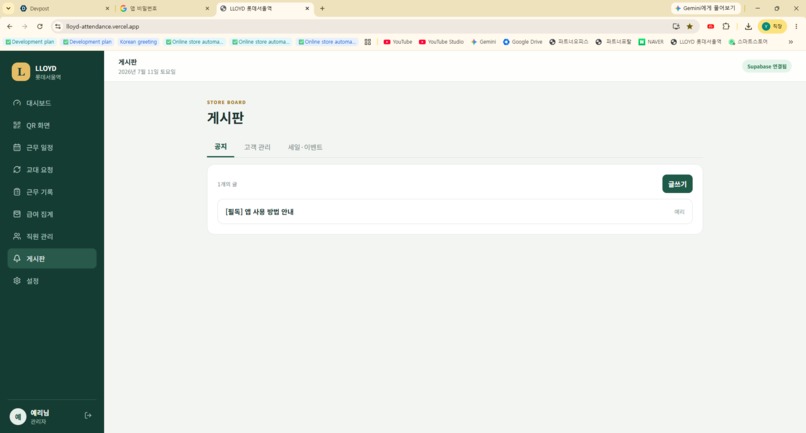
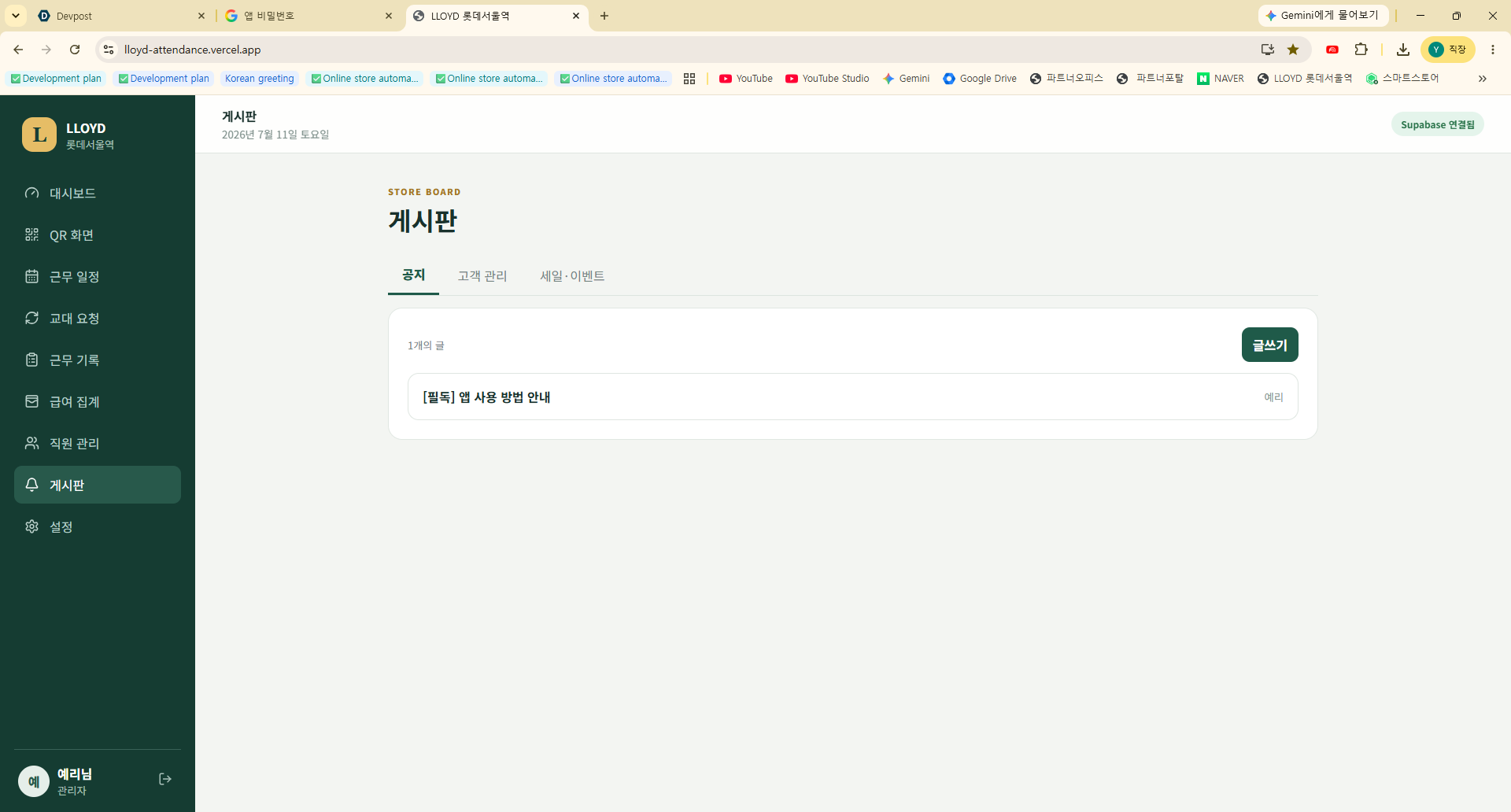
Store board for notices, customer requests, and sale or event posts, designed for both staff phones and the store laptop.
-
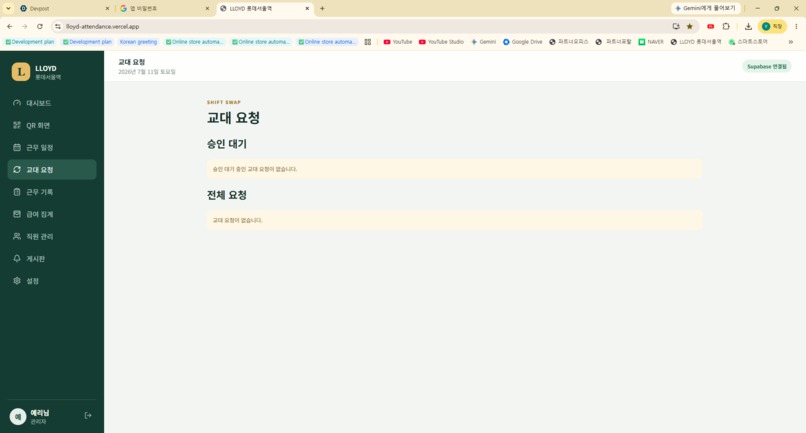
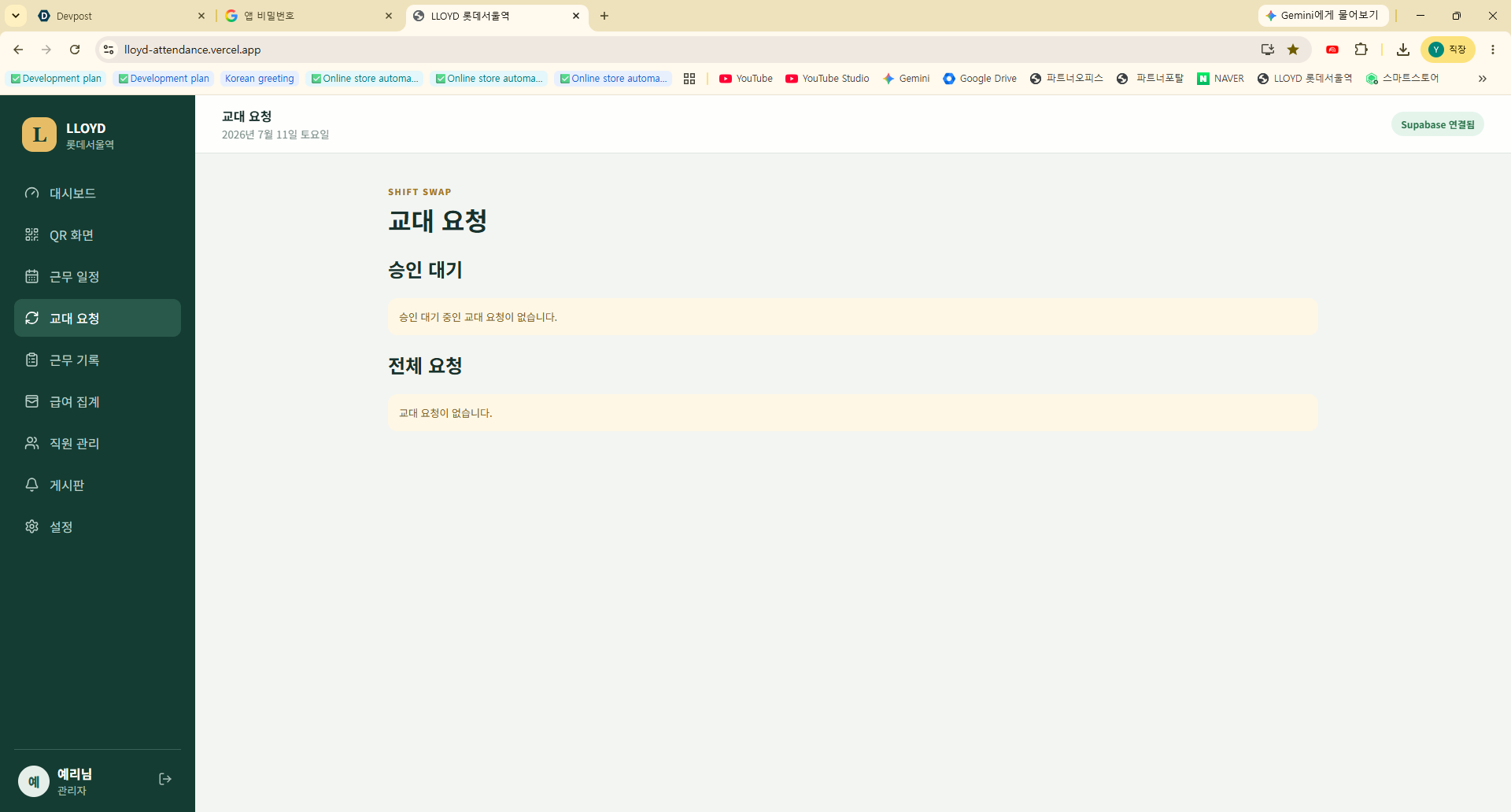
Shift swap approval screen where the manager can review staff requests and keep schedule changes controlled.
-
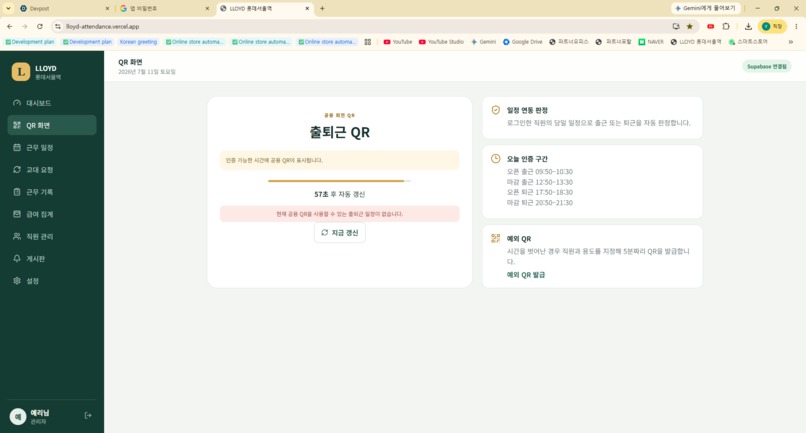
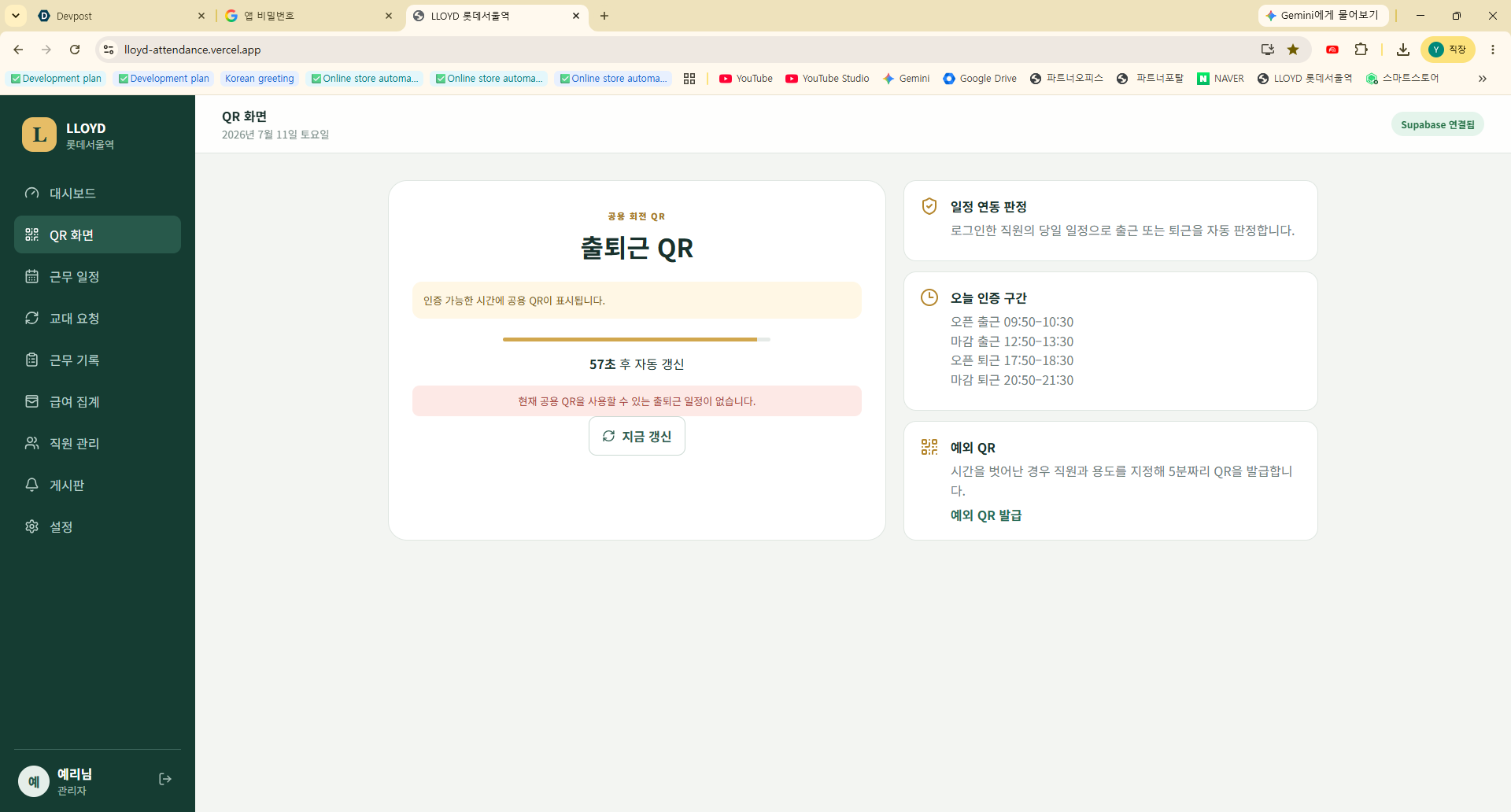
Shared rotating QR attendance screen for the store laptop, with schedule-based check-in and check-out windows.
-
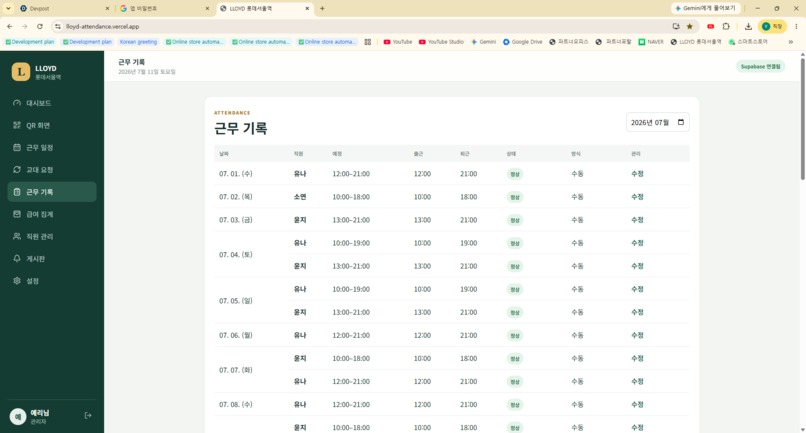
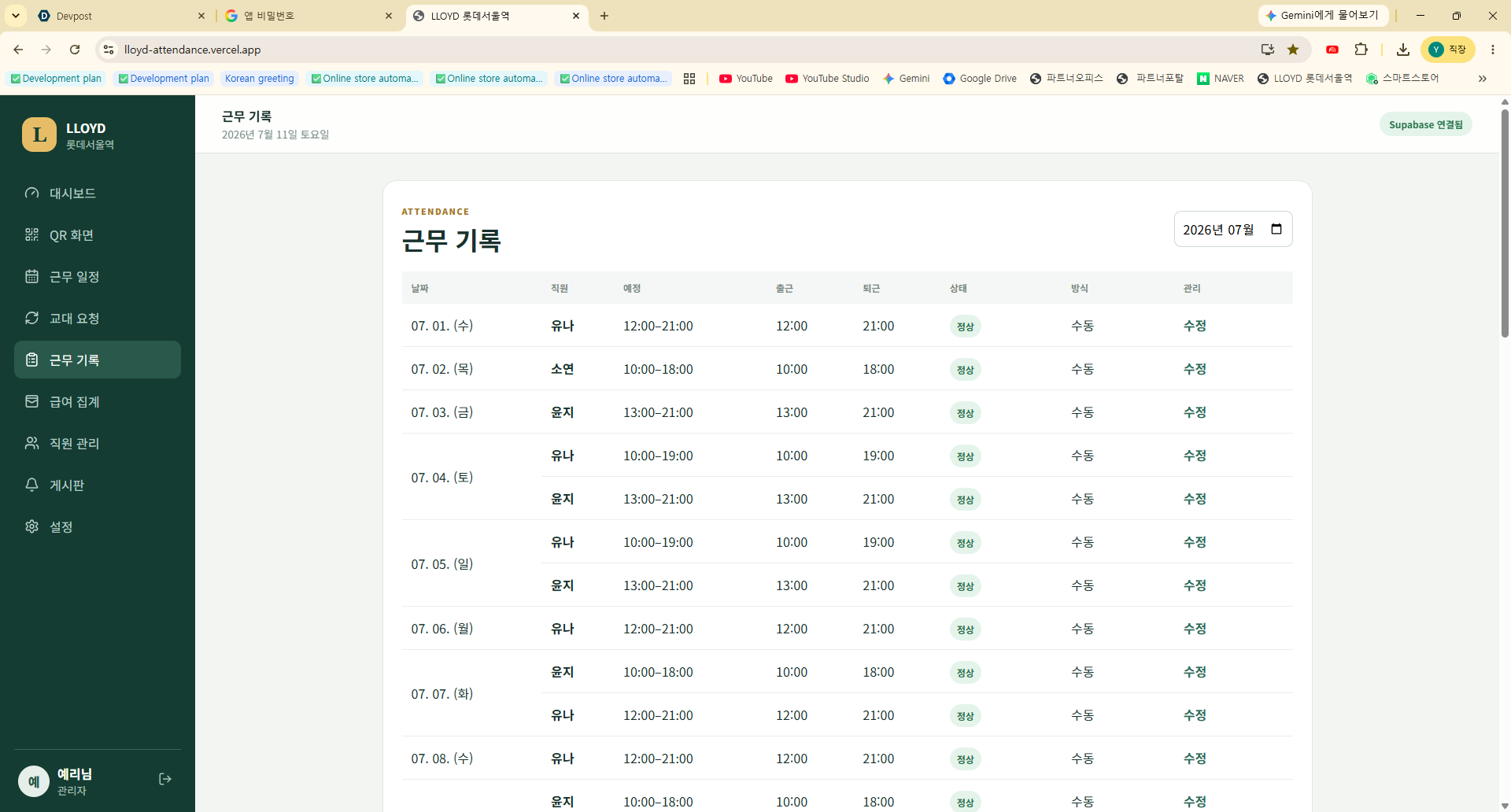
Attendance records with scheduled hours, actual check-in and check-out times, status, method, and manager corrections.
-
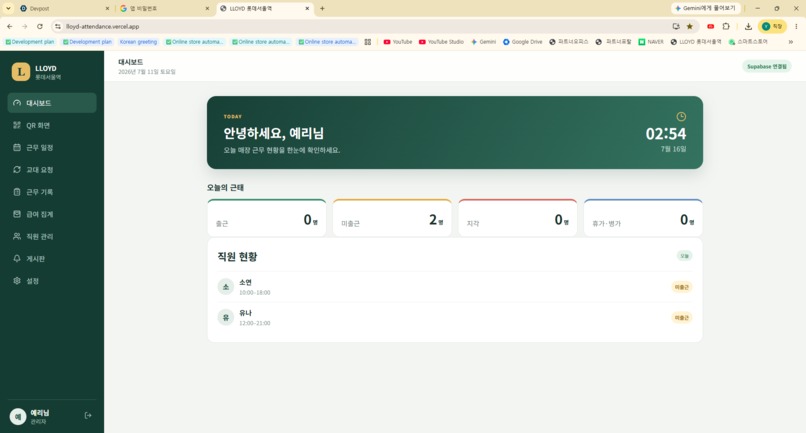
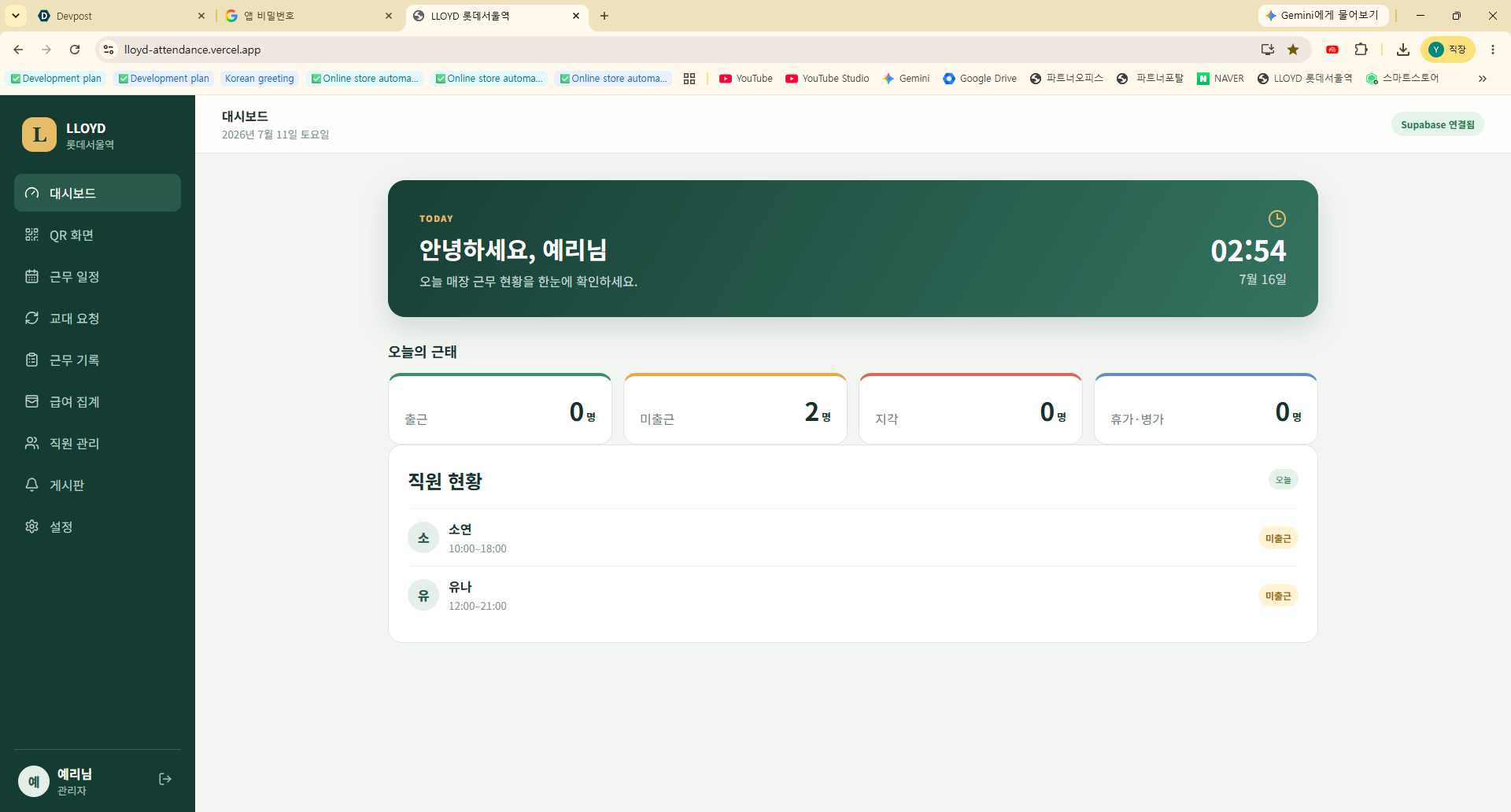
Manager dashboard showing today’s scheduled staff, attendance status, and real-time store operation overview.
-
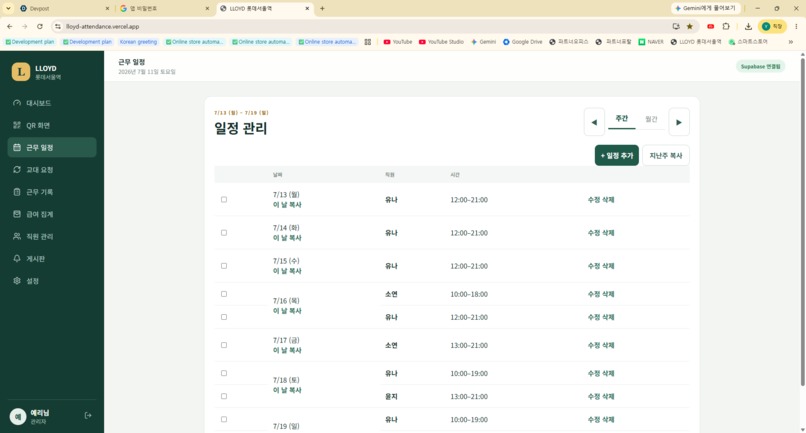
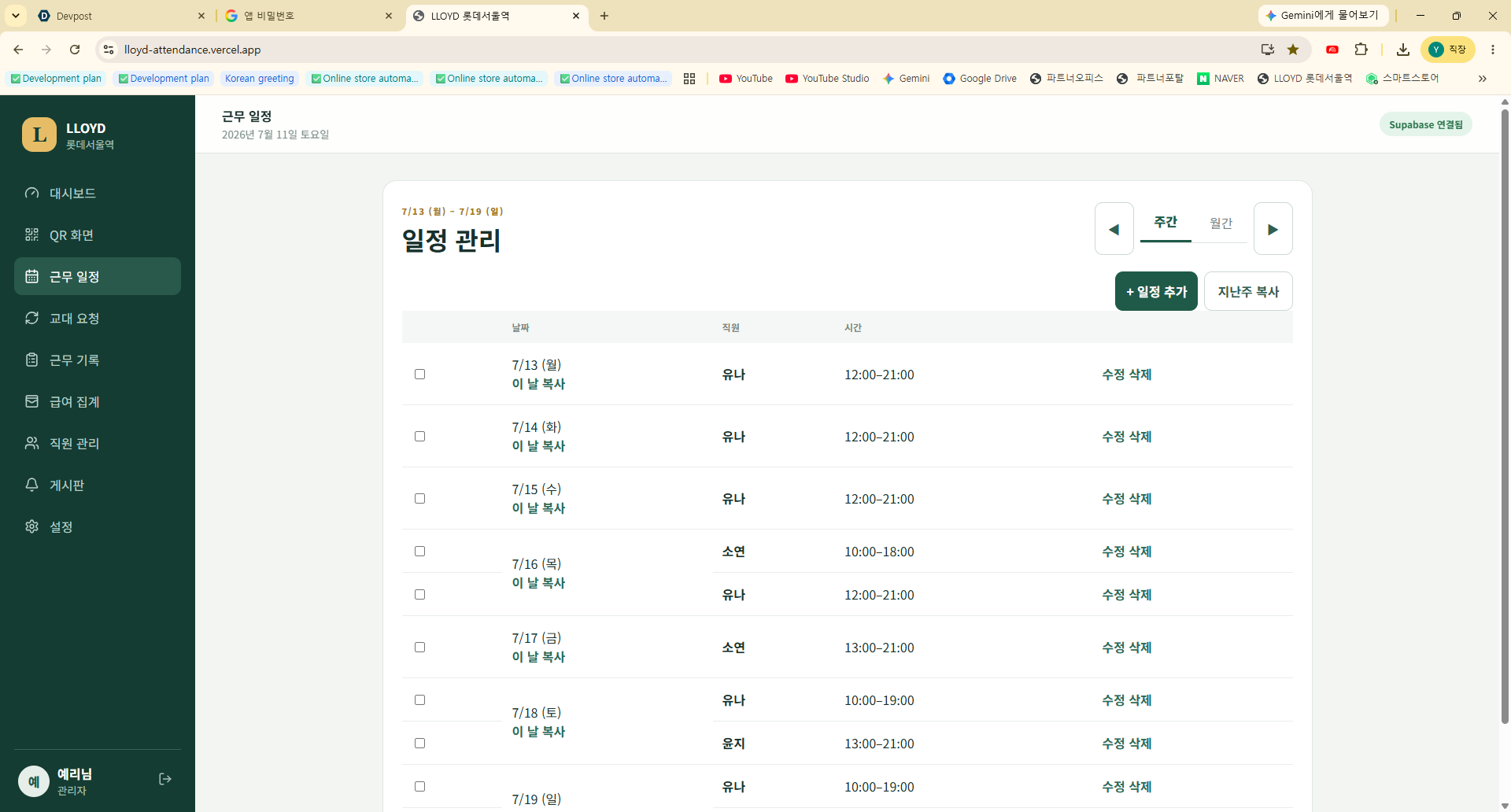
Weekly schedule management with staff assignments, working hours, multi-date selection, and copy-from-last-week workflow.
Inspiration
I run a retail store in Seoul, and daily workforce management was spread across too many tools: paper schedules, spreadsheets, chat messages, attendance notes, and manual payroll calculations.
This created extra administrative work and made it easy to miss schedule changes, attendance issues, or important store announcements. I wanted to build a practical tool that could actually be used in a small retail store, not just a demo.
What it does
StoreFlow is a mobile-first workforce management app for small retail teams.
It brings employee scheduling, Wi-Fi-first attendance check-in, rotating QR backup verification, shift swap requests, payroll support, store announcements, and push reminders into one workflow.
Managers can create weekly schedules, review attendance records, approve shift requests, manage store board posts, and check payroll-related data.
Employees can view their schedules, check announcements, receive reminders, and check in or out from their phones when connected to the store Wi-Fi. If Wi-Fi verification is unavailable, they can use a rotating QR code as a backup method.
How we built it
StoreFlow was built with React, TypeScript, Vite, Supabase, PostgreSQL, Edge Functions, and Progressive Web App technology.
During OpenAI Build Week, I used Codex and GPT-5.6 as my main coding partners. They helped me design the architecture, generate code, debug authentication and attendance issues, improve the UI, write database logic, and quickly iterate based on real store feedback.
The app is deployed on Vercel with Supabase handling authentication, database access, role-based permissions, and backend functions.
Challenges we ran into
The hardest part was making attendance tracking practical for a real store environment.
GPS alone was not reliable enough for daily use, and QR-only attendance felt inconvenient. The final flow uses store Wi-Fi as the primary attendance signal, with rotating QR codes as a backup when Wi-Fi verification is unavailable.
Another challenge was keeping the app simple for non-technical staff while still giving managers the tools they need for schedules, records, payroll support, and announcements.
Accomplishments that we're proud of
I am proud that StoreFlow is connected to a real operational problem from my own store.
The app now supports manager and employee roles, schedule management, Wi-Fi and QR attendance, manual attendance correction, shift requests, payroll support, store board posts, push reminders, and PWA installation.
I am also proud that I was able to build and improve this while running the store full-time, using Codex to move much faster than I could have alone.
What we learned
I learned that AI coding tools are especially powerful when they are used to solve a very specific real-world workflow.
Codex helped me turn messy store operations into clear product flows, test ideas quickly, and fix problems that appeared during real usage.
I also learned that the best solution is not always the most complex one. For attendance, a simple Wi-Fi-first flow with QR as backup was more practical than relying only on GPS or manual records.
What's next for StoreFlow: Scheduling & Attendance
Next, I want to continue improving StoreFlow based on feedback from real store usage.
Planned improvements include better mobile UI polish, stronger attendance reliability, improved payroll reporting, richer notification settings, and easier onboarding for other small retail teams.
The long-term goal is to make StoreFlow a simple workforce operations tool that small shops can use without needing complicated enterprise software.
Built With
- ai-coding-assistant
- attendance
- chatgpt
- codex
- database
- javascript
- operations
- productivity-tool
- pwa
- react
- retail
- scheduling
- small-business
- supabase
- typescript
- vercel
- web-development
- workforce-management

Log in or sign up for Devpost to join the conversation.