Inspiration
I develop mobile rhythm games, audio-based games, and music production apps with Unity. One of the biggest problems I repeatedly faced was mobile audio latency, sometimes reaching around 150 ms. That delay can ruin the experience in rhythm games and virtual instruments, so I decided to build a better solution.
What it does
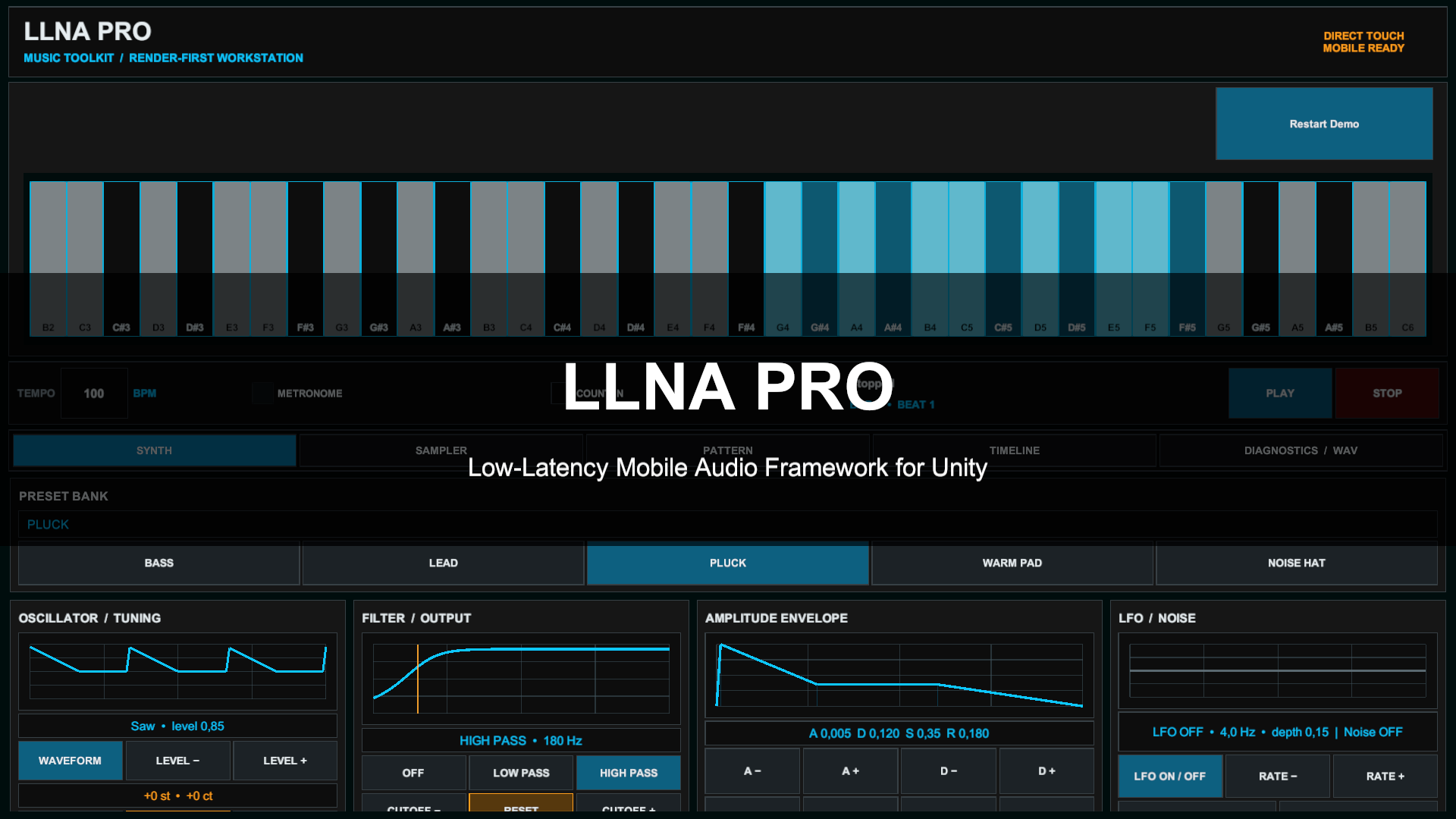
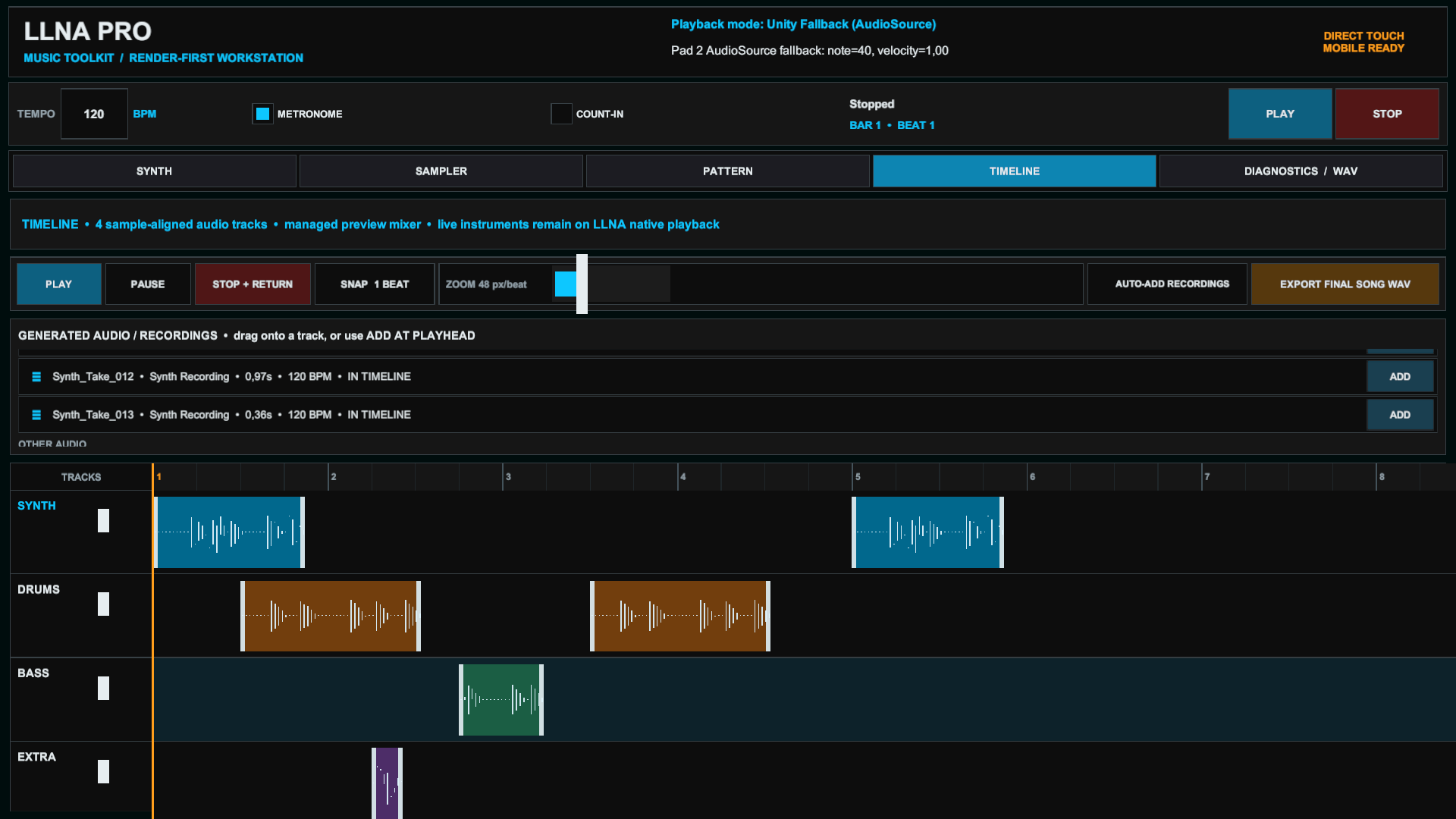
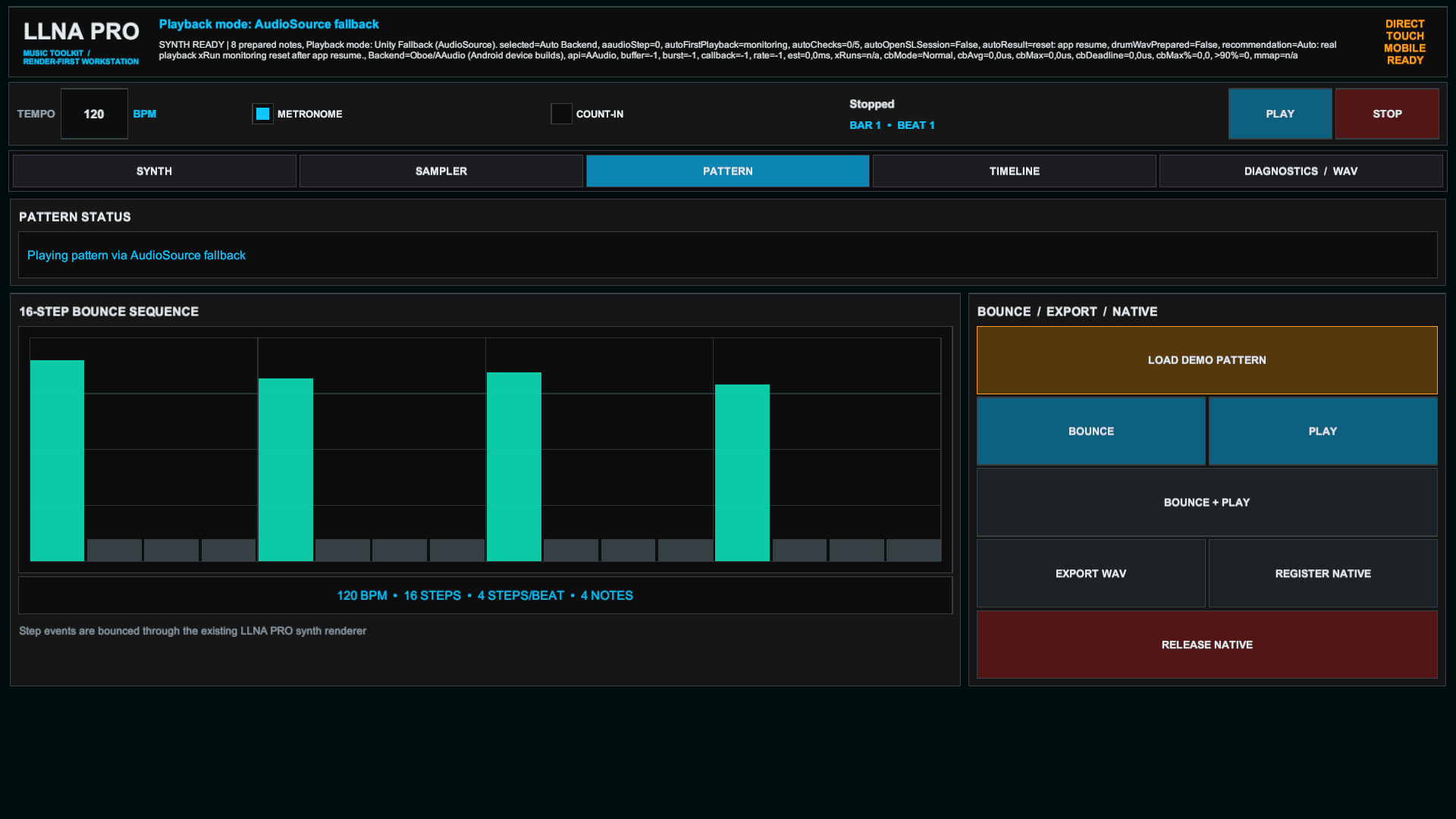
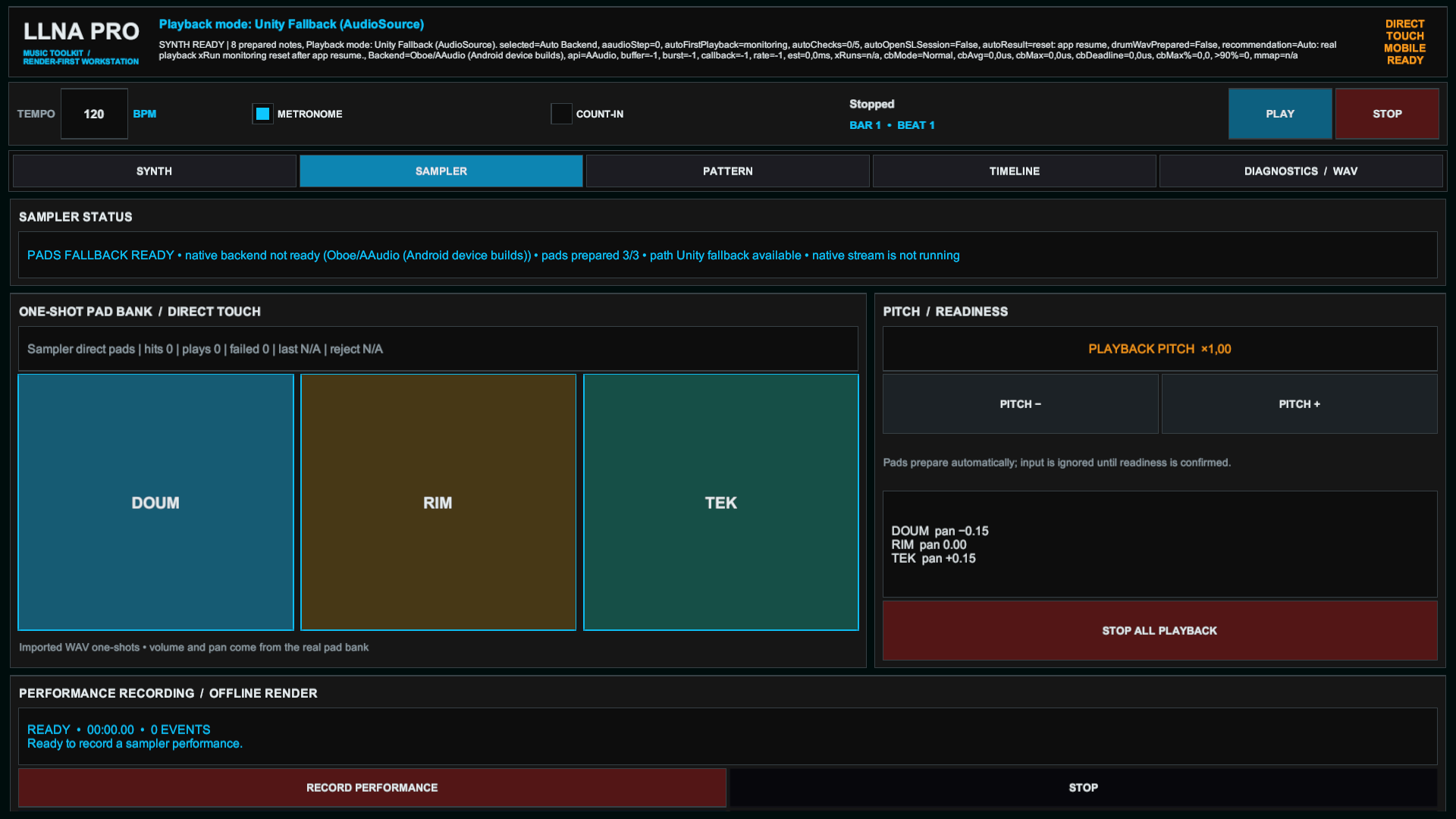
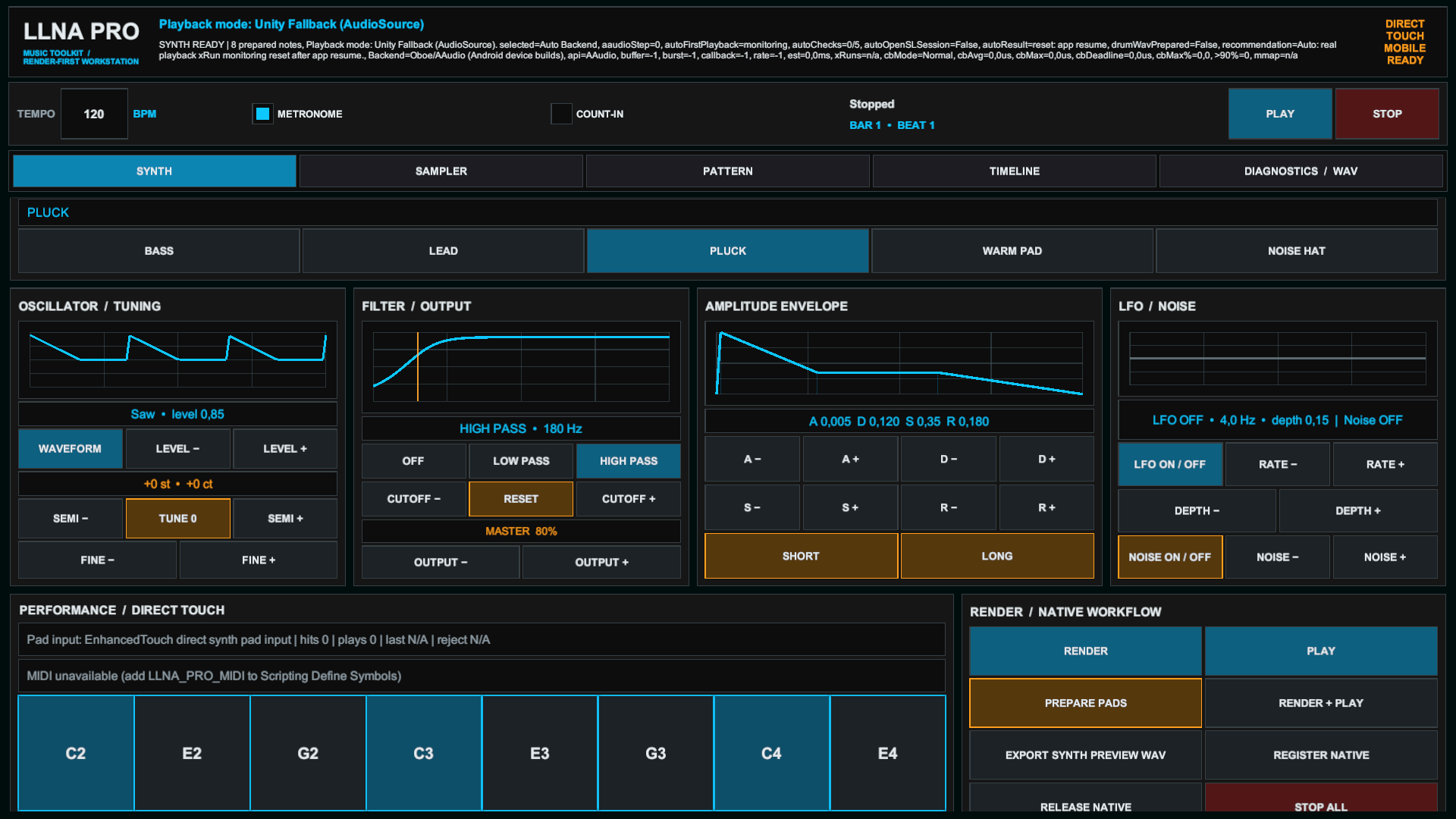
LLNA PRO is a mobile-first, low-latency audio framework for Unity. It gives developers the tools to build rhythm games, virtual instruments, drum machines, and music production apps without depending entirely on Unity’s standard audio pipeline. The framework includes native audio playback for Android and iOS, a playable synthesizer, sampler, pattern sequencer, audio timeline, offline audio rendering, and WAV export. Developers can use these systems to create applications in which users can play instruments, arrange musical patterns, render audio, and export WAV files directly on their mobile devices.
How we built it
We built the framework with Unity, C#, Android native audio technologies such as Oboe and AAudio, and iOS AudioUnit/RemoteIO. Codex helped with architecture, implementation, debugging, code reviews, testing workflows, and cross-platform integration.
Challenges we ran into
The biggest challenge was that mobile audio performance varies significantly between devices. Small buffers reduce latency but can cause crackling, while larger buffers are more stable but introduce delay. We also had to manage app lifecycle changes, native audio initialization, memory usage, touch responsiveness, and platform-specific behavior.
Accomplishments that we're proud of
We are proud that LLNA PRO grew from a solution for a single audio-latency problem into a complete cross-platform audio toolkit. We successfully connected Unity to native Android and iOS audio systems and built a working synthesizer, sampler, sequencer, offline renderer, WAV exporter, and audio timeline on top of that foundation. The framework supports responsive touch input, glissando keyboard interaction, reusable presets, native playback, and rendered audio output. Most importantly, LLNA PRO turns complex native audio technology into Unity components that developers can use without building separate Android and iOS audio engines from scratch.
What we learned
We learned that audio latency is not caused by a single system. It is a combination of input handling, audio processing, buffering, operating-system behavior, and hardware. We also learned that low latency must always be balanced with stability, audio quality, and device compatibility.
What's next for LLNA PRO – Low-Latency Mobile Audio Framework for Unity
Next, we plan to improve the audio timeline, expand MIDI support, add more effects and instruments, improve device-specific optimization, and make the framework easier for Unity developers to integrate into rhythm games, virtual instruments, and music production apps.

Log in or sign up for Devpost to join the conversation.