LLMConnect
Inspiration
AI-driven conversations happen across many browser tabs and API accounts. We wanted a local-first workspace that keeps sessions isolated, preserves structured chat history, and makes it easy to reuse and organize prompt-driven work without sending everything to a third-party server.
What it does
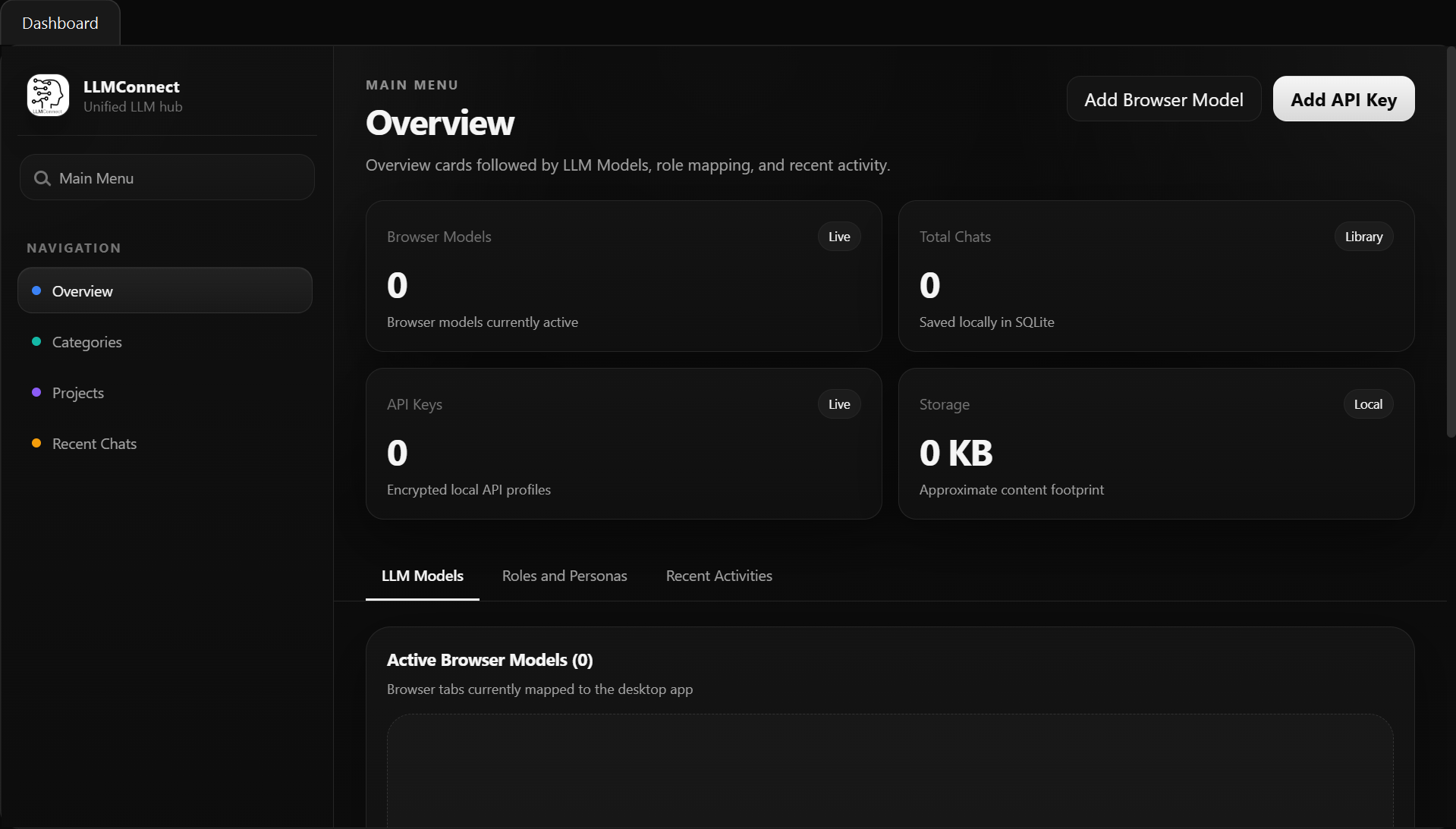
- Runs multiple browser sessions in an integrated desktop dashboard.
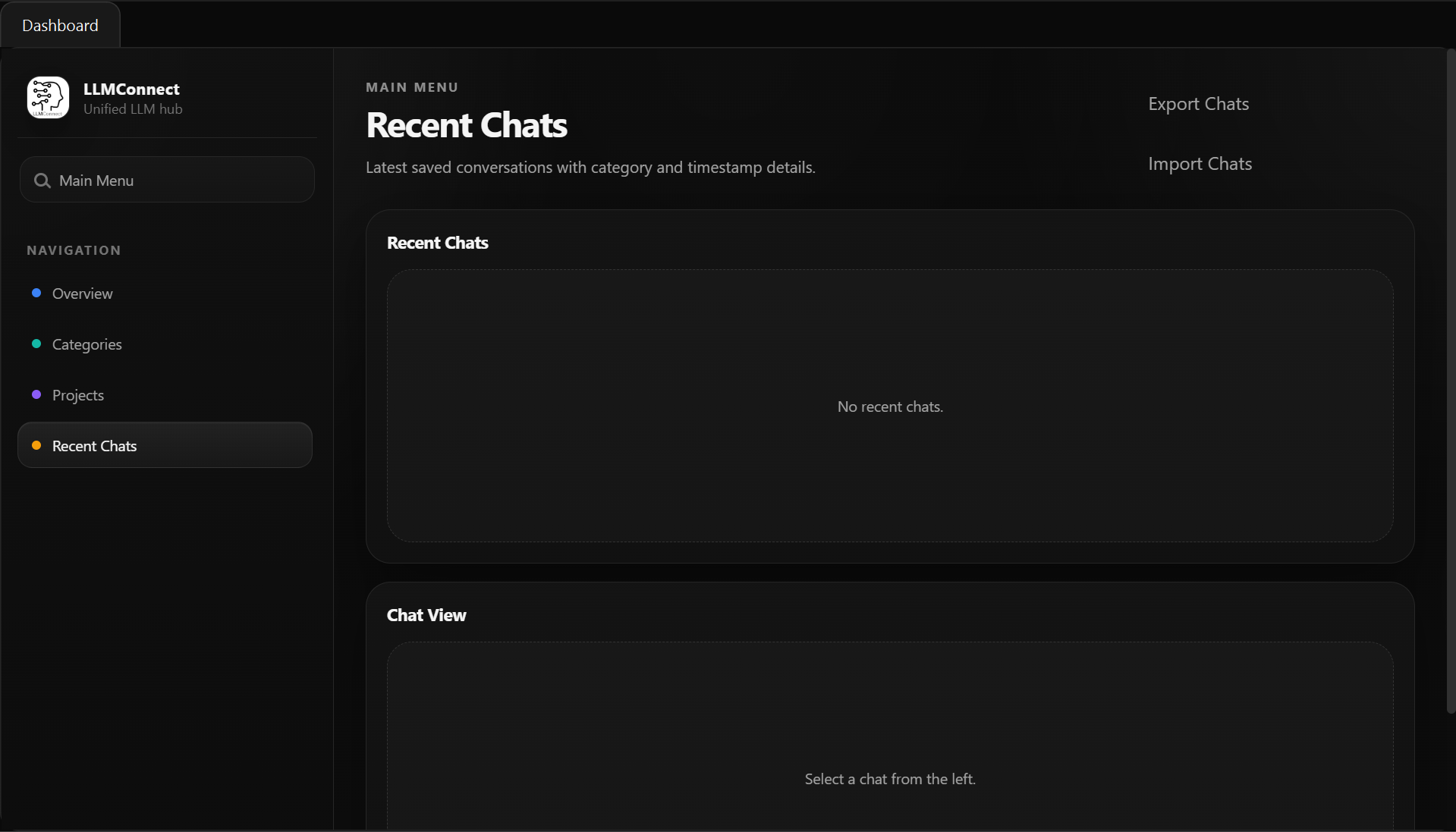
- Extracts and stores structured chat history in a local SQLite database.
- Encrypts and manages API profiles locally so credentials stay on-device.
- Provides lightweight browser tooling and persona prompts to standardize interactions.
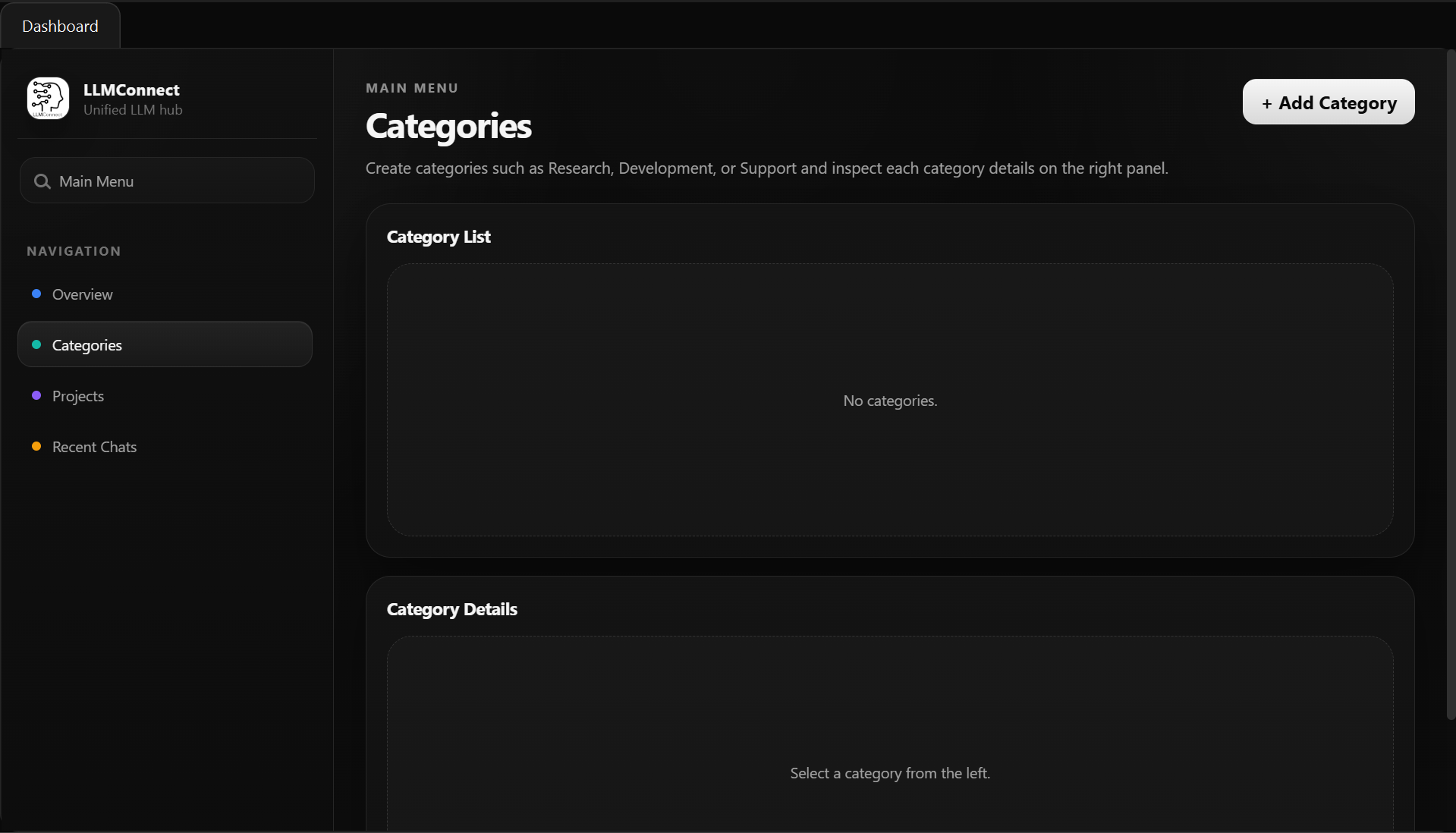
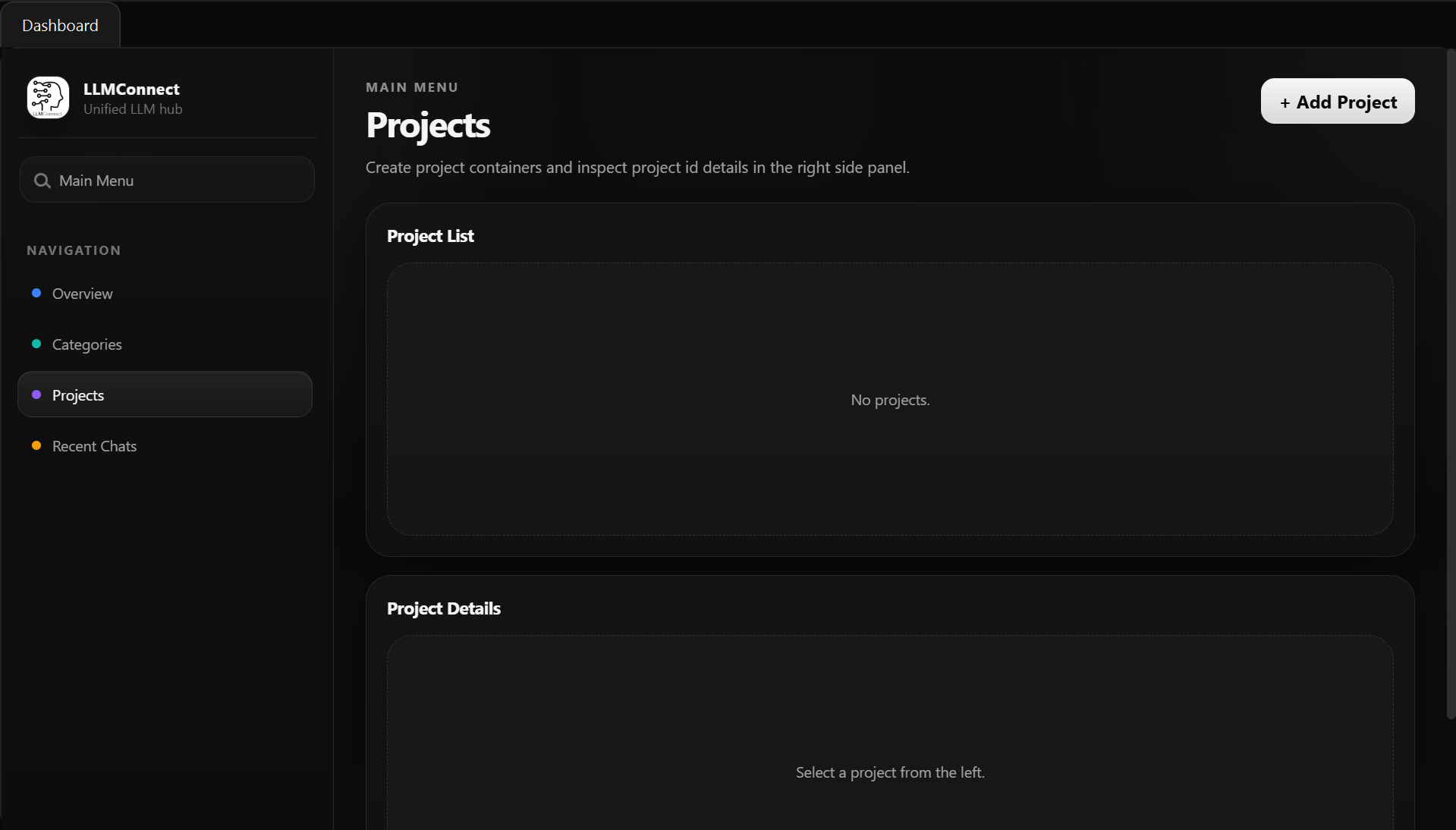
- Enables categorization and project tagging for later review and reuse.
How we built it
We built LLMConnect as a PyQt6 desktop application with a modular engine layer:
- UI: PyQt6 for the main window, dashboard, and browser tab management.
- Browser integration: in-process browser views with injected lightweight scripts for extraction and persona tooling.
- Storage: SQLite for chat history and a small encrypted store for API profiles.
- Modules: modular provider adapters so new LLM providers can be added by implementing provider interfaces in
models/. - Security: local-first architecture and encrypted credential storage to keep sensitive data on-device.
Challenges we ran into
- Keeping browser extraction robust against provider DOM changes.
- Managing isolated sessions while providing a fluid UX for switching contexts.
- Designing a small, usable encrypted profile store that is easy to configure.
- Balancing modularity with simplicity so new providers are easy to add.
Accomplishments we're proud of
- A working local-first desktop dashboard that brings browser chats into one place.
- Reliable structured extraction that makes conversations searchable and reusable.
- Secure, encrypted storage for API profiles and credentials.
- A modular design that lets contributors add provider adapters and custom skills easily.
What we learned
- Browser DOMs are a moving target — defensive extraction and graceful degradation are essential.
- Local-first privacy matters: users appreciate tooling that keeps keys and sessions on-device.
- Modular, well-documented interfaces dramatically lower the bar for community contributions.
What's next for LLMConnect
- Add more provider adapters and make integrations pluggable via a clear plugin API.
- Improve extraction resilience with heuristics and optional user-assisted selectors.
- Add sync options for users who want encrypted cloud backups.
- Build example workflows and templates for common roles (developer, researcher, product manager).

Log in or sign up for Devpost to join the conversation.