Inspiration
Our inspiration came from observing the struggles modern farmers face with pests, diseases, and resource management. Additionally, as I come from an agricultural background, I have witnessed these day-to-day struggles firsthand. We wanted to create a solution that leverages the latest AI and LLM technologies to make agriculture more sustainable, efficient, and eco-friendly.
Our aim was to empower farmers with tools that simplify their work and maximize productivity while protecting the environment.
What It Does
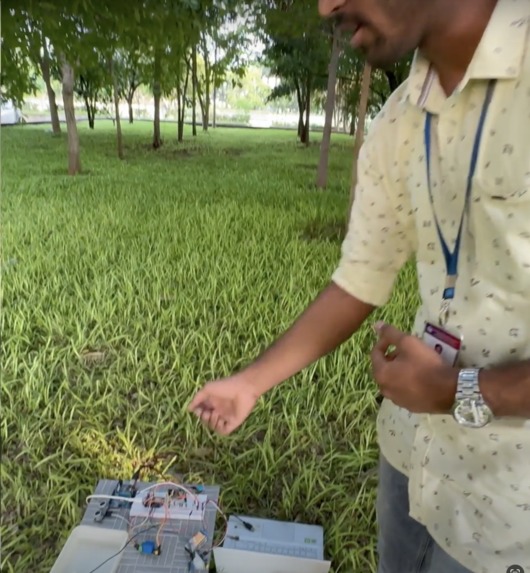
Smart AgriTech is an AI-powered IoT kit that transforms traditional farming. It integrates smart sensors and automated systems to manage pests, diseases, and irrigation in real-time.
Key Features:
- Facilitates bookkeeping tasks for farmers and provides real-time insights to enhance crop yield.
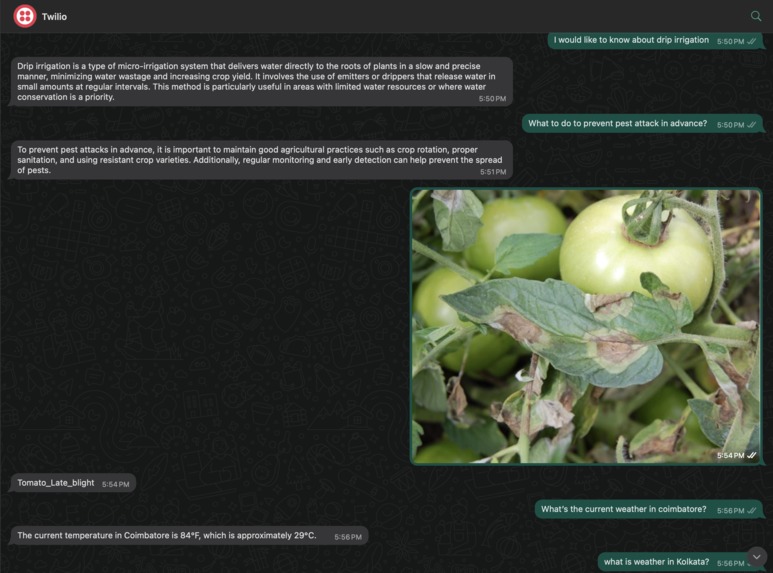
- Combines functionalities into a simple WhatsApp chatbot powered by Falcon LLM 180-B, ensuring ease of use for farmers of all literacy levels.
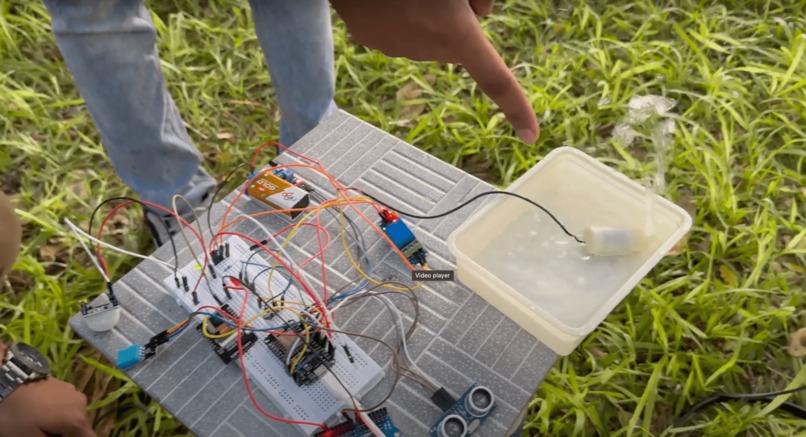
- Uses infrared and ultrasonic sensors to detect pests and deploys eco-friendly methods to repel them.
- Monitors soil and environmental conditions to optimize irrigation and predict pest outbreaks.
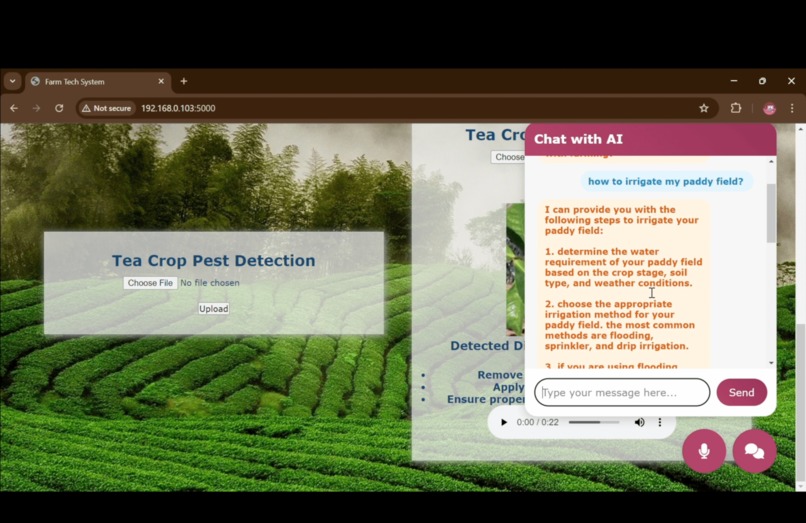
- ML and DL models analyze images taken via mobile phones to detect pests or diseases and provide immediate remedies.
- MongoDB for bookkeeping: Farmers can upload bills or invoices, which are stored in the database for accounting, eliminating the hassle of manual record-keeping.
- RAG (Retrieval Augmented Generation): Allows farmers to upload files (e.g., manuals) to the chatbot, which then converts them into vector embeddings, enabling them to ask questions for better understanding.
How We Built It
Software Components:
- Falcon LLM 180-B
- MongoDB
- RAG (Pinecone DB)
- LangChain
- Twilio
- Flask
- Huggingface Spaces
- TensorFlow
- Scikit-learn
Hardware Components:
- Ultrasonic Sensor
- IR Sensor
- PIR Sensor
- DC Water Motor
- UV Light
- HIW Battery
- NodeMCU
- Arduino UNO
- ESP-32 Camera
Challenges We Ran Into
- Sensor Calibration: Debugging and rectifying data transfer from NodeMCU to the Flask server took considerable time, but we ultimately resolved it after persistent effort.
- LLM Response Limitations: We faced token limit issues when querying the LLM. This was overcome by implementing Unsloth Optimization with 4-bit quantized models.
- Cost Effectiveness: Selecting affordable yet efficient hardware components for integration posed a challenge but was ultimately resolved.
Accomplishments We’re Proud Of
- Successfully reducing the cost of the solution by 65% compared to traditional methods.
- Developing a multilingual chatbot that supports native languages, making the technology accessible to all farmers.
- Creating an eco-friendly pest management system, reducing reliance on harmful chemicals.
- Winning multiple awards at hackathons, demonstrating the innovation and effectiveness of our solution.
- Learning how to approach and solve real-world problems through hands-on hackathon experience.
What We Learned
- The hardworking nature of farmers and the importance of agriculture in our country.
- Technical insights into LLM response processing and optimizing data transfer between NodeMCU and a web Flask app using a local server network.
What’s Next for Smart AgriTech – AI-powered IoT Kit
- Community Engagement: Focus on educating farmers to adopt sustainable practices and use technology effectively.
- Continuous Improvement: Refine models and systems based on real-world feedback to ensure optimal outcomes for farmers.
- Startup Idea: Develop this project into a tangible product and implement it in local farms, moving beyond the hackathon stage.
Built With
- api
- deep
- learning
- llm
- machine-learning
- python

Log in or sign up for Devpost to join the conversation.