-
-
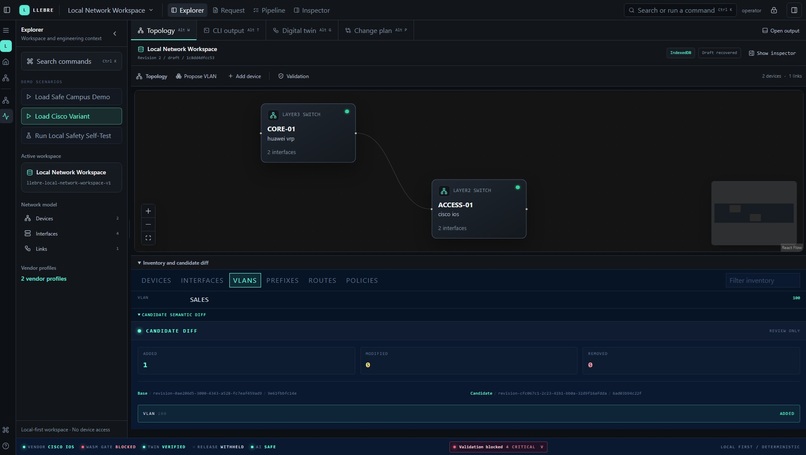
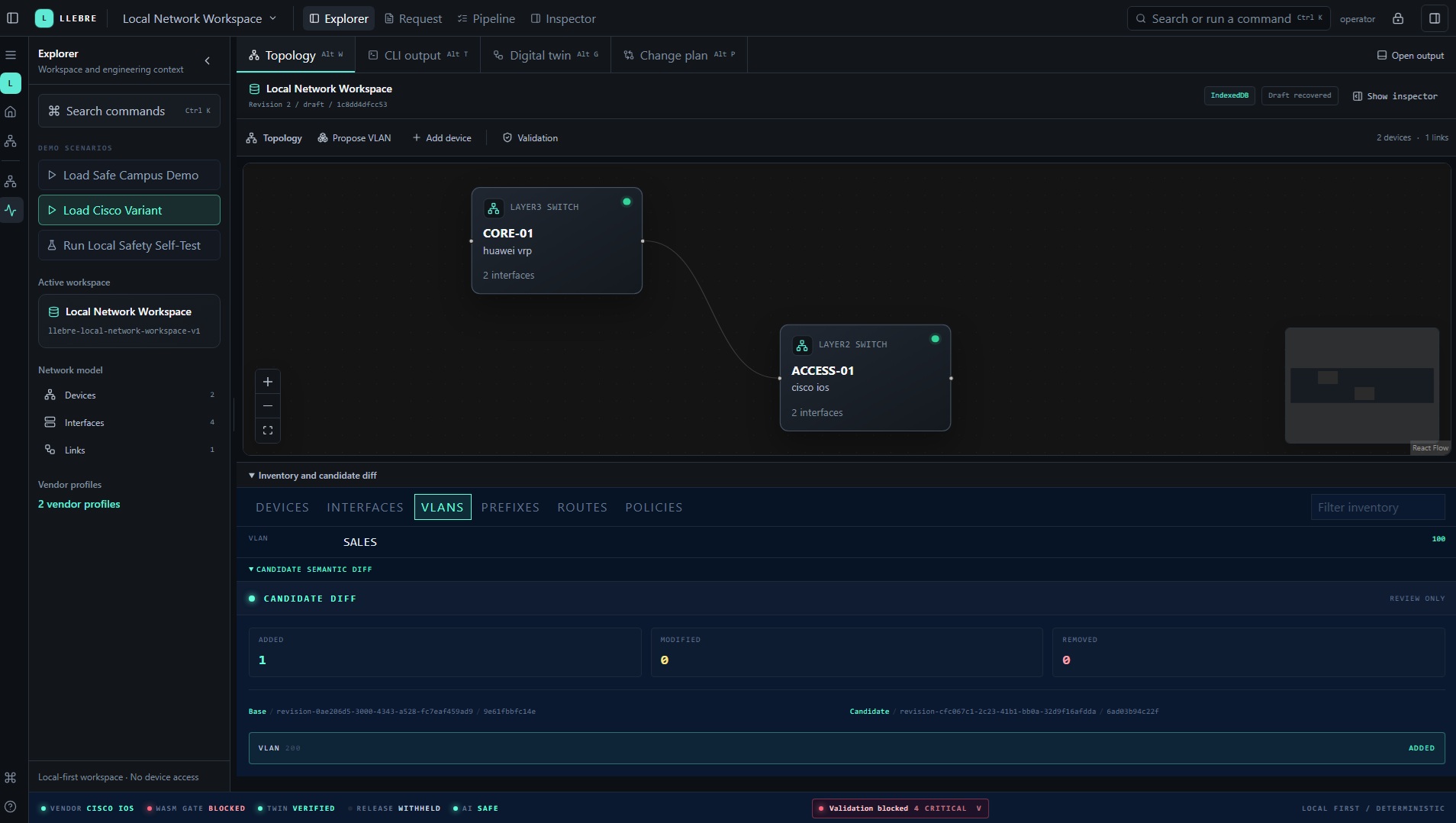
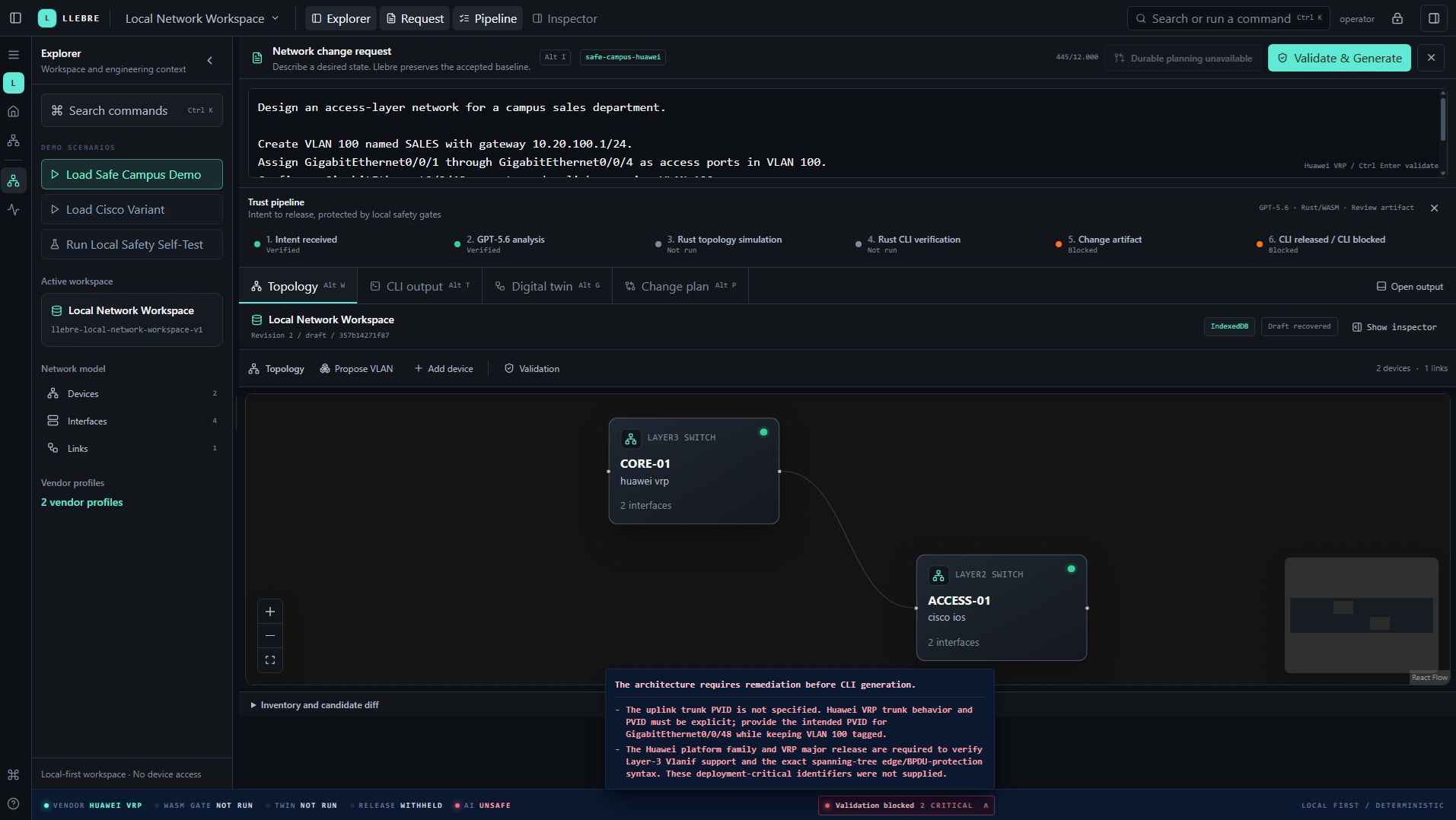
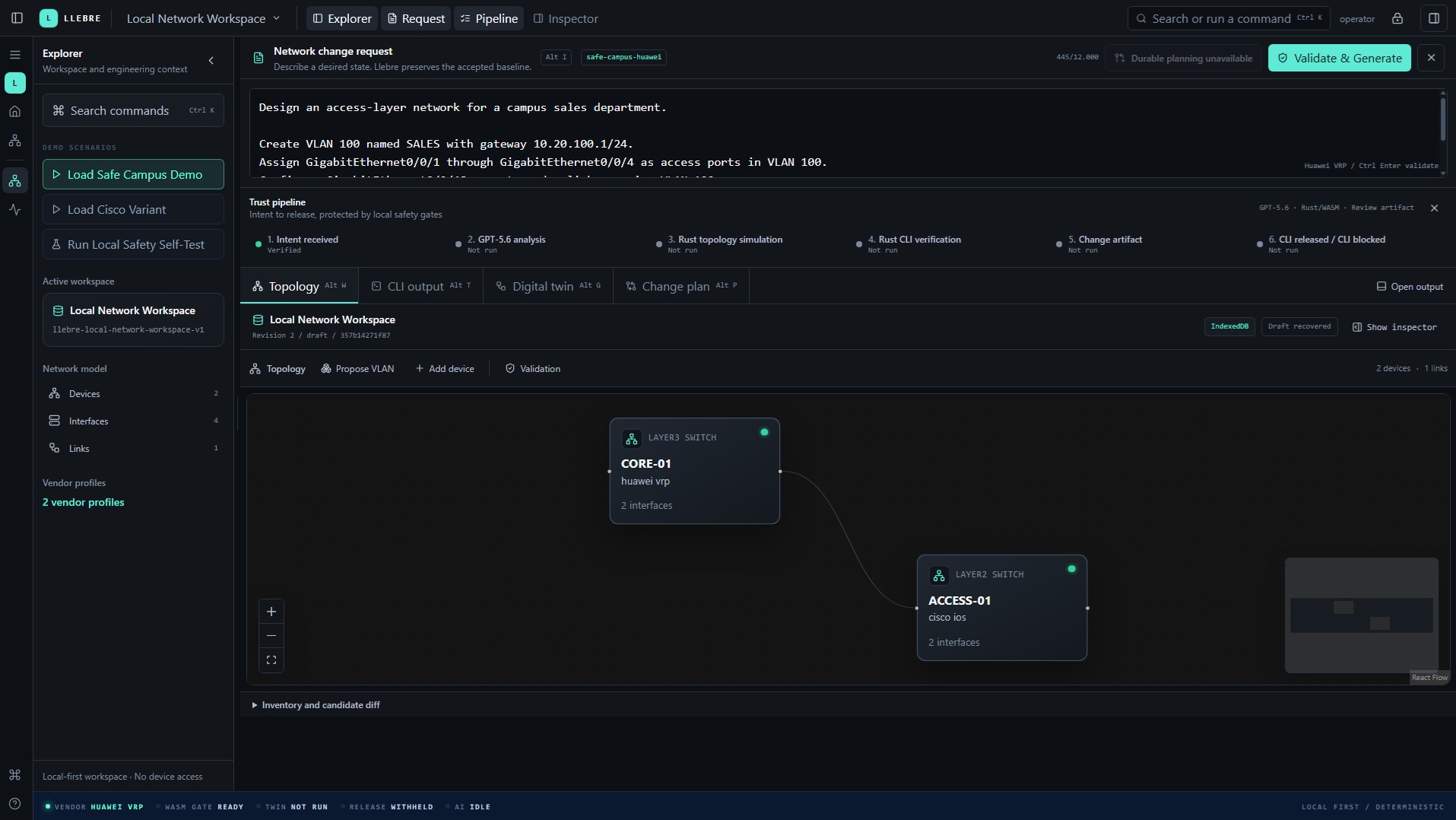
Topology and changes diff
-
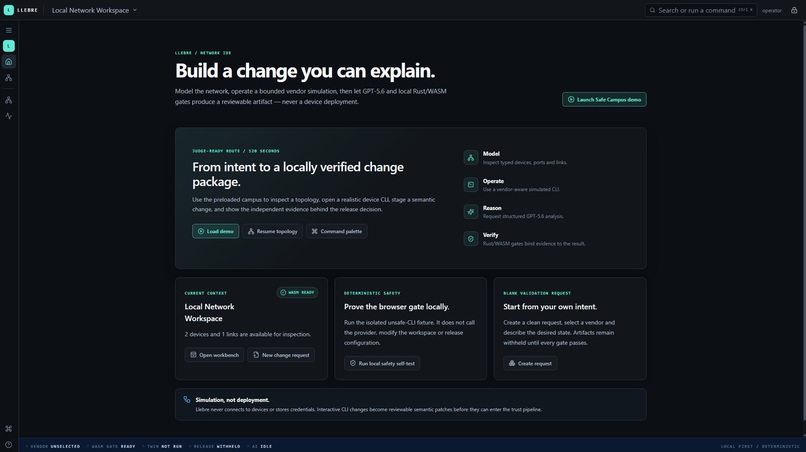
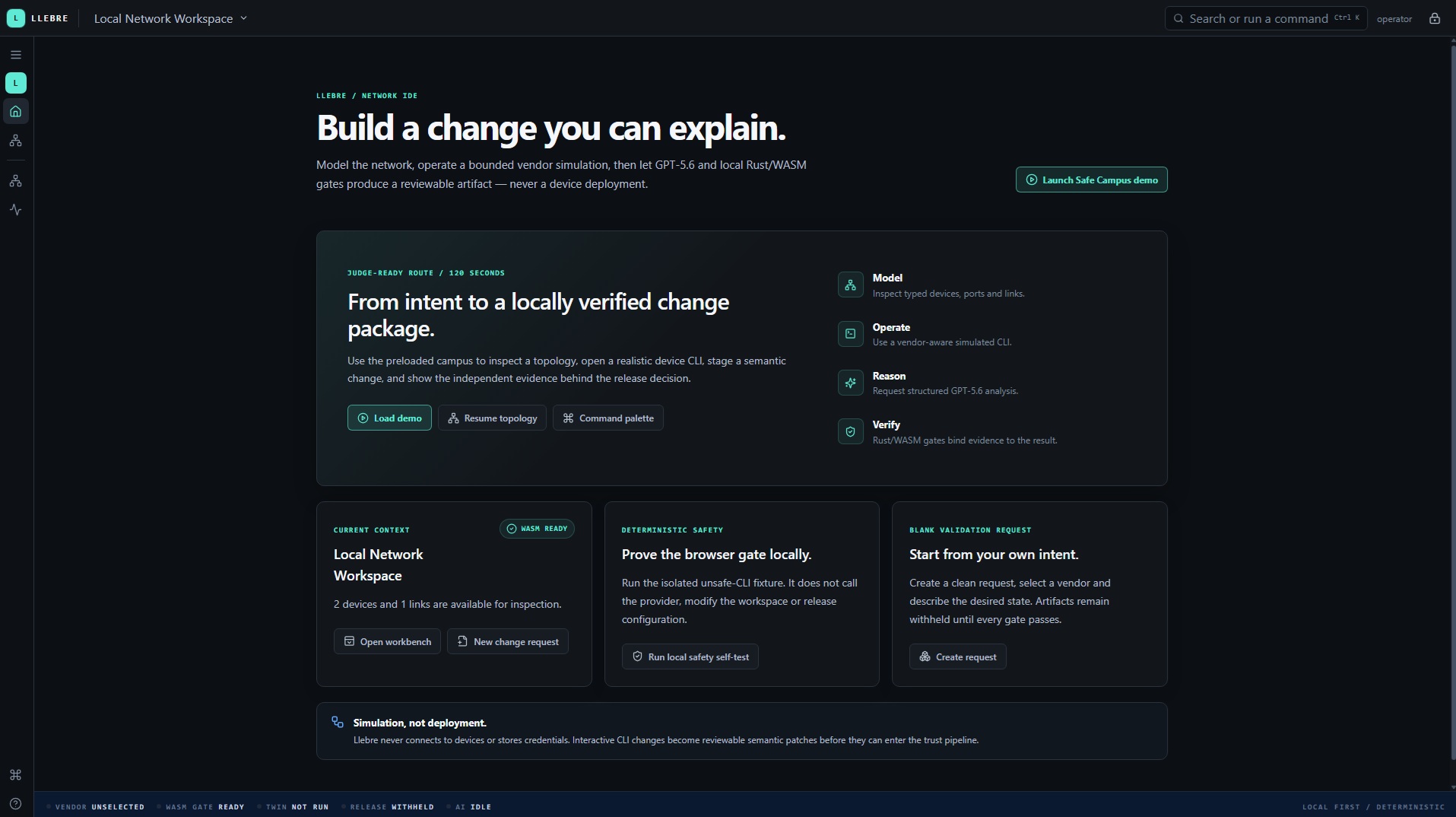
Demo homepage
-
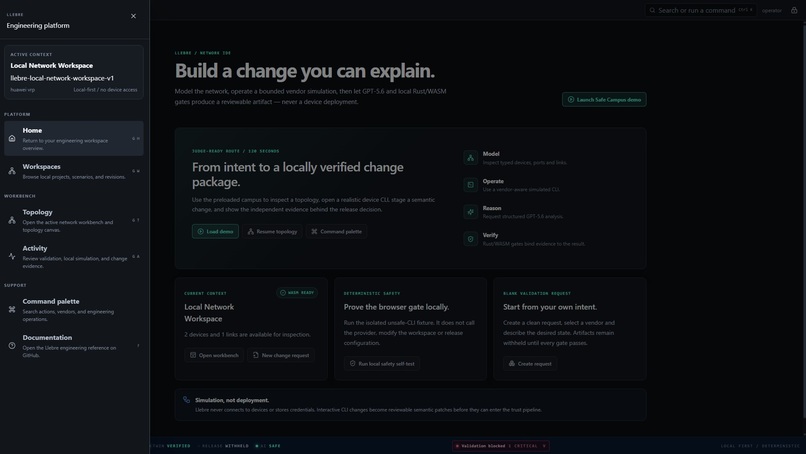
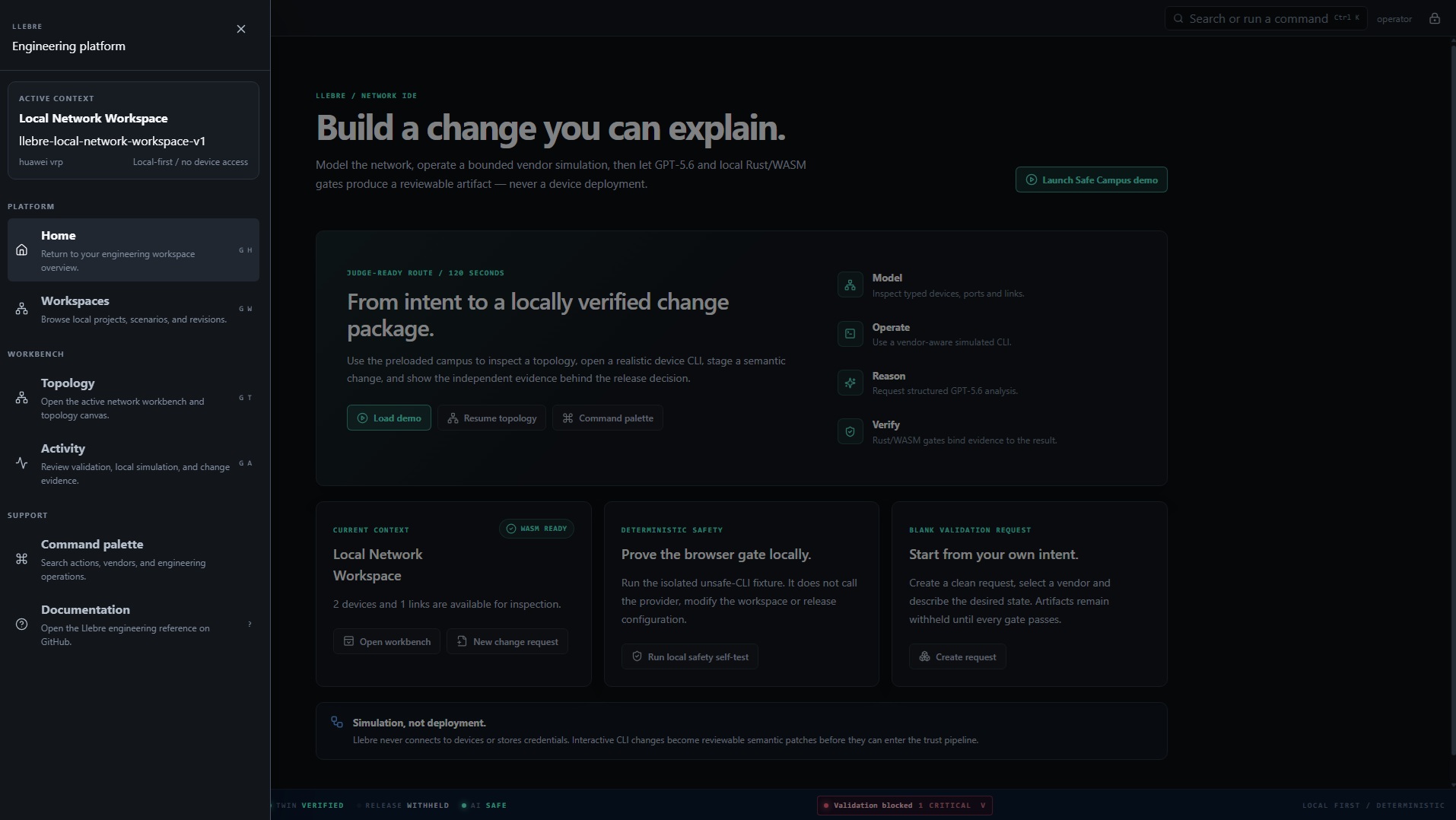
Menu
-
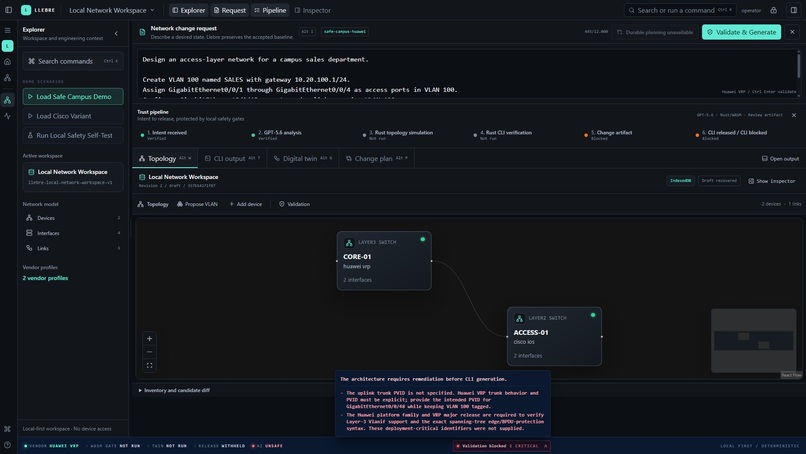
Validation ends
-
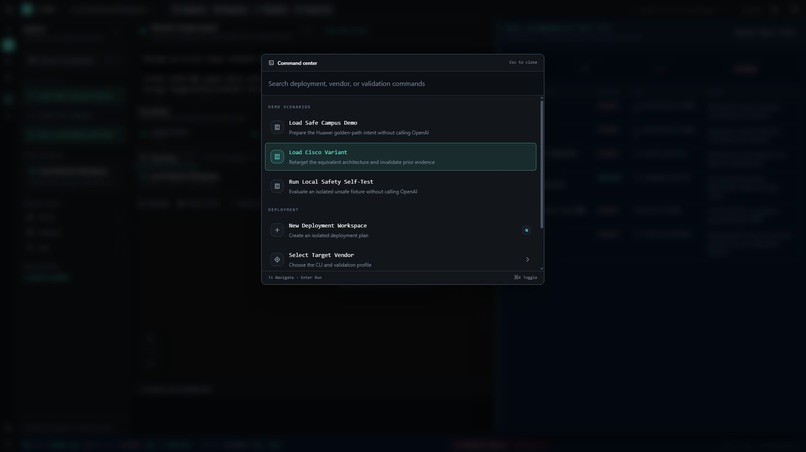
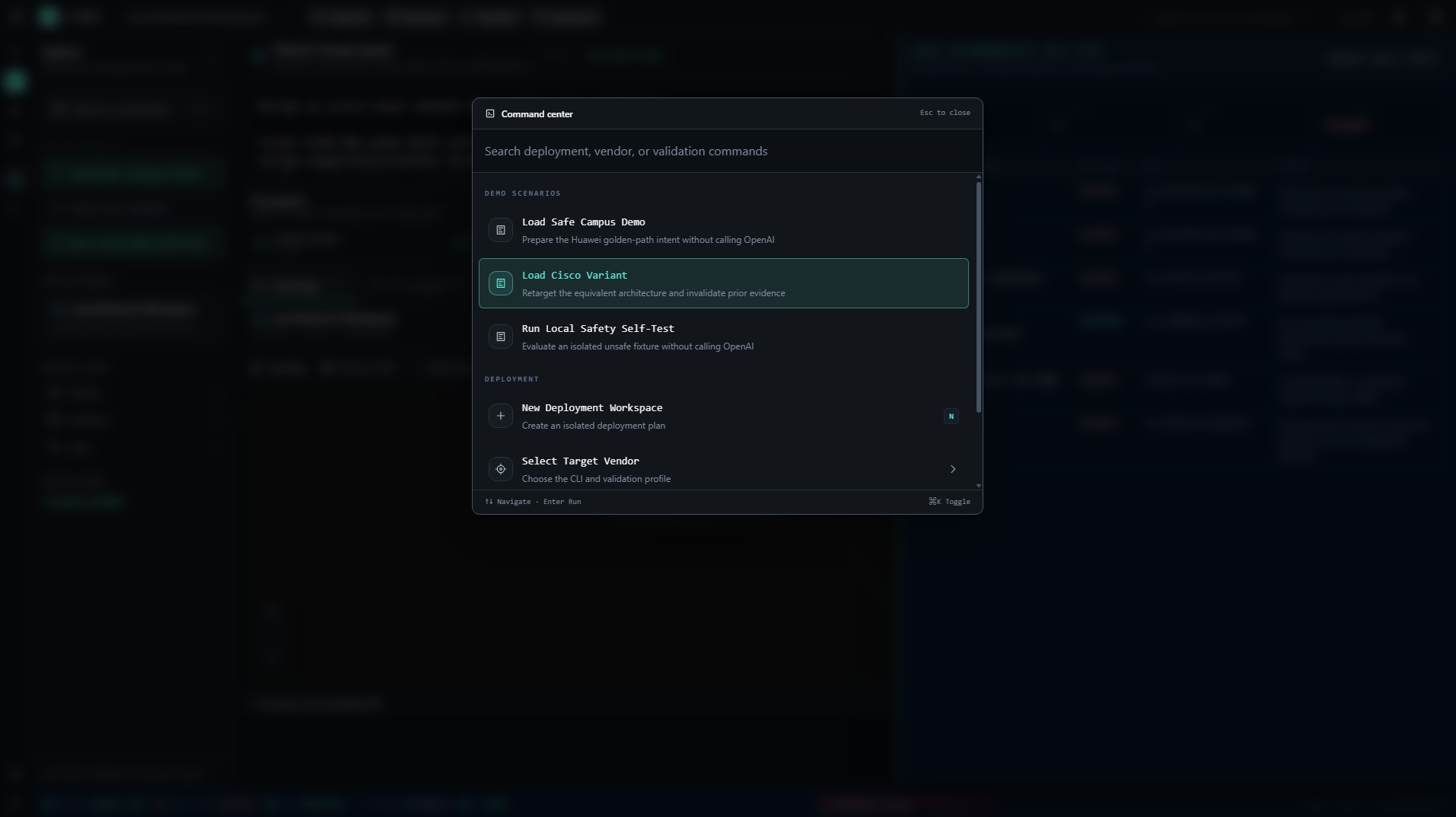
Keyboard shortcuts
-
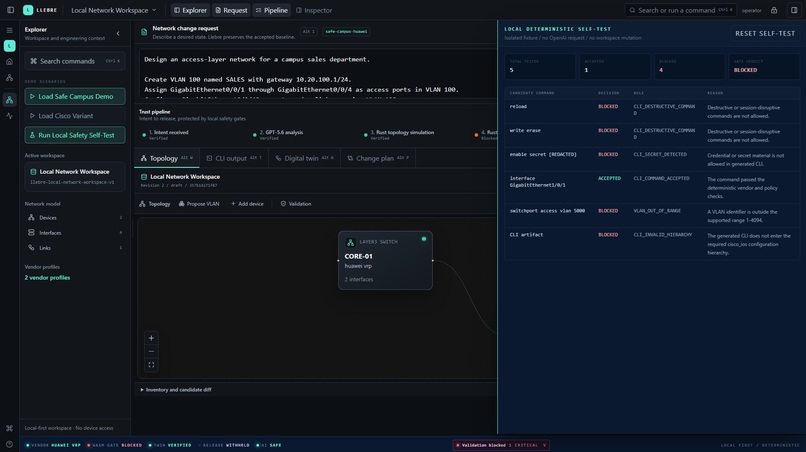
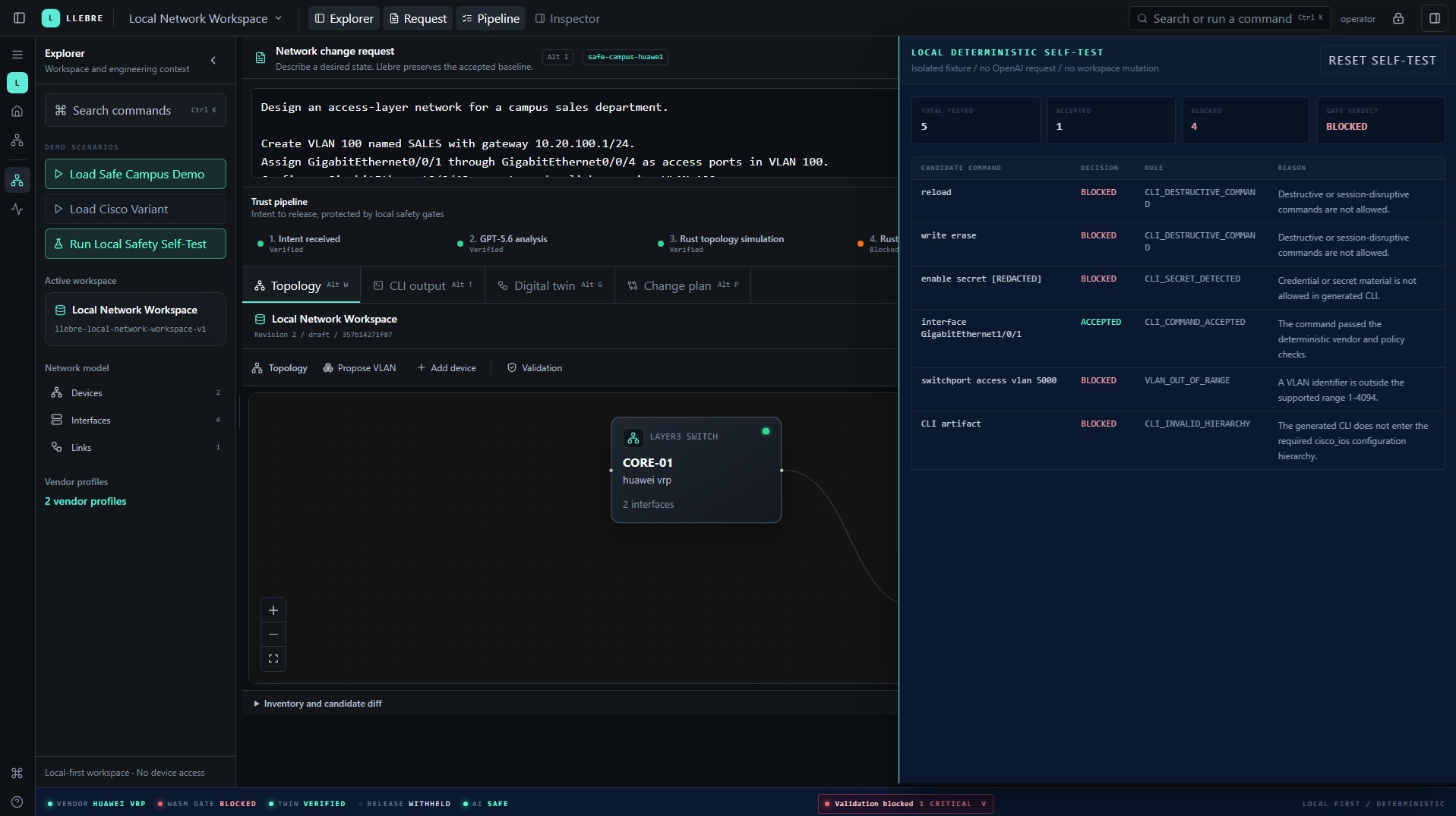
Local deterministic self-test
-
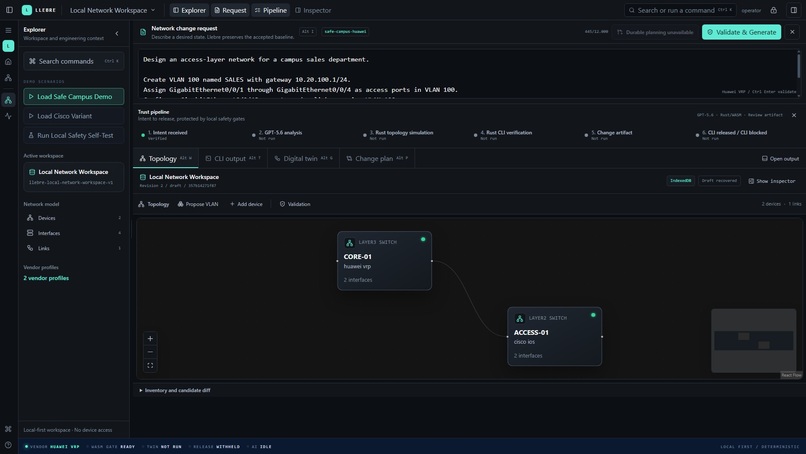
Validation
From learning networks to building Llebre
When I started working with networks years ago, I wished there had been a tool that made it easier to understand what a network design would actually do before touching a real device. Network engineering is unforgiving: a small mistake in a VLAN, trunk, route, ACL, or vendor-specific command can turn into downtime, lost access, or a painful rollback.
That idea led me to create NetSim earlier this year: a hands-on network simulation environment where engineers could build topologies and practice realistic device interaction. While building it, I saw a larger opportunity. Simulation alone is valuable, but engineers also need help turning an architectural intent into a safe, explainable, vendor-aware change.
That is why NetSim evolved into Llebre.
What Llebre does
Llebre is a Network Engineering IDE for designing, validating, simulating, reviewing, and generating network changes safely.
An engineer can describe an intent in plain language, such as:
Create VLAN 100 for Sales, assign access ports, configure an uplink, and preserve spanning-tree safety.
Llebre turns that intent into an engineering workflow:
- GPT-5.6 analyzes the architecture using structured output rather than free-form chat.
- Llebre applies vendor-aware constraints for Cisco IOS, Huawei VRP, D-Link DGS, MikroTik RouterOS, and HPE Aruba OS.
- A local Rust/WASM deterministic safety gate checks generated CLI before it can be released.
- The system exposes the resulting topology, validation report, warnings, evidence, change artifact, and vendor-specific CLI in one workspace.
- If the architecture is unsafe or the CLI fails verification, release is blocked rather than hidden behind a vague AI answer.
The goal is not to create another chatbot that produces commands. Llebre makes the reasoning, safety boundaries, and resulting network artifact visible and reviewable.
Why GPT-5.6 matters
GPT-5.6 is the architectural reasoning engine inside Llebre, not a conversational layer added on top of the product.
It receives the requested intent together with the selected vendor profile and must return a strict structured response containing:
- architectural validity
- critical errors
- warnings
- architecture notes and remediation guidance
- a vendor-specific CLI candidate
The model is instructed to actively identify issues such as routing loops, missing subnet definitions, unsafe assumptions, incompatible syntax, missing redundancy, and vendor-specific configuration constraints. Llebre then combines that reasoning with deterministic local validation in Rust/WASM, so the AI is powerful without becoming the only trust boundary.
What I learned
Building Llebre reinforced that AI tools for infrastructure need more than good prompts. They need explicit state, reliable schemas, transparent evidence, deterministic safeguards, and a user interface that helps engineers understand risk quickly.
The most difficult part was keeping the experience useful without pretending that AI output is automatically safe. That led to Llebre's trust pipeline:
Intent → GPT-5.6 analysis → topology/simulation → CLI verification → change artifact → release or block
Every phase is visible, and blocked states are first-class outcomes.
What is next
Llebre is designed to grow from an AI-assisted configuration generator into a complete network engineering platform: richer digital twins, realistic device consoles, topology editing, change review, simulation, rollback planning, and eventually controlled deployment workflows.
For this hackathon, Llebre demonstrates a practical direction: AI should help network engineers move faster, but it should also make infrastructure changes more explainable, testable, and safe.
Built With
- api-gateway
- aws-lambda
- cargo
- cisco-ios
- eslint
- github-actions
- gpt-5.6
- huawei-vrp
- network-automation
- network-simulation
- openai-api
- react
- responses-api
- rust
- structured-outputs
- tailwind-css
- typescript
- vercel
- vite
- vitest
- wasm-bindgen
- webassembly
- zustand


Log in or sign up for Devpost to join the conversation.