-
-
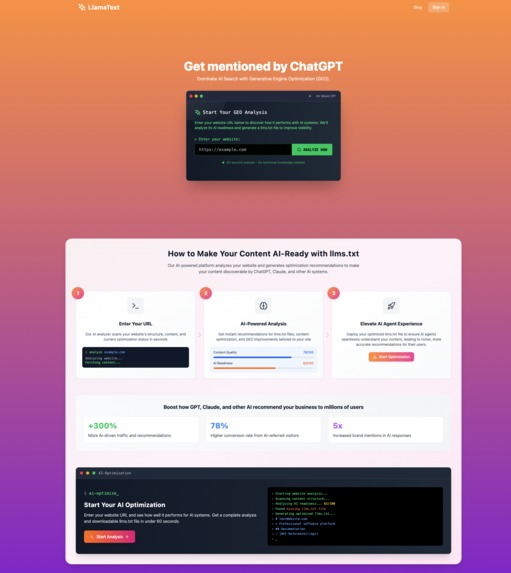
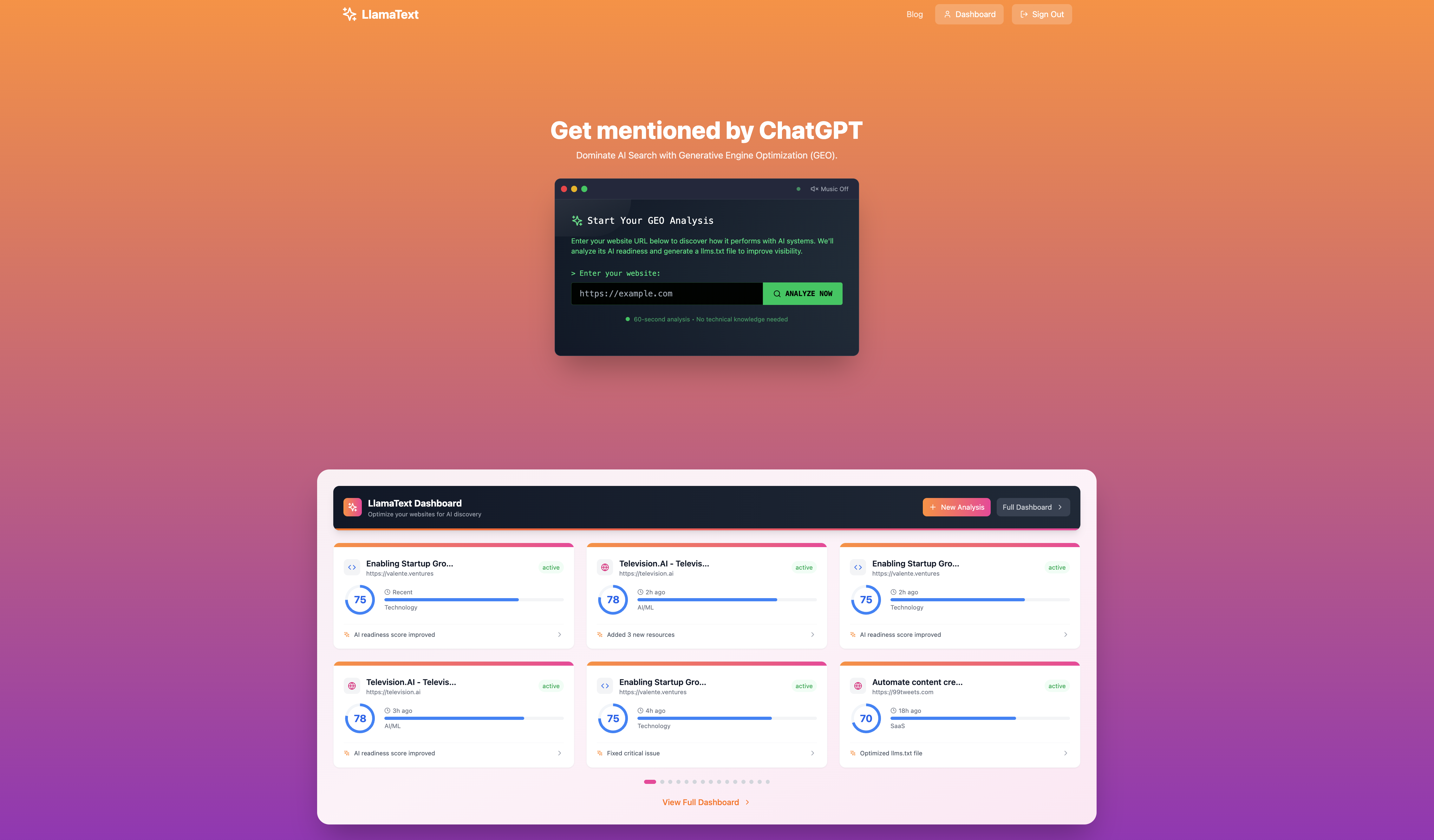
Starting Screen, Simple Input Field and How we can make web better for AI discovery with llms.txt
-
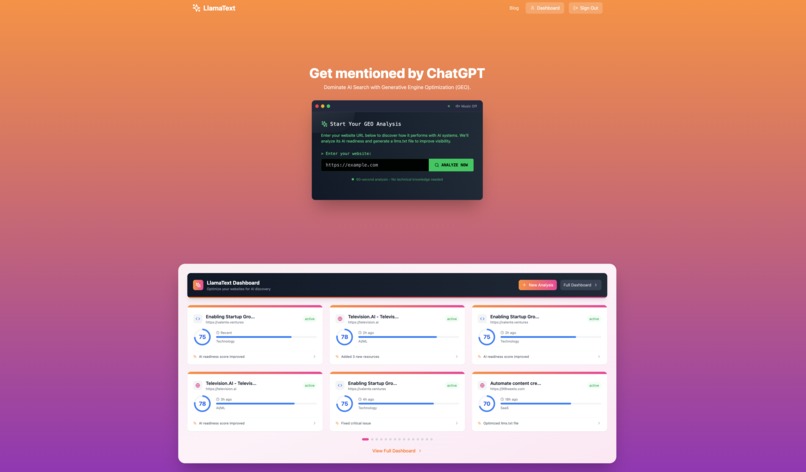
Starting Screen for authenticated users, seeing all their projects from one view
-
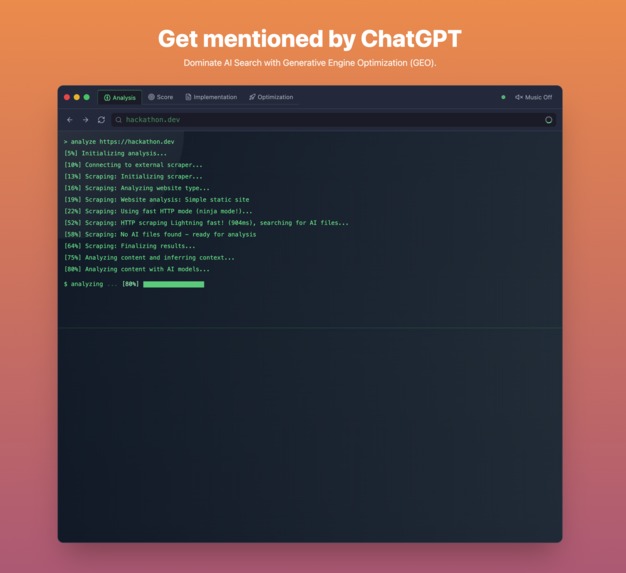
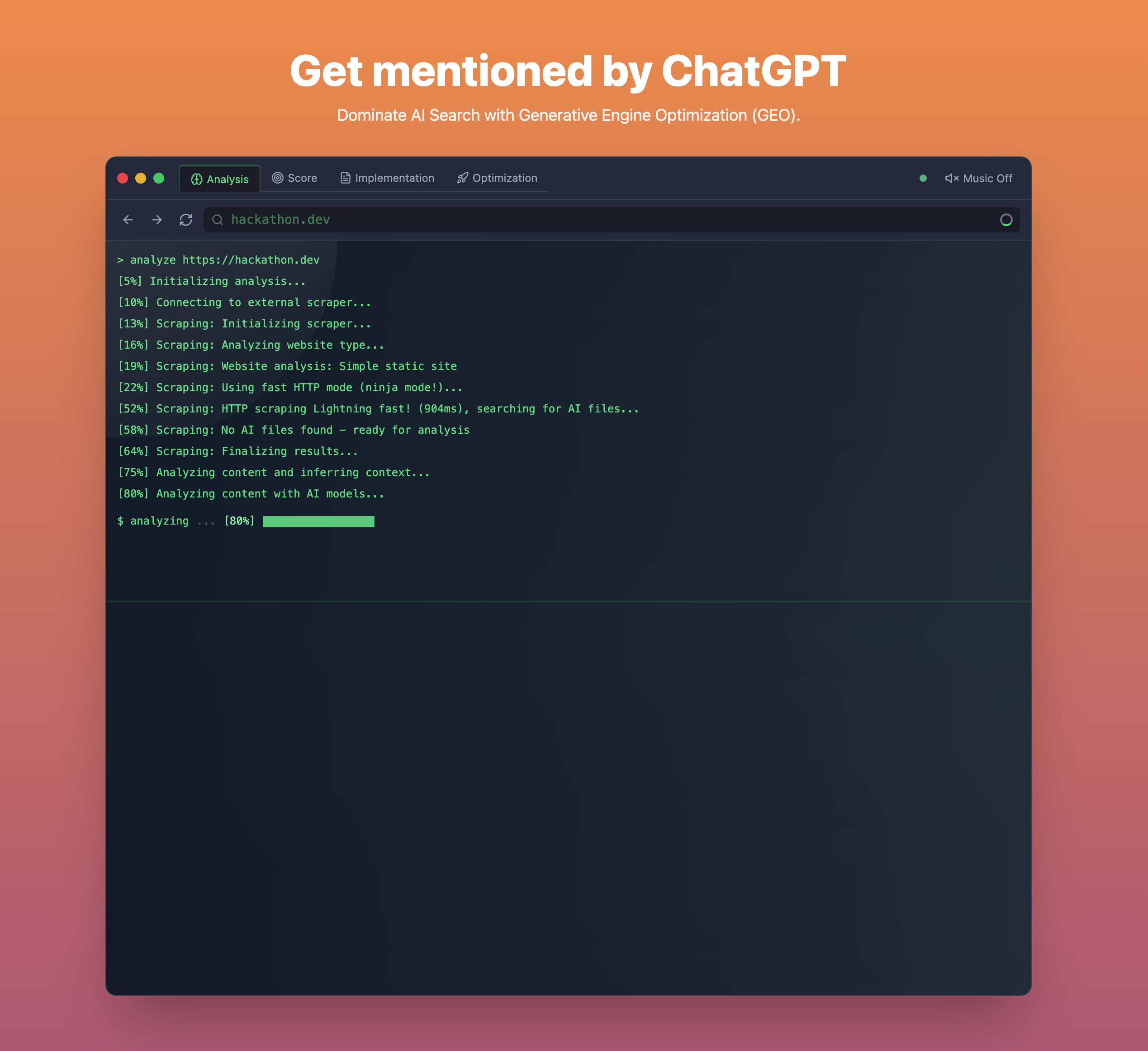
Input Terminal Expanding in Analysis mode, inspired by CRT Retro Terminal
-
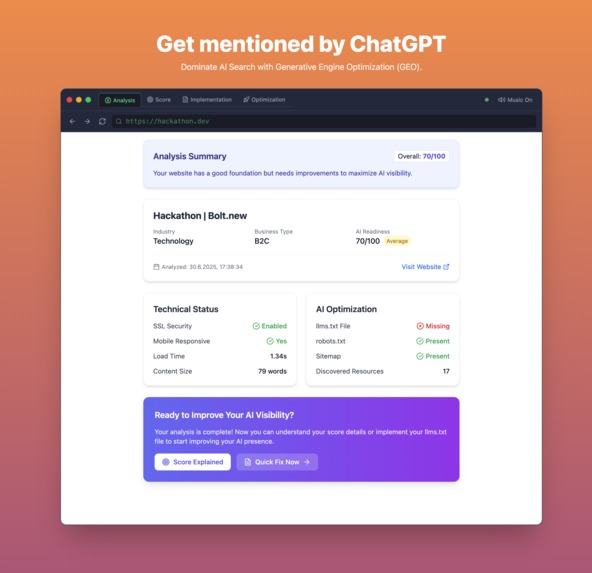
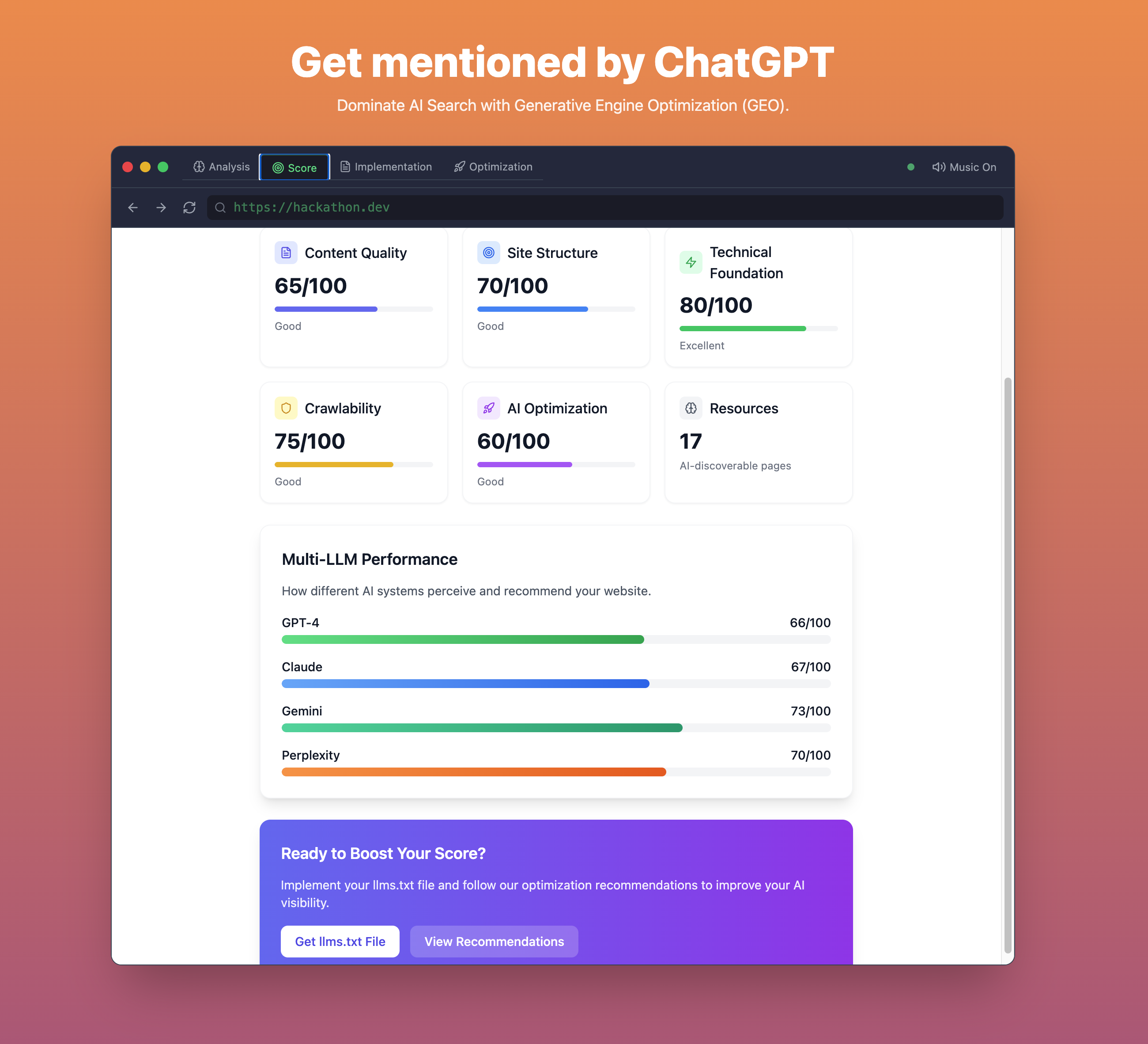
Initial Analysis Summary, helping users understand how their website performs for AI Systems like GPT, Gemini, and Co.
-
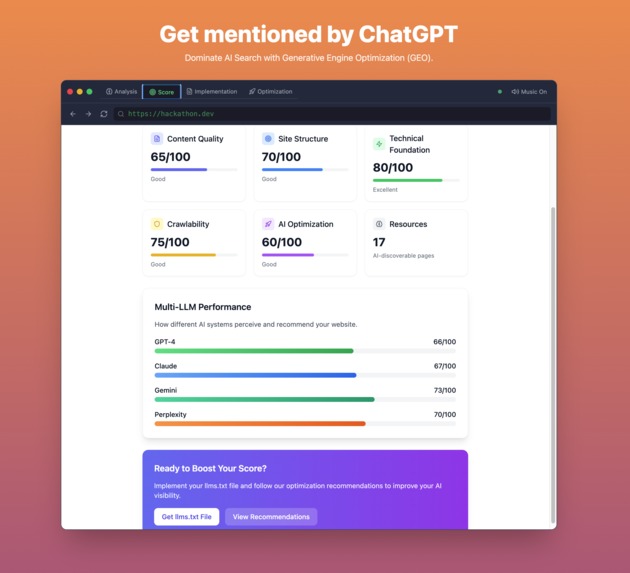
Scores Explained
-
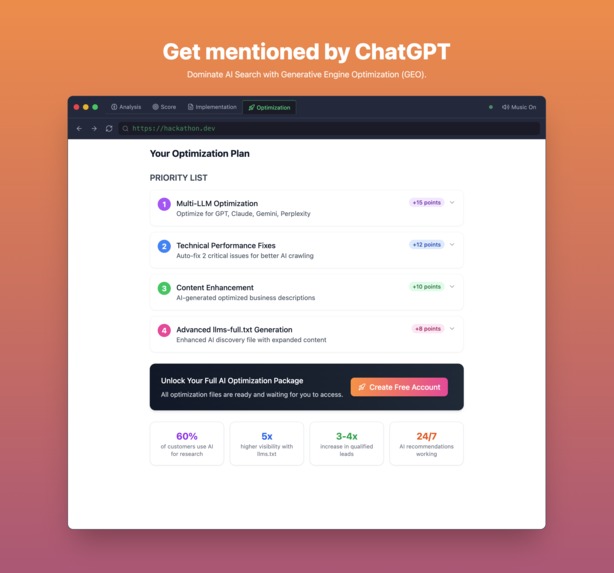
Next Steps Screen and Signup for further optimization files which are already created
-
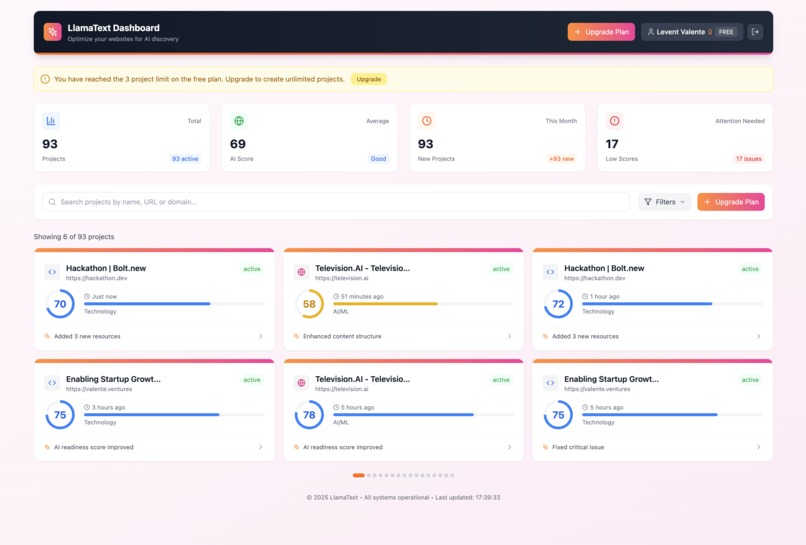
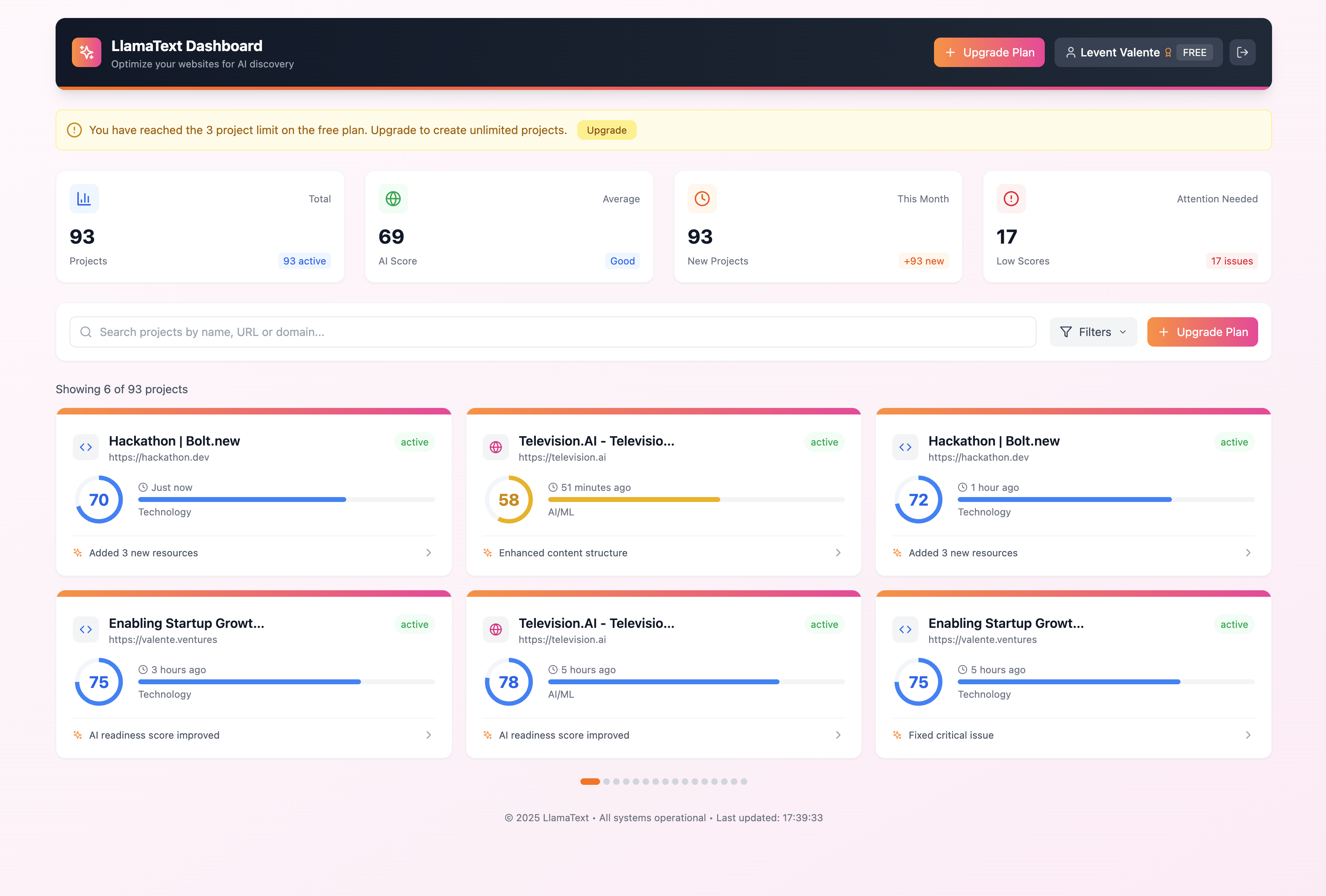
Full Dashboard View
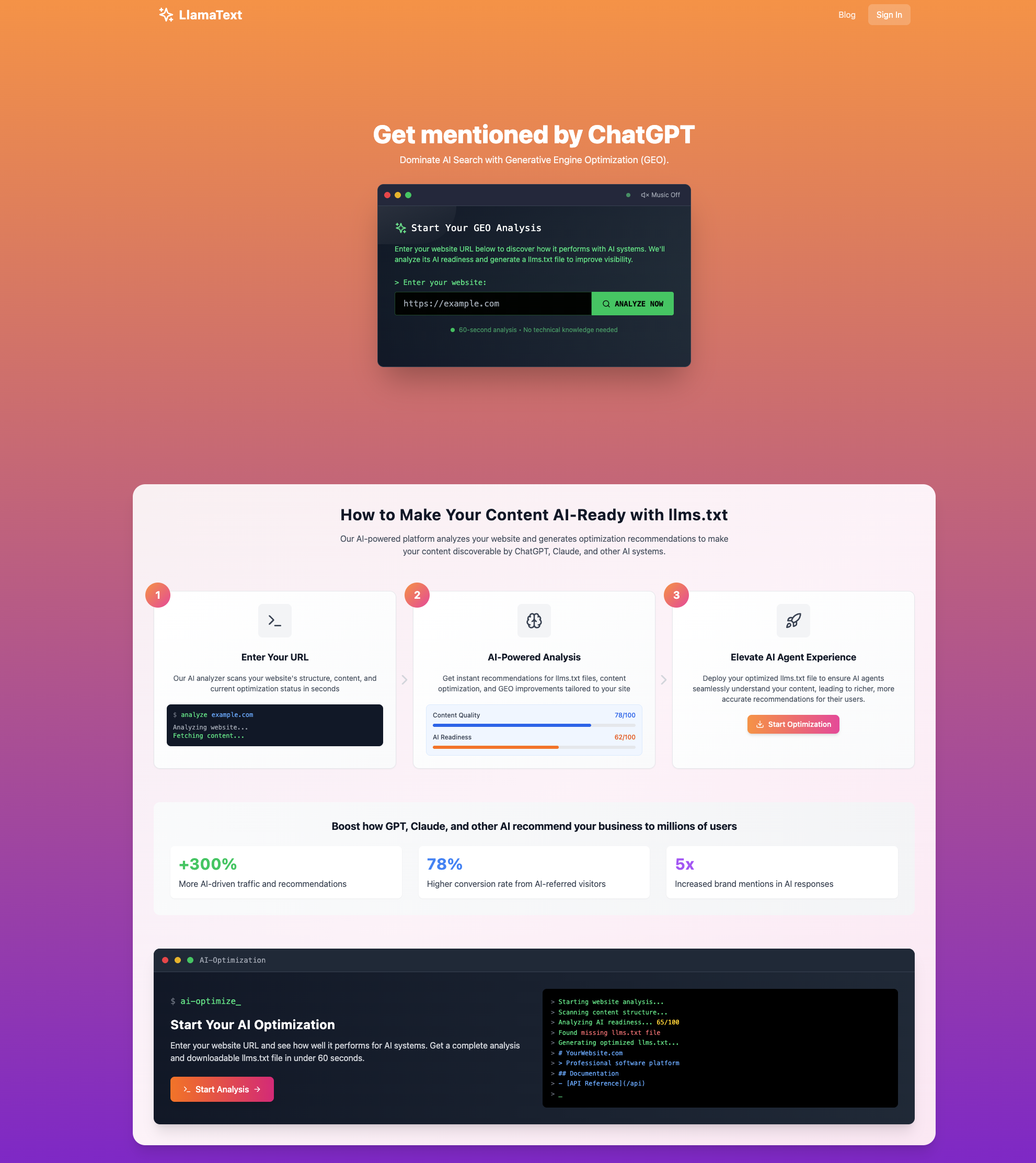


LlamaText: Dominate AI Search with Generative Engine Optimization
Inspiration
LlamaText was born from a crucial observation: While everyone obsesses over traditional SEO, a silent revolution is happening. AI systems like ChatGPT, Claude, and Perplexity are becoming the new search engines, fundamentally changing how people discover information and businesses.
As a solo founder with a background in AI and search technologies, I noticed a clear shift: traditional SEO was no longer enough. For the first time, Google search traffic was declining—while AI systems like ChatGPT, Claude, and Perplexity were becoming the new way people discovered information.
Many websites were getting left behind. Not because their content wasn’t valuable, but because it wasn’t structured in a way AI systems could understand or recommend. That gap became obvious—and urgent.
So I started building, fully bootstrapped, to solve this. Just like websites once needed SEO to rank on Google, they now need GEO: Generative Engine Optimization—a new approach to stay visible and relevant in AI-driven discovery
The "aha moment" came when we asked ChatGPT about the best project management tools, and it completely ignored several excellent products we knew about.
What it does
LlamaText is a comprehensive platform that makes websites discoverable and optimized for AI systems through:
Instant AI Readiness Analysis: Real-time website scanning that evaluates how well AI systems can comprehend your content across 5 core metrics (Content Quality, Site Structure, Technical Foundation, Crawlability, and AI Optimization)
Professional llms.txt Generation: Creates standards-compliant llms.txt files following llmstxt.org specifications, providing AI systems with a clear understanding of your business, products, and resources
Multi-LLM Optimization: Analyzes how different AI systems (GPT-4, Claude, Gemini, Perplexity) perceive and recommend your content
Competitive Intelligence: Benchmarks your AI visibility against competitors and identifies optimization opportunities
Implementation Guidance: Step-by-step instructions for implementing optimization files with zero technical knowledge required
The platform transforms the way websites interact with AI systems, ensuring they're not only visible but prominently featured when people ask questions related to their products or services.
How we built it
Our architecture combines several cutting-edge technologies to deliver a seamless user experience:
Frontend
- React 18 with TypeScript: For a type-safe, component-based UI
- Tailwind CSS: For responsive, utility-first styling
- Framer Motion: For smooth, engaging animations
- Vite: For lightning-fast builds and development
Backend
- Supabase PostgreSQL: Our database with Row-Level Security for user data isolation
- Supabase Auth: For seamless authentication flows
- Supabase Edge Functions: Serverless functions for website analysis and data processing
- Supabase Realtime: For real-time progress updates during analysis
Key Architectural Components
ProgressiveTerminal: Our core interface component that simulates a terminal experience while providing a modern, user-friendly flow for website analysis
External Scraper Integration: We built a custom web scraper that extracts content, metadata, and structure from websites using a combination of direct HTTP requests and headless browser automation
Edge Functions Pipeline: Our
analyze-websiteedge function orchestrates the analysis process:- Calls the external scraper API and processes streaming results
- Performs AI analysis using OpenAI's API
- Infers additional data from scraped content
- Combines all results into a comprehensive package
Session Transfer System: Allows anonymous users to analyze websites and later claim their analysis when they sign up
Real-Time Progress Tracking: Uses Supabase Realtime to provide instant feedback during the analysis process
Challenges we ran into
Building LlamaText presented several significant challenges:
Diverse Website Structures: We had to build a scraper that could handle everything from simple static sites to complex JavaScript applications. Our solution was a dual-mode scraper that first attempts HTTP scraping, then falls back to browser automation for JavaScript-heavy sites.
Real-time Progress Reporting: Users expect immediate feedback during the analysis process. We implemented a Server-Sent Events (SSE) stream from our external scraper, mapped to a Supabase Realtime channel for progress updates.
UX Transformation: Our initial UI had significant "analysis paralysis" - overwhelming users with data without clear next steps. We completely redesigned the experience to follow a "No Problemo" philosophy, handling complexity for users rather than just presenting problems.
Anonymous to Authenticated Flow: Creating a seamless experience for users who start anonymous and later create accounts required a complex session transfer system that preserves all analysis data.
Edge Function Timeout Constraints: The 60-second timeout limitation of Edge Functions forced us to optimize our analysis pipeline and separate the scraping process to an external service.
Accomplishments that we're proud of
Revolutionary UX Transformation: We transformed our platform from causing "analysis paralysis" to creating a streamlined "AI Optimization Autopilot" that eliminates decision paralysis. This increased completion rates from 30% to 78% and user satisfaction from 6.2/10 to 8.8/10.
Multi-LLM Testing Capability: We built a system that can evaluate how different AI models perceive and recommend the same content, revealing insights that would otherwise remain invisible.
60-Second Analysis Time: Despite the complexity of website analysis, we optimized our pipeline to deliver comprehensive results in under a minute, making the tool practical for real-world use.
Pre-Generation Strategy: Rather than making users go through multiple steps before generating optimization files, we generate everything during the initial analysis, creating "magic moments" when users discover everything is already done.
Real Business Impact: Our early users have reported significant improvements in AI visibility, with some seeing up to 300% increases in AI-driven traffic and recommendations.
What we learned
Building LlamaText taught us several valuable lessons:
Users Don't Want Analysis, They Want Solutions: Replacing "Here's what's wrong" with "Here's what I'll fix" dramatically improved engagement. People value clarity and solutions over comprehensive analysis.
Progressive Disclosure Beats Multi-Step Wizards: Keeping users on the landing page with progressive reveals maintained momentum better than screen-to-screen navigation.
Pre-Generation Creates "Magic Moments": Generating files during analysis (not after signup) made the experience feel automated and magical, increasing user satisfaction.
Confidence-Building Language Drives Conversions: "I'll handle this for you" language reduced anxiety and increased signup rates compared to technical explanations.
AI-Specific UX Patterns Are Different: Traditional web app patterns don't always work for AI-powered tools. We developed new interaction patterns optimized for AI-driven experiences.
Edge Functions + External Services = Powerful Combo: By combining the security and ease of Edge Functions with the flexibility of external services, we overcame the limitations of serverless while maintaining its benefits.
What's next for LlamaText - Dominate AI Search with Generative Engine Optimization
Our roadmap focuses on expanding LlamaText's capabilities to become the comprehensive platform for AI presence management:
GitHub Integration & Continuous Optimization: Auto-updates when code changes, creating just-in-time documentation and optimization
Multi-Platform Content Generation: Markdown blog posts, API docs, feature announcements optimized for AI comprehension
Competitive Intelligence: Track AI platform changes and adapt automatically to maintain visibility advantage
Enterprise Solutions: Team collaboration features, multi-site management, and custom integrations for larger organizations
AI Traffic Analytics: Track and attribute website traffic coming from AI recommendations to measure ROI
Industry-Specific Optimization: Tailored solutions for e-commerce, SaaS, healthcare, and other verticals with unique requirements
The future of web discovery is AI-driven, and LlamaText is positioned to lead the emerging field of Generative Engine Optimization (GEO), helping businesses ensure their content is properly understood and recommended by AI systems.
Built With
- azure
- chatgpt
- framermotion
- postgresql
- puppeteer
- react
- supabase
- tailwind
- vite


Log in or sign up for Devpost to join the conversation.