-
-
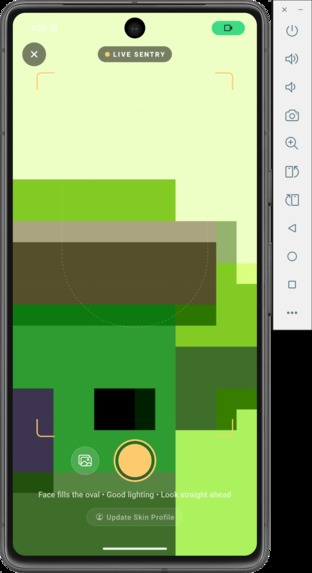
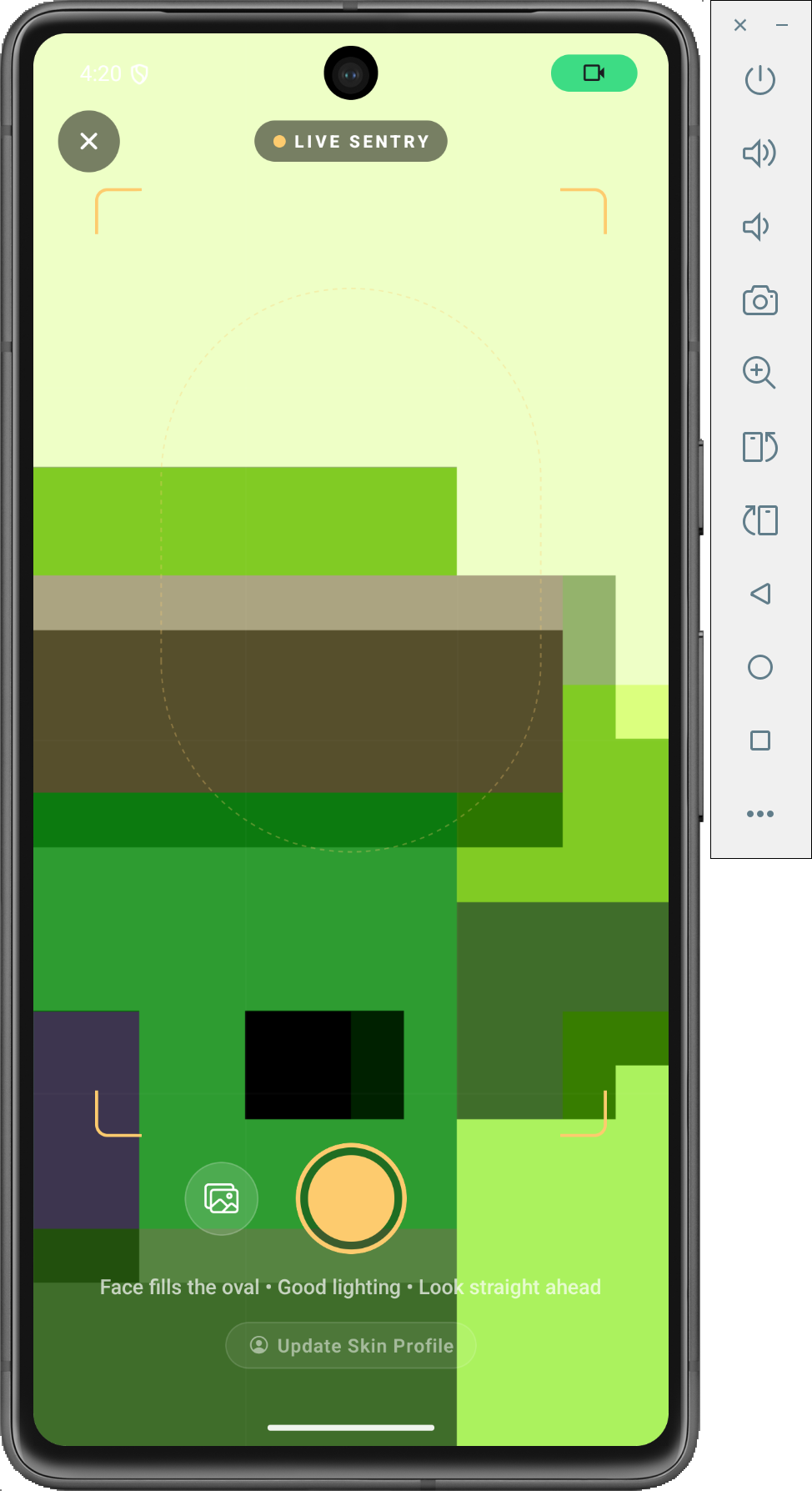
Live Sentry Mode — Real-time AR Face Mesh & Analysis
-
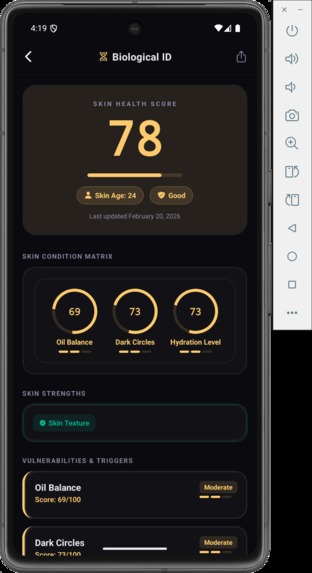
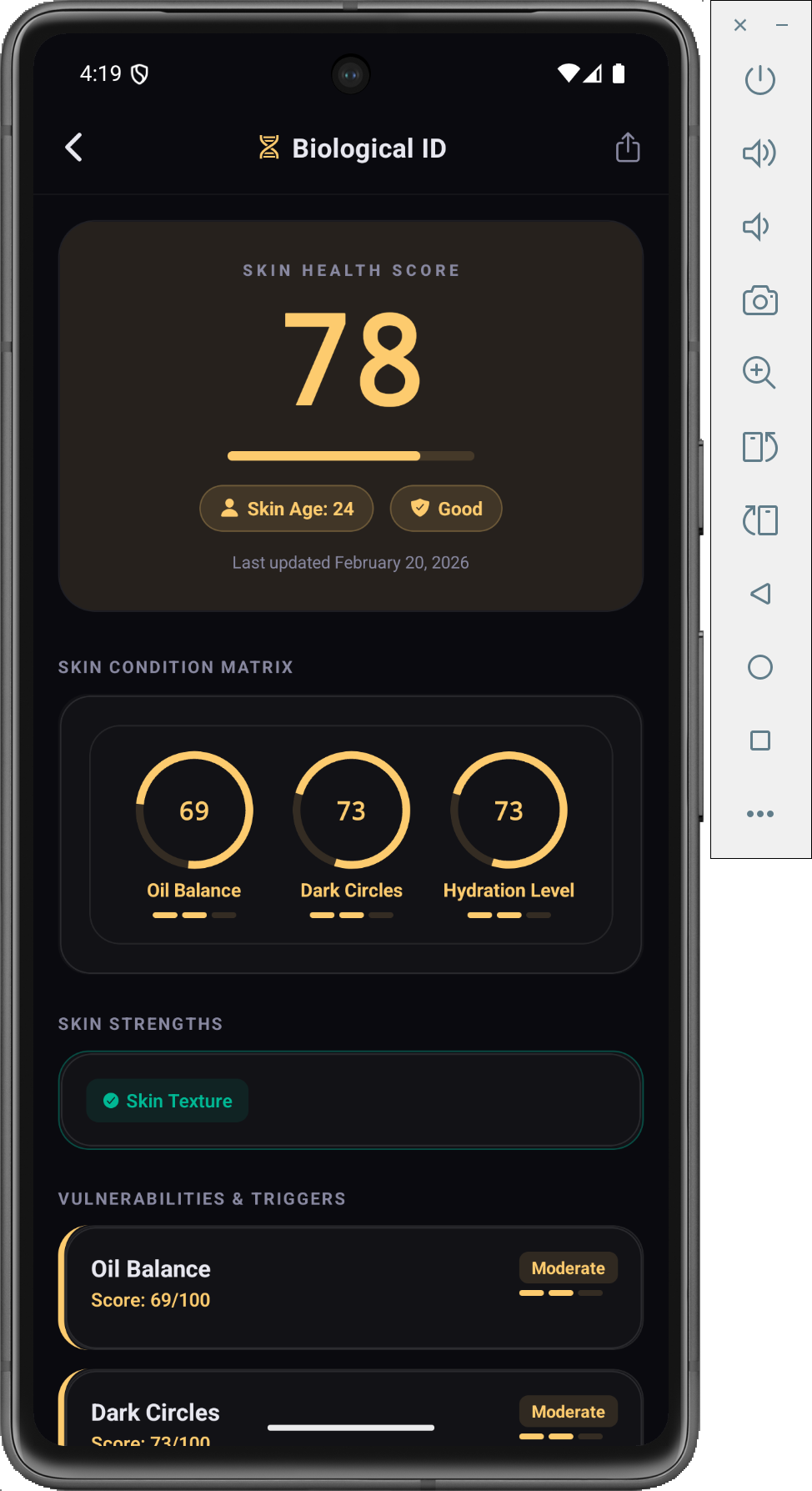
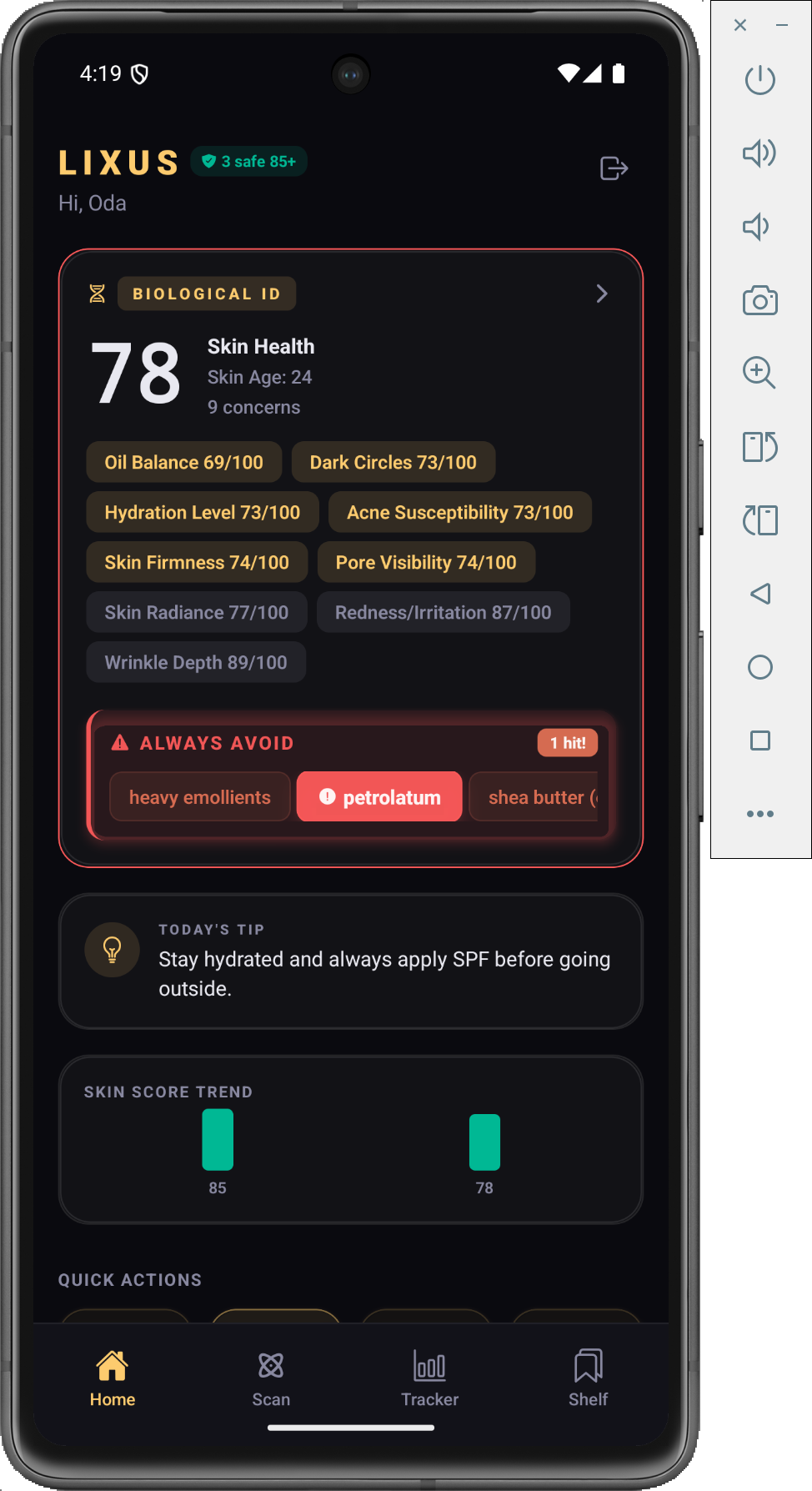
Biological ID — Full 14-Concern Clinical Matrix
-
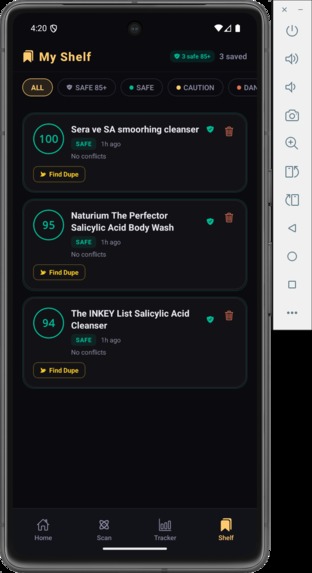
-
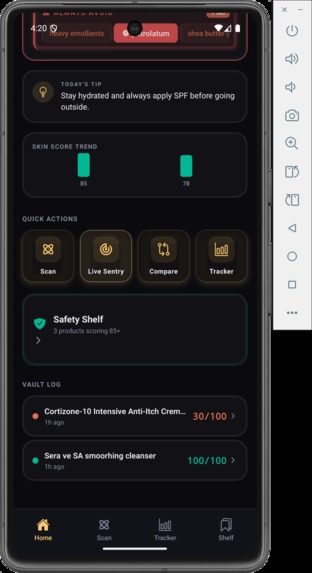
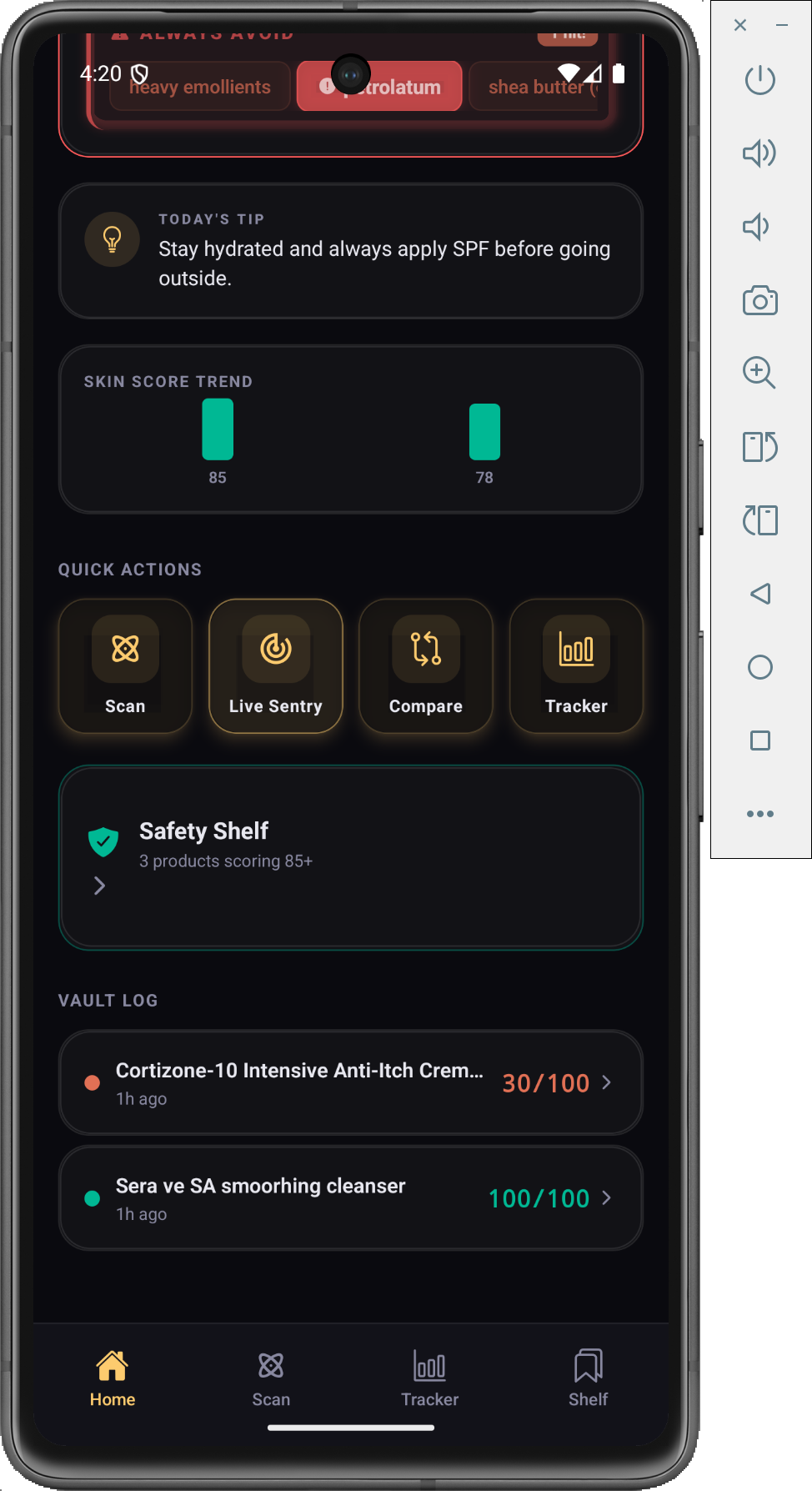
Orbital Navigation — 2026 Bento-Grid Quick Actions
-
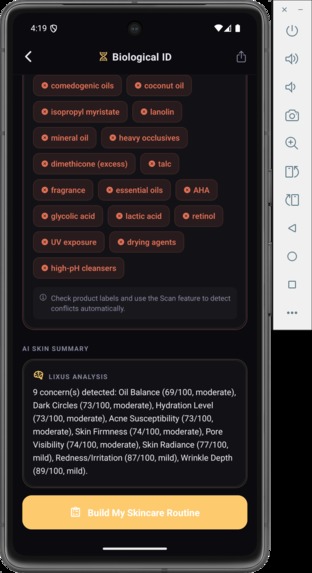
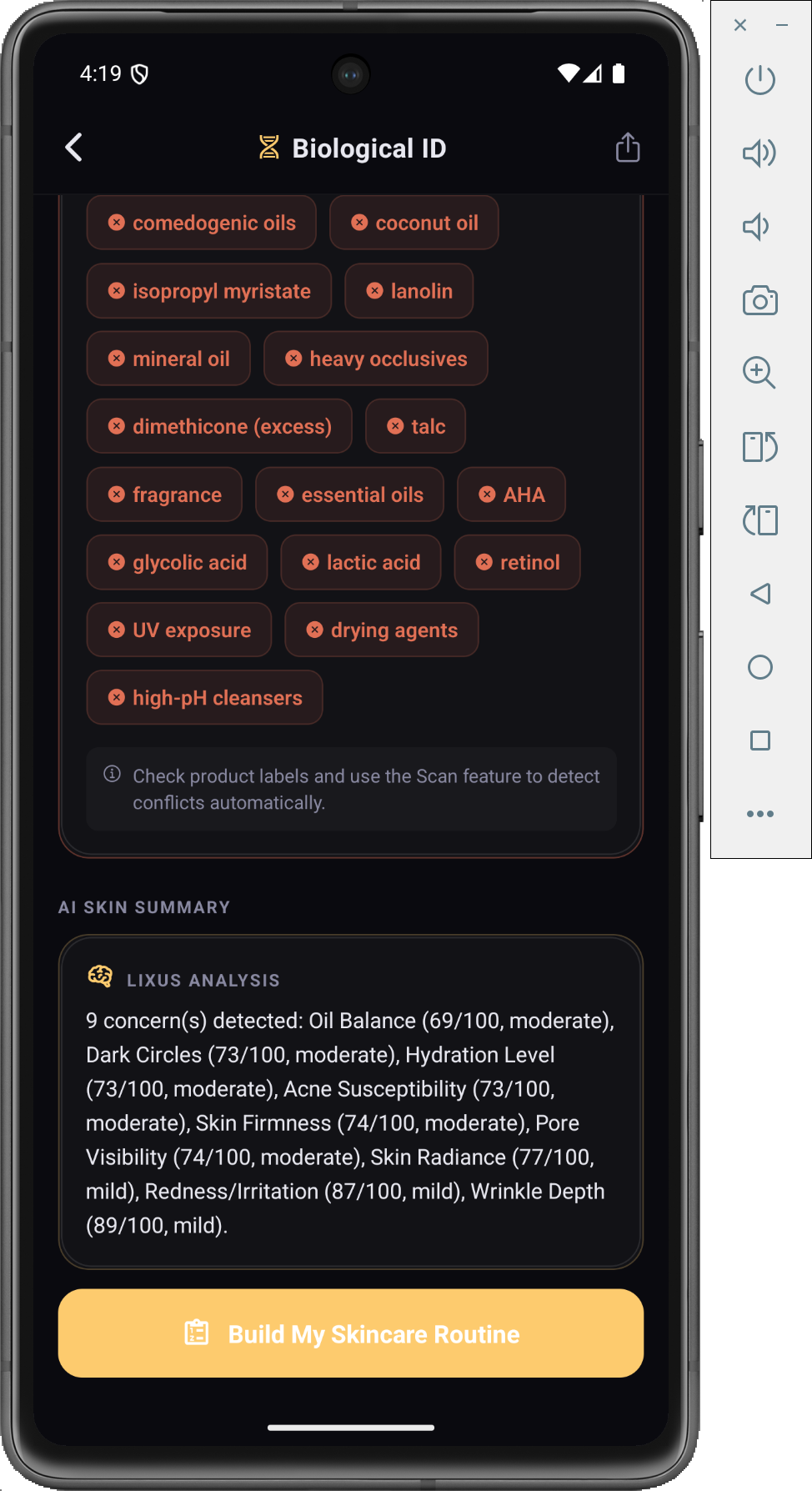
The Sentry Map — Identified Biological Vulnerabilities
-
-
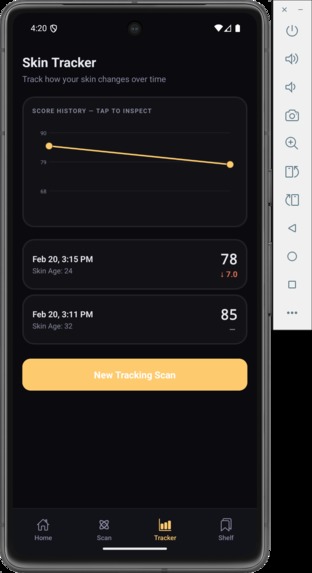
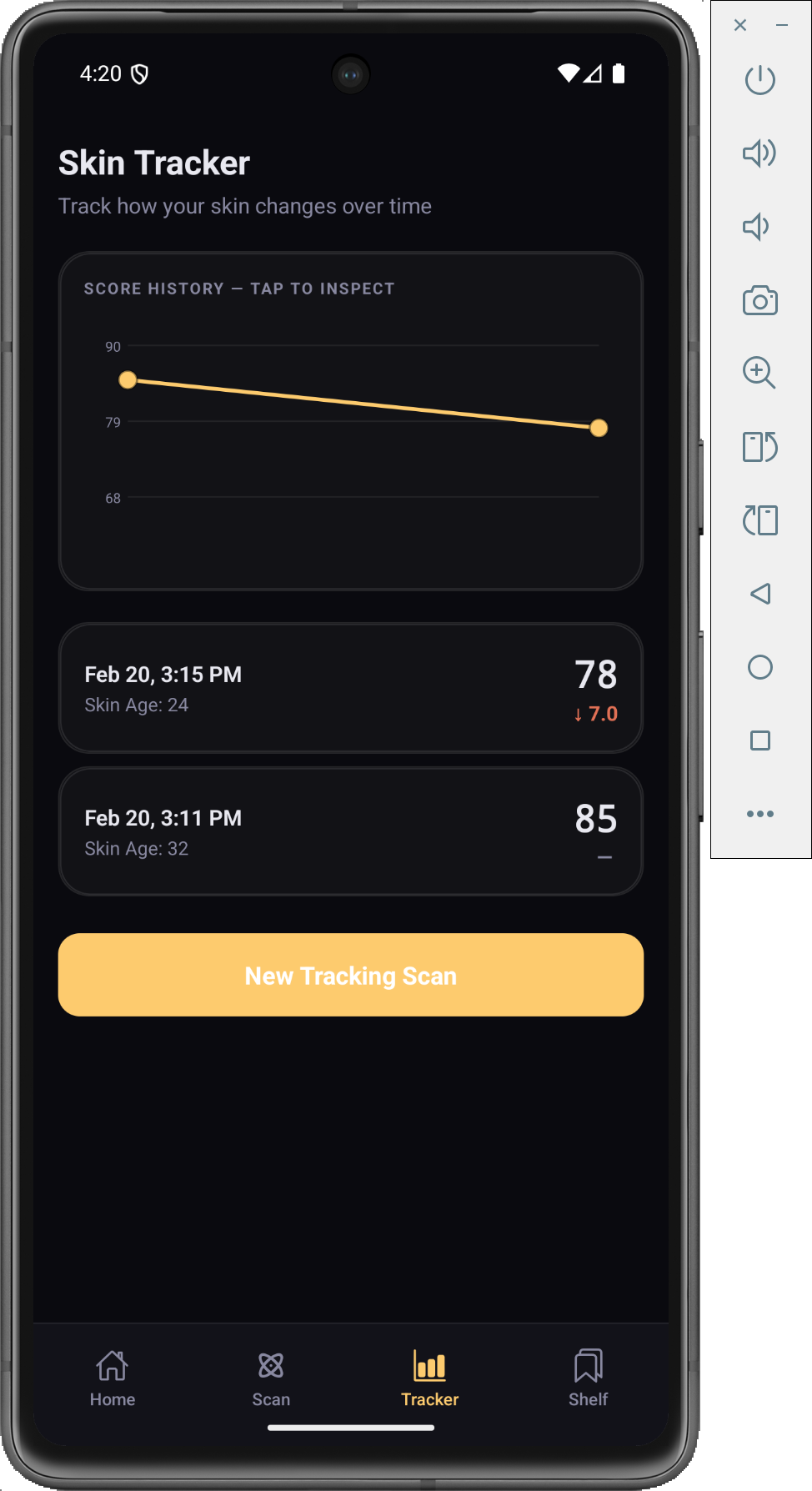
Evolution Tracker — Weekly Skin Health Trend Analysis
-
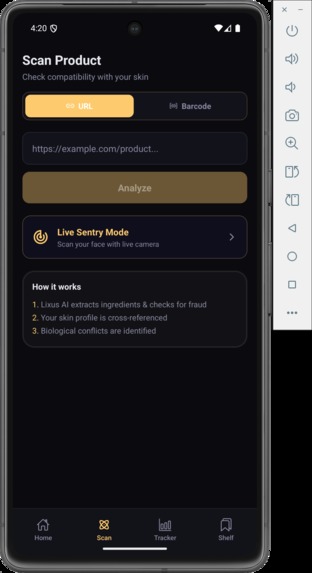
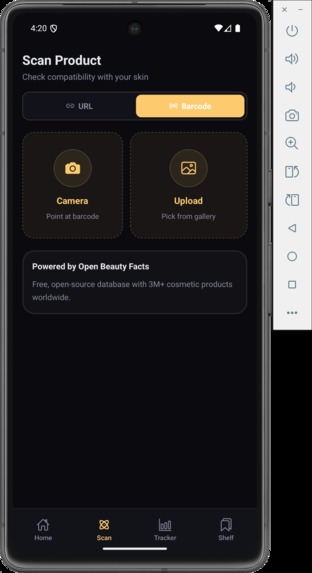
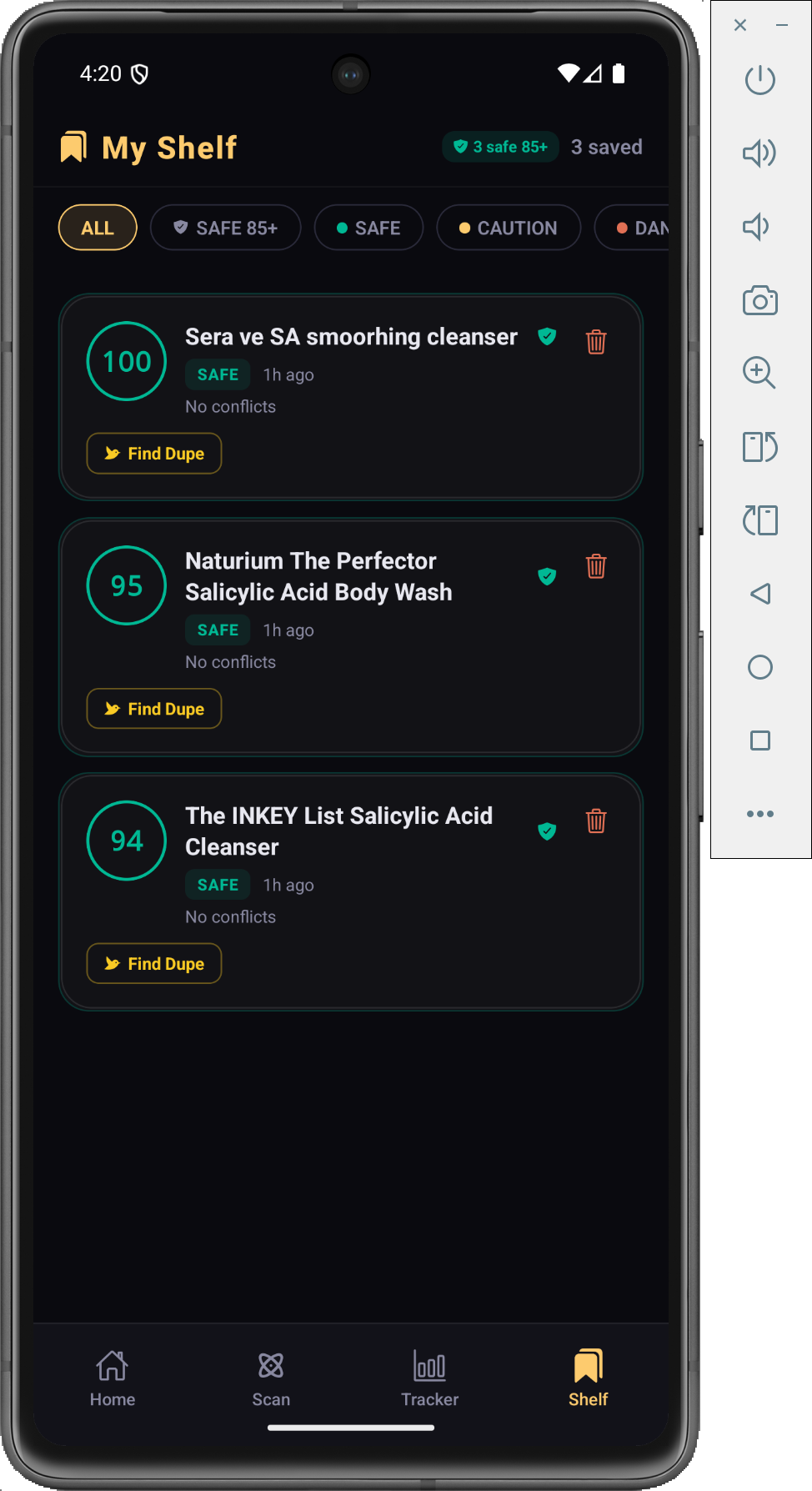
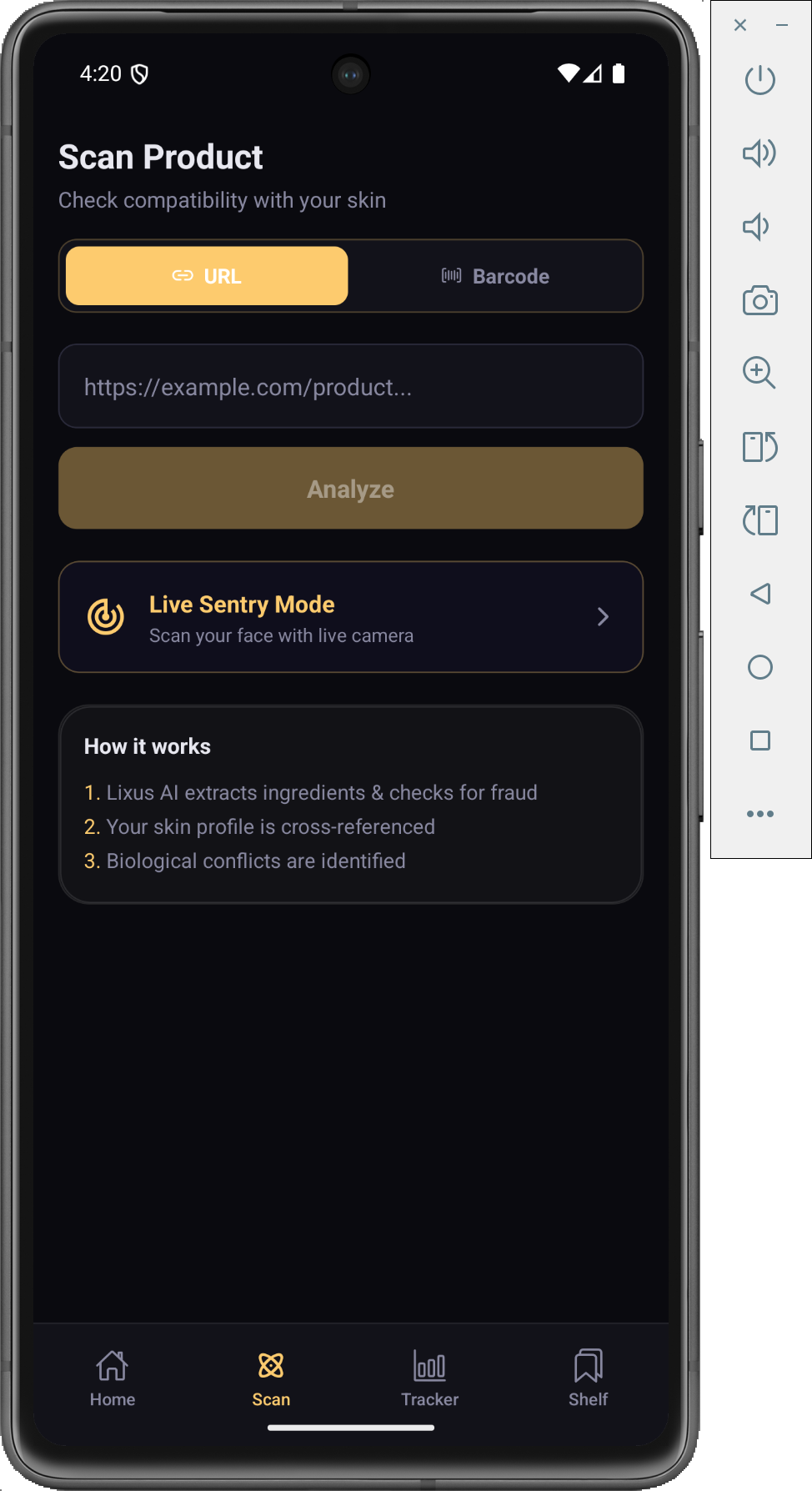
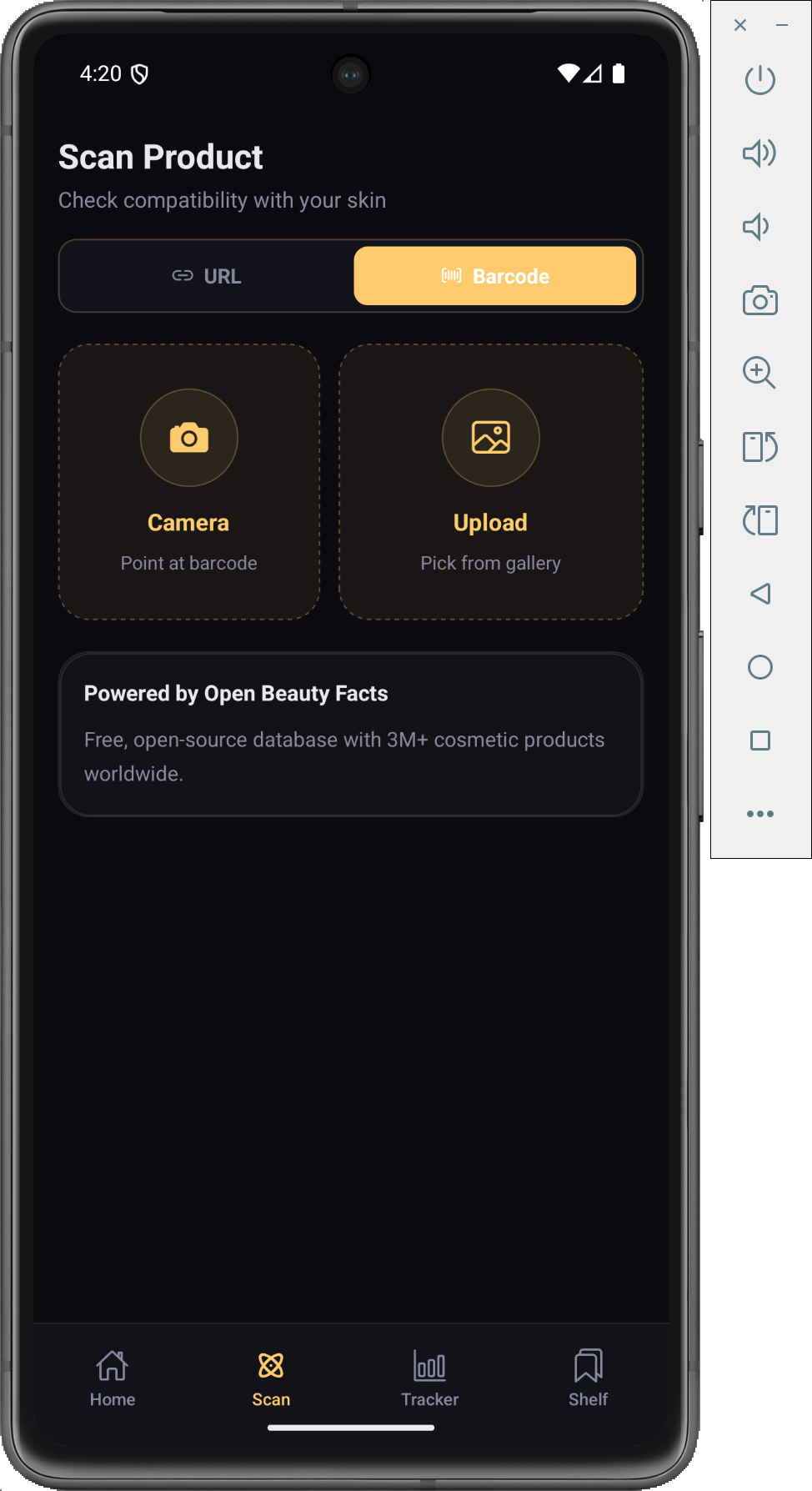
Product Scout — URL & Barcode Investigative Entry
-
-
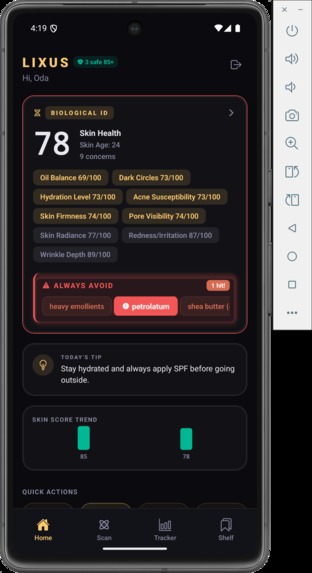
Home Dashboard — "Excellent" Skin Health Baseline
-
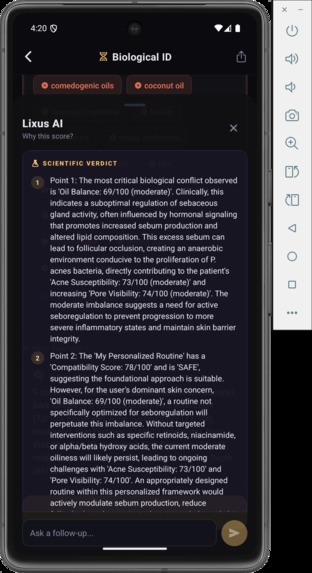
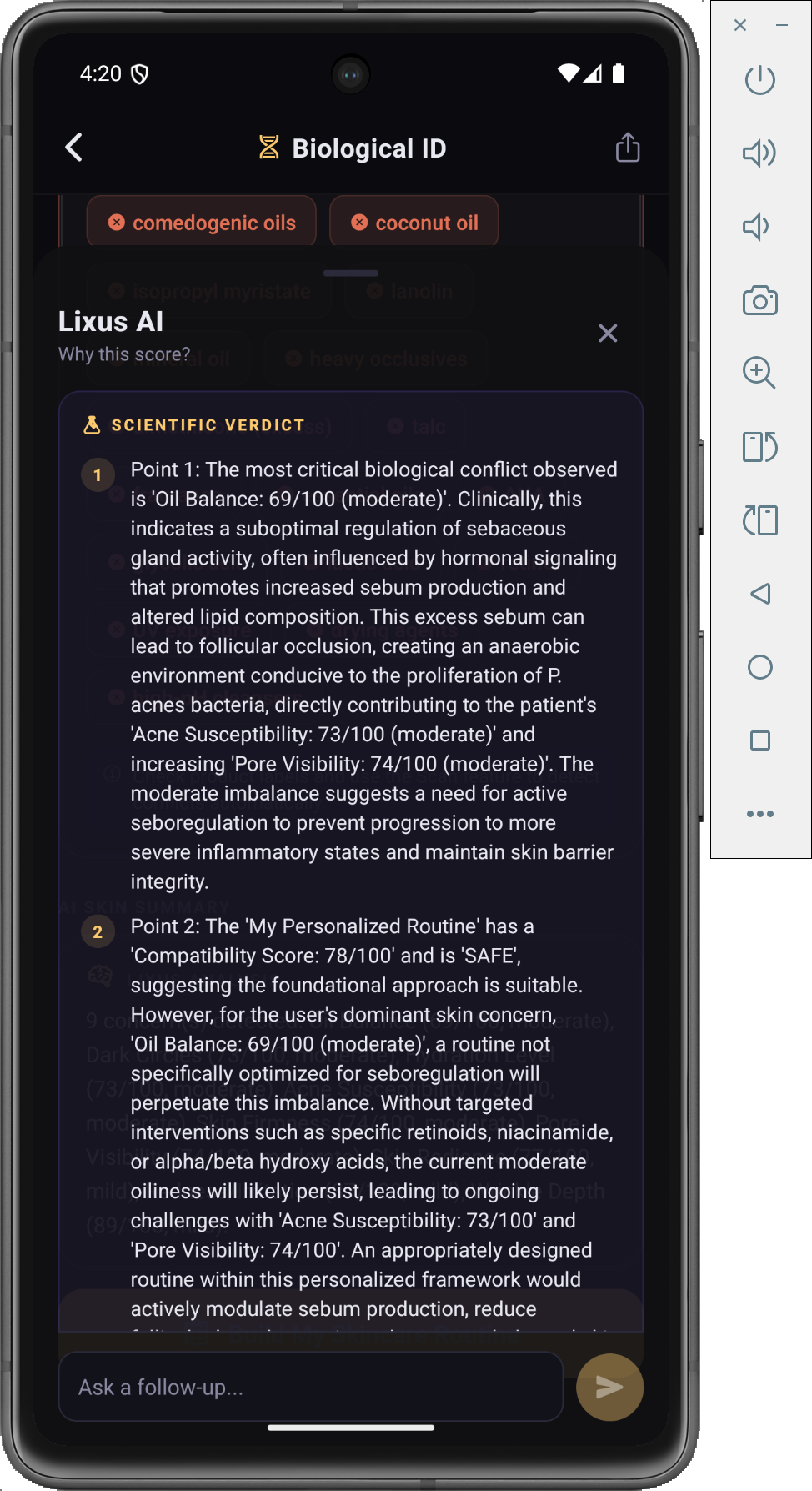
Scientific Verdict — Clinical Conflict Reasoning & Morning/Evening Protocol
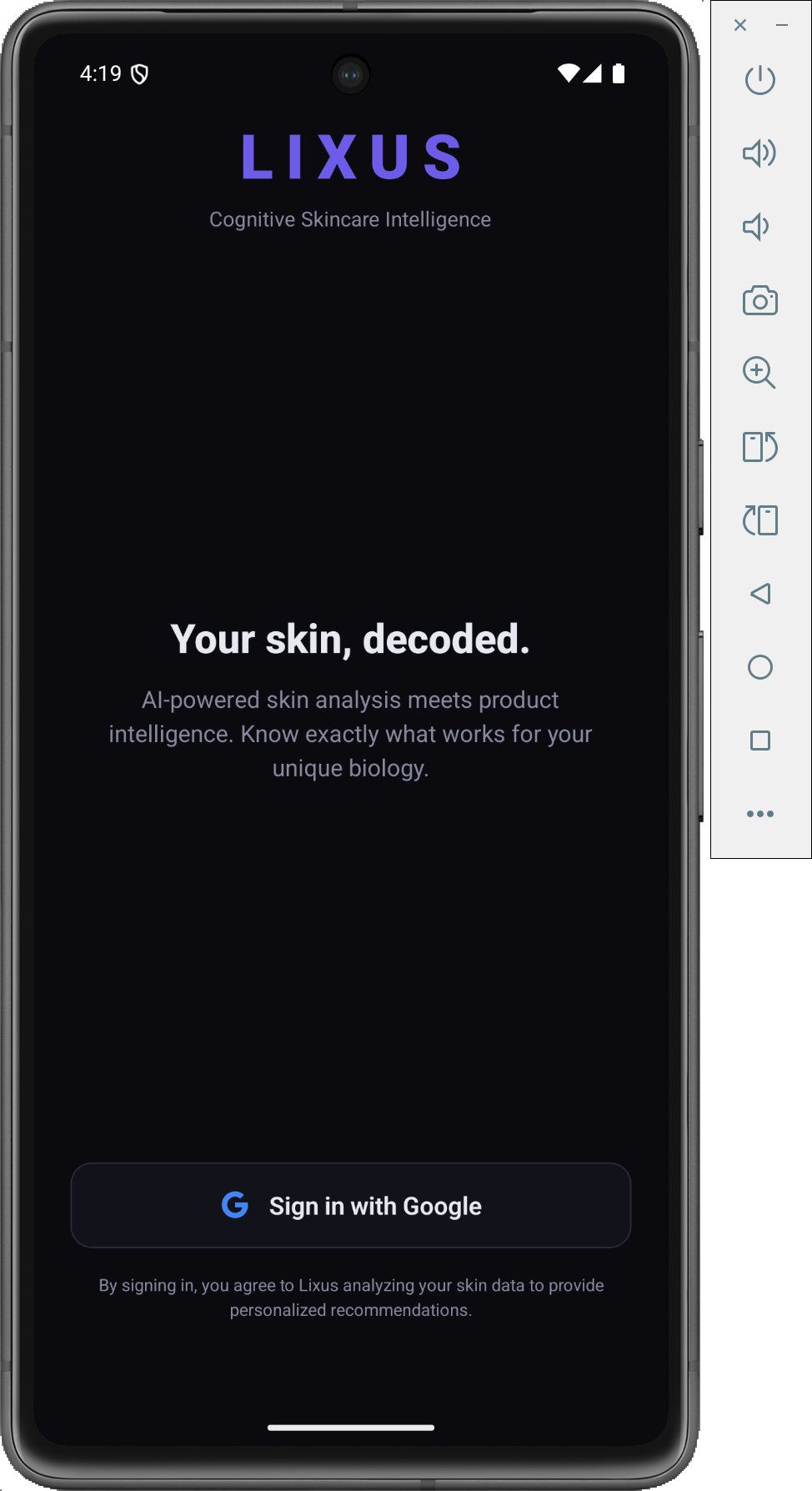
Lixus — Your Biological Skincare Firewall
Know your skin. Trust your products. Never buy something that conflicts with your biology again.
Lixus is an AI-powered mobile skincare intelligence platform. It uses Perfect Corp's clinical skin analysis API combined with Google Gemini to build a personalized Biological Safe State for each user — a real-time map of their skin vulnerabilities — and cross-references that map against the ingredient list of any product they're about to buy. The result is an instant, science-backed verdict: SAFE, CAUTION, or DANGER.
💡 Inspiration
In 2026, the global marketplace is a \$500B frontier of both innovation and deception. Consumers face a dual threat: Biological Mismatch and Retail Fraud. Inspired by the ancient gateway of Lixus, I built this "Biological Firewall" to ensure nothing touches your skin unless it is 100% compatible with your unique nature.
🛠 How We Built It
Lixus follows an Agentic Orchestrator architecture to move from data to decision in seconds:
- Mobile Frontend: Built with React Native (Expo) featuring a "Liquid Glassmorphism" UI and ML Kit for real-time face detection.
- Backend: A Node.js server utilizing Sharp.js for industrial-grade image preprocessing before hitting the Perfect Corp S2S API.
- Intelligence Core: Gemini 2.5 Flash handles the "Reasoning Loop," while Open Beauty Facts provides the fallback database for barcode scanning.
The Security Formula
We calculate the compatibility score using a weighted non-linear equation:
$$S_{comp} = \sum_{i=1}^{14} (W_i \cdot C_i) - \Delta_{fraud}$$
The Variables:
- ( S_{comp} ): The final Compatibility Score (0–100).
- ( W_i ): The Severity Weight of the ( i )-th skin concern detected by Perfect Corp.
- ( C_i ): The Conflict Factor (0 or 1) based on chemical ingredients identified by Gemini.
- ( \Delta_{fraud} ): The Security Penalty applied if the Hudhud Scout detects suspicious retail indicators.
🧬 Perfect Corp Integration
Lixus uses the Perfect Corp YouCam Experience (YCE) S2S API v2.0 as the primary skin analysis engine. This is the backbone of the product; without accurate, clinical-grade skin measurement, downstream conflict detection would be meaningless.
Severity Classification Logic
The system classifies vulnerabilities based on the raw JSON output from the analysis task:
- $\text{Score} \geq 90 \rightarrow$ Healthy (Strength)
- $75 \leq \text{Score} < 90 \rightarrow$ Mild (Vulnerability)
- $60 \leq \text{Score} < 75 \rightarrow$ Moderate (Vulnerability)
- $\text{Score} < 60 \rightarrow$ Severe (Vulnerability)
🚧 Challenges Faced
The build wasn't without "Hackathon Nightmares":
- The 429 Crisis: I hit the Gemini rate limit during testing, forcing the implementation of a Local Sentry fallback using regex-based ingredient checking.
- The Physical Handshake: Getting the Samsung ADB link to work on a modern Mac required a deep dive into Android SDK 36 licenses and NDK 27 installations.
- Emulator Lag: Heavy AI reasoning loops caused massive lag, solved by pivoting entirely to physical device testing for the final demo.
🎓 What I Learned
I learned that in 2026, AI is no longer just about "chatting"—it's about agency. Building an app that can investigate a URL and decide if a product is safe for a specific human's biology taught me the power of combining clinical sensor data with large-scale reasoning.
🚀 Future Vision
Scaling the Hudhud Match engine into a global affiliate network, allowing Lixus to suggest "100/100 compatible" products in real-time at the best price worldwide.
Built With
- beauty
- css/liquid
- expo-54
- express.js
- google-gemini-2.5-flash
- javascript-(esm)
- kotlin-(android-native)
- node.js
- oauth
- open
- perfect-corp-yce-s2s-v2.0
- react-native
- sharp-(image-processing)
- sqlite
- victory-native-(charts)


Log in or sign up for Devpost to join the conversation.