-
-
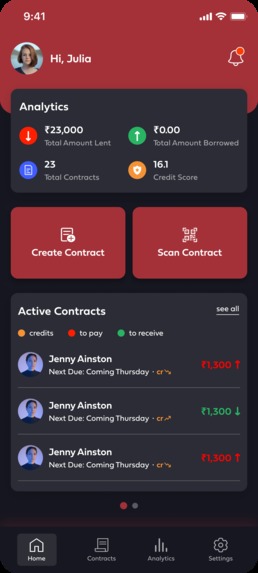
Home screen , Simple to use Scan and Create Option
-
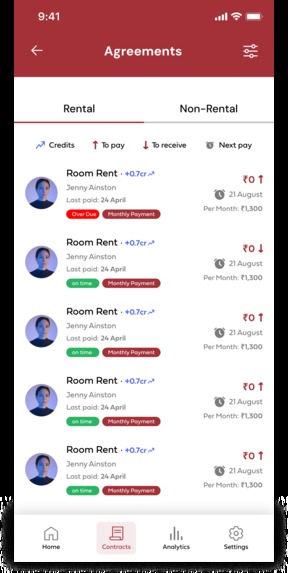
View all the contracts/Agreements created
-
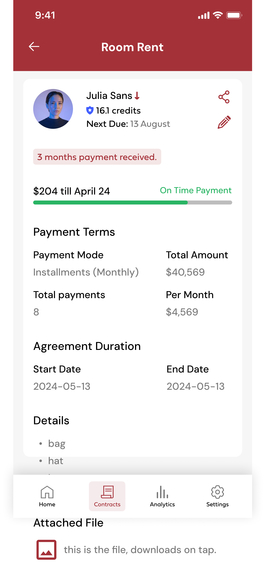
Details of each contract , with ability for mutual verification and tracking of progres
-
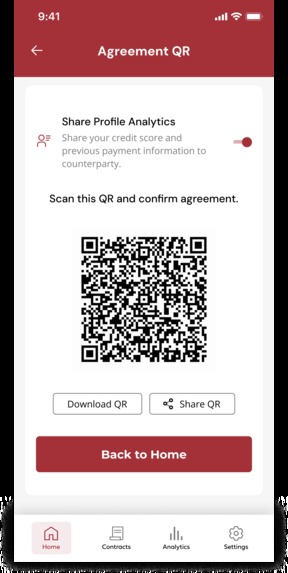
QR for seamless contract term review by other party


TrustBridge: A Platform for Trustworthy Informal Lending
Inspiration
As bachelor college students, we often faced the inefficiencies and awkwardness of informal lending within our friend groups. Challenges included tracking repayments, sending reminders, and the risk of straining friendships over financial matters. Similarly, we observed a more significant issue in rural communities, where farmers often rely on verbal agreements for loans. These agreements are prone to disputes due to forgotten or altered terms, leading to financial hardship.
This blend of personal experience and societal observation inspired us to create TrustBridge, a platform for securely digitizing and formalizing informal lending.
What We Learned
1. Mobile App Development with Flutter
We developed a cross-platform application using Flutter, exploring its widget-based architecture and state management through Riverpod.
2. Blockchain as a Ledger
We leveraged Polygon, a layer-2 Ethereum scaling solution, for its low gas fees and fast transactions. This ensured an immutable, transparent, and secure record of financial transactions.
3. API Integration
We designed and integrated REST APIs to connect the Flutter frontend with the backend services and blockchain.
4. UI/UX Design for Mobile
We focused on creating an intuitive interface tailored to simplify financial transactions for non-tech-savvy users, especially in rural areas.
5. Importance of User Research
By understanding the pain points of college students and rural borrowers, we built solutions aligned with their real-world needs.
6. KYC and Legal Implications
We studied regulatory requirements for KYC (Know Your Customer) compliance and data privacy to ensure the platform adhered to legal standards.
How We Built It
LendSafe was built using the following technologies:
Frontend
- Framework: Flutter
- State Management: Riverpod
- Design System: Material Design
Backend
- Framework: Node.js with Express.js
- Authentication: JSON Web Tokens (JWT) for secure login and user sessions
- API Design: REST APIs for seamless communication
Blockchain
- Platform: Polygon (Ethereum Layer 2)
- Smart Contracts: Written in Solidity to handle transactions and agreements. Deployed using Hardhat.
- Wallet Integration: Metamask and WalletConnect for accessibility.
Database
- Type: PostgreSQL
- Purpose: For storing user profiles, off-chain data, and contract metadata.
Cloud Platform
- Hosting: AWS EC2 and S3 for backend hosting and file storage.
- CI/CD: GitHub Actions for continuous integration and deployment.
Notes-to-Contract Conversion
- Tech Used: A rule-based engine using OpenAI APIs for natural language processing. This maps informal notes into structured contract fields.
KYC Verification
- Tool: Integrated Signzy API for automated KYC, ensuring a smooth user onboarding experience.
Core Development Process
- Designing the mobile UI and user flow with Flutter.
- Developing backend APIs for user authentication, data management, and blockchain communication.
- Implementing Polygon smart contracts for transaction and contract recording.
- Building the "Notes-to-Contract" feature using NLP tools.
- Integrating Signzy for seamless KYC verification.
- Conducting extensive testing across devices and iterating based on feedback.
Challenges We Faced
1. Flutter Learning Curve
Mastering Flutter's advanced features, such as custom animations and Riverpod for state management, was time-intensive.
2. Backend-Blockchain Integration
Achieving real-time synchronization between blockchain transactions and off-chain data storage was complex but crucial for data consistency.
3. Balancing Security and Usability
Designing a secure financial app without overwhelming users with complexity required extensive prototyping and user testing.
4. Simplifying Complex Logic
Translating informal agreements into structured contracts that were both user-friendly and legally sound posed a significant challenge.
5. Notes-to-Contract Conversion
Accurately mapping informal notes to structured fields demanded robust rule-based NLP models and context understanding.
6. KYC Compliance
Ensuring a balance between user privacy and strict regulatory requirements required in-depth research and API implementation.
7. Data Synchronization
Ensuring consistent updates between the Polygon blockchain and PostgreSQL database was critical for maintaining trust in the system.
Conclusion
TrustBridge represents a blend of technology and empathy, aiming to address both personal and societal challenges in informal lending. Through the use of modern tools like Flutter, Polygon, and NLP, we have built a secure, user-friendly platform that bridges the gap between informal agreements and trustworthy digital solutions.
Built With
- blockchain
- fluter
- node.js
- polygon
- web3


Log in or sign up for Devpost to join the conversation.