Inspiration
Most interactive story games promise meaningful choices, but in practice the world often forgets them. Characters reset their attitudes, past actions lose relevance, and endings feel predetermined.
We were inspired by a simple question: What if a story could actually remember the player?
Living Tales was born from the idea of treating narrative as a living system rather than a scripted flow. We wanted to explore how Gemini 3’s long-context reasoning could enable stories that evolve naturally over time, where choices echo forward instead of disappearing after the next scene.
What it does
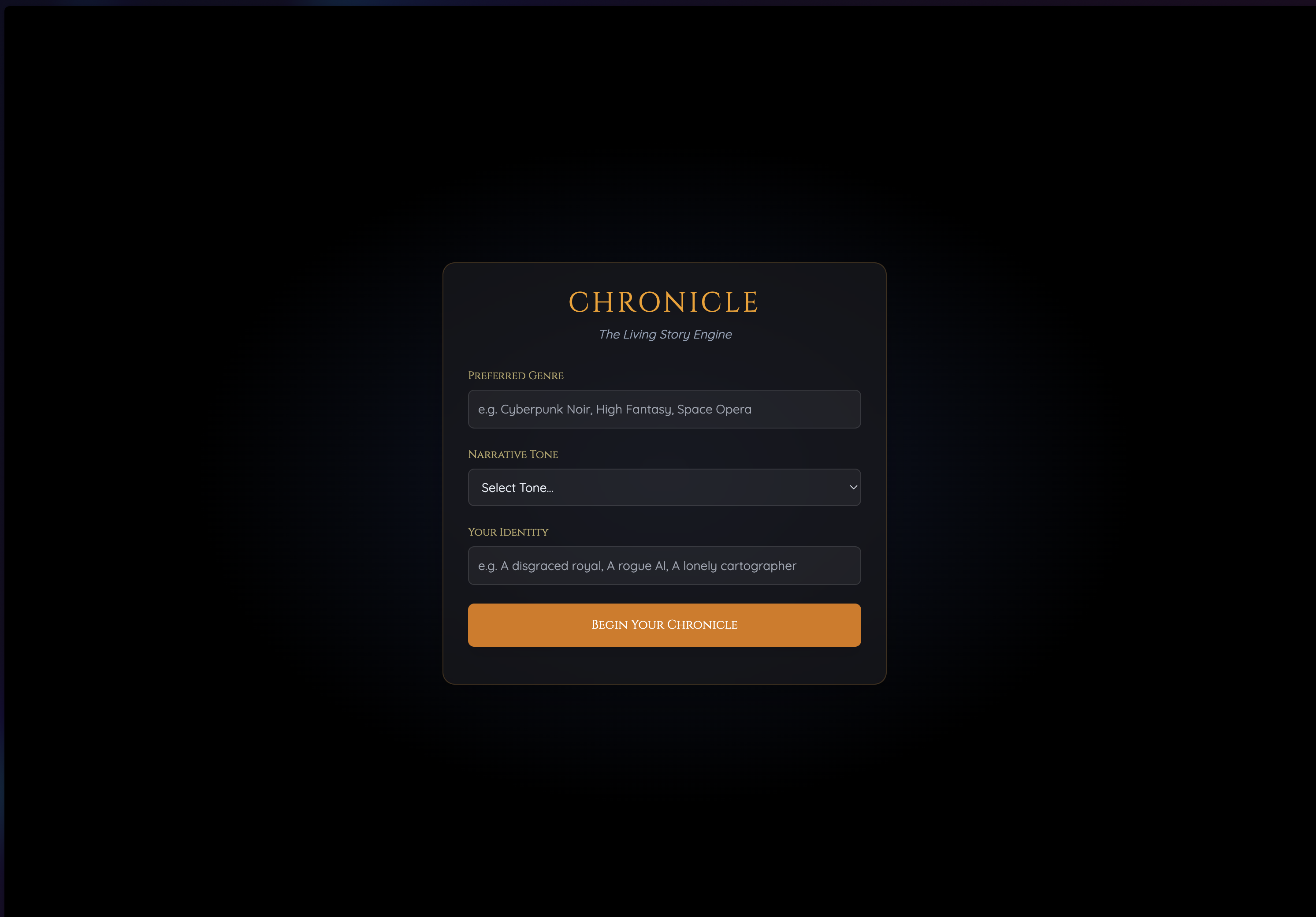
Living Tales is an interactive story game where:
- Player choices permanently shape the world
- Characters remember how they were treated and react accordingly
- Relationships evolve over time instead of resetting
- The story unfolds dynamically without predefined endings
Rather than following branching paths, the game maintains a persistent story state. Every decision influences character behavior, emotional dynamics, and future events — sometimes immediately, sometimes much later.
No two playthroughs are the same, not because of randomness, but because the world continuously reasons about its own history.
How we built it
Living Tales is built as a narrative game engine with Gemini 3 at its core.
High-level architecture:
- A frontend presents the current scene and available player choices
- Each player action is sent to the Gemini 3 API together with the evolving story state
Gemini 3 reasons about:
- past events
- character memories and emotions
- unresolved plot threads
- long-term consequences
The model generates:
- the next scene
- character actions and dialogue
- new meaningful choices
We designed a strict internal story structure so Gemini 3 could maintain narrative consistency across long sessions. The game relies heavily on Gemini 3’s long-context memory and deep multi-step reasoning to keep characters believable and the world coherent.
Challenges we ran into
The biggest challenge was maintaining consistency over time.
Long-running narratives can easily drift, contradict earlier events, or flatten character personalities. To address this, we had to carefully design prompts that prioritize memory, character integrity, and continuity over short-term drama.
Another challenge was avoiding predefined endings. Letting the story emerge organically required trusting the model’s reasoning rather than forcing scripted outcomes — which was both technically and creatively challenging.
Accomplishments that we're proud of
- Built a fully interactive game, not just a chatbot or AI demo
- Achieved persistent character memory across extended play sessions
- Created narratives that remain coherent without predefined story branches
- Demonstrated a clear use case where Gemini 3 is not optional, but essential
We’re especially proud that the game feels emotionally grounded — characters reference past interactions naturally, and consequences feel earned rather than artificial.
What we learned
This project taught us that large language models can function as simulation engines, not just content generators.
We learned that:
- Long-context reasoning enables new forms of interactive storytelling
- Memory and consistency matter more than raw creativity
- AI-driven narratives work best when the model is allowed to reason deeply, not rushed to respond
Most importantly, we learned that stories become more meaningful when the world remembers the player.
What's next for Living Tales
Future plans include:
- Saving and restoring story states across sessions
- Expanding character emotional models and relationship dynamics
- Adding visual and audio elements for a richer experience
- Exploring multiplayer or shared-world storytelling
Living Tales is just the beginning. We believe Gemini 3 opens the door to a new generation of narrative games — worlds that don’t just tell stories, but remember them.
Built With
- ai
- studio

Log in or sign up for Devpost to join the conversation.