-
-
Level 1 Banner
-
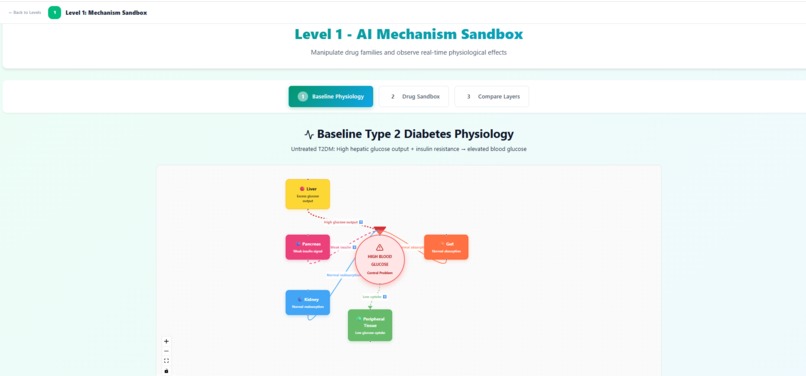
Level 1
-
Level 2 Banner
-
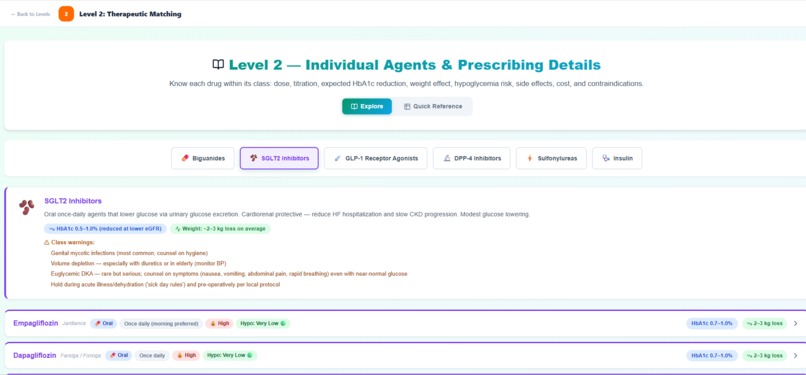
Level 2
-
Level 3 Banner
-
Level 3
Inspiration
Learning Type 2 Diabetes (T2D) pharmacology is tough. Traditional tools such as flashcards, question banks and textbooks force students to memorize isolated drug facts rather than understanding how drugs interact with human physiology.
We wanted to create a dynamic, interactive environment where students can see how drug families alter glucose regulation across organs, hormones, and risk indicators. Our goal: shift from memorization to systems-based reasoning and clinical decision-making.
What it does
We developed Team Glucologic’s Living Physiology Sandbox, a three-level scaffolded learning platform that transforms how students learn T2D pharmacology:
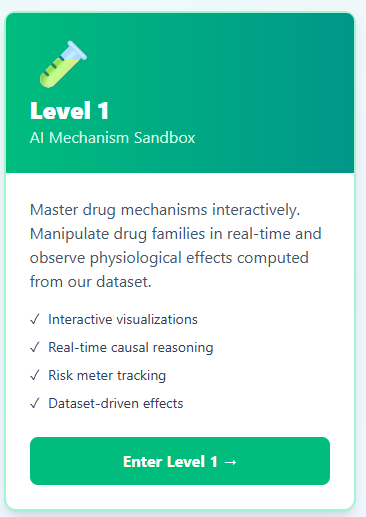
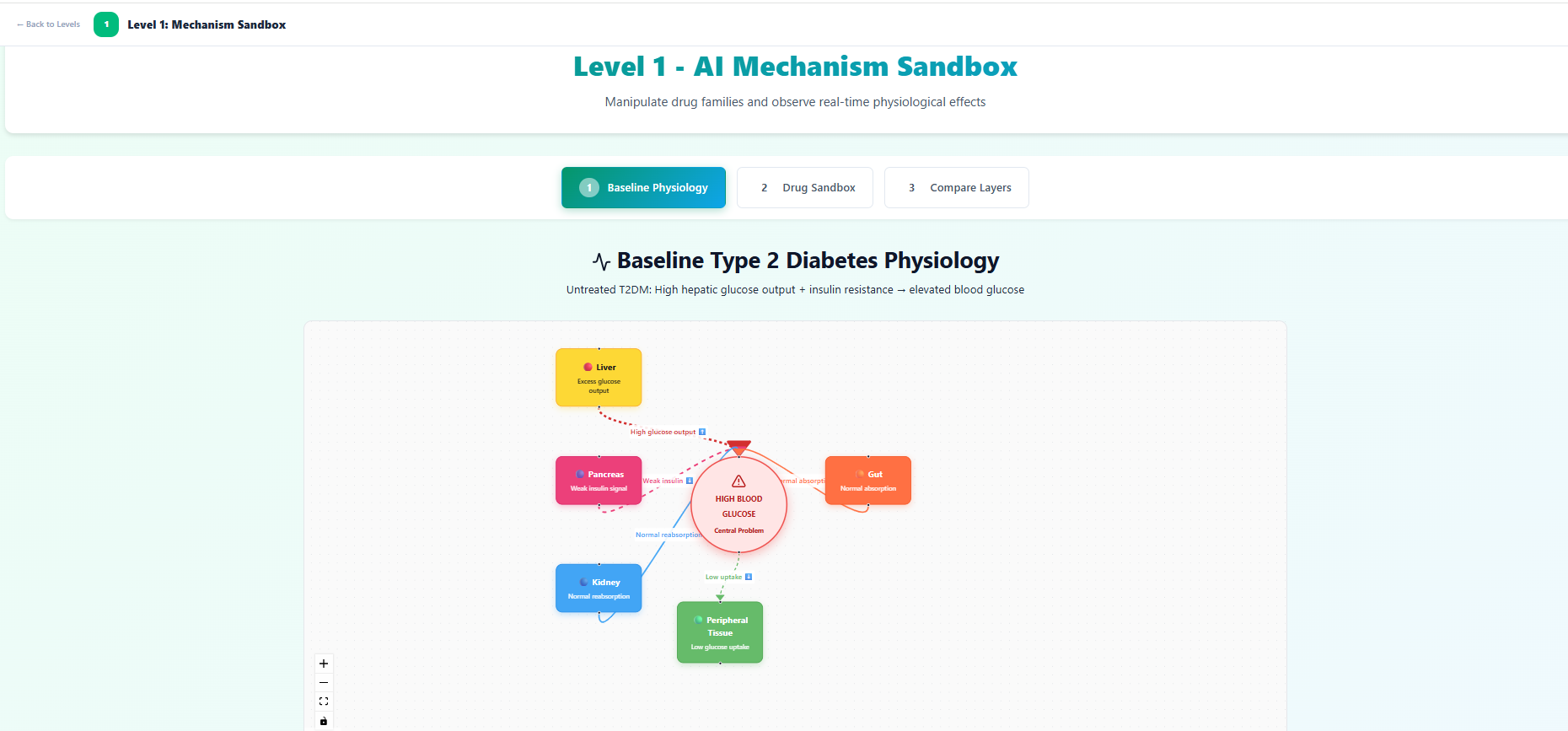
Level 1 – Mechanism Sandbox: Explore baseline T2D physiology and toggle drug families to see real-time changes in glucose, hormones, and organ-level effects.
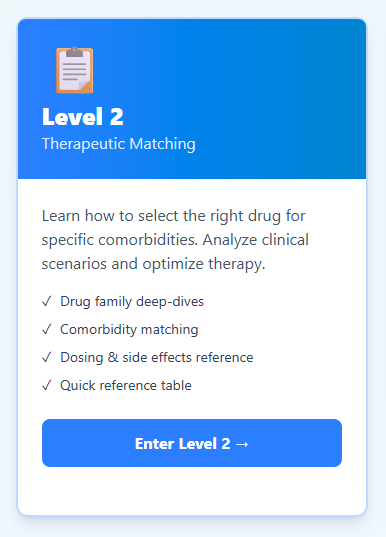
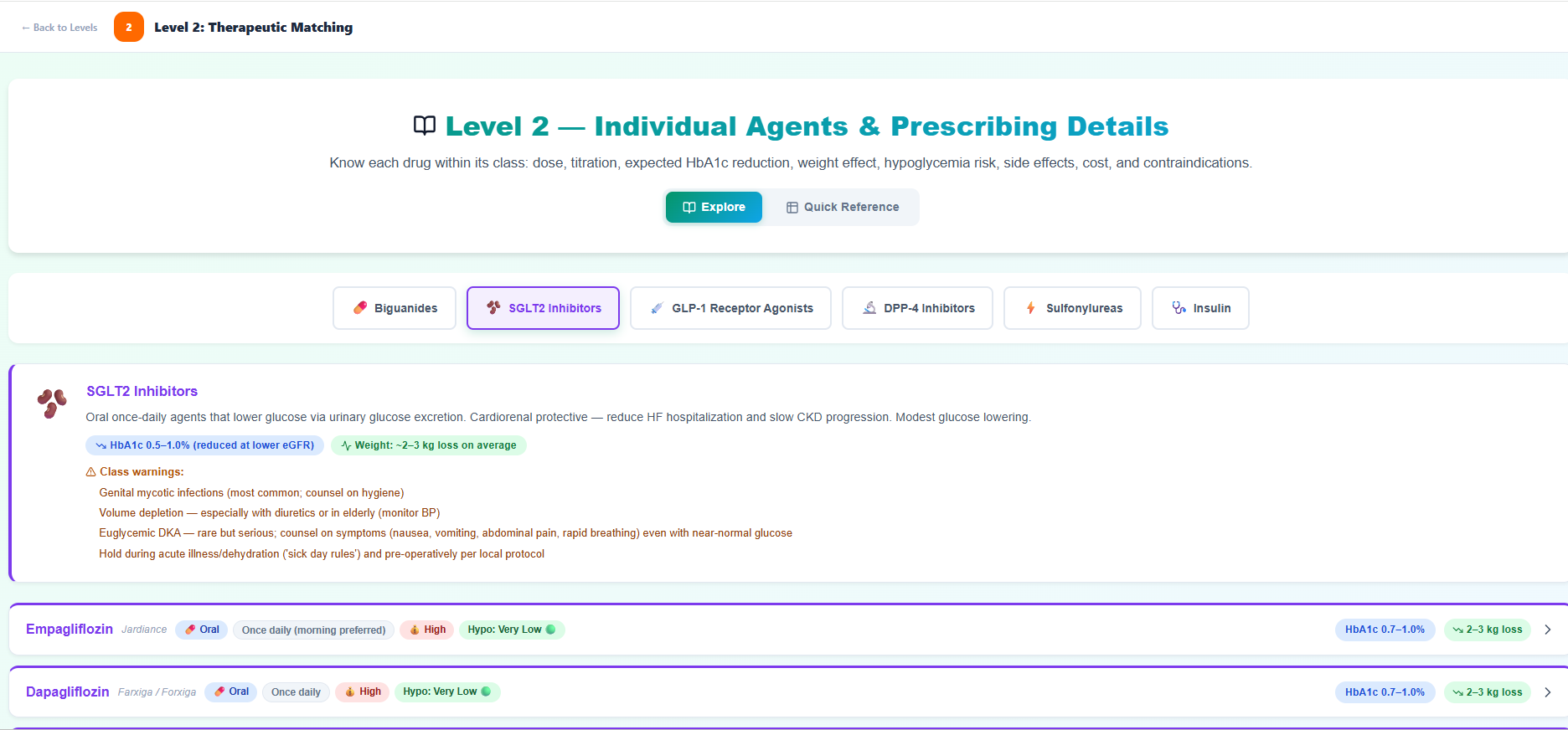
Level 2 – Therapeutic Matching: Dive deeper into drug families, their mechanisms, dosing, side effects, and comorbidity considerations through interactive learning tools and reference tables.
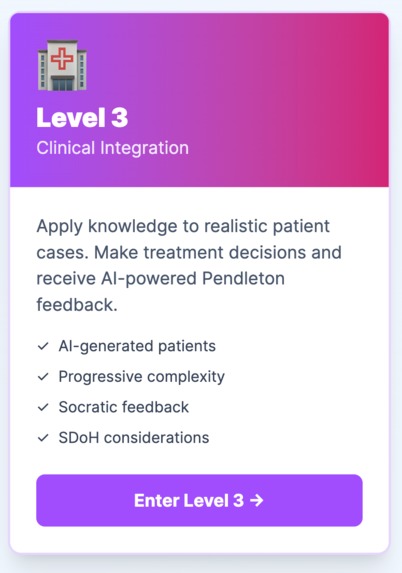
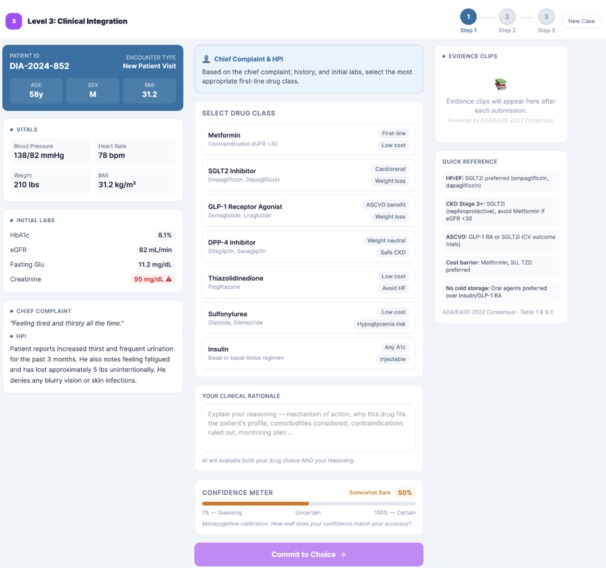
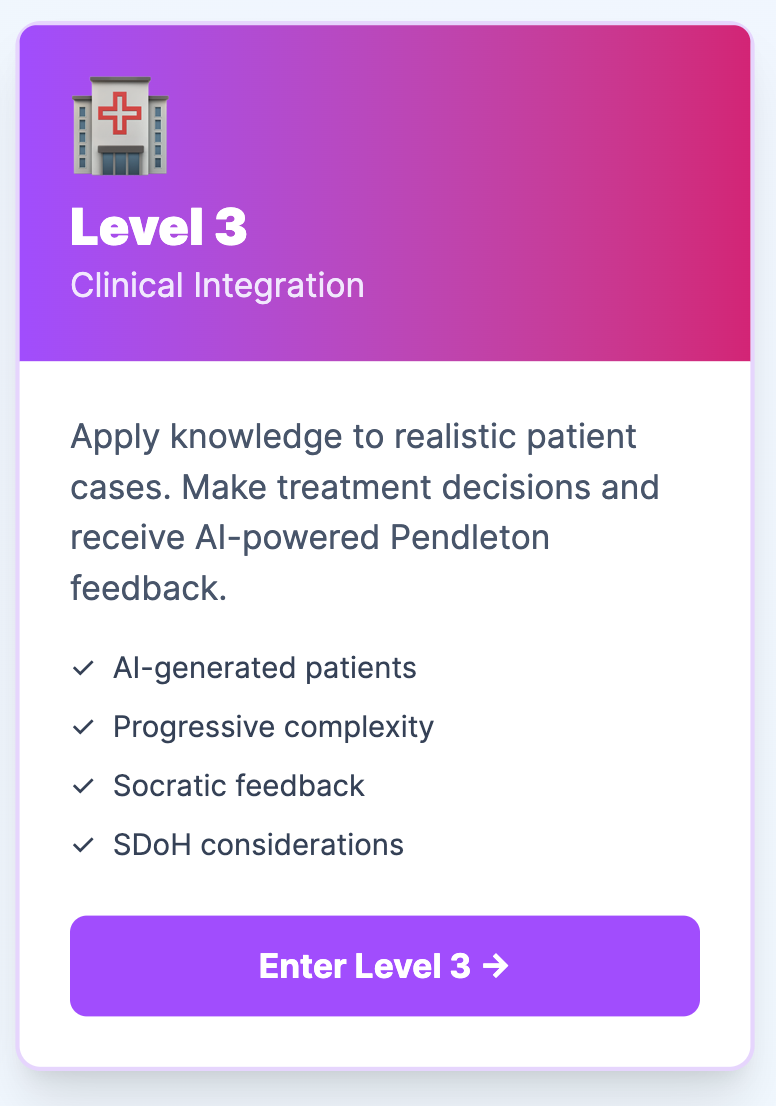
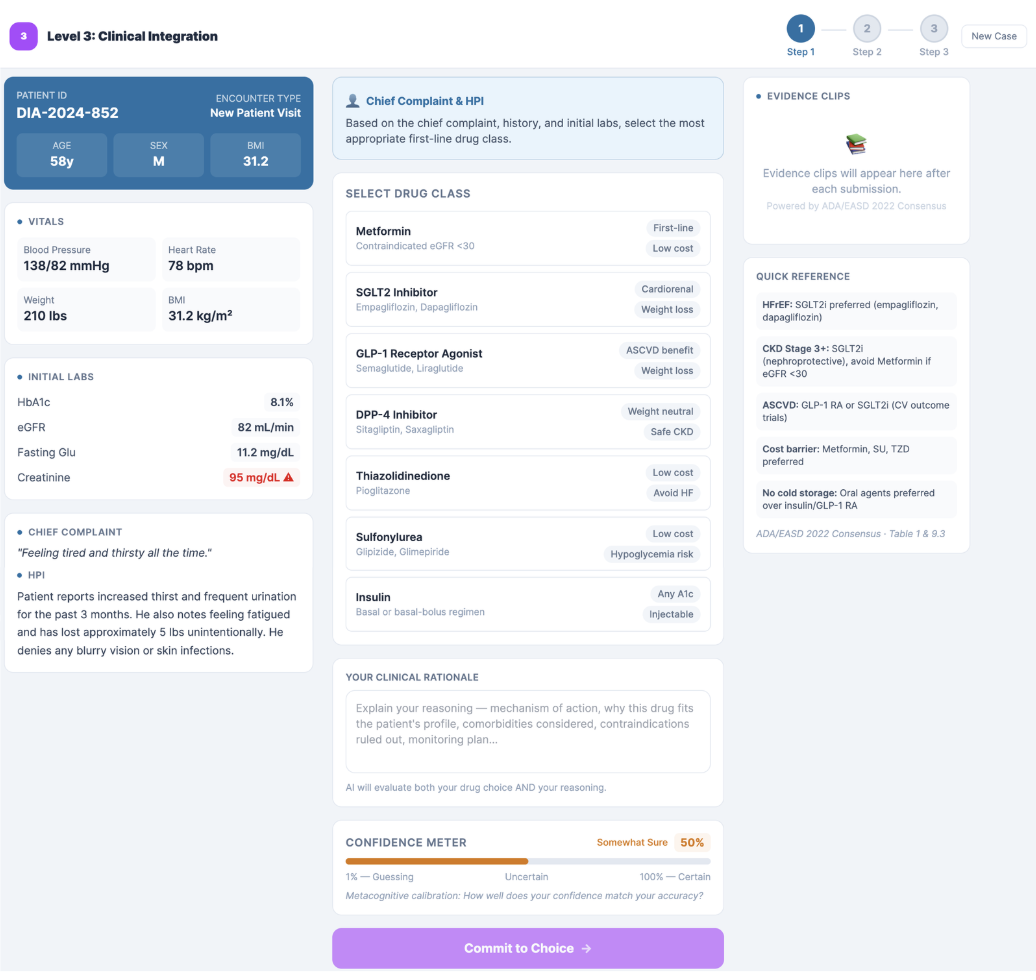
Level 3 – Clinical Integration: Full case simulations combine lab results, patient factors, and drug effects for patient-centered prescribing.
Key Features:
- AI-powered dynamic effects: Drug mechanisms and side effects are pulled from a structured dataset, producing accurate animations and causal explanations.
- Simplified schematic visualization: Labeled blocks and arrows make glucose flow and organ interactions clear and intuitive.
- Interactive scaffolded learning: Students commit to choices before receiving feedback, promoting active, generative learning.
How we built it
We built Team Glucologic’s Living Physiology Sandbox as an interactive web application using a modern, AI-powered stack:
Frontend:
- Vite + React for a fast, responsive, and modular application.
- Reactflow for interactive schematic diagrams of organs, glucose flow, and hormonal signals.
AI & Backend Logic:
- Integrated with Gemini API to generate real-time causal explanations with dataset based on real-case scenarios.
- Drug mechanisms, side effects, and physiological responses are pulled from a structured pharmacology dataset, ensuring accuracy.
- The AI dynamically updates glucose flow, organ interactions, and risk indicators when students manipulate drug families.
Deployment:
- Hosted on Vercel, making the sandbox accessible via any web browser without installation.
- Result: Students can explore T2D physiology, interact with drug families, and learn mechanisms, dosing, and side effects in a hands-on, scaffolded, and AI-powered environment—all without quizzes or memorization.
Challenges we ran into
- Converting research into a usable dataset: Translating pharmacology literature into a structured, machine-readable dataset of drug families, mechanisms, organ targets, and side effects was time-intensive but critical for AI accuracy.
- AI integration with Gemini: Ensuring real-time, accurate physiological explanations required careful coordination between our frontend, backend, and AI APIs. Managing latency, consistent outputs, and correct mapping to the dataset was a key technical challenge.
- Visualization and interactivity: Representing glucose flow, organ interactions, and multi-drug effects in a clear, intuitive schematic while keeping it AI-friendly required multiple design iterations.
Accomplishments that we're proud of
- Built a working AI-powered physiology sandbox for T2D pharmacology.
- Created a three-level scaffolded learning platform from mechanisms to drug families.
- Developed interactive visual schematics and dataset-driven AI explanations for accurate physiology and drug effects.
What we learned
- Simplicity works: Abstract blocks and arrows communicate systems better than realistic organs.
- AI + dataset is reliable: Structured data ensures accurate, scalable outputs.
- Active learning beats memorization: Students understand drug effects by exploring interactions themselves.
- Careful design matters: Coordinating real-time AI with the frontend and dataset is critical.
What's next for Teaching Clinical Reasoning in T2D Medication selection
- Pilot with healthcare students: Test usability, navigation, clarity, and time-to-complete cases; assess learning outcomes such as confidence and prescribing accuracy.
- Expand disease modules: Add hypertension, chronic kidney disease (CKD), and heart failure (HF) to broaden clinical scenarios.
- Evaluate outcomes: Measure knowledge retention, decision quality in novel cases, and optionally, learner satisfaction and perceived usefulness. Compare results to traditional question-bank learning.

Log in or sign up for Devpost to join the conversation.