Inspiration
We are all kids who grew up in America, but our families come from different parts of the world. Growing up, we heard stories from our parents and grandparents about their lives, traditions, and journeys, but we realized those stories are often never written down or preserved. Over time, they fade.
At the same time, the hackathon theme of creative flourishing made us think about how AI could help people find meaning, not replace it. We wanted to build something that uses AI to preserve identity, culture, and memory. That’s how Living Archive was born.
What it does
Living Archive is a platform where anyone can share a personal or cultural story and turn it into a living, interactive memory.
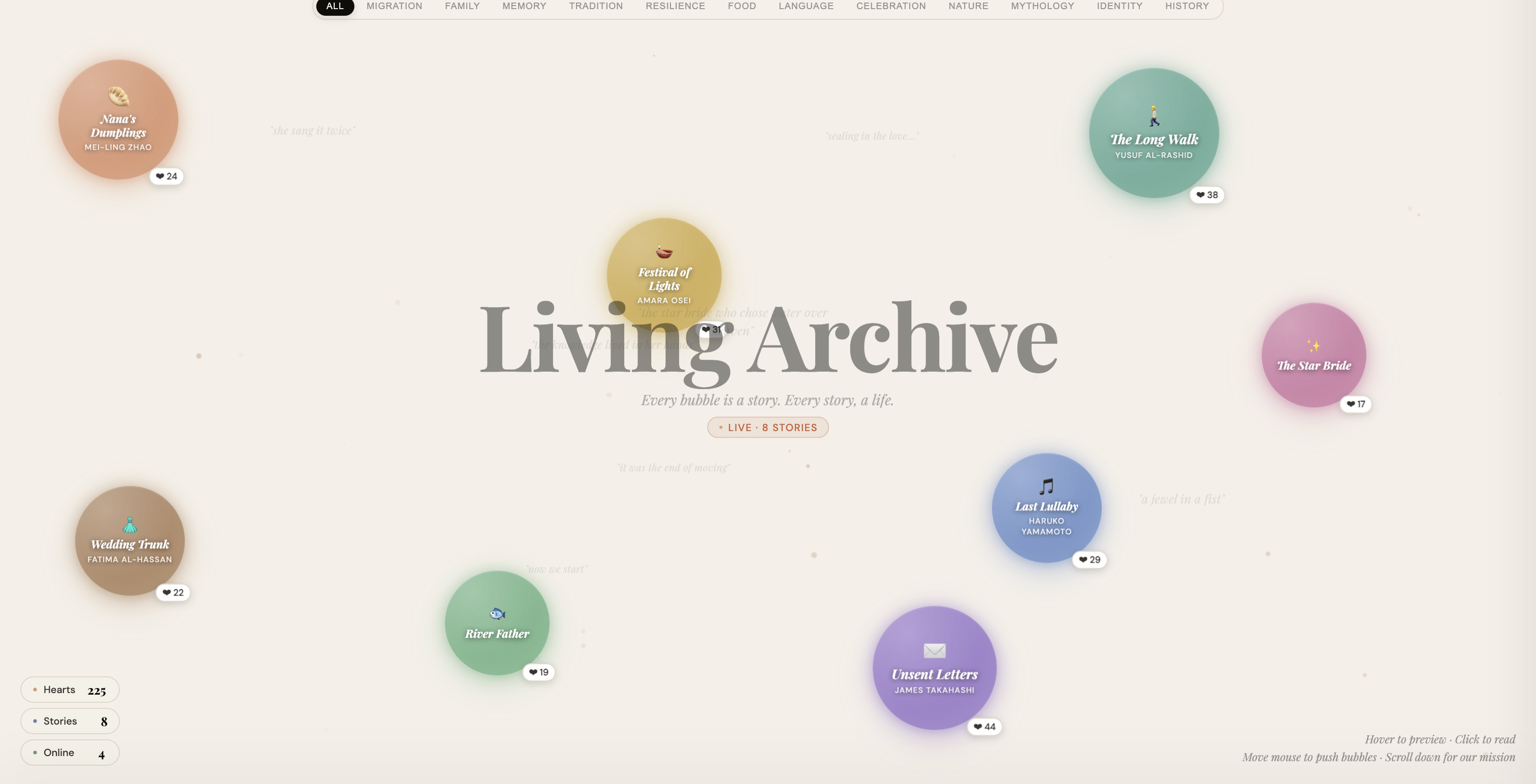
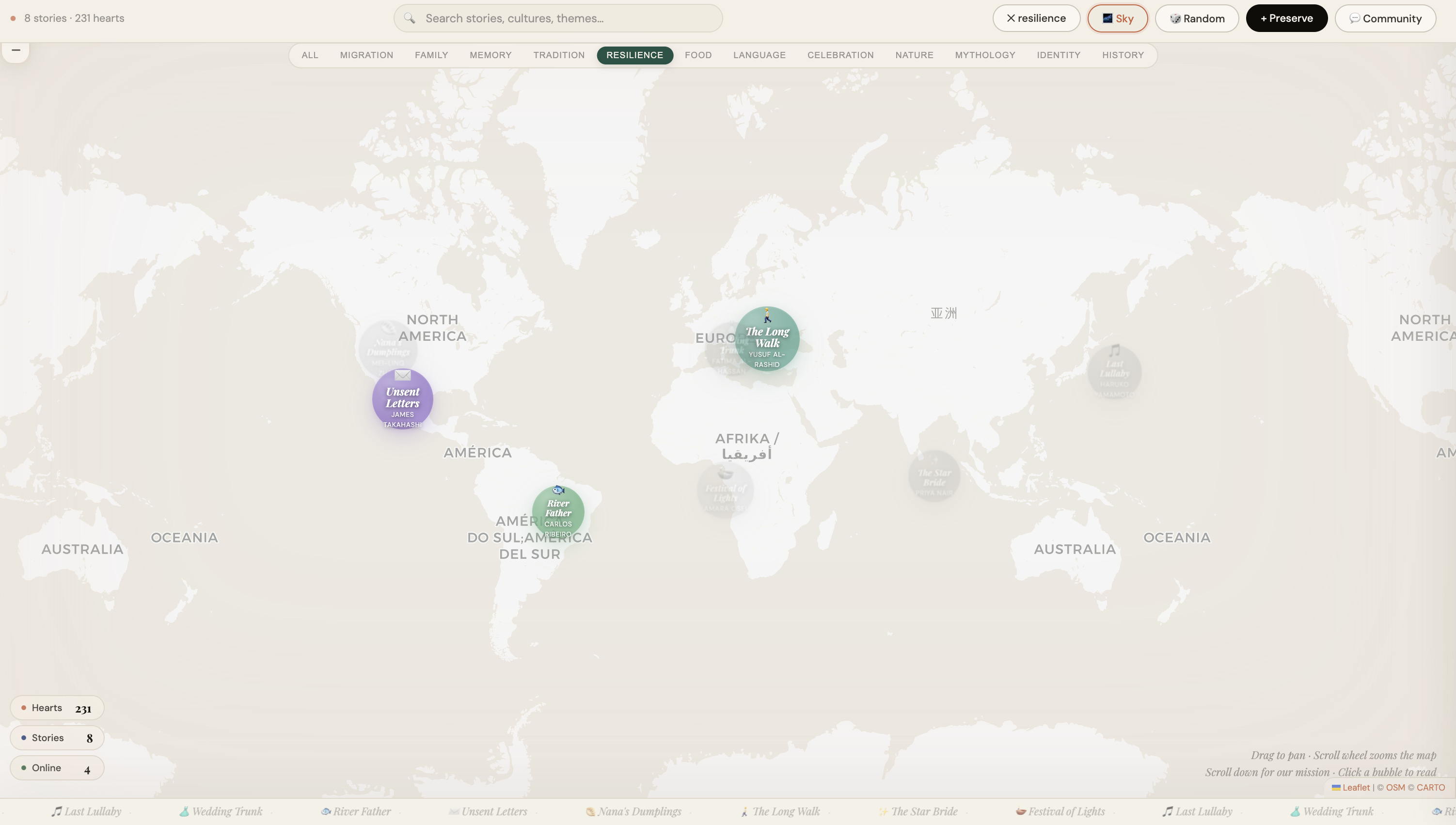
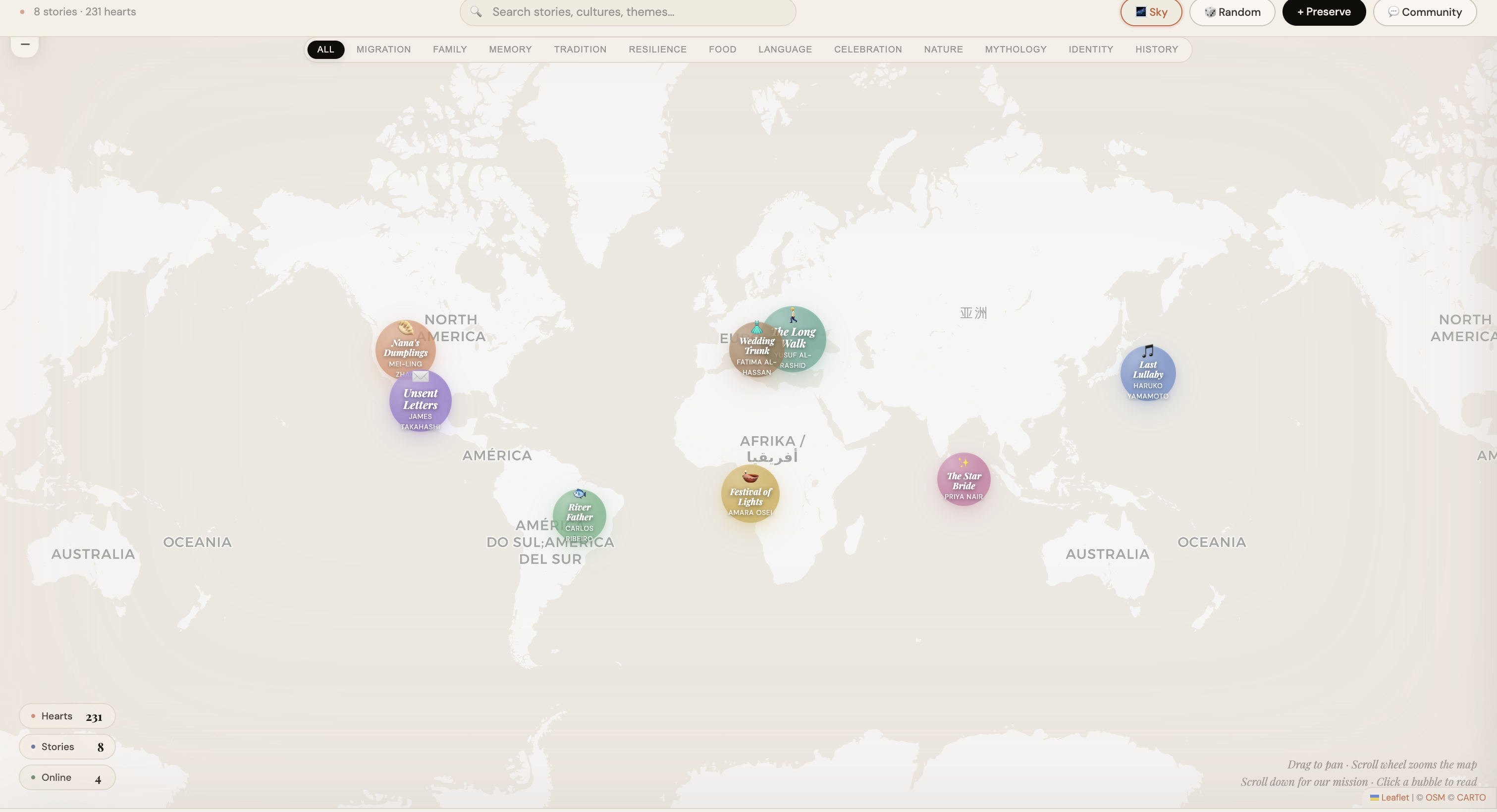
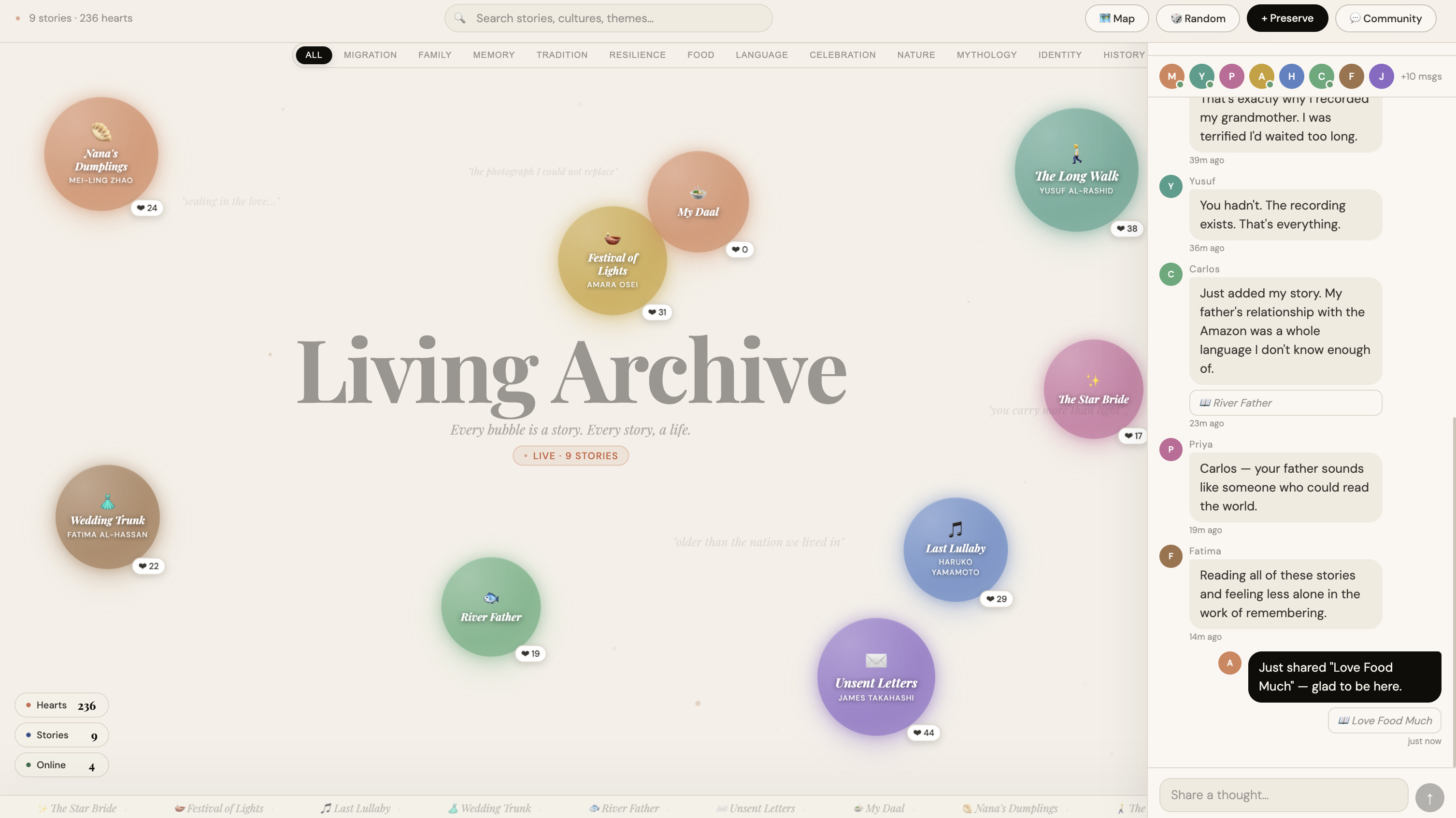
Users submit a story, and it is transformed into a structured archive entry that captures its meaning, themes, and significance. Each story becomes an interactive bubble in a shared space and can also be explored on a global map, connecting stories across places and cultures.
We also generate an AI scrapbook of the story, breaking it into key moments and turning them into a visual flipbook. This allows users to imagine what their story might have looked like, making the experience more immersive and personal.
The result is a growing, connected archive where stories are not just stored, but experienced.
How we built it
We built Living Archive as a React-based web app using a single-page architecture. The UI includes a floating bubble system powered by a custom physics engine, allowing stories to drift and interact dynamically.
We used Claude to help generate the idea, plan the project, and build the initial codebase. From there, we iterated quickly by describing features in natural language and having Claude implement them.
For the AI features, we implemented story transformation and a scrapbook system that breaks stories into meaningful moments and renders them as a flipbook experience. When API access was limited, we built a local story parsing system using keyword extraction and sentence scoring to generate personalized scrapbook pages without external calls.
Challenges we ran into
One of the biggest challenges was making the scrapbook feel personal rather than generic. Early versions produced outputs that looked nice but were not grounded in the actual story. We had to rethink the approach and ensure every scene was tied directly to the story’s details.
We also had to deal with time and API constraints during the hackathon. This pushed us to design a fallback system that could still deliver a strong experience without relying on external services.
Another challenge was balancing visuals and performance, especially with animated bubbles and interactive UI elements.
Accomplishments that we're proud of
We are proud that we built a full, working product in a very short time that feels meaningful and complete.
The floating bubble interface, the scrapbook feature, and the map view all come together into a cohesive experience. Most importantly, the product feels emotional. It does not just show data, it tells stories.
We are especially proud that the scrapbook feature feels personal and grounded in each story, even without relying fully on external AI.
What we learned
We learned how powerful AI can be as a collaborative tool, not just for generating content but for planning and building systems end to end.
We also learned that good products are not just about technical complexity. What matters is clarity of idea, emotional impact, and user experience.
Finally, we learned how to adapt quickly when constraints change, and how to design systems that still work under those limitations.
What's next for Living Archive
Next, we want to make Living Archive a true global platform. This includes improving the map feature, adding better story discovery and search, and allowing users to connect stories across themes and cultures.
We also want to enhance the scrapbook experience with richer visuals and optional real image generation when available.
Long term, we see Living Archive as a space where anyone in the world can preserve their story, connect with others, and feel that their experiences matter and will not be forgotten.
Built With
- claude
- javascript
- python
- react

Log in or sign up for Devpost to join the conversation.