Project Story: Livestock Disease Prediction
About the Project
Livestock is a vital component of the rural economy, providing livelihoods, food security, and sustenance to millions of farmers. However, diseases in livestock often go undiagnosed due to limited access to veterinary care, leading to economic losses and the spread of infectious conditions. This inspired us to develop an AI-driven Livestock Disease Prediction system, designed to empower farmers by providing accurate and timely disease detection using simple tools like images and symptom descriptions.
Our vision was to create an accessible, user-friendly solution that could bridge the gap between farmers and expert veterinary care. With this project, we aim to promote healthier livestock, reduce economic losses, and improve the overall quality of rural life.
What Inspired Us
During our research for hackathons and community-based projects, we learned about the pressing challenges faced by livestock owners. Farmers often struggle to identify diseases early due to a lack of veterinary expertise and resources in remote regions. Observing how AI has transformed healthcare for humans, we realized it could also revolutionize livestock healthcare.
Hackathons like the Smart India Hackathon 2024 and our interactions with veterinarians and farmers provided invaluable insights. Their challenges and resilience became our driving force to create an impactful and practical solution.
How We Built the Project
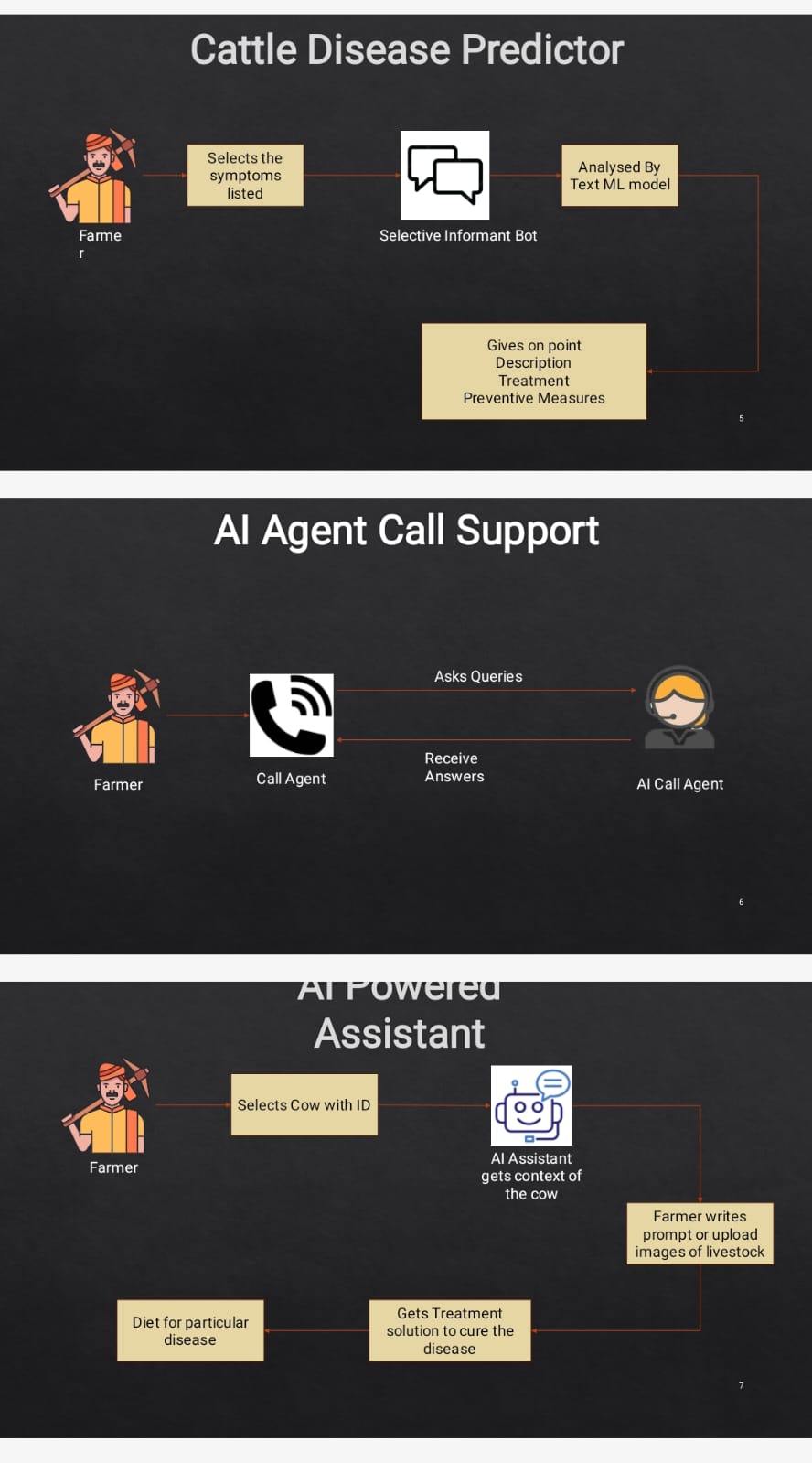
The project combines modern AI technologies with a user-centric design to ensure accessibility and scalability. Here’s how we developed it:
Image-Based Disease Detection
- Used a dataset of livestock disease images sourced from open repositories and veterinary experts.
- Trained a computer vision model with transfer learning using pre-trained networks like ResNet and EfficientNet for accuracy and faster training.
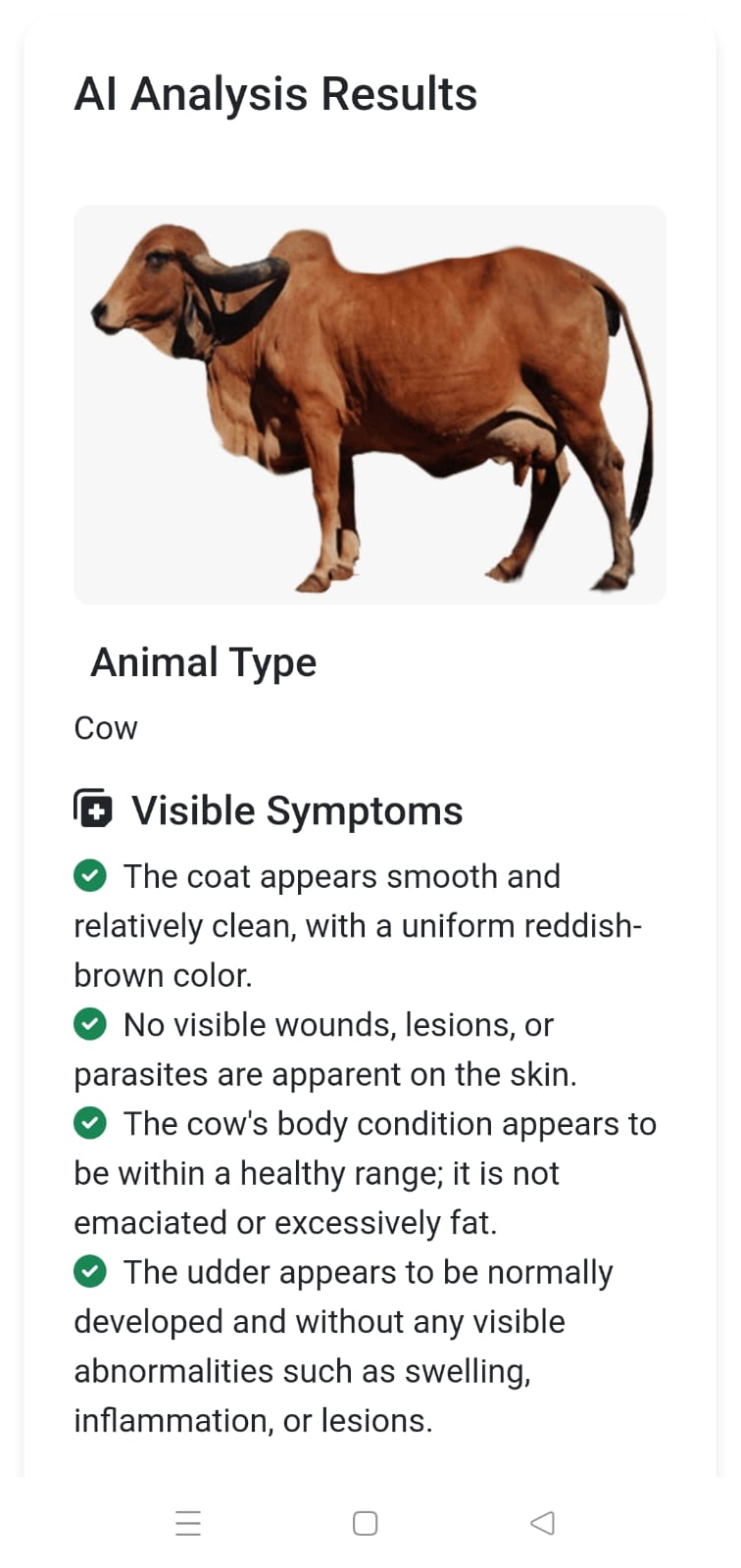
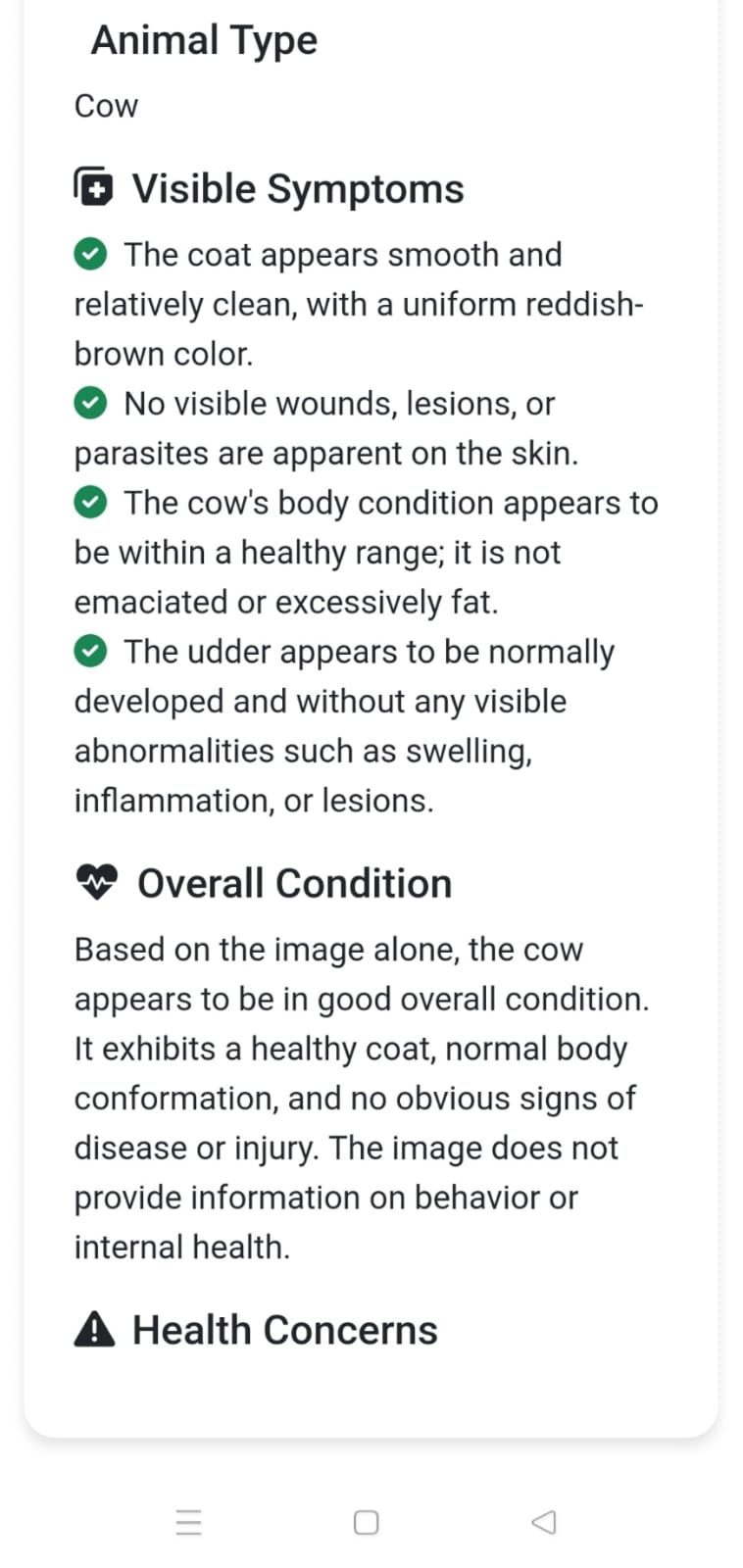
- Deployed the model for real-time prediction, allowing farmers to upload photos of affected animals for immediate analysis.
- Used a dataset of livestock disease images sourced from open repositories and veterinary experts.
Symptom Analysis via NLP
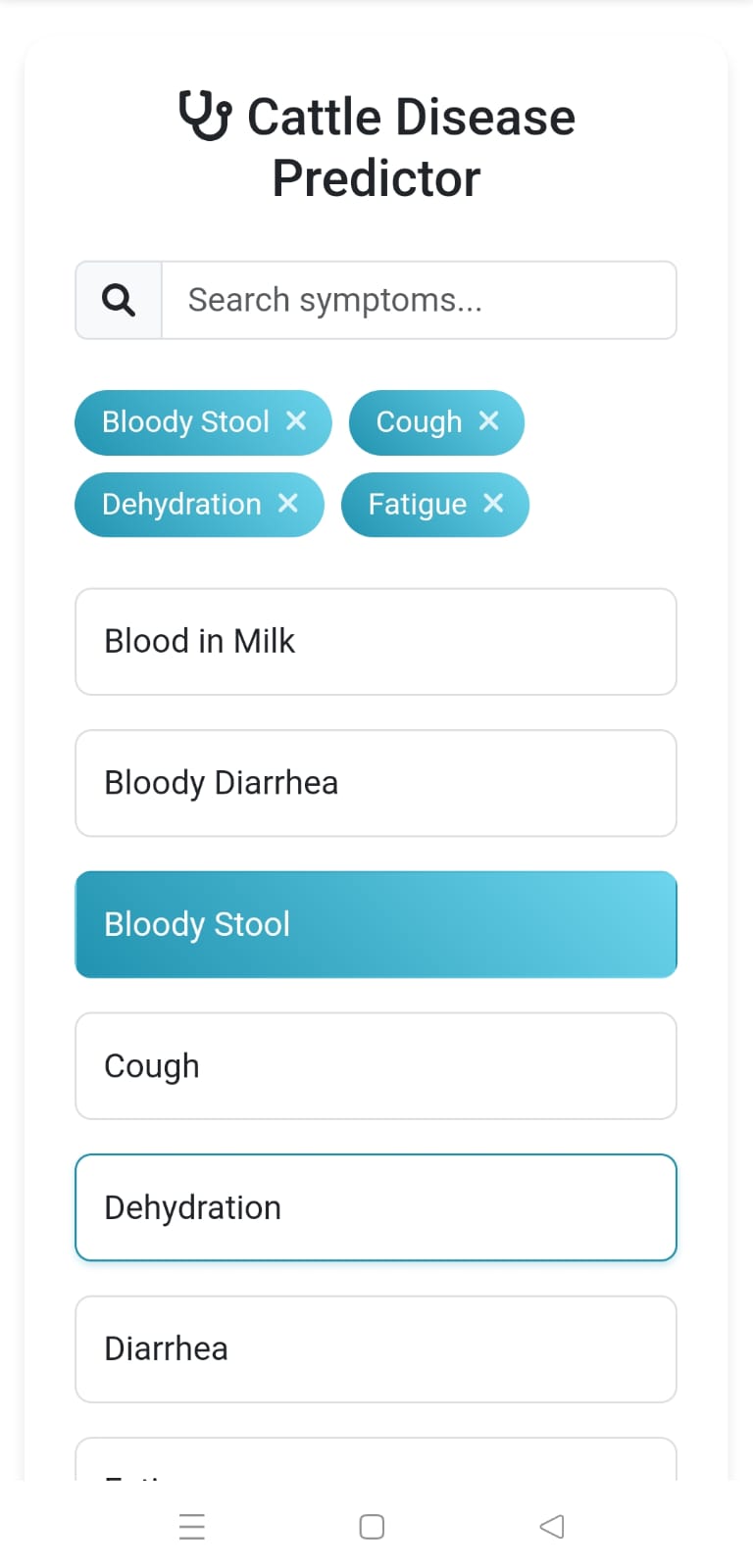
- Developed an NLP model to analyze symptoms described in text or voice by farmers.
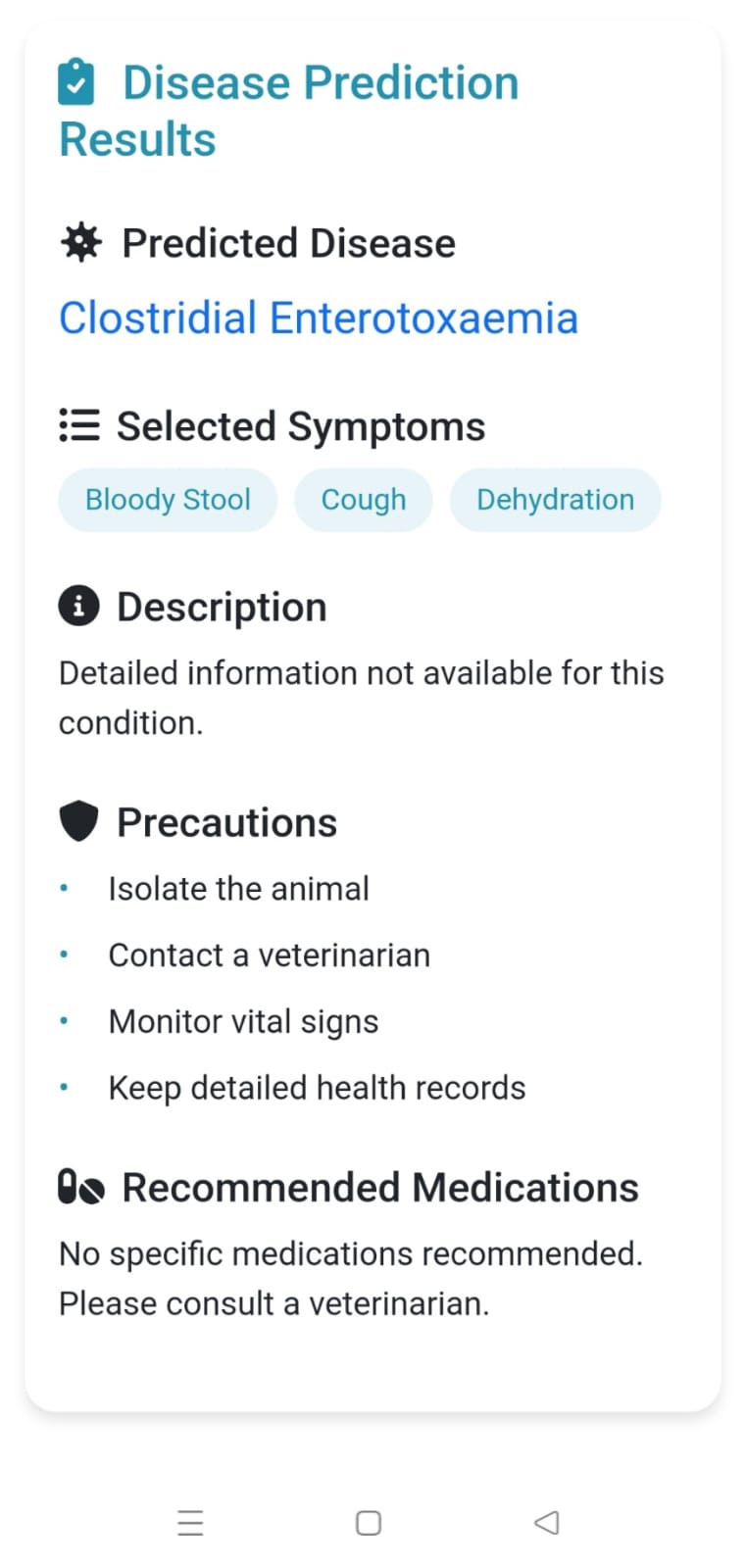
- Utilized Hugging Face transformers for processing and matching symptoms to known diseases.
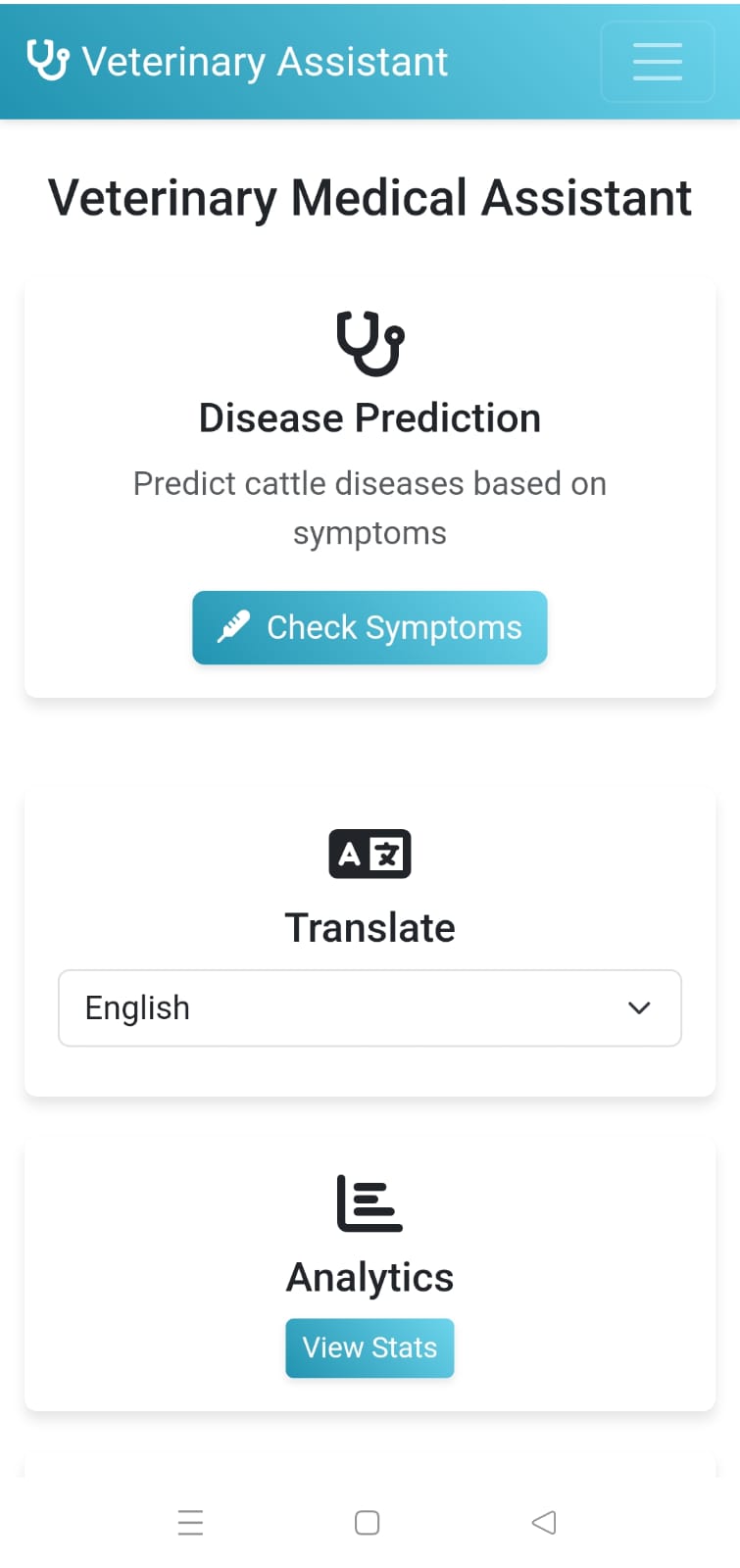
- Added regional language support to cater to diverse user bases.
- Developed an NLP model to analyze symptoms described in text or voice by farmers.
Platform Design
- Built the interface using React for simplicity and responsiveness.
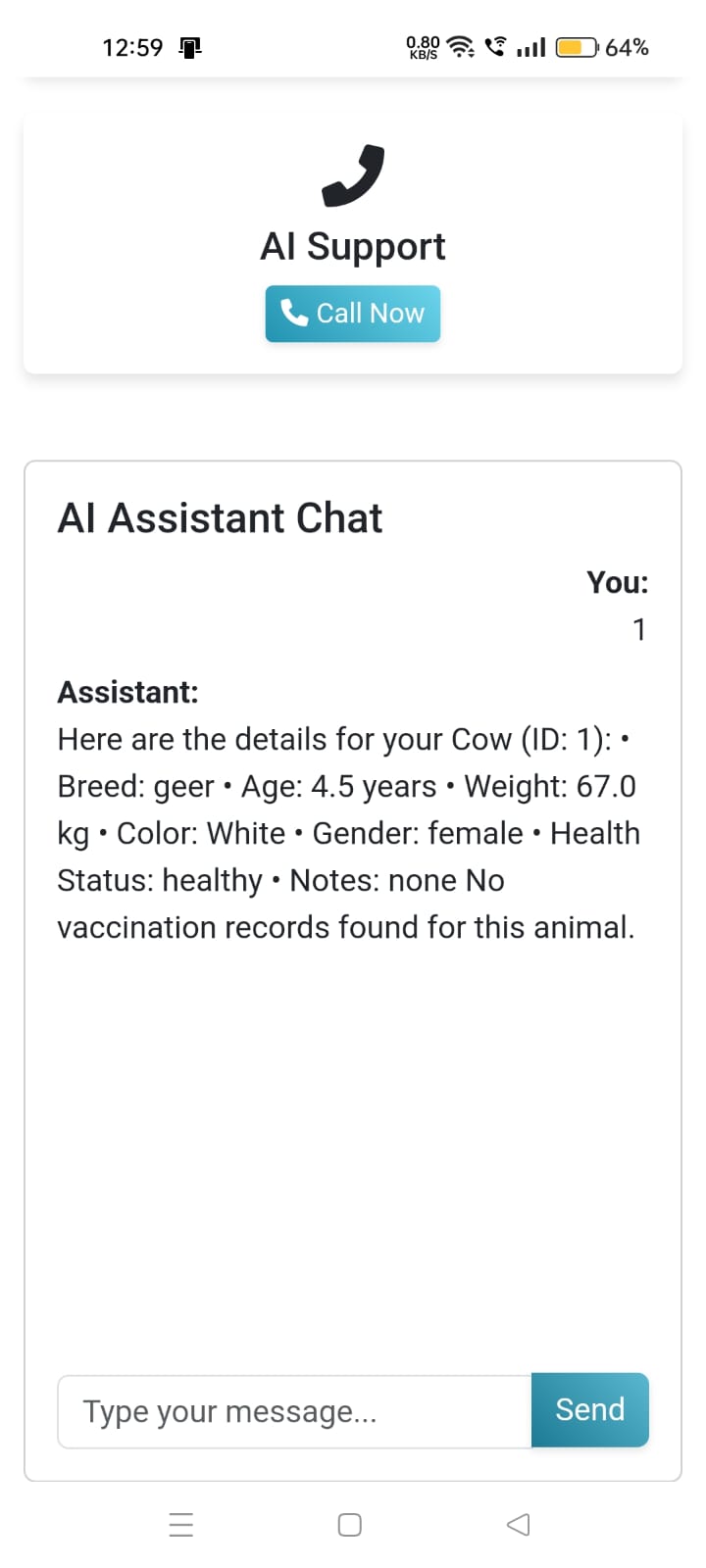
- Integrated voice-based interaction for accessibility, particularly for users with limited literacy.
- Added geotagging to track disease outbreaks and notify local veterinary authorities.
- Built the interface using React for simplicity and responsiveness.
Backend and Deployment
- Hosted the models and platform on cloud services for scalability.
- Focused on optimizing latency to ensure smooth functioning even in areas with low internet connectivity.
- Hosted the models and platform on cloud services for scalability.
What We Learned
This project was a blend of technical and real-world learning experiences. Key takeaways included:
- Interdisciplinary Collaboration: Working with veterinarians and farmers helped us understand the ground-level challenges and refine our solution.
- Technical Growth: Building and optimizing models for diverse datasets improved our skills in AI and system design.
- User-Centric Design: Making the platform intuitive and accessible for rural users taught us the value of empathetic design thinking.
- Data Challenges: We gained experience in curating datasets and managing data scarcity through augmentation techniques and domain knowledge.
Challenges We Faced
- Data Scarcity: Obtaining high-quality, diverse datasets for livestock diseases was difficult. We overcame this by collaborating with experts and using data augmentation.
- Model Efficiency: Ensuring that the AI models performed well on low-end devices was crucial for rural deployment. We optimized the models using pruning and quantization.
- Regional Adaptation: Building multilingual support required extensive work on translations and voice recognition for various dialects.
- Validation and Testing: Ensuring the system’s predictions were reliable required rigorous validation with veterinary professionals.
- Scaling the Solution: Designing for low internet connectivity and limited computational resources was an ongoing challenge.
Impact and Vision
We envision a future where every farmer, regardless of location, has access to the tools and information needed to keep their livestock healthy. This project aims to reduce economic losses, improve rural healthcare infrastructure, and empower communities to adopt AI-driven solutions for sustainable agriculture.
By combining AI with grassroots-level insights, we’re not just creating a tool but driving a movement towards smarter, healthier farming practices. Our long-term goal is to scale this solution globally and integrate additional features like predictive analytics for disease outbreaks and real-time veterinary consultations.
Conclusion
The journey of building this project was both challenging and rewarding. From ideation to implementation, we embraced the power of technology to solve real-world problems. We believe that this system has the potential to make a significant difference in the lives of farmers, ensuring that their hard work is supported by innovative and reliable tools. Through this project, we’ve learned, grown, and become more determined to use technology for good.


Log in or sign up for Devpost to join the conversation.