
Inspiration I was inspired by the daily struggles commuters face due to unpredictable traffic and the delays that emergency vehicles often encounter while trying to navigate congested roads. I wanted to create something simple yet impactful that can help people make better travel decisions and assist emergency services in reaching their destinations faster.
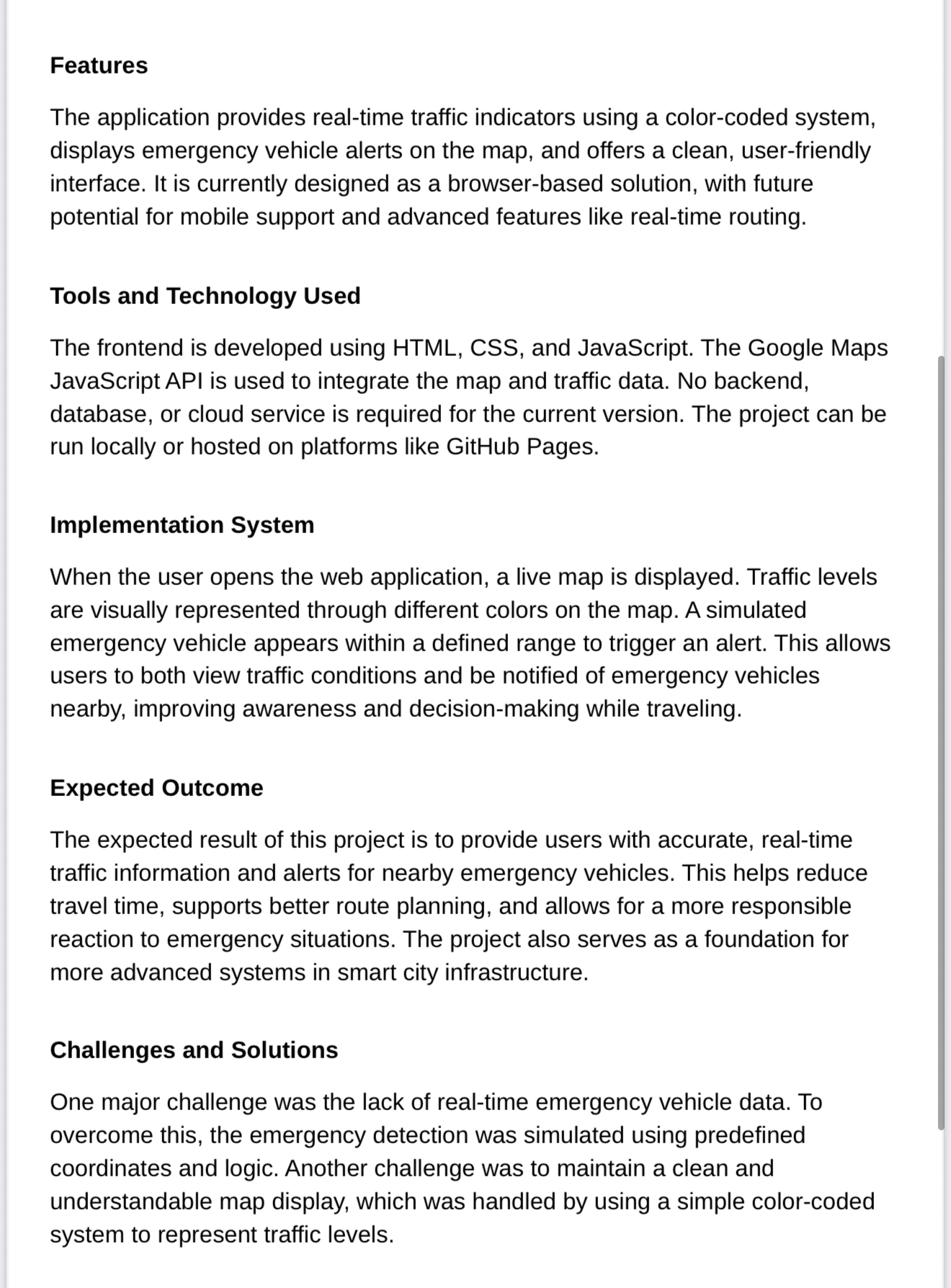
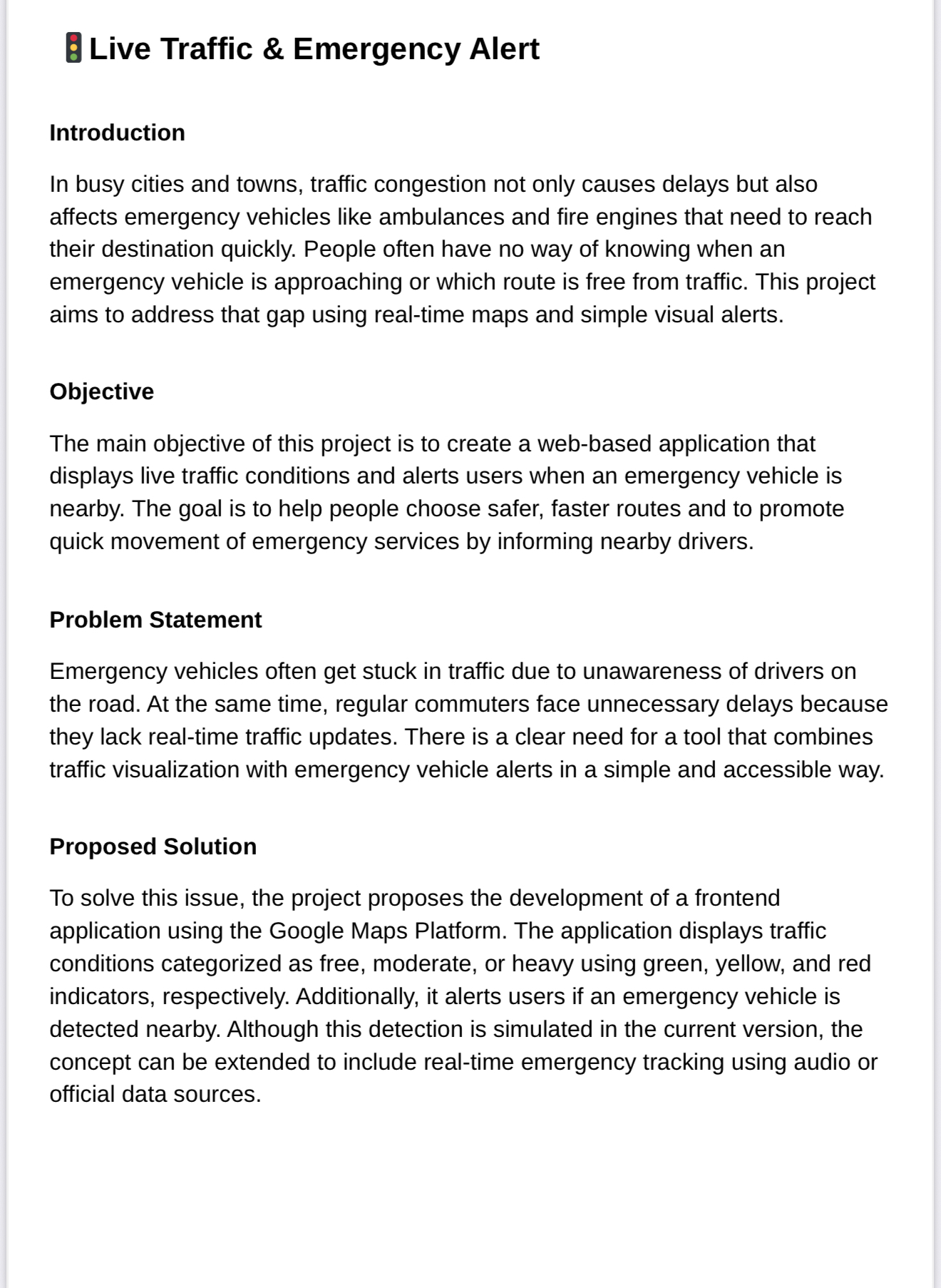
What It Does My project, ClearWay, is a web-based application that displays real-time traffic conditions using green, yellow, and red indicators to represent free, moderate, and heavy traffic. It also detects when an emergency vehicle, such as an ambulance or fire engine, is nearby and alerts the user through a visual indicator on the map. This promotes safer and smarter commuting while encouraging people to give way during emergencies.
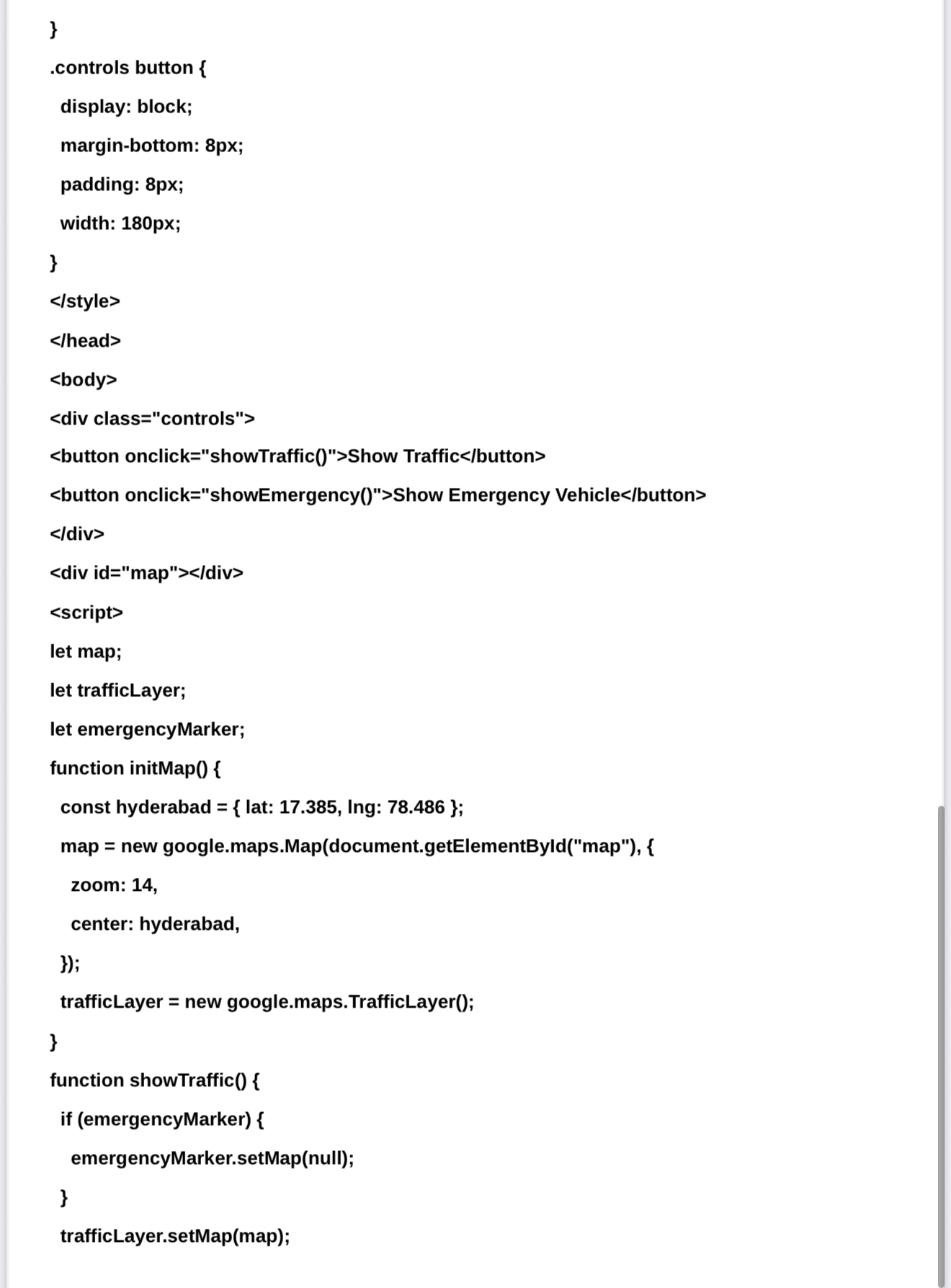
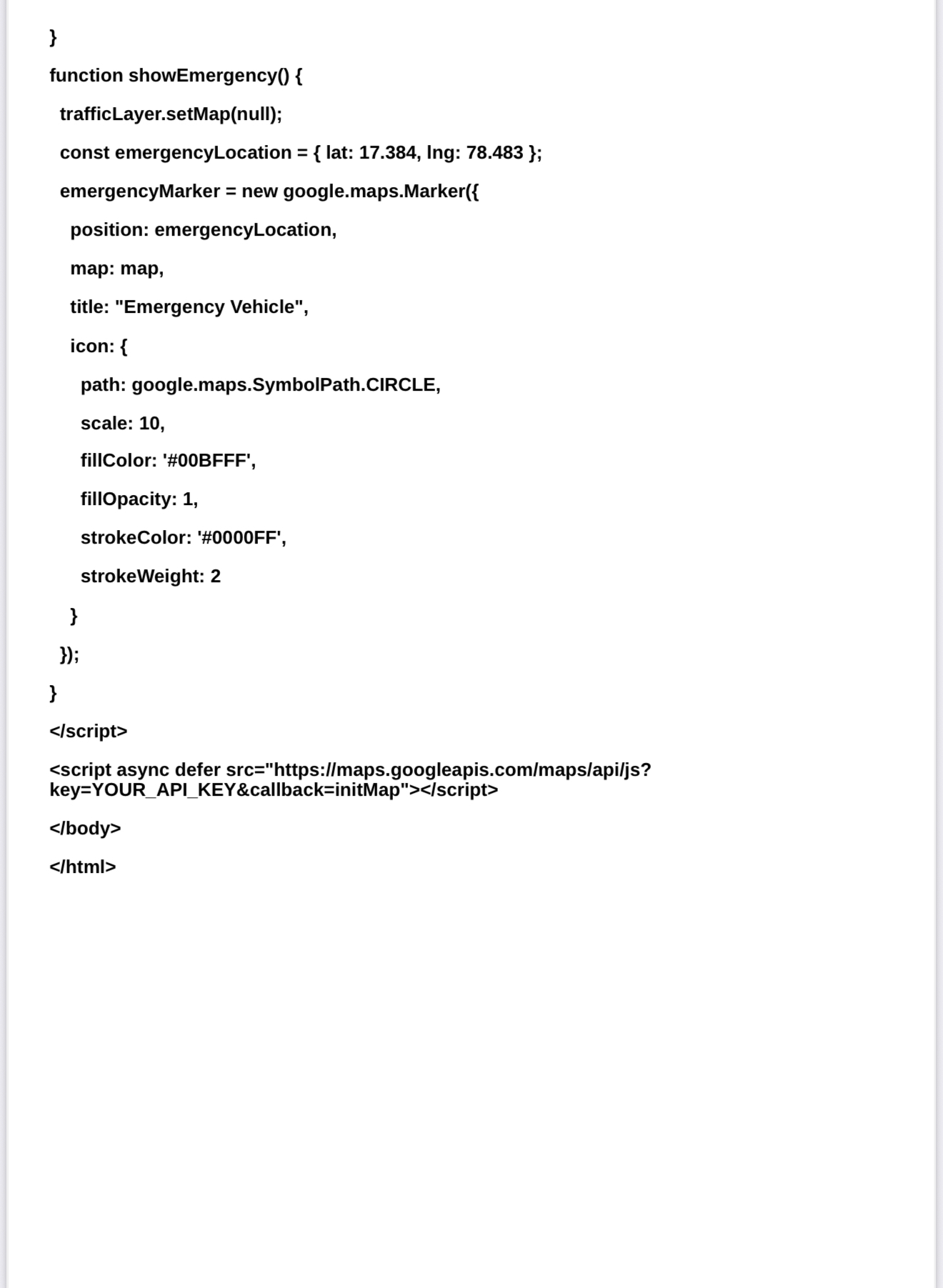
How I Built It I built the application using HTML, CSS, and a bit of Java. Since this is my first time working on a project like this, I focused mainly on building the frontend part creating the map layout, adding traffic indicators, and designing how the alerts should look when an emergency vehicle is nearby. I’m still exploring how the full backend and real-time APIs work, but I tried to simulate the main features using simple logic for now.
Challenges I Faced One of the key challenges I faced was simulating emergency vehicle detection without access to real-time siren or government traffic feeds. Designing an interface that clearly and cleanly displays traffic conditions and alerts, while keeping the user experience simple, was also a challenge.
Accomplishments I’m Proud Of I’m proud of building a working prototype that integrates live traffic data with a responsive map and shows emergency vehicle alerts in a meaningful way. It combines location technology with safety, solving a real-world problem in a user-friendly interface. Using the Google Maps Platform in this way was both rewarding and educational.
What I Learned Through this project, I learned how to effectively use Google Maps APIs, calculate distances between coordinates, and design a responsive frontend application that serves a real purpose. I also understood the importance of clear visual communication when working on tools related to safety and navigation.
What’s Next In the future, I would like to integrate real-time emergency vehicle tracking from official data sources, implement siren detection using audio input and machine learning, and make this tool mobile-friendly. I also hope to develop route suggestions and eventually collaborate with traffic authorities or smart city programs to bring it into real-world use.

Log in or sign up for Devpost to join the conversation.