-
-
-
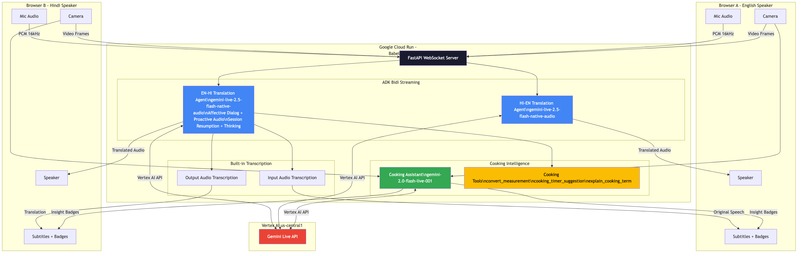
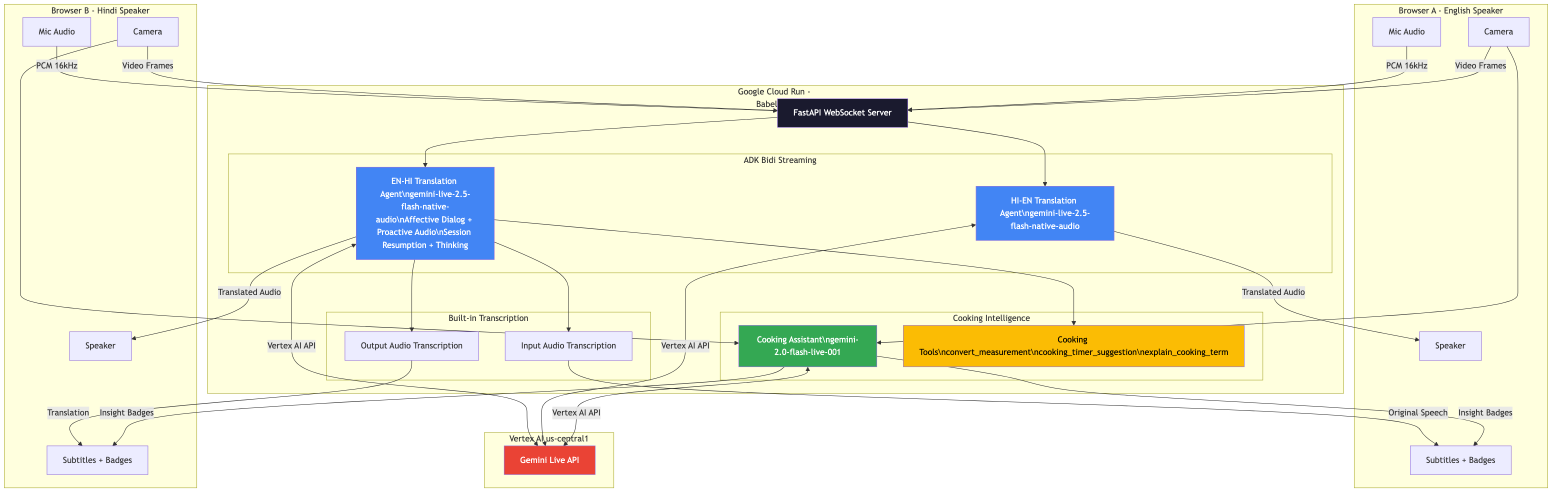
Arch. Diagram
-
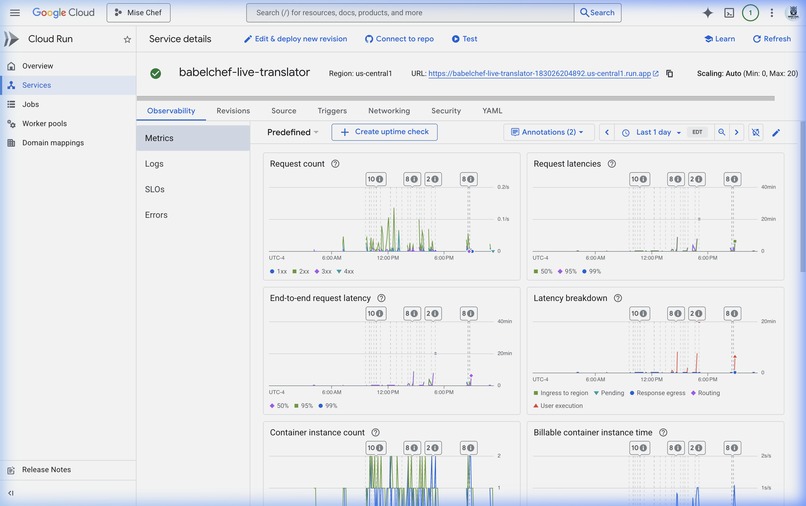
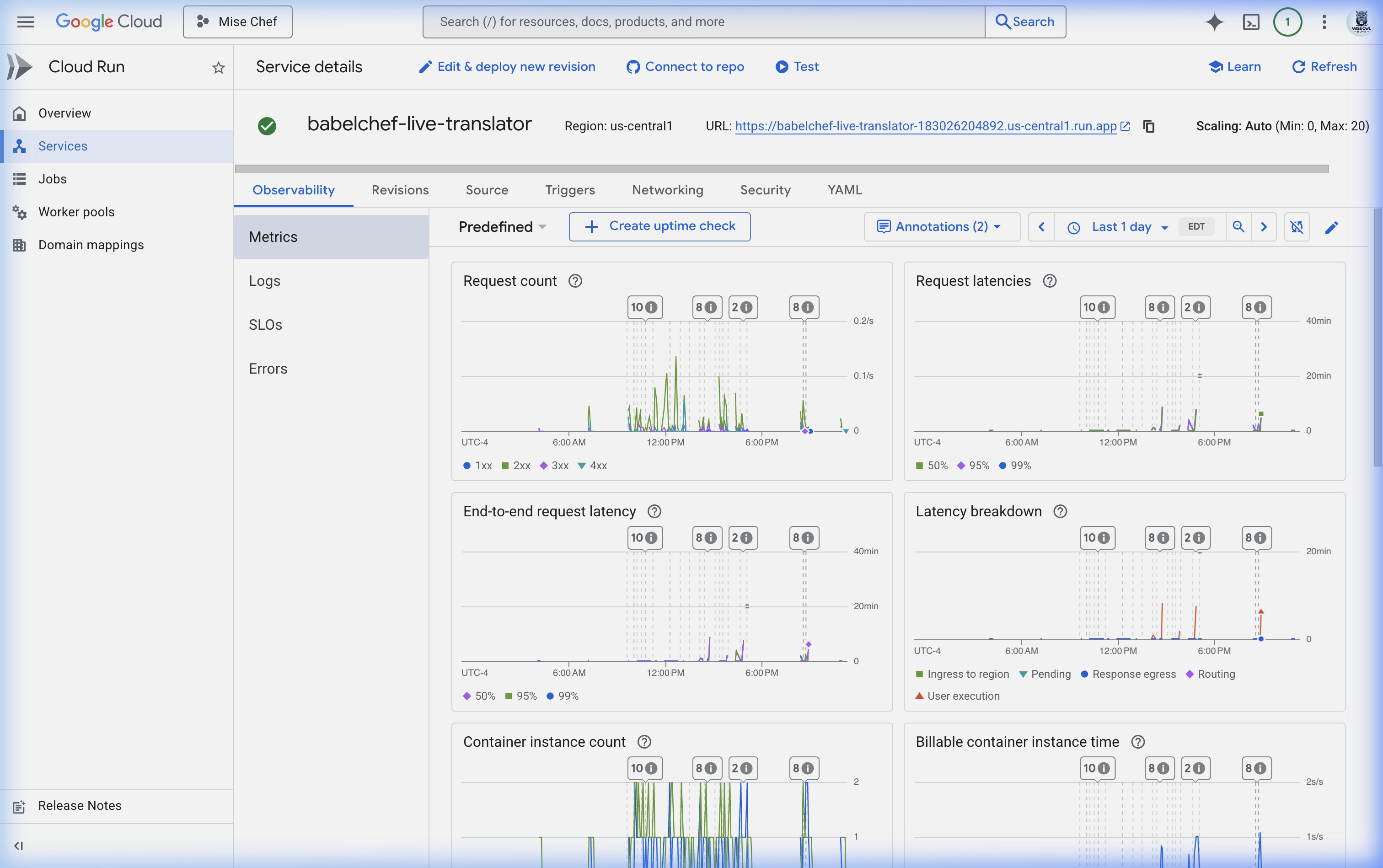
GCP Proof
-
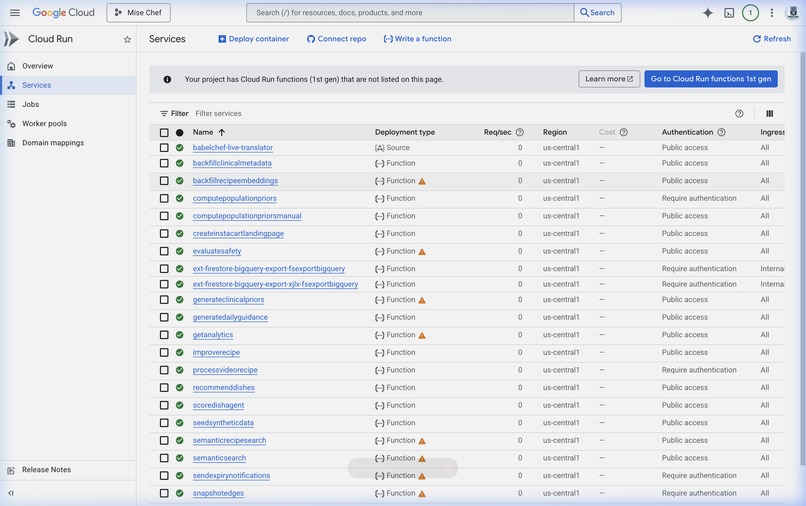
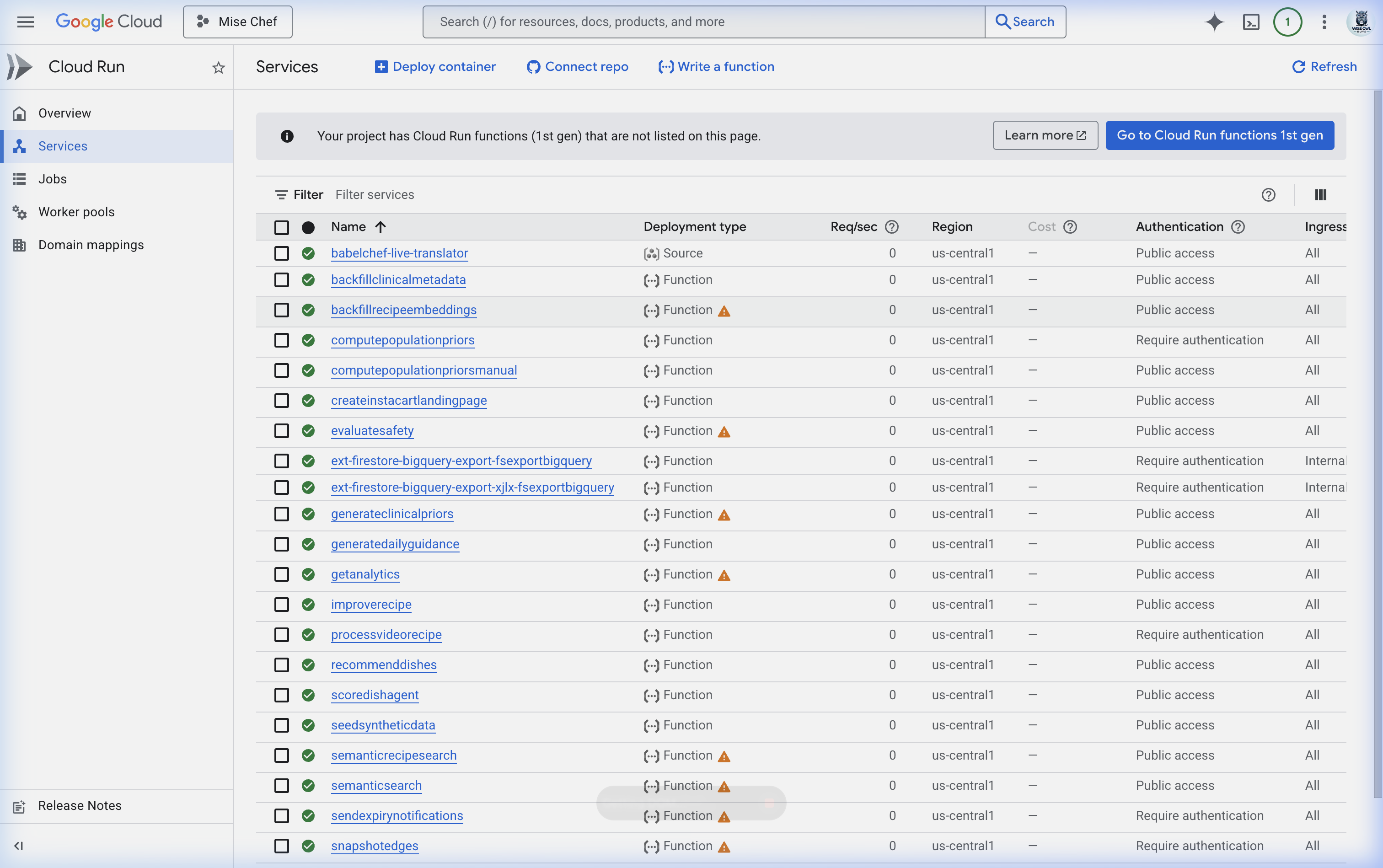
GCP Proof
-
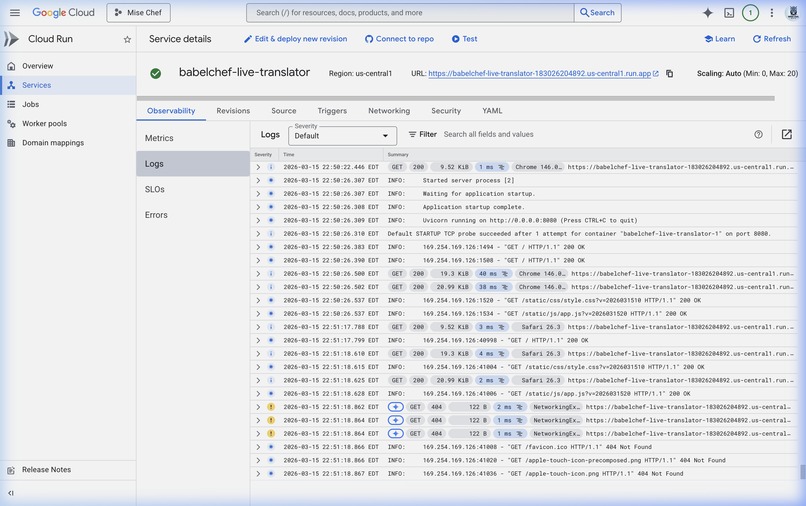
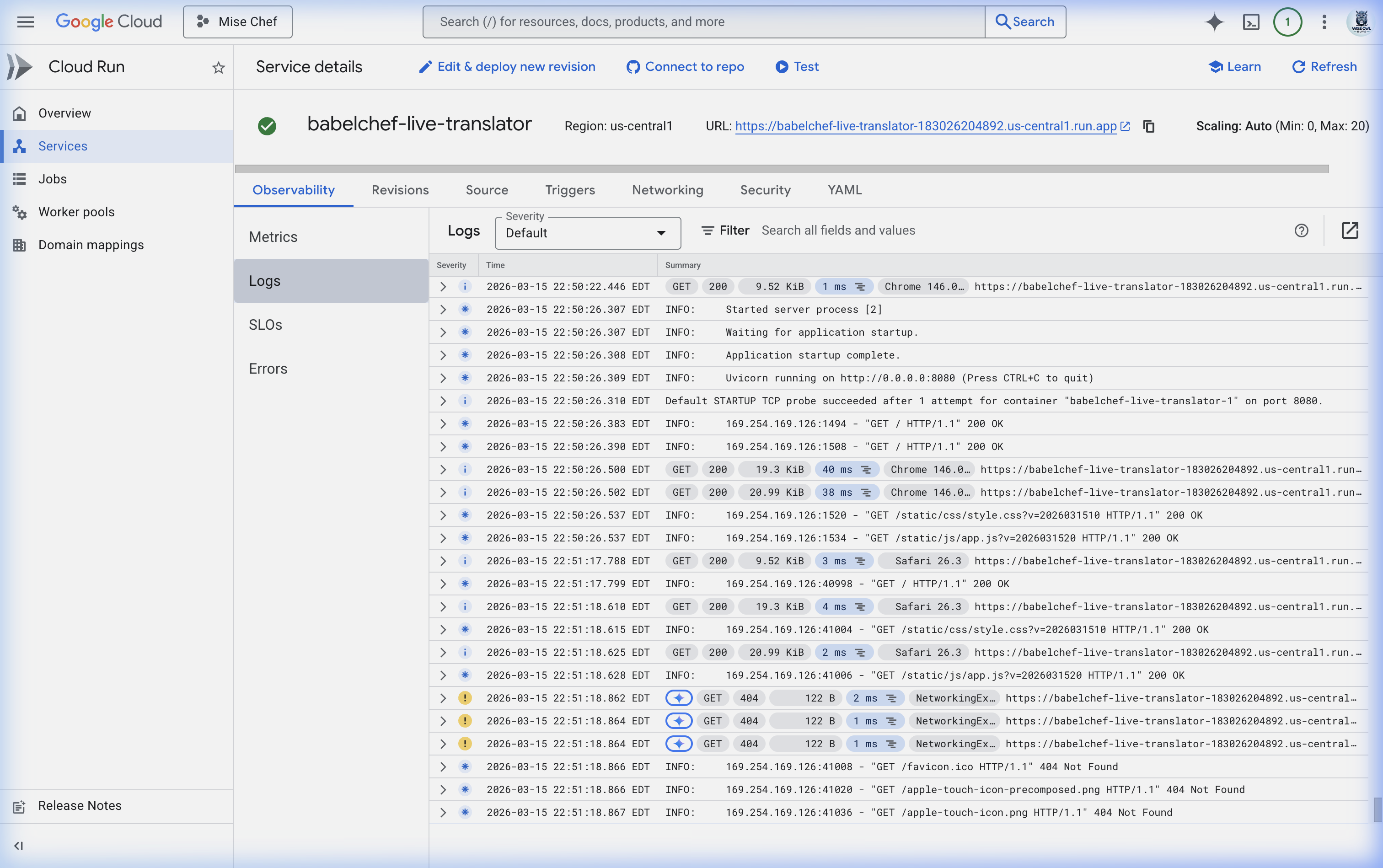
GCP Proof
-
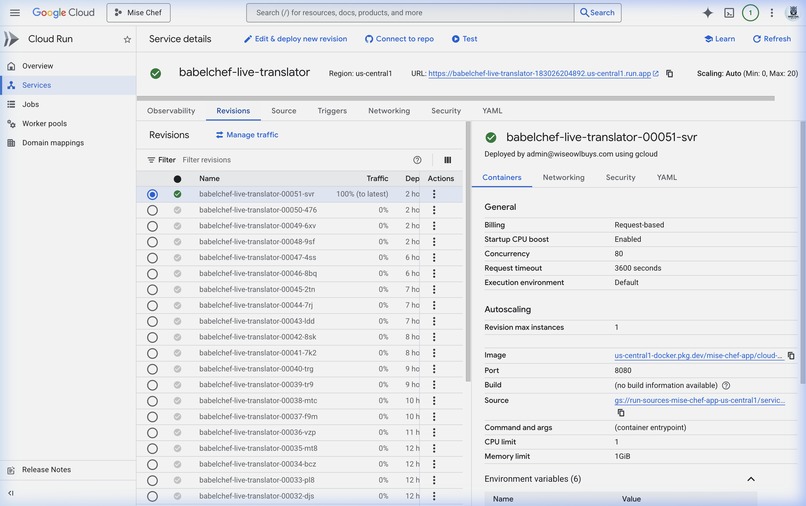
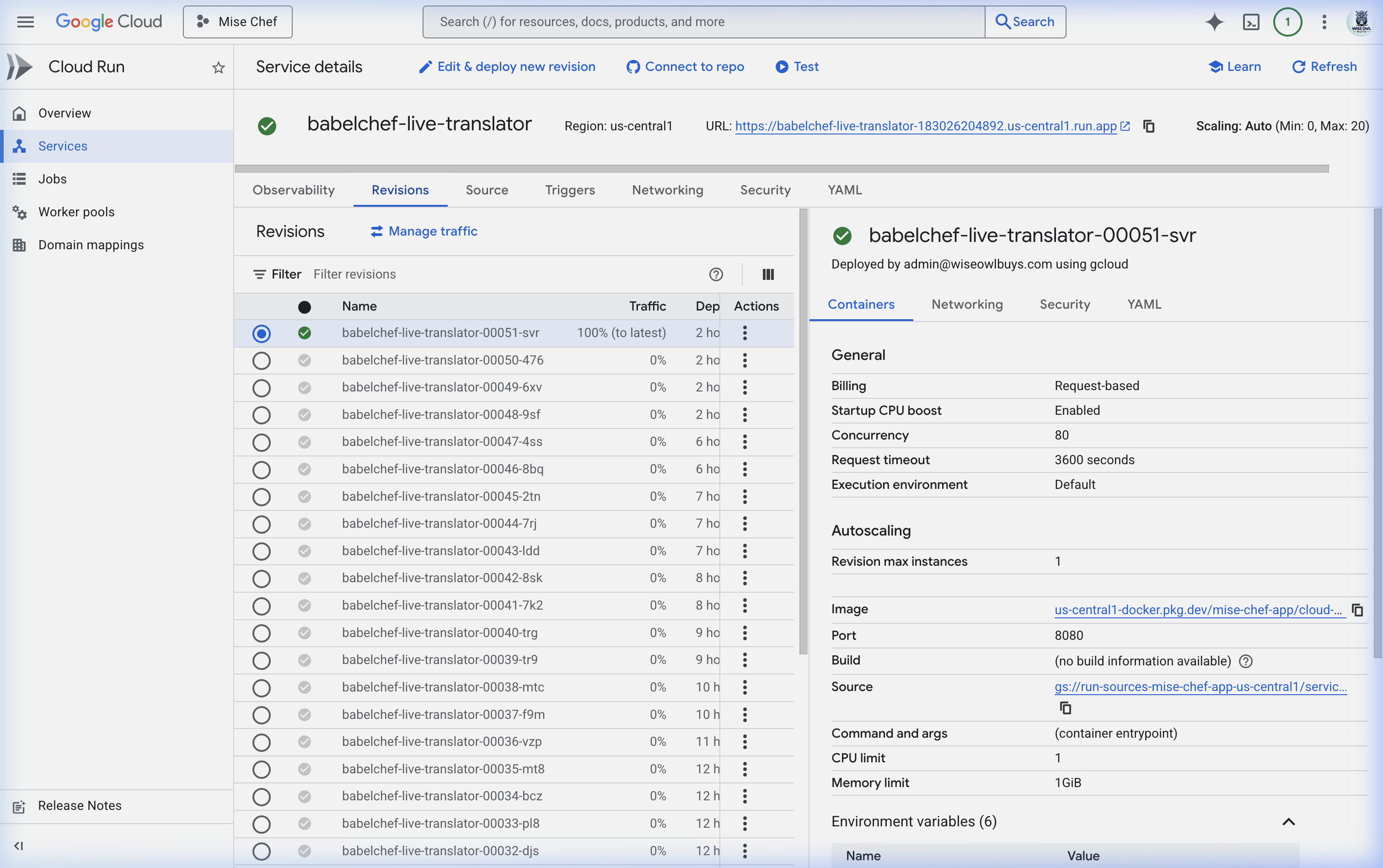
GCP Proof
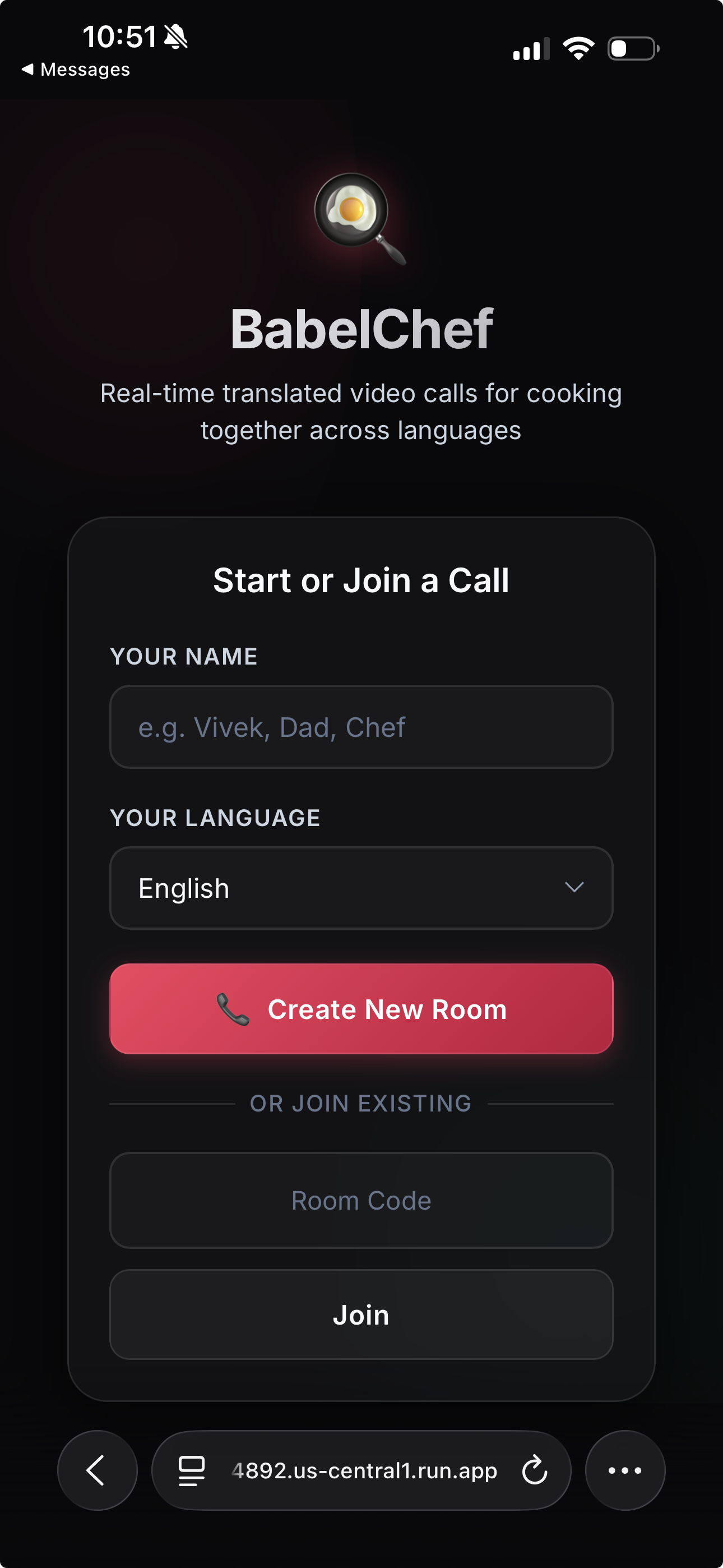
Visit Correct Video at: https://mise-chef-app.web.app/babelchef/
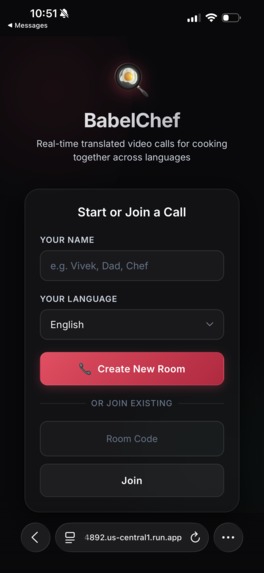
BabelChef
Summary
BabelChef is a real-time bilingual video call translator purpose-built for cross-cultural cooking. When Mom speaks Hindi and daughter-in-law speaks English, BabelChef bridges the gap so they can cook biryani together — guided by voice, face-to-face on video, with AI that understands what's happening in the kitchen.
The Problem
700 million people worldwide live in multilingual family households. When a Hindi-speaking grandmother wants to teach her English-speaking daughter-in-law how to make biryani over a video call, no existing tool works:
- Google Translate: Text-based, turn-by-turn — too slow for "Add the spices NOW!"
- Video calls (FaceTime, WhatsApp): No translation
- Interpreter apps: No video, no visual context
- Kitchen noise problem: Sizzling oil, clattering utensils, and running water trigger phantom translations
- Session drops: Cooking sessions last 30-60 minutes, exceeding typical API session limits
The Solution
BabelChef creates a video call where each person speaks their own language and hears the other in theirs — in real-time, with emotional tone preserved, and with AI that understands cooking context.
7 Gold Standard Gemini Live API Features
- Session Resumption — Long cooking sessions survive WebSocket connection limits
- Context Window Compression — Unlimited session length without memory degradation
- Input Audio Transcription — Shows original speech as subtitles
- Output Audio Transcription — Shows translated speech as subtitles
- Affective Dialog — Preserves emotional tone: excitement, urgency, tenderness
- Proactive Audio — Filters kitchen noise — sizzling, chopping, clattering don't trigger phantom translations
- Function Calling (Cooking Tools) — Mid-conversation measurement conversion ("How many grams is 2 cups?"), timer suggestions, and culturally-aware cooking term explanations ("What does tadka mean?")
Additionally, Thinking Config enables contextually accurate translations of cooking idioms rather than literal word-for-word translations.
Technologies Used
- Gemini Live 2.5 Flash Native Audio — Bidirectional real-time translation with native audio I/O
- Gemini 2.0 Flash Live — Cooking assistant agent (text output for insight badges)
- ADK (Agent Development Kit) — Bidi streaming via
LiveRequestQueue+run_live(), function calling - Google Cloud Run — Serverless container hosting with WebSocket support + session affinity
- Vertex AI — Gemini model serving (us-central1)
- FastAPI — Python web framework with WebSocket support
- Web Audio API — Browser-based PCM audio capture and playback (16kHz mono)
Architecture
The system runs three concurrent ADK agents per room:
- EN→HI Translation Agent: Receives English audio + video frames, outputs Hindi audio with emotional tone preservation
- HI→EN Translation Agent: Receives Hindi audio + video frames, outputs English audio
- Cooking Assistant: Watches video from both cameras, identifies ingredients/techniques, provides cultural cooking insights as text badges
All agents use ADK's run_live() for bidirectional streaming with automatic session management, tool invocation, and transcription.
Findings & Learnings
- Native audio models cannot output text — The cooking assistant needed
gemini-2.0-flash-live-001(text-capable) while translation agents usegemini-live-2.5-flash-native-audio(audio-only) - Proactive Audio is a game-changer — Kitchen environments are noisy. Without it, sizzling pans and running water generate phantom translations. With Proactive Audio, only intentional speech triggers translation.
- Session Resumption is essential for real-world cooking — A typical biryani takes 45-60 minutes. Without session resumption, the connection drops and context is lost.
- Affective dialog makes translation feel human — When Mom excitedly says "Wah! Bahut accha!" the translation preserves the joy, not just the words.
- Vision context improves translation accuracy — When someone says "that looks done," the AI sees what "that" refers to in the video frame.
- Vertex AI model names differ from AI Studio — This caused runtime errors until we mapped the correct model IDs for the Live API.
Third-Party Integrations
- LiveKit (livekit.io): WebRTC infrastructure for video relay between participants. Used under their standard API terms.
- Google Cloud Run: Container hosting with WebSocket support
- Vertex AI: Gemini model access
All other components are original work built during the contest period.
Built With
- cloud-run
- fastapi
- gemini-2.0-flash
- gemini-live-api
- google-adk-(agent-development-kit)
- google-cloud
- javascript
- python
- web-audio-api
- websocket

Log in or sign up for Devpost to join the conversation.