-
-
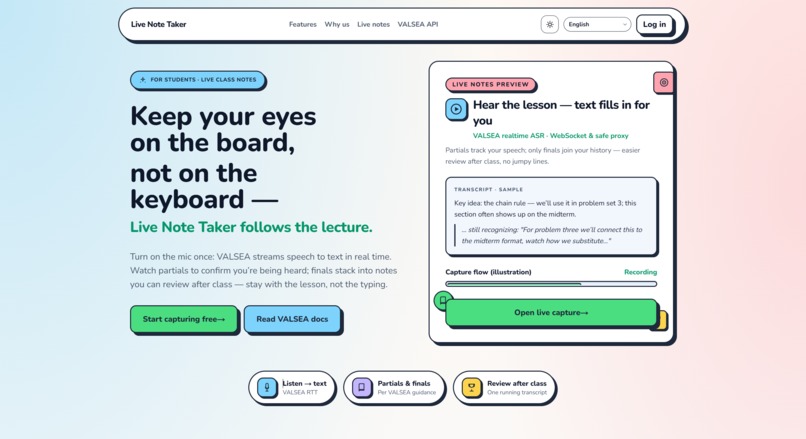
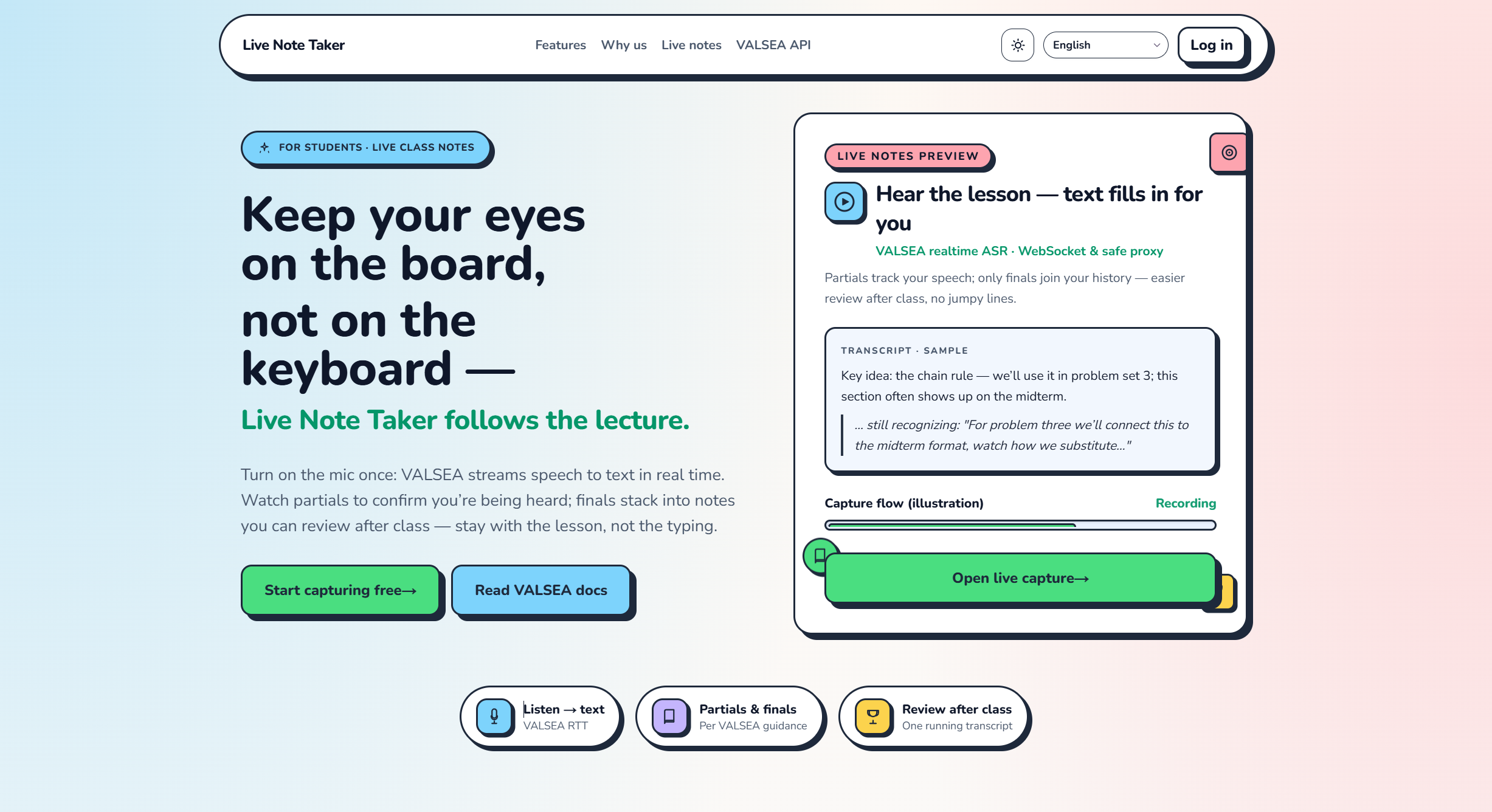
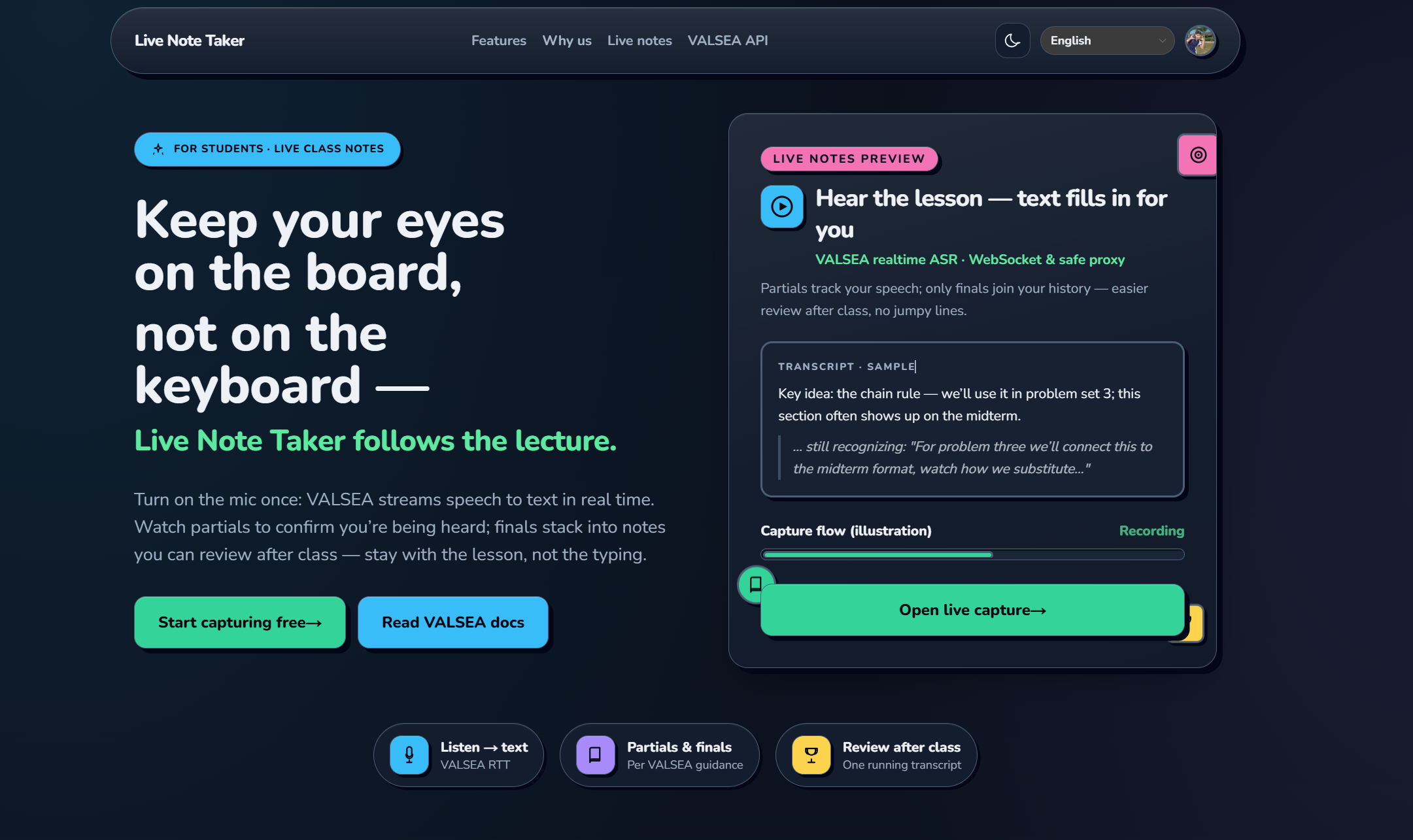
Home: Live Note Taker — keep eyes on the lecture, not the keyboard.
-
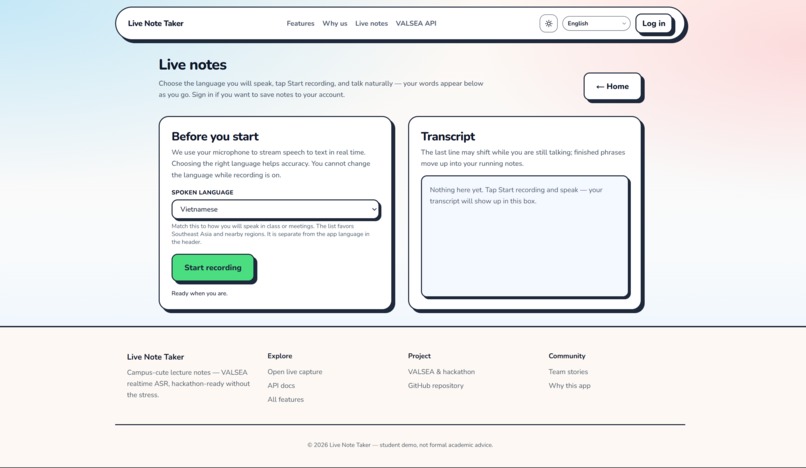
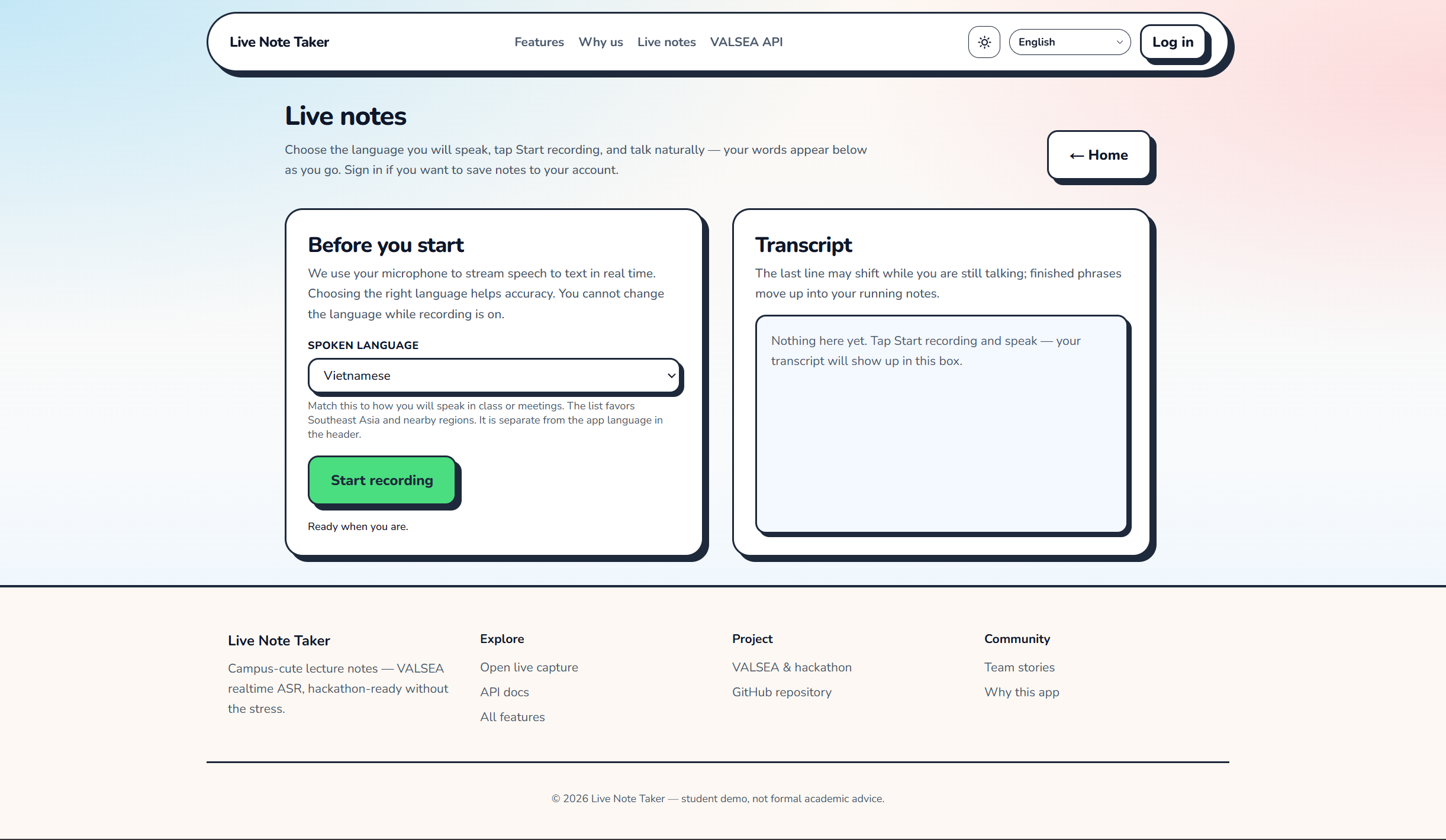
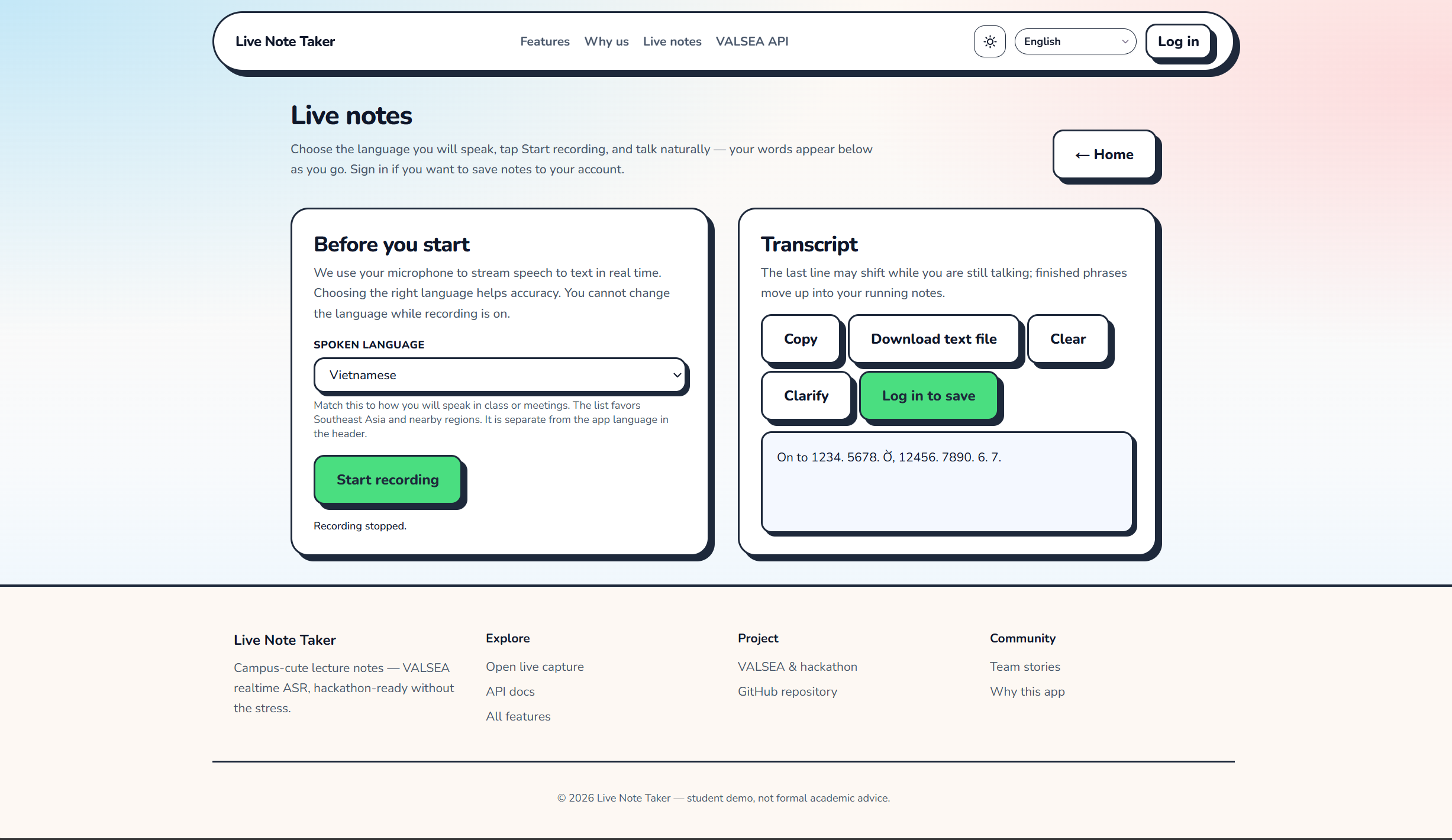
Live RTT: speak into the mic; partial and final transcript streams in real time via VALSEA.
-
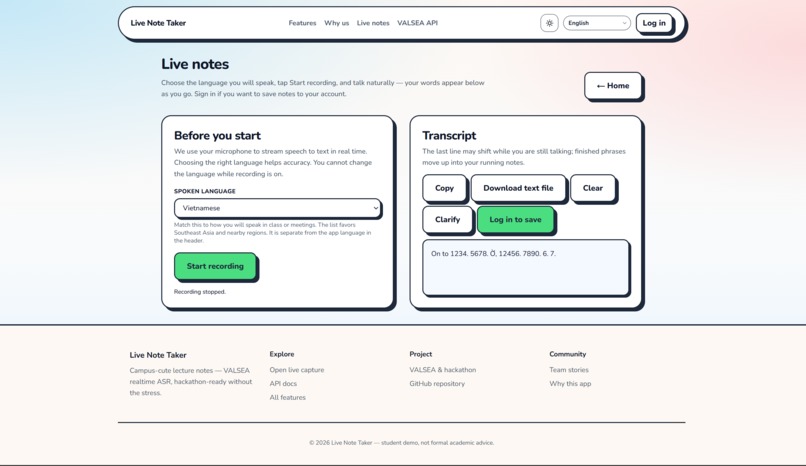
After class: copy, download .txt, clarify text, or save to your workspace when signed in.
-
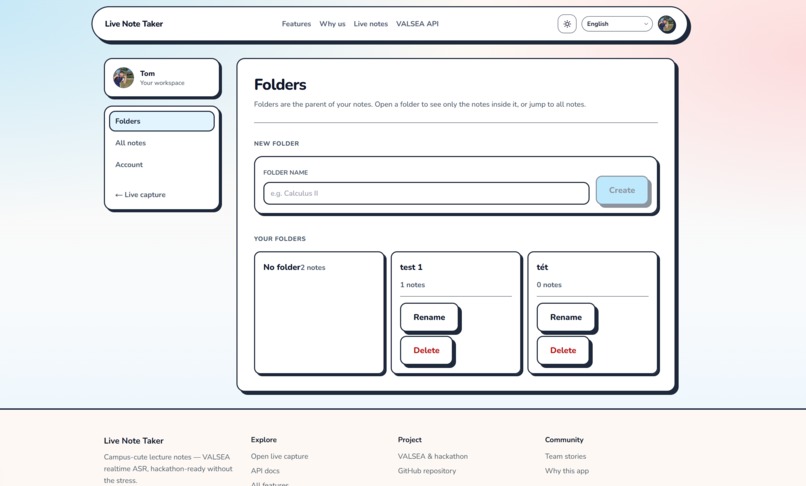
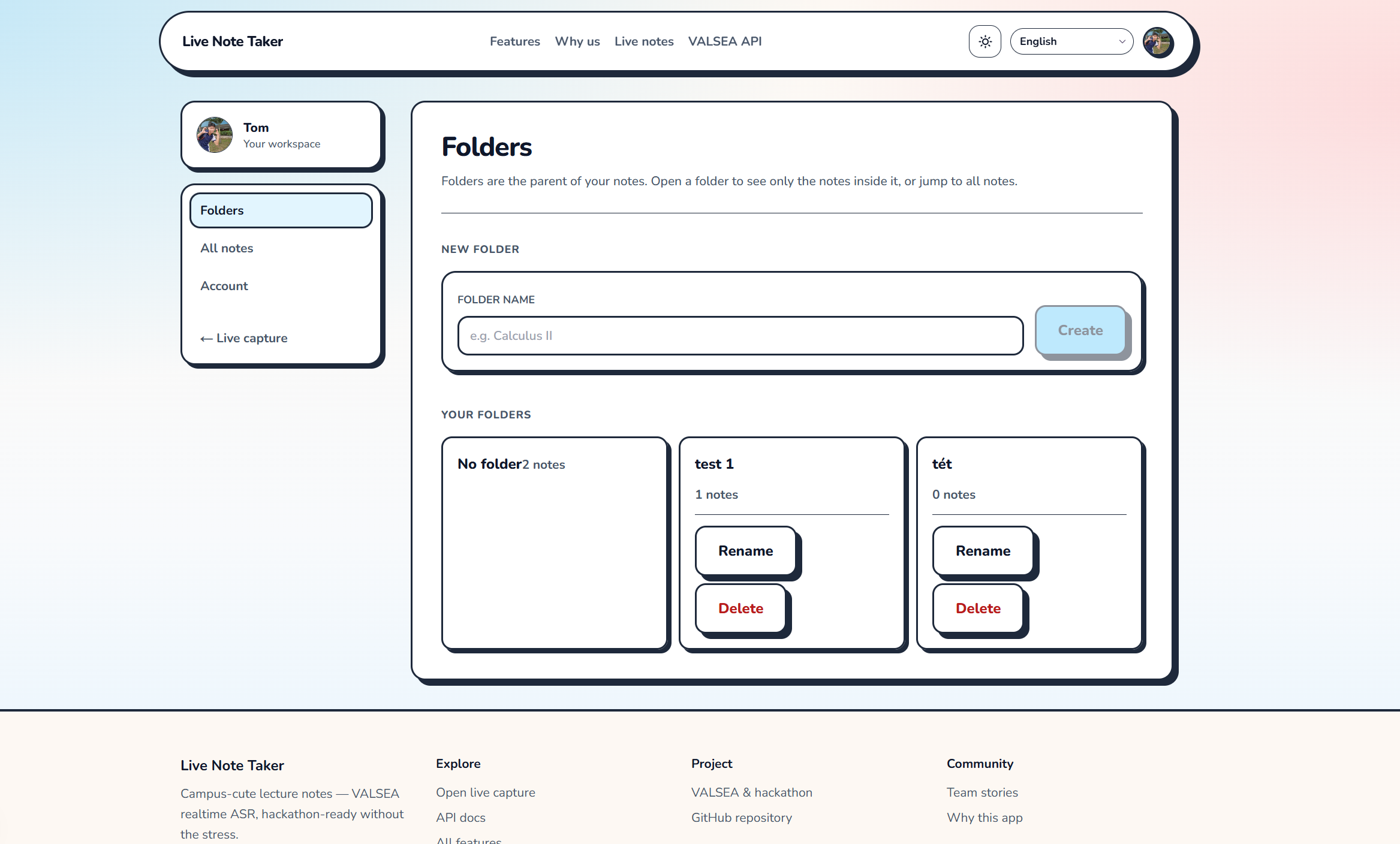
Workspace: organize saved transcripts into folders; rename, open, and keep courses tidy.
-
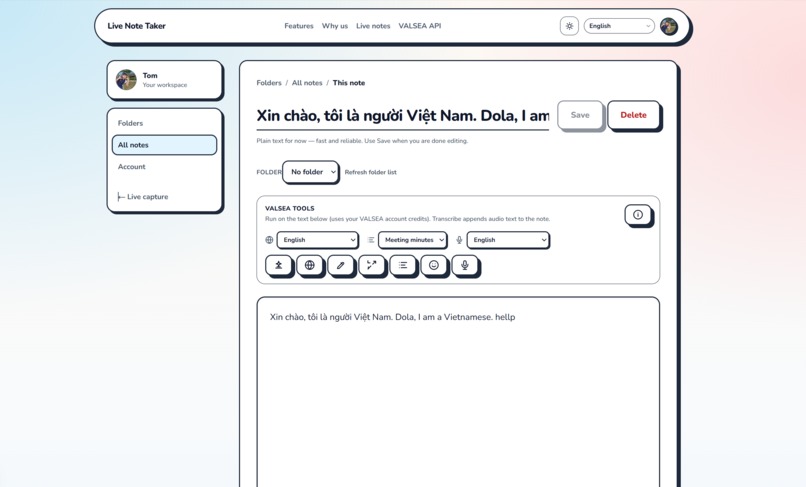
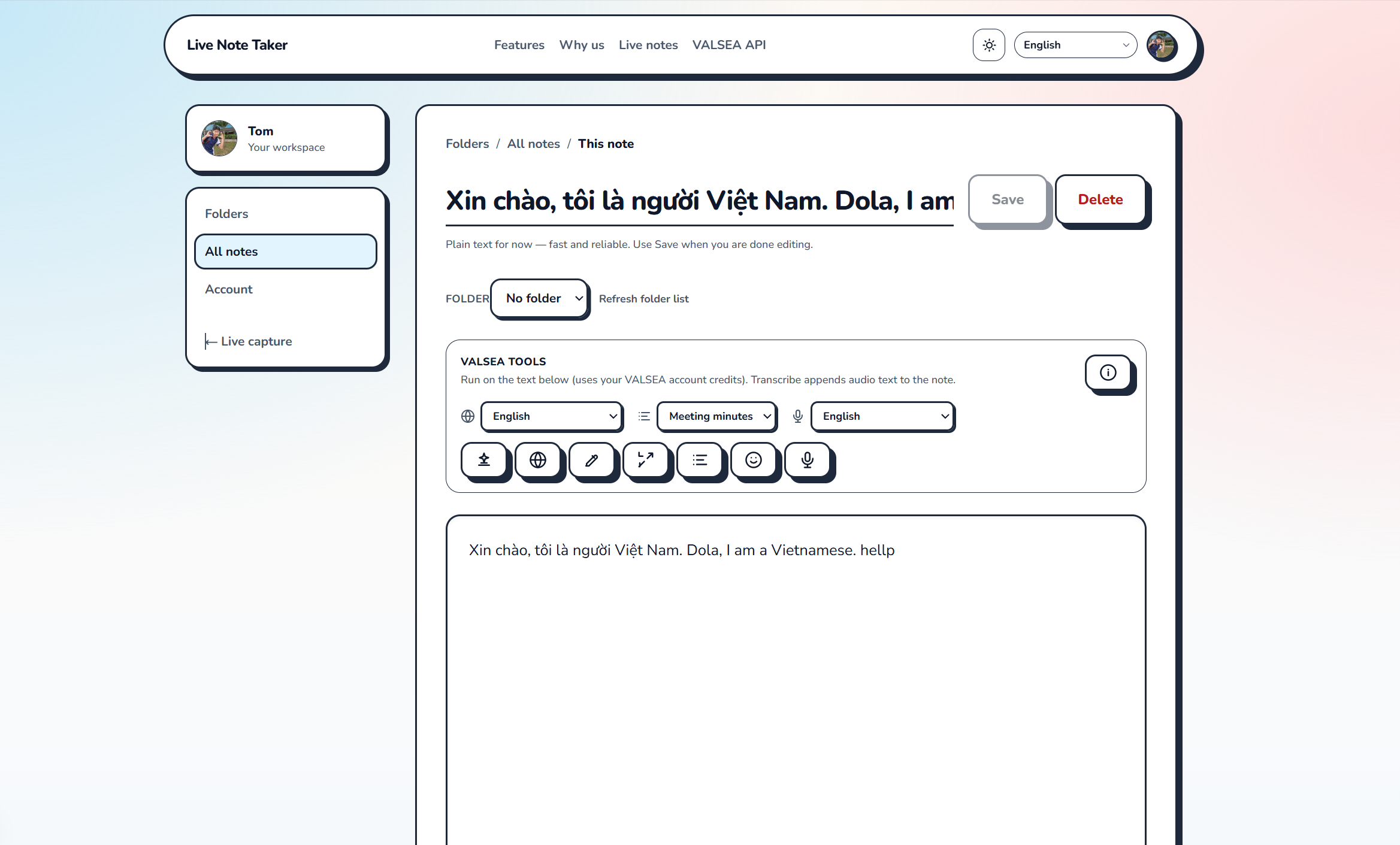
Note editor: refine saved transcripts; optional VALSEA tools (translate, format, sentiment, …).
-
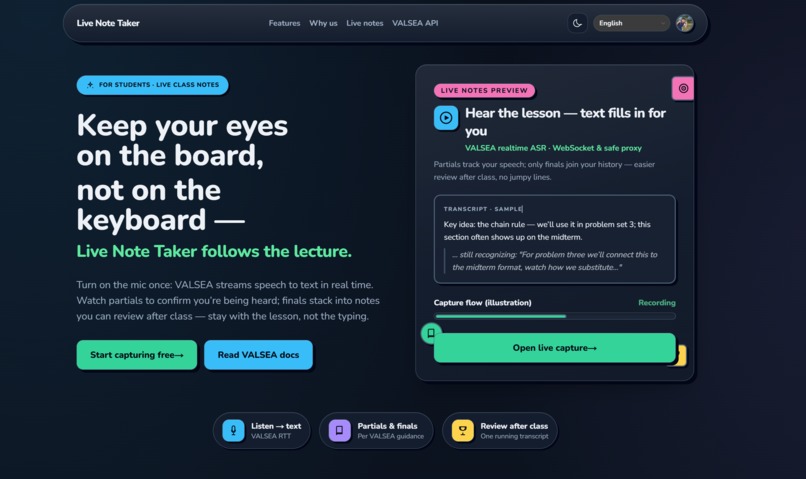
Dark mode + responsive layout — comfortable for long study sessions.
Inspiration
Taking notes during live classes, workshops, or calls is tiring: you either miss what’s being said or fall behind while typing. We wanted a flow that feels like “speak, watch the words appear, keep what matters”—fast enough for real sessions, not a batch upload demo. VALSEA real-time transcription was the right backbone for something that had to feel instant and useful in a hackathon timeframe.
What it does
- Live transcription (RTT): Capture microphone audio in the browser, stream it over WebSocket to a VALSEA RTT proxy, and show partial and final transcript text as it arrives.
- Save & organize: Sign in with Google (Supabase Auth), save sessions into folders, open them in a note editor, and manage folders (rename, delete) in a simple workspace.
- After the session: Copy or download plaintext, clarify transcript via API when configured, and use optional VALSEA tools on saved notes (e.g. translate, format, sentiment)—behind server route handlers so keys stay private.
- Polished app shell: Landing page, live tool, login, profile area; light/dark themes, responsive layout, i18n (vi, en, id, th, ms), loading states and accessible controls where it matters.
How we built it
- Frontend: Next.js 16 (App Router), React 19, TypeScript, Tailwind CSS with design tokens and a neo-clay marketing style; next-intl for locales; next-themes for dark mode;
loading.tsxskeletons and route transition feedback. - Live audio path: Web Audio API → downsample to PCM → WebSocket messages to the RTT proxy; strict session start/stop and error handling in a client panel component.
- Backend & data: Supabase (Postgres + RLS) for folders and transcript sessions; Server Actions and Route Handlers for mutations and VALSEA REST calls; middleware chains next-intl with Supabase session refresh on the same response so redirects and cookies stay consistent.
- Auth: Google OAuth with PKCE, server auth callback, and safe redirect (
next) allowlisting to avoid open redirects. - Deploy story: App targets Vercel; RTT proxy and
VALSEA_API_KEYare documented for split deployment (browser →wssproxy → VALSEA).
Challenges we ran into
- Browser ↔ WebSocket RTT: Reliable session lifecycle (connect, ready, stream, stop), handling mic permissions and disconnects without leaking streams or leaving confusing UI states.
- Middleware + i18n + Supabase: Ensuring locale redirects and session cookies are applied on one
NextResponse—easy to break if the order or response object is wrong. - Production networking: Moving from
ws://locally towss://behind HTTPS, documenting env likeNEXT_PUBLIC_VALSEA_RT_PROXY_URLfor judges and deployers. - UI at the edges: Responsive header/navigation on narrow screens, dark-mode contrast on neo-style buttons and pills (specificity vs. Tailwind utilities), and long toolbar rows without horizontal layout breaks.
Accomplishments that we're proud of
- A working end-to-end loop: live stream → transcript → save → folder → editor, not just a mock UI.
- Serious frontend hygiene for a hackathon: i18n, a11y touches, loading/disabled states, and docs in-repo for architecture and env.
- Security-minded defaults: API keys on the server, RLS for user data, and sanitized post-login redirects.
- Regional relevance: first-class support for SEA locales alongside English, matching how students and teams actually work.
What we learned
- Streaming ASR is product work: partial vs final copy, latency, and status copy matter as much as model quality.
- Supabase + Next App Router patterns (server client, cookies, middleware) are powerful but easy to get subtly wrong without careful testing.
- Design systems in the open: tokenizing landing vs app surfaces and fixing dark mode early saves painful one-off hacks later.
- Documentation is part of the deliverable: clear README/docs helps judges, teammates, and your future self ship fixes under time pressure.
What's next for Live Note Taker
- Hardening: automated tests for critical paths, stricter error boundaries, and observability (client/server logging) for RTT failures.
- UX: optional pause, speaker diarization if the API supports it, better empty/error states, and offline-safe “draft” behavior where possible.
- Collaboration: shared folders or read-only share links for classmates (with explicit privacy controls).
- Mobile & PWA: tighter mobile capture UX and installable PWA for classroom use.
- Deeper VALSEA: more editor tools wired to real workflows (summaries, action items, export to Markdown/PDF) once keys and quotas are production-ready.
Built With
- next-intl
- next-themes
- next.js-16
- node.js
- react-19
- supabase-(postgresql-+-auth-+-rls)
- tailwind-css
- typescript
- valsea-api-(websocket-rtt-+-rest)
- vercel
- zod

Log in or sign up for Devpost to join the conversation.