-
-
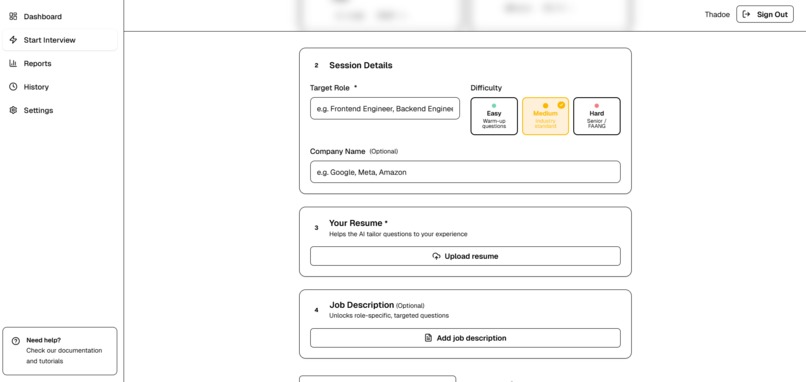
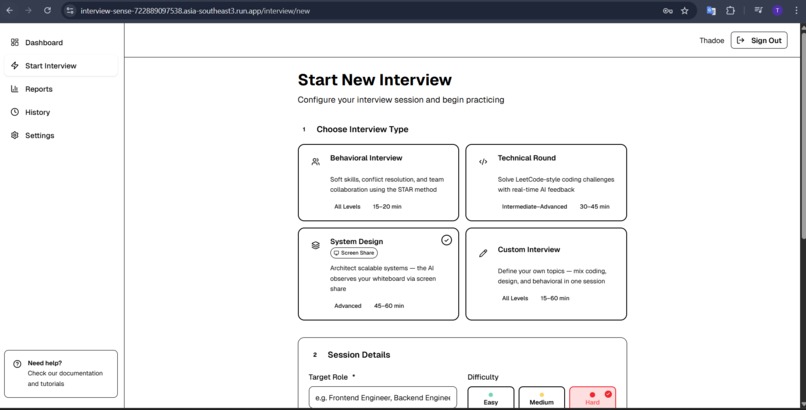
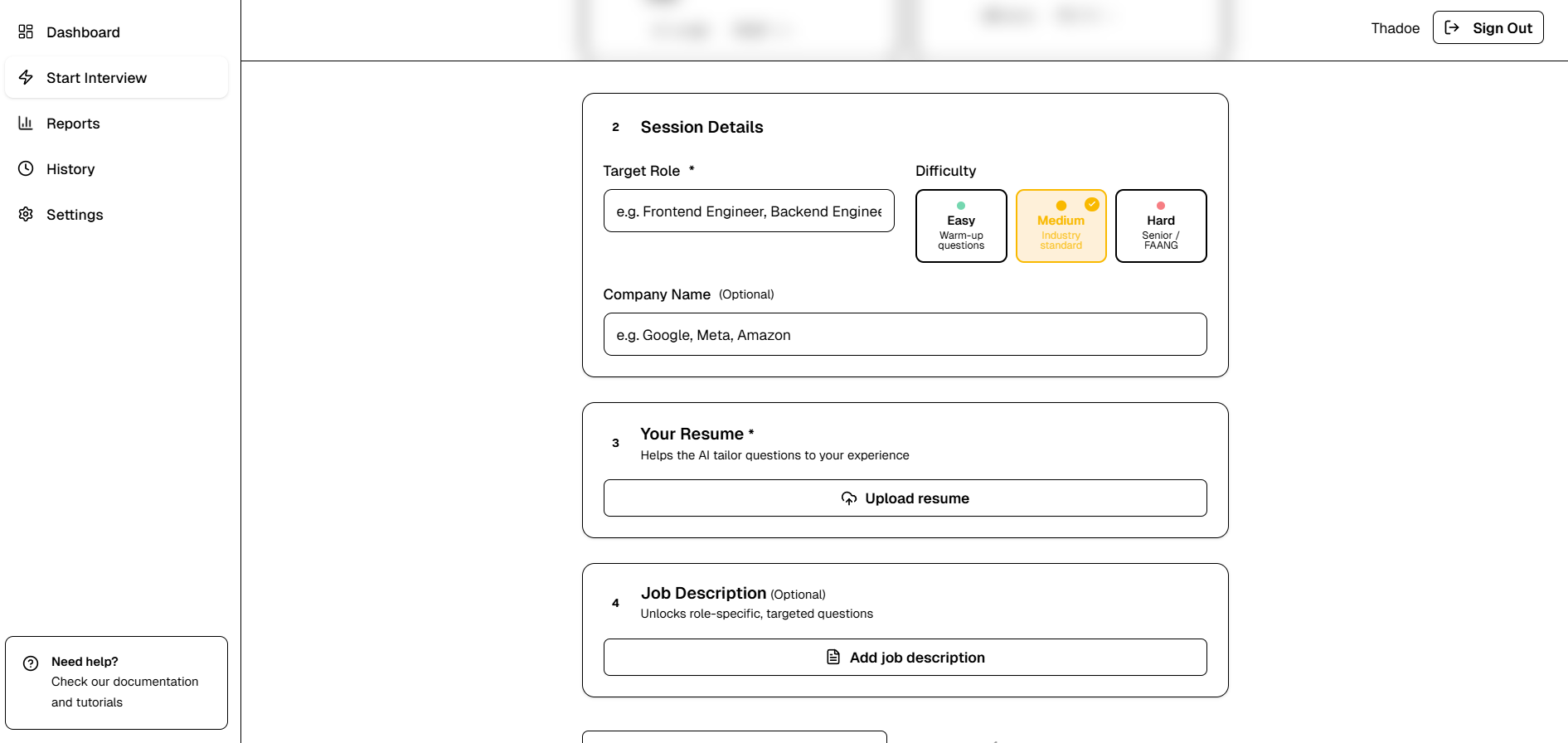
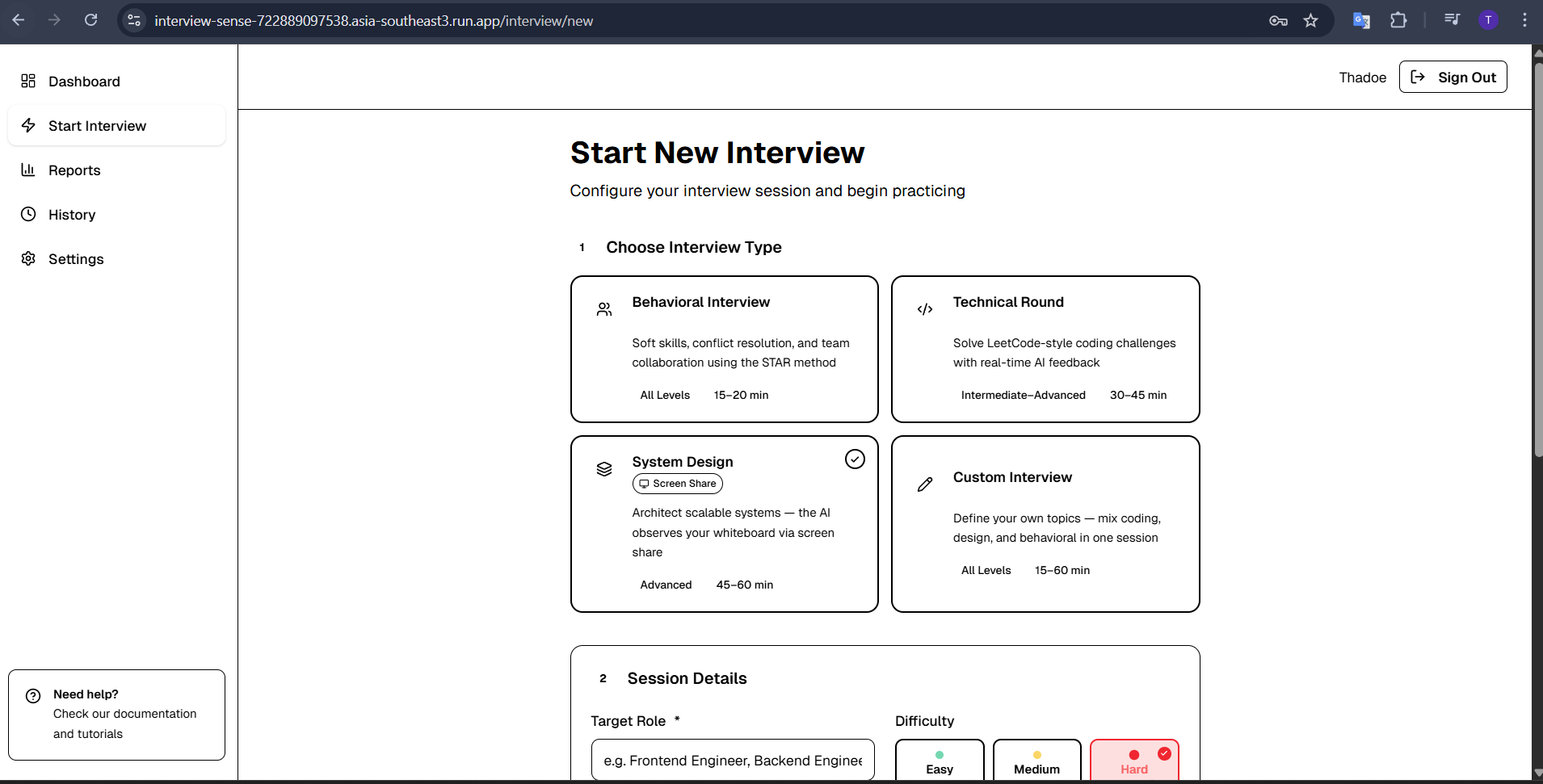
Starting a new mock Interview Session
-
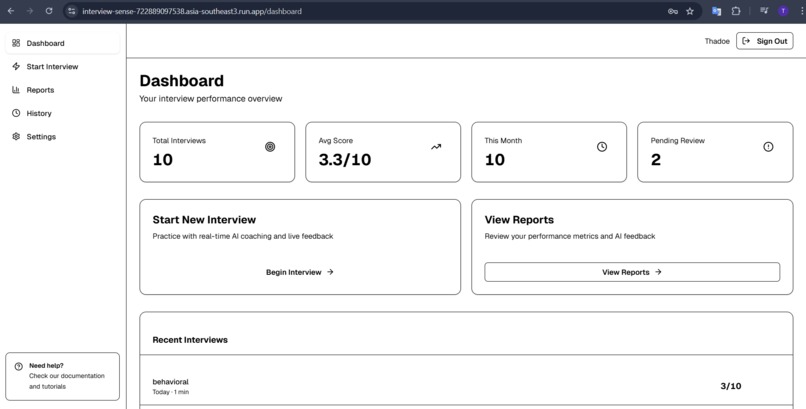
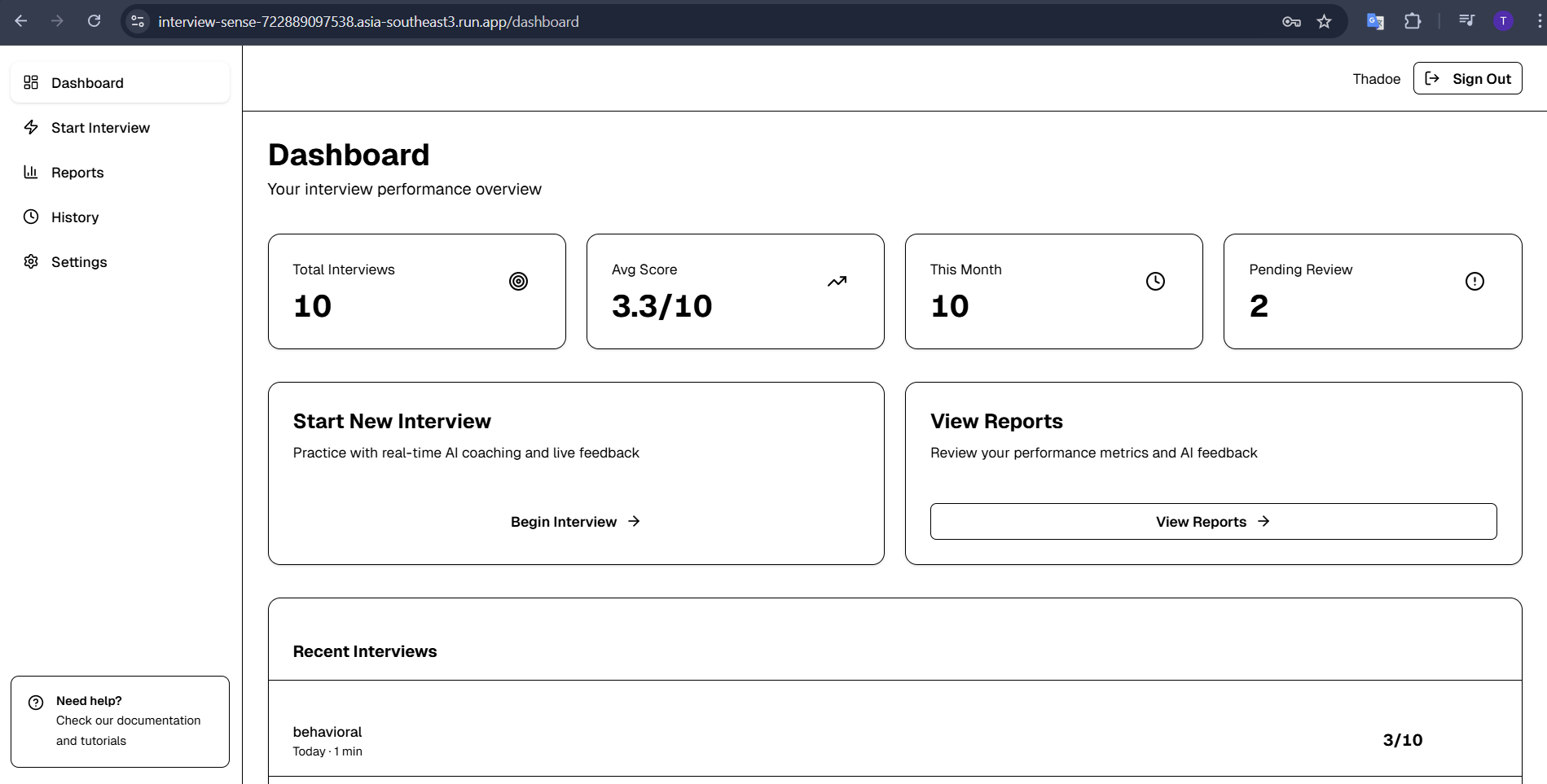
Dashboard (feedback from AI)
-
-
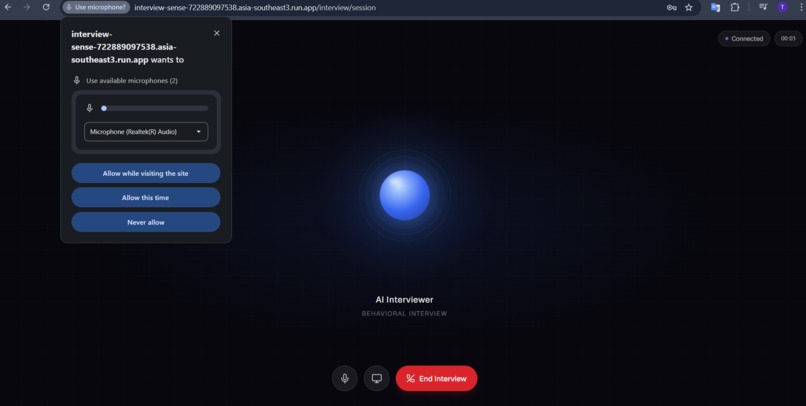
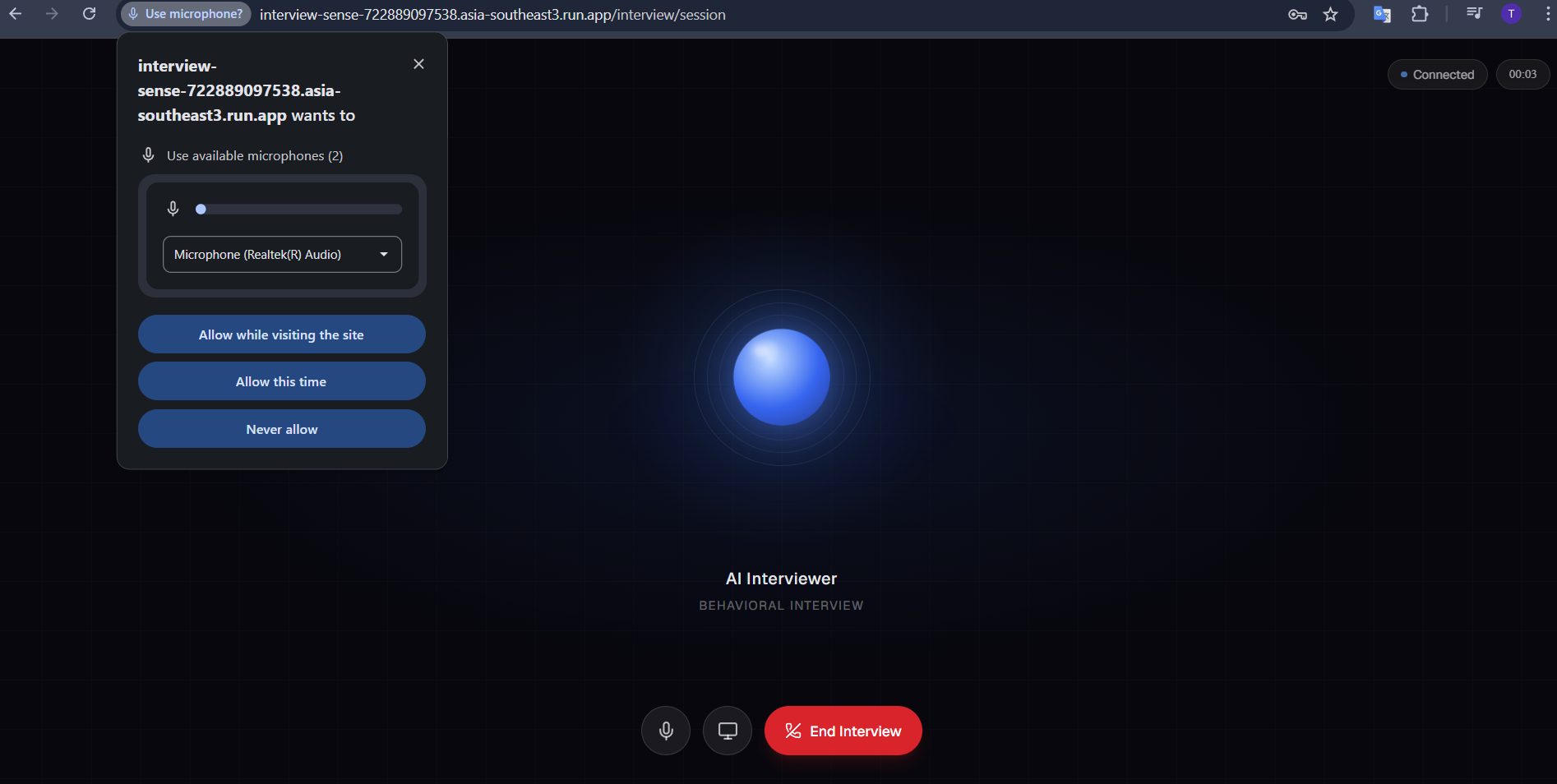
AI Interview Screen , you can share screen through here.
Interview Sense - An AI-Powered Career Coach
The Inspiration
I have been job hunting for a while now. I have made it to final rounds more times than I can count, and still walked away with nothing. Rejections, ghosting, the whole experience. At one point I tried applying to bigger companies, and I could not even get past the first behavioral interview round. Not because I lacked the skills, but because I froze. I did not know how to answer, I was nervous, and the moment passed.
That frustration is what pushed me to build Interview Sense.
A lot of people in this field are in the same position. They are capable, they have done the work, but they never had access to the kind of coaching that teaches you how to actually perform in an interview. I wanted to build something that could fill that gap, not just for myself, but for anyone who has ever walked out of an interview wishing they had prepared differently.
The goal was straightforward: turn AI into something more than a question-and-answer tool. Make it feel like a real interview, give it structure, and make the feedback actually useful.
What It Does
Interview Sense is built around three ideas:
High-Fidelity Simulation The experience is timed, conversational, and meant to replicate the pressure of a real interview. It is not a quiz. It is a live session where the AI plays the role of an interviewer and pushes back when your answer is incomplete.
Structured Feedback Instead of vague encouragement, the tool scores responses across three dimensions: Clarity, Structure, and Technical Depth. The feedback is specific and tied to what you actually said.
Progress Over Time The system tracks sessions so you can see where you are improving and where you are still stuck. Interview prep is not a one-time thing, and the tool is built to reflect that.
Technical Implementation
Full-Stack Architecture
The project is built with Next.js using the App Router, with TypeScript throughout for type safety across the entire codebase. Server-side API routes handle the evaluation and notes logic, which keeps the heavy lifting away from the client and makes the system easier to maintain and secure.
Real-Time AI Integration
I wrote a custom React hook, use-gemini-live.ts, to manage communication with Google Gemini. The hook handles streaming responses, tracks request state, and deals with error cases in a way that keeps the conversation feeling natural rather than mechanical.
Prompt Engineering
Getting the AI to behave consistently as an interviewer took a lot of iteration. The system prompts define a rubric, set the tone, and include logic for generating follow-up questions based on what the user said. Early versions were too lenient. I had to move from loose instructions to structured, JSON-schema-style feedback definitions to get scoring that was repeatable and fair.
Interface Design
The UI is intentionally minimal. During a session, there is nothing on screen that is not directly relevant to the interview. The goal was to keep users focused, not distracted, because that is closer to what a real interview feels like.
What I Learned
AI consistency is harder than it looks. Getting a model to score responses fairly across different users and different question types required more than a good prompt. It required thinking carefully about what "good" actually means in each category and encoding that into the instructions precisely.
Real-time systems surface problems quickly. Building the streaming layer forced me to deal with edge cases I had not considered: dropped connections, partial responses, state that gets out of sync. It made me more careful about how I think about resilience in any system.
The user's emotional state matters. This is a tool people use when they are already stressed about their job search. I thought a lot about how the feedback lands, not just whether it is accurate. The tone had to be direct without being discouraging.
Why It Matters to Me
This project is not just a technical exercise. I built it because I needed it, and because I know others do too. Every feature reflects something I personally ran into during my own job search. If it helps even one person walk into an interview feeling more prepared and less afraid, that is enough.
How we built it
Challenges we ran into
Accomplishments that we're proud of
What we learned
What's next for Interview Sense
Built With
- google-ai
- javascript
- next.js
- typescript

Log in or sign up for Devpost to join the conversation.