-
-
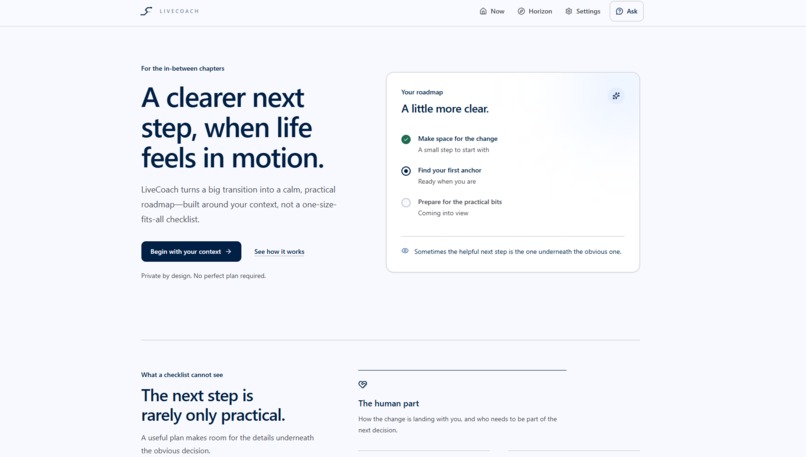
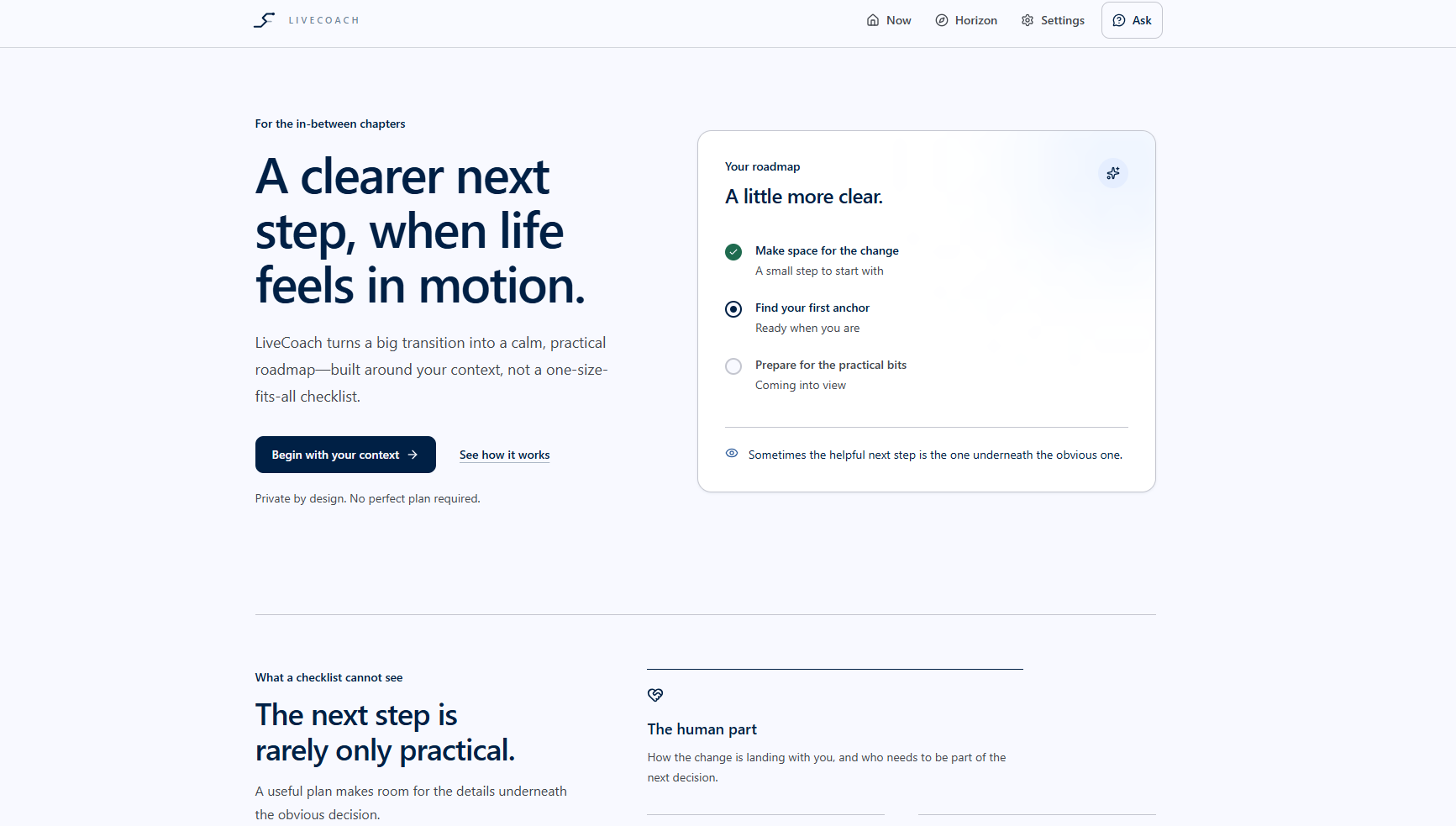
Landing Page
-
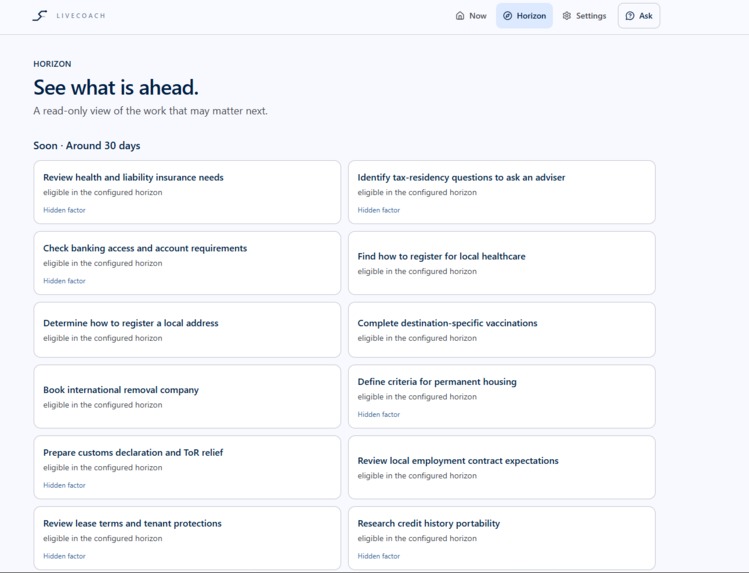
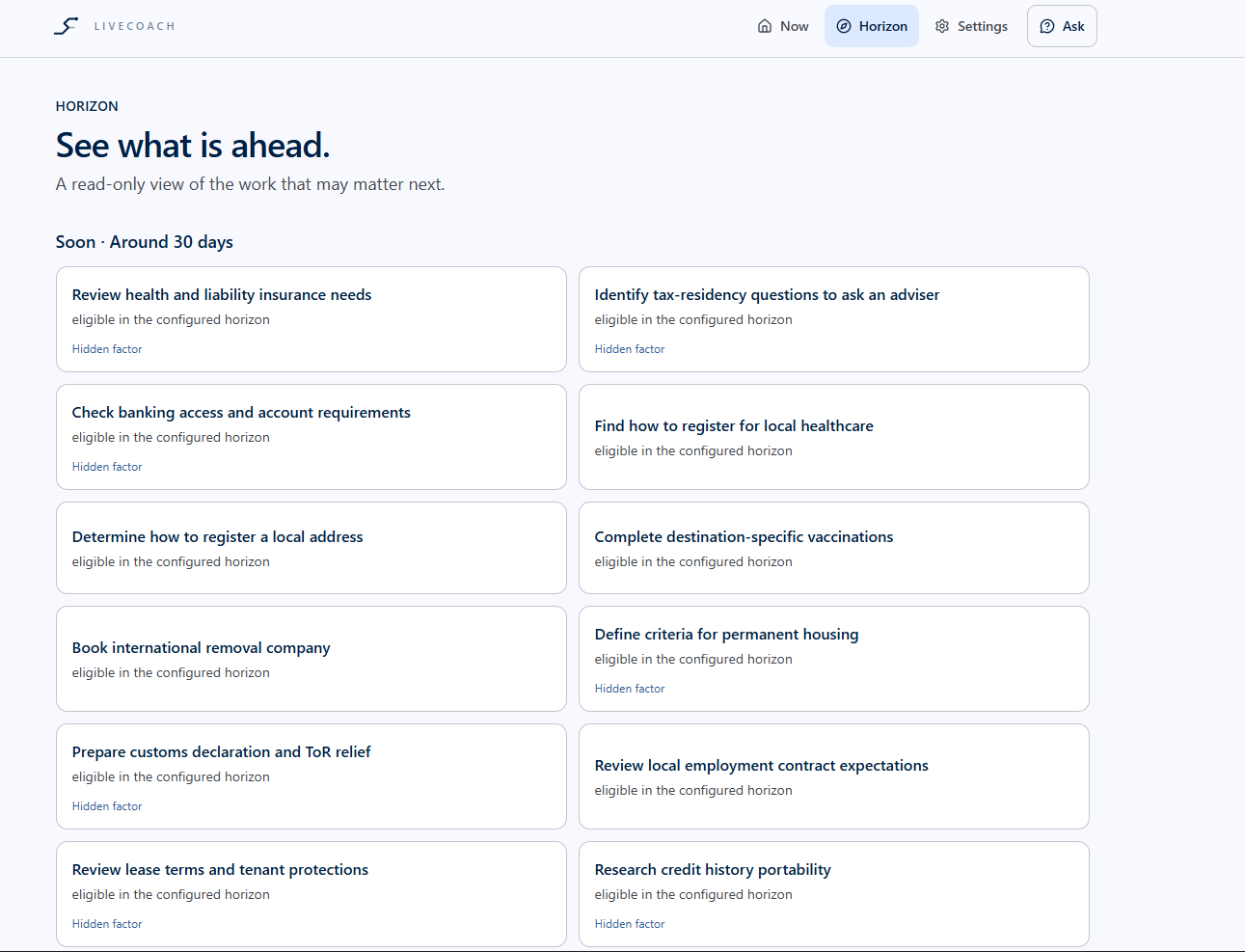
Horizon View
-
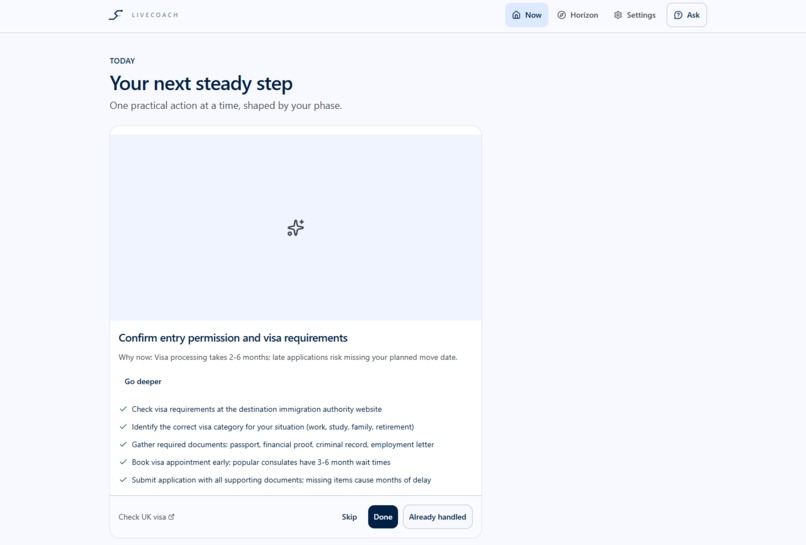
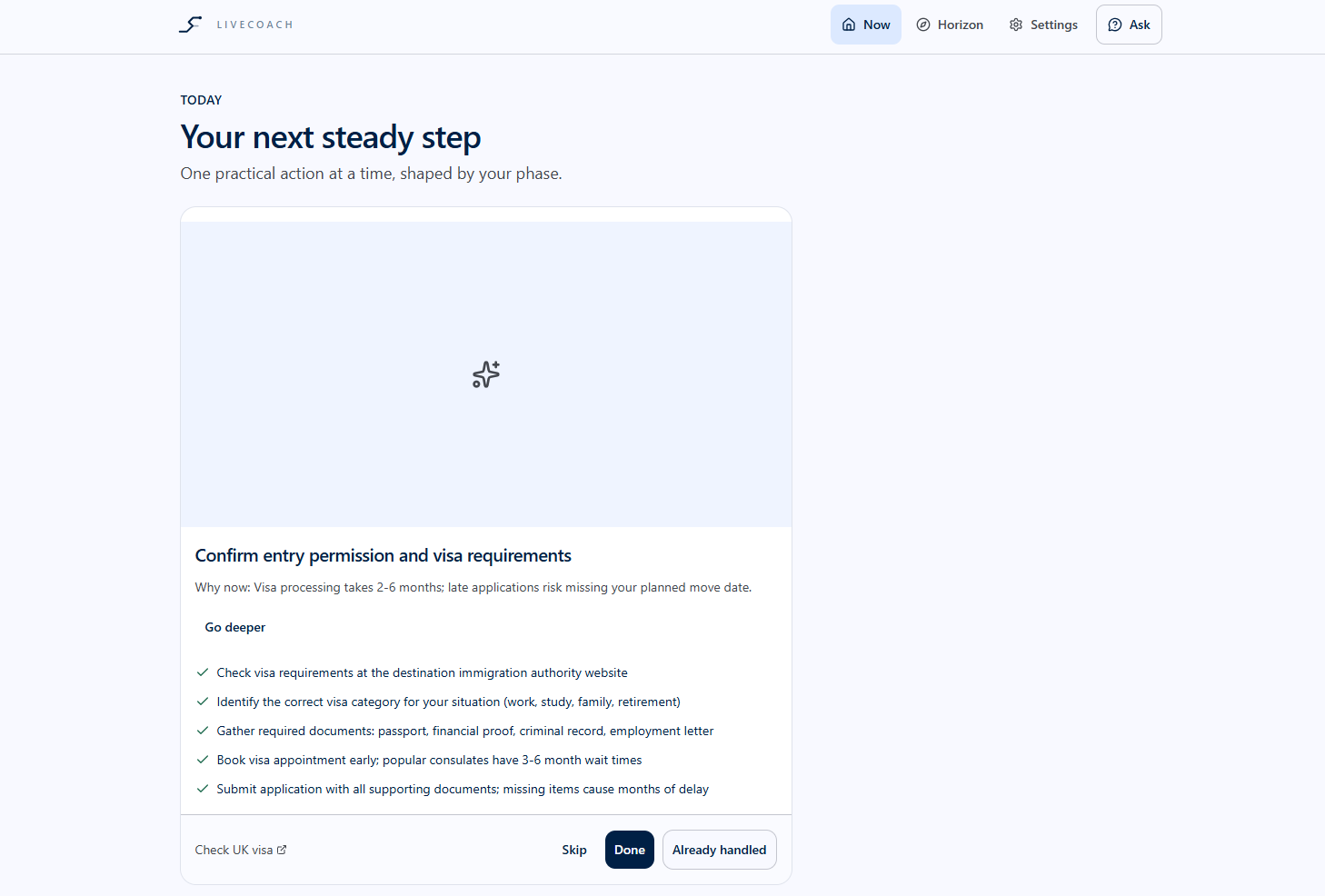
Daily Card View
-
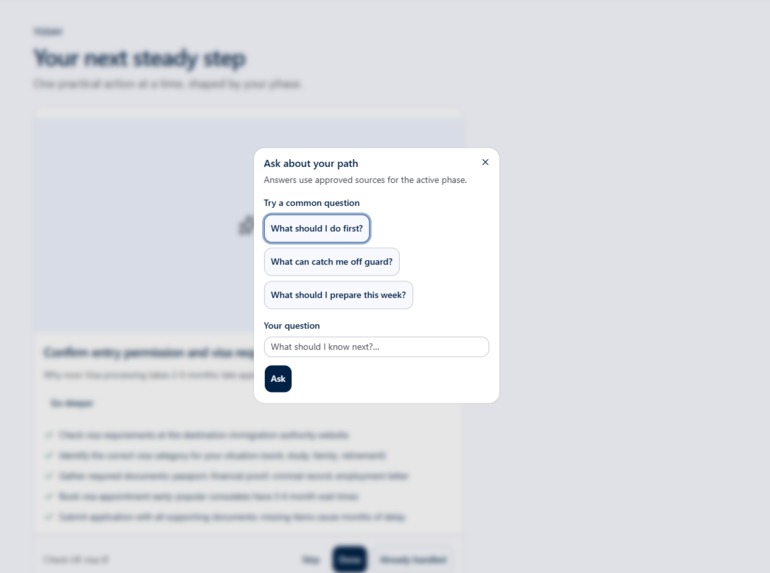
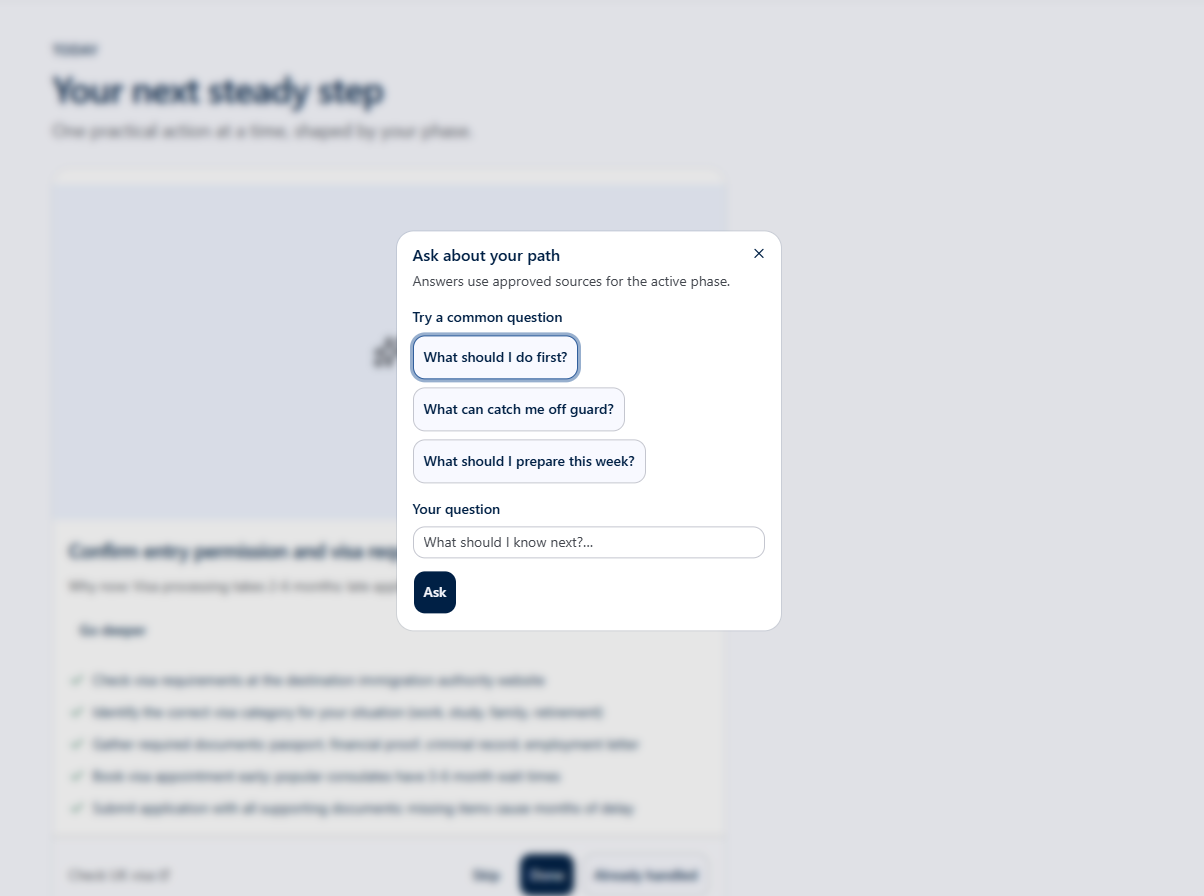
Ask View
Inspiration
When people face major life transitions (moving abroad, becoming parents, changing careers), they scramble to find fragmented advice on Reddit, blogs, and forums. There's no structured, personalized learning path that kicks in exactly when motivation peaks and relevance matters most.
We wanted to build something that turns a big life transition from a wall of anxiety into a calm, day-by-day roadmap that shows you exactly what to do next.
What it does
Live Coach is a just-in-time guidance platform for major life transitions. You pick a life phase (like relocating abroad), answer a few questions about your situation, and it builds a personalized roadmap.
Each day, it surfaces the single most relevant action sourced from authoritative portals with plain-language guidance on why it matters right now.
It also flags "hidden factors" the non-obvious things a generic checklist and queries would miss.
You can ask follow-up questions and get them answered against verified sources.
How we built it
We utilized GPT 5.6 to accelerate development.
Frontend: Next.js 16 with React 19, TanStack Query for server state, Zustand for client state, Tailwind CSS, and shadcn UI components. Offline support caches the last roadmap locally and replays queued actions on reconnect.
Backend: Python FastAPI with async SQLAlchemy over PostgreSQL 18. A deterministic priority ranker sequences cards. A resilient grounding provider wraps approved-source retrieval with a local fallback.
Infra: Docker Compose with PostgreSQL, Redis for rate limiting, and a local OpenTelemetry Collector. Structured JSON logging, Prometheus metrics.
Content: A hand-curated concern bank of relocation concerns across multiple categories, each with source citations pointing to official portals, bullet points, and hidden factor flags.
Challenges we ran into
Adaptive engine design: Getting the card lifecycle right, when to resurface a skipped item vs. deprioritize it vs. flag it as a hidden factor that must return. The state machine went through multiple versions before settling on the skip-threshold → relevance-check pattern architecture decision.
Offline-first reliability: Queuing card actions locally and replaying them on reconnect with idempotency keys sounds simple until you need to handle conflicts, partial failures, and stale roadmap versions. We ended up with a dedicated offline store per user+phase.
Accomplishments that we're proud of
- A fully functional MVP with offline support built from scratch during the hackathon.
- The concern bank with, source-verified entries covering real relocation needs most people don't think about until it's too late.
- The card lifecycle state machine that elegantly handles skip → resurface → relevance-check without user confusion.
What we learned
- Deterministic ranking can be a good start for small, well-defined domains, we know exactly what matters most in a relocation timeline, and rules gave us predictable, debuggable behavior.
- Building an editorial CMS alongside the user-facing product forces you to think clearly about data models, versioning, and content lifecycle from the start.
- Offline-first is a product requirement, not a nice-to-have people research life transitions on buses, in waiting rooms, and in places with spotty connectivity.
What's next for Live Coach
- More life phases: Parenting, career change, retirement
- Richer grounding: Expand the approved source corpus and improve the retrieval pipeline for more nuanced Q&A
- Localization: Support for non-English source jurisdictions
- Community features: Let users share tips and flag outdated information in the concern bank
Built With
- codex
- fastapi
- next.js
- openai
- postgresql

Log in or sign up for Devpost to join the conversation.