-
-
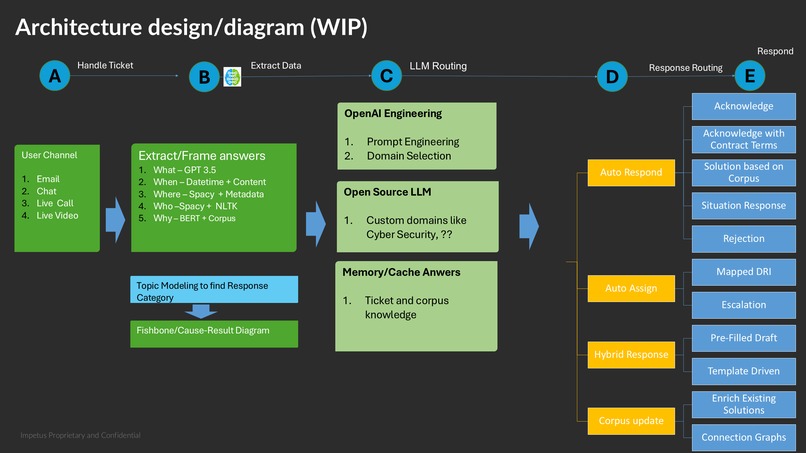
LiveCallAnalytics Architecture
-
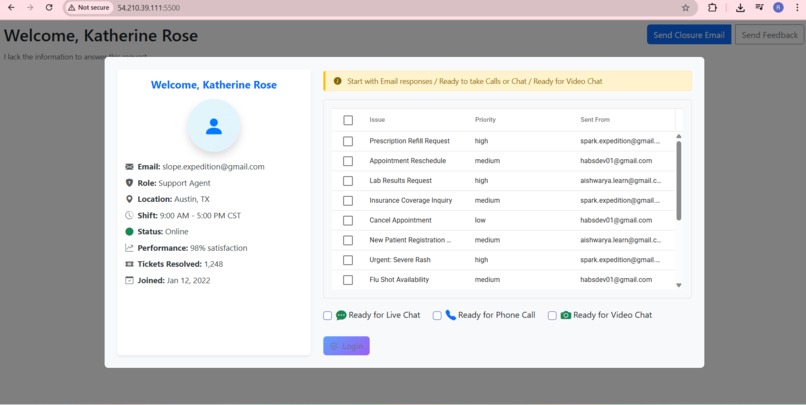
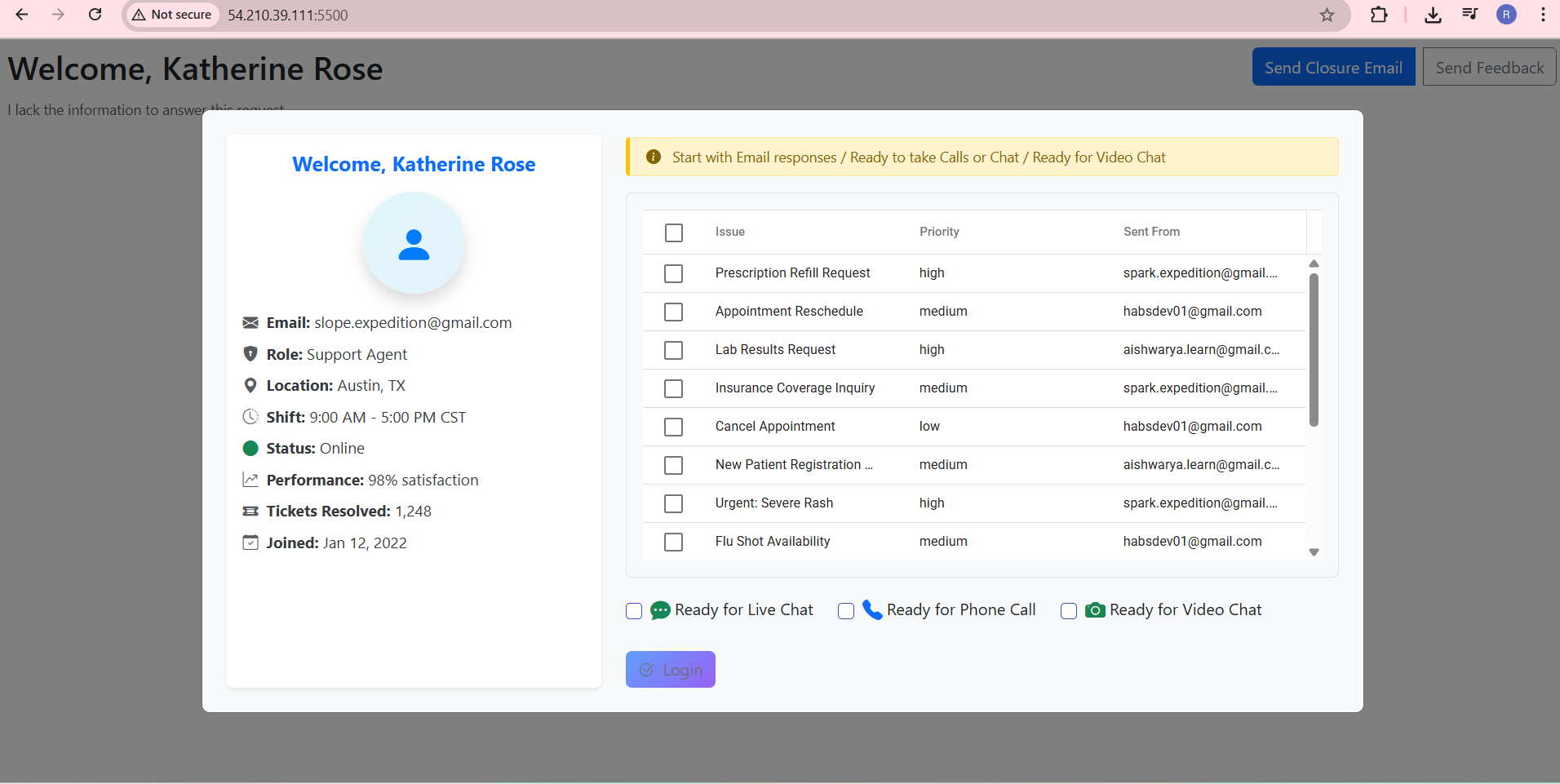
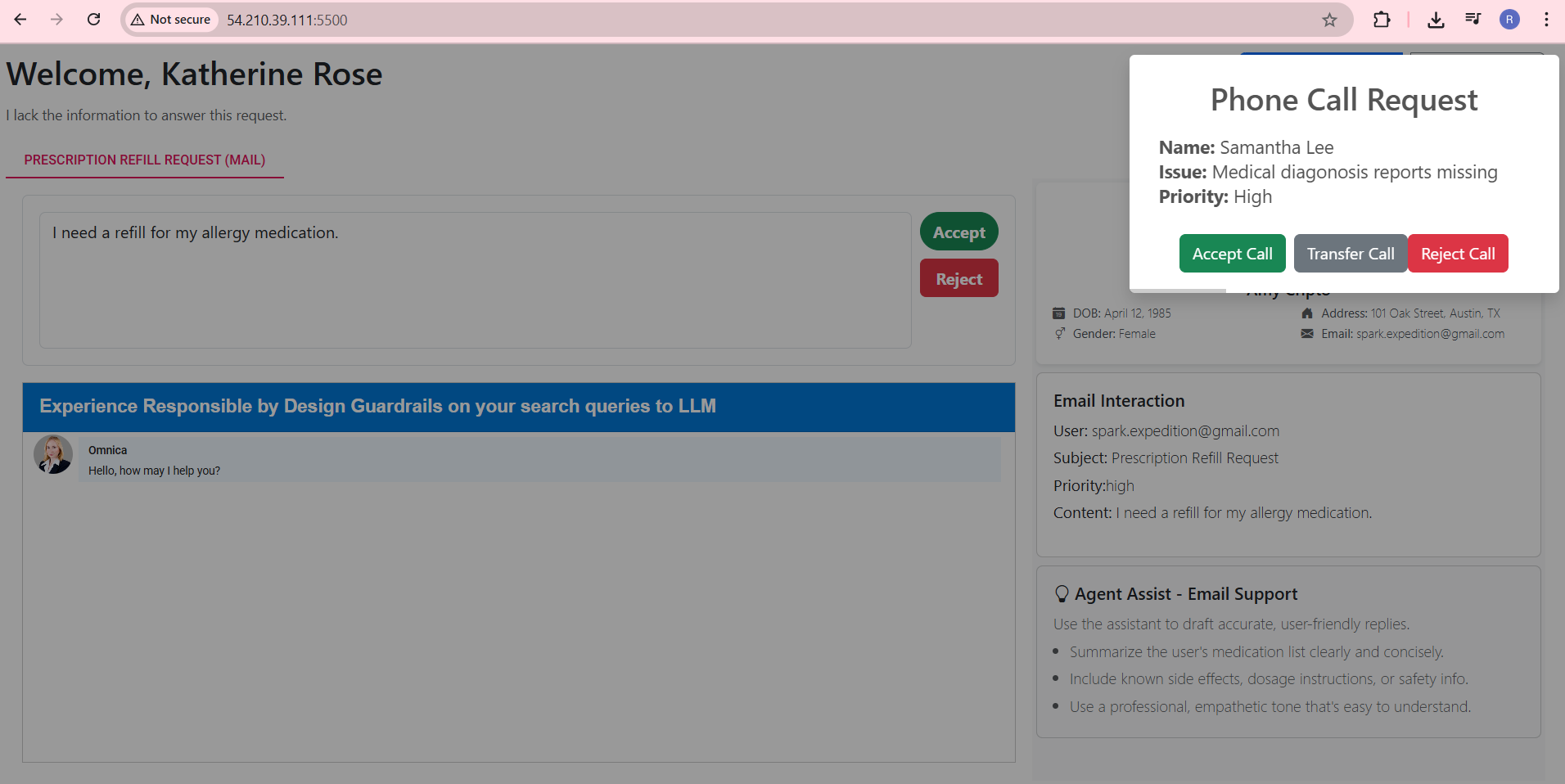
Agent Landing Page
-
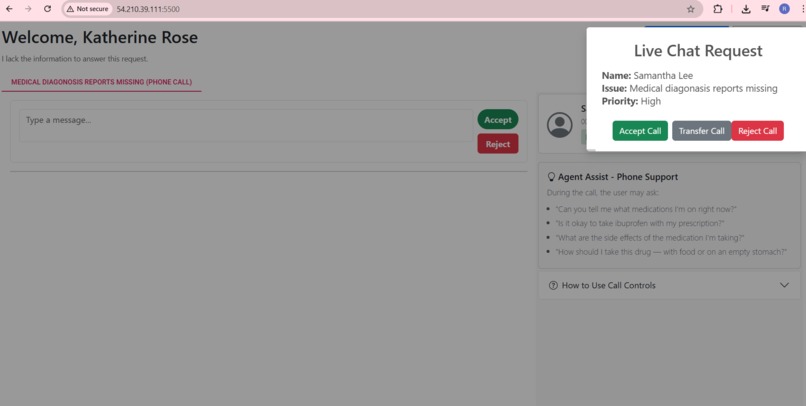
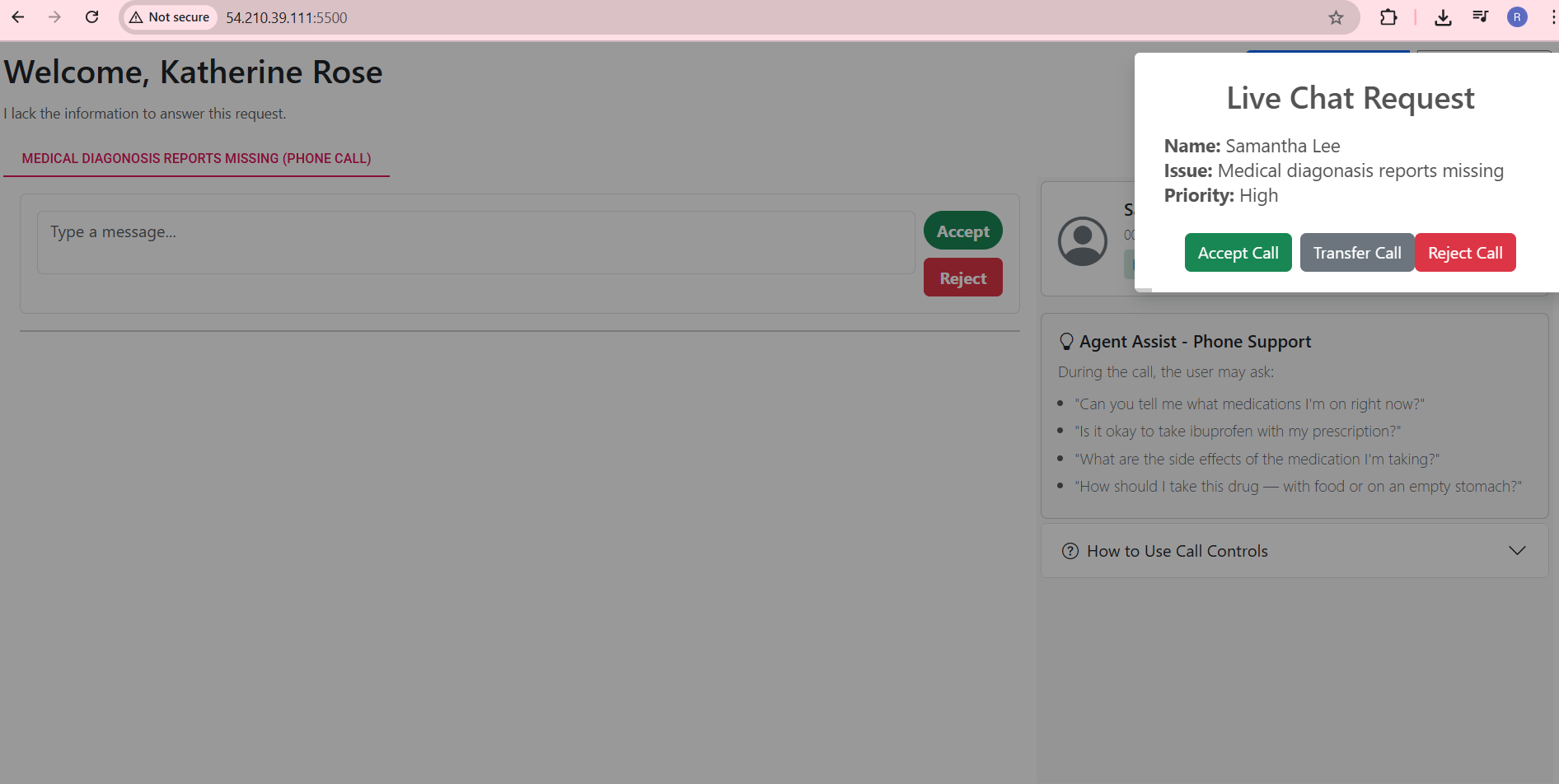
Incoming Live Chat Call to Agent
-
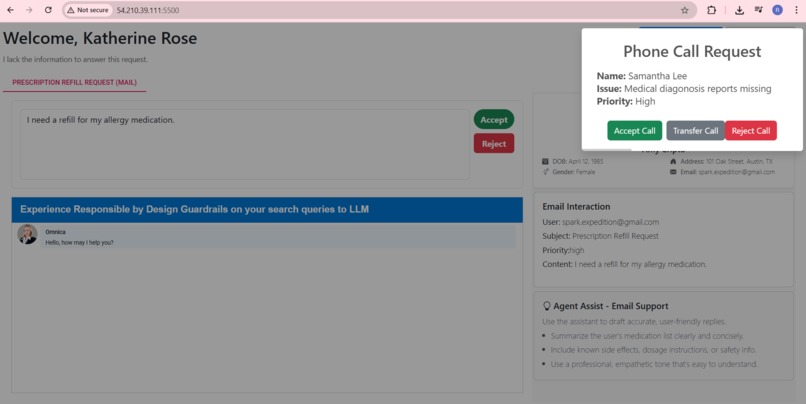
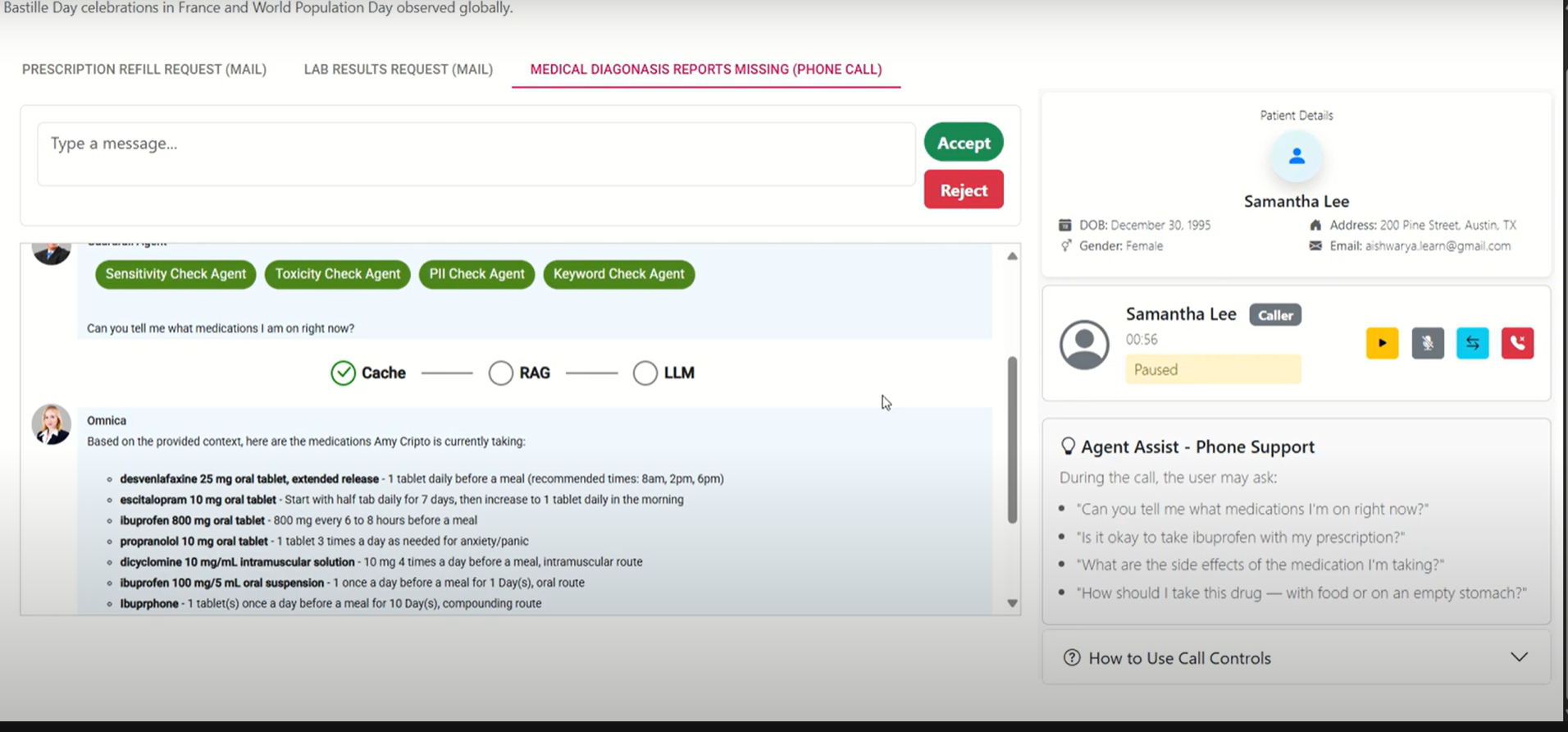
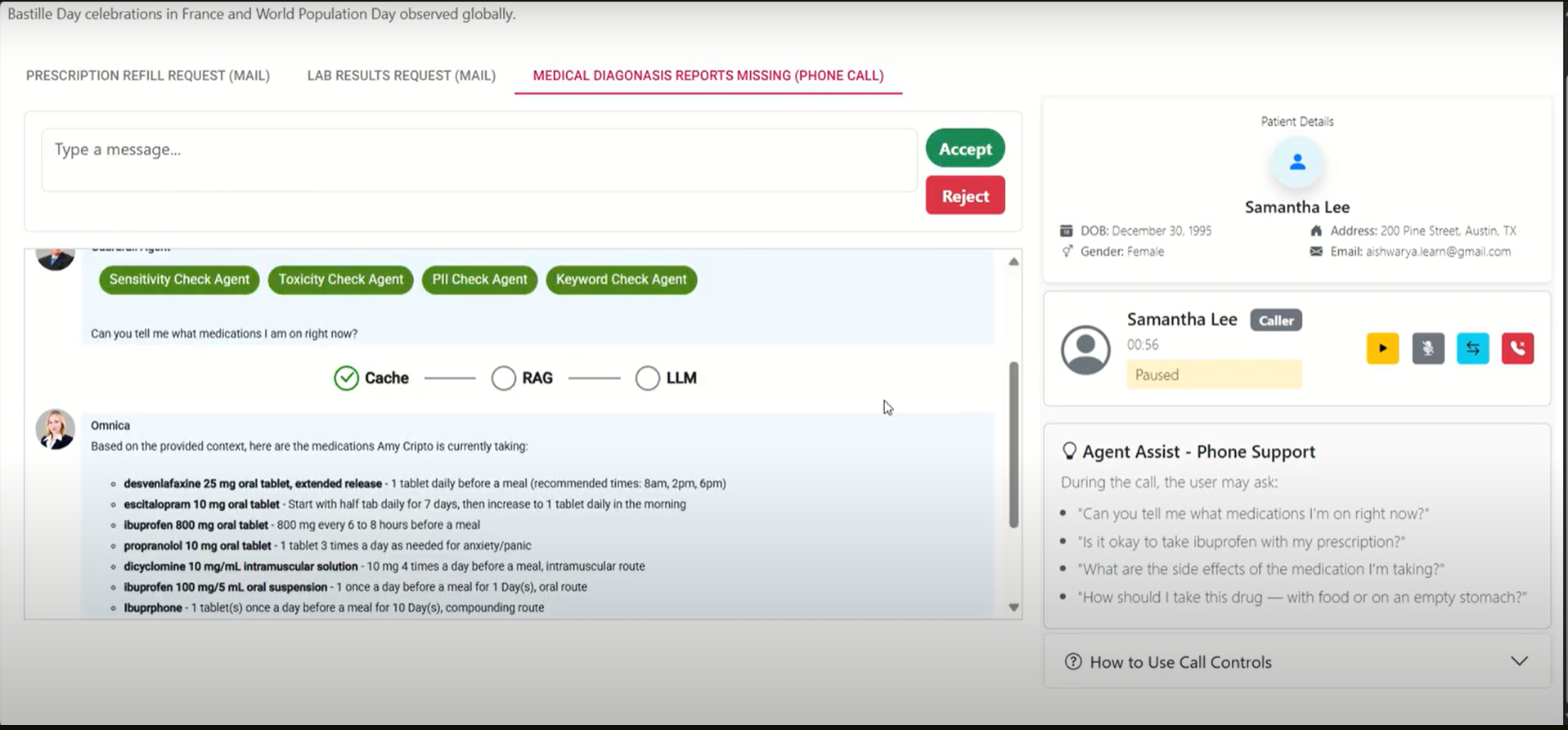
Incoming Live Phone Call to Agent
-
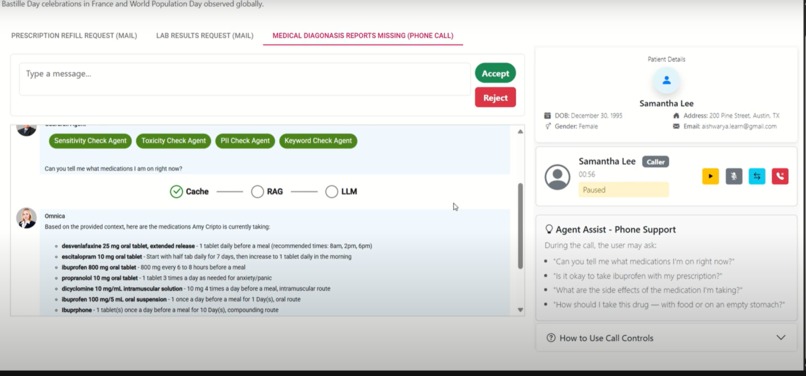
LLM Agent Response
-
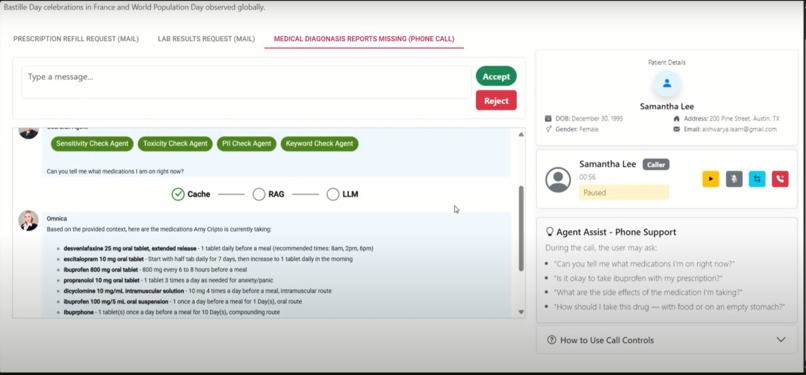
Guardrail Agent
💡 What Inspired Us
In today’s fast-paced healthcare environment, patients expect seamless, real-time support across multiple communication channels. Our goal was to create a unified agent experience that empowers support teams to resolve critical medical, clinical, and insurance-related issues with speed, intelligence, and empathy.
Key Inspirations Behind the Experience:
- Omnichannel Support: Patients may reach out through email, live chat, or real-time calls (audio/video). We wanted to ensure that no matter the medium, agents can handle and resolve queries from a single, intuitive platform.
- Agent Empowerment via AI: Live agent interactions are enhanced with the support of a powerful LLM agent. Agents can pause conversations, ask for assistance, and quickly provide accurate, context-aware answers to patients.
- Real-Time Intelligence: Speech-to-text captures live audio conversations and displays them as chat input, ensuring the agent never misses a detail. This reduces friction and improves turnaround times for resolutions.
- Secure, Compliant Handling of Sensitive Data: With Guardrail agents performing PII checks and integrating with a Retrieval-Augmented Generation (RAG) system for patient documents, responses remain safe, compliant, and informed.
- Human-Centric Resolution Flow: From email queries to live calls and chat sessions, the journey is designed with clarity and empathy. Every resolved issue ends with a thoughtful closure email, reinforcing trust. This solution is inspired by the vision of blending human expertise with AI-powered assistance, ensuring that healthcare support becomes faster, smarter, and more compassionate than ever before.
⚙️ What It Does
This intelligent support system is designed to handle and resolve critical medical, clinical, and insurance-related user queries across multiple channels — all from a single agent interface.
Core Capabilities:
- Multichannel Query Handling
Agents can receive and respond to user queries via:- Live Chat
- Live Audio Call
- Live Video Call
- Dynamic Query Resolution
Agents select from priority medical issues and begin resolving them. For example:- An email query gets auto-populated into a text area.
- Live chat requests can be accepted and answered with the help of LLM-generated responses.
- Incoming voice calls transcribe user speech in real time, allowing agents to view and interact with the conversation seamlessly.
- AI-Powered Agent Assistance
During a live interaction, agents can:- Pause the conversation
- Consult the LLM Agent for support
- Retrieve relevant medical or insurance information stored in a RAG (Retrieval-Augmented Generation) system
- Resume the conversation and respond with confidence and accuracy
- Built-in Guardrails for Data Privacy
Every user query is checked for sensitive information (PII) before a response is generated, ensuring compliance and patient safety. - End-to-End Resolution Workflow
Once a query is resolved:- Calls and chats are closed cleanly
- A closure email is automatically sent
- The issue is marked as resolved in the system This solution is crafted to streamline healthcare support, reduce resolution times, and enhance both agent productivity and patient satisfaction.
🛠️ How We Built It
We built this intelligent healthcare support assistant by integrating modern AI tools, secure data handling practices, and seamless communication APIs — all tied together in a unified agent experience.
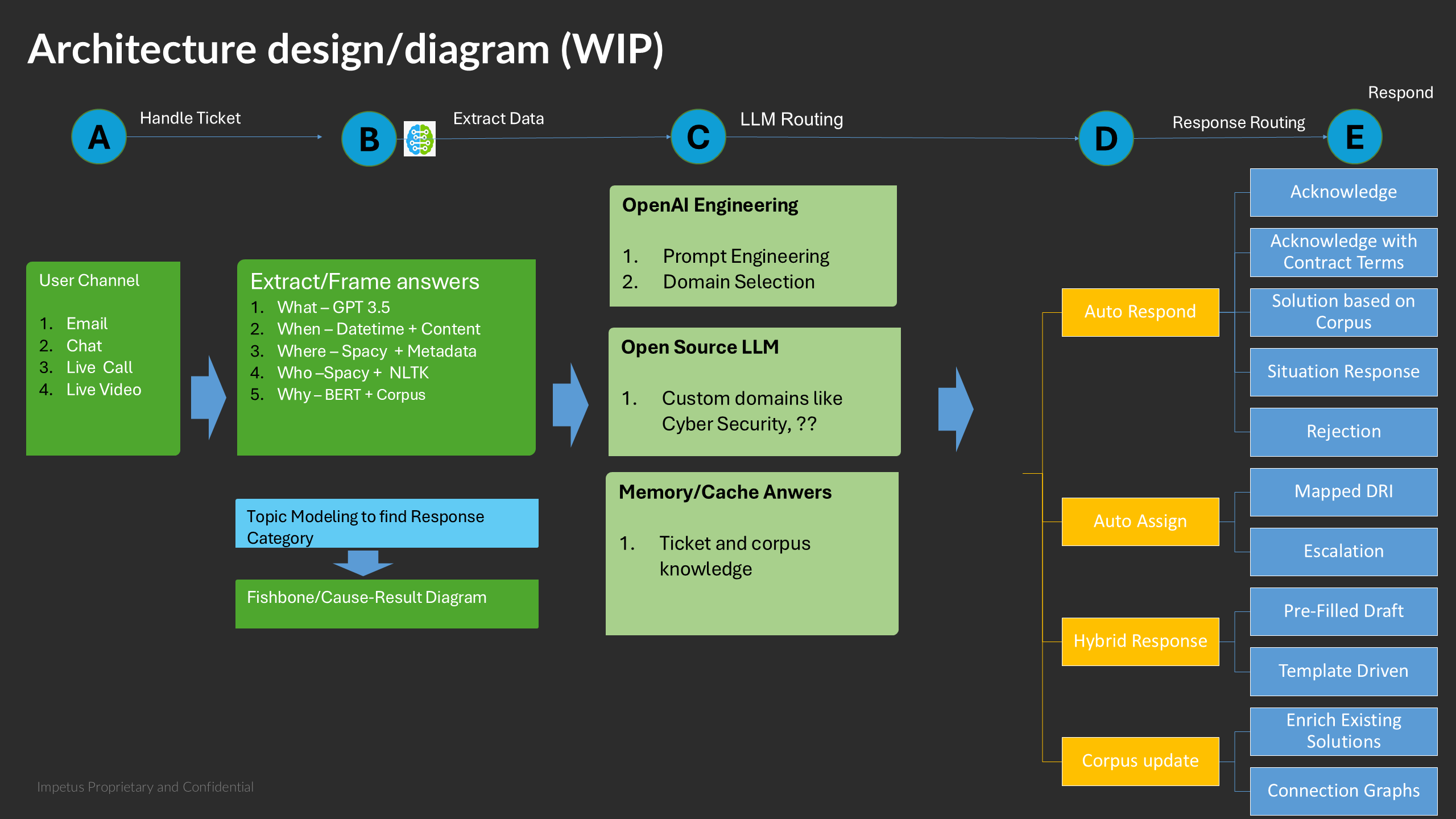
Key Components:
- Frontend Interface
- A responsive dashboard where agents can:
- View priority medical/clinical/insurance queries
- Accept and handle email, live chat, audio, and video calls
- View incoming requests and respond in real-time
- Pause/resume interactions while retrieving AI assistance
- Multichannel Communication Stack
- Integrated with APIs to support:
- Email ingestion and response
- Live chat (bi-directional messaging with typing indicators)
- Voice calls with real-time transcription
- Video call support for high-touch queries
- LLM-Powered Agent Assistance
- Used OpenAI/Gemini for natural language understanding and response generation
- Agents can invoke the LLM at any time for query resolution
- Patient context and query history passed for richer responses
- Guardrails and PII Detection
- Built-in PII scanners (via Guardrails AI agent)
- All queries and documents undergo filtering before LLM interaction
- Ensures compliance with healthcare data policies
- RAG (Retrieval-Augmented Generation) System
- Patient documents and historical data indexed in a vector store
- LLM retrieves and references relevant content dynamically
- Provides accurate, personalized responses based on prior records
- Backend Orchestration
- Secure microservices manage:
- Session tracking
- Channel routing
- Call/chat/email lifecycle
- Audit and closure notifications
- Hosted on AWS Cloud
- The entire solution is deployed on AWS, leveraging services like:
- EC2 for compute
- S3 for storage
- Lambda for serverless tasks
- CloudWatch for monitoring
- Ensures scalability, security, and high availability
- Closure Workflow
- After resolution, the system triggers:
- Automatic closure email
- Feedback loop for continuous improvement
⚠️ Challenges We Ran Into
Building a real-time, AI-assisted, multichannel healthcare support system came with several challenges — both technical and operational. Here's what we encountered:
Integration Complexities
- Managing seamless communication across email, chat, audio, and video channels required integrating multiple APIs and ensuring synchronized session states across them.
- Ensuring consistent UX across these modes was tricky, especially during transitions (e.g., switching from email to live call).
PII Detection & Compliance
- Healthcare data is sensitive. Detecting and redacting Personally Identifiable Information (PII) in real-time before passing queries to the LLM was crucial and complex.
- We had to implement Guardrail agents and validate that every response adhered to HIPAA-like compliance and audit standards.
Contextual LLM Querying
- Getting relevant, accurate answers from the LLM agent wasn’t always straightforward — especially when queries involved context from past interactions or uploaded patient documents.
- Fine-tuning our RAG system to return just the right context for each case required multiple iterations.
Real-time Speech-to-Text Accuracy
- During live calls, converting user speech into accurate, readable chat input in real-time was challenging, especially with accent variability and medical terminology.
- Handling overlapping speech or background noise required refining our transcription pipeline.
Latency & Performance
- Ensuring low latency for LLM responses while handling multiple concurrent sessions was challenging, especially during peak traffic.
- Optimizing LLM inference + RAG retrieval + frontend updates to feel instantaneous took performance tuning across layers.
Cloud Infrastructure & Scalability
- Balancing cost-efficiency and scalability on AWS was non-trivial, especially while supporting voice/video processing and session persistence.
- Monitoring distributed services (Lambda, EC2, S3, API Gateway) required robust logging and alerts through CloudWatch.
These challenges helped shape a more resilient, privacy-first, and responsive healthcare support solution — ready for real-world deployment.
🏆 Accomplishments We Are Proud Of
Building this AI-powered, multichannel healthcare support assistant has been a challenging but rewarding journey. Here are some of the accomplishments we’re most proud of:
Seamless Multichannel Support
- Successfully enabled real-time query handling across Email, Chat, Audio, and Video Calls — all within a single agent dashboard.
- Ensured smooth transitions between channels while maintaining session context.
Smart Agent + LLM Collaboration
- Integrated a Large Language Model (LLM) to assist agents with accurate, contextual responses in real time.
- Enabled agents to pause live conversations, ask the LLM for guidance, and resume with confidence — improving resolution speed and quality.
Robust Privacy & Compliance
- Implemented a Guardrail Agent to automatically detect and filter PII/sensitive data before processing queries.
- Ensured all interactions adhere to privacy standards — critical in healthcare and insurance use cases.
Effective Use of Patient Data via RAG
- Indexed patient records and support documentation in a RAG (Retrieval-Augmented Generation) system.
- Delivered personalized and document-grounded responses using LLM with minimal hallucination.
Live Call Transcription & Resolution
- Enabled real-time transcription of voice calls into chat input, improving accessibility and agent comprehension.
- Allowed agents to respond with precision and track user intent instantly.
Automated Closure Workflow
- Built a closure pipeline that sends follow-up emails and logs resolution data automatically, saving agent time and maintaining professional communication.
Fully Cloud-Native Deployment
- Successfully hosted the entire platform on AWS Cloud, ensuring scalability, high availability, and secure storage.
These milestones reflect our commitment to building a smart, responsive, and secure healthcare support system — one that truly empowers agents and puts patients first.
📚 What We Learned
This project pushed us to innovate at the intersection of healthcare, AI, and real-time communication. Along the way, we learned valuable lessons — both technical and human-centered.
AI Is Powerful, But Needs Guardrails
- While LLMs are great at understanding and generating responses, they must be guided by context, filtered for safety, and supplemented with facts.
- Implementing PII detection and document-grounded RAG systems was crucial to maintain both accuracy and trust. ### Human + AI Collaboration Enhances Support
- Empowering agents with AI-backed assistance—without removing the human in the loop—results in faster and more empathetic resolutions.
- Features like pause-resume for live calls and on-demand LLM help proved essential for real-world usability. ### Healthcare Domain Needs Extra Care
- Building for healthcare means extra responsibility: privacy, compliance, terminology, and emotional sensitivity all matter deeply.
- We learned how to align technical decisions with domain-specific regulations and patient trust. ### Multichannel Coordination Is Complex (but Worth It)
- Synchronizing logic across email, chat, audio, and video streams was technically challenging — but it enabled a truly unified agent experience.
- Each channel has its own quirks, but shared context across them improves continuity and reduces friction. ### Real-Time Systems Need Deep Optimization
- Building low-latency interactions (especially for voice and LLM responses) taught us the value of performance tuning, preloading context, and streamlining API calls.
- Tools like AWS Lambda, EC2, and CloudWatch helped monitor and scale the system effectively. ### Small Details Make Big Differences
- From closure emails to UI feedback loops, we learned that micro-interactions matter — they build user trust and polish the experience. This journey taught us how to blend cutting-edge AI with compassionate support — creating something both technically exciting and deeply impactful.

Log in or sign up for Devpost to join the conversation.