LiveBridge AI – Project Story
LiveBridge AI was inspired by a very real and common problem faced in today’s global and remote-first world: communication barriers during real-time conversations and meetings. While working on collaborative projects and exploring global tech communities, I noticed how language differences often slow down understanding, and how important information from meetings is frequently lost because people rely on manual note-taking. This inspired me to build a system that could not only translate speech in real time but also understand conversations and automatically generate structured meeting insights. The goal was to create something that feels natural, fast, and intelligent enough to assist humans during communication rather than interrupting it.
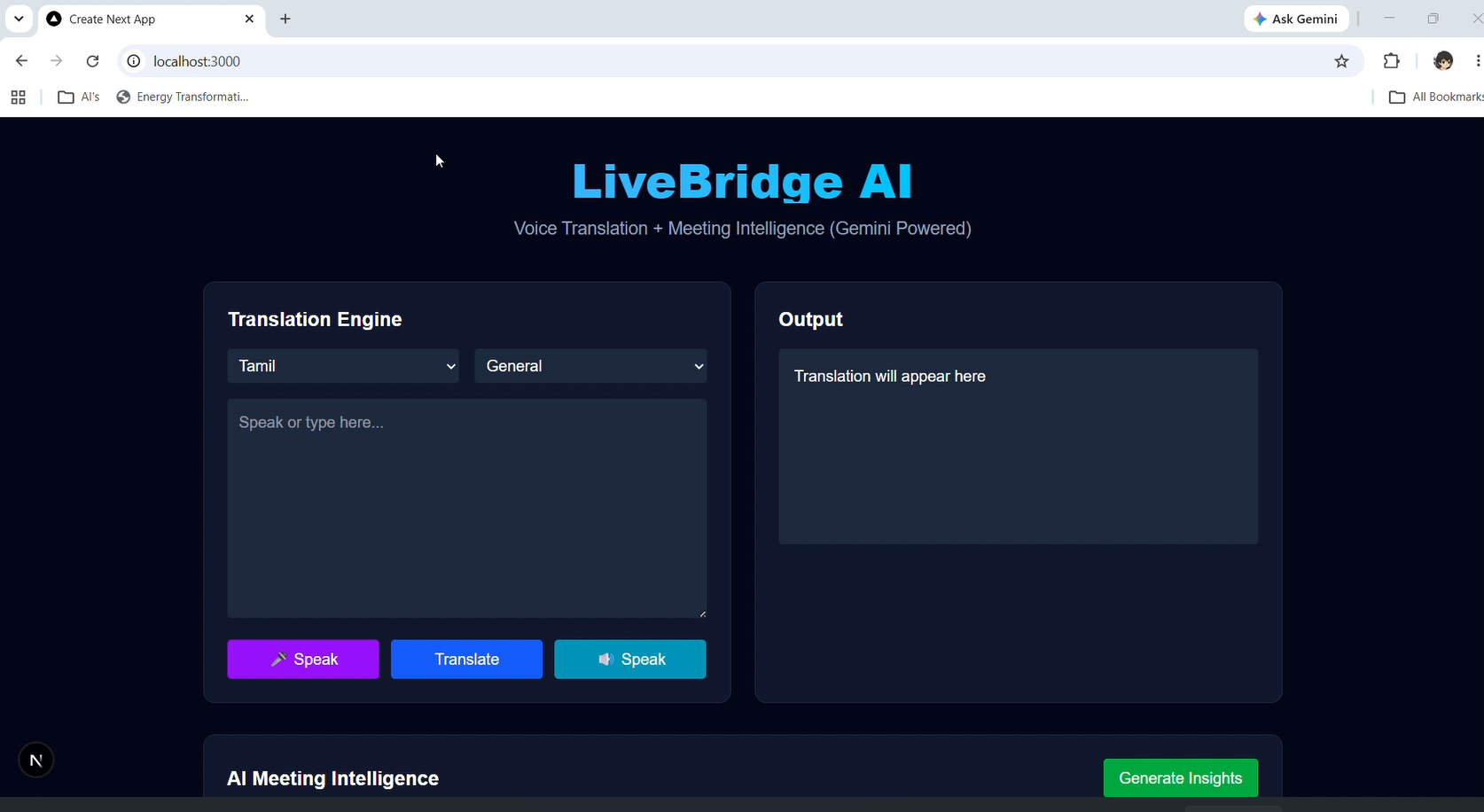
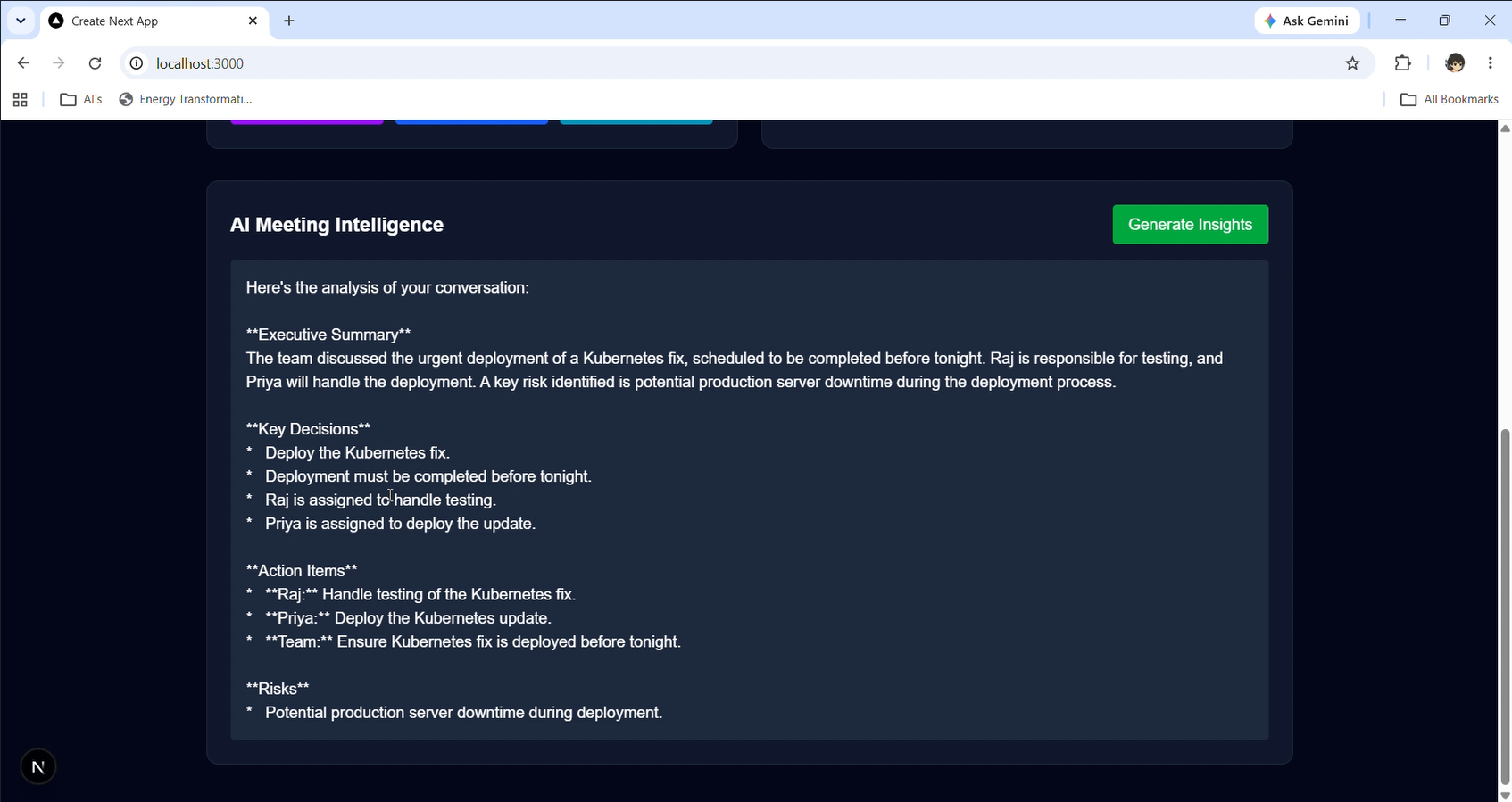
The idea behind LiveBridge AI evolved into a real-time voice translation and meeting intelligence platform. The system allows users to speak or input text naturally, and then processes it using an AI-powered backend to translate it into different languages instantly. Beyond translation, it also analyzes conversational context to generate summaries, key decisions, action items, and risks. This combination of translation and intelligent summarization is what makes the project unique, because it does not just convert language but also understands meaning and structure in communication.
I built this project using a modern full-stack architecture. The frontend is developed using Next.js with TypeScript, which provides a fast and responsive user interface. The design focuses on simplicity so users can interact with voice input and text areas without confusion. For the backend, I used FastAPI in Python because of its speed, scalability, and ease of integration with AI services. The backend acts as the core processing layer where all requests from the frontend are handled, formatted into prompts, and sent to the Gemini API for intelligent processing.
For the AI layer, I used Google Gemini 2.5 Flash. This model powers both translation and meeting summarization tasks. It was chosen because of its strong reasoning ability, low latency, and suitability for real-time applications. I designed custom prompts to ensure the model behaves like a professional translator and meeting assistant, returning structured and clean outputs instead of raw or unformatted text. The system is also domain-aware, meaning it can adjust translation style based on contexts like business, technical, or general communication.
One of the key learnings from building this project was understanding how to structure AI prompts effectively. Small changes in prompt design significantly impacted the quality of output, especially for summarization tasks. I also learned how to integrate frontend and backend systems efficiently, handle API communication, and manage environment variables securely using API keys. Another important learning was working with real-world constraints such as API rate limits and system performance, which required me to optimize requests and handle errors gracefully.
However, the development process was not without challenges. One major challenge was dealing with API quota limits and unexpected errors from the Gemini service, which initially caused inconsistent responses. Debugging these issues helped me understand cloud-based AI limitations better. Another challenge was setting up a smooth connection between frontend voice input and backend processing, especially ensuring that real-time interaction felt seamless. Managing environment configuration across systems and avoiding dependency issues also required careful attention.
Despite these challenges, building LiveBridge AI was a highly rewarding experience. It helped me strengthen my skills in full-stack development, API integration, AI prompt engineering, and system design. More importantly, it gave me a deeper understanding of how AI can be used to enhance human communication rather than replace it. LiveBridge AI is not just a technical project for me—it represents an attempt to make communication more inclusive, efficient, and intelligent in a world that is increasingly connected but still divided by language barriers.

Log in or sign up for Devpost to join the conversation.