-
-
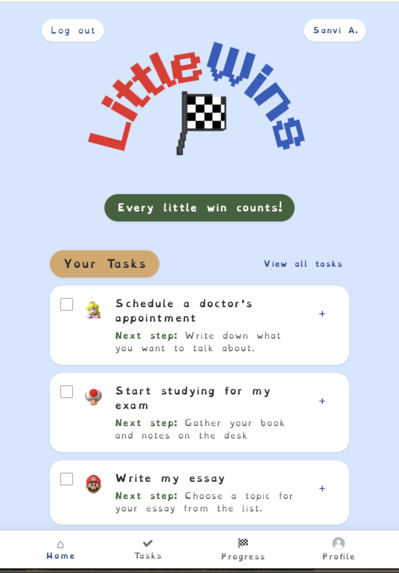
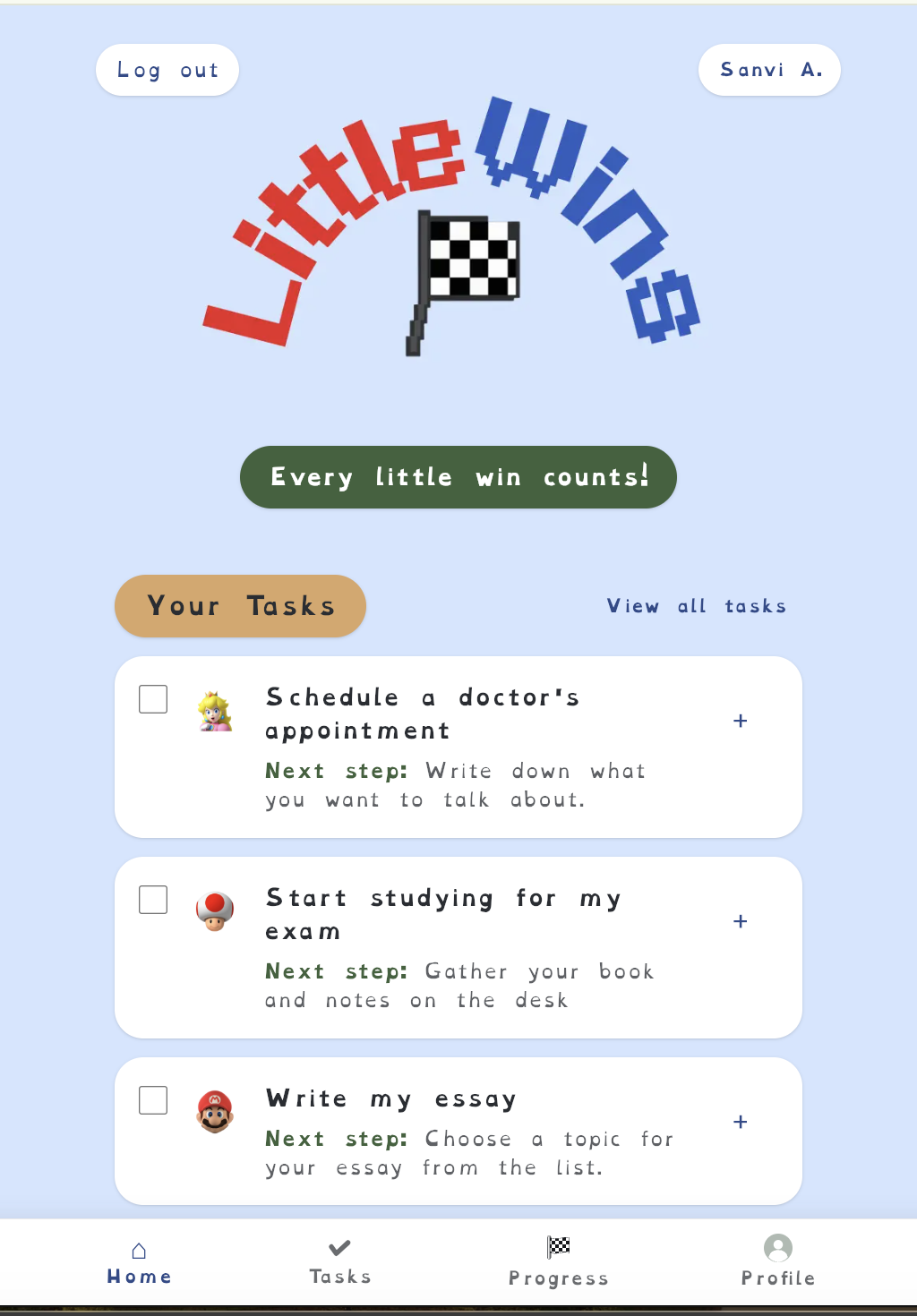
Home Page
-
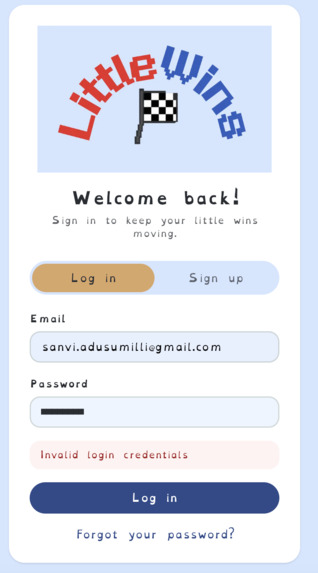
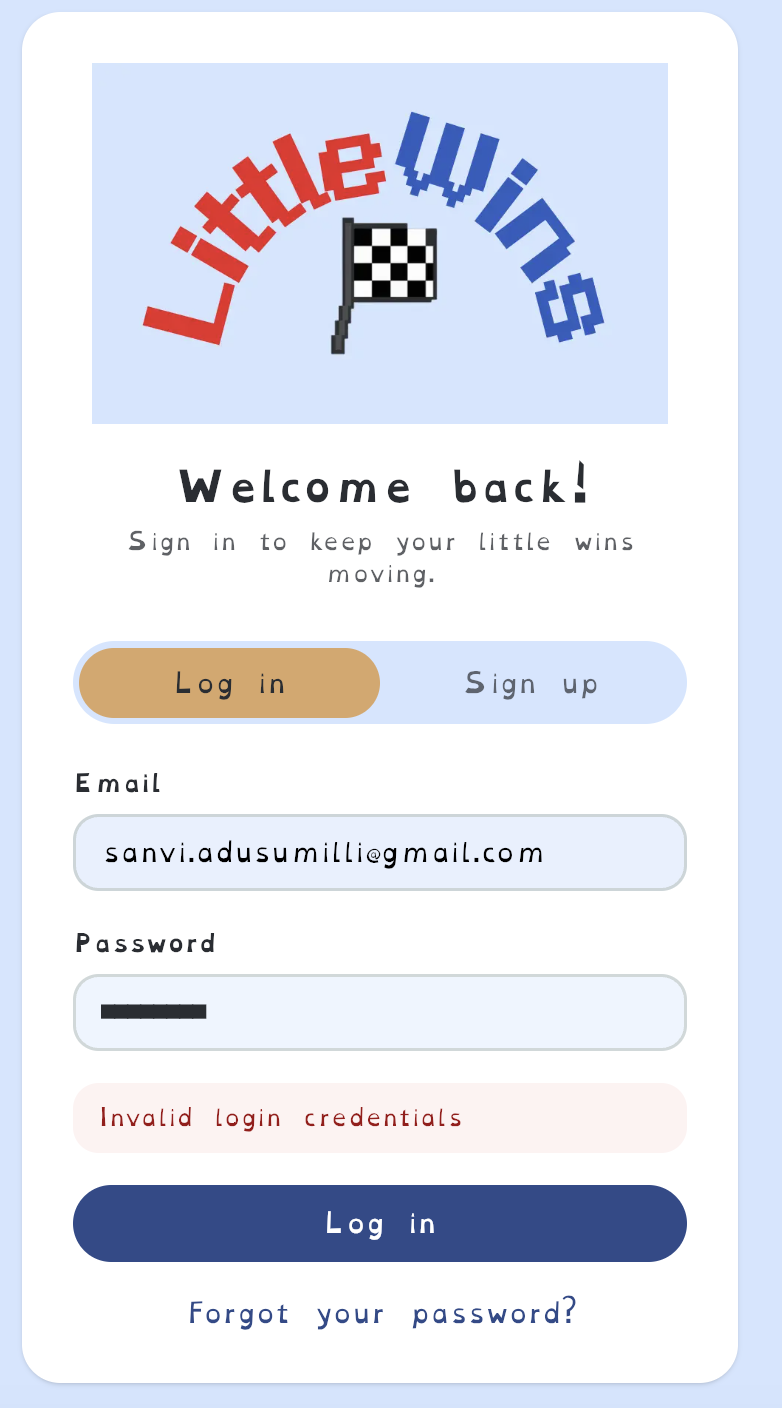
Login/Sign Up
-
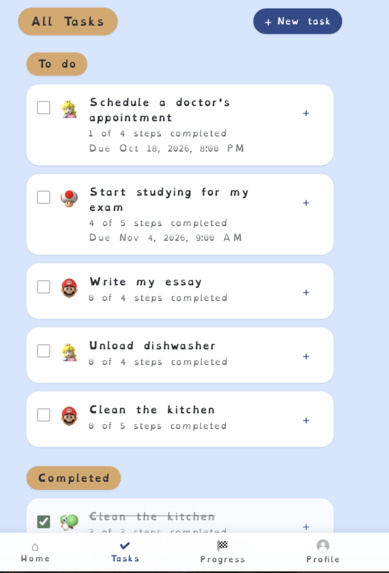
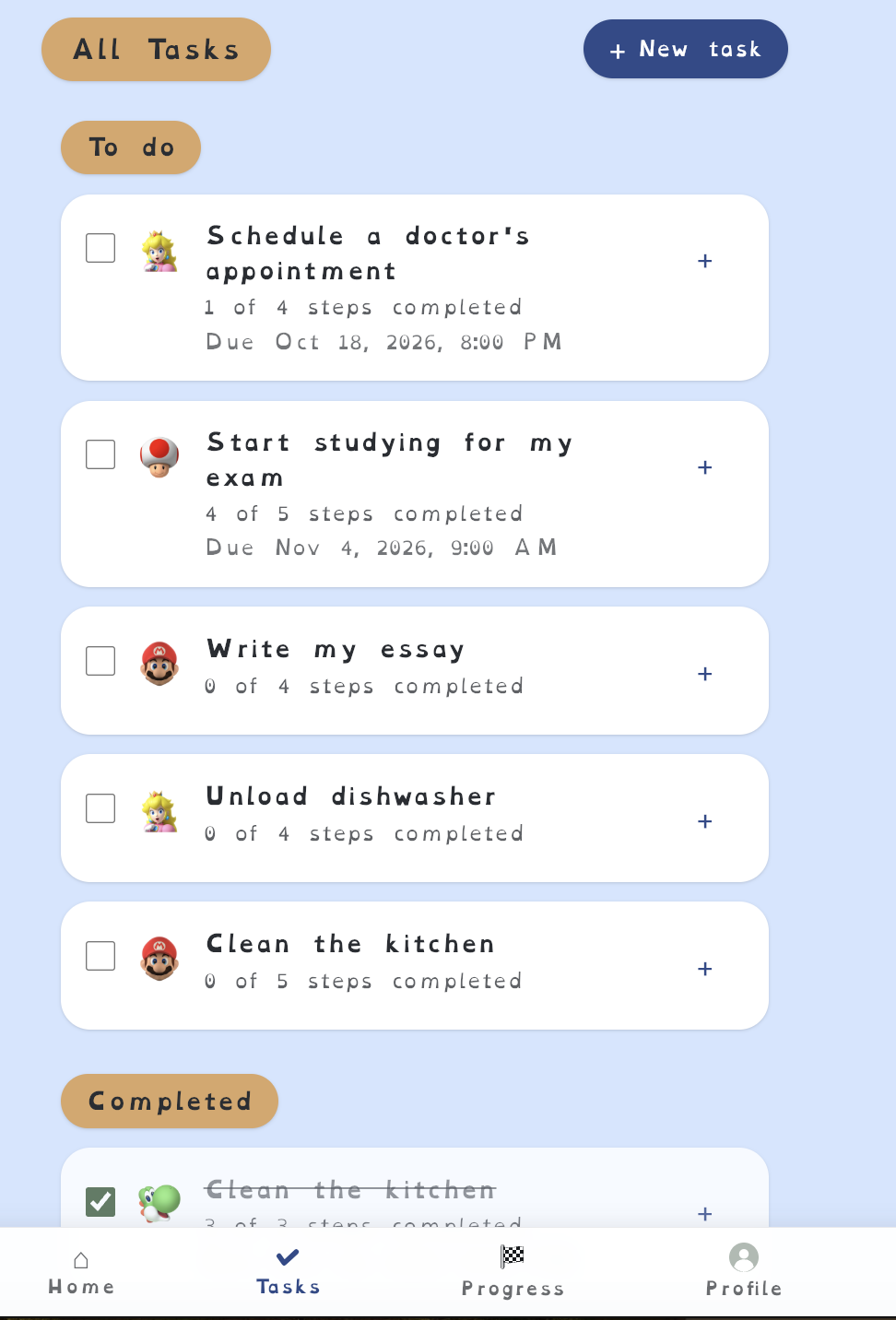
Tasks Page
-
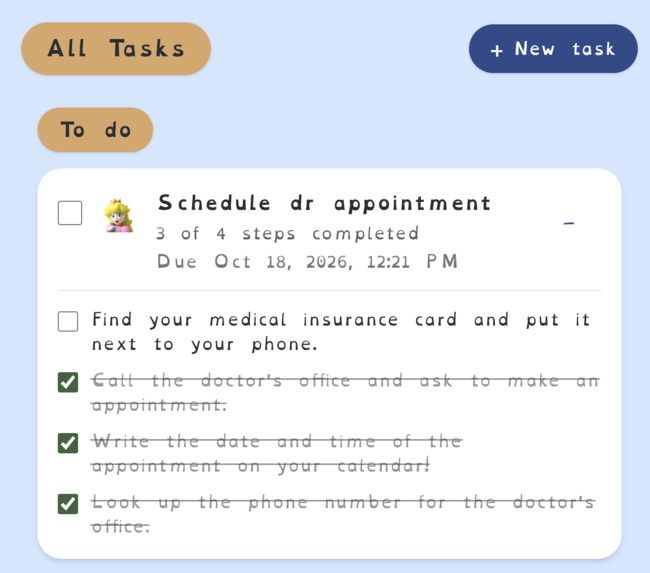
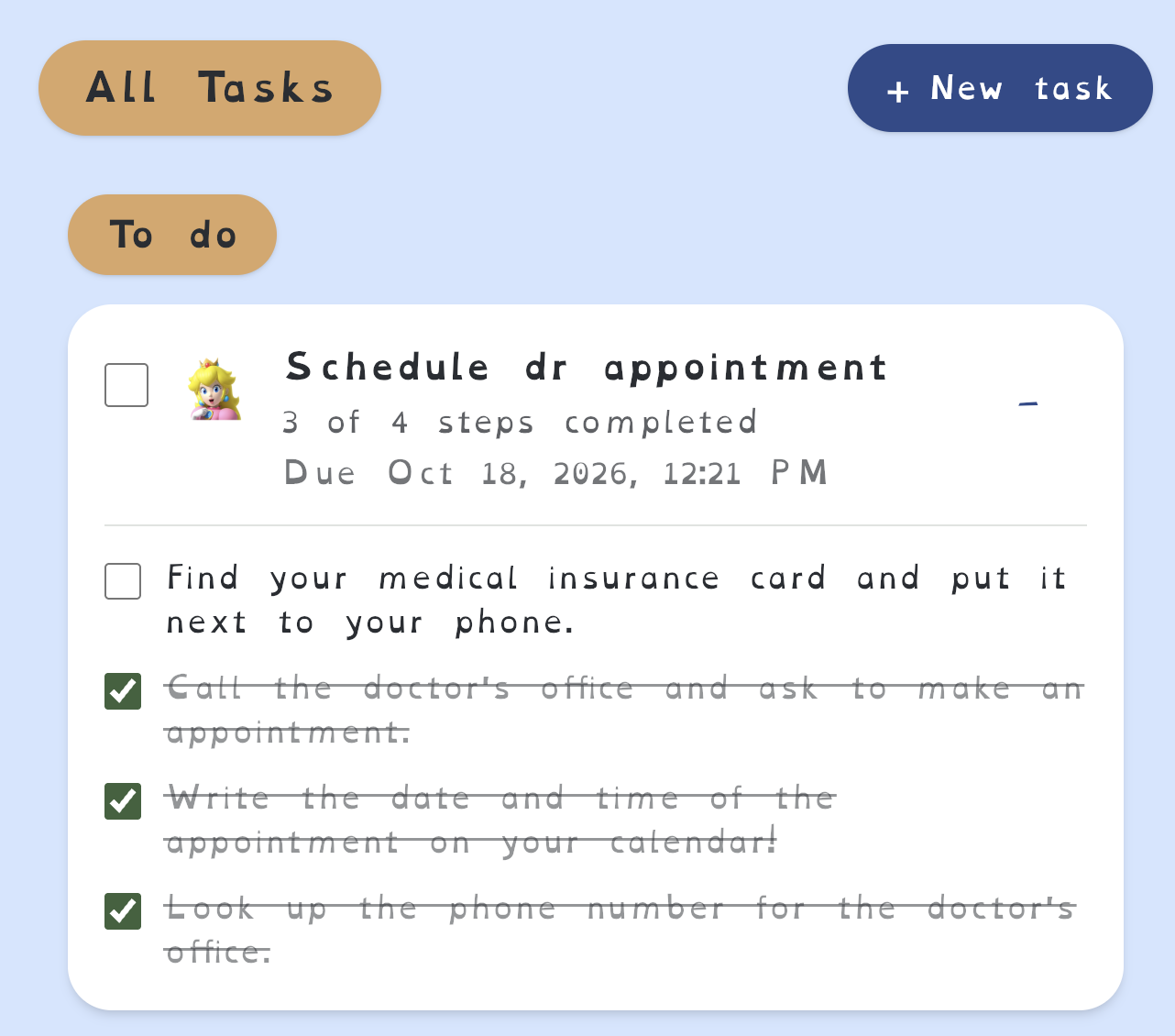
Use dropdown to see steps
-
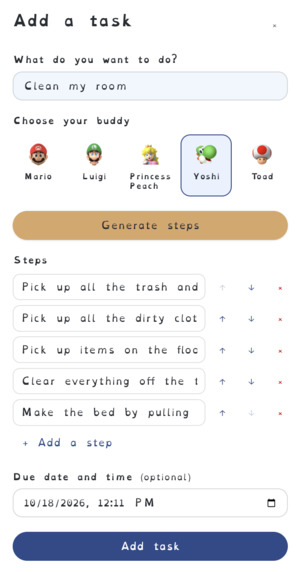
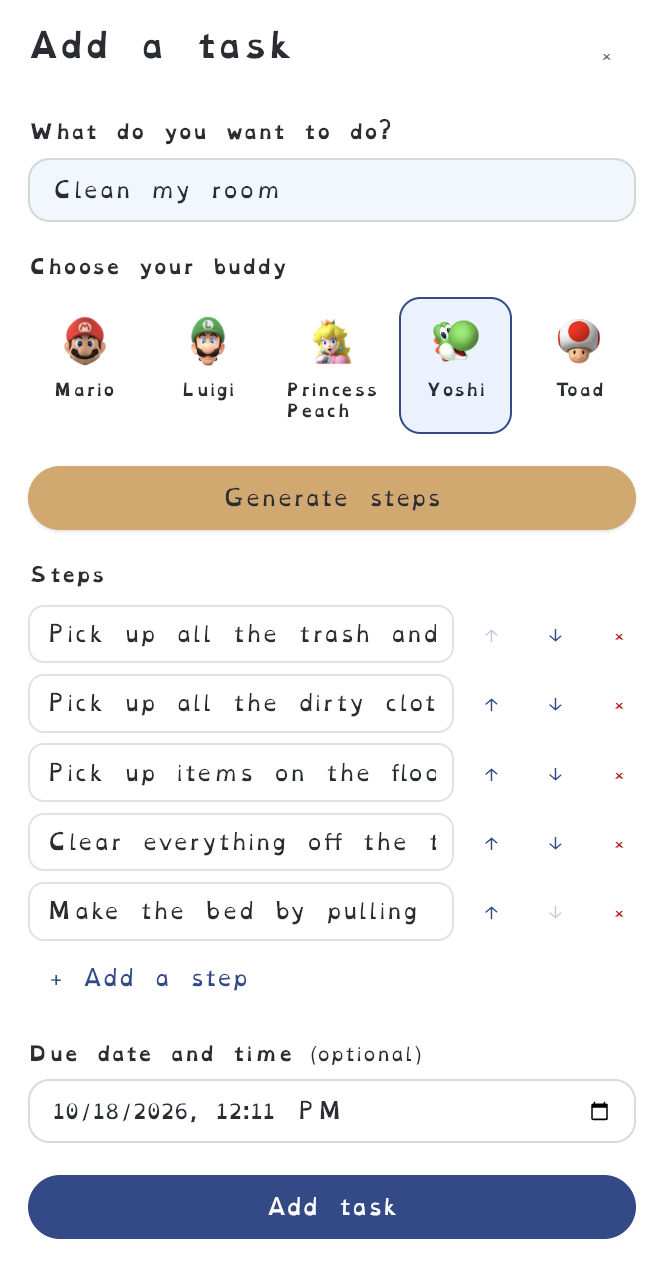
Add and Generate a Task
-
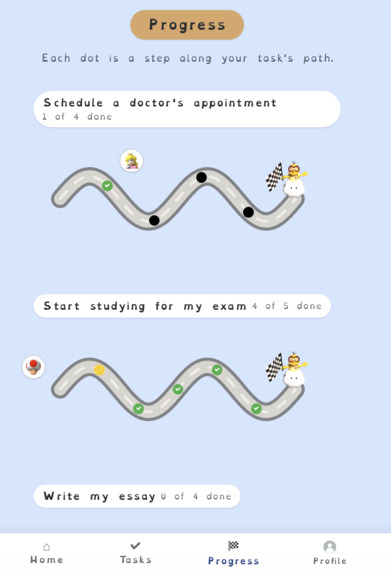
Progress Page
-
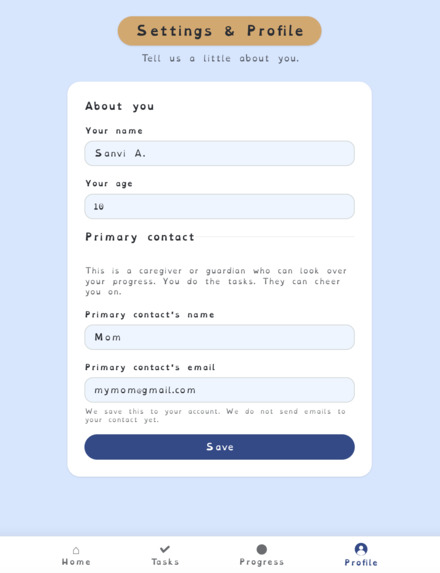
Profile page
Inspiration
When we thought of 2016, the first thing that came to our mind was Mario Kart. We also thought about how many people struggled to manage their everyday tasks. Traditional to-do lists allow users to input their tasks but don't often help them plan out the steps required and track their progress. As such, we decided to incorporate this idea with Mario Kart aesthetics to create a program that helps people who face barriers related to executive functioning and task organization, promoting accessibility for these populations.
What it does
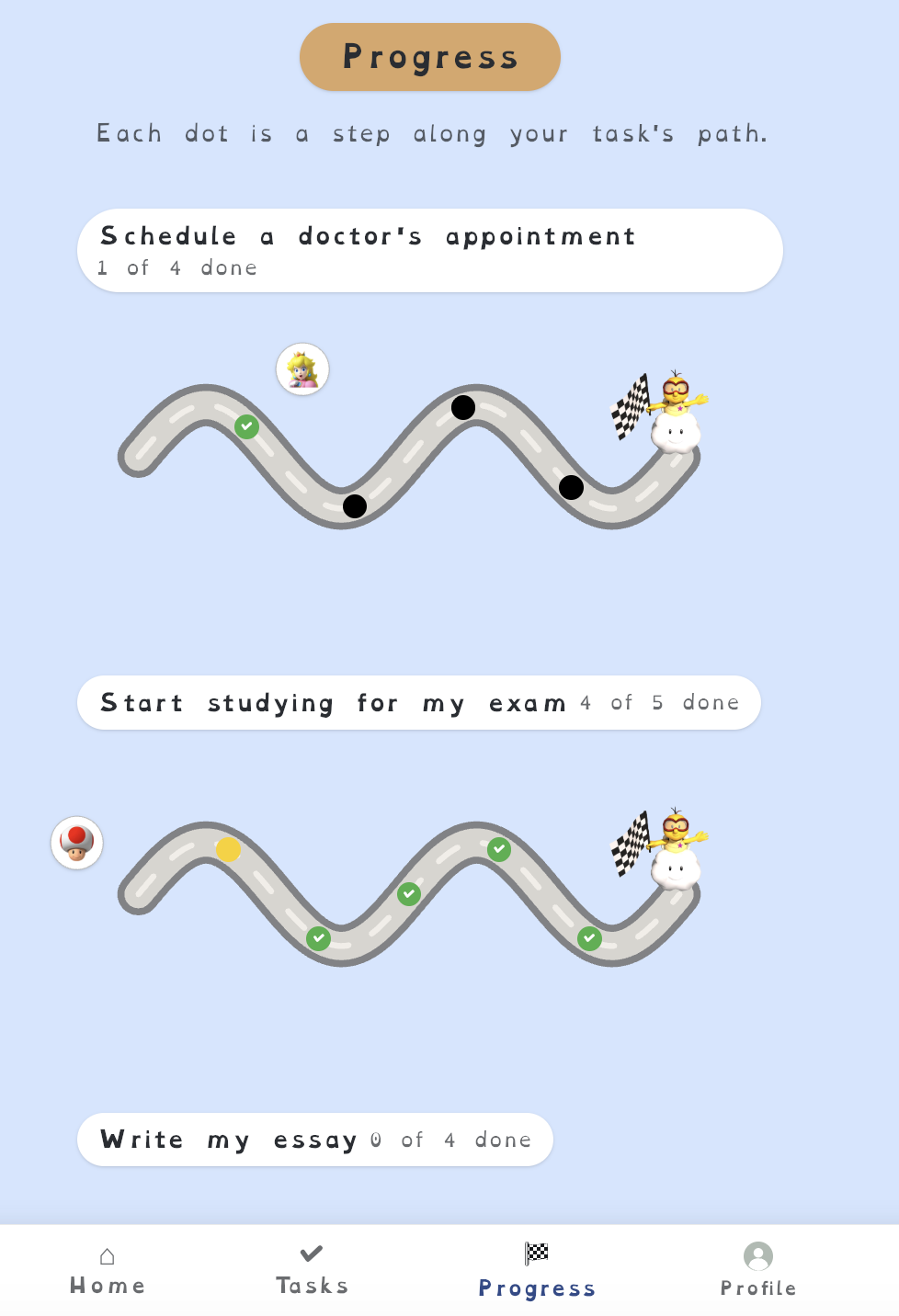
Essentially, it automatically generates some steps/subtasks for each task the user adds using the Google Gemini API, which provides a clear starting point and checkpoints for the user. It also incorporates a Mario Kart-inspired theme that aims to make task management more engaging and rewarding for users. Users can choose a buddy for each task and watch them move along a racetrack as they complete subtasks. Each spot on the track represents a step towards completing the overall task, allowing for a visual representation of their progress.
How we built it
Next.js with the App Router for the application and backend API routes. TypeScript for all application code. Tailwind CSS for styling consistency with the existing frontend. Supabase PostgreSQL for task and subtask storage. Supabase Auth for authentication, using the existing setup Google Gemini API for AI-powered task breakdown.
Challenges we ran into
One of the main challenges we ran into was integrating everyone's work into a cohesive application. When multiple team members were working on the same components simultaneously, we had to figure out how to coordinate our changes and merge our work appropriately, so everything was being saved without overwriting anyone's contributions. In addition, we ran into challenges with the UI design as we had to make sure our design was informative while also maintaining a clean interface. This was an important consideration with our target population as an overly cluttered design could be increase cognitive load and make the application feel overwhelming. Since our goal was to make task management more accessible and approachable, it was important to ensure that our interface was clear without adding unnecessary complexity.
Accomplishments that we're proud of
One accomplishment that we're proud of is our UI design, particularly how we created an interface that fit the 2016 vibes while also being visually clean and straightforward. We are especially proud of our progress page where we incorporated game-like elements inspired by Mario Kart to make task management more interactive and engaging. The features we incorporated such as choosing a Mario Kart character as a buddy and watching it move along a racetrack allowed us to transform regular task management into a more enjoyable experience. Overall, we are proud of how we were able to tailor our application and features to our target population, keeping accessibility and user needs in mind.
What we learned
By developing Little Wins, we learnt to balance functionality and accessibility with visual design so we can genuinely benefit our target population. We learnt to design for the needs of our target population, considering the diverse needs, preferences, and abilities of our users.
Relation to the theme
In terms of the theme, we focused on enhancing accessibility for communities facing executive functioning challenges like those with ADHD and autism through inclusive technology. By automatically generating subtasks and utilizing a fun Mario Kart theme to track progress, we hoped to improve accessibility by breaking down some of the barriers that inhibit their ability to complete their tasks so they can take charge of their life. Mario Kart was also very popular in 2016, tying into the back to 2016 theme of this hackathon!
What's next for Little Wins - Health & Accessibility Track
As we move forward with Little Wins, we hope to incorporate more visual elements and customizable features that make task management accessible to a wider range of users. We would like to explore ways to present information in different formats to accommodate users with varying cognitive needs. For instance, we'd also like to implement an auditory component where users can verbally add tasks and hear their tasks spoken aloud. Ultimately, we aim to make little wins a more inclusive tool that supports a broader range of impairments and needs.
Built With
- css
- gemini
- next.js
- postgresql
- supabase
- typescript


Log in or sign up for Devpost to join the conversation.