-
-
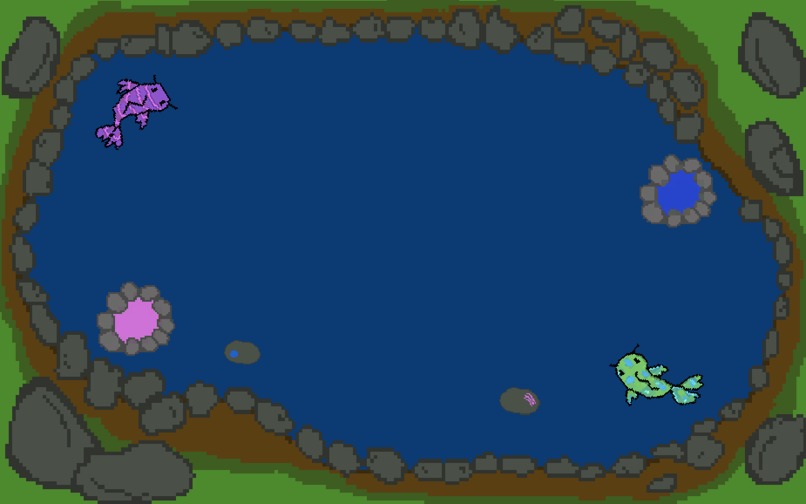
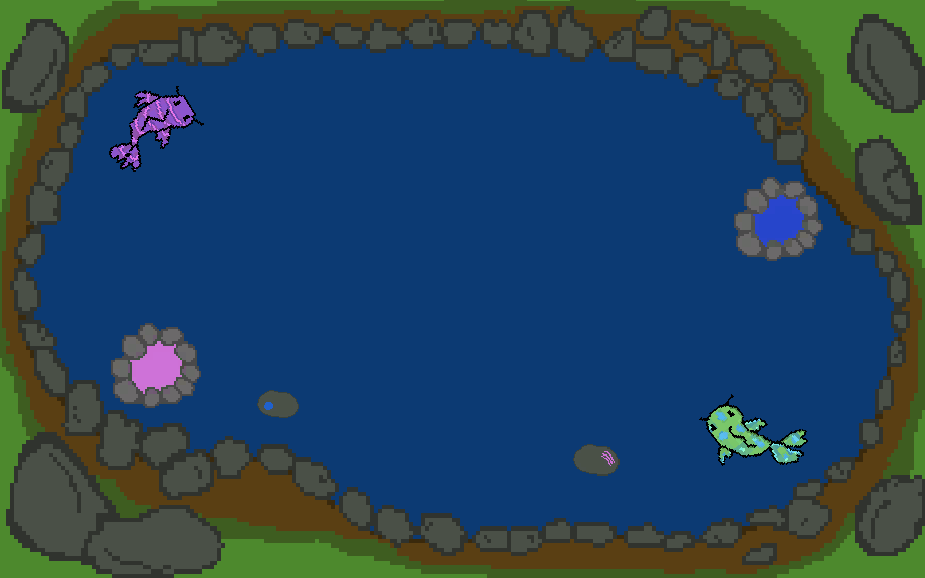
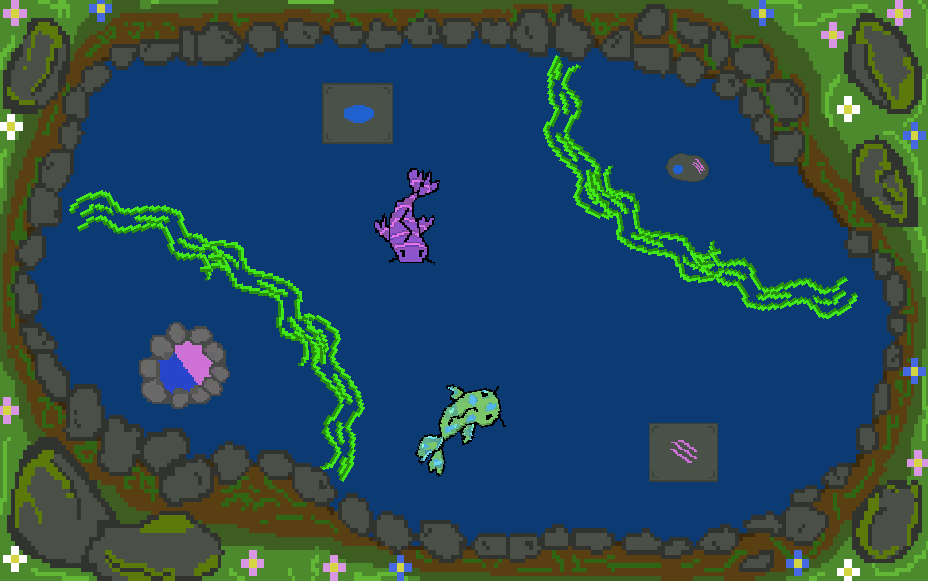
Level 1
-
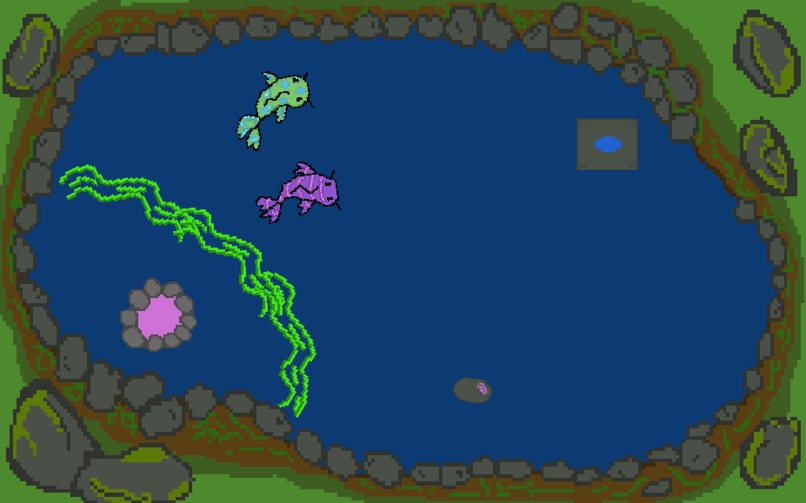
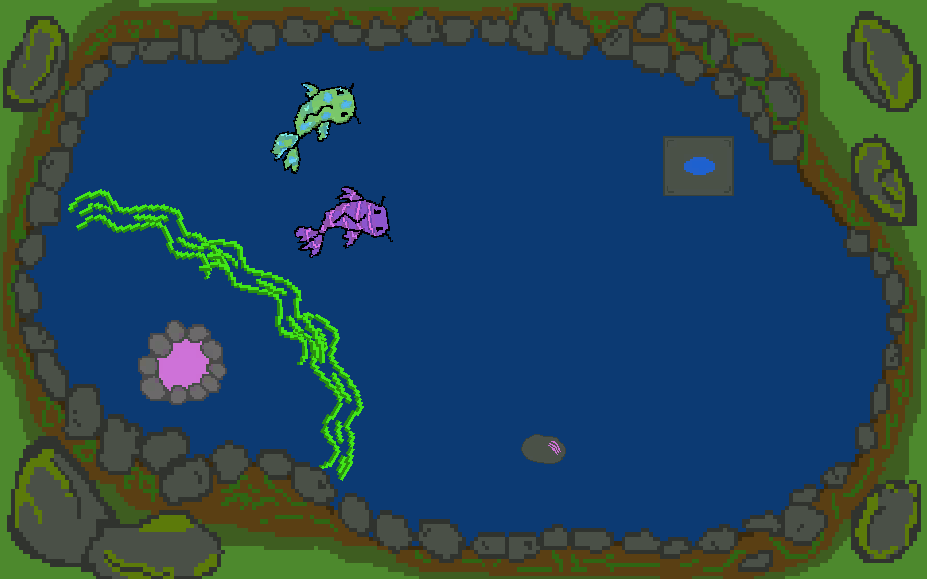
Level 2
-
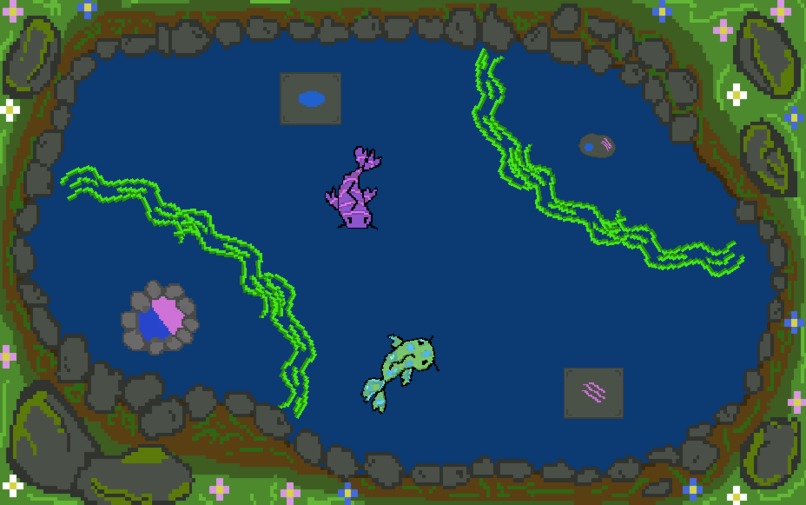
Level 3
-
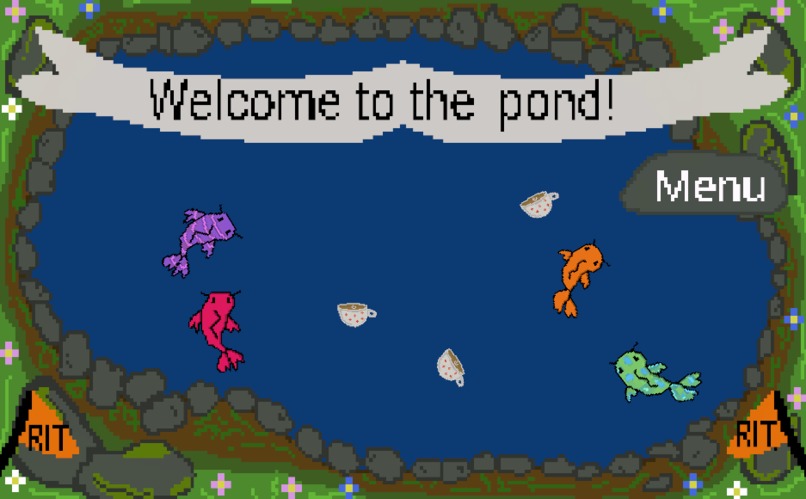
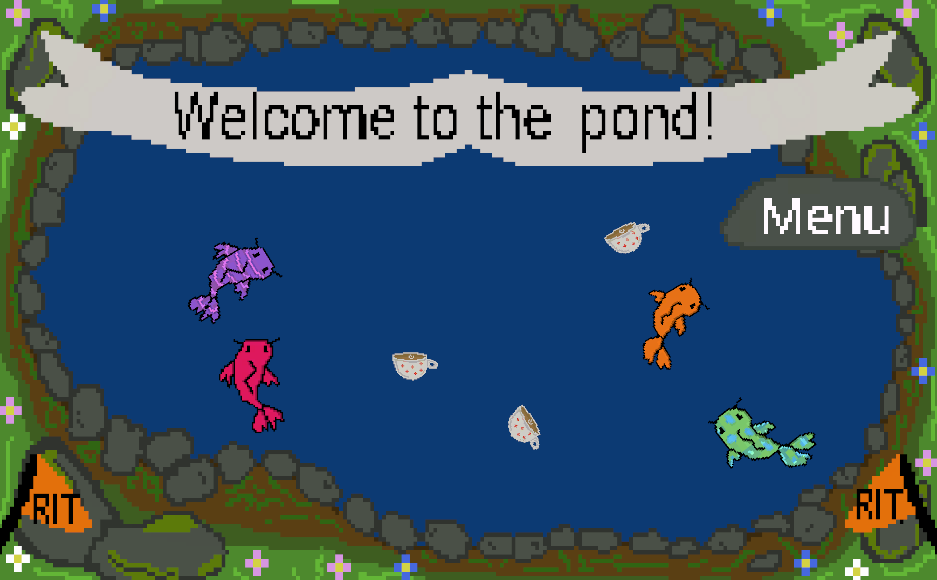
End Level
-
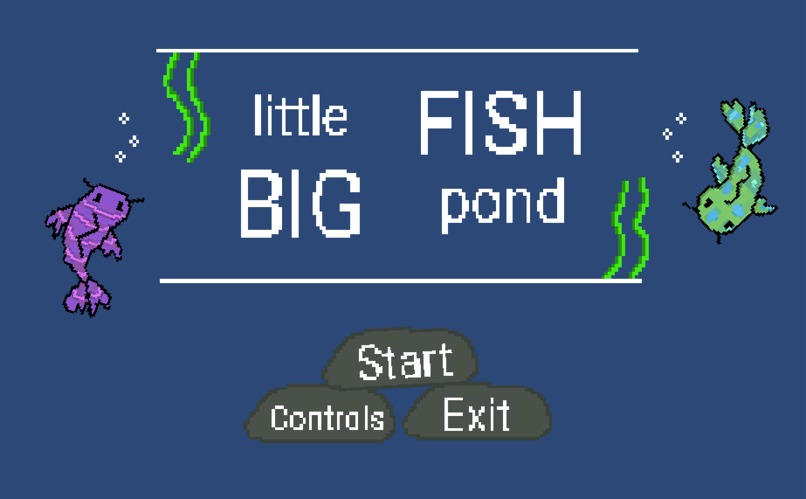
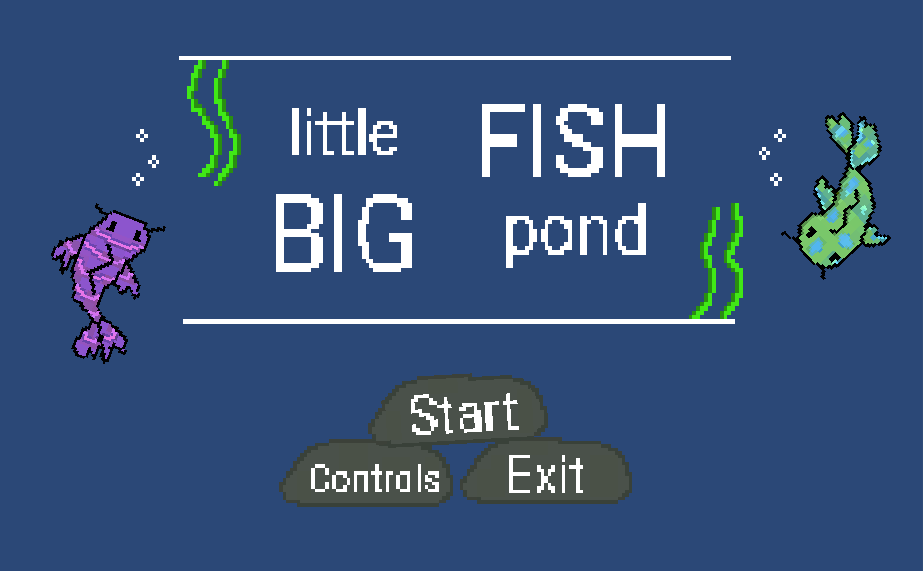
Title Menu
-
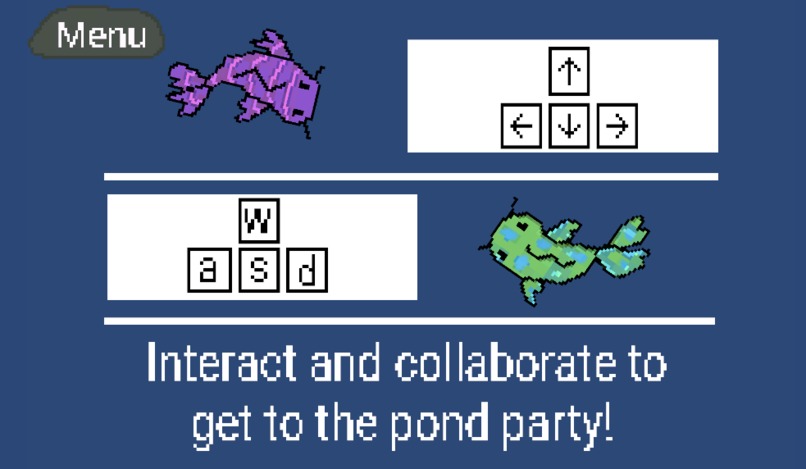
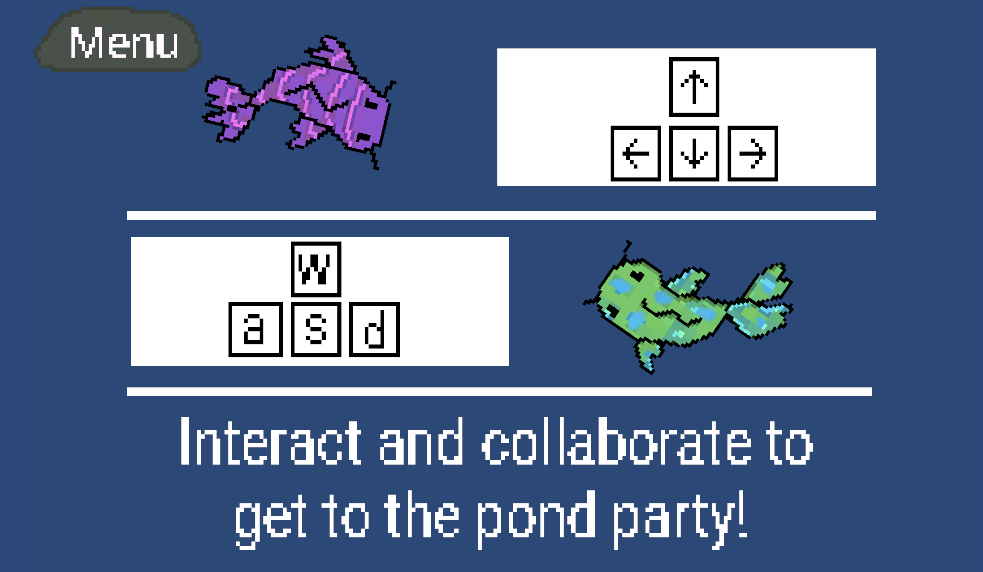
Controls Menu
-

Player 1 (Blue Fish)
-

Player 2 (Pink Fish)


Inspiration
Our team wanted to create a game that focuses on the idea of coming together and working with the people around you. We figured that the best way to do this would be to create a cooperative puzzle game. We were inspired by games like Fireboy and Watergirl, another popular 2-player, co-op game. The theme of our game, fish in a pond, was inspired not only by the saying "Little Fish in a Big Pond," but also by RIT's own koi pond.
What it does
Little Fish, Big Pond is a 2D, 2-player, co-op game that explores the importance of understanding your situation and how it relates to the people around you. The players are not able to win all three levels of Little Fish, Big Pond unless they communicate and work together. We wanted to create a game that would foster a place for people to become more familiar with each other, a place where strangers can become friends.
How we built it
Our build was made through Unity using C#. All our assets were made in Pixelorama.
Challenges we ran into
The main challenge we ran into was keeping our code organized. This was most often caused by our naming conventions, but this was solved once we sorted out a naming system. For the gameplay, we also found some difficulty with interaction between the rocks and the bounds of the level. We fixed this by creating a separate collision layer that only affects the rocks and nothing else, ensuring that the player can move the rocks around with less frustration.
Accomplishments that we're proud of
We are proud of the consistency in the assets that are present in the game, how we managed to stick to our scope and how well our team worked together.
What we learned
We learned that making a project can be a ton of fun if your team starts the hackathon off by putting in the effort to properly plan out the scope of the project and ensuring that everyone knows what their role is from the beginning.
What's next for Little Fish, Big Pond
In the future, further development of Little Fish, Big Pond would focus on improving the display of the game and how the player interacts with it. We want to add smooth animations that translate cleanly on the screen, regardless if the project is built on the web or on windows. We want to improve the design of the puzzles on each level, both by adding more levels that the players can explore and making them more complex, so that the players have to spend more time working together to solve them. We also want to experiment with different controllers, specifically moving away from keyboards and moving towards handheld controllers. The thought behind this is that we think it would easier for the two players to connect if they are, for example, sitting on a couch looking at a TV screen together rather than having to lean over the same keyboard.


Log in or sign up for Devpost to join the conversation.