Inspiration
The inspiration for Litter Ballista stemmed from a growing need to raise environmental awareness among children in a fun and engaging way. Seeing the increasing impact of pollution on our planet, we wanted to create an educational tool that would both entertain and inform young players about the importance of environmental conservation. By combining gaming with education, we aimed to spark a sense of responsibility and curiosity about keeping our environment clean.
What it does
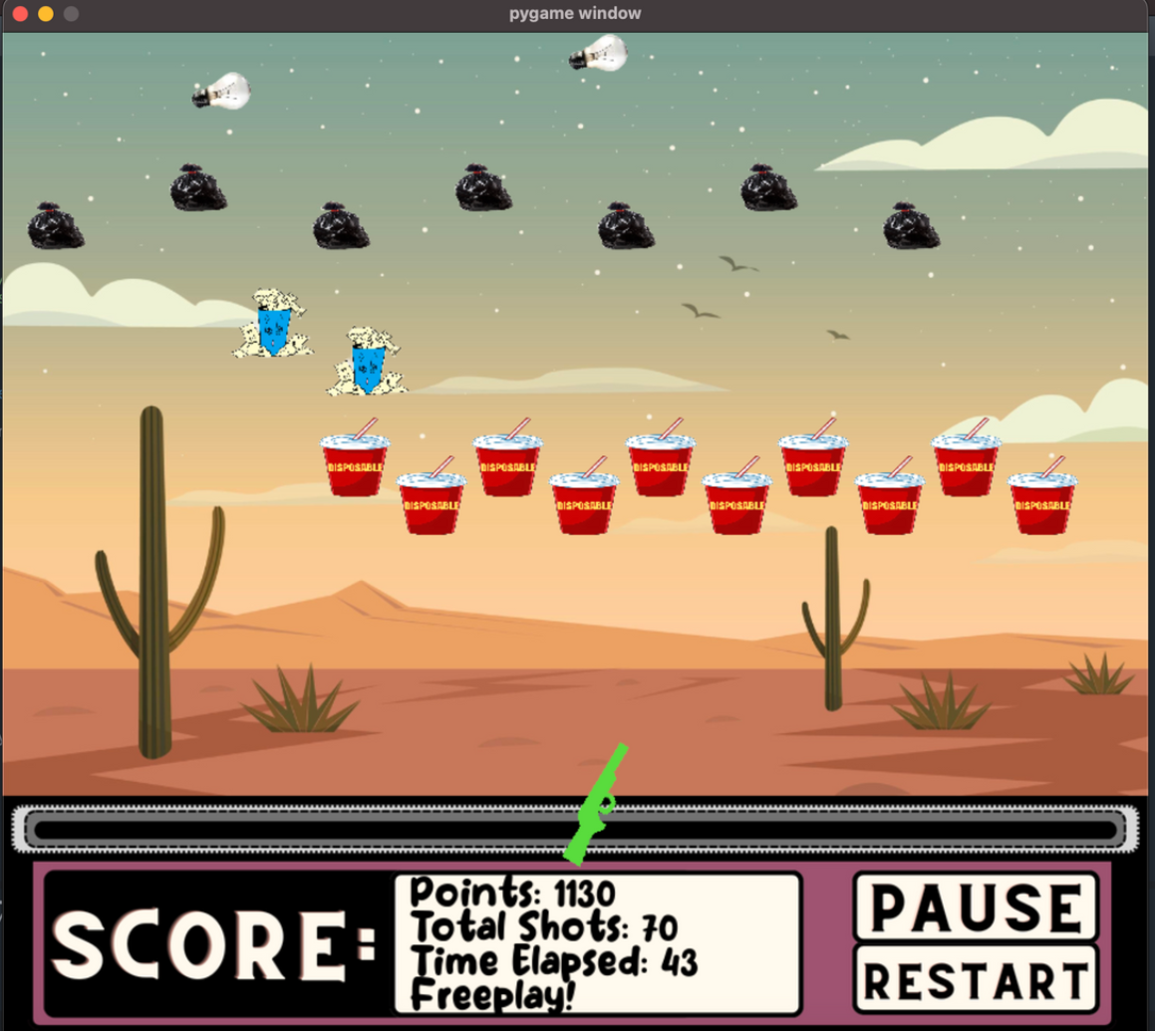
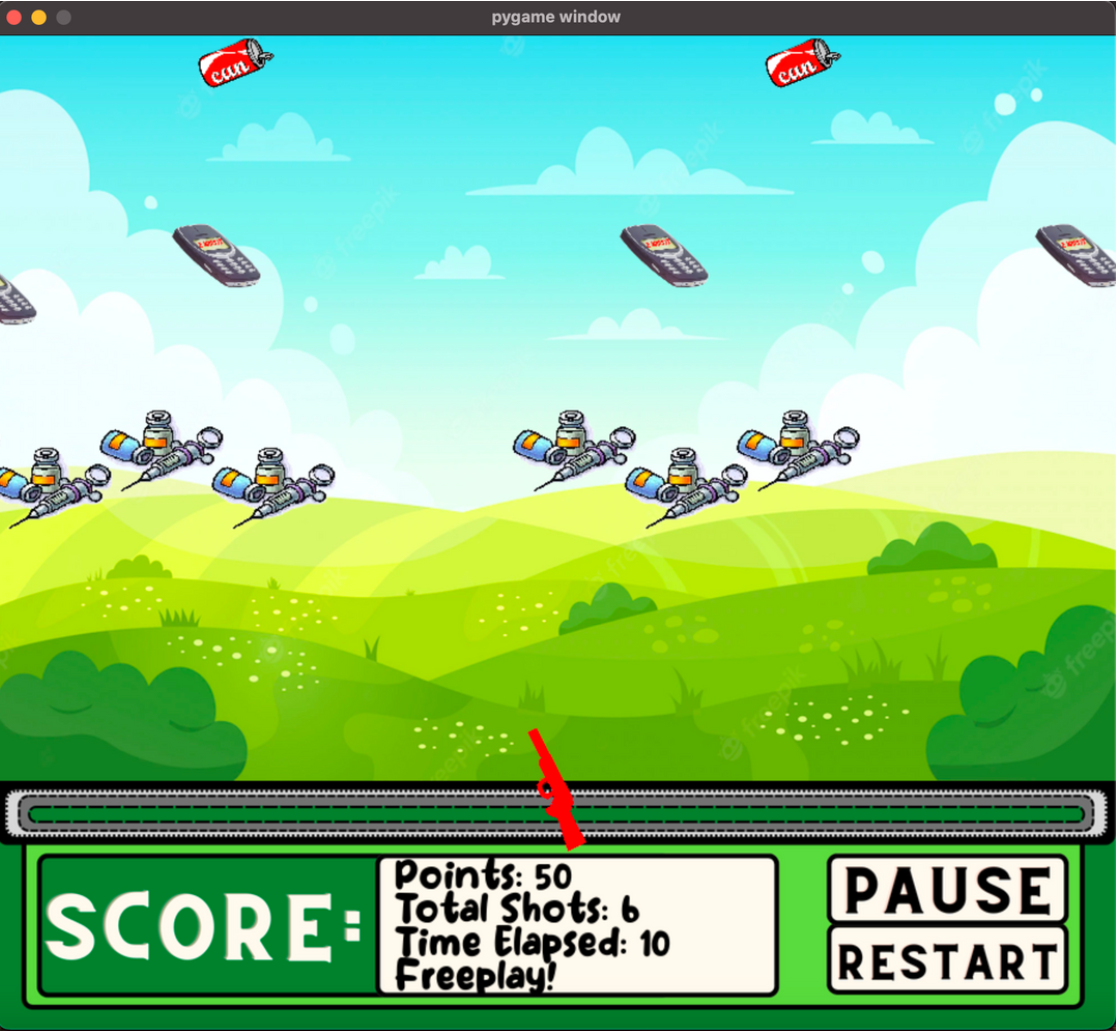
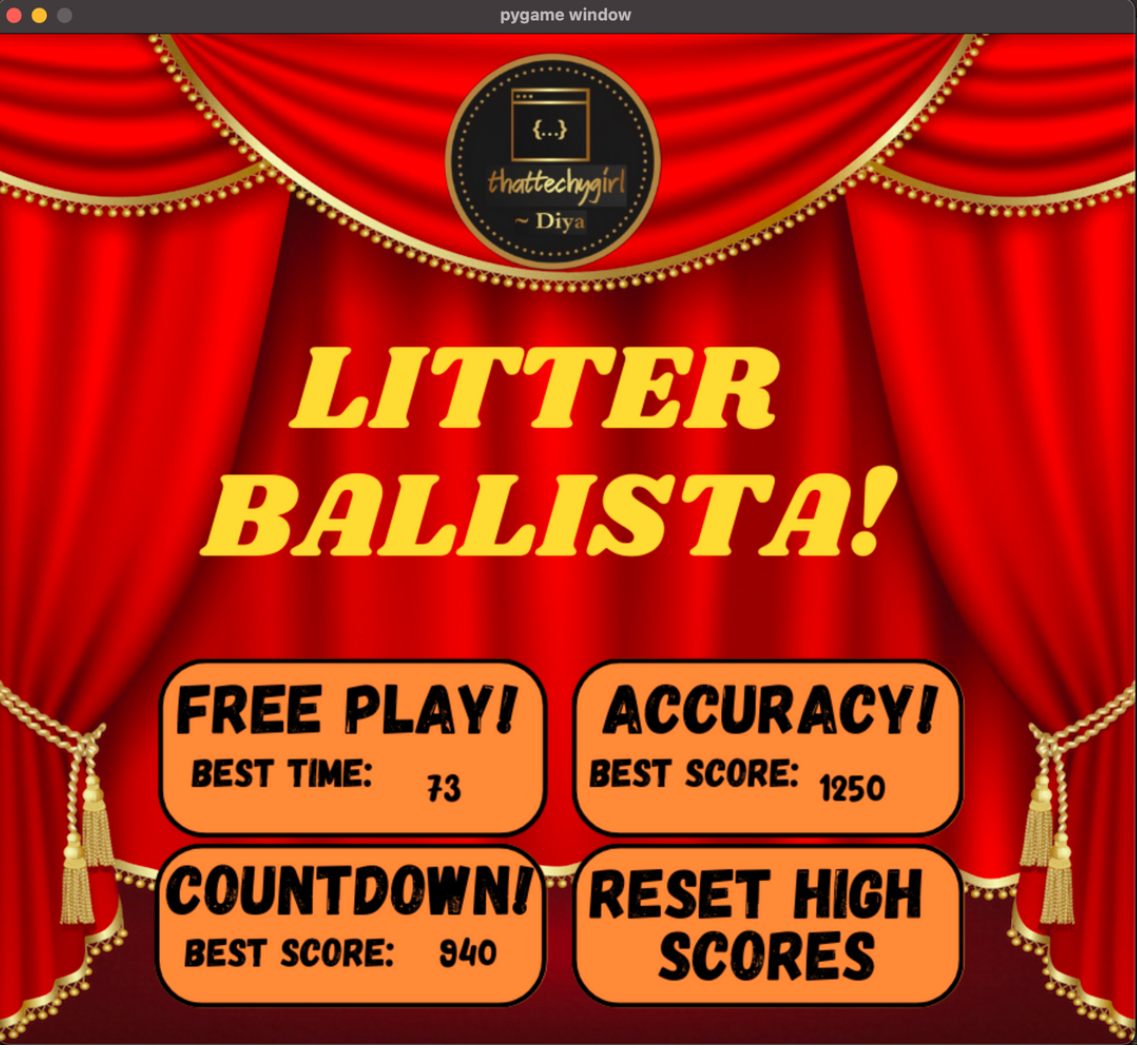
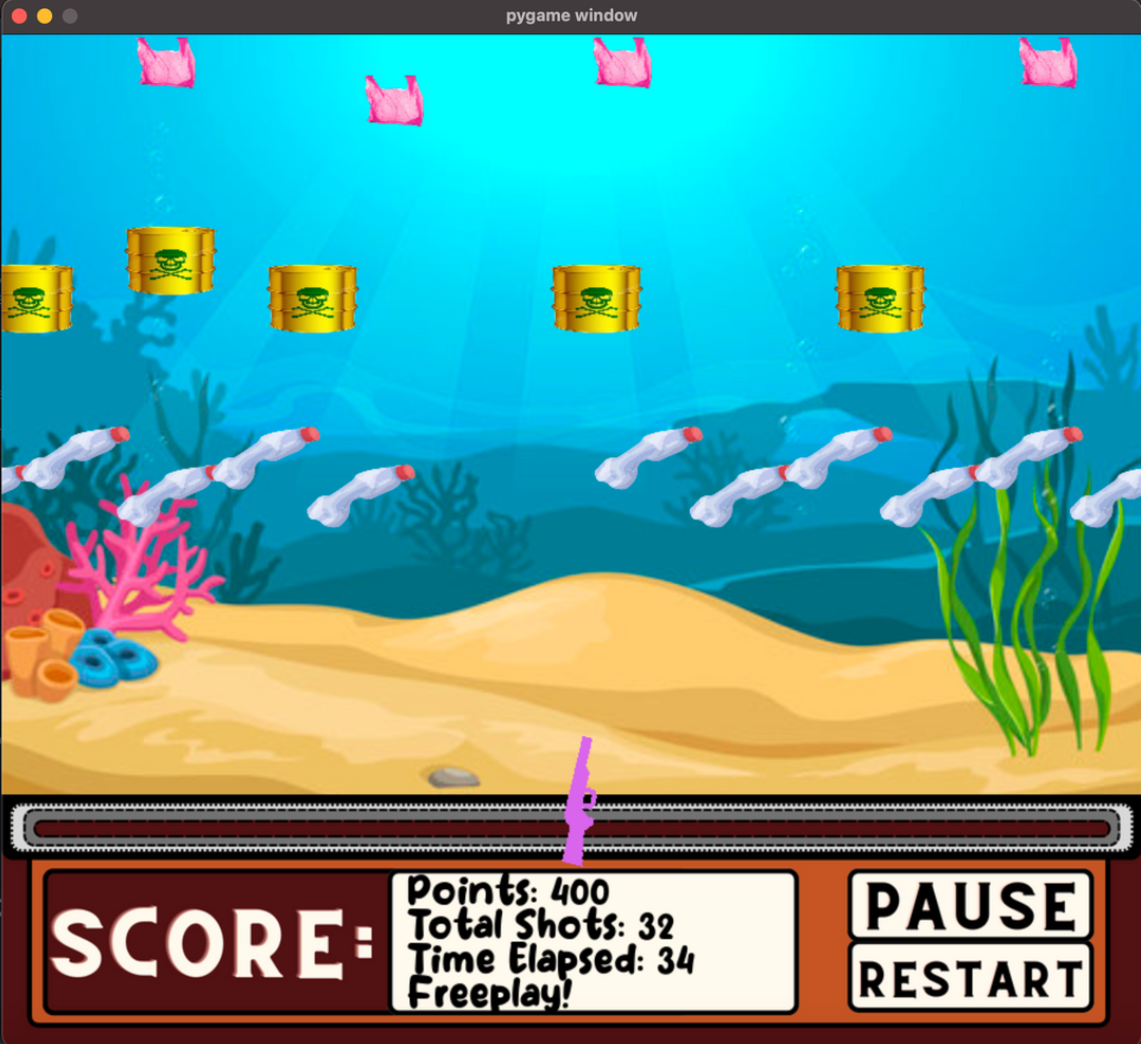
Litter Ballista is an educational game designed to teach children about environmental pollution. The game features three levels, each progressively more challenging, where players identify and eliminate pollutants. It offers three play modes:
- Freeplay Mode: Players aim to complete the game as quickly as possible.
- Countdown Mode: Players score as many points as they can within a 30-second timer.
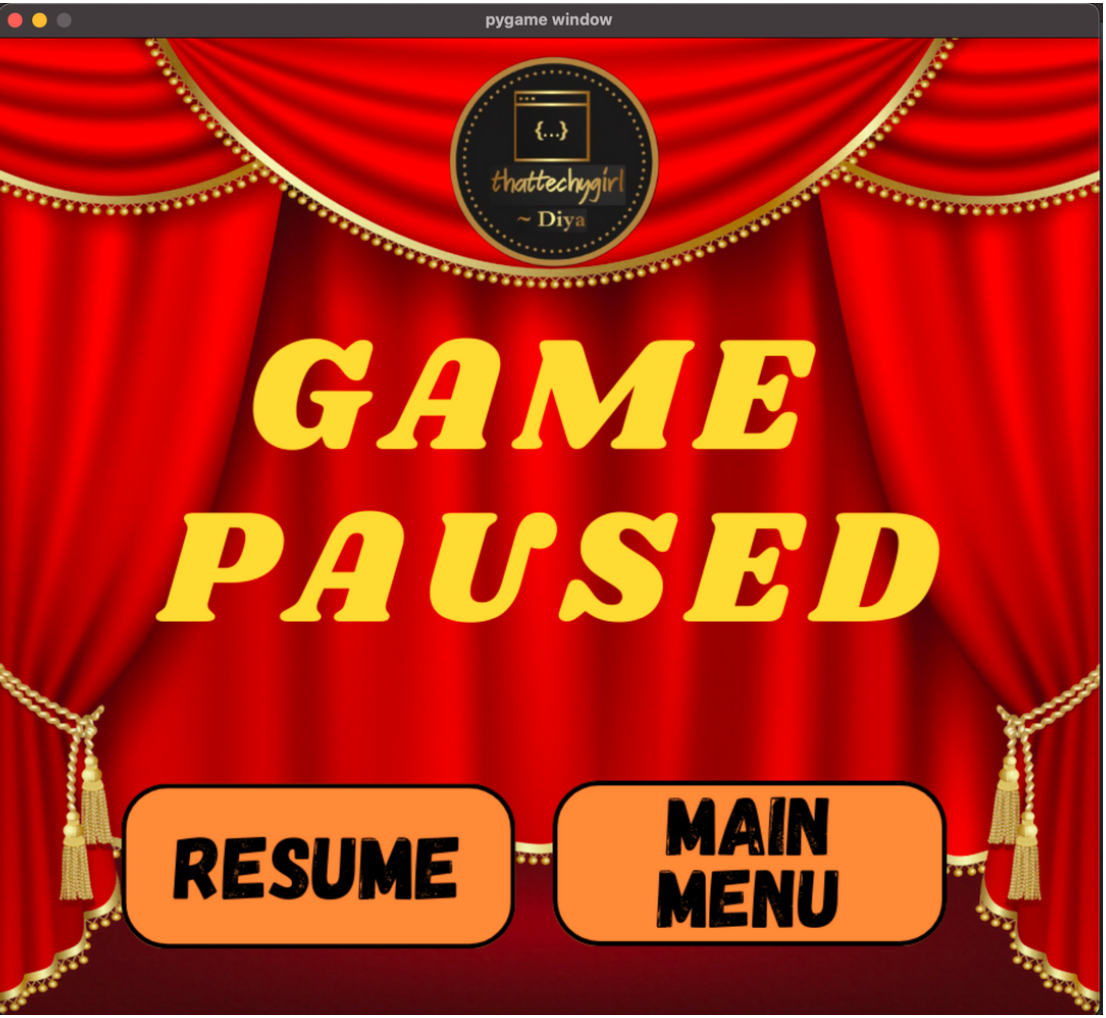
- Accuracy Mode: Players use 81 shots to score the highest number of points. The game includes features such as pause and restart options, high score tracking, and a point system that rewards players for targeting harder-to-hit objects, all aimed at making the learning process both engaging and effective.
🌟## Key Features 🎮 Arcade-style gameplay with increasing difficulty 🗑️ Different trash items (paper, plastic, glass, etc.) ⏱️ Countdown timer and real-time scoring 💾 High-score tracking stored across sessions 🎯 Game Modes: Accuracy, Speed, Freeplay 💥 Score Multiplier Power-Up: Collect a floating star to double your points temporarily 🌱 Eco-Fact Popups: Learn interesting environmental facts between levels 🔊 Immersive sound effects and music
How I built it
I developed Litter Ballista using Python, leveraging libraries (specifically the pygame library) and frameworks that facilitated game design and user interaction. The game’s architecture was built to ensure smooth gameplay and educational value. The graphical elements and game mechanics were carefully designed to make the game both visually appealing and challenging. We used Tkinter for creating the game interface and managing user input, ensuring that the game runs efficiently and provides a seamless experience for players.
Challenges I ran into
One of the main challenges was finding the right balance between fun and educational content. It was crucial to design a game that was both entertaining and effective in conveying environmental messages. Another challenge was ensuring the game’s difficulty was appropriate for its target audience, which required extensive testing and adjustment. Additionally, integrating educational content without overwhelming players posed a significant challenge, necessitating a careful approach to game design and content presentation.
Accomplishments that I'm proud of
I am proud of successfully integrating educational content with entertaining gameplay. Litter Ballista not only engages children but also educates them about environmental conservation in a way that is both enjoyable and impactful. The game’s high score tracking and various play modes have been appreciated at International Digital Fest and received a cash price of AED 2000, providing players with multiple ways to interact and learn.
What I learned
Through the development of Litter Ballista, I learnt valuable lessons about combining educational content with interactive design. Balancing educational value with engaging gameplay is challenging but crucial for creating a successful educational game. I also gained insights into the importance of user feedback and iterative development, which helped me refine the game to better meet players’ needs and enhance their learning experience.
What's next for Litter Ballista Game
Moving forward, I plan to expand Litter Ballista by introducing new levels and additional modes to keep the gameplay fresh and challenging. We aim to incorporate more detailed educational content about different types of pollutants and environmental issues


Log in or sign up for Devpost to join the conversation.