-
-
sketch
-
ending
Litigraft AI
Inspiration
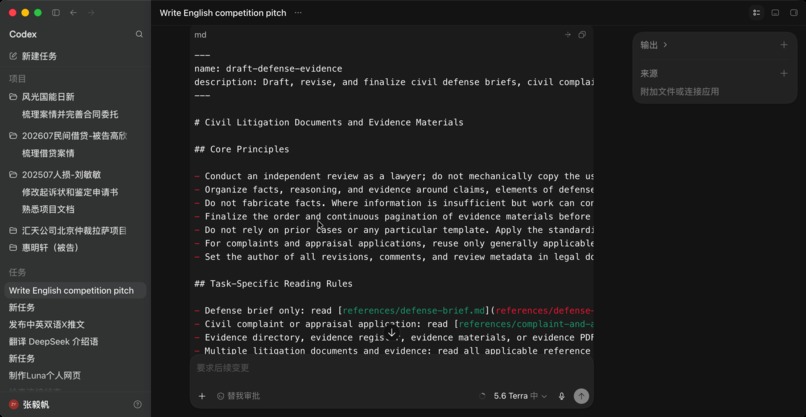
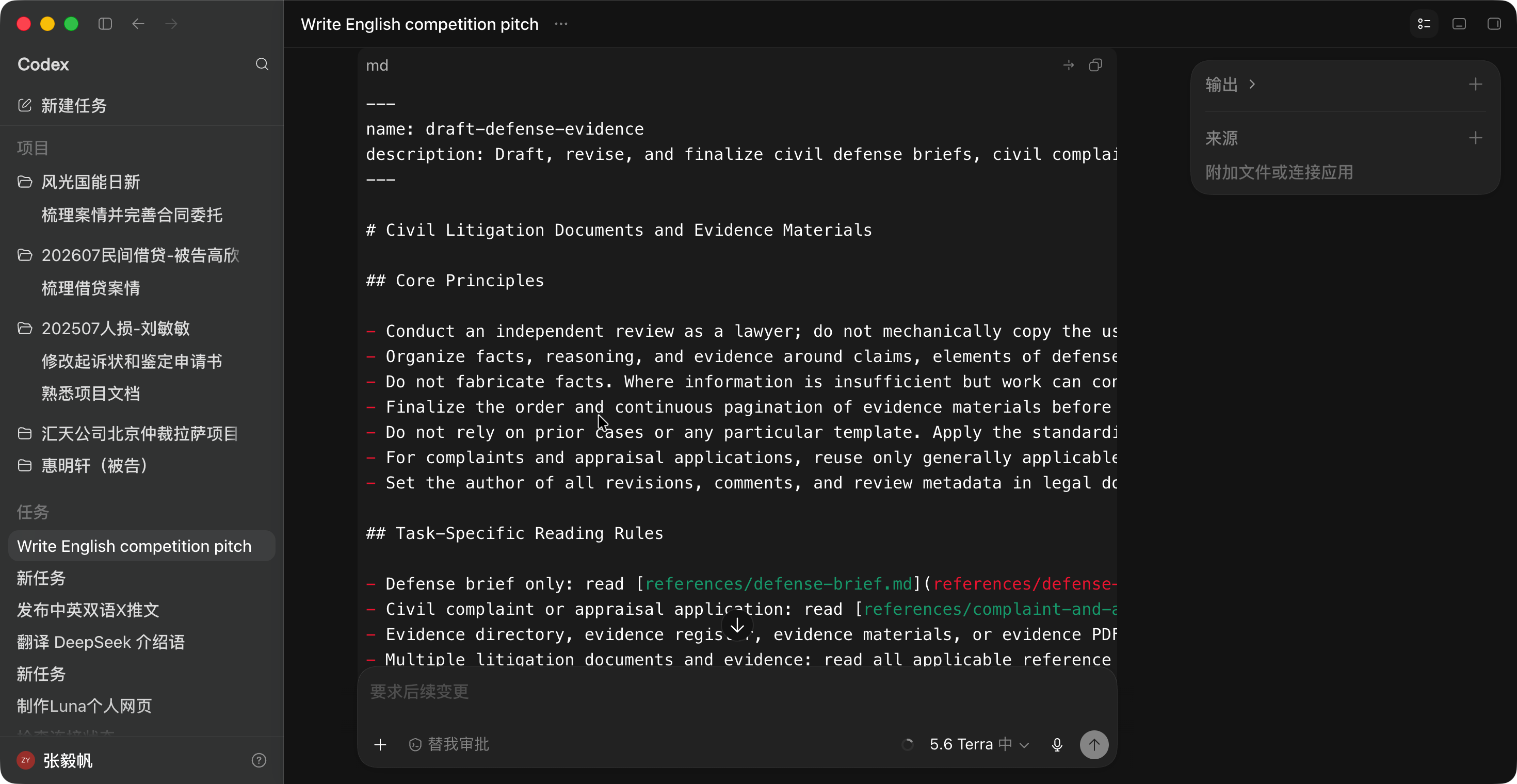
As a practicing lawyer, I found that drafting litigation documents is rarely just a writing task. The real difficulty is turning scattered case facts, chat records, contracts, payment records, and preliminary legal ideas into a coherent argument without overstating unsupported facts or creating inconsistencies between a defense brief, evidence directory, and evidence bundle.
GPT helped me draft faster, but it also showed me that a general-purpose chat workflow was not enough for high-stakes legal work. I needed a repeatable system that preserved professional judgment, evidence discipline, and document-level accuracy.
What I Built
Litigraft AI is a reusable AI workflow for PRC civil litigation drafting. It helps transform case materials into evidence-grounded litigation documents, including defense briefs, evidence directories, and court-ready evidence bundles.
The workflow:
- Reviews the case from a lawyer’s perspective instead of blindly following an initial theory.
- Flags unsupported facts as
To Be Confirmedrather than inventing certainty. - Organizes evidence by legal issue and purpose of proof.
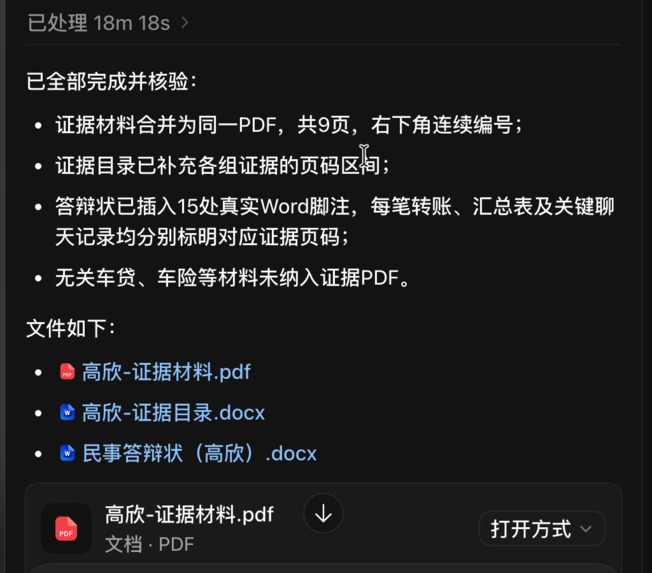
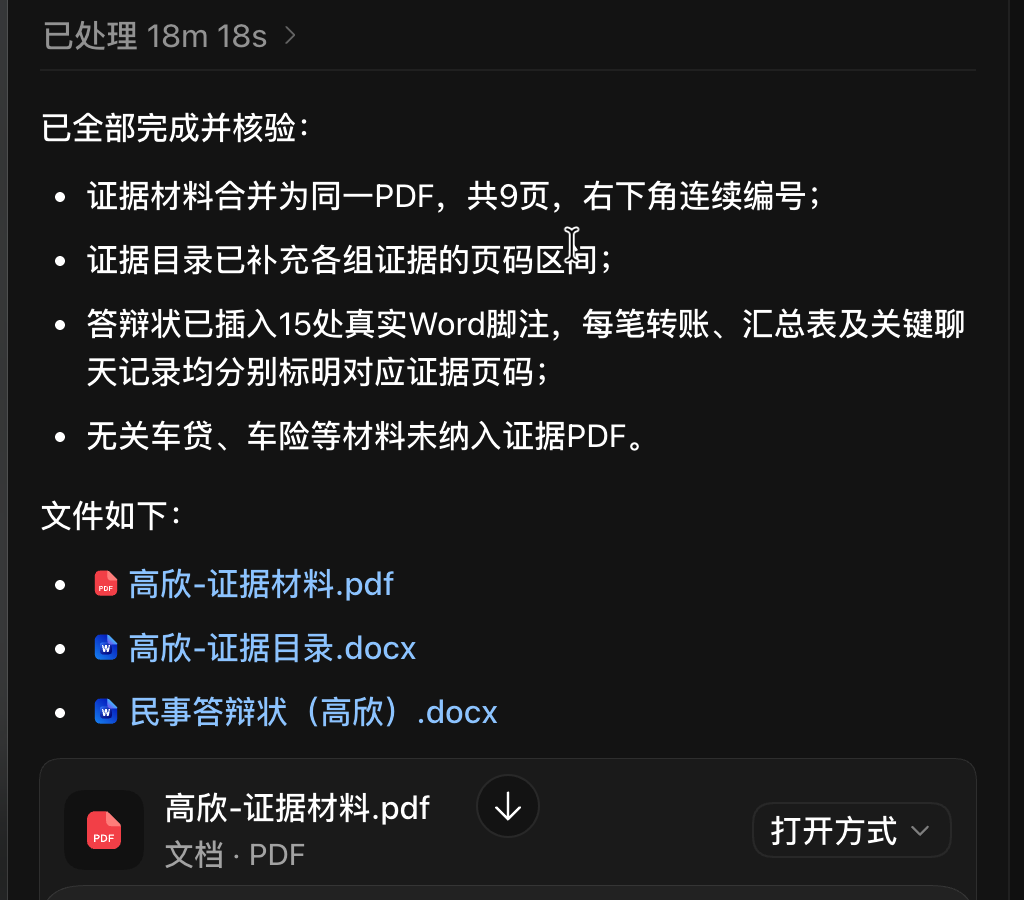
- Merges evidence into one ordered PDF with continuous page numbers.
- Backfills exact page references into the evidence directory and document footnotes only after the final PDF is complete.
- Performs a final consistency check across names, dates, amounts, page ranges, signatures, and seals.
What I Learned
I learned that the value of AI in legal work is not simply generating more text. It is designing constraints that make generated work safer, more verifiable, and easier for professionals to review.
I also learned how to turn repeated personal workflow corrections into an explicit, reusable skill. Instead of explaining the same standards in every prompt, I encoded the process as structured rules, clear output boundaries, and validation steps.
Challenges
The hardest challenge was avoiding “plausible but wrong” output. A polished legal document can still be dangerous if it adopts an unfavorable framing, overstates evidence, or cites incorrect pages.
Another major challenge was synchronizing multiple deliverables. Page numbers cannot be reliably guessed before evidence files are merged and paginated, so the project had to enforce the correct sequence: finalize the evidence bundle first, then generate page references, then run a cross-document verification pass.
Litigraft AI is my attempt to make AI-assisted legal drafting faster without sacrificing the caution, traceability, and professional judgment that real litigation requires.
Built With
- language?legal
- vibecoding


Log in or sign up for Devpost to join the conversation.