-
-
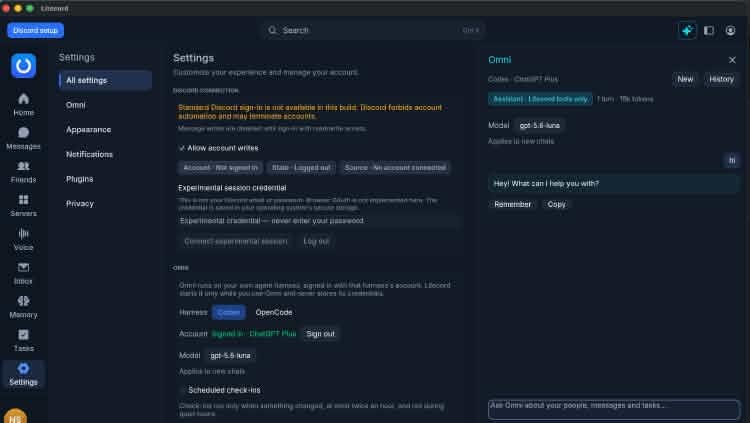
Settings Page
Inspiration
Running out of RAM when we have 32GB of DDR5 RAM and seeing that one of the apps (Discord) we use all the time uses half a gig worth of RAM just by being idle was mind boggling and made us want to fix that issue
What it does
Litecord is a play on words of Discord and the word Light. Due to it being a different different language, due to it being a different design and having new functionality that previously discord did not have it added a new way of thinking about the app.
How we built it
We built the app using mainly the Rust Programming Language, and Markdown files but during the iterations of the app we used C# at times and switched the languages around as new activities and idea were brought to life. We also used help from Codex and Claude to do the annoying things that we didn't want to do nor knew how to do at the time.
Challenges we ran into
- Connecting Discord to the app: We had to route Gateway and REST data through Litecord’s existing queue, reducer, database, and UI while preserving source identity.
- Recovering missed messages: Reconnects required durable recovery cursors so newer live messages could not hide earlier gaps.
- Handling logout safely: Pending requests and queued events needed session checks to prevent old account data from arriving after logout.
- Protecting credentials: We added masked input, OS credential storage, account validation, and redacted logs.
- Missing font glyphs: The icon fonts lacked replacement characters, causing startup warnings. Adding fallback fonts resolved them.
- Windows launch and build issues: Some windows opened on the tool’s isolated desktop, and running processes locked the executable during rebuilding.
- Verifying live compatibility: Automated tests passed, but a real Discord account connection remains unverified because no owner credential was supplied.
Accomplishments that we're proud of
- We managed to build a native desktop app with a cohesive interface and an experimental Discord account pipeline that should be able to work but, feeds messages into local storage, search, and memory. 2. We added secure credential storage, reconnect recovery, and resumable history syncing.
- We managed to take an idea and build it in the span of ~24 hours.
- We got much better at working together as a group and for the future we will try to continue participating in other hackathons.
What we learned
- Hackathons are not easy, its stressful, its tiring, its a big project a big load but it is very fun and rewarding when everything comes together.
- It was a new experience and we want to do others together to further improve our coding journey and also improve our work ethics and improve the way we work in a collaborative setting to help us in our future careers.
- AI models are not the answers to all the problems they are tools not the answers, they are supposed to be used in uni-sense with humans to help us get mundane tasks done faster and to learn about how languages, frameworks work on the fly.
What's next for Litecord
Improving the UI/UX, reducing glitches that occur in the UI and improve the ease of use because it is a little unintuitive at the moment. Verifying true multi modality of the apps data-flow.

Log in or sign up for Devpost to join the conversation.