-
-
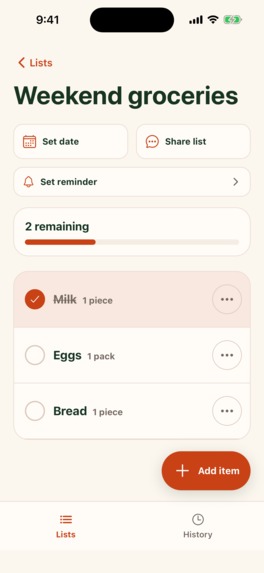
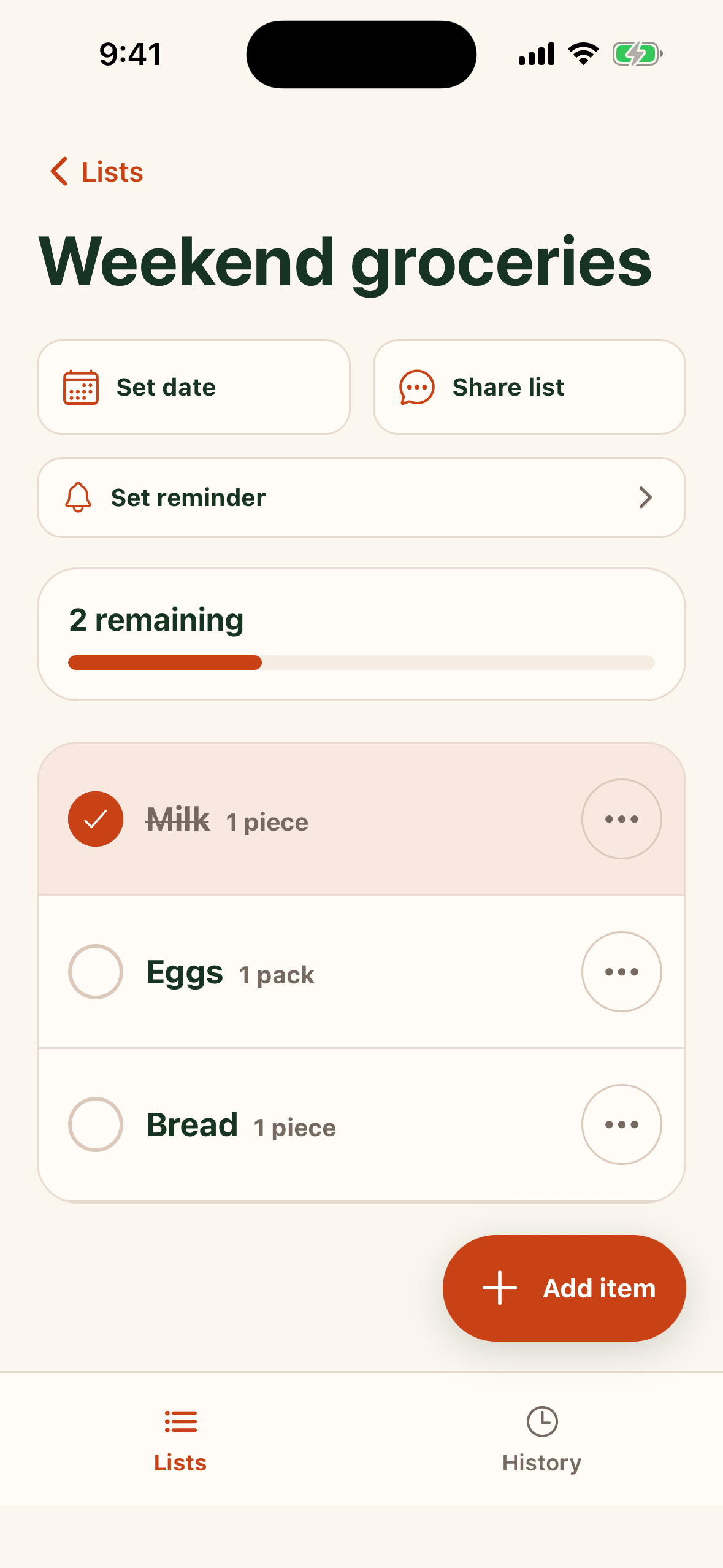
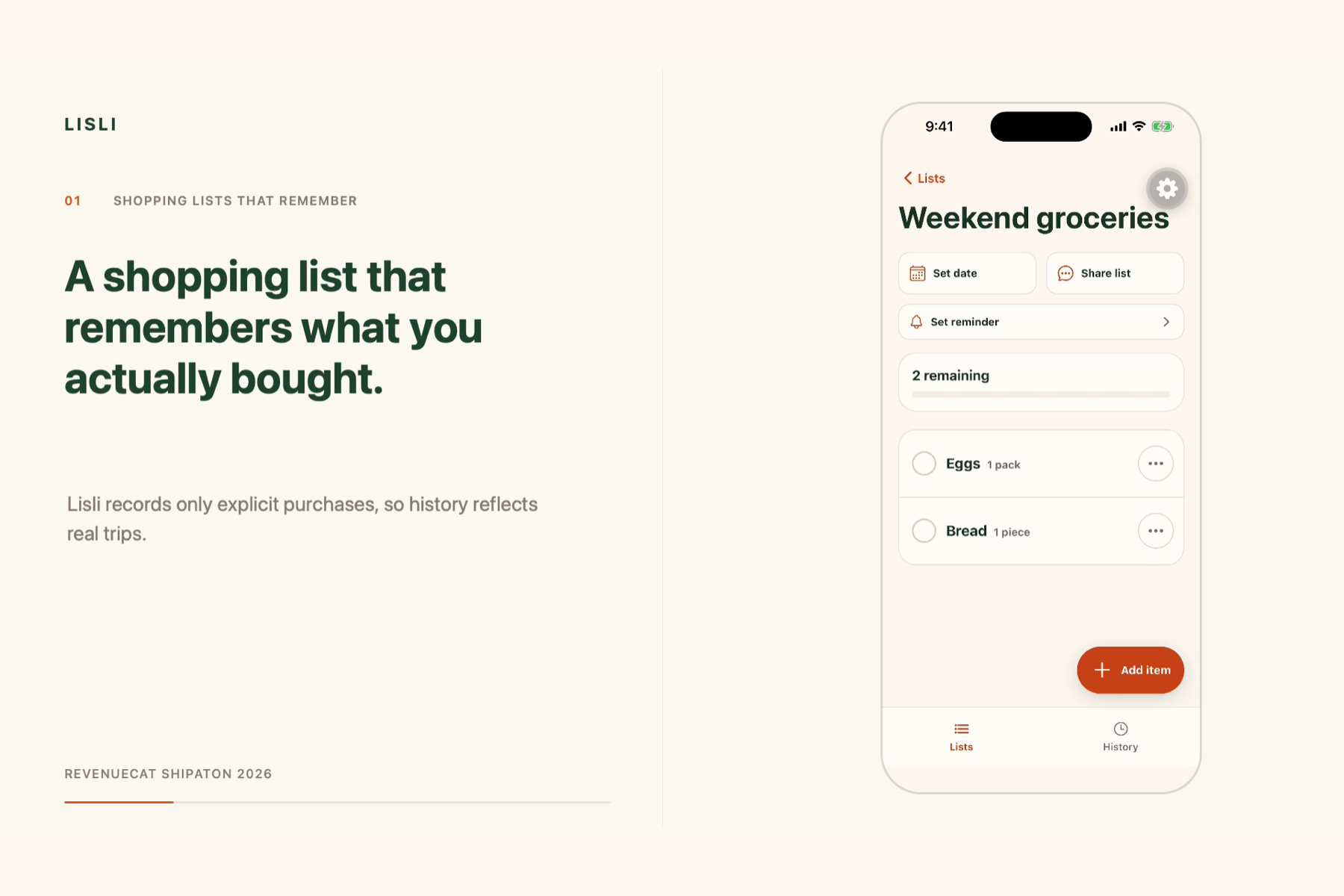
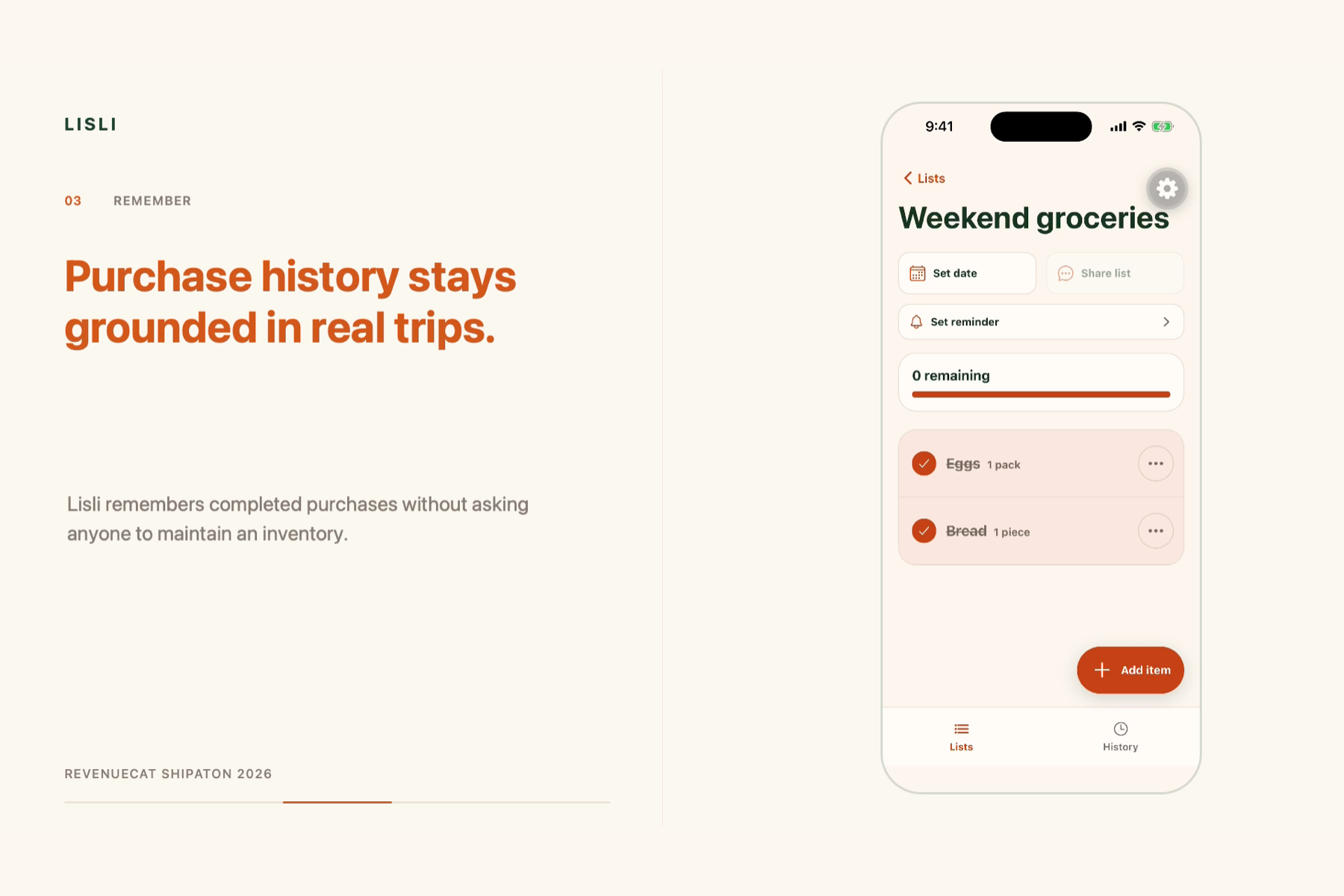
Lisli’s calm, high-contrast shopping-list interface, designed for quick use before and during a store visit.
-
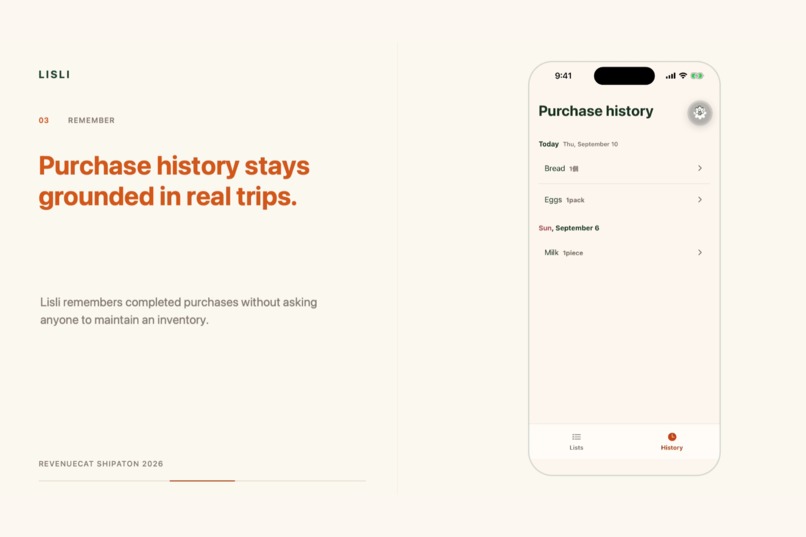
Lisli, September 10, 2026. Actual iOS Simulator footage; product and post-launch growth details are explained in the story.
-
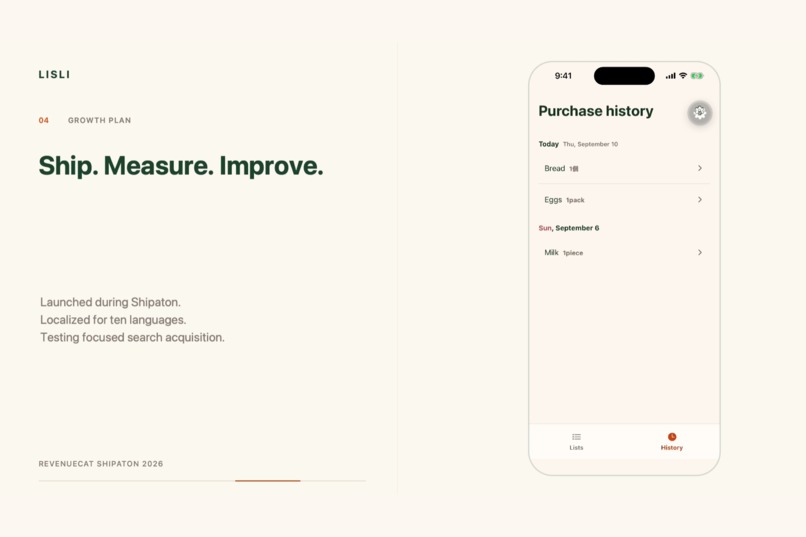
Lisli, September 10, 2026. Actual iOS Simulator footage; product and post-launch growth details are explained in the story.
-
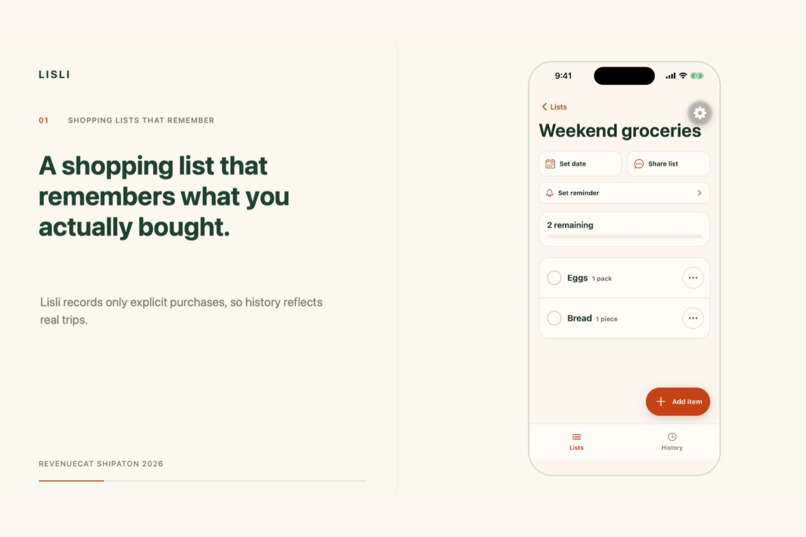
Lisli, September 10, 2026. Actual iOS Simulator footage; product and post-launch growth details are explained in the story.
-
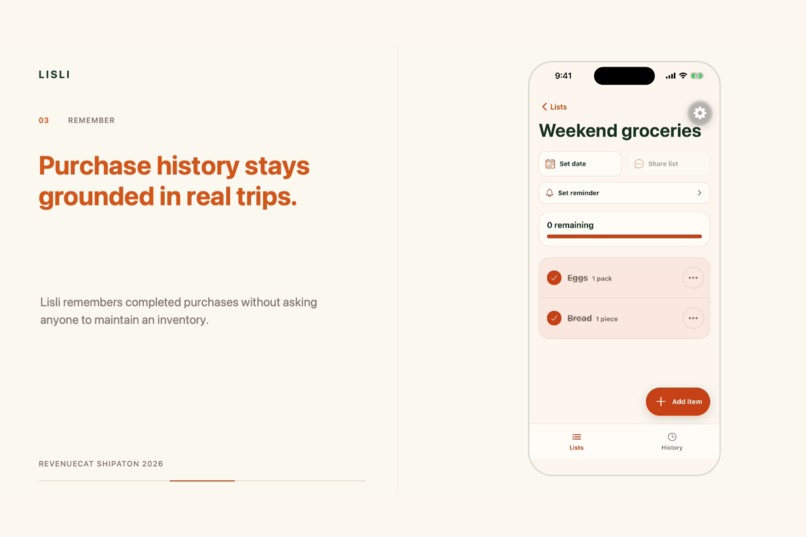
Lisli, September 10, 2026. Actual iOS Simulator footage; product and post-launch growth details are explained in the story.
A shopping list that helps with the next shop
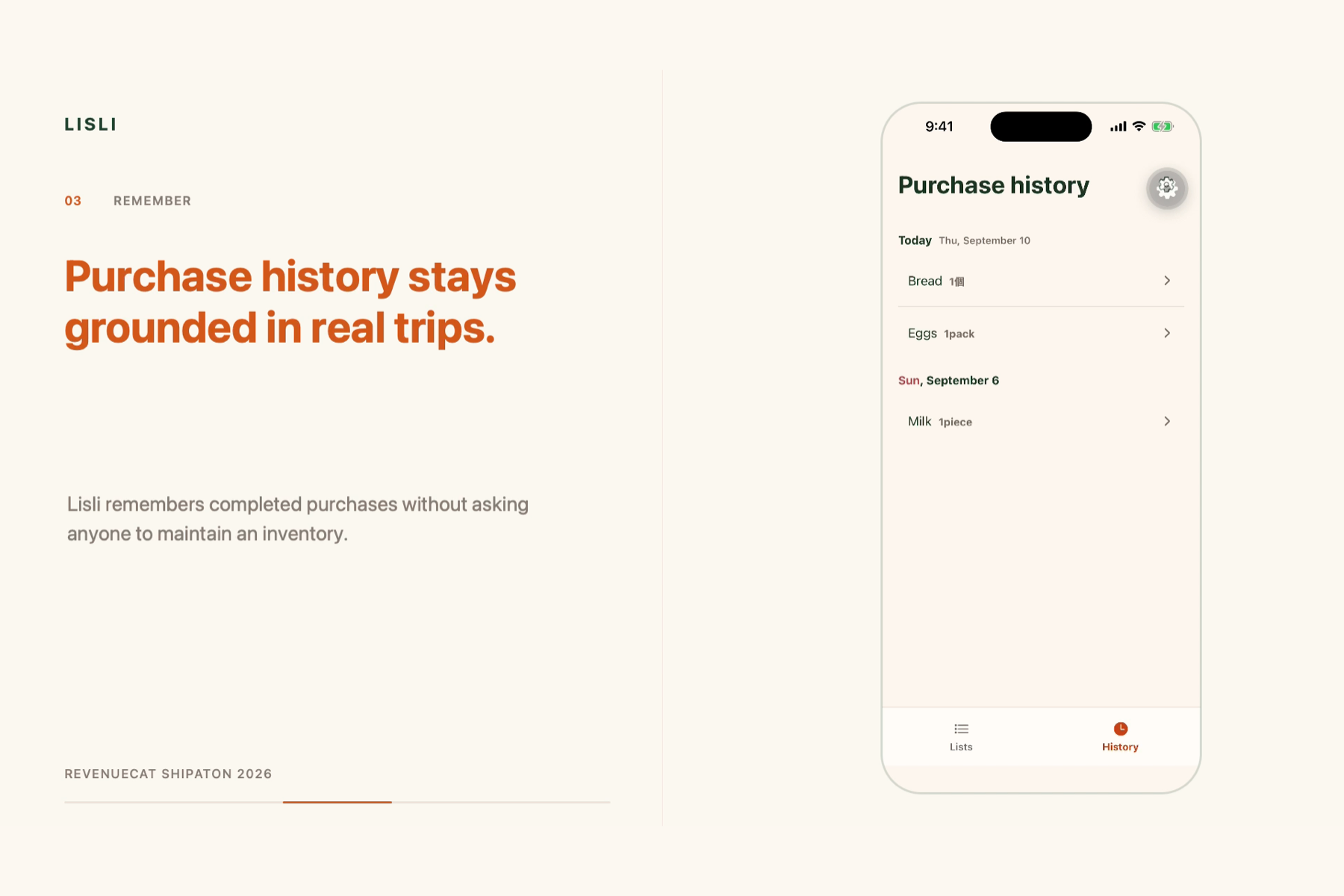
Buy the milk. Check it off. Next week, add it from purchase history instead of typing it again.
That is Lisli's core idea: the small action that finishes one shopping trip should help start the next. I built it for people who repeatedly buy groceries and household essentials but do not want to maintain an inventory database.
What it does
Add an item with just its name. Organize it into a shopping list, or put it in Buy Later until there is a trip for it. At the store, tap an item to record a purchase; tap again to undo a mistake. Purchased items become history that can be reused when preparing another list.
Personal lists work without an account. Family Plus adds a shared household space with common lists and purchase history, while private lists stay separate. RevenueCat powers the monthly and annual subscription, purchase restoration, and Family Plus access.
The product is built around a repeatable household task. It earns another visit when remembering last time is easier than starting over.
Shipping, then learning from distribution
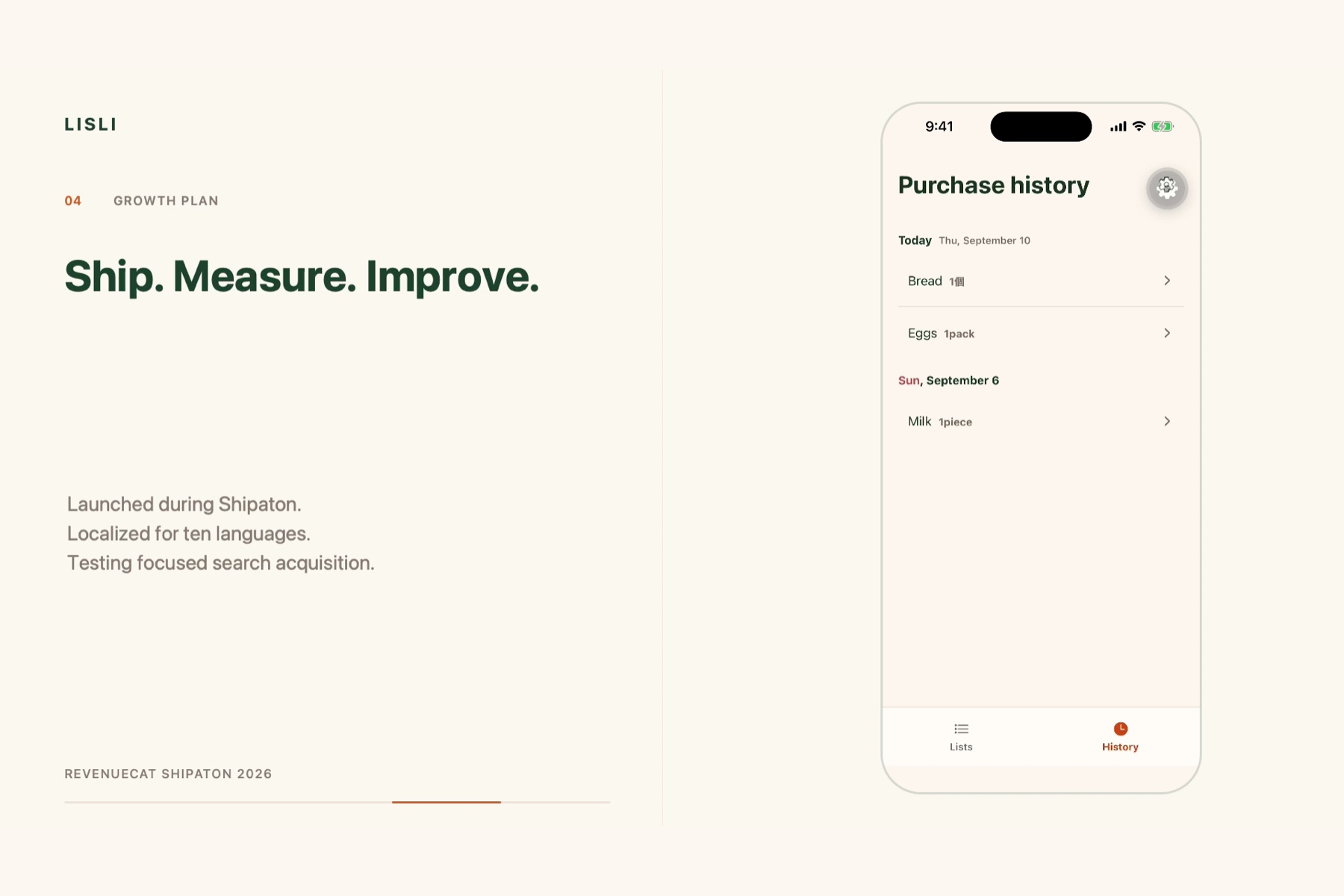
Lisli first became publicly available during Shipaton's release window: Apple's Japanese listing records August 4, 2026. After launch, I worked on three barriers to adoption: understanding the product, finding it, and using it in a familiar language.
- Make the benefit visible. I revised the App Store screenshots and tested their ordering, centering the story on how a completed shop helps prepare the next one. The screenshot experiments are no longer running; I am not claiming a statistically proven winning variant.
- Make the product accessible across markets. The current public release is version 1.7, released September 8. Lisli supports ten UI languages, with complete six-image App Store screenshot sets across twelve inspected market/localization combinations.
- Test a channel with purchase intent. A focused Japanese Apple Ads experiment tested exact-match shopping terms. In the September 3–9 reporting window (Japan time), the keyword 買い物リスト, meaning “shopping list,” recorded 12 tap-attributed installs from 35 taps, at JPY 1,419 total spend and a displayed JPY 118 cost per install. This keyword total includes spelling variants; it is not the count for one literal search phrase.
- Put it in front of an international audience. I launched Lisli on Product Hunt on September 8, asking for feedback on whether history makes the next shopping trip easier. This is a completed distribution step, not a claim of Product Hunt-driven downloads or a ranking award.
The early paid-search result shows that a small, relevant audience can be reached at a measurable cost. It does not yet show profitable acquisition, paid conversion, or long-term retention. App Store and advertising reports can overlap, so I do not add their download counts together.
How I built it
React Native, Expo, and TypeScript let me iterate on a shared product foundation. Personal shopping interactions save locally; Supabase supports authenticated household sharing. RevenueCat handles subscription purchases, restoration, customer identity, and entitlement checks. PostHog provides aggregate activity measurements, with test accounts and distribution channels separated when evaluating App Store use.
The hard engineering problem was preserving meaning across purchase, undo, account changes, and shared state. A suggested item must not become a purchase. A restored subscription must not promise access before it is verified. A shared household must not absorb someone's private shopping history.
The interface follows the same rules: clear labels, one-tap purchase and undo, optional details, and suggestions that remain optional. Warm ivory surfaces, deep green text, and restrained terracotta actions help keep attention on the current shopping task.
What I learned and what comes next
Shipping made the next constraint visible: discovery. Translating the app and preparing store pages expanded availability; the search experiment supplied the first concrete evidence of acquisition. Neither is a substitute for repeat use.
The next growth decision is whether people return for another trip and whether households choose Family Plus. I plan to connect those outcomes to acquisition cost before increasing spend, use real feedback to shorten list preparation, and update this submission with dated results as they become available. The current evidence is early, and I want the submission to be precise about both progress and remaining work.
Built With
- expo.io
- ios
- react
- react-native
- revenuecat
- storekit
- supabase
- typescript

Log in or sign up for Devpost to join the conversation.