-
-
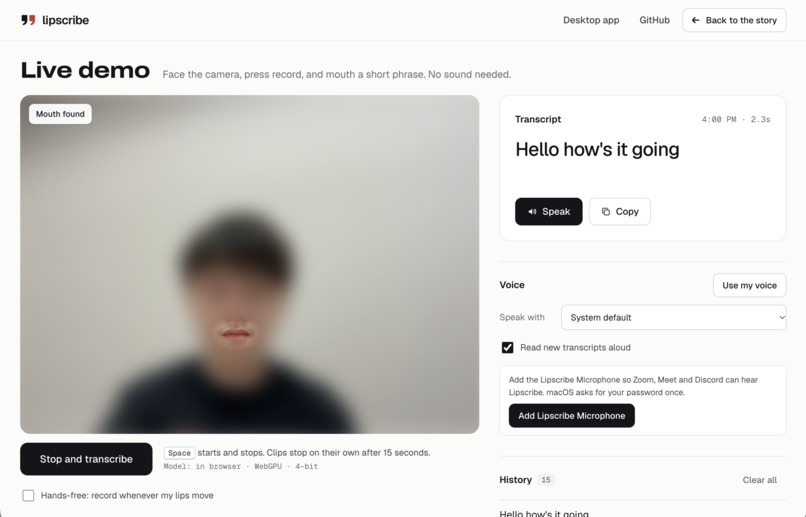
Desktop App
-
-
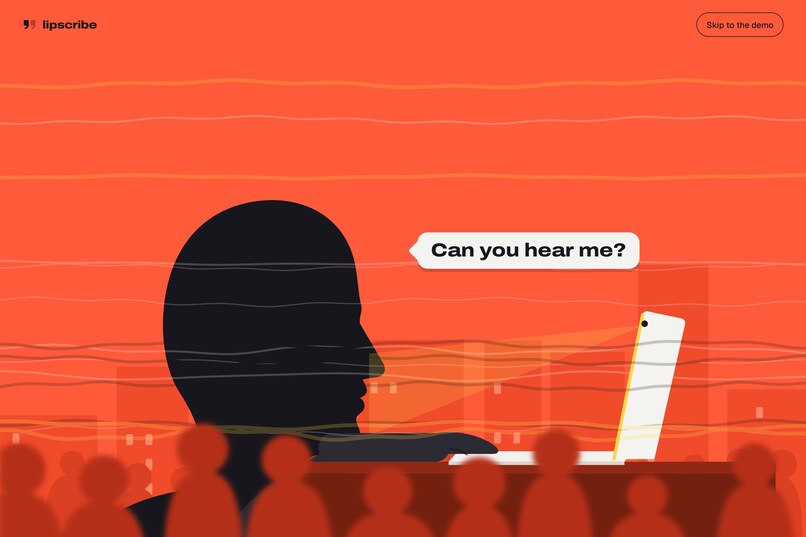
Webpage art
-
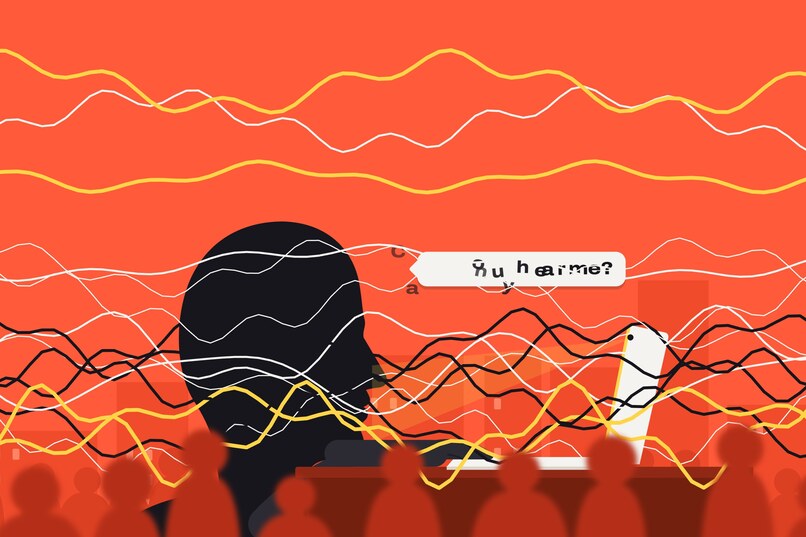
Webpage art 2
Inspiration
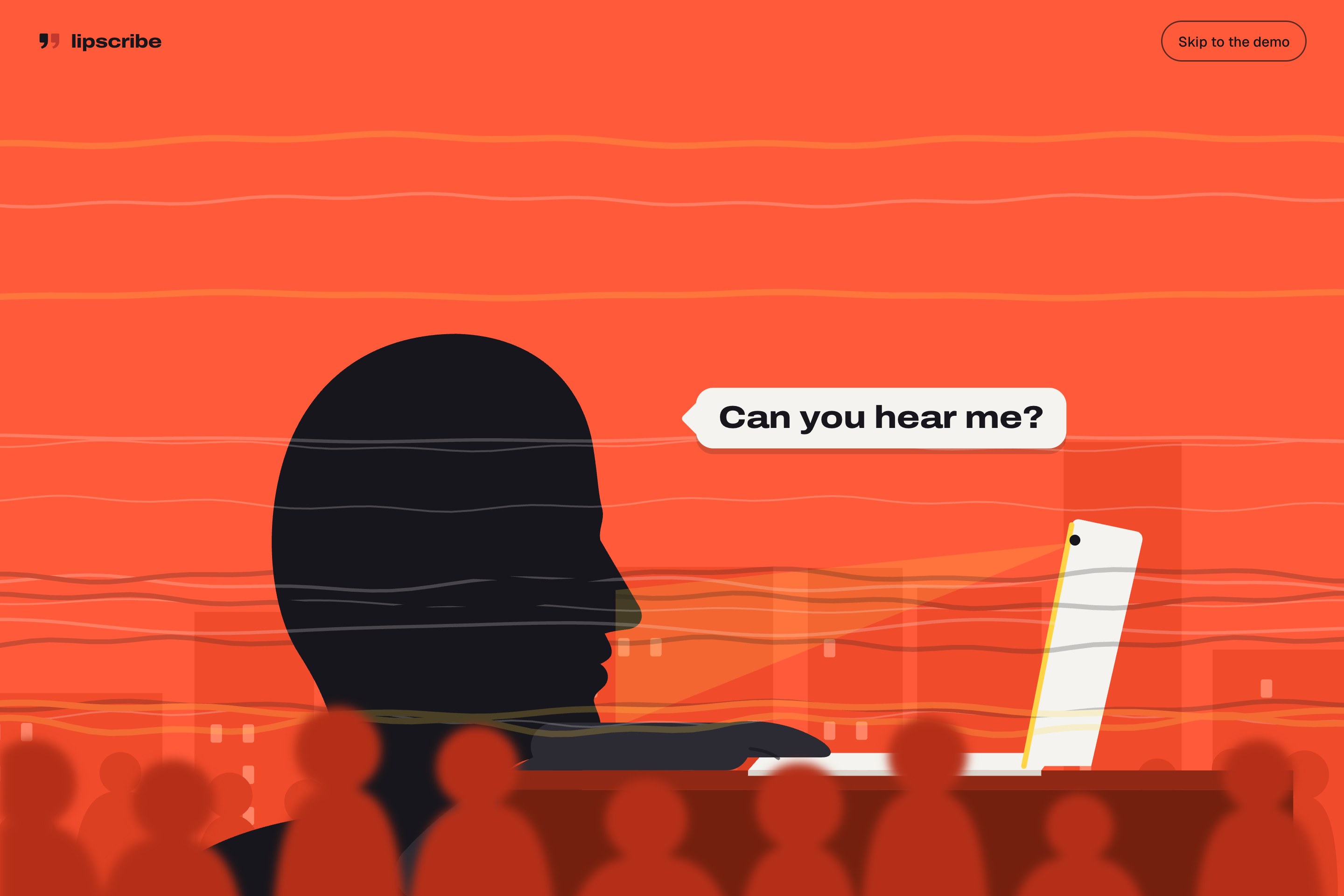
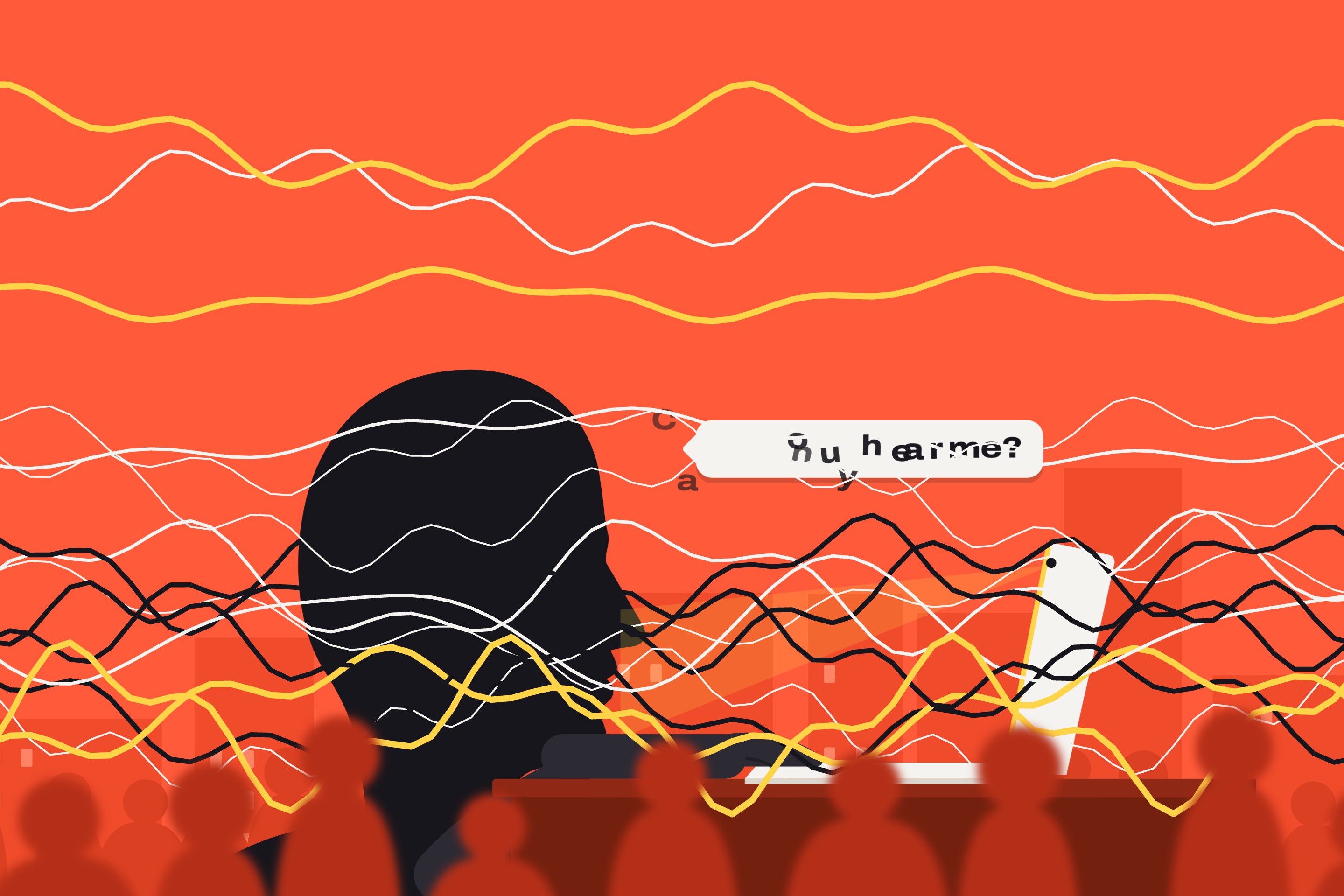
Sometimes you can’t talk out loud: in a library, on a loud train, next to someone sleeping. Some people can’t speak at all, after surgery or because of a voice condition, but their lips still move. We wanted to turn those lip movements into words.
What it does
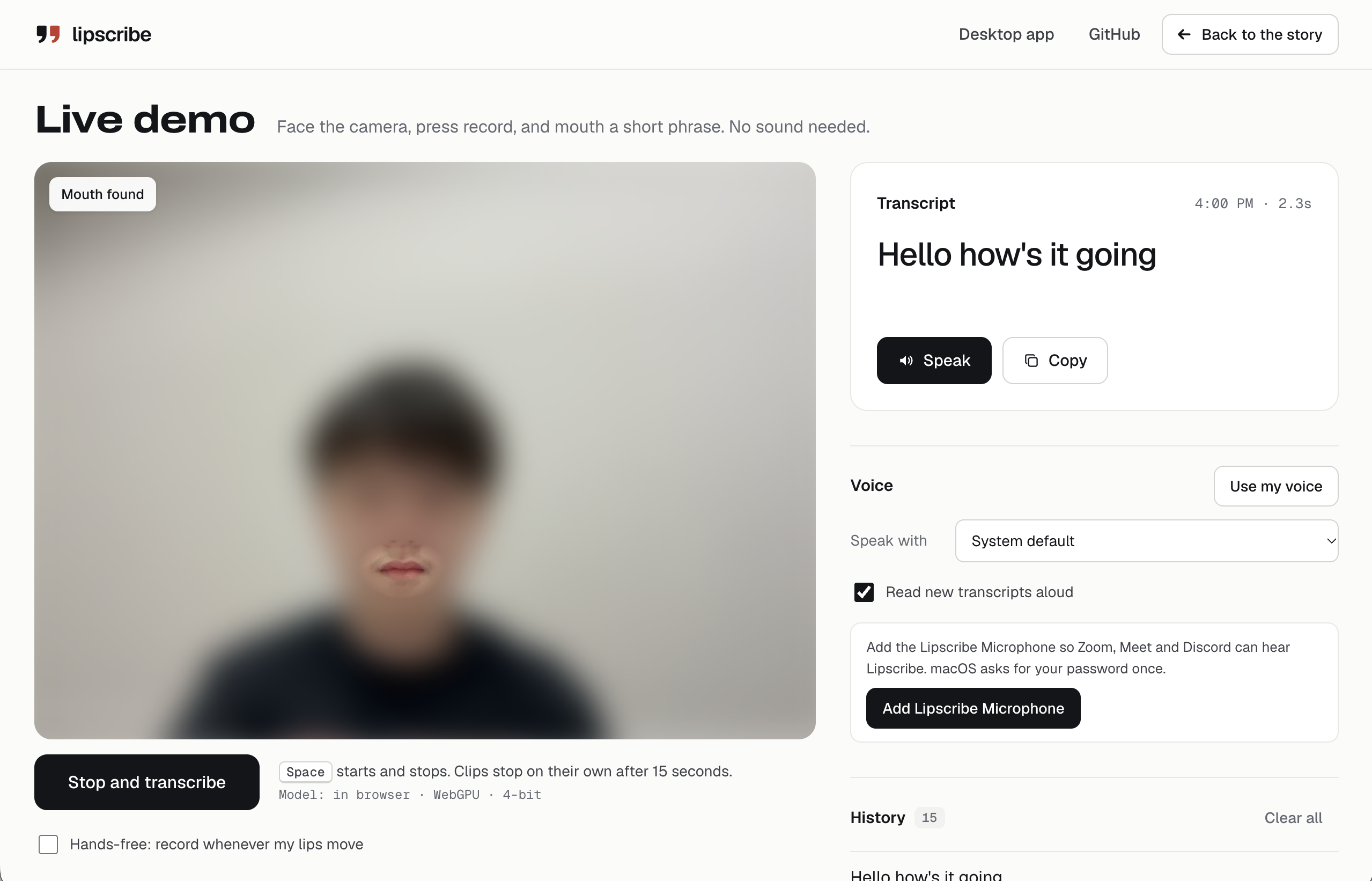
Lipscribe reads your lips through your webcam and turns silent speech into text and speech.
Watch: mouth a short phrase at the camera. Lipscribe follows your mouth and ignores anyone else in the frame. Read: a lip-reading model writes down what you said. On the website it runs in your browser, so your video never leaves your computer. Speak: Lipscribe reads the words aloud in a system voice, one of 10 natural voices, or a copy of your own voice (made with consent from about 20 seconds of reading). Join calls: the desktop app for macOS and Windows reads lips offline. It sends its voice to a virtual microphone, so people on Zoom, Meet, Teams or Discord hear you.
How we built it
Model: we used the pretrained Auto-AVSR lip-reading model, which was trained on TED talks. We exported it to ONNX and wrote our own beam search. We compared six versions of the model, from full size down to 4-bit. We tested them on the GRID dataset and on 96 clips we recorded ourselves. Browser: we rebuilt the whole pipeline in JavaScript, from face detection and tracking to mouth crops and decoding. The model runs on ONNX Runtime Web with WebGPU and is served from Cloudflare R2. Voices: a Node server calls OpenRouter: Fish Audio for your own voice, HeyGen for the preset voices. Upstash Redis rate-limits it. Website: a scroll story built with GSAP and Lenis, plus a live demo page. Desktop: an Electron app, with installers built by GitHub Actions.
AI Use Statement Claude Code (Claude Opus 5.5): our main coding assistant. It helped write the ONNX export, the quantization and evaluation scripts, and the JavaScript port of the lip-reading pipeline (face tracking, mouth crops, beam search). It also built the voice server (OpenRouter text-to-speech, rate limits), the Electron desktop app and the GitHub Actions installer builds. On the website, it built the scroll-story animations (GSAP) and redesigned the demo page; we used a Claude design-review skill to check the layout. AI in the product itself: the pretrained Auto-AVSR lip-reading model (we didn’t train it), plus Fish Audio and HeyGen voices through OpenRouter for speech and voice cloning. We chose the approach and design, recorded our own test clips, checked every accuracy number ourselves, and tested each change in the browser.
Challenges we ran into
Matching Python exactly. Tiny differences in cropping change the words that come out. We replaced OpenCV’s alignment step with a least-squares fit that JavaScript can reproduce. Now all 30 test clips give the same transcript in the browser as in Python. Model size. At about 1 GB, the model was far too big for a web page. The right face. The open-source project chaplin can jump to another person partway through a clip. We fixed the tracking so it stays on one face. Safe voice cloning. We only accept a live recording that starts with a consent sentence. The server stores nothing, and spending is capped.
Accomplishments that we're proud of
Our ONNX export and decoder give the same transcripts as the original PyTorch model on all 196 test clips. We shrank the model from 1027 MB to 182 MB with no loss on our recordings (18.6% WER vs 19.7%). A full lip-reading model runs in a browser tab, with no video upload. We built a website, a live demo, cloned voices and a desktop app in one day.
What we learned
The hard part of running a model in the browser was making it match Python exactly, not compressing it. Our own recordings told us more about accuracy than the public test set did. Voice cloning needs consent and abuse limits from day one.
What's next for Lipscribe
Live captions while you mouth the words Better accuracy in dim light and at side angles A short calibration so the model learns your mouth More languages and a mobile app Testing with people who have lost their voice, and with speech therapists


