-
-
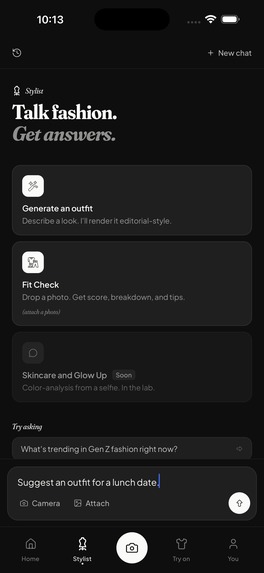
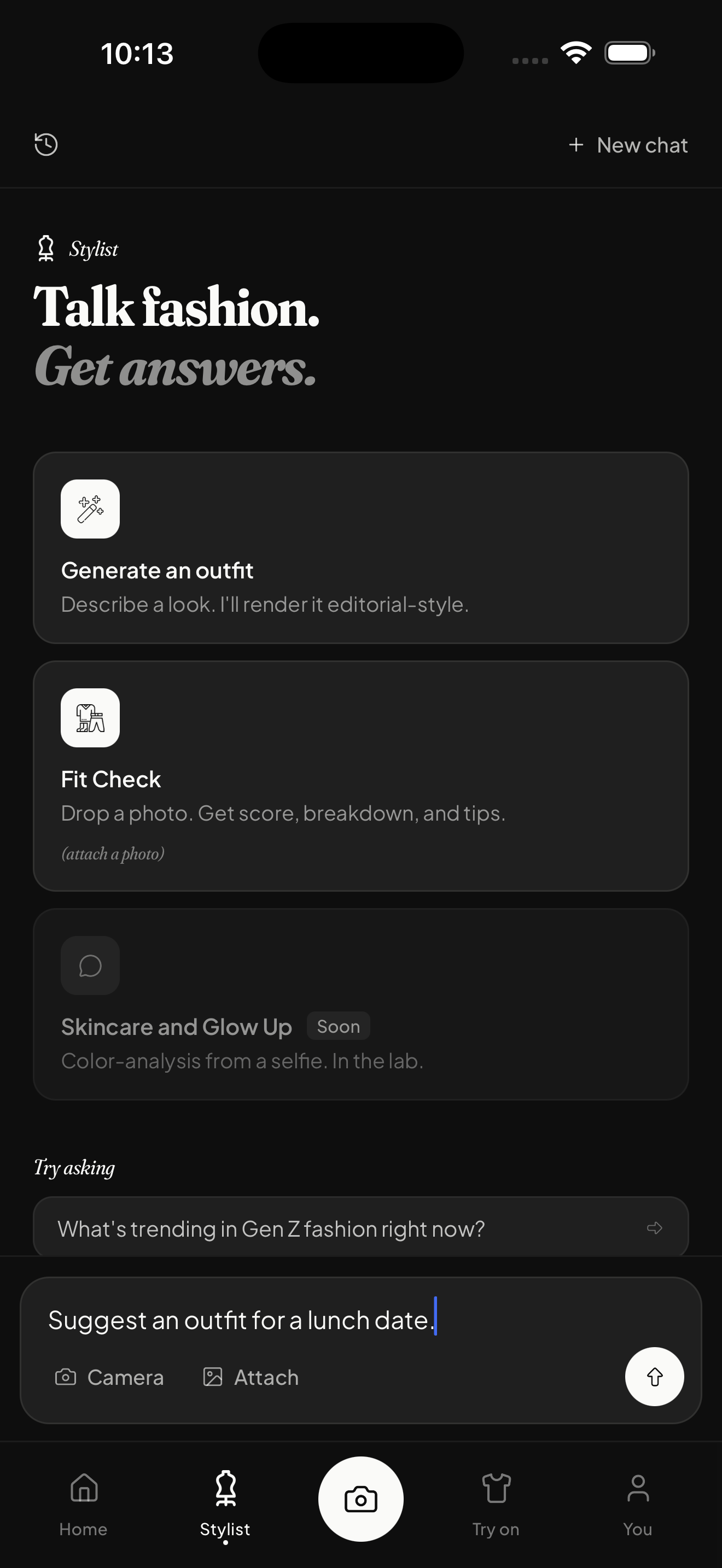
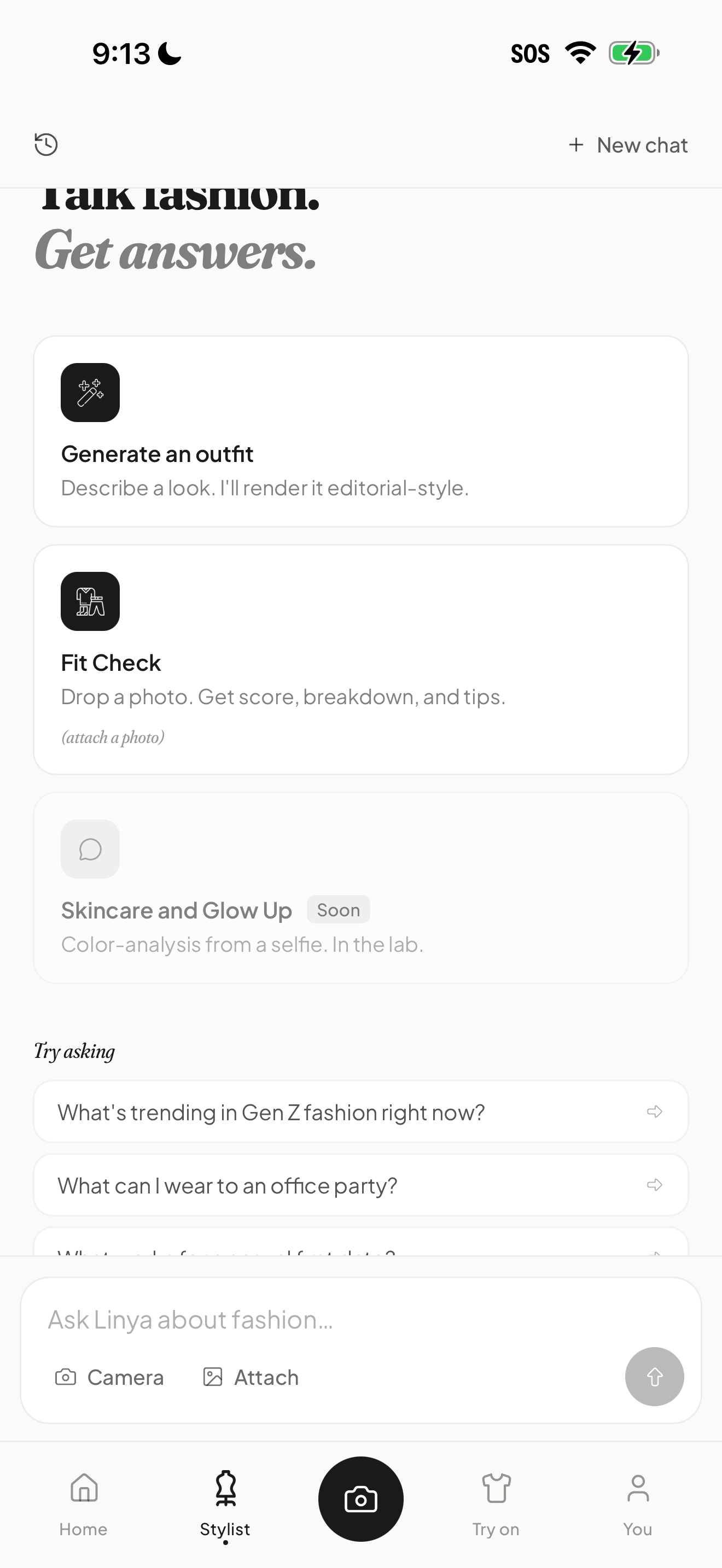
stylist page
-
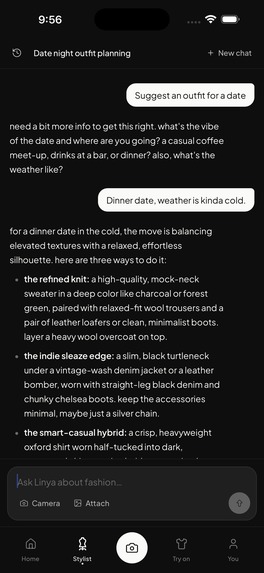
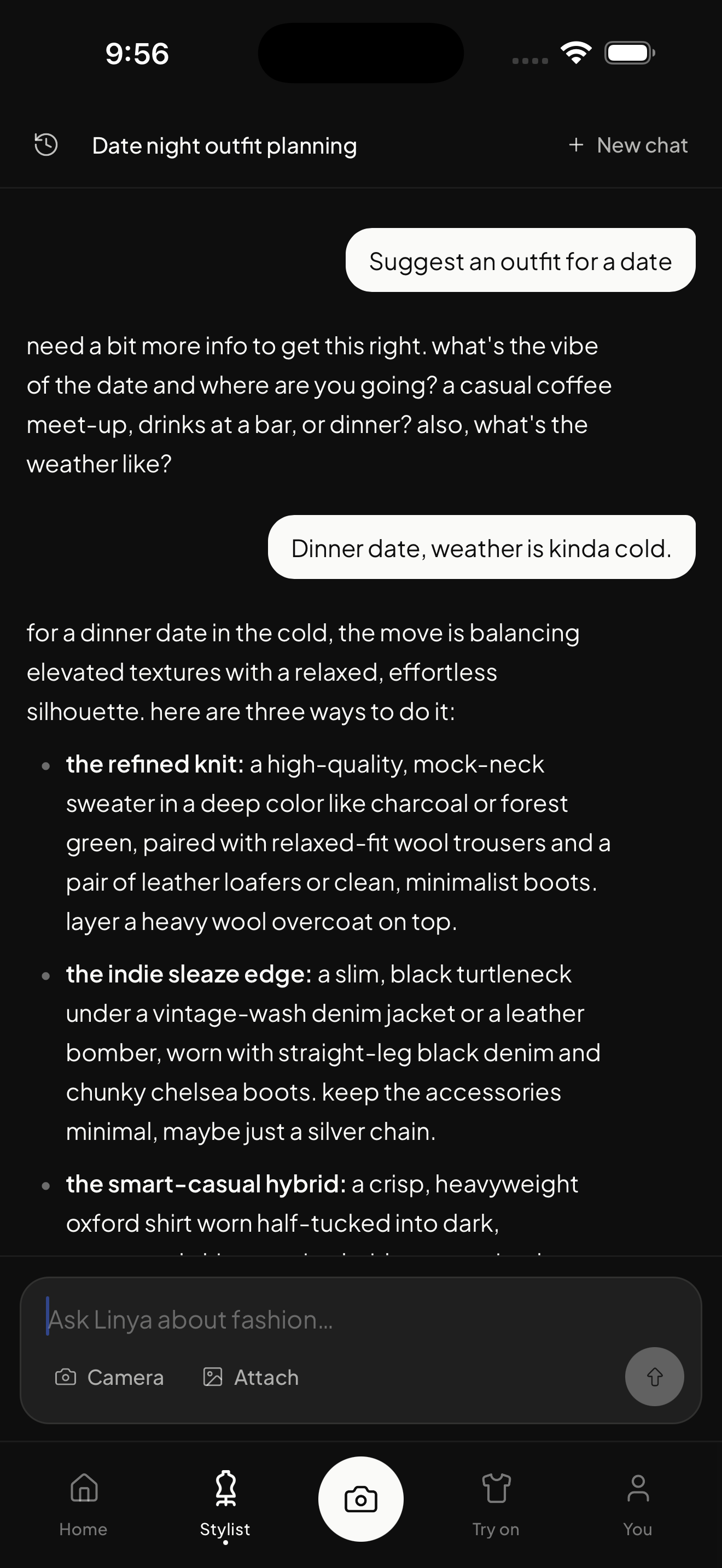
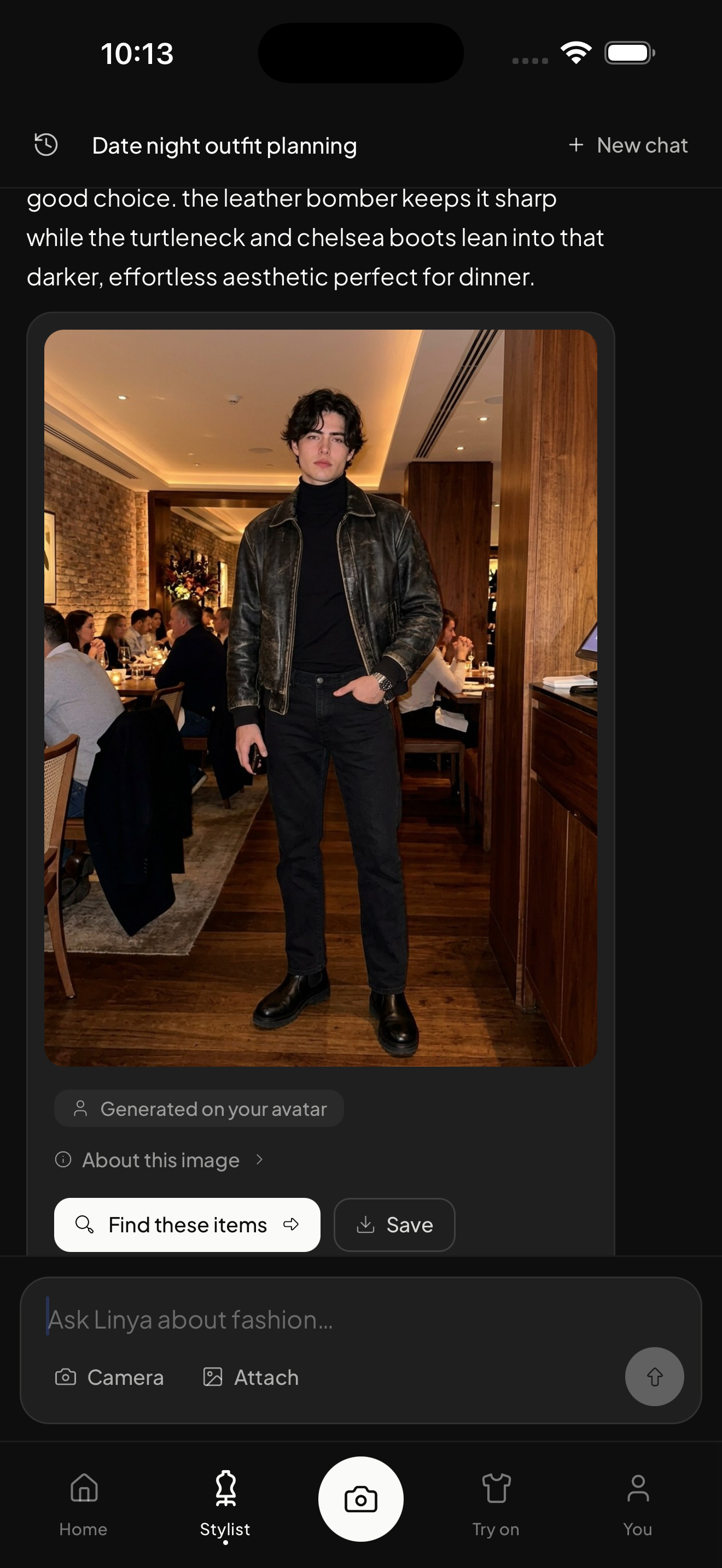
a conversation with an AI stylist
-
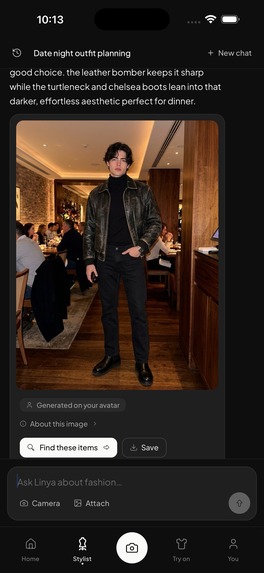
outfit generation
-
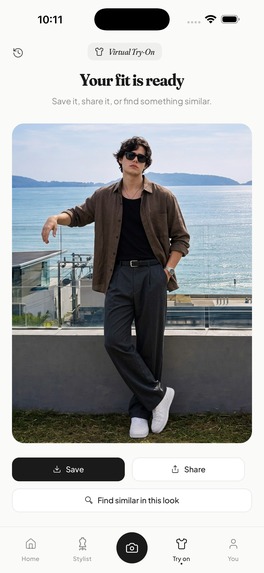
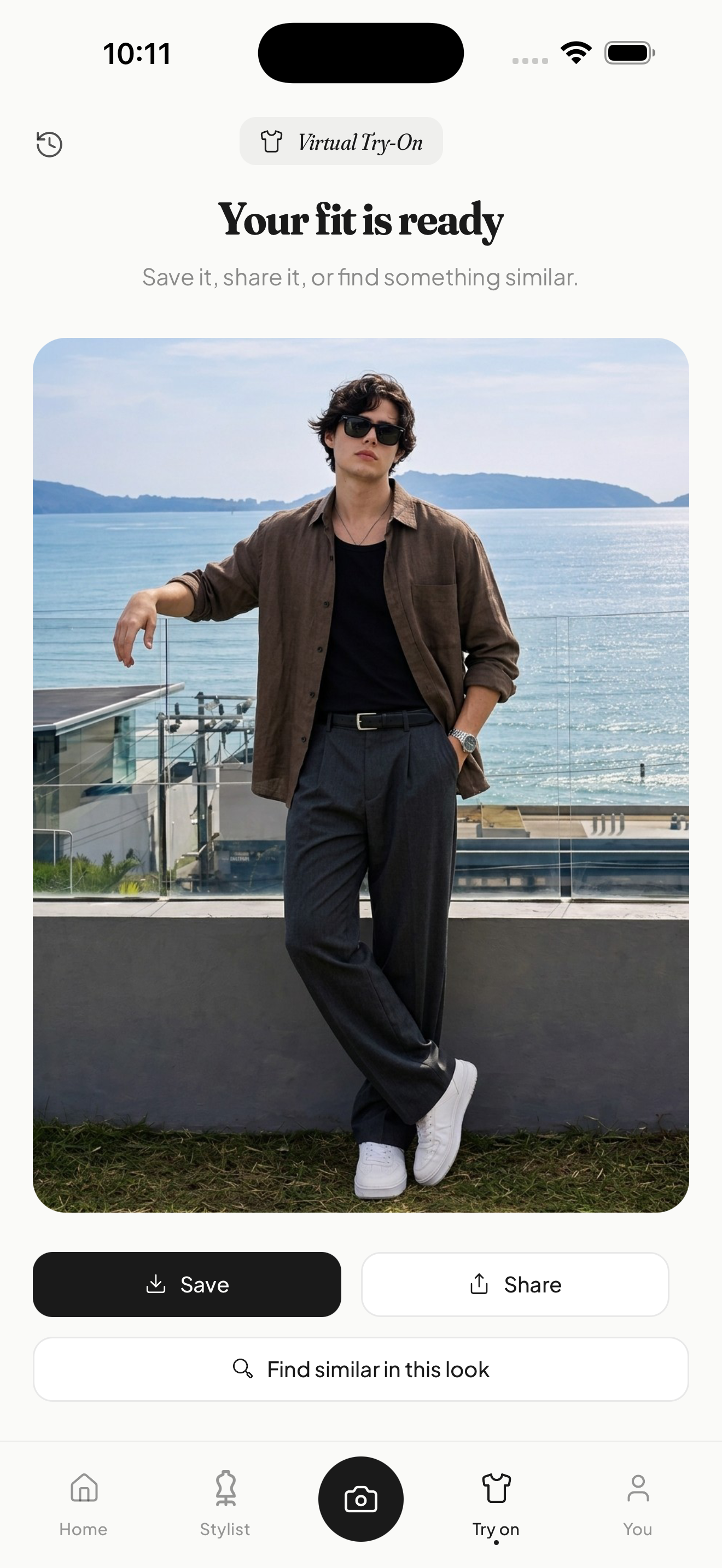
virtual try-on
-
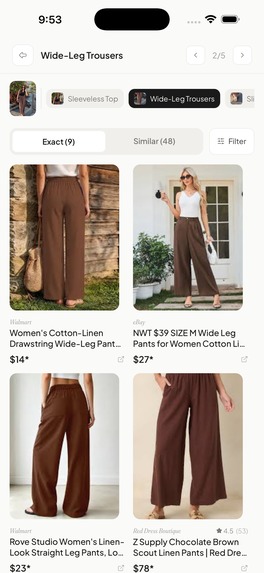
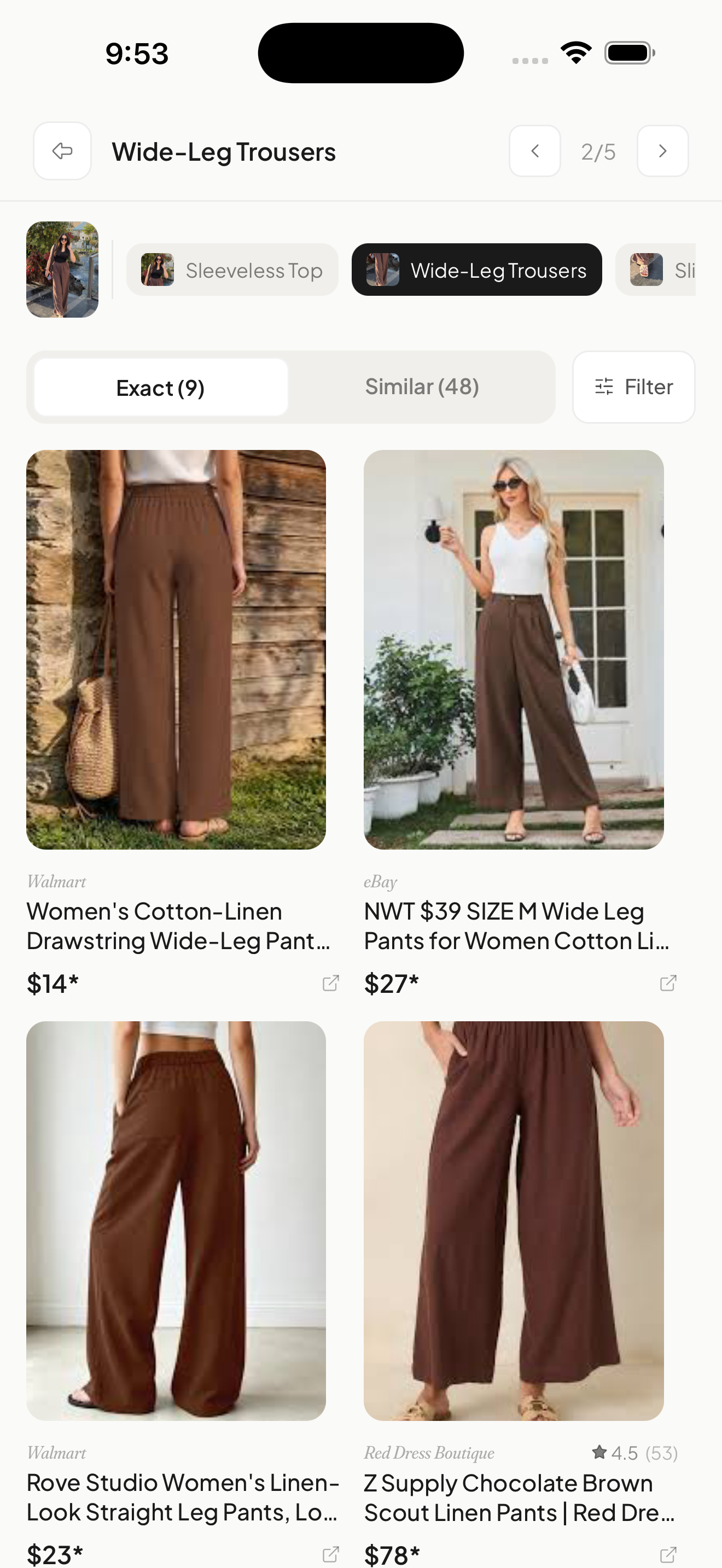
find the exact garment
-
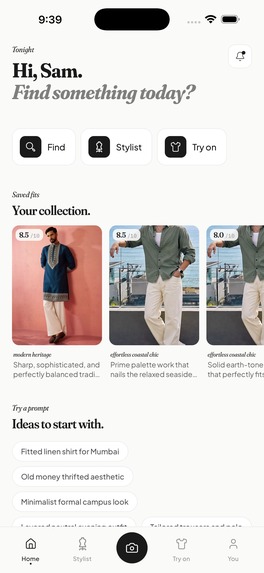
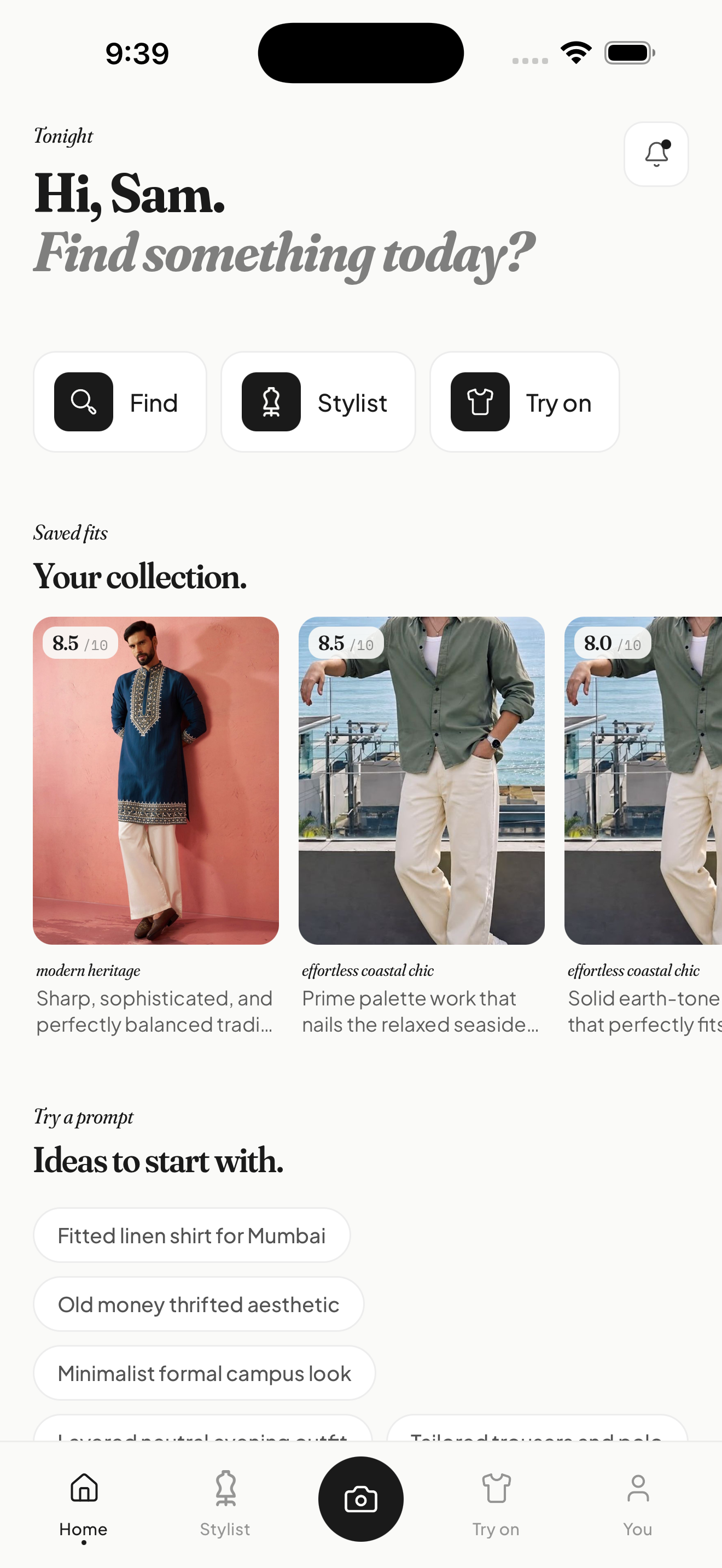
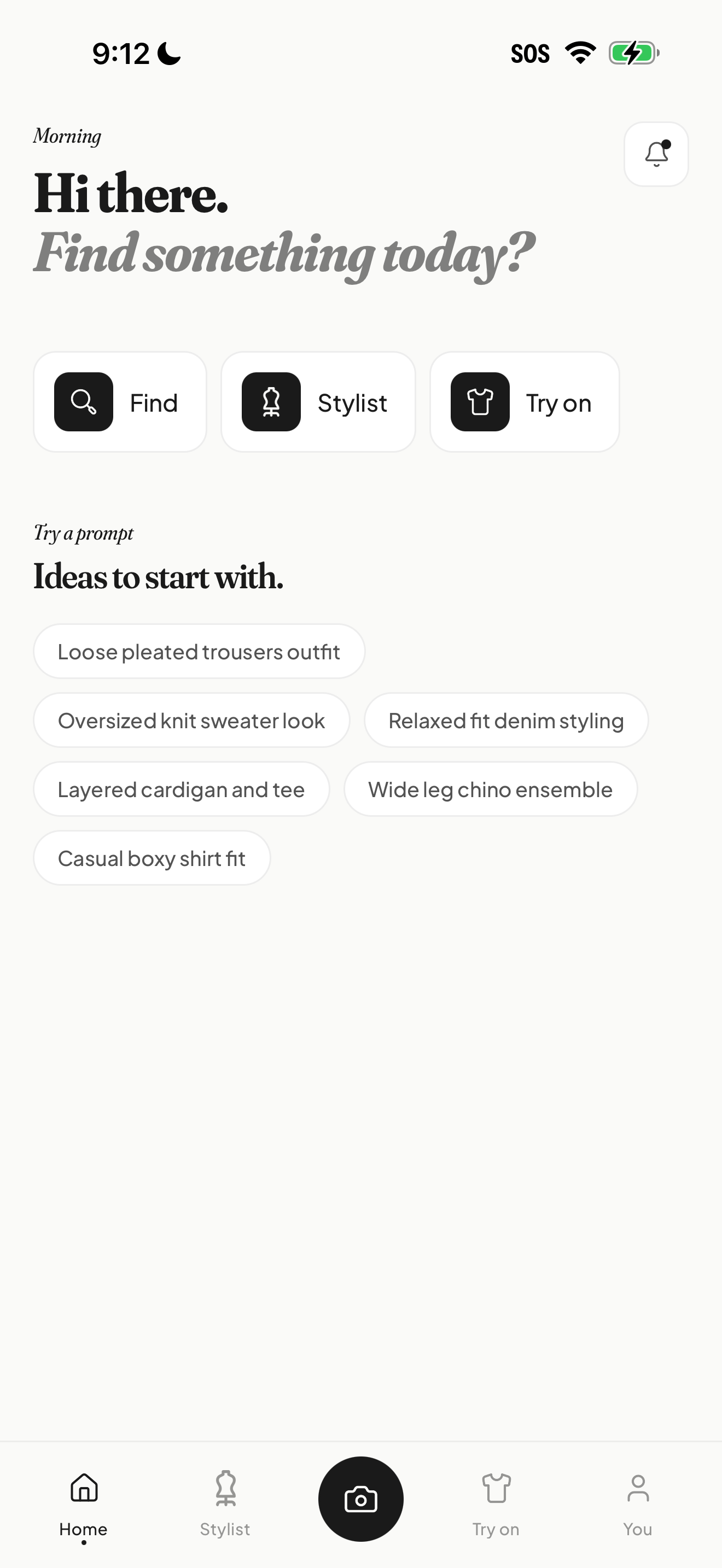
home page
-

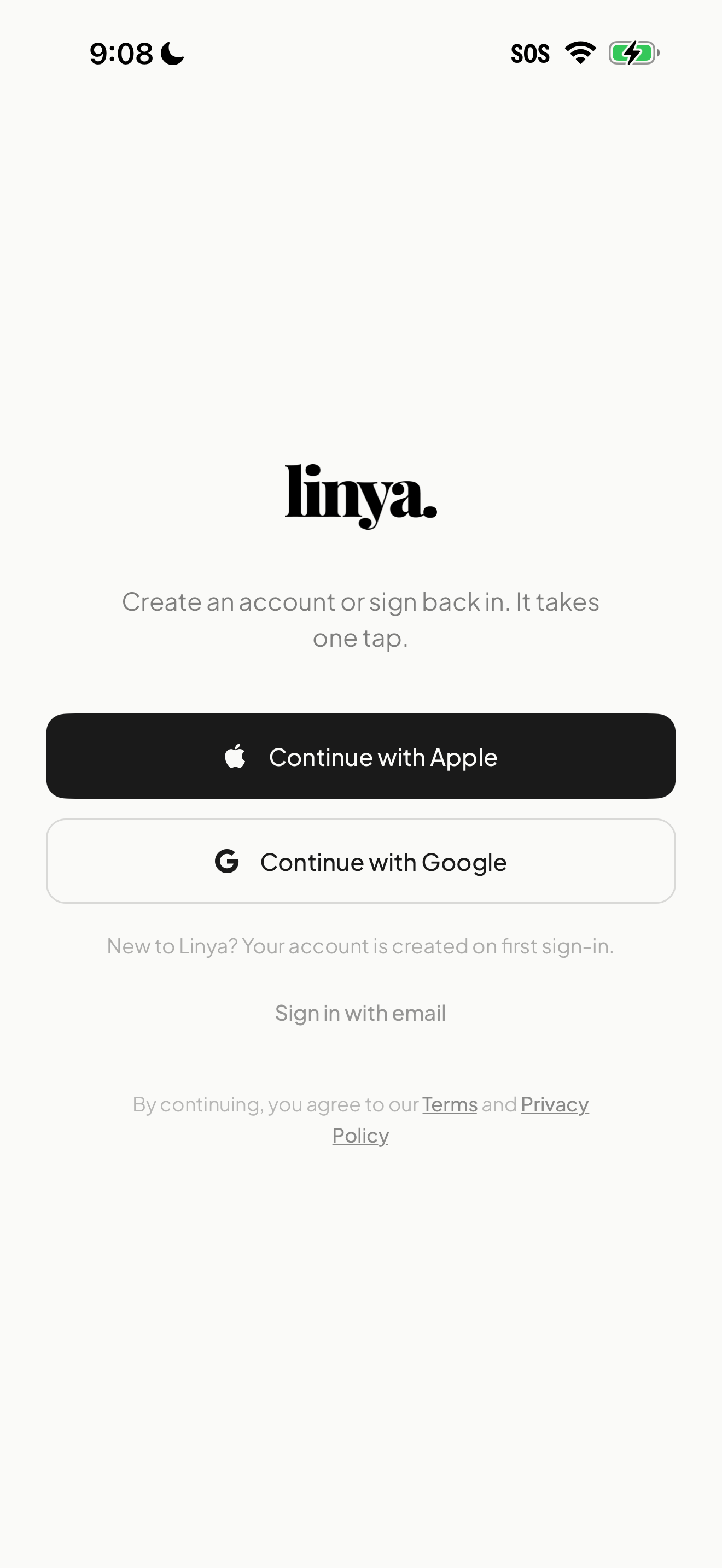
logo
-
sign up page
-
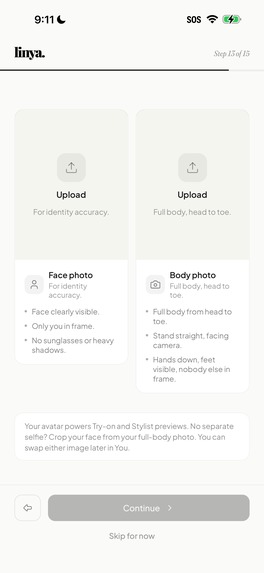
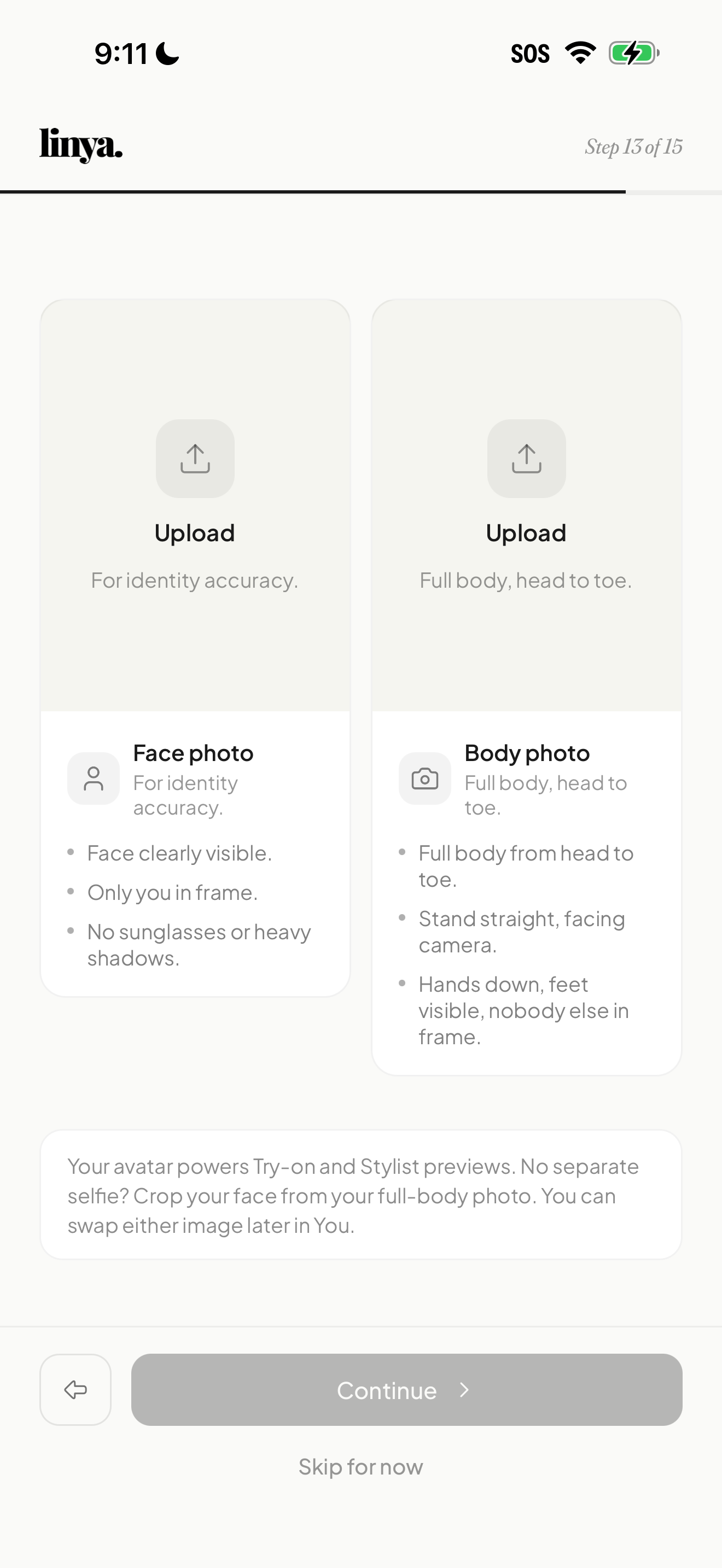
a step in onboarding
-
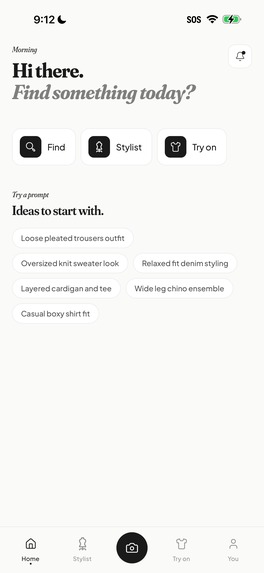
home page for test accounts
-
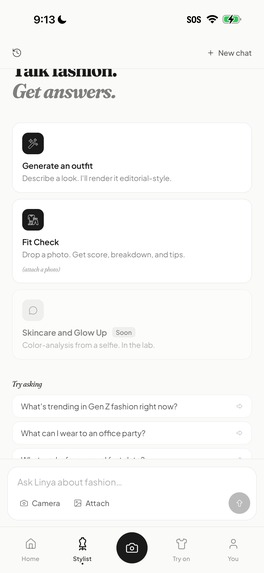
stylist page

Inspiration
It started from a specific, recurring frustration: seeing an outfit in a photo, on a friend, or in a screenshot, and having no real way to find or buy it beyond screenshotting it into Google Lens, which returns visually similar clutter instead of the actual garment or a place to buy it. That gap between liking a look and being able to act on it felt like a solvable product problem, especially once vision models got good enough to identify a specific garment instead of just similar-looking ones.
What it does
Linya turns a photo into the exact products you can buy, or cheaper dupes if the original's out of budget. From there it goes further than search: a virtual try-on lets you see clothes on yourself before buying, an outfit editor lets you mix and adjust pieces, and an AI stylist scores the fit of what you're currently wearing and can generate full outfit suggestions, then tells you where to buy every piece in them.
How I built it
The app is built on Next.js 14 and Supabase for the web side, with Expo and React Native powering the iOS app. Nano Banana Pro handles the visual generation and editing work behind try-on and outfit creation, and an OpenAI and Google Lens–based search layer handles garment identification and pricing, along with some backend algorithms which makes it better than Google Lens. RevenueCat runs the whole subscription system, two tiers (Pro and Pro+), monthly and annual, live across 175 countries. The whole thing is hosted on Vercel.
Challenges we ran into
Building the payment infrastructure solo was the hardest part, specifically the RevenueCat and StoreKit sandbox testing process. Apple's sandbox has no simulator support for real purchases, compresses subscription durations in ways that make testing renewal logic unintuitive, and fails silently on unmapped product IDs with no useful error message. Getting that working end to end, alone, with no team to split the debugging with, took real persistence.
What's next
Linya's roadmap extends past search into what we're calling a Fashion OS: a digital wardrobe for organizing what you already own, a real storefront for thrift stores and small retailers whose inventory is currently invisible to search, inventory management for stores trying to move dead stock, a peer-to-peer resale marketplace, and eventually an AI assistant that teaches people to make their own clothes.
Built With
- expo.io
- next.js
- react-native
- revenuecat
- supabase
- tailwind-css
- typescript
- vercel


Log in or sign up for Devpost to join the conversation.