-
-
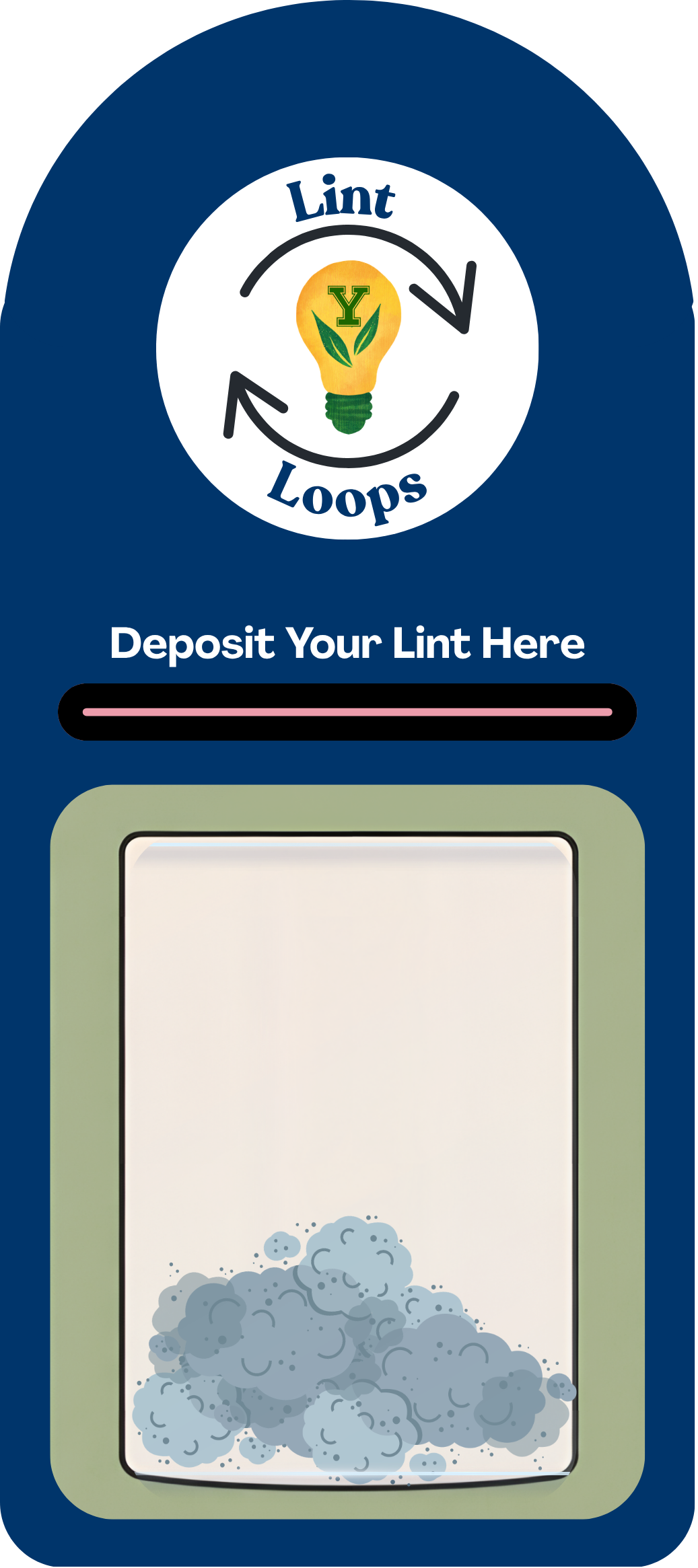
Lint Loops Logo
-
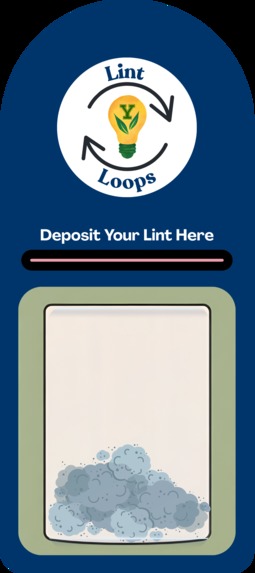
Lint Loops Physical Prototype
-
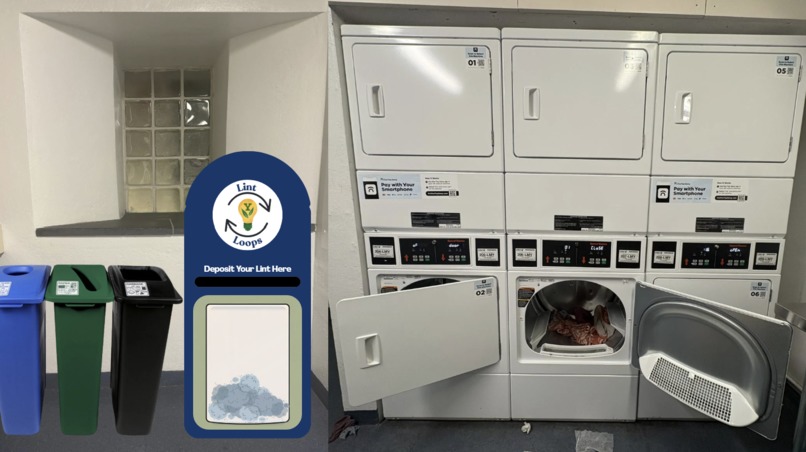
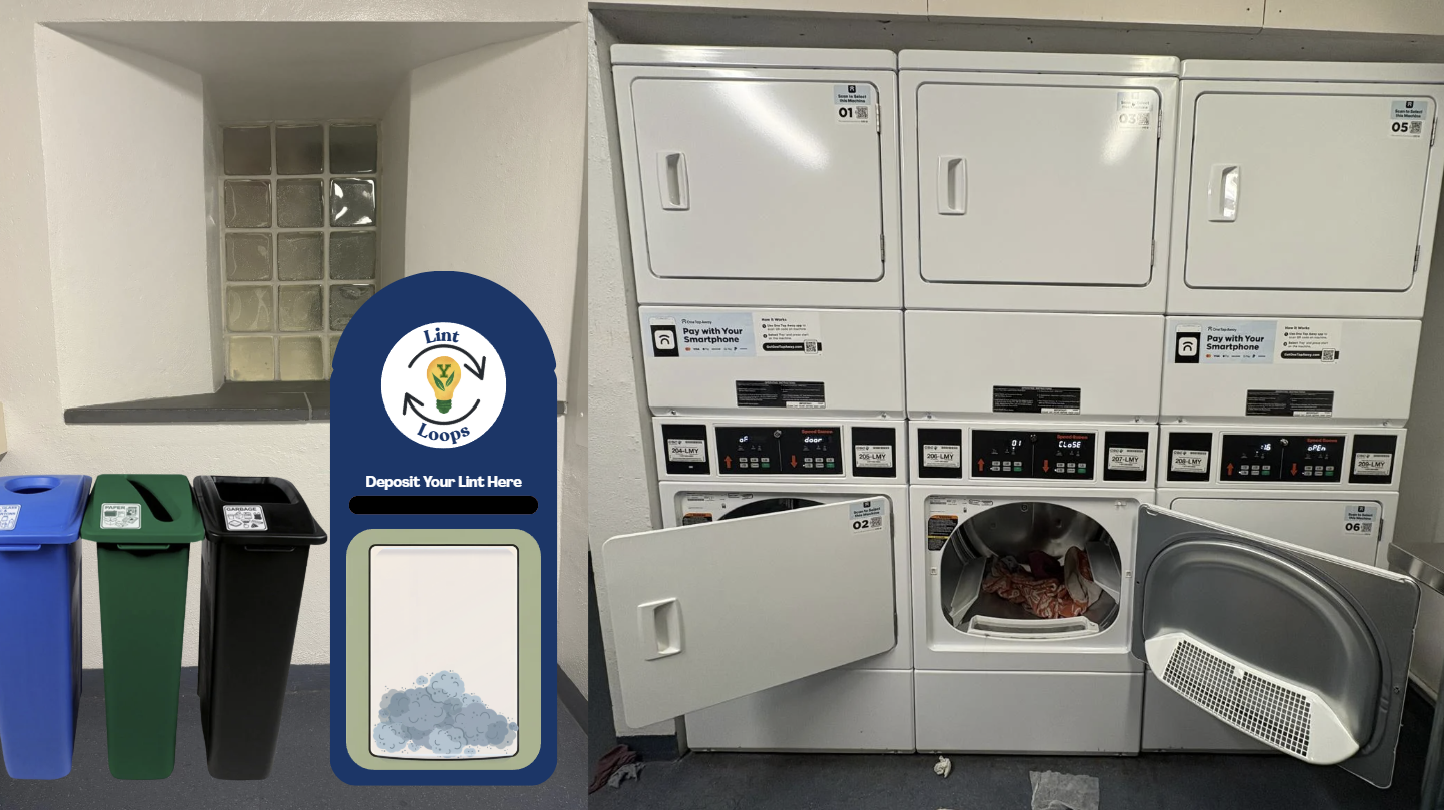
Lint Loops Real Life implementation
Inspiration
The way one student finishes their laundry becomes the way the next student begins...
When we started looking at the laundry experience at Yale, we found several problems that affect students using shared laundry rooms through interviews. Some of the most common complaints one hears are clothes being left in machines, students not always being sure which machines are available or how to use them properly, trash accumulating around the room, and dryers being dirty inside. We decided to combine some of these complaints and tackle an issue that is usually ignored: cleaning the dryer lint trap.
Dryer lint stood out to us since it is something most people do not think about after throwing it away (or forgetting it inside the dryer). When you put into perspective the amount of lint a person can produce throughout a year, it starts becoming a much more significant topic of interest. Furthermore, recent research revealed how much material can be hidden in what looks like a very small and insignificant amount of lint. In one experiment, only 77 mg of lint collected from a polyester blanket represented approximately 1.1 million fibers.
Thus, this made us ask two questions: How can we encourage students to actually clean the lint trap? And instead of immediately throwing that material away, could we learn something from collecting it?
And that was the origin of Lint Loops.
What does Lint Loops do?
Our initiative Lint Loops is composed of both a physical and digital system that is meant to redesign the last task of a student's laundry cycle.
The student interaction follows four steps:
- Clean the lint
- Discard it in our machine
- Scan the QR code
- Gain a Loop!
After a dryer cycle, the student removes their clothes and cleans the lint trap. Instead of leaving the lint behind or throwing it into another bin, they deposit it into a Lint Loops collector located beside the dryers. They can then scan a specific QR code and earn a Loop for participating and contributing. Potentially, the system could limit repeated scans from the same dryer within a short period to reduce misuse. Students using multiple dryers could still earn a Loop for each dryer load since the Loop reward is individualized per machine.
Moreover, students could see their progress toward potential rewards through the digital platform. For example, Loops could eventually unlock small purchase-linked incentives from campus partners, such as a discount at a buttery or campus store. Currently, we have opted to incorporate sustainability-focused rewards to further connect participation with the environmental goals of the project. This gives students an additional reason to build the habit while also creating value for participating businesses through greater visibility within the student body and an increase in student traffic.
As additional helpful tools, the app could also include cycle reminders and laundry-room information, helping students remember when their clothes are finished and which laundry rooms have less usage overall.
How we built it?
For the physical component, we designed an initial prototype in SolidWorks. The machine includes a small lint-only opening, designed to discourage students from depositing other laundry waste. It also has an internal chute that directs the lint downward, lateral access to the collection chamber, vinyl signage, and an acrylic front panel that allows students to see the lint accumulate. Making the collection visible was important in our design process because we wanted students to see the collective result of an action that would otherwise disappear into the trash.
We also intentionally designed the collector without a screen or complicated electronics, making it purely mechanical. We would also encourage the incorporation of current Yale trash and recycling bins, so they can remain available for dryer sheets, detergent packaging, and other laundry waste.
In terms of the digital component, the application was designed using Figma to support the physical interaction of the user rather than become a separate laundry app.
Nonetheless, we did not want Lint Loops to simply move lint from one trash can into another. It seemed like wasted potential for something more. Due to this, it was decided that once collected, the lint could become a measurable material stream. Because dryer lint can contain combinations of natural and synthetic fibers, we saw its uncertain composition as an opportunity for further research rather than assuming an immediate use for the collected material.
Challenges we ran into
Our biggest challenge was making Lint Loops something students would realistically use while keeping the system simple.
We had to consider contamination, because students could place dryer sheets or other trash inside the collector. This influenced our decision to use a restricted lint-only opening and clear signage while keeping existing waste bins nearby.
We also considered reward misuse. A student could potentially scan the same QR code repeatedly without cleaning the lint trap. Our concept therefore uses dryer-specific QR codes and could restrict repeated rewards from the same dryer within an unrealistic time period.
Another challenge was the physical placement of those QR codes. Because the dryers are existing equipment and involve heat, a real pilot would require identifying a safe location and using an appropriate heat-resistant label rather than placing a regular sticker inside the machine.
Accomplishments that we're proud of
One of the accomplishments we are most proud of is how much Lint Loops evolved throughout the design process. What initially started as an idea for collecting dryer lint eventually became a system that combines a physical SolidWorks prototype, a digital Figma component, student incentives, and opportunities for research and collaboration.
We are also proud that we were able to keep the physical design relatively simple while still giving every component a purpose. Rather than trying to completely redesign Yale's laundry rooms, Lint Loops works alongside what already exists and focuses on improving one small but repeated action.
There is no doubt that now, every time we enter our laundry rooms, we will think and wish for Lint Loops implementations. It will be such a fun memory to look back on.
What we learned
One of the biggest things we learned was that adding more features does not necessarily create a better solution.
At first, we considered addressing all types of laundry-room trash and several other problems at the same time. As we continued developing the project, we realized that trying to solve every laundry problem weakened the main idea (and its impact).
We also learned that designing for sustainability means being extremely careful about the claims we make. We originally explored different ways lint might be reused, but because its composition can vary, we could not assume that it was compostable or safe for a specific application. Thus, it could not simply be donated for compost or reusable applications. Instead, our design creates a way to collect first, measure second, and determine responsible uses through research.
Overall, it was honestly surprising to us how much there was to learn from something as simple as dryer lint! We want to keep learning more about this textile in more detail!
What's next for Lint Loops
Our next step would be to implement a small pilot program before expanding Lint Loops across Yale's residential colleges. We must first assess student behavior and opinions in order to optimize and maximize the impact of Lint Loops. During the pilot, we could measure lint collection, contamination, QR participation, repeat users, and feedback from students and staff.
Those results would tell us what needs to change after the initial pilot. The opening might need to be redesigned, the station might need to move closer to the dryers, students might respond differently to certain incentives, or the digital interaction might need to become simpler.
Something exciting for the future are the potential collaborations with Yale sustainability groups, the Yale School of the Environment, and researchers. These collaborations could help characterize the collected lint and investigate responsible pathways for it. We also wanted the results of this research to come back to the students and community that contributed to the project.
One idea developed was “What We Shed,” a potential exhibition or public-facing project that could show what happened to the lint collected throughout the semester. Through potential collaborations with the Yale School of Art, student artists, designers, and sustainability organizations, the research could be transformed into photography, data visualizations, enclosed lint installations, or experimental material samples. New Haven environmental, waste, nonprofit, or creative organizations could also become involved through sustainability education and creative collaborations, bringing additional perspectives to conversations about textile waste and its environmental impact. This could be the perfect way to bring communities together while showing tangible evidence of our initiative's results.
It is clear now to us that making an impact does not always start with a massive change. Sometimes, it starts with what we choose to do with something everyone else overlooks.
Clean the trap. Close the loop. Make an impact :)
Built With
- canva
- figma
- photoshop
- premiere
- solidworks

Log in or sign up for Devpost to join the conversation.