-
-
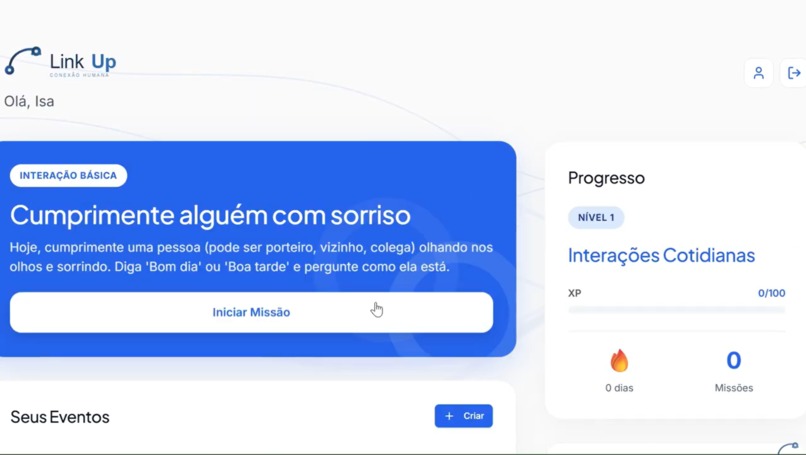
Link Up
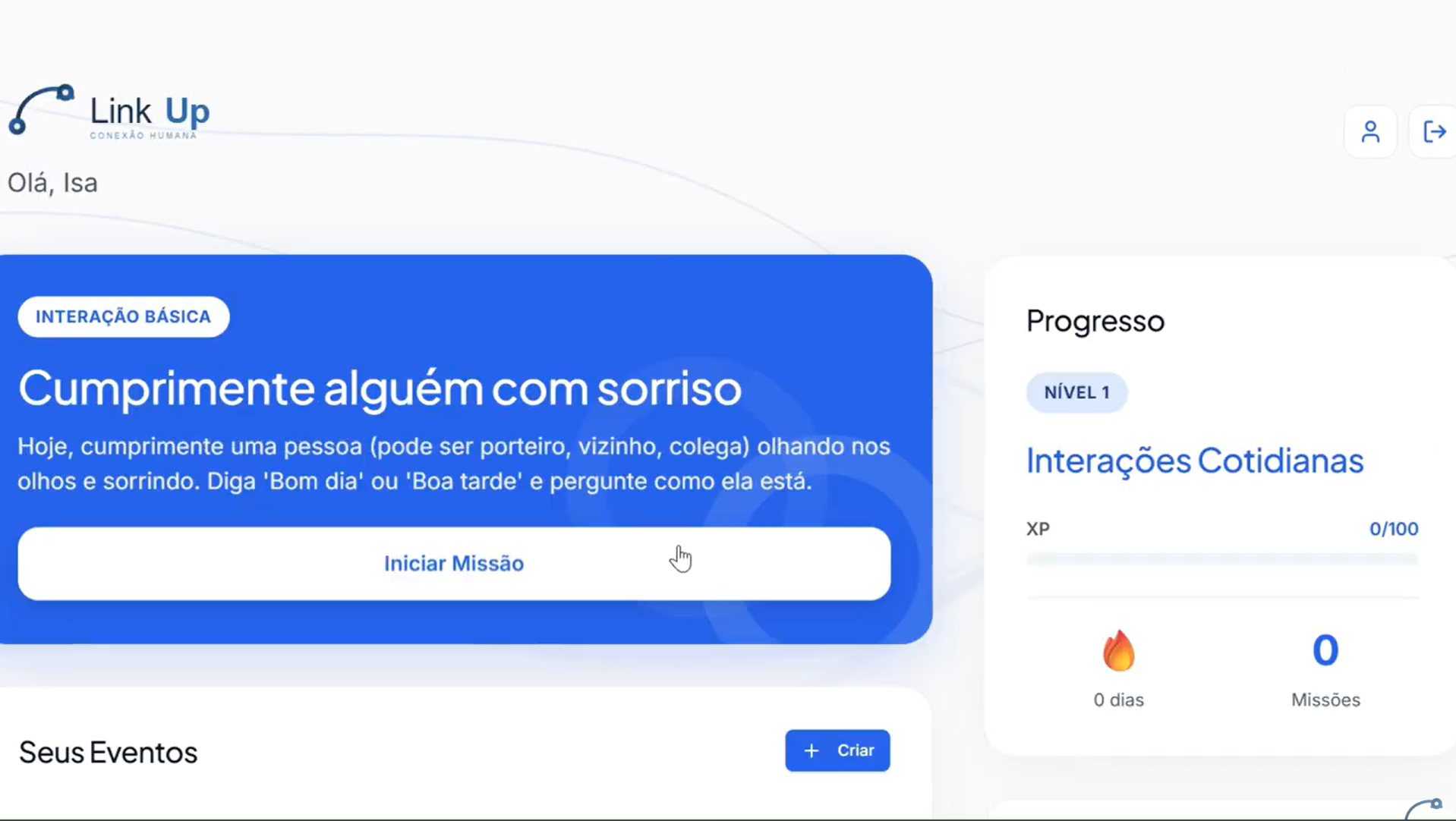
Key Features
- Intelligent Onboarding: A 7-question initial assessment analyzed by AI to determine the user's anxiety level (Levels 1–3) and recommend personalized missions.
- Practical Mission System: A three-phase workflow consisting of preparation (recording limiting beliefs and pre-mission anxiety), real-world mission execution, and final reflection (lessons learned and post-mission anxiety evaluation).
- Evidence Journal: A tool that visually compares the user's catastrophic predictions with actual outcomes, with the option to generate personalized motivational feedback through AI.
- Gamification: An engaging progression system featuring levels, experience points (XP), streaks, and achievement badges.
- Community: A safe environment divided into Mission Pods (small groups guided by mentor "Anchors") and Clusters (the entire community), encouraging peer support and interaction.
- Progress Insights: Periodic evaluations that identify growth patterns and track the user's development across recent missions.
Technologies Used
Frontend
The interface was designed to be fluid, responsive, and modern, leveraging the latest React ecosystem standards:
- React 19 & React Router DOM (v7) for UI development and routing.
- Tailwind CSS for utility-first styling and a design system centered around blue color palettes (
blue-100toblue-500) and Inter/Manrope typography. - Shadcn UI (@radix-ui) for accessible and customizable components such as Accordions, Dialogs, Sliders, and Toasts.
- Axios for HTTP requests and API communication.
Backend
The core API was designed for high performance, efficient asynchronous processing, and seamless AI integration:
- FastAPI as the high-performance web framework.
- Uvicorn as the ASGI server.
- MongoDB (via Motor) as the asynchronous NoSQL database, organized into collections such as
users,missions,evidences, andcommunity. - Pydantic for robust data validation.
- PyJWT and Passlib (bcrypt) for secure authentication and password hashing.
Artificial Intelligence
The intelligent core of LinkUp is powered by Google's AI ecosystem:
- Gemini 3 Flash (via
google-genaiandgoogle-generativeai). - Integrated into four primary workflows:
- Onboarding Analysis
- Mission Recommendation Engine
- Evidence Feedback Generation
- General Progress Insights
Project Structure
The repository follows a monorepo architecture containing the entire application ecosystem:
LinkUp/
├── backend/                      # FastAPI + MongoDB API
│   ├── server.py                 # Main routes (Auth, User, Missions)
│   ├── seed_data.py              # Test seed data (15 missions, 15 posts)
│   └── requirements.txt          # Python dependencies
├── frontend/                     # React application
│   ├── public/                   # Base HTML and assets
│   └── src/
│       ├── pages/                # Pages (Login, Dashboard, MissionFlow, etc.)
│       ├── components/ui/        # Shadcn base components
│       ├── App.js                # Routing and application contexts
│       └── App.css               # Advanced styling (Glassmorphism, etc.)
├── tests/                        # Automated tests (Pytest)
└── test_reports/                 # Test execution reports
Built With
- css
- dockerfile
- html
- javascript
- python
- shell


Log in or sign up for Devpost to join the conversation.