Inspiration
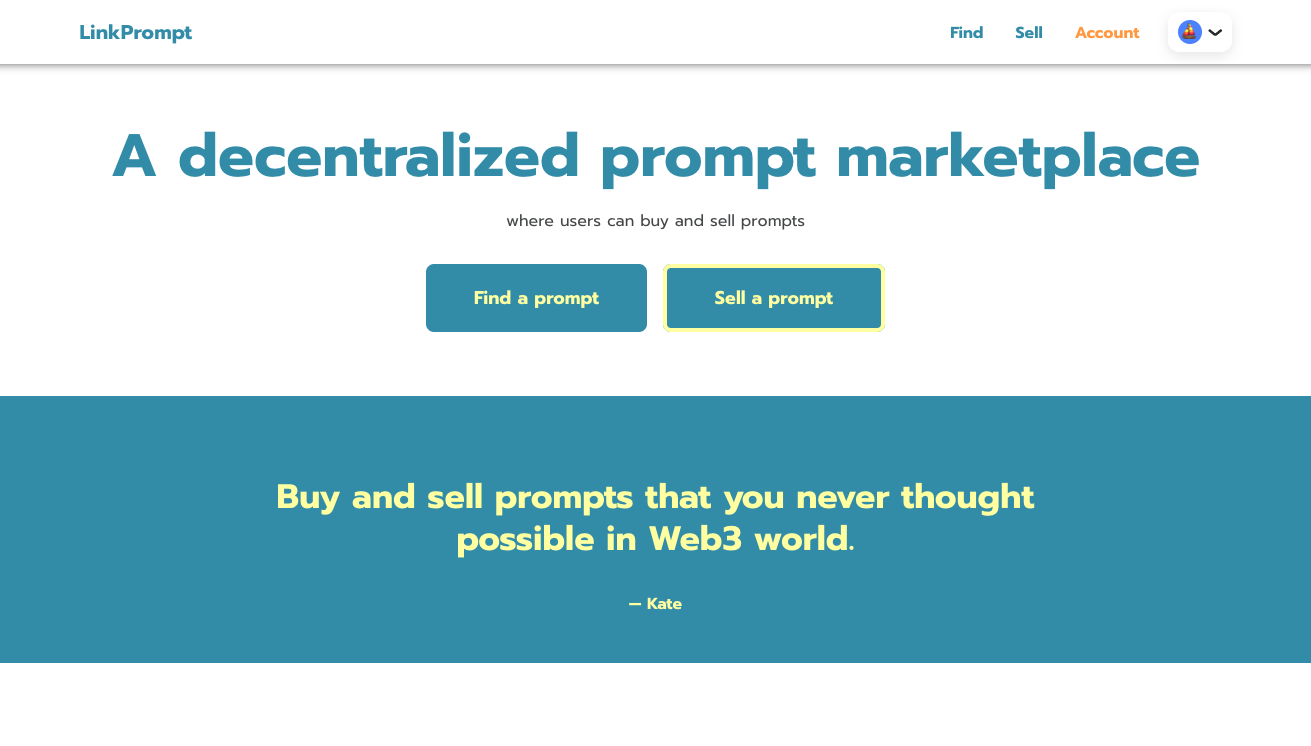
Today, we've been utilizing GPT for marketing. We've used it for content creation and extraction, SEO, item description creation for Amazon listings, social posting, and more. We started the project with the idea of creating a marketplace where these prompts could be transparently traded on the blockchain. There are many different solutions that can be explored to create this, but avalanche and chainlink are the perfect way to organize it, with faster and more reliable protocols. A marketplace that sells GPT prompts combined with blockchain can take advantage of several benefits of blockchain. In particular, the more complex the prompt, the more transparent the distribution of the original author's copyright can be organized using NFT technology by providing a marketplace to buy and sell them. This allows users with good marketing prompts to profit from this marketplace, and it's all traceable to NFTs.
What it does
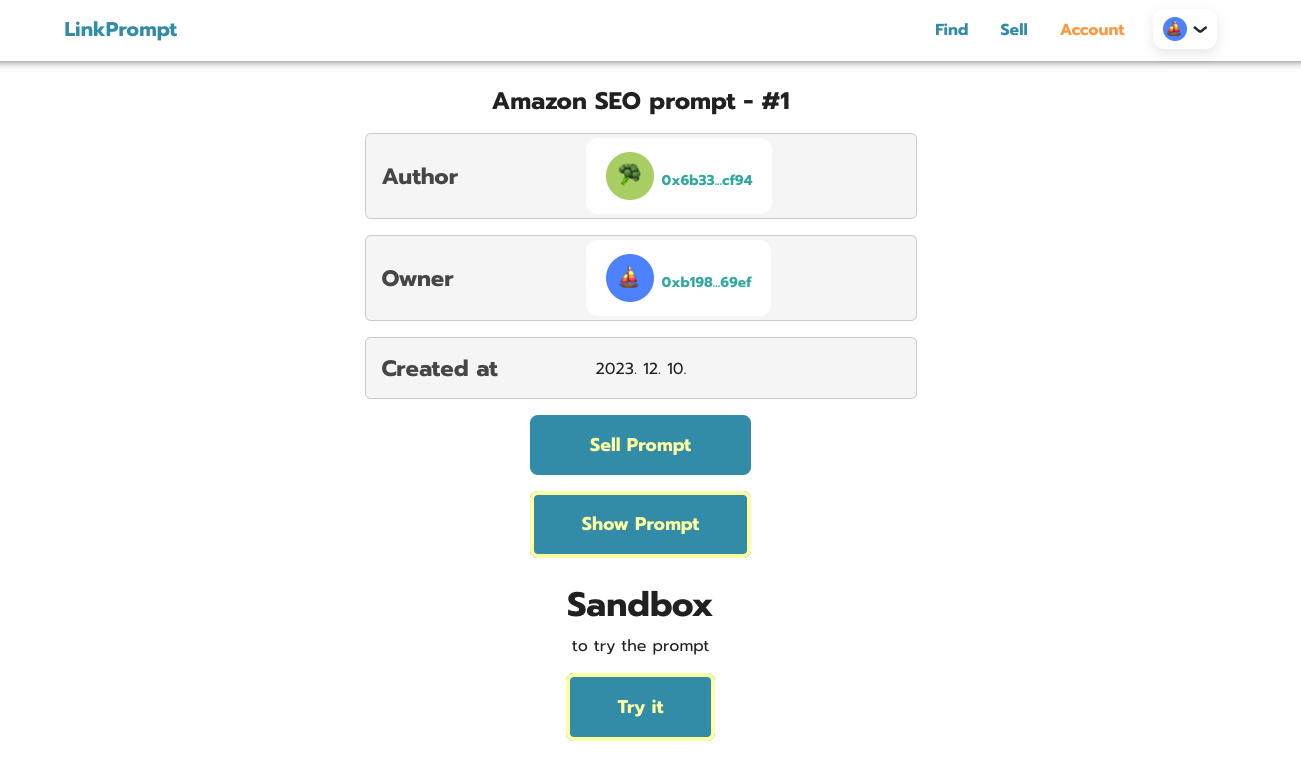
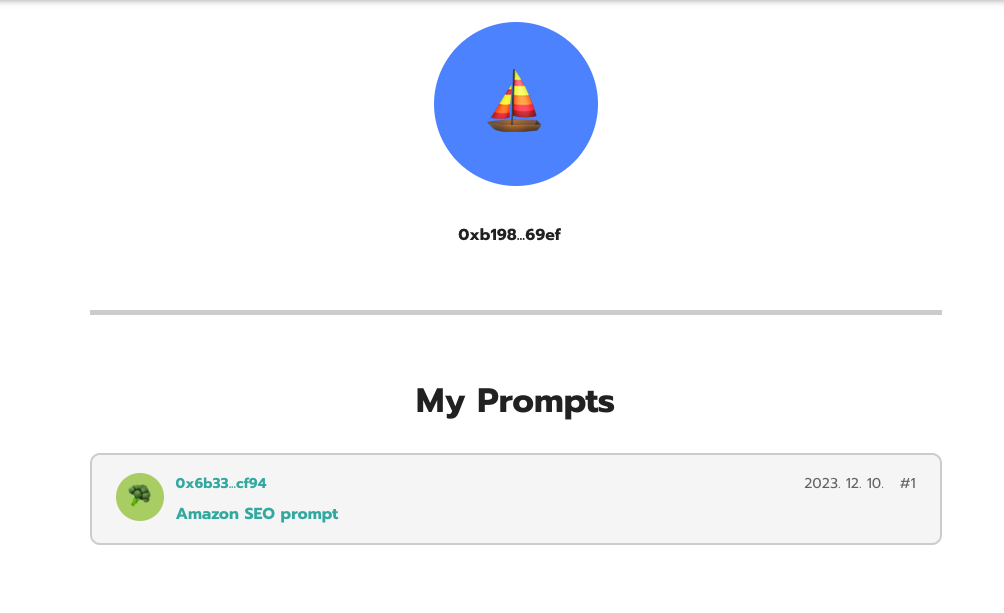
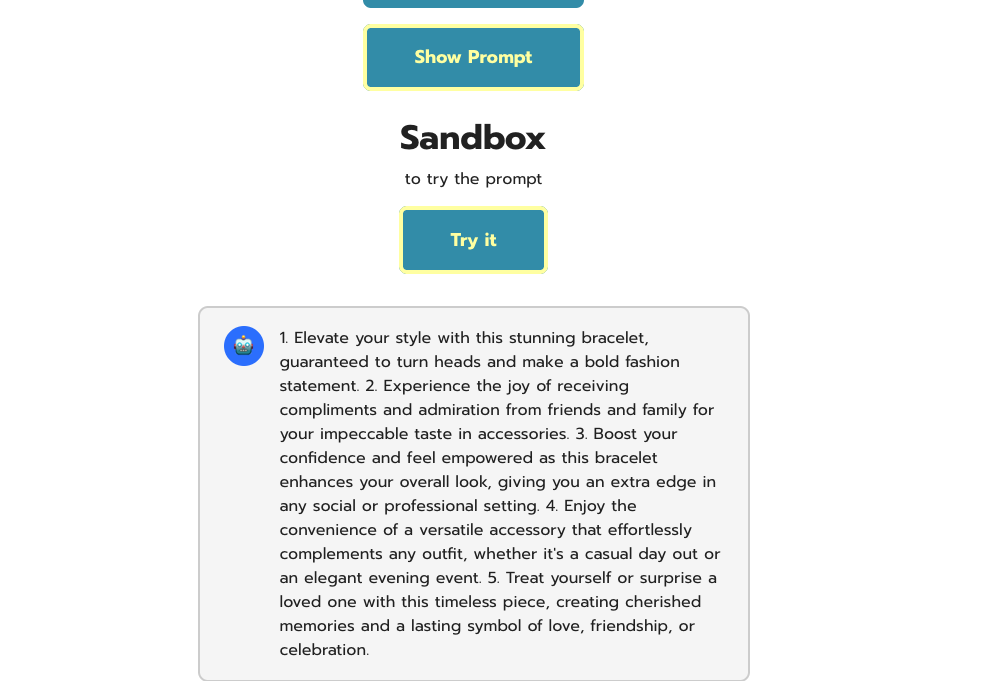
Here's how it works. When a user enters the desired prompt that wants to sell in the Sell prompt and send it, it is encrypted by the lit protocol and stored in the contract. At this point, the NFT is minted to specify user’s ownership. When executing the created prompt, it calls the GPT linked to the chainlink function. To sell it, change the ownership to the marketplace contract and set the desired price. Other users will not see any prompts before making a purchase and can execute any number of them. If the execution is successful in the sandbox, the user can purchase the prompt and transfer the NFT to their ownership.
How we built it
Prompts can be created, bought and sold are tracked to ensure they are not minted as NFTs and stolen. We also configured ERC-721 based NFT minting for each prompt in the form of a license to use it, and the contract for this is deployed on the Avalanche fuji testnet. OpenAI GPT works with chainlink functions to make it trustworthy and track user usage. This contract was deployed to the fuji testnet to integrate the frontend and server. Litprotocol v3 was utilized to enhance security through encrypt/decrypt when registering and viewing prompts. While we're still working on the specific business logic, this allows us to provide a faster user experience and create a revenue structure that transparently credits the original authors of the prompts they create and earns them commission fees. The frontend consists of nextjs and typescript, utilizing wagmi, formik, MUI, and node.js. Also all resources are stored on IPFS via Spheron. PROFILE_CONTRACT_ADDRESS=0x6c9DA107817DA5080366d356EB0038d4430cF797 PROMPT_CONTRACT_ADDRESS=0xd43234b2C8E56FB914fd8296123cc030a934b811 MARKETPLACE_CONTRACT_ADDRESS=0x47F18d235E6b50698817EdDd99Af130828C508e1 CHAINLINK_FUNCTION_CONTRACT_ADDRESS=0xcfd2709a4e39c6ccad724b71db715798f211c712
Challenges we ran into
In fact, we initially planned for more. We wanted to incorporate more complex AI for user feedback, but it was difficult to complete in a short amount of time, starting with setting up the chainlink function. and struggling to resolve chainlink function with dallee-3 api since it occurred the abort error issue.
Accomplishments that we're proud of
We want to focus on completing the desired prompt marketplace. It seems like a simple feature, but we've been thinking about how to organize a trusted marketplace with a solution like chainlink, and we are proud to say that we've finally completed it.
What we learned
Efficiency of avalanche, the architecture of chainlink functions, subscription
What's next for LinkPrompt
We're planning a beta launch that will allow our user community to build more robust features and integrate directly into affiliate marketing and social channels.
Built With
- avalanche
- chainlink-functions
- formik
- ipfs-via-spheron
- lit-protocol
- mui
- next.js
- node.js-hardhat
- openai-gpt
- solidity
- typescript
- wagmi
- wallet-connect

Log in or sign up for Devpost to join the conversation.