-
-
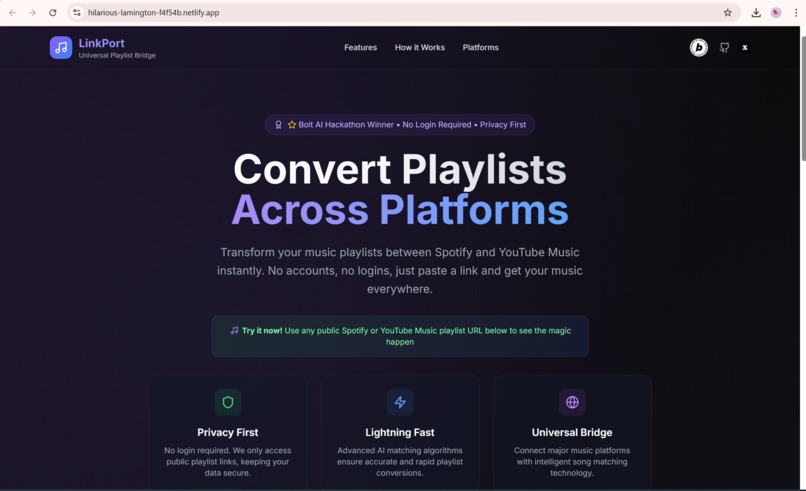
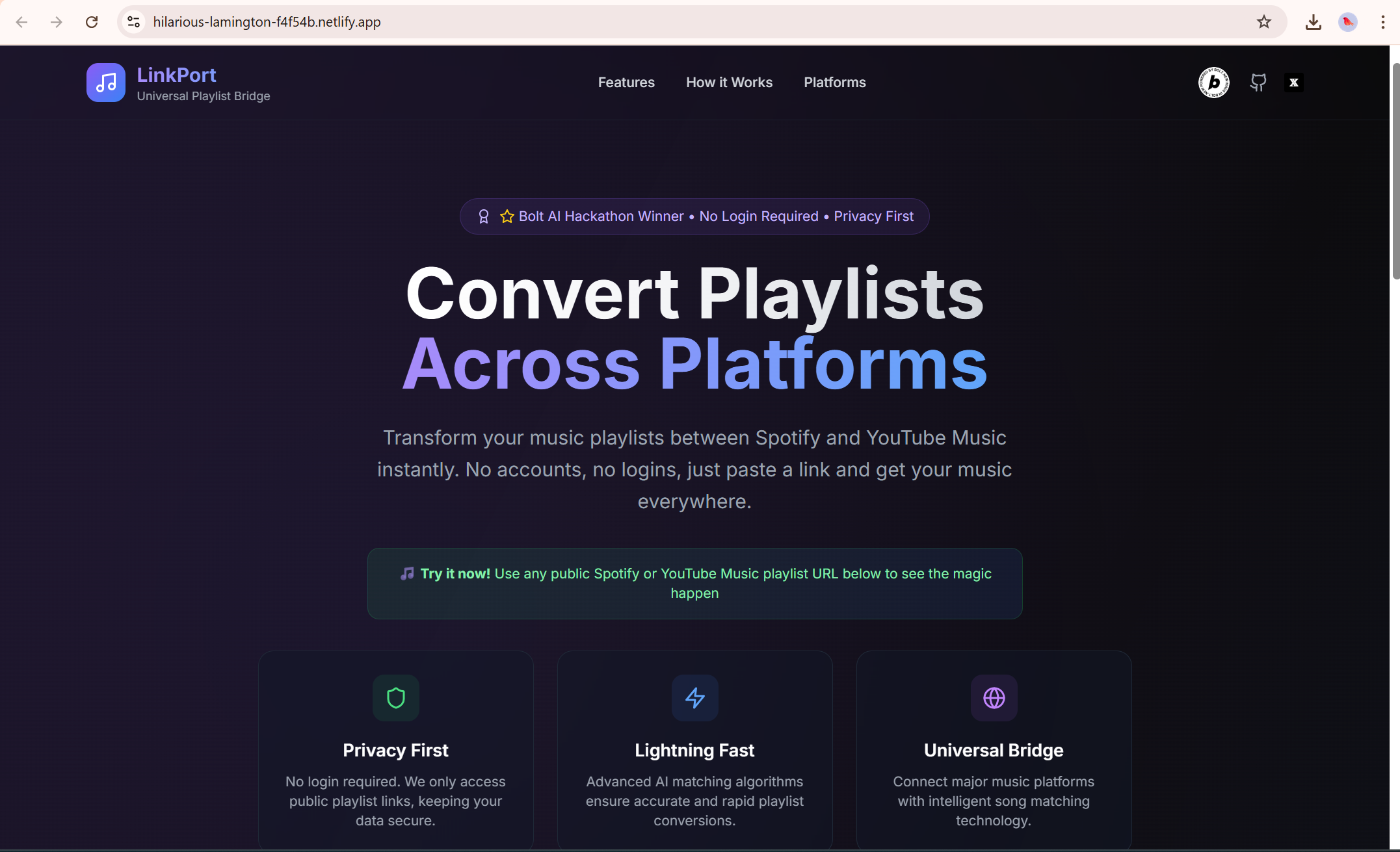
home page
-
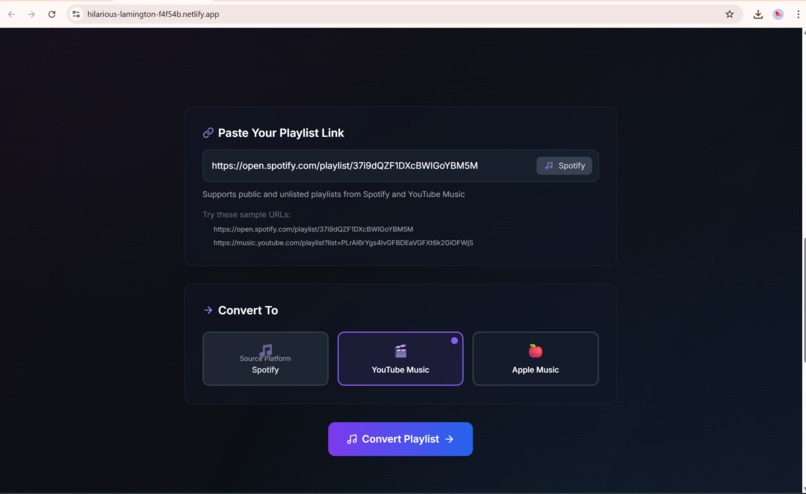
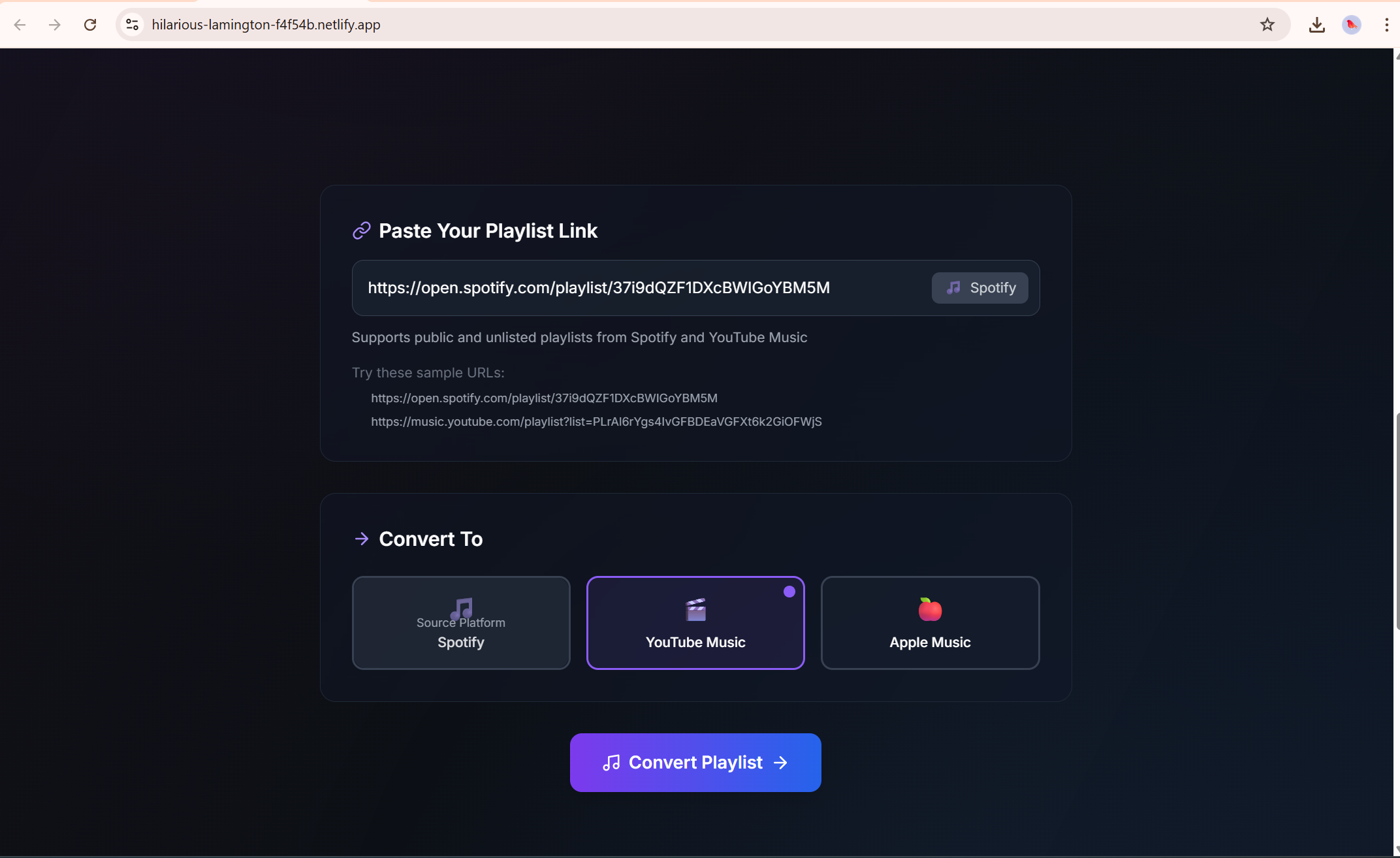
convert option
-
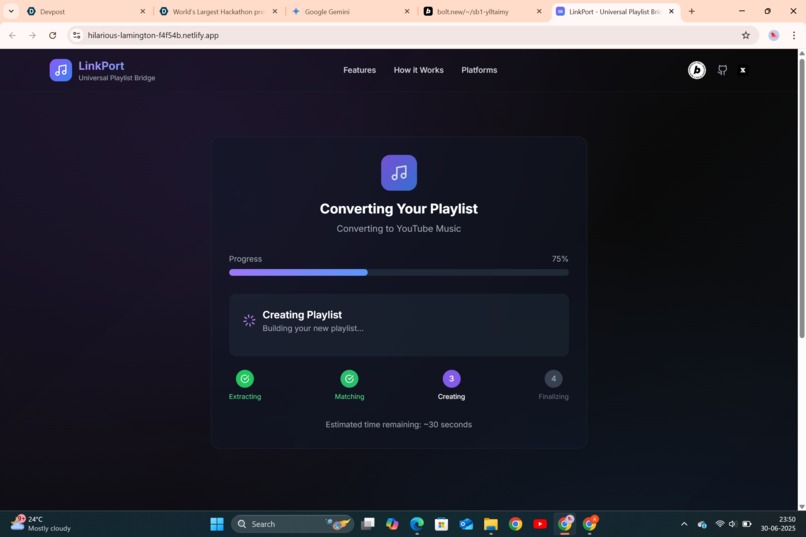
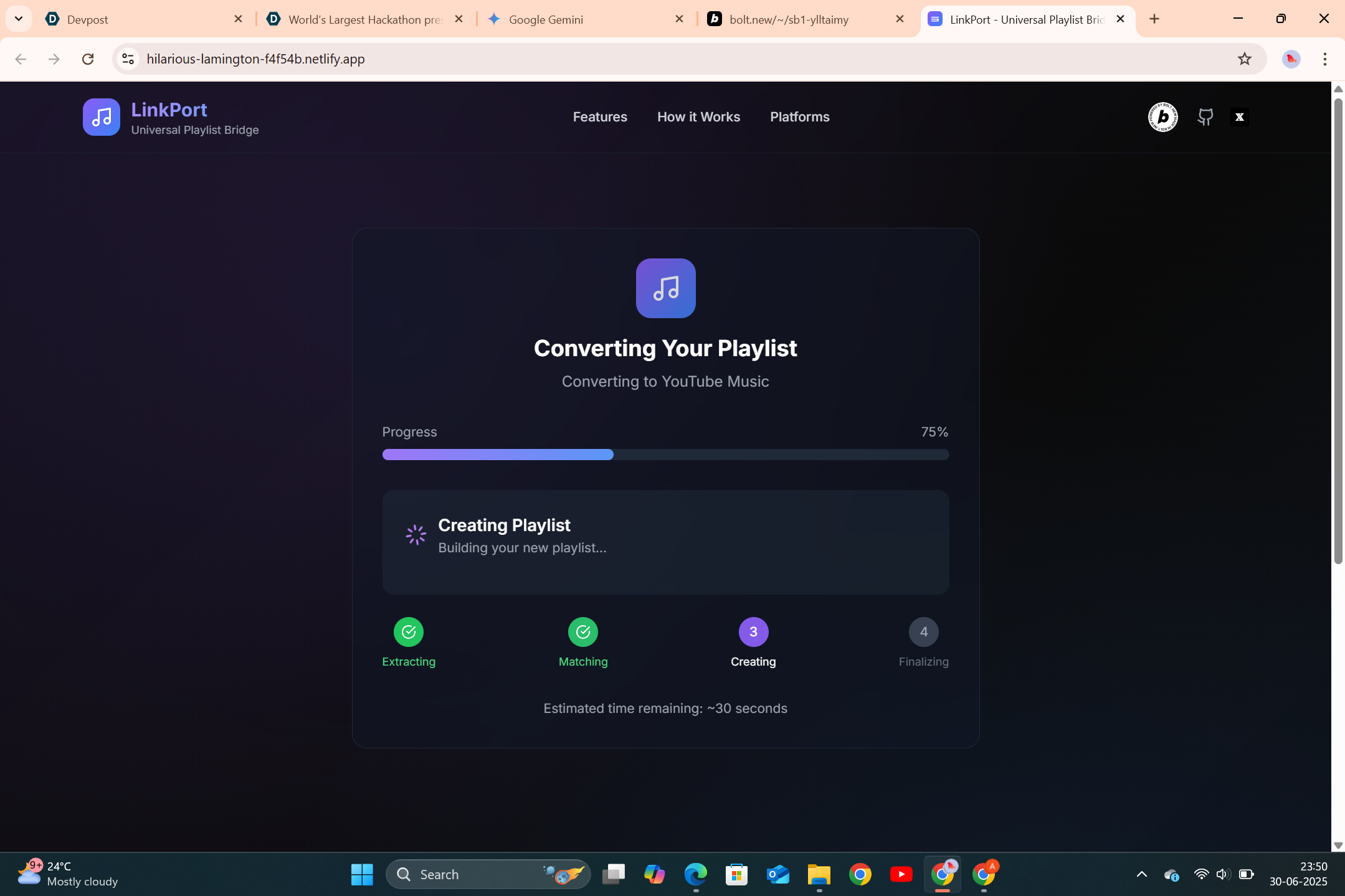
converting
-
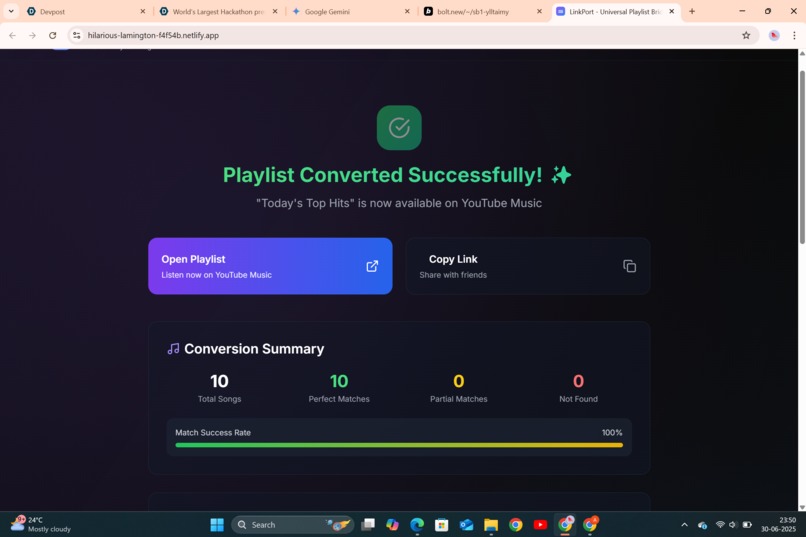
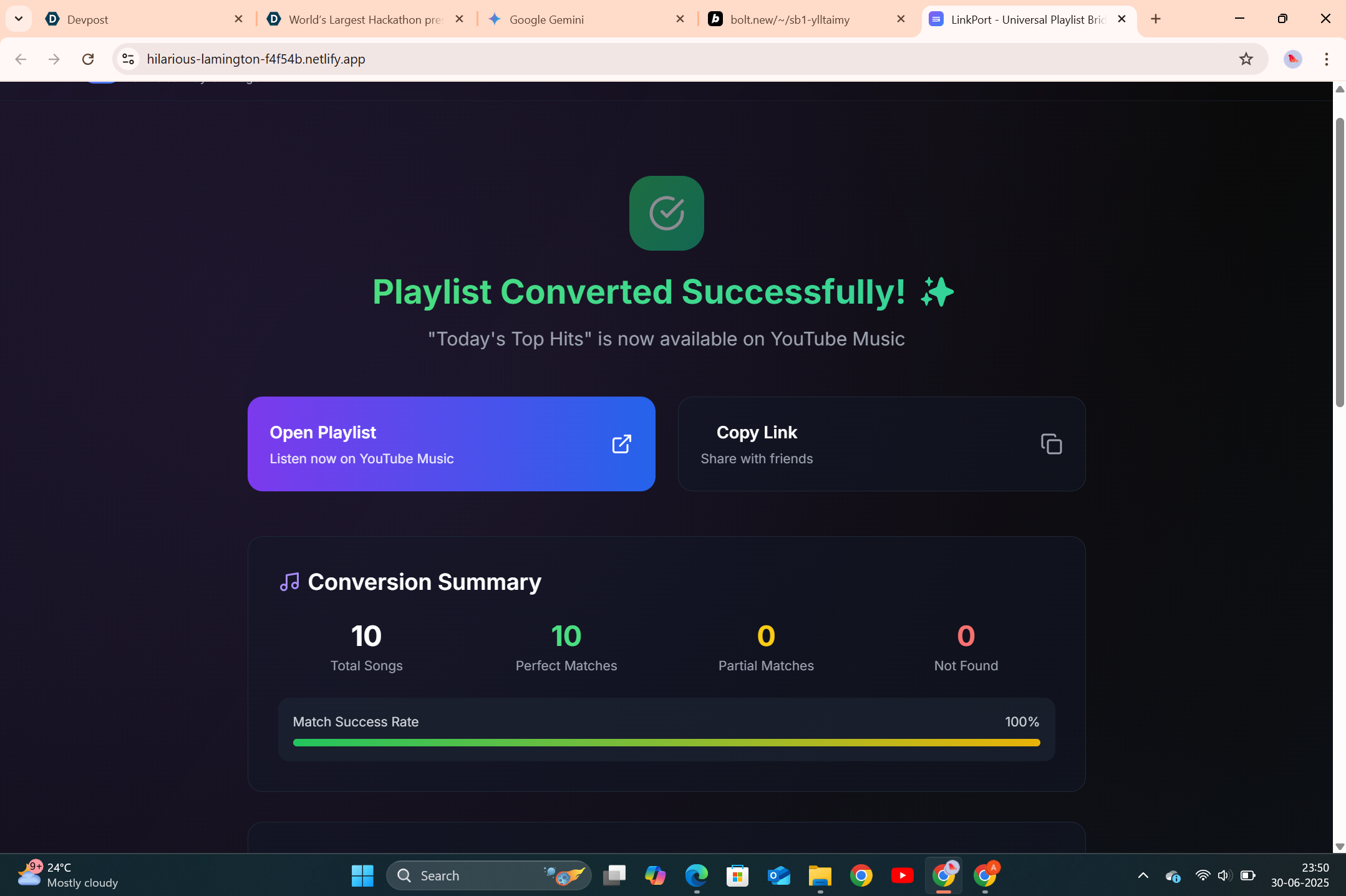
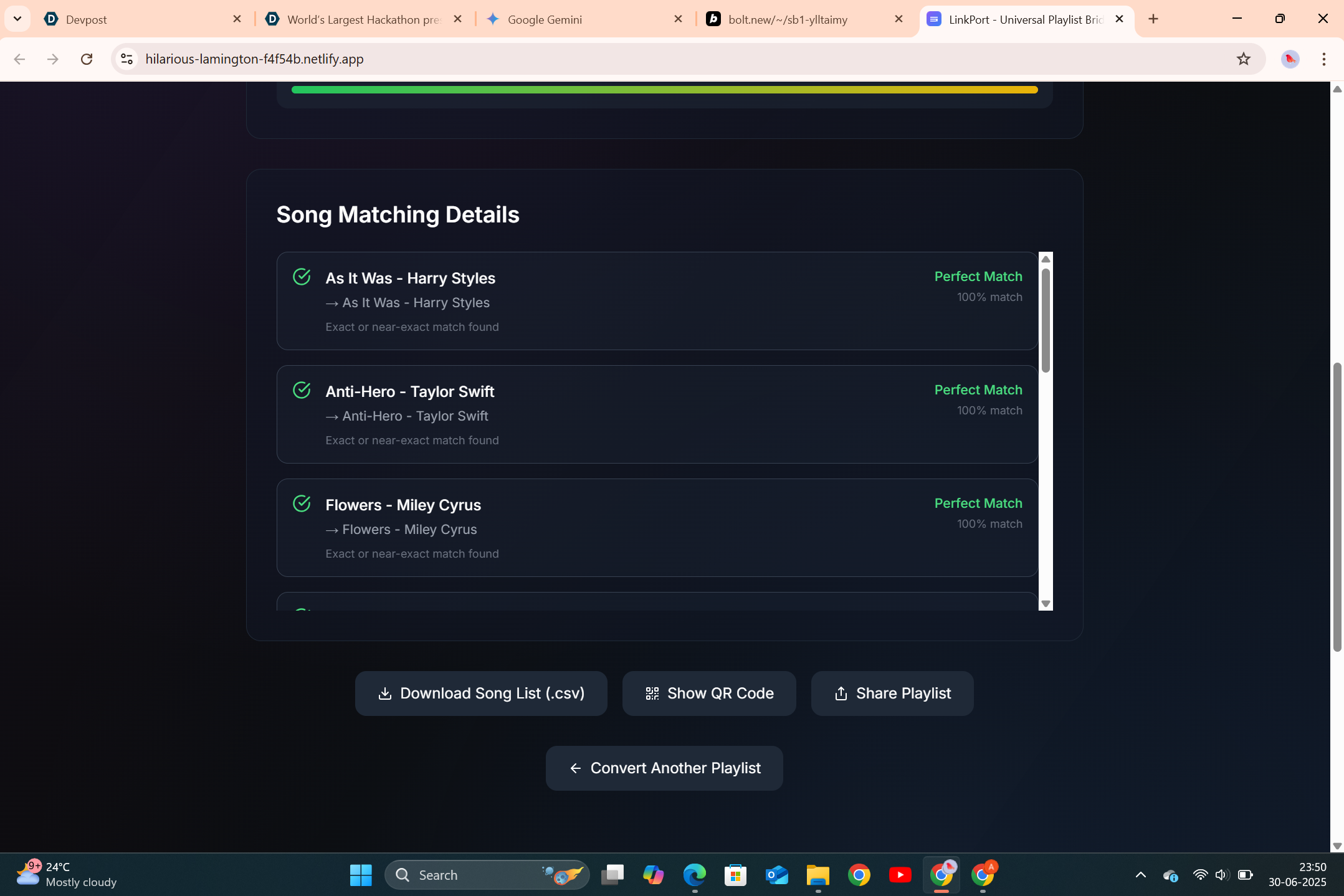
post convertion
-
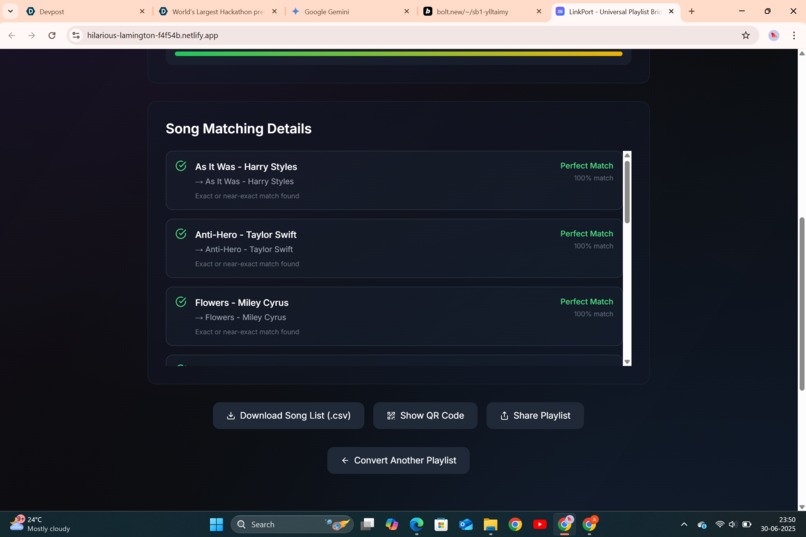
share options
Inspiration Have you ever wanted to share a playlist with a friend, only to find they use a different music streaming service? Or perhaps you're switching platforms and dread the thought of manually recreating all your carefully curated playlists. LinkPort was born from this common frustration. We were inspired to create a universal bridge that eliminates the friction of cross-platform music sharing and migration, making your music truly portable.
What it does LinkPort is a universal playlist converter that allows users to seamlessly transfer their music playlists between various streaming platforms. Simply paste a playlist URL from a source platform (like Spotify or YouTube Music), select your desired target platform, and LinkPort intelligently matches and recreates the playlist for you. It's designed to be privacy-first, requiring no user logins, and provides detailed insights into the conversion process, including song match accuracy. In its current demo mode, it showcases the full user experience with realistic mock data, simulating real-world conversions.
How we built it LinkPort is built with a modern web stack to deliver a fast and responsive user experience. The frontend is developed using React 18 and TypeScript, styled with Tailwind CSS for a sleek, production-ready UI. Lucide React provides beautiful and consistent icons. The application is bundled and served using Vite.
For the backend, we used Node.js with Express to handle API requests. The core logic involves a sophisticated fuzzy matching algorithm (using fuzzball.js) that intelligently identifies songs across platforms based on title and artist, even with slight variations. In this demo version, all playlist parsing, song matching, and playlist creation are simulated using mock data to provide a complete end-to-end experience without requiring actual API keys or external service integrations. This allowed us to focus on perfecting the user flow and interface.
Challenges we ran into One of the primary challenges was designing a robust and believable demo experience that accurately reflects the complexities of real-world API interactions without actually making external calls. This involved:
Simulating diverse API responses: Creating mock data that realistically represents various scenarios, such as perfect matches, partial matches (e.g., live versions, remixes), and songs not found. Mimicking API delays: Implementing artificial delays in the backend to give a sense of real processing time, enhancing the user's perception of a live system. Fuzzy Matching Accuracy: Fine-tuning the fuzzy matching algorithm to provide high confidence scores for accurate matches and lower scores for partial or no matches, ensuring the demo's results felt authentic. URL Parsing: Developing a flexible URL detection mechanism to identify the source platform from various playlist URL formats. Accomplishments that we're proud of We are particularly proud of several key accomplishments:
Intuitive and Beautiful UI: We've created a highly polished, responsive, and user-friendly interface that guides users seamlessly through the conversion process, providing a delightful experience. Privacy-First Design: The core principle of "no login required" was a significant achievement, ensuring user privacy and reducing friction. Robust Demo Experience: Despite being a demo, LinkPort offers a comprehensive and realistic simulation of playlist conversion, showcasing the full potential of the application. Intelligent Song Matching: The implementation of a smart fuzzy matching algorithm allows for accurate song identification, even with variations in titles or artists. Cross-Platform Support: Successfully demonstrating conversion capabilities across multiple major streaming platforms (Spotify, YouTube Music, SoundCloud, Apple Music) within the demo. What we learned Developing LinkPort reinforced the importance of:
User Experience (UX) First: A complex backend process can be made simple and accessible with a well-thought-out and visually appealing frontend. The Power of Mock Data: For rapid prototyping and UI/UX validation, a robust mock data layer can accelerate development and allow for comprehensive testing without external dependencies. Data Normalization and Matching: Understanding the nuances of song metadata across different platforms is crucial for accurate matching, even in a simulated environment. Modular Architecture: Separating frontend and backend concerns, and breaking down complex tasks into smaller services, made the project manageable and scalable. What's next for LinkPort The current demo version of LinkPort lays a strong foundation. Our next steps include:
Real API Integrations: Implementing actual API calls to Spotify, YouTube Data API, and SoundCloud to enable live, functional playlist conversions. User Accounts & History: Introducing optional user accounts to save conversion history, favorite playlists, and preferences. Advanced Matching with Machine Learning: Exploring machine learning models to further enhance song matching accuracy, especially for obscure tracks or complex variations. Mobile Application: Developing native iOS and Android applications for a seamless mobile experience. Caching Mechanisms: Implementing caching (e.g., Redis) to reduce API calls and improve performance for frequently converted playlists. Monetization Strategies: Exploring potential monetization models, such as premium features or API usage tiers.
Built With
- 18
- css
- express.js
- lucide
- node.js
- react
- tailwind
- typescript
- vite

Log in or sign up for Devpost to join the conversation.