-
-
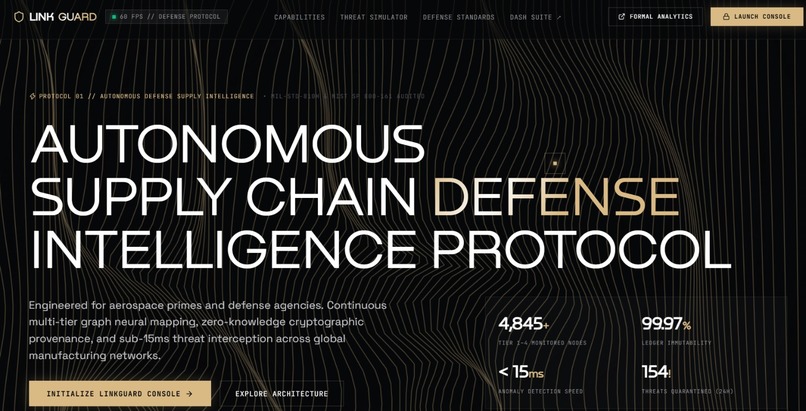
Home Page
-
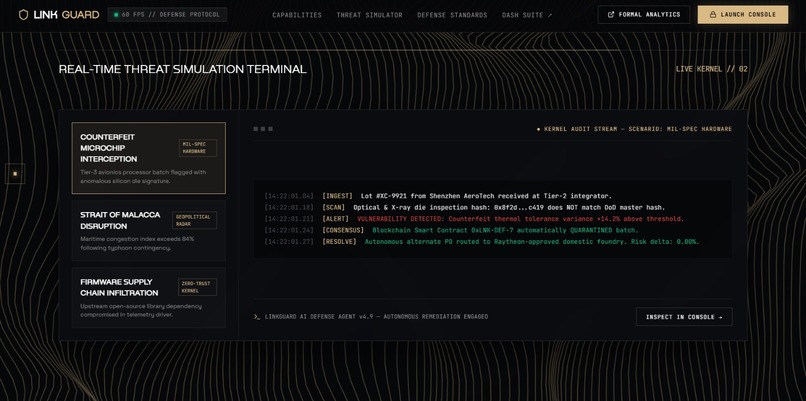
Threat Simulator
-
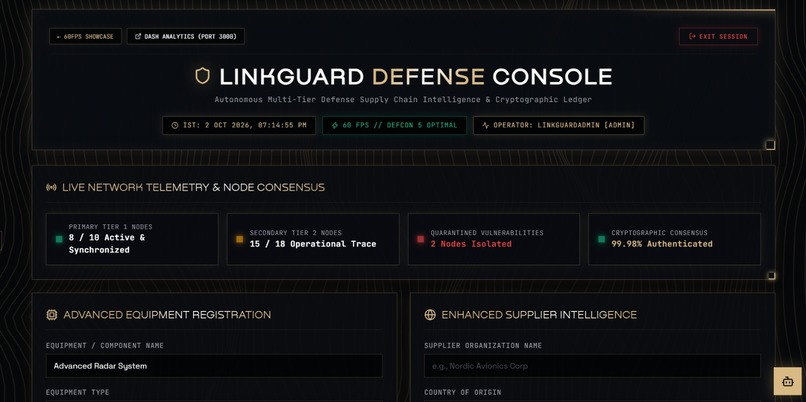
Console Page
-
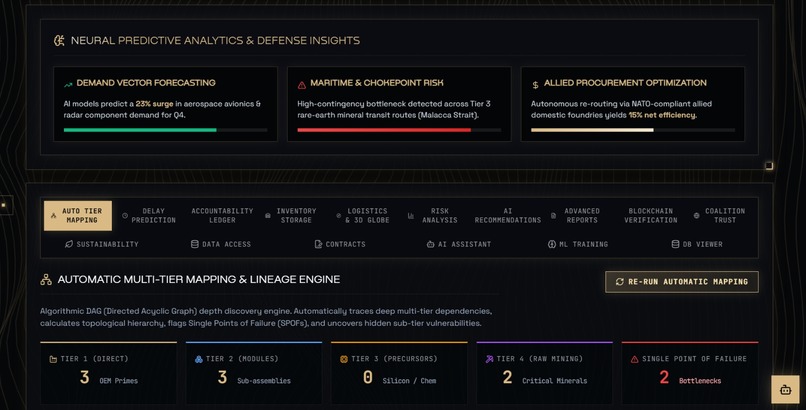
Telemetry Analysis
-
ML Analysis
-
Mapping
Inspiration
LinkGuard did not start as a perfect idea. It grew from our experience participating in multiple hackathons, where we kept building projects, making mistakes, receiving feedback, and improving them.
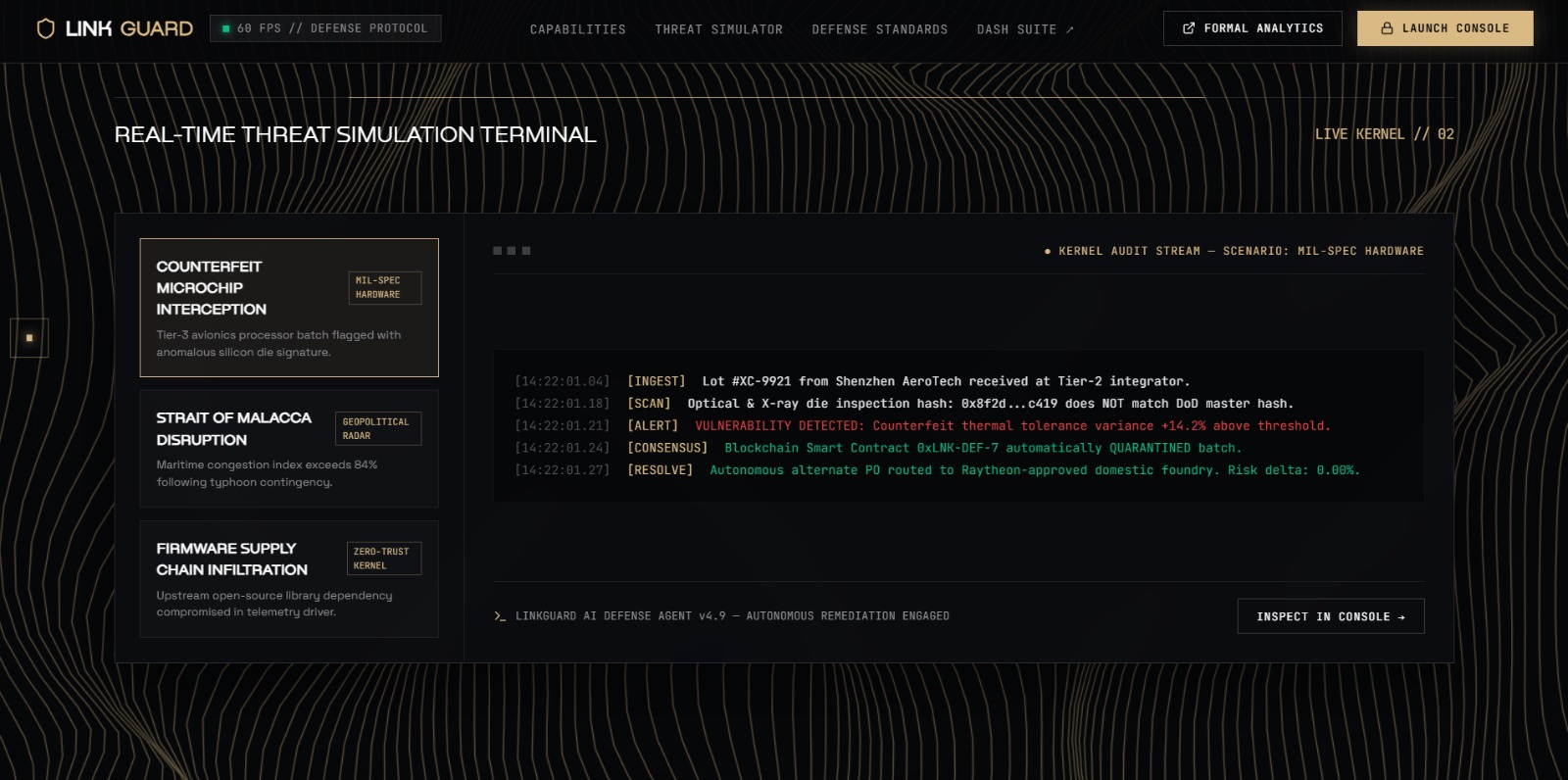
During these experiences, we noticed that many systems are good at showing what is happening, but they do not always help us understand what could happen next. This made us think about a problem that is especially important in defense and critical infrastructure: a small failure deep inside a supply chain can affect many other suppliers and eventually impact operations.
We wanted to build something that could look beyond Tier-1 suppliers, understand the relationships between suppliers, predict possible disruptions, and show how a failure could spread through the network. That idea became LinkGuard.
What it does
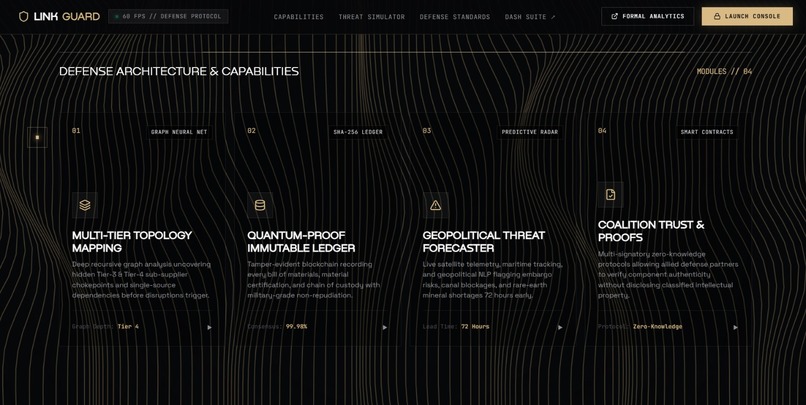
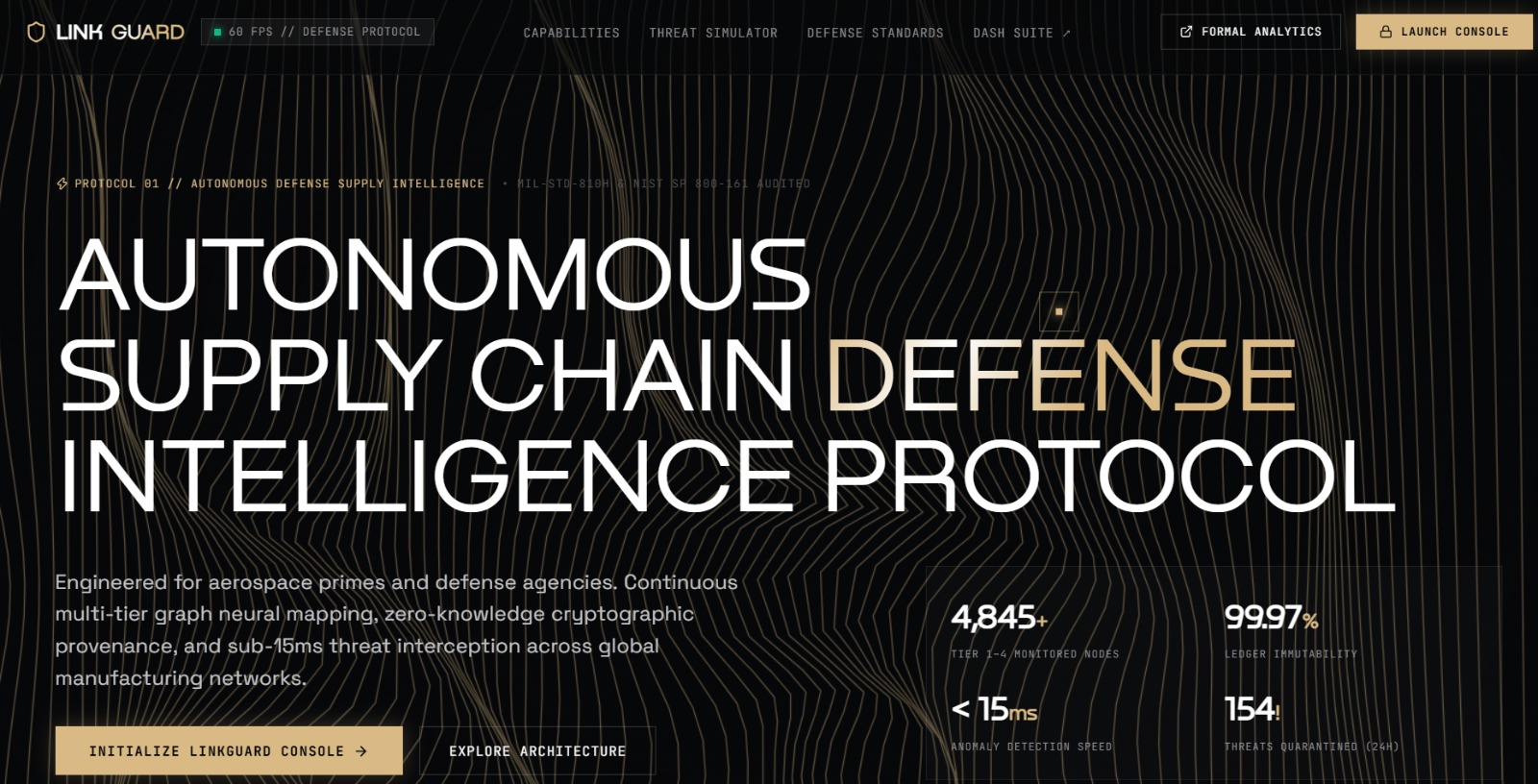
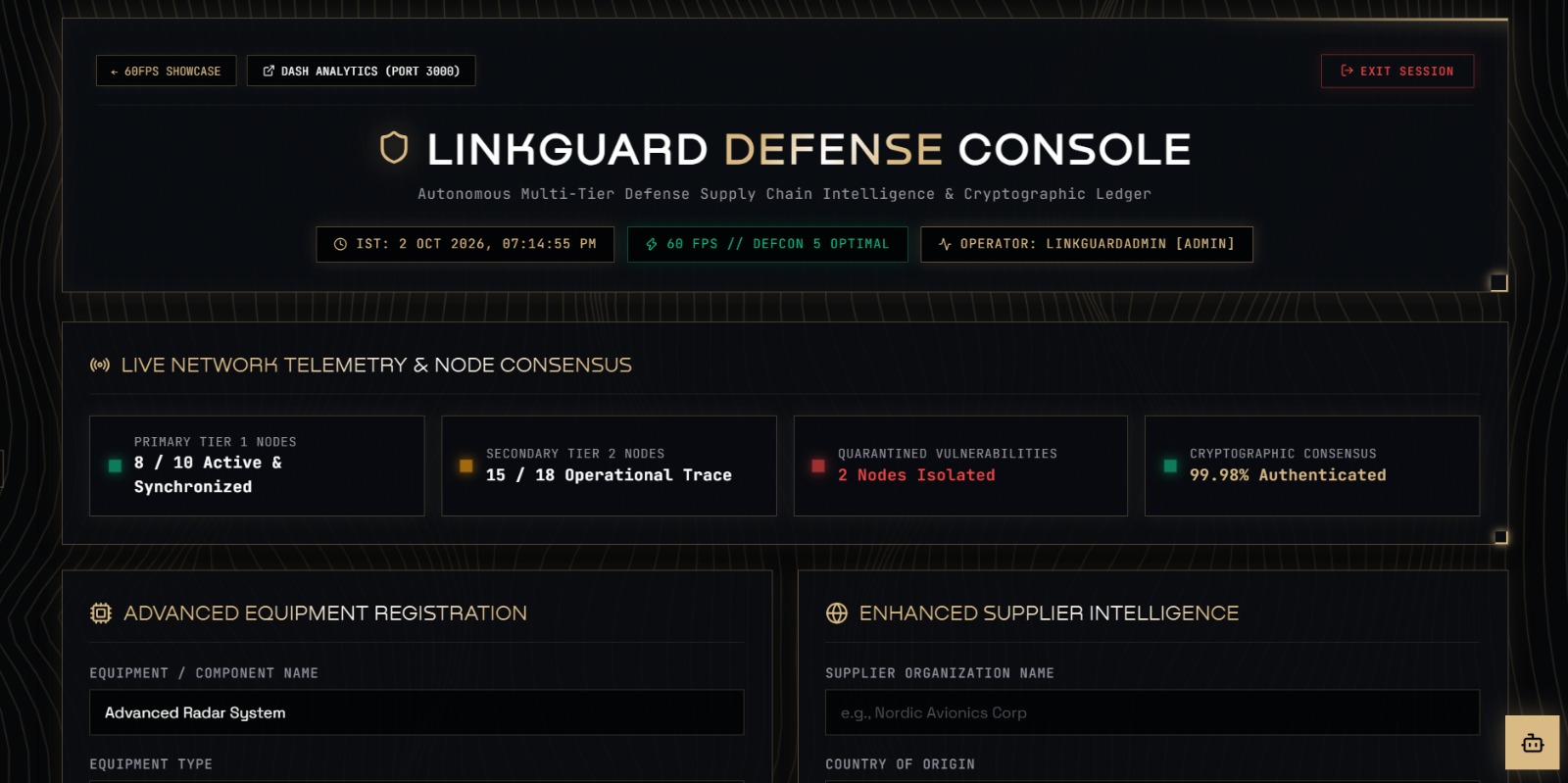
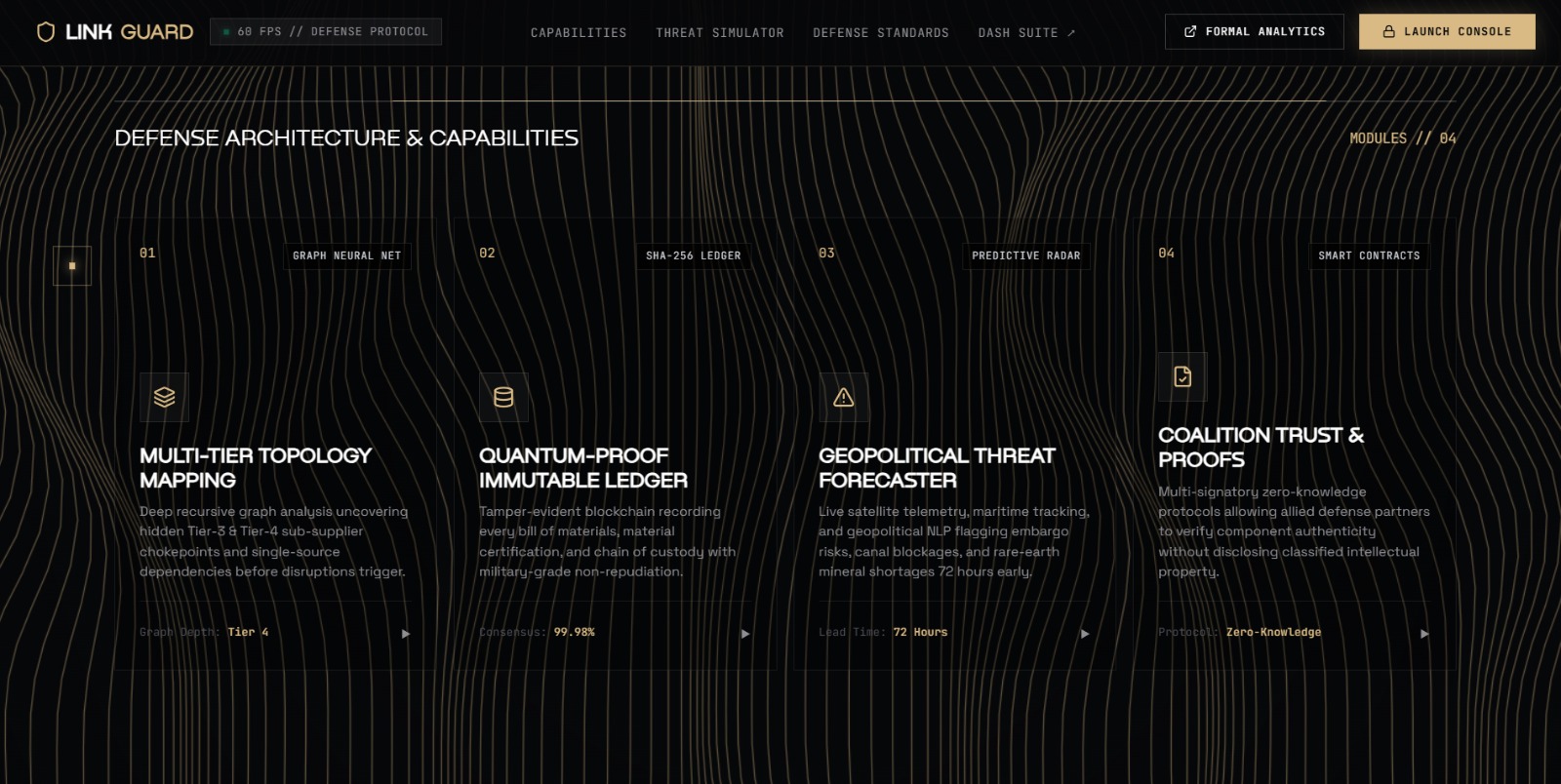
LinkGuard is an AI-powered, blockchain-secured multi-tier supply chain risk intelligence system designed for defense and critical infrastructure supply chains.
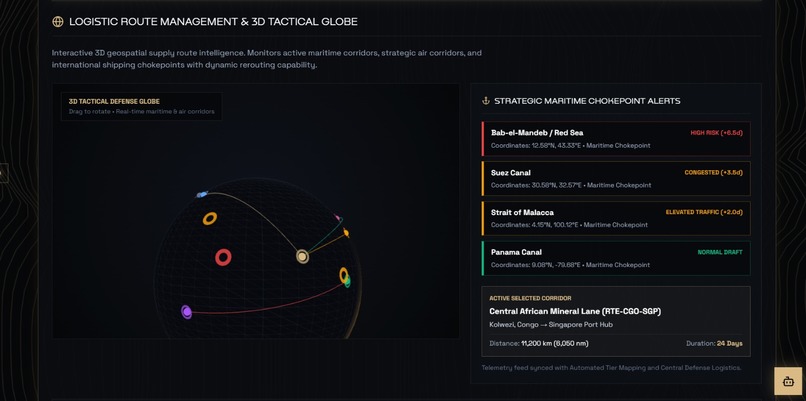
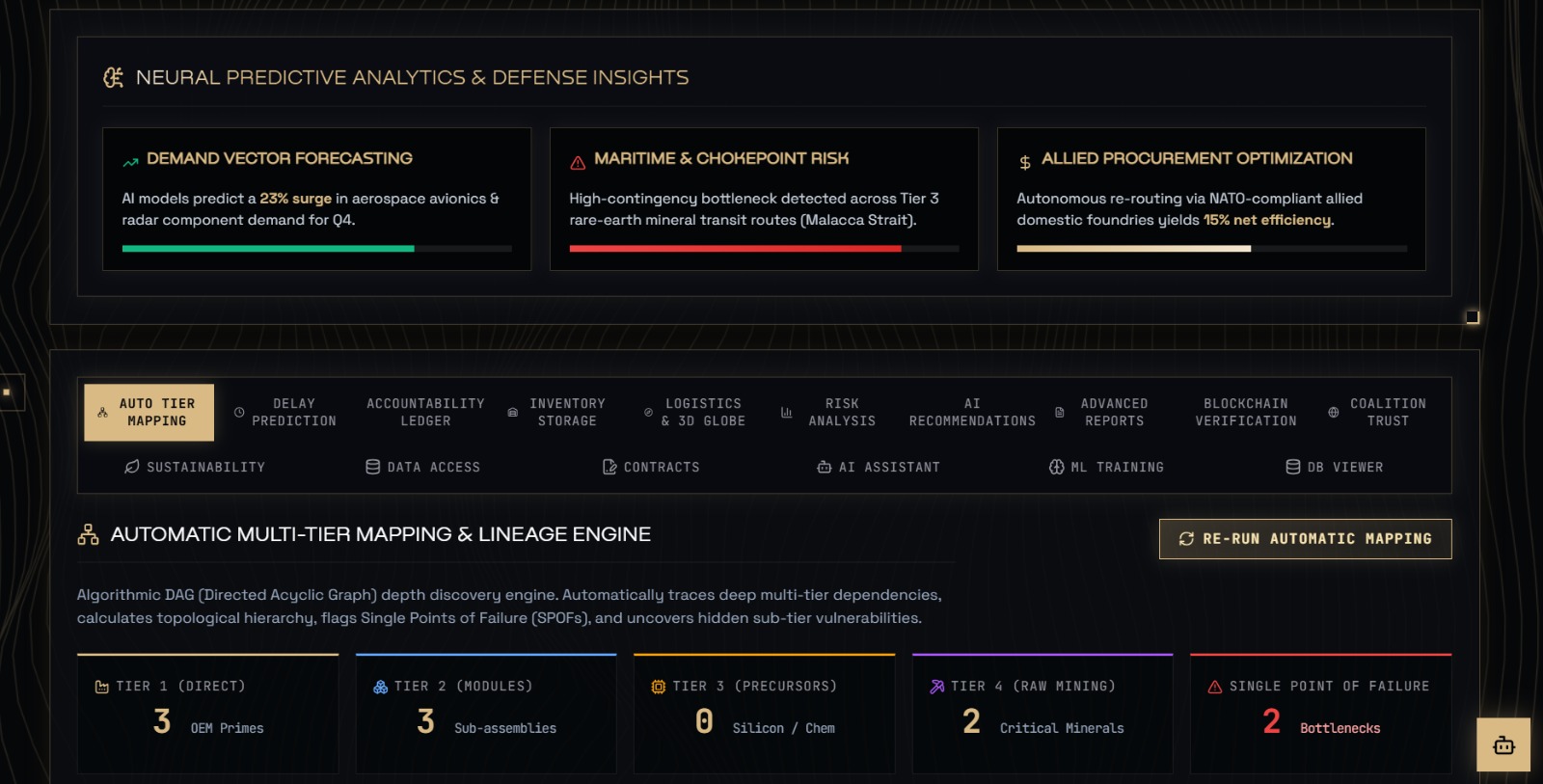
It maps supplier relationships across multiple tiers and uses predictive models to estimate disruption risk. It also analyzes how risk can propagate through the supplier network and helps identify suppliers that could become critical points of failure.
Blockchain is used to maintain trusted and tamper-resistant supplier records and audit information, while human validation keeps important decisions under human oversight.
The goal is simple: instead of only reacting after a supply chain problem occurs, LinkGuard helps organizations understand potential risks earlier.
How we built it
We built LinkGuard as a modular full-stack system using Python, TensorFlow, Keras, Pandas, NumPy and Scikit-learn.
The backend is built with Flask and provides REST APIs, while the frontend uses HTML, CSS and JavaScript to provide an interactive dashboard.
We first focused on creating a multi-tier supplier network using graph-based modeling. We then added data processing and validation before applying machine learning for disruption prediction and risk scoring.
The system also includes a blockchain-based verification layer for supplier records and audit trails. Finally, we connected these components through an API-driven architecture so that the different parts of the system could work together.
Challenges we ran into
The biggest challenge was not building one individual technology, but making different technologies work together as one meaningful system.
We had to understand how supplier relationships could be represented as a graph, how disruption risk could be calculated, and how a failure in one part of the network could affect other connected suppliers.
We also faced challenges while working with data quality, model design, and blockchain integration. Like our earlier hackathon projects, some of our first approaches did not work as expected. Instead of treating those mistakes as failures, we used them to simplify, test, and improve the system step by step.
Accomplishments that we're proud of
We are proud that LinkGuard grew beyond a simple supply chain monitoring idea into a complete risk intelligence framework.
The project brings together multi-tier supplier mapping, predictive risk analysis, risk propagation, human validation, and blockchain-backed data integrity in one system.
More importantly, we built it through the same process that shaped many of our previous hackathon projects: building quickly, finding what does not work, learning from it, and improving the next version.
What we learned
LinkGuard taught us that building a good project is not just about using more technologies.
We learned how important it is to understand the actual problem first and then choose the technology that solves it. We also learned more about graph-based systems, machine learning, APIs, blockchain, data validation, and how different components can be combined into a single application.
Our biggest lesson from hackathons has been that mistakes are part of development. Every failed approach, integration issue, and piece of feedback helped us understand what we needed to improve.
What's next for LinkGuard
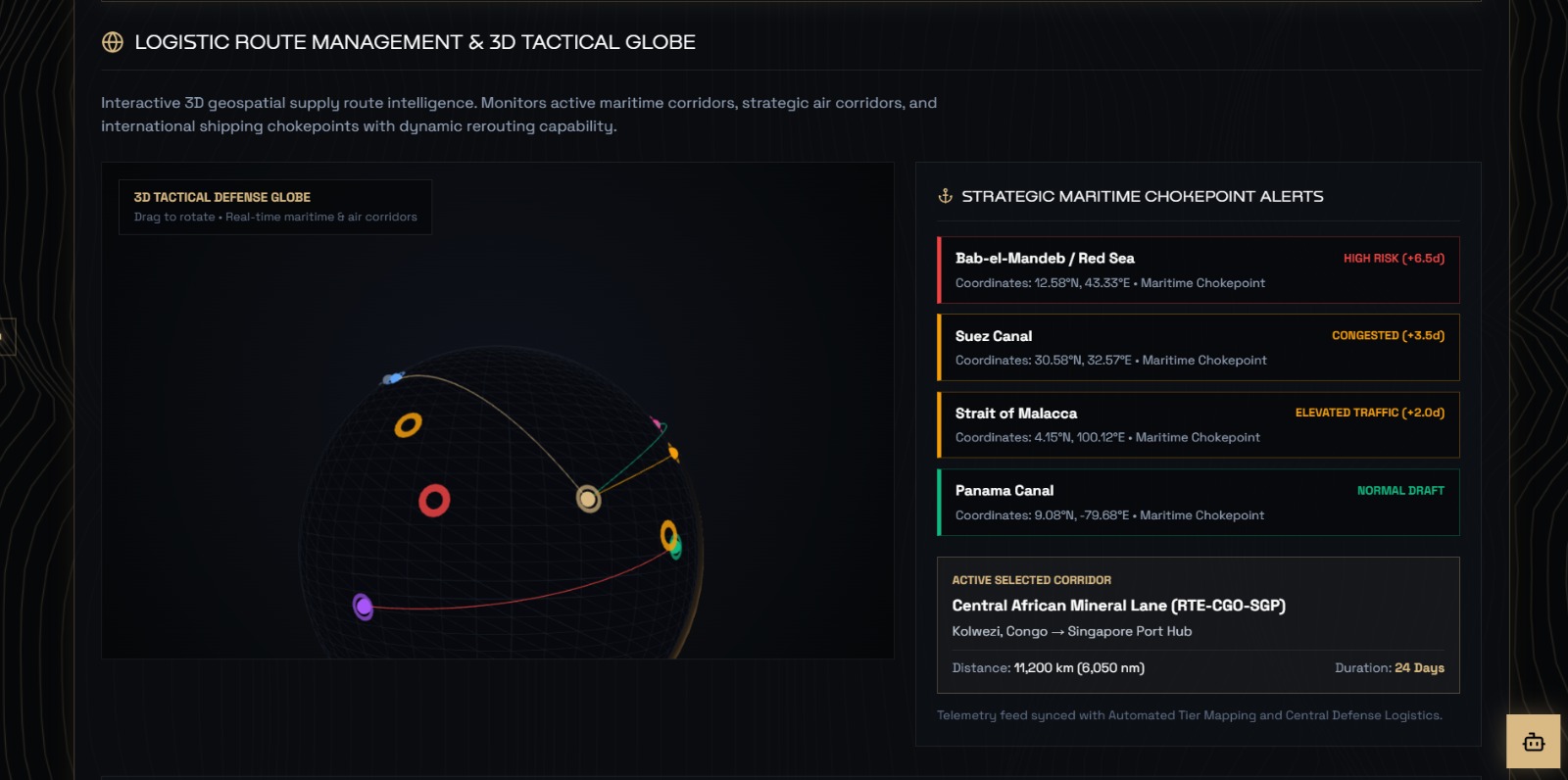
We want to take LinkGuard further by connecting it with live geopolitical and economic risk feeds and improving its graph-based risk propagation capabilities.
We also plan to explore permissioned blockchain networks for multi-agency collaboration, real-time supplier diversification recommendations, and integration with procurement and ERP infrastructures.
Our long-term goal is to evolve LinkGuard into a reliable decision-intelligence platform for strategic and defense supply-chain ecosystems.
Built With
- aiml
- blockchain
- mern


Log in or sign up for Devpost to join the conversation.