-
-
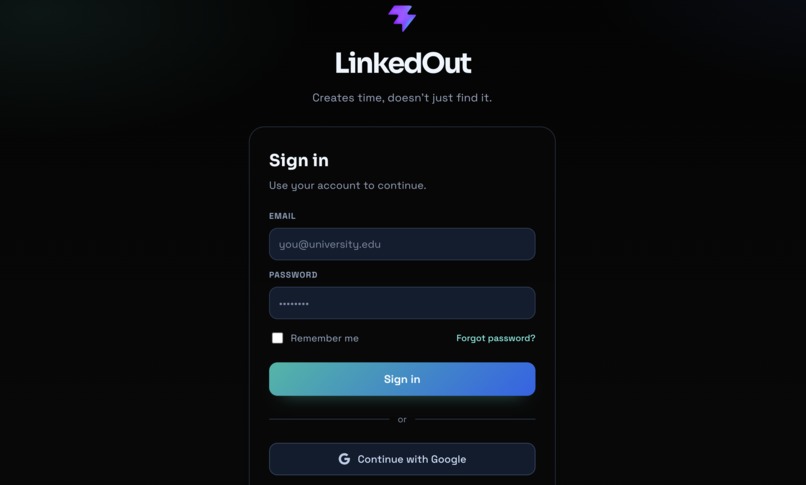
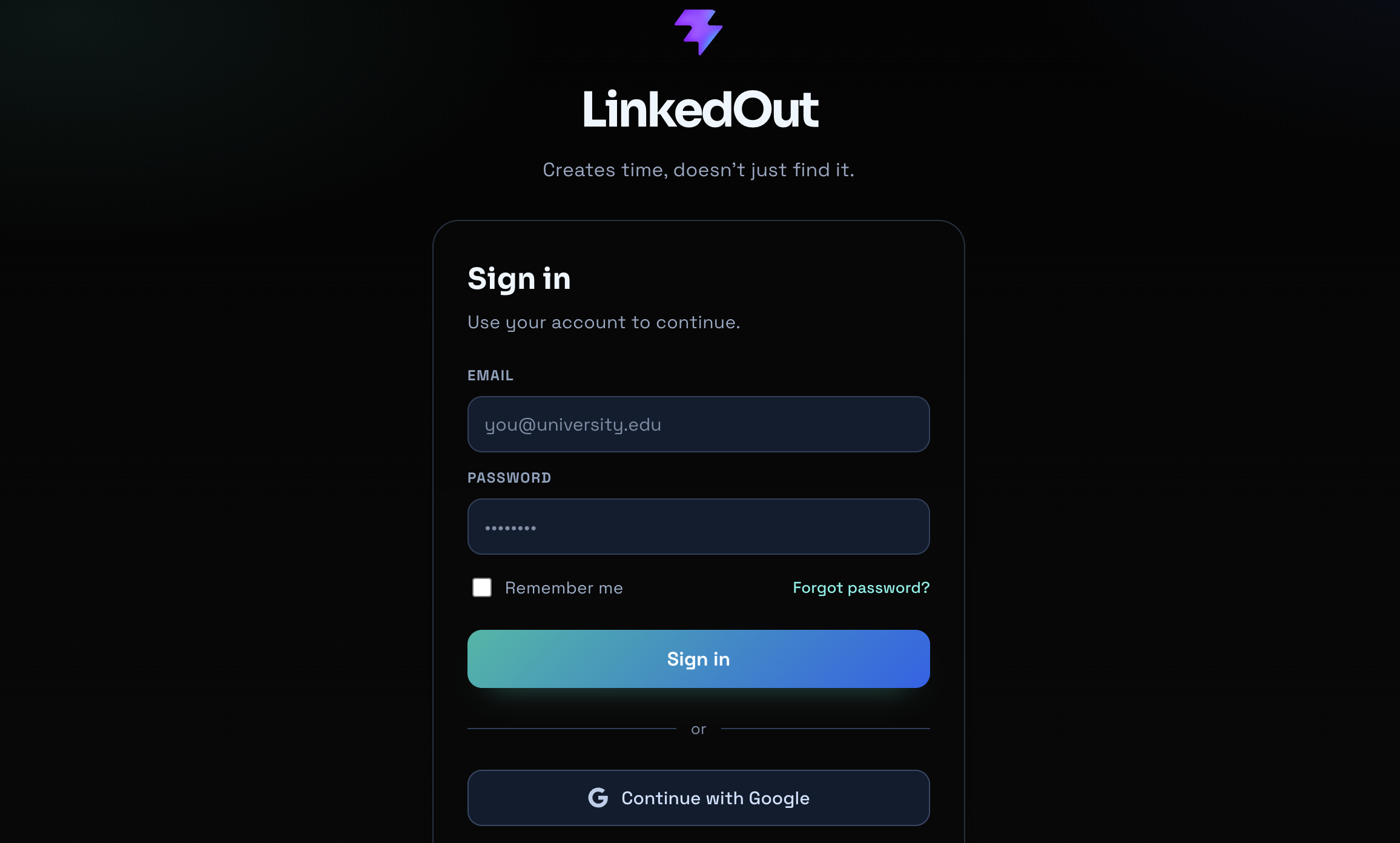
Sign-In
-
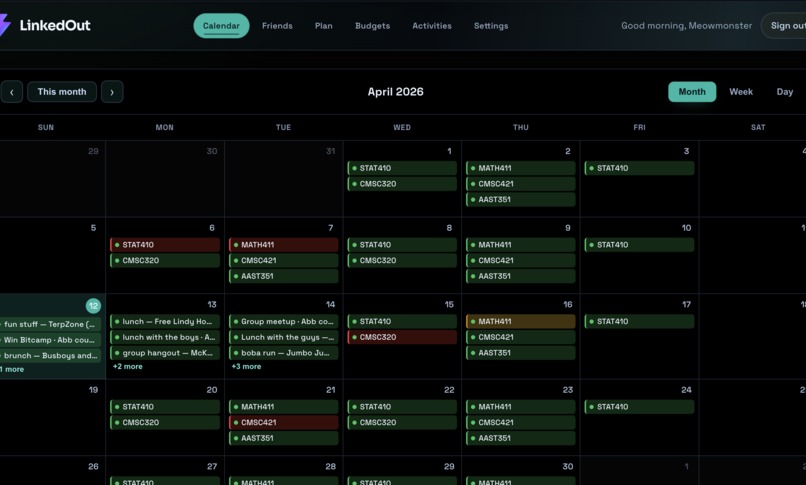
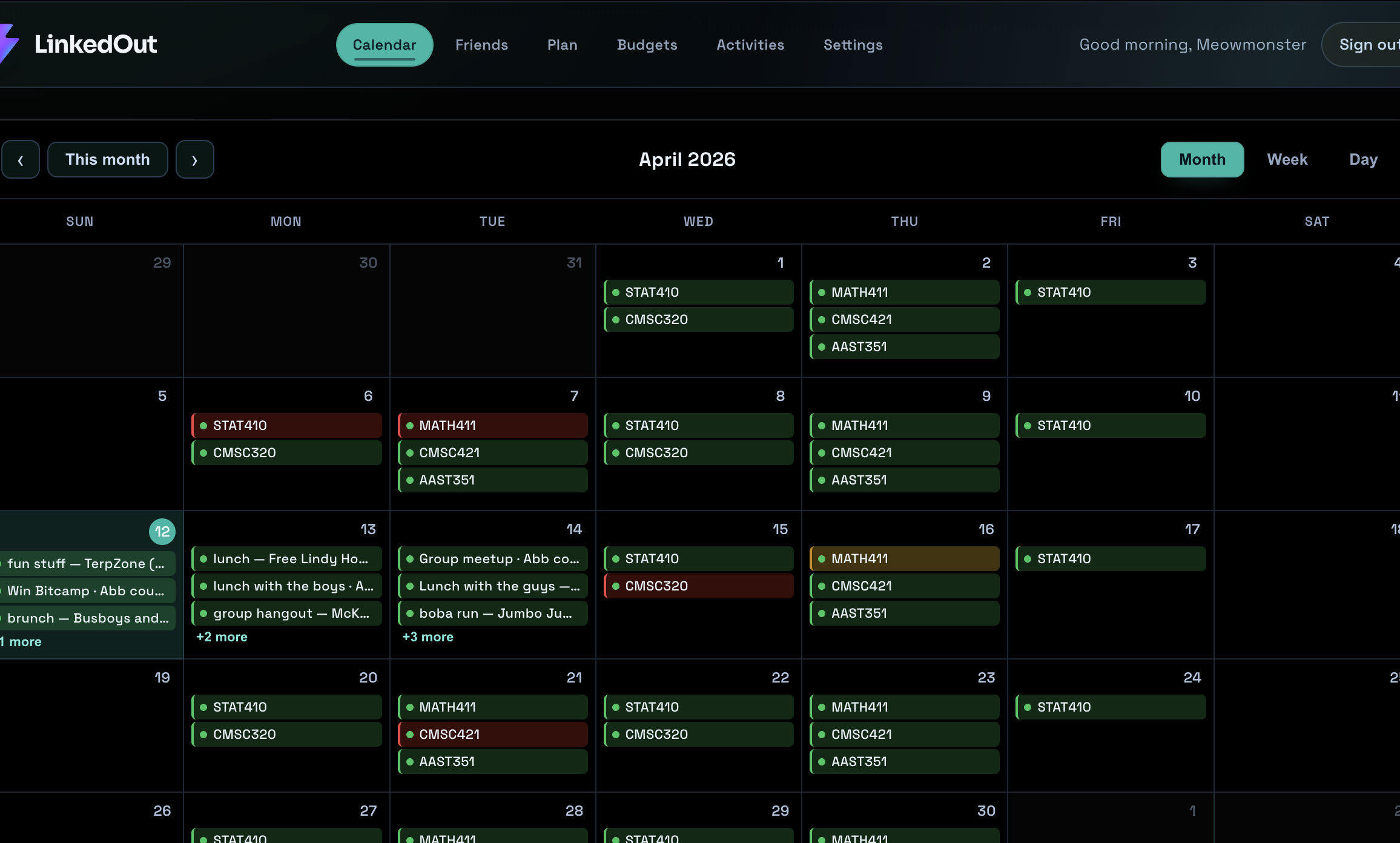
Dashboard Monthly View w/ Priority Levels
-
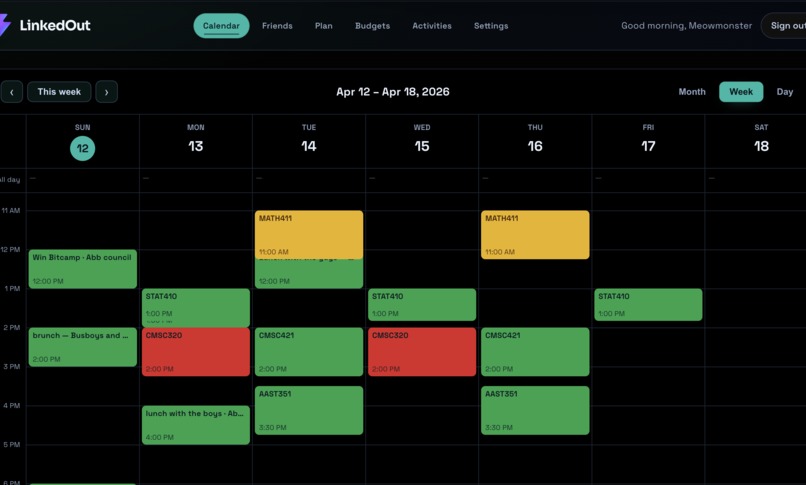
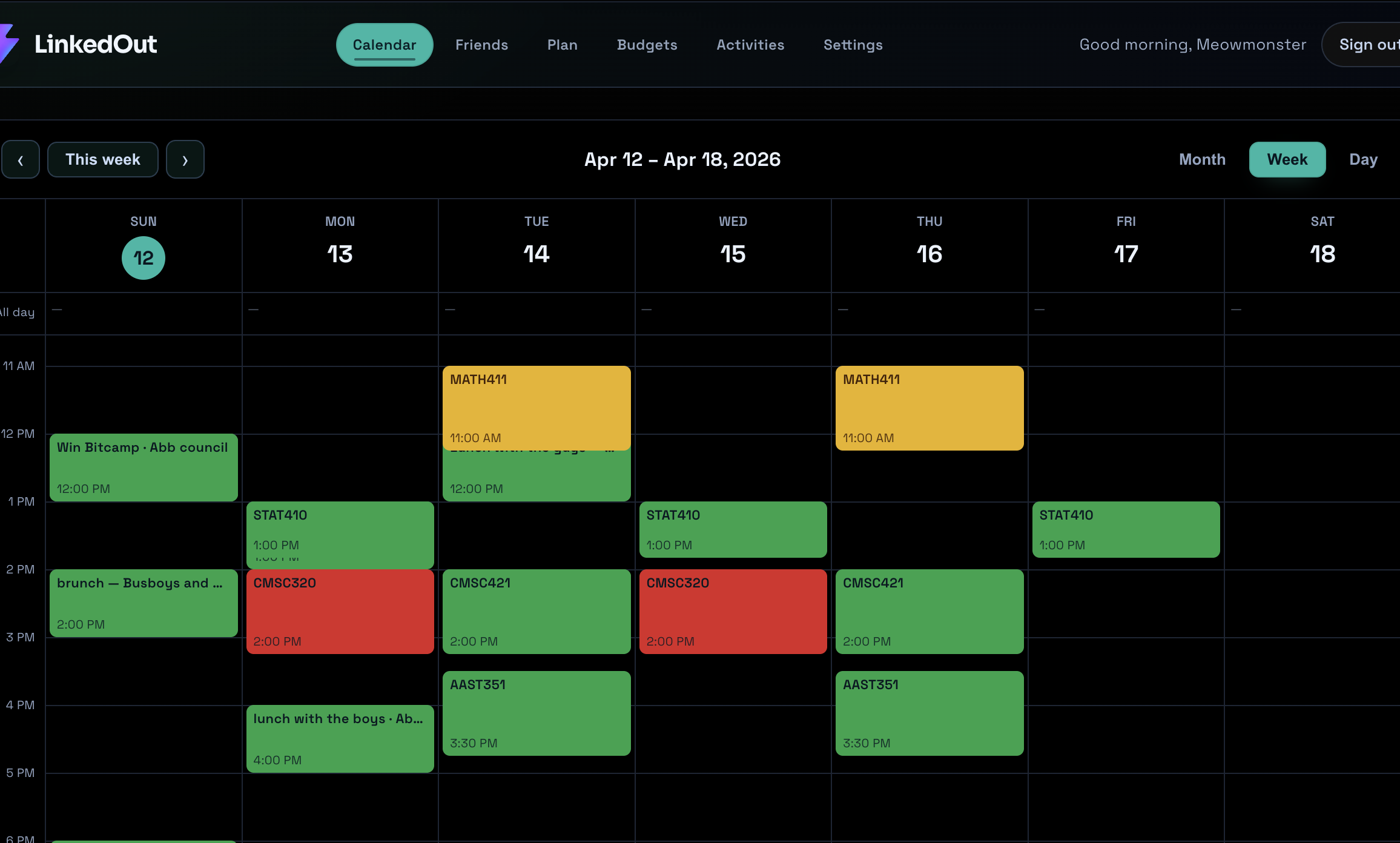
Dashboard Weekly View w/ Priority Levels
-
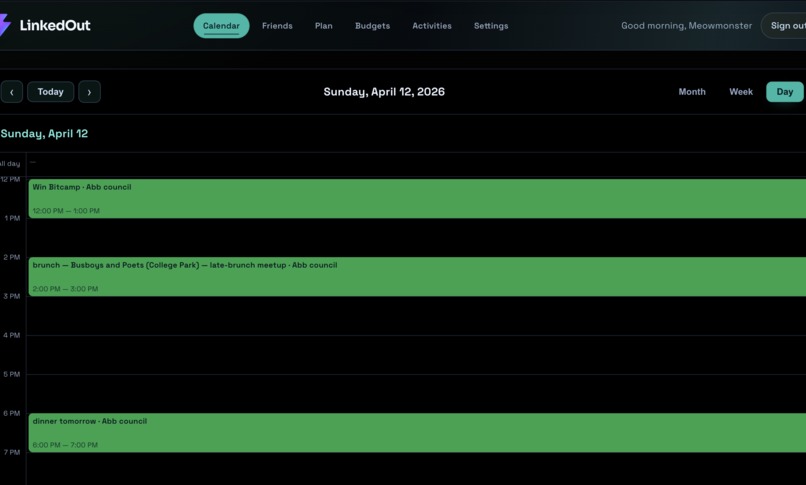
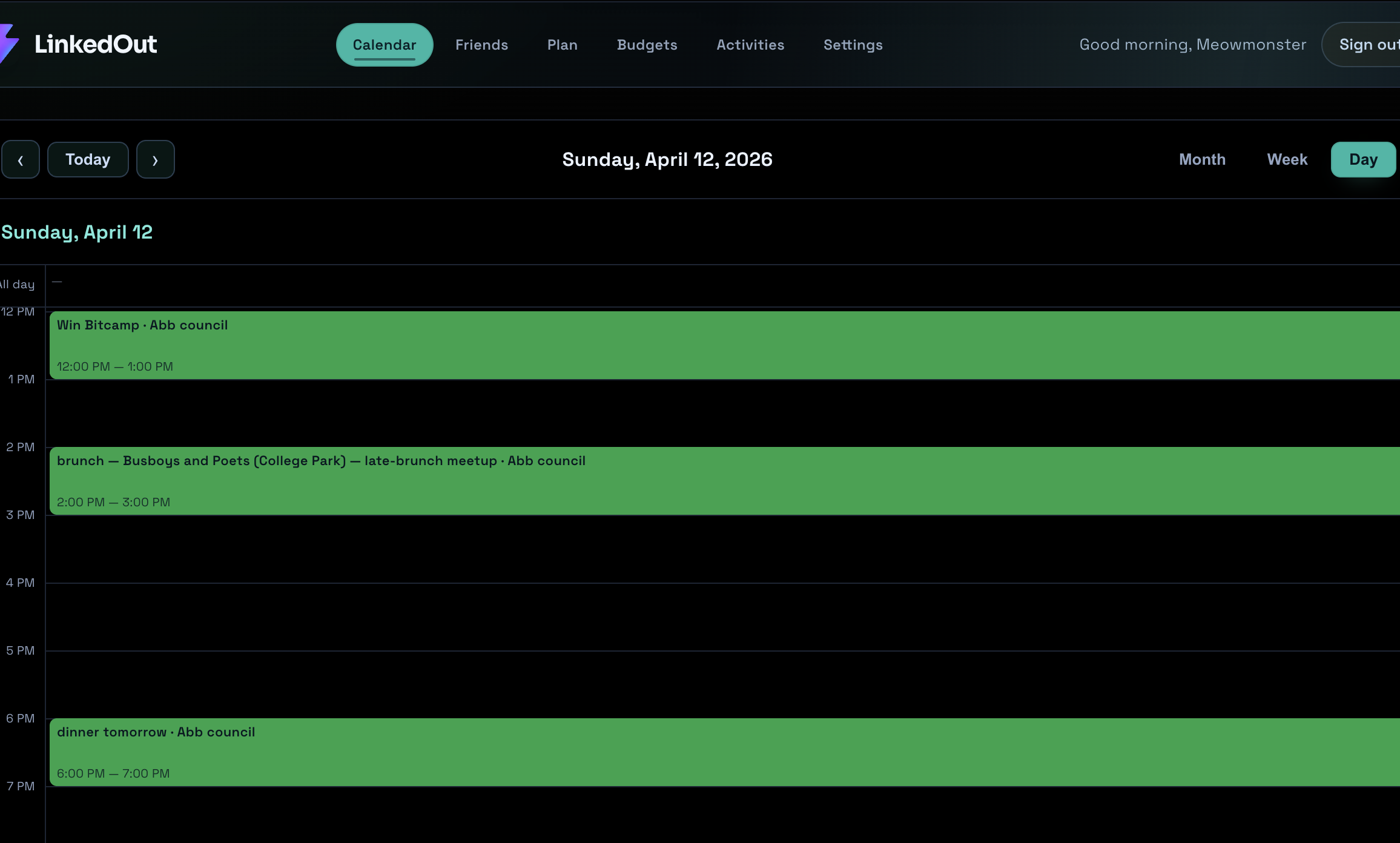
Dashboard Daily View
-
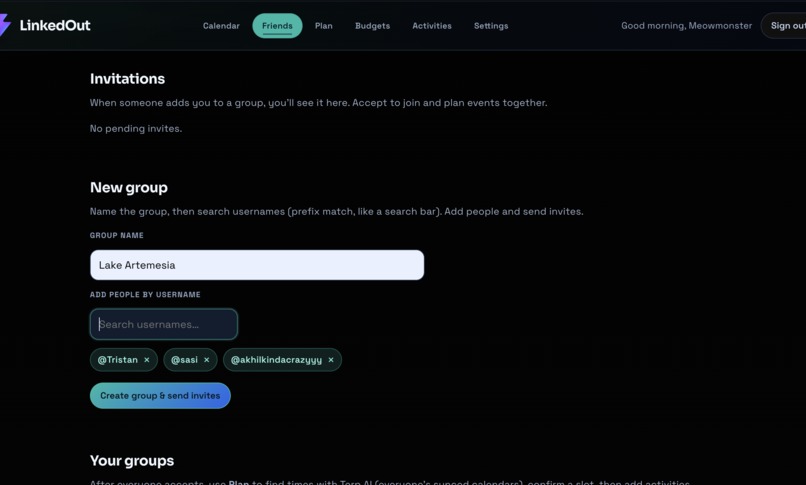
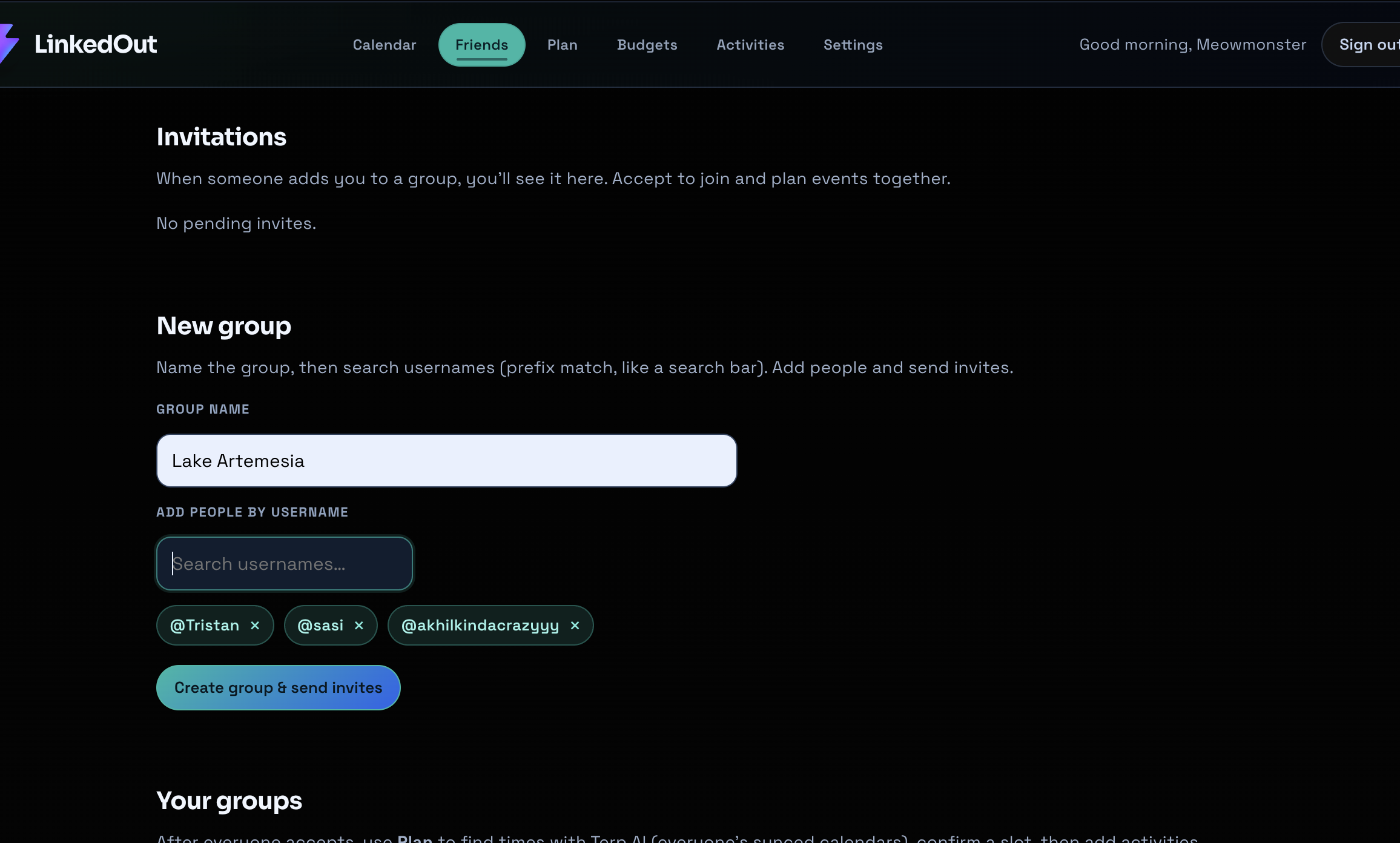
Group Selection from Friends
-
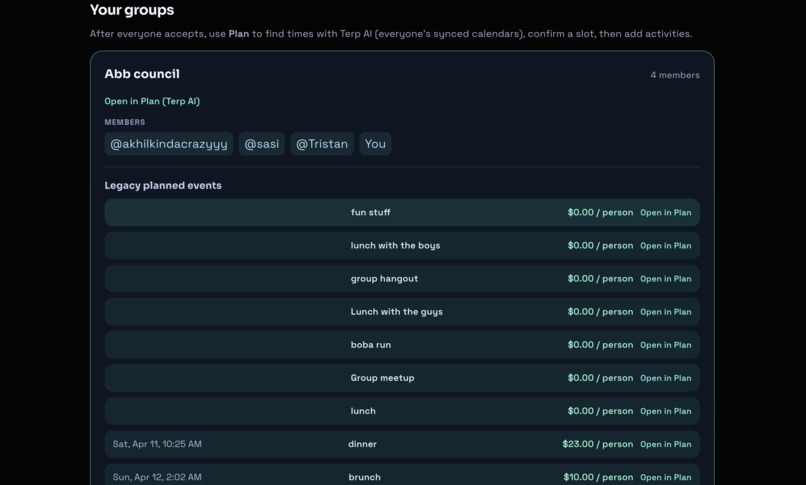
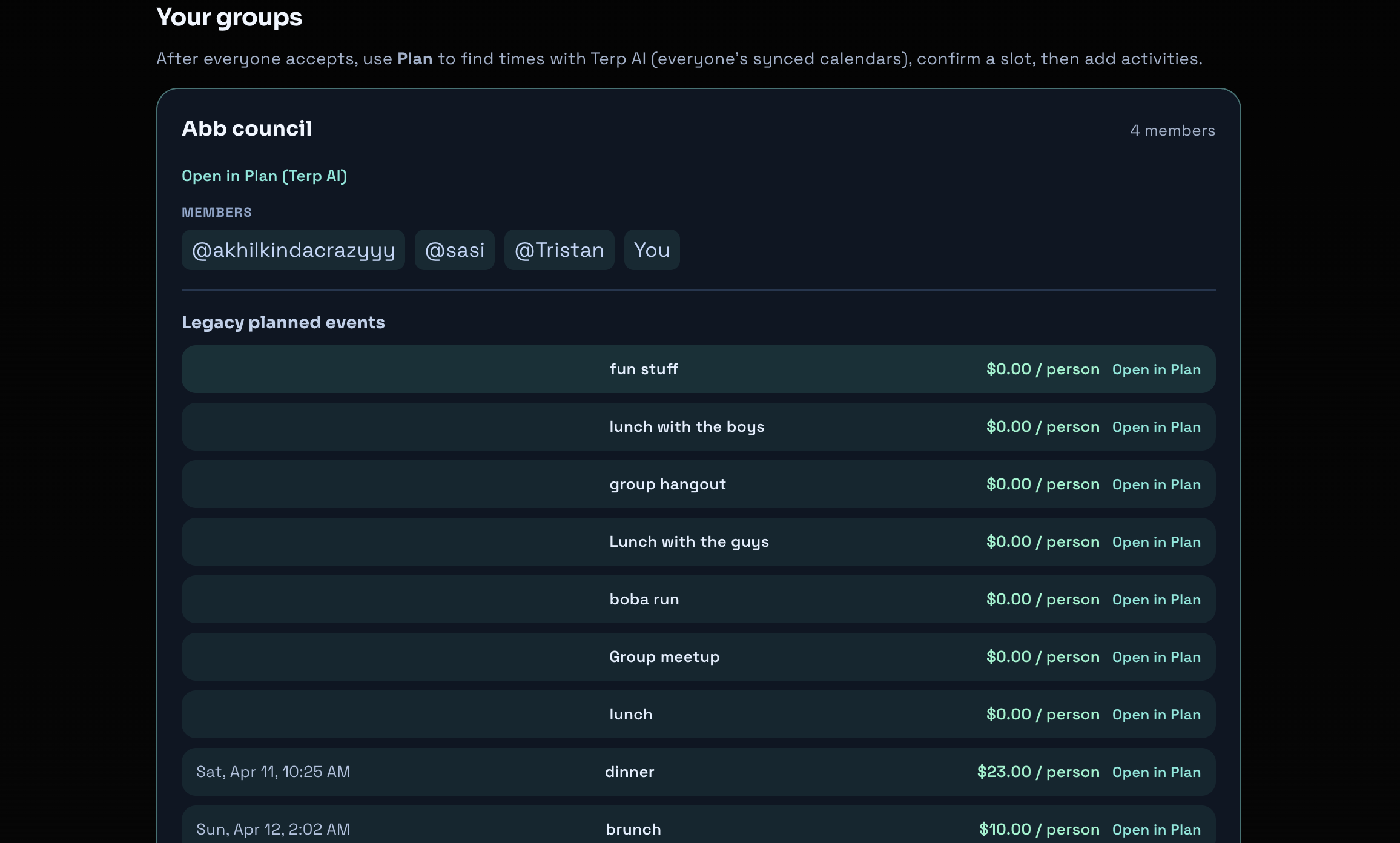
Example Group
-
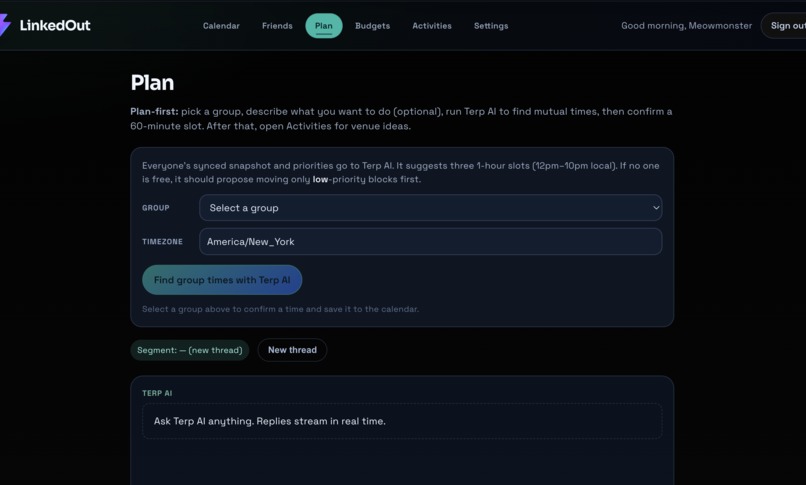
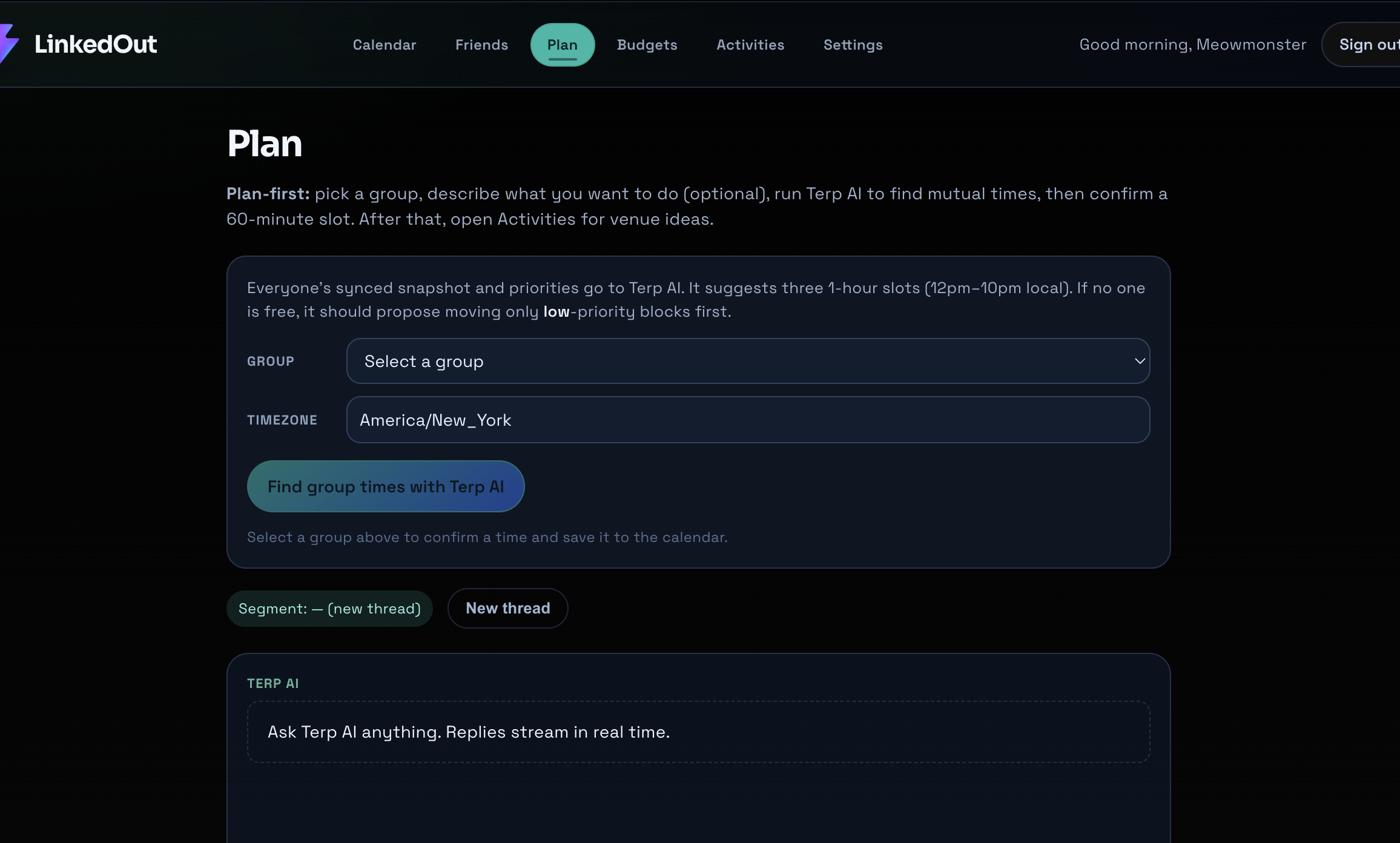
TerpAI Finding Group Times
-
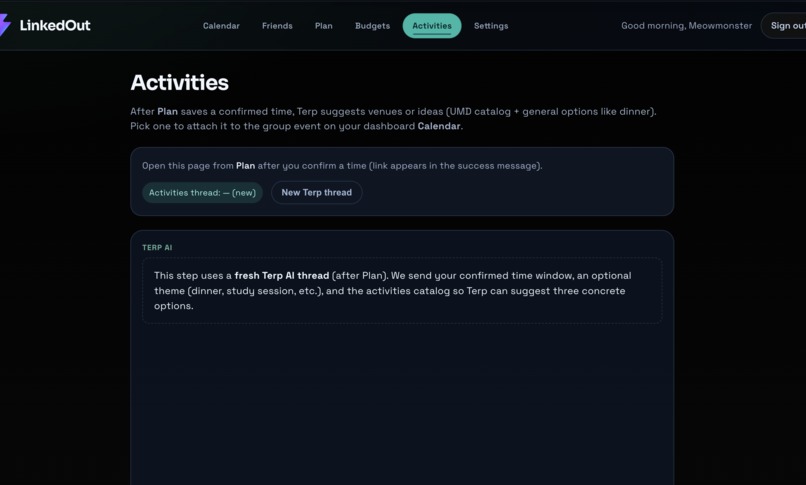
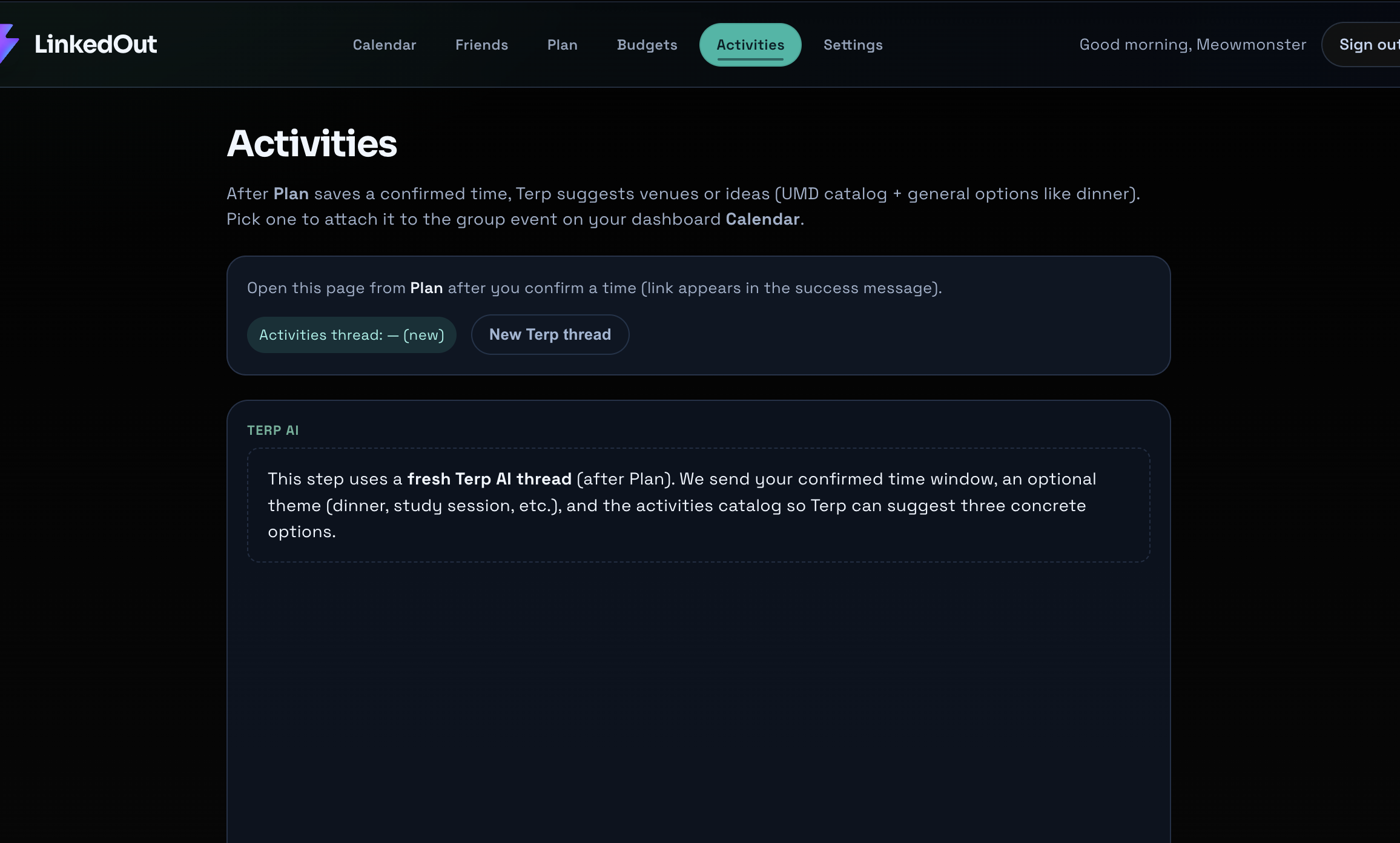
TerpAI Finding Group Activities from UMD Catalogue
-
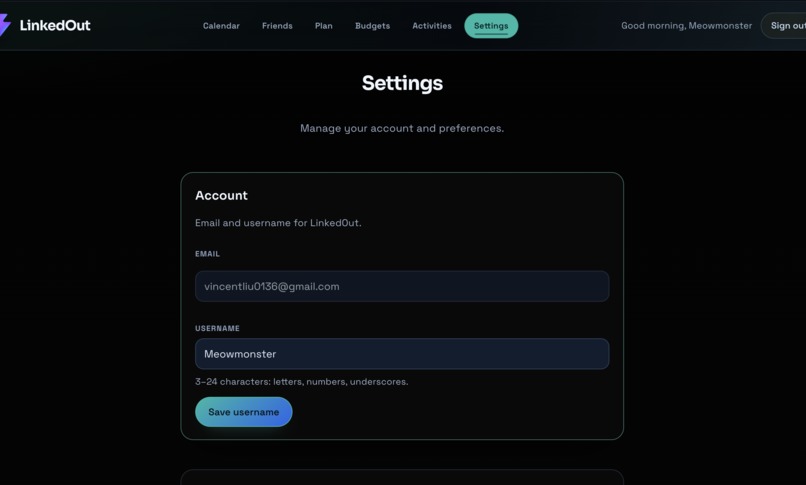
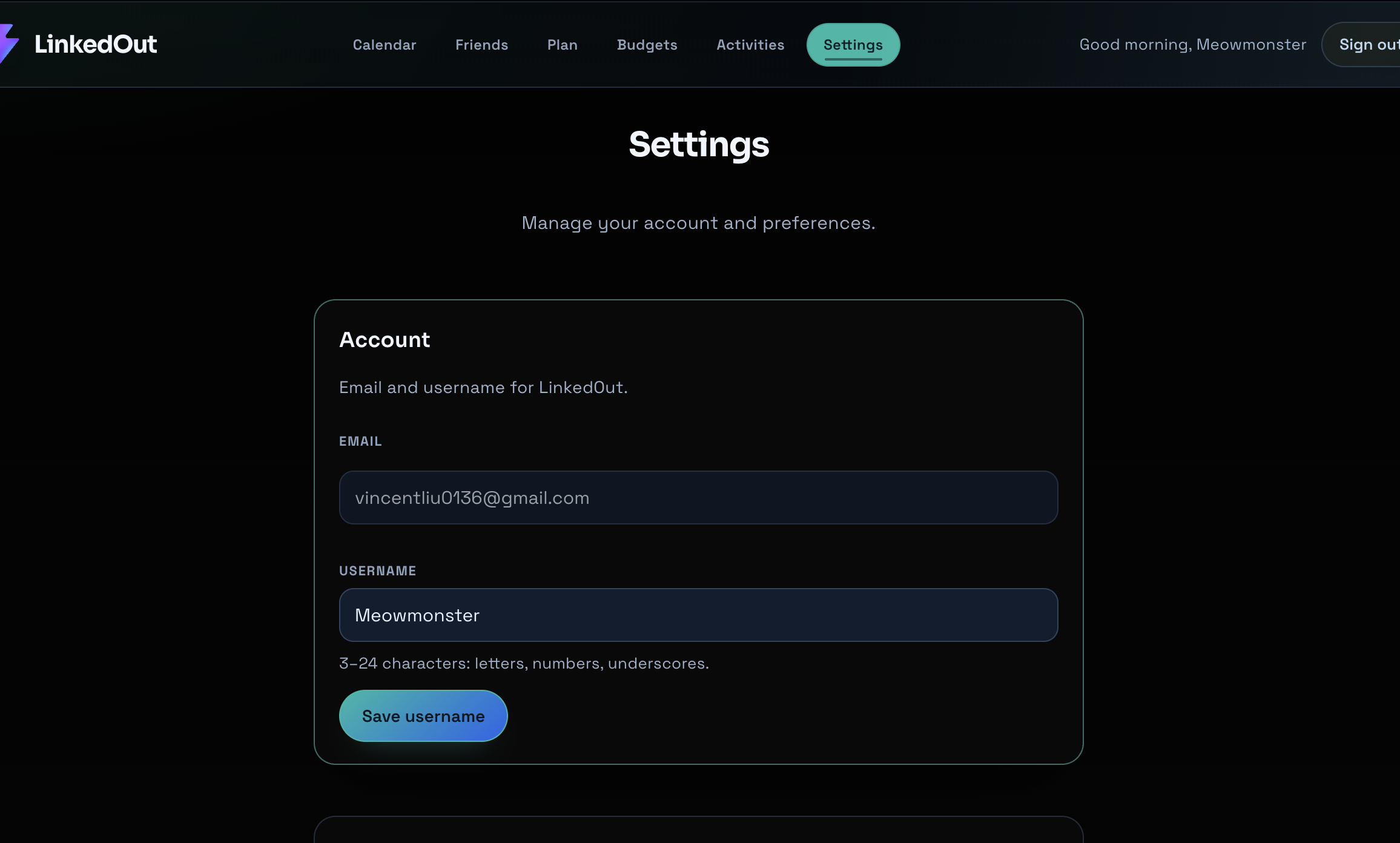
Account Settings
-
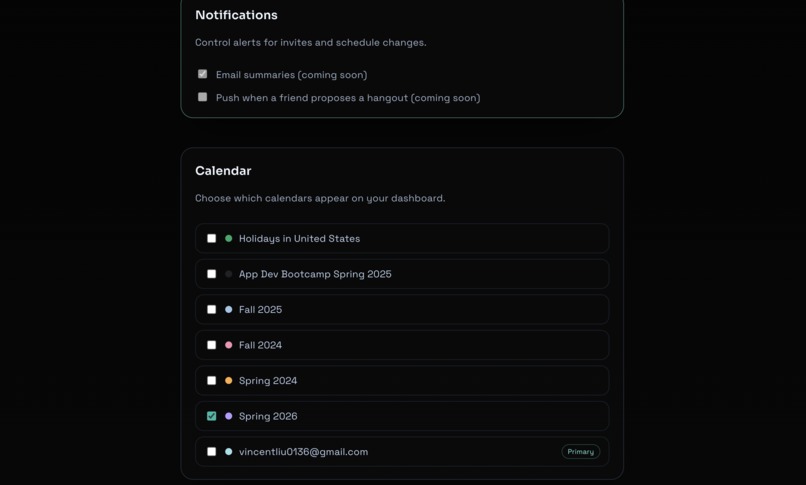
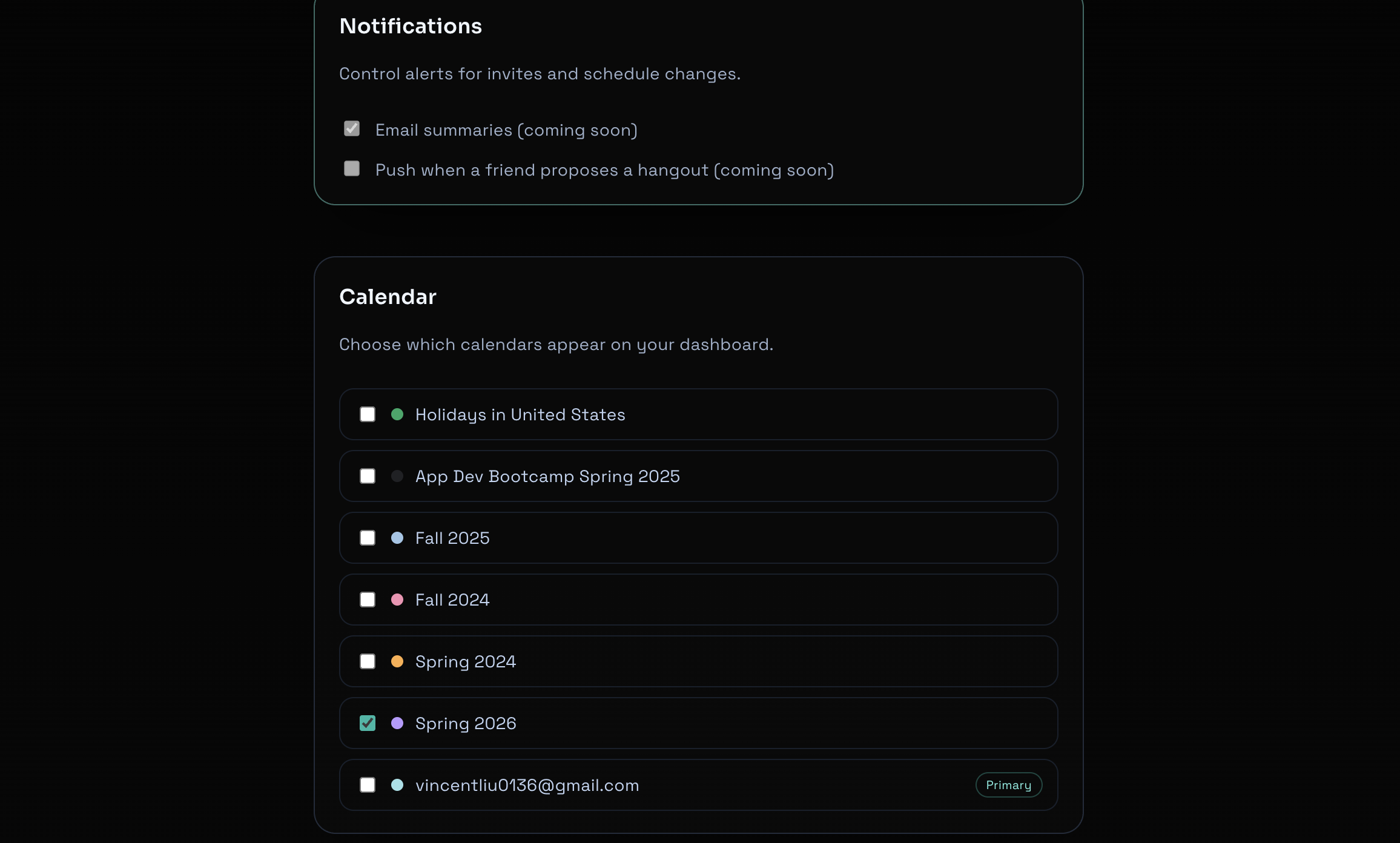
Google Calendar Settings (Can Change Preferences)
🧠 Inspiration
Group plans shouldn't be this hard. But on college campuses everyone's busy, schedules don't line up, and plans never make it out of the group chat. Between classes, assignments, clubs, and part-time jobs, coordinating valuable time with friends is surprisingly difficult. The problem isn't a lack of intent: rather, it's a lack of coordination. But what if an agent could handle it for you? What if that agent could consider factors of time and budget to deliver a perfect hang out? That's why we built LinkedOut. LinkedIn keeps you busy. LinkedOut gets you out.
⚡ What it does
At its core, LinkedOut is an autonomous, multi-user social planning agent that connects to your Google Calendar, analyzes your group’s availability, considers budget constraints, and surfaces relevant UMD campus activities to create plans that wouldn’t have existed otherwise. No more waiting for people to return from their mysterious activities to find a plan.
Instead of waiting on group chats, LinkedOut
- Detect or create overlapping availability
- Suggest a concrete plan. Examples include dinner with friends or a study sesh
- Adjust low-priority events if needed
- Coordinates across multiple people
- Locks the plan into everyone's calendar
- Even out the costs and suggest events based on everyone's budget.
It turns the plan from potential into reality.
🛠️ How we built it
We built out LinkedOut using...
- React for frontend interface
- Node.js for backend and agent logic
- Firebase for database and authentication (via Google)
- Google Calendar API + Google OAuth for real-time schedule access and mutation
At it's core, we have agents that:
- Normalize calendar data in Google Calendar into a unified format
- Detect and resolve scheduling conflicts by identifying overlaps and proposing optimal adjustments
- Surface relevant UMD events by integrating with the official University of Maryland events feed
- Generate optimized group plans that account for everyone’s availability and preferences
- Execute scheduling actions by writing finalized events back to each participant’s calendar automatically
🚧 Challenges we ran into
TerpAI does not expose a public API, so we inspected its network request patterns, captured authenticated requests (Bearer tokens, cookies, headers), and recreated those requests on our backend. This effectively created a programmatic interface layer, allowing our agent to query TerpAI dynamically and incorporate real-time activity recommendations into the planning pipeline. Additional challenges included: -Handling edge cases in multi-user scheduling -Maintaining consistency across distributed calendar updates -Managing scope by prioritizing core features over others
🏆 Accomplishments that we're proud of
Instead of building a system that suggests plans, we actually created and execute them. It implements schedule shifting to unlock time, and we designed something thats both real and usable. It solves a canonical problem that almost everybody has had before with plans not making it out the group chat, and results in a time where everyone can hangout -- with LinkedOut!
🧠 What we learned
The biggest problems on campus are often coordination and behavior, not lack of tools. When we focus on one problem in particular and one powerful capability, it's more impactful than many features. Agentic systems are about actions and outcomes, not just insights. When we integrate real data (like Google Calendar data) it makes our projects instantly feel practical and useful.
🚀 What's next for LinkedOut
- Learn group preferences (e.g. preferred activities and times)
- Improving activity suggestions using real-time local data
- Enabling a passive "auto mode" where the agent proactively creates plans Essentially, we would want to make social life on campus effortless, even with packed schedules.


Log in or sign up for Devpost to join the conversation.