-
-
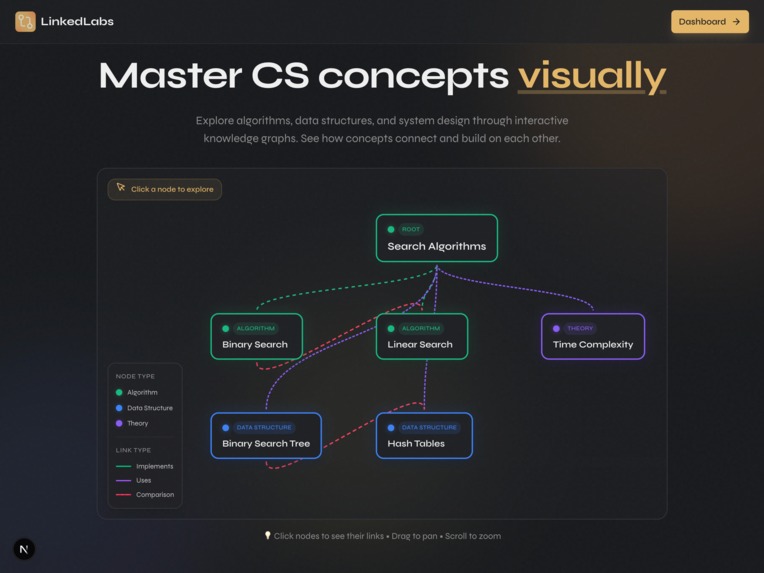
Landing Page
-
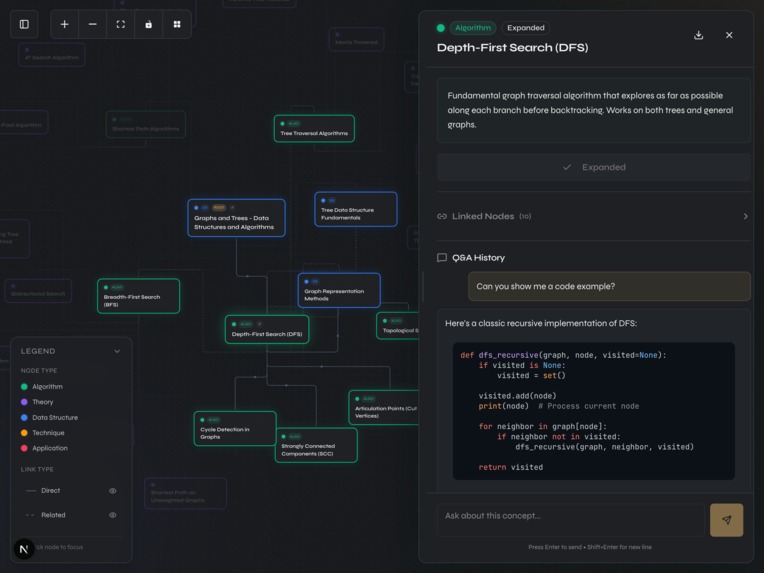
Topic Exploration
-
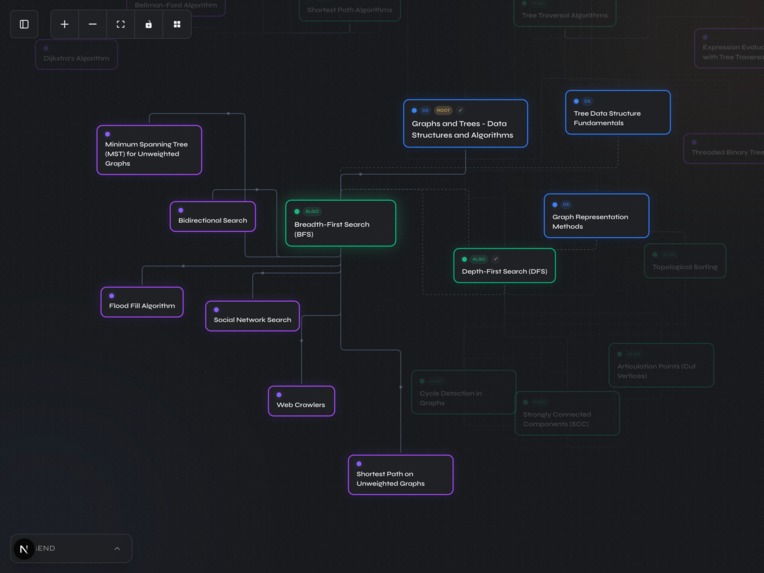
Concept Map
Inspiration
As a CS student, I've experienced the frustration of learning new concepts in isolation—studying algorithms without understanding how they connect to data structures, or learning design patterns without seeing their real-world applications. Traditional learning resources present information linearly, but knowledge isn't linear. I wanted to create a tool that mirrors how experts actually think about CS concepts: as an interconnected web of ideas that build on each other. LinkedLabs was born from the desire to help students "go down the rabbit hole" of learning, discovering connections they never knew existed.
What it does
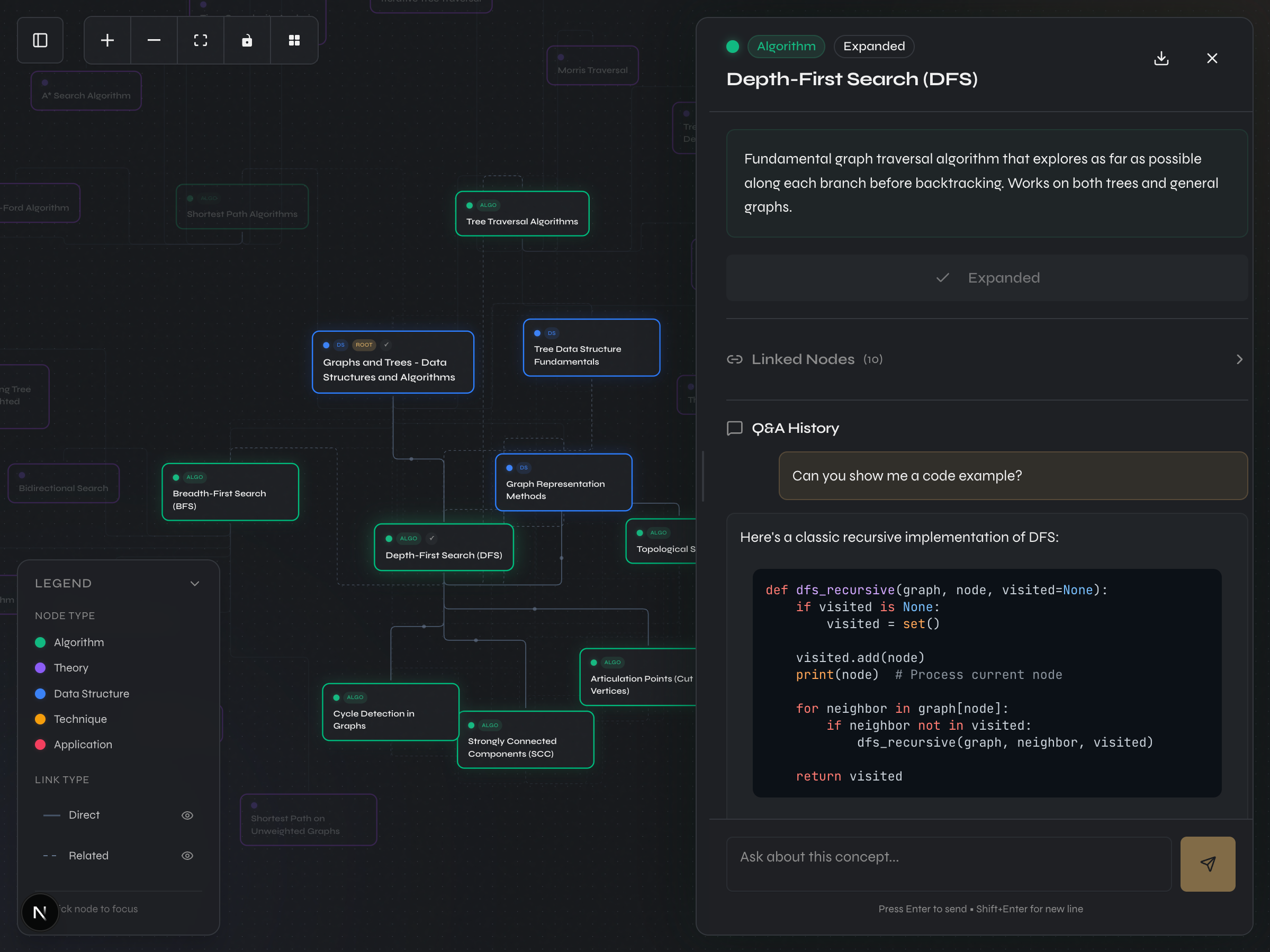
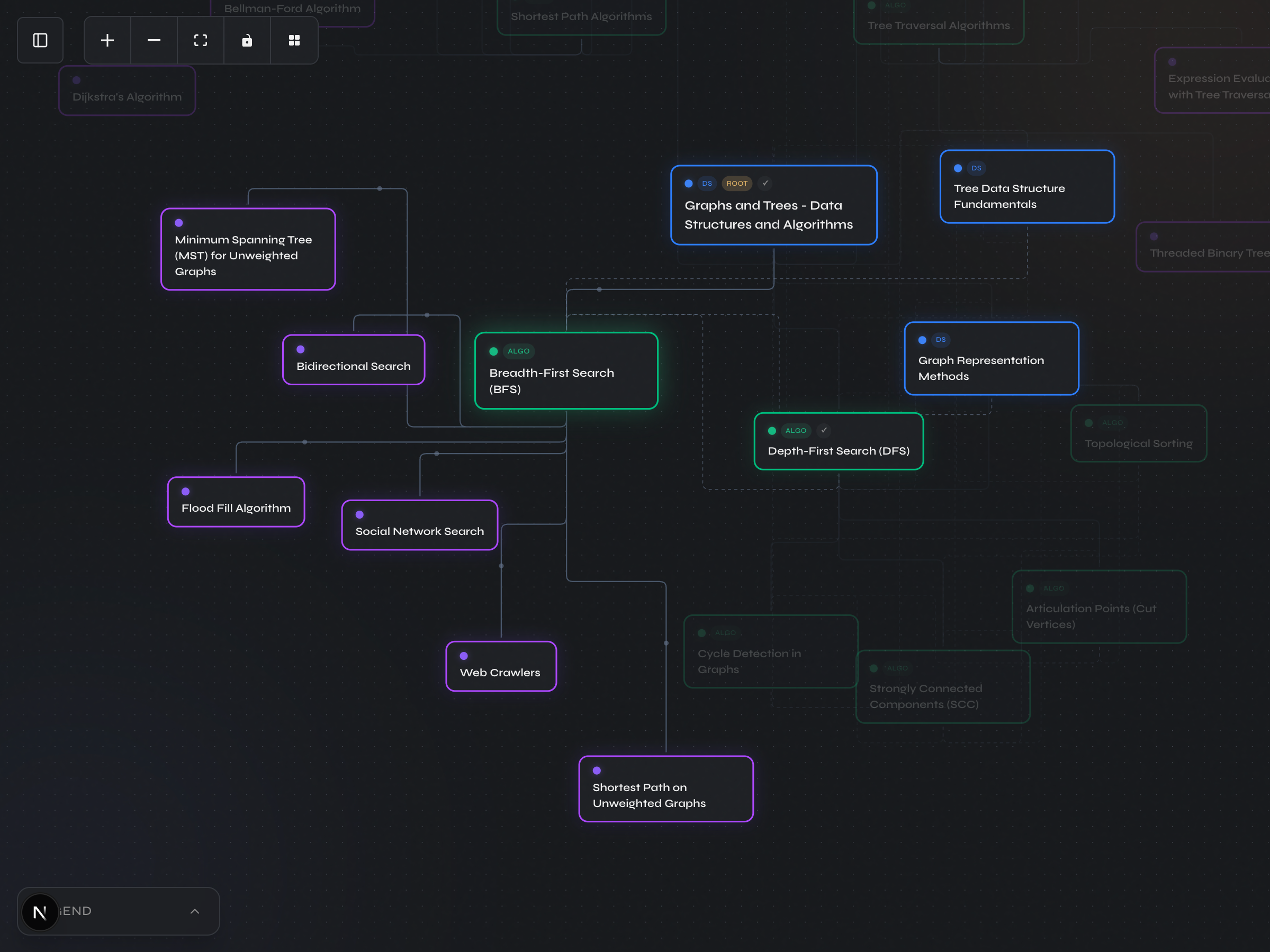
LinkedLabs is an AI-powered research visualization tool that generates dynamic, interactive concept maps for educational exploration. Users enter any CS topic—like "Machine Learning" or "Compiler Design"—and the AI generates a comprehensive knowledge graph showing related concepts, their relationships, and how they connect.
Key features include:
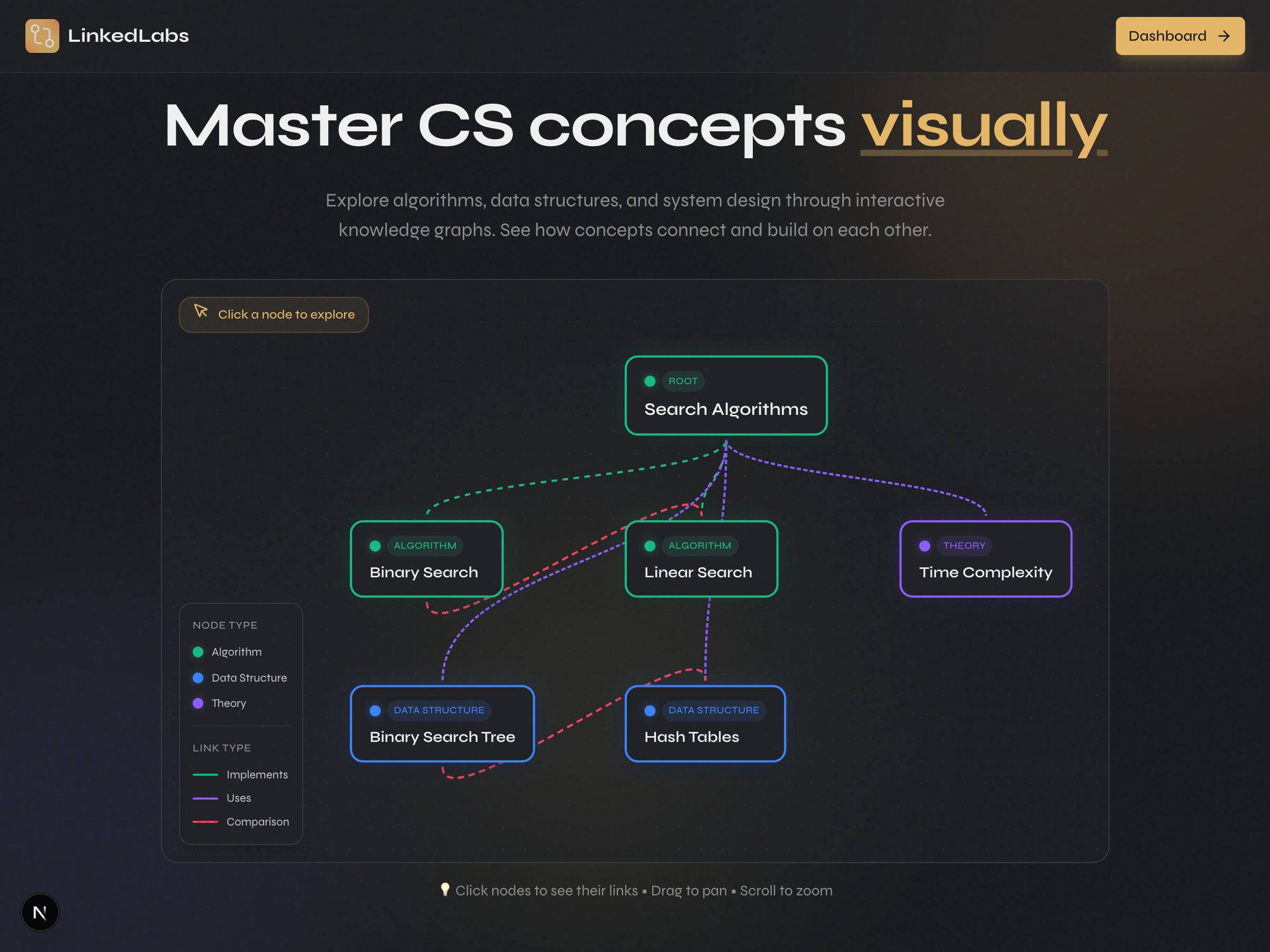
- Interactive concept maps with color-coded nodes by type (Algorithm, Data Structure, Theory, Technique, Application)
- Different relationship types visualized through link styles (Direct connections, Related concepts)
- Deep-dive panels for each node with AI-generated explanations and code examples
- Q&A functionality allowing users to ask questions about any concept directly within the interface
- Multiple research categories (Algorithms, Systems, Theory, Development, General)
- Persistent maps that users can save and revisit
How I built it
I built LinkedLabs using a modern web stack with AI at its core:
- Frontend: Next.js with React for the interactive UI
- Visualization: Custom graph rendering with animated connections and interactive nodes
- AI Backend: Google Gemini API for generating concept relationships, explanations, and code examples
- Styling: Tailwind CSS for a sleek, dark-themed interface optimized for long study sessions
- Deployment: Vercel for seamless hosting and CI/CD
The AI pipeline takes a user's topic, determines relevant sub-concepts, classifies each by type, and identifies meaningful relationships between them—all rendered in real-time as an explorable graph.
Challenges I ran into
- Graph layout algorithms: Getting nodes to position themselves intelligently without overlapping while maintaining readable relationship lines was surprisingly complex
- AI response consistency: Ensuring Gemini returned structured, parseable data for graph generation required careful prompt engineering
- Real-time interactivity: Balancing smooth animations with the computational cost of rendering many connected nodes
- Information hierarchy: Deciding what information to show at a glance vs. on click to avoid overwhelming users
- Solo time management: Building a full-featured product alone in 36 hours meant making tough prioritization calls
Accomplishments that I'm proud of
- Built a genuinely useful learning tool that I'll actually use myself—as a solo developer in a single weekend
- Created a polished, professional UI that feels like a real product
- Successfully integrated AI in a way that enhances rather than replaces the learning experience
- Implemented the Q&A feature with contextual code examples that actually help understanding
- The visual design with animated dashed connections and the color-coded node system
What I learned
- Advanced prompt engineering techniques for getting structured output from LLMs
- Graph visualization principles and force-directed layout algorithms
- How to balance AI generation speed with user experience expectations
- The importance of visual hierarchy in educational interfaces
- Working with the Gemini API and its capabilities for educational content generation
- How much a solo developer can accomplish with focus and good tooling
What's next for LinkedLabs
- Collaborative maps: Allow study groups to explore and annotate maps together in real-time
- Learning paths: AI-suggested sequences for learning concepts in optimal order
- Progress tracking: Mark concepts as "learned" and track mastery over time
- Export functionality: Generate study guides and flashcards from maps
- Expanded domains: Extend beyond CS to mathematics, physics, and other interconnected fields
- Spaced repetition: Integrate with the Q&A feature to help users retain what they learn
Built With
- auth0
- bun
- framer
- gemini
- neon
- nextjs
- tailwindcss
- vercel


Log in or sign up for Devpost to join the conversation.