Inspiration
Before I adopt a new technique, I read about it: engineering blogs on how teams use coding agents, docs, issues and comparisons. Then I want my coding agent to build with what I read. Today that means pasting links or rereading pages to brief it, and the agent gets a pile of text, not what the pages say about each other. I wanted to build that knowledge as easily as bookmarking a page, ask it questions myself, and hand the same knowledge to my agent.
What it does
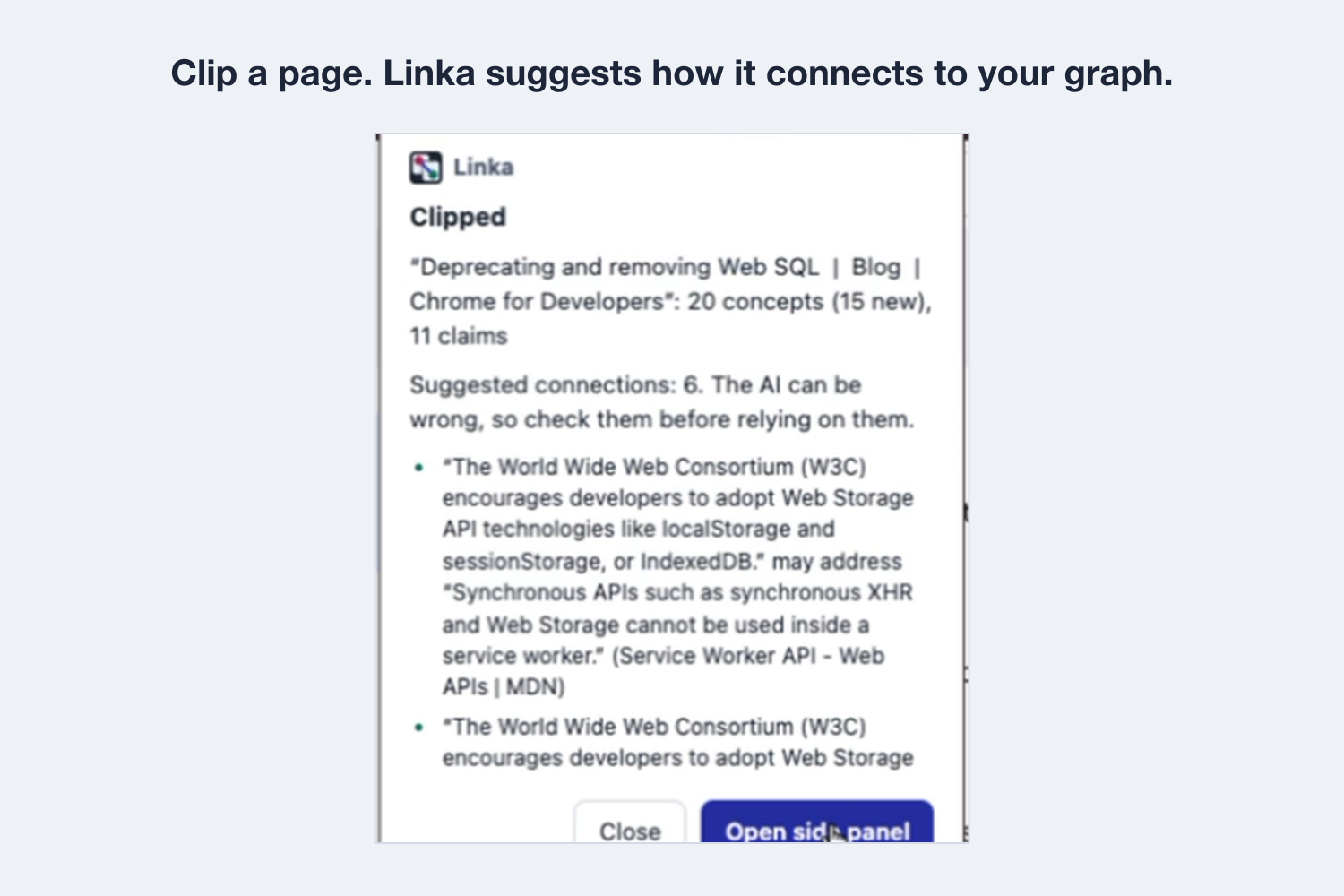
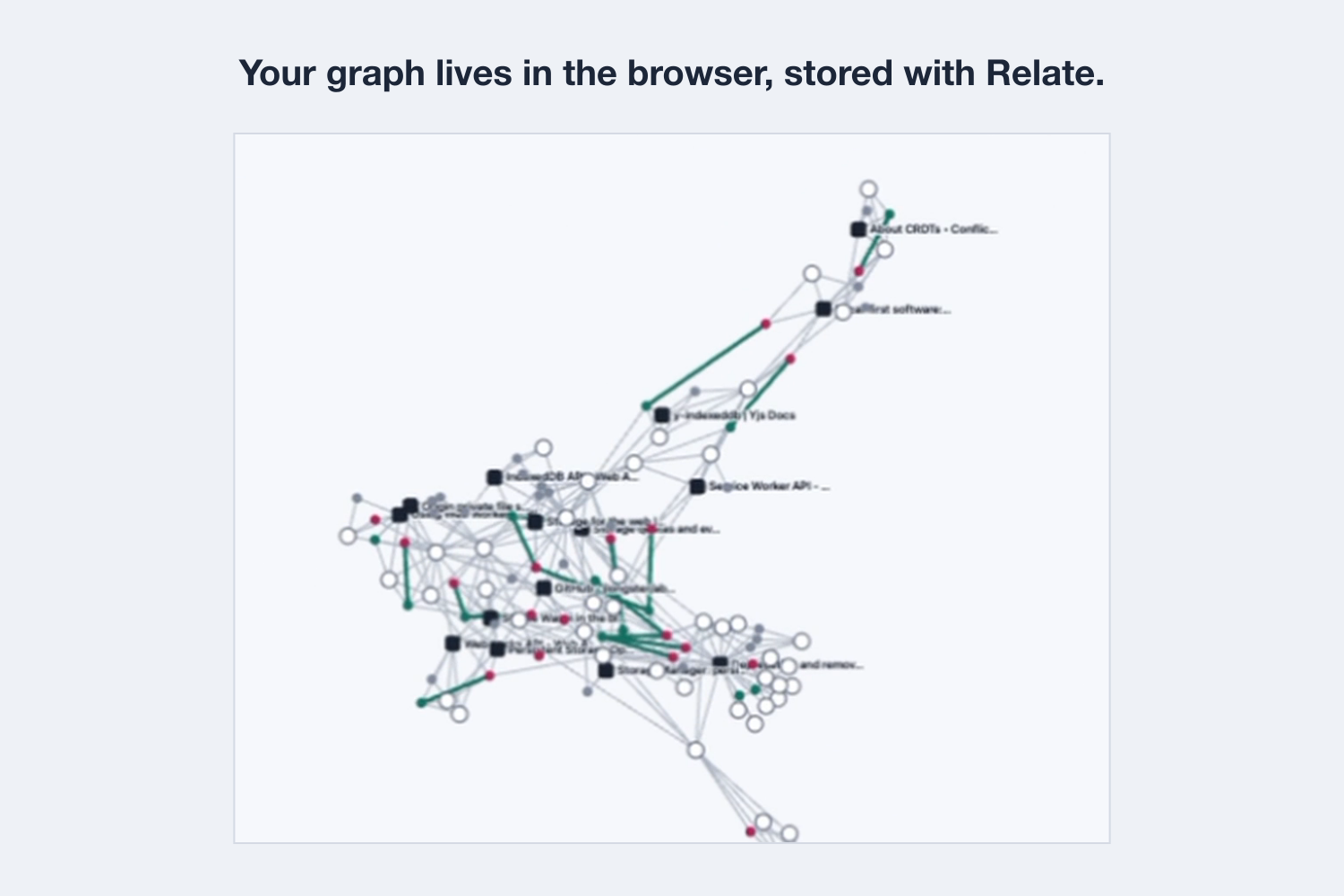
Linka is a Chrome extension. Click its icon on an article, doc or issue, and Gemini Nano, running on your device, extracts the page's summary, concepts, authors and claims: concerns, solutions, benefits and facts. Linka writes them into a Relate graph inside the browser (Relate Wasm persisted to OPFS).
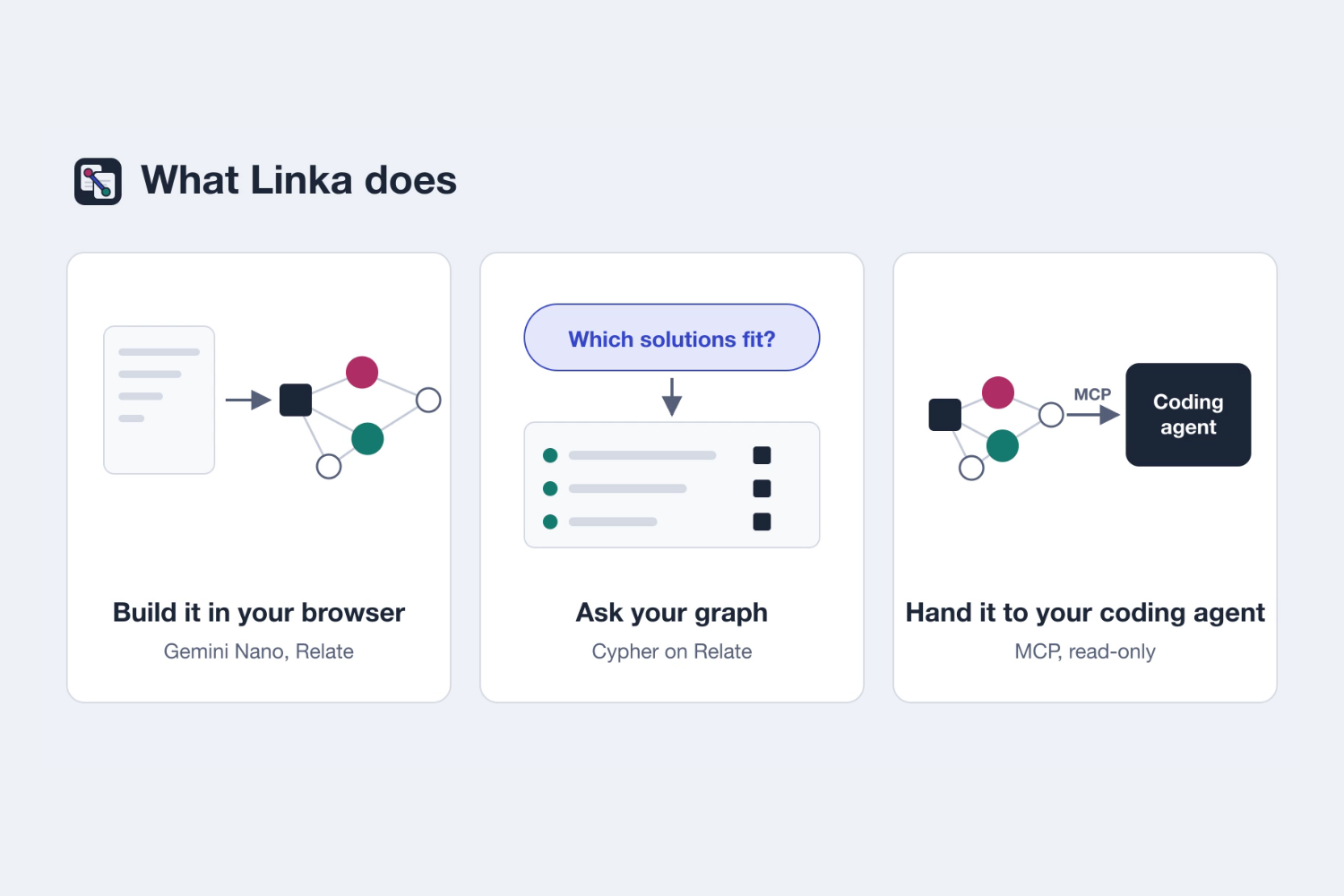
- Build it in your browser. Pages connect through shared concepts. When a page proposes a solution to a concern raised on another page, Linka asks Gemini Nano whether it addresses it and links the two claims with
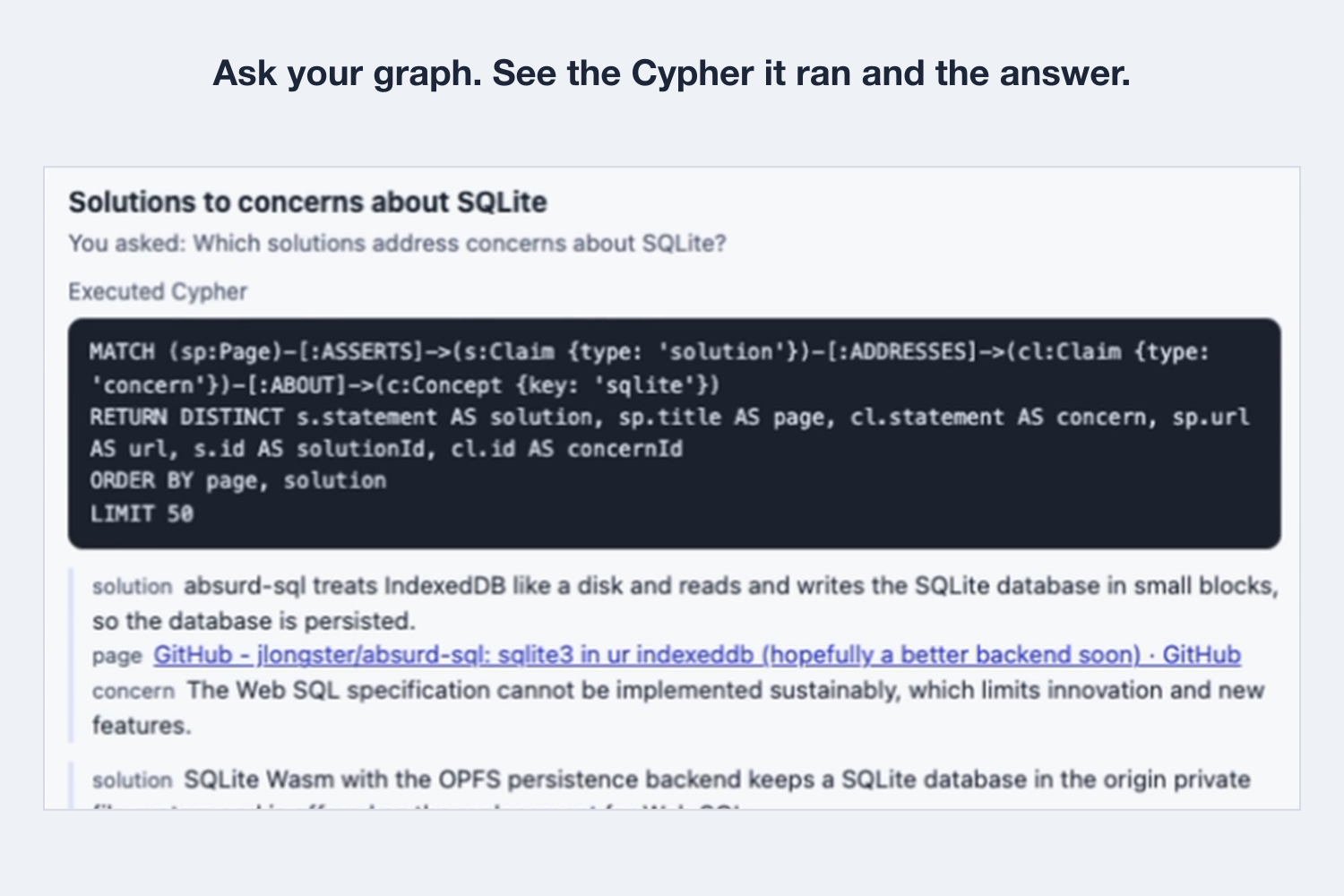
ADDRESSES. These show up as suggested connections, because a small on-device model can be wrong. - Ask your graph. In the side panel, ask a question such as "Which solutions address concerns about offline support?". Linka runs a Cypher query on Relate, shows the query, and highlights the answer in the graph.
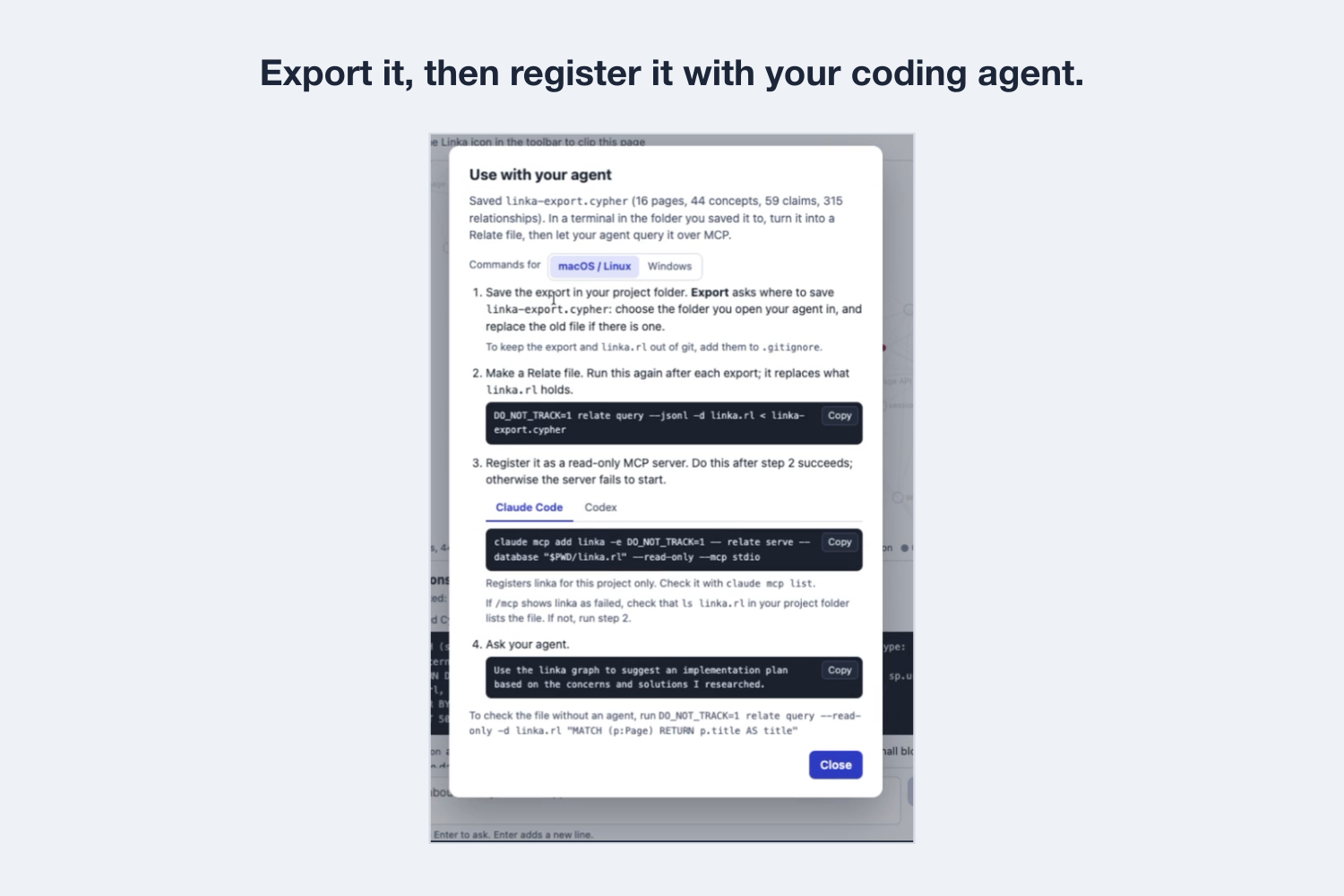
- Hand it to your coding agent. Export the graph, turn it into a single-file Relate store with the Relate CLI, and register
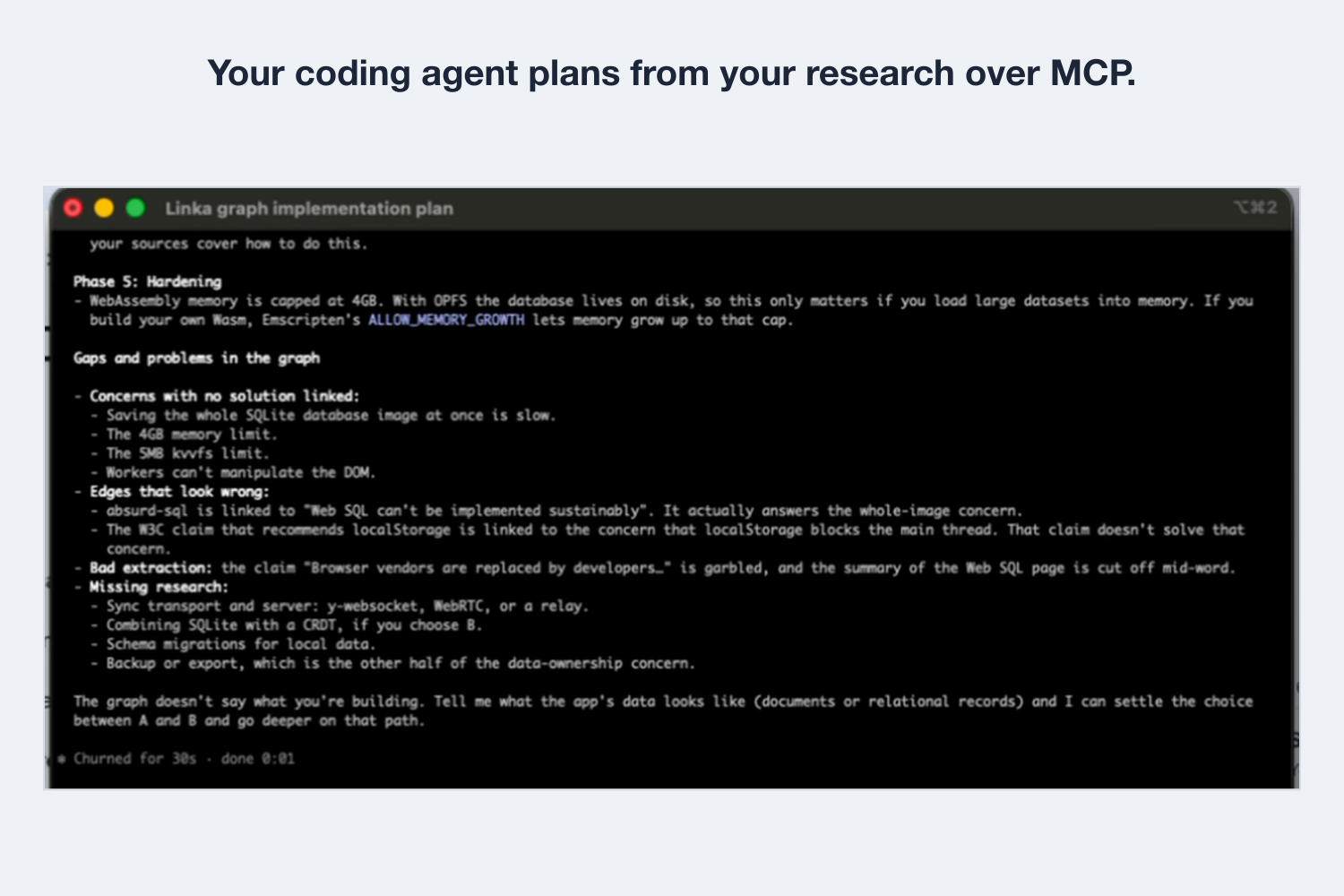
relate serve --read-only --mcp stdiowith Claude Code or Codex. Your agent then plans with the concerns and solutions you collected.
Nothing leaves your device: extraction and questions run on Gemini Nano, and there is no server. Linka starts with an empty graph and stores only the pages you clip. A demo graph of 15 research pages ships as data/linka.rl, so you can inspect a persisted Relate store with the CLI without installing anything in Chrome.
How we built it
- Relate in the browser. Relate Wasm 1.0.1 persists only to OPFS, and only from a dedicated worker. A service worker cannot start one, so an MV3 offscreen document owns the store in a dedicated worker, and the popup and every side panel send it requests.
- Gemini Nano through the Prompt API, called from the offscreen document (the API is not available in workers). Extraction,
ADDRESSESjudging and picking a question type all useresponseConstraintwith JSON Schemas generated by zod. - Cypher built by the code, never by the model. Extraction results become parameterized
MERGEstatements. For questions, Gemini Nano only picks one of nine query kinds and its target. - The hand-off uses the Relate CLI (
relate query) to build the.rlstore and Relate's MCP server (relate serve --read-only --mcp stdio), so the agent sees onlyread_cypherandget_schema. - React, TypeScript, Vite, react-force-graph-2d, Mozilla Readability, Vitest and Biome. Many tests run against a real Relate database in Node. Developed with Claude Code and Gemini.
Challenges we ran into
- Letting a small model write Cypher did not work. When Gemini Nano wrote Cypher for 10 test questions, only 2 answers were right. I switched to having it choose a query kind and a target, and the code builds the query.
- Long pages. Reading about 30,000 characters in one prompt took longer than the 90-second timeout on slower machines, so pages are split into parts of about 8,000 characters.
- No transactions in Relate Wasm. A clip writes several statements, so Linka records how to undo them before writing and restores the graph if a write fails partway.
- Judging connections. On 21 labeled pairs, Gemini Nano's judgment agreed on 13. I tightened the instructions and kept the result honest in the UI: a solution may address a concern.
- Getting the agent set up across machines. A relative path to the store breaks when the agent starts in a subfolder, and Windows PowerShell 5.1 drops a bare
--, so the guide shows absolute paths and separate macOS / Linux and Windows commands.
Accomplishments that we're proud of
- The whole loop runs on your device: clip, connect, ask, and hand off to a coding agent, with no server and no API key.
- Cross-page
ADDRESSESlinks turn separate pages into a map of which page answers which concern, and both you and your agent can query it. - The graph you build in Chrome becomes MCP context for an agent with two commands, read-only.
What we learned
- A small on-device model is much more reliable at choosing between options than at writing code. Keeping the model to extraction and choices, and keeping Cypher in the code, made the results predictable.
- Relate runs the same Cypher in the browser (Wasm) and on the command line, so one export format serves both the extension and the agent.
What's next for Linka
- Removing a single page and correcting extracted claims
- An optional local model endpoint (such as Ollama) for machines where Gemini Nano is not available
- Better extraction for pages that are not in English
Built With
- biome
- chrome
- chrome-prompt-api
- claude-code
- cypher
- gemini-nano
- mcp
- mozilla-readability
- opfs
- react
- react-force-graph
- relate
- typescript
- vite
- vitest
- webassembly
- zod
