Inspiration
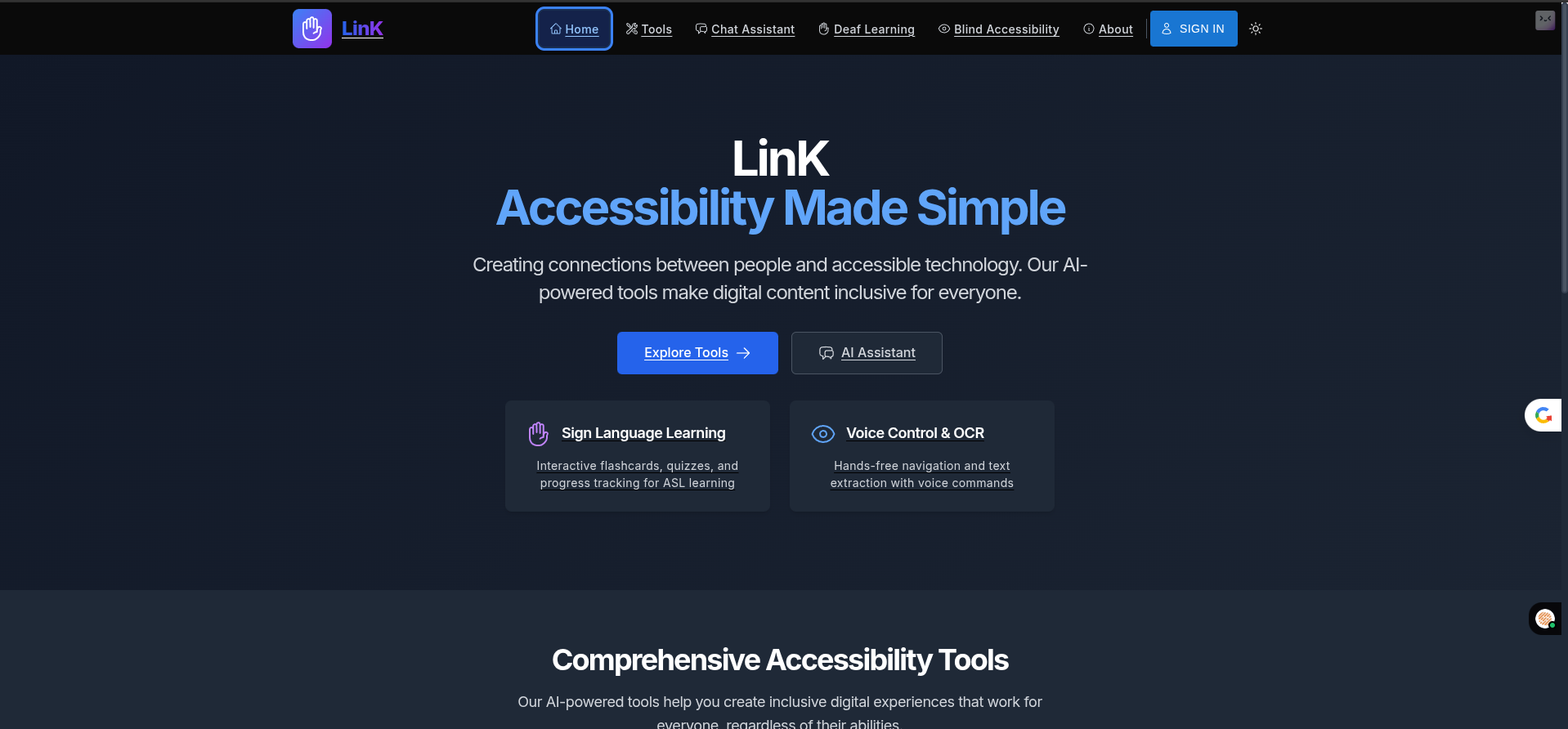
🚀 Inspiration We were inspired by a simple yet powerful idea: what if technology could become a true companion for the deaf and the blind — not just a tool? During our interactions with people from the deaf and blind communities, we realized how isolating it can be to access digital learning environments that aren't built with them in mind. We wanted to change that. We envisioned LinK as a compassionate and intelligent platform that adapts to the unique needs of each user.
What it does
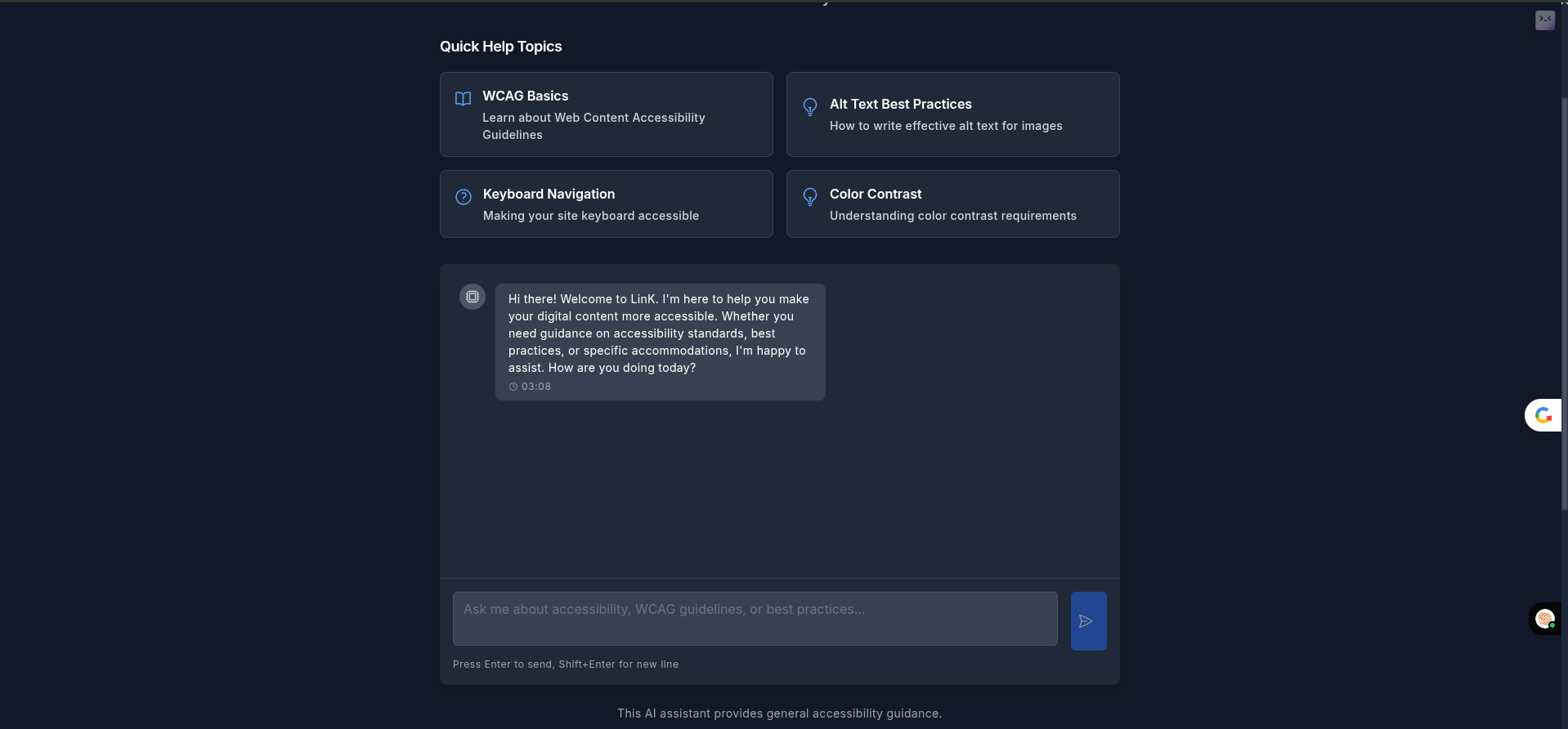
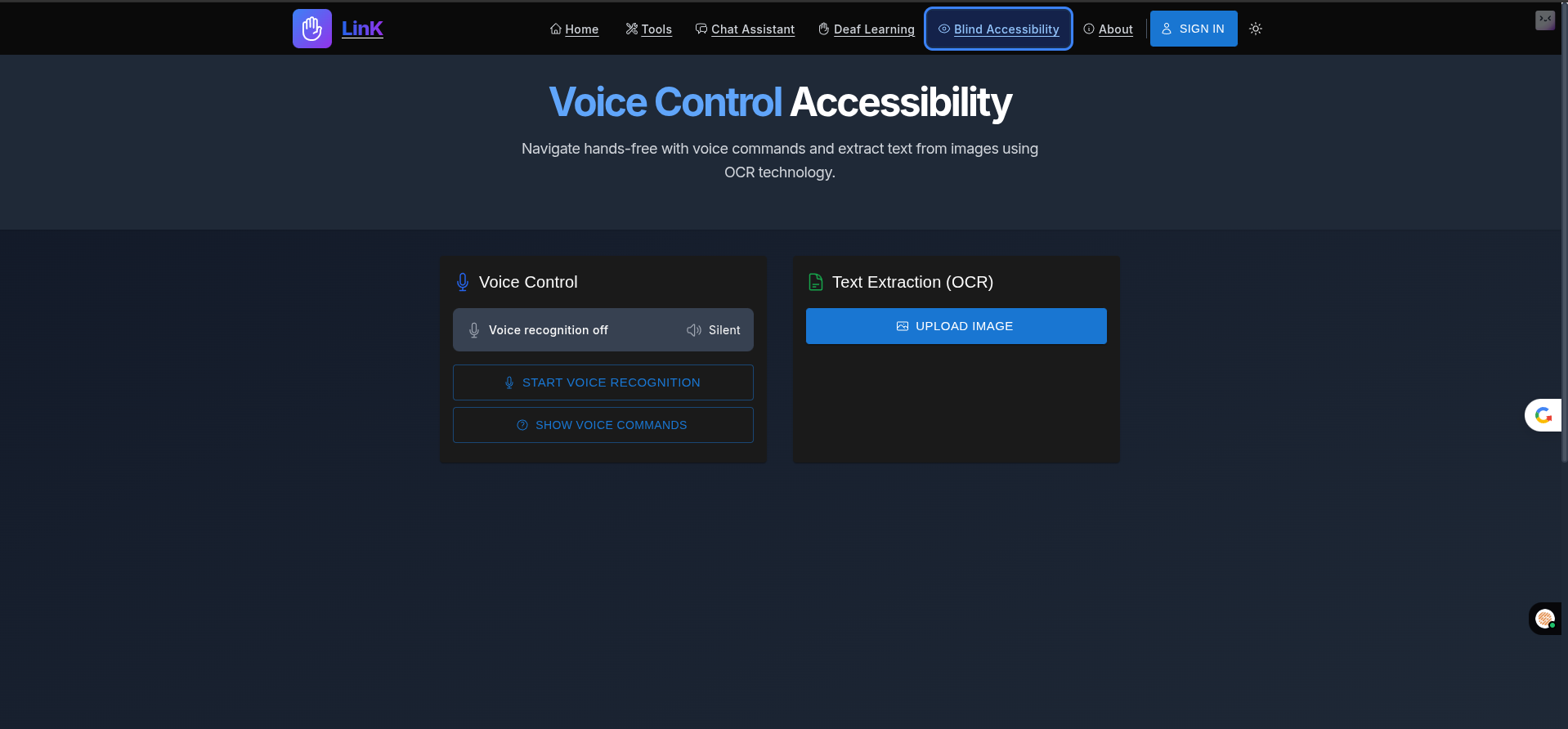
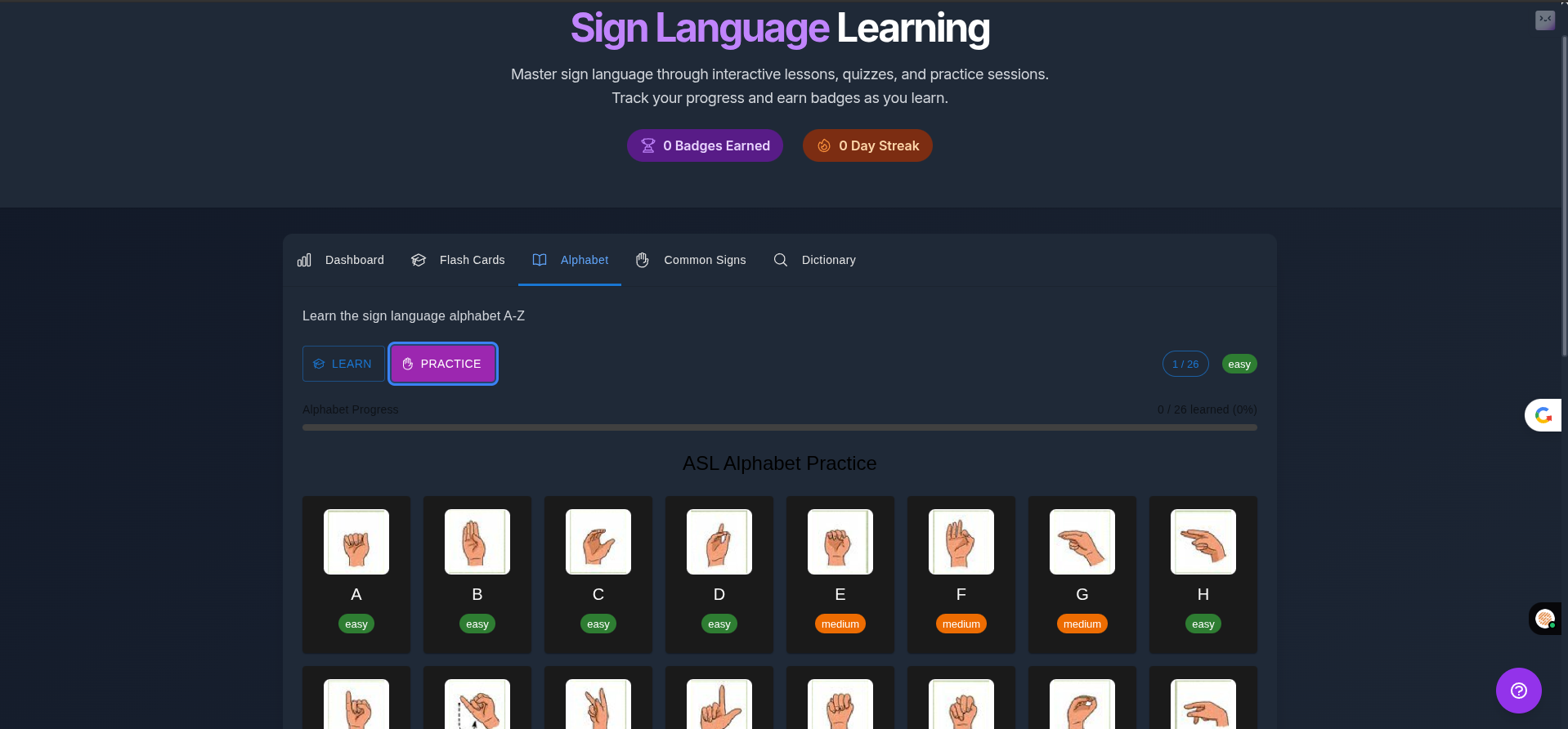
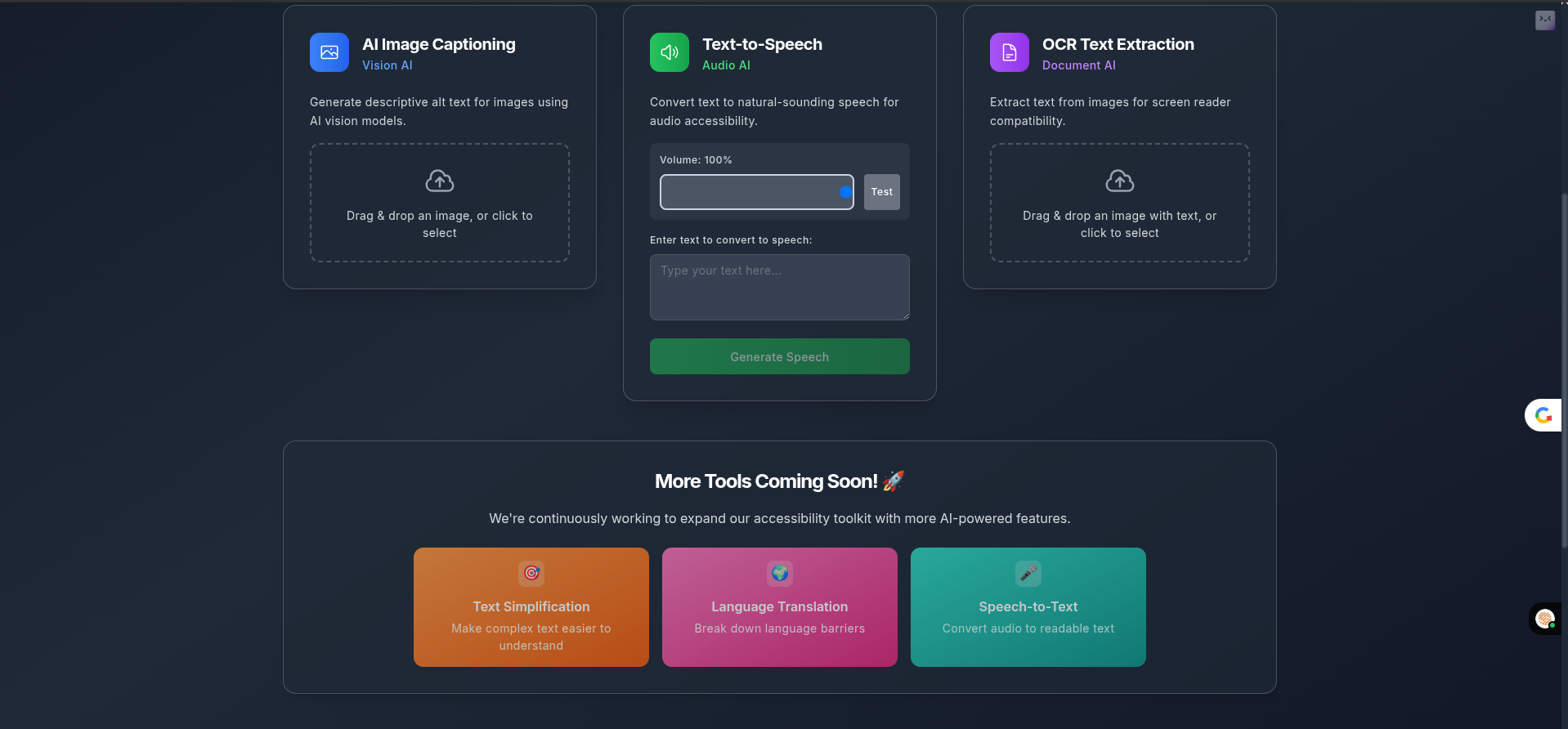
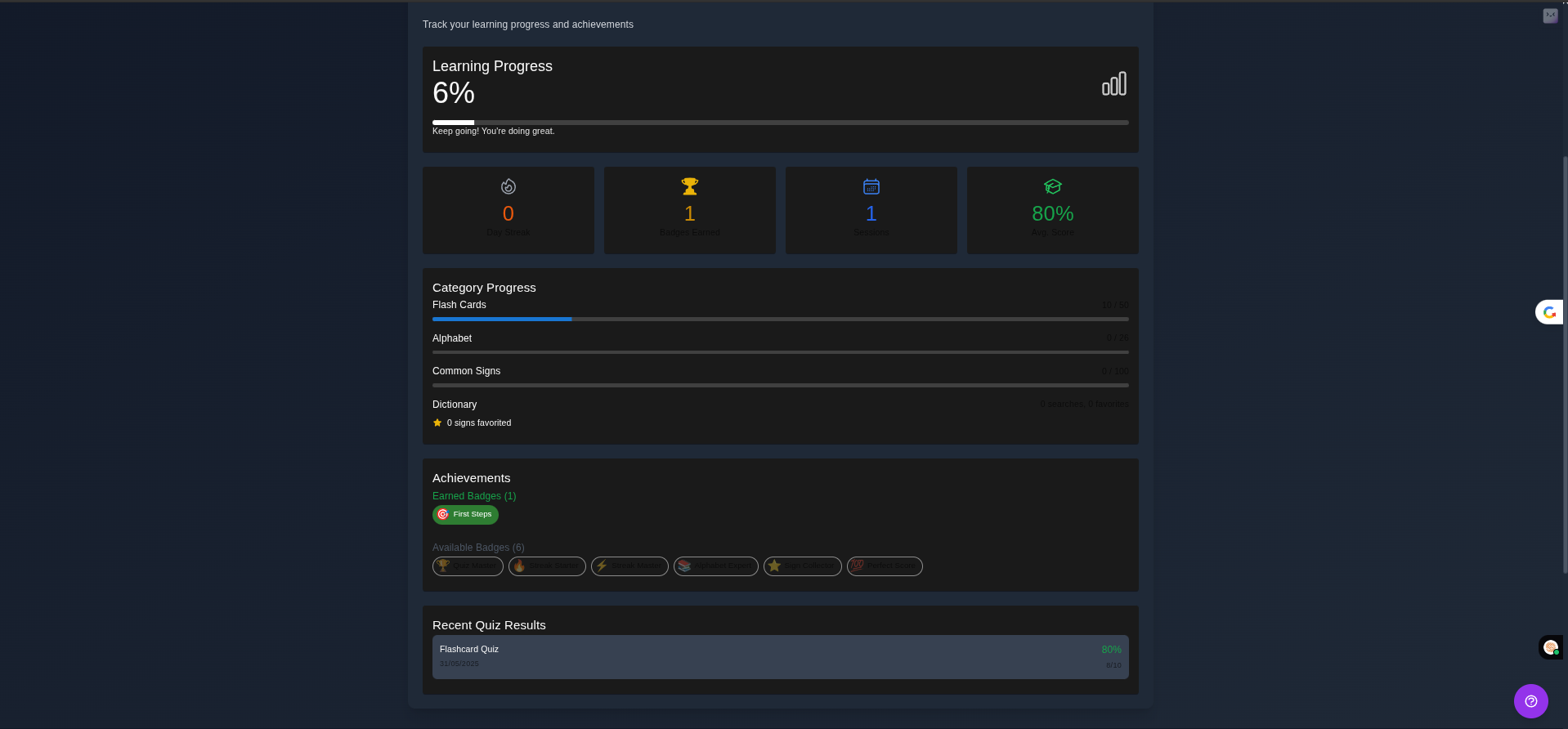
💡 What it does LinK is an accessible learning assistant for people with hearing or vision impairments. On launch, it asks via voice: "Do you need Deaf Help or Blind Help?" Depending on the user's spoken answer, the site adapts its interface: Blind Help: Activates full voice-based navigation and hands-free control, including spoken output and audio cues. Deaf Help: Prioritizes visual-based navigation, interactive sign language lessons, and responsive UI, fully operable via keyboard/mouse. Key features include: Interactive Flash Cards (Study & Quiz modes) Sign Language Dictionary with images and contextual explanations Gamified progress tracking (badges, streaks, completion bars) Personalized greetings and motivational messages based on user role
How we built it
🛠 How we built it We used: React for modular and scalable UI components Tailwind CSS for flexible and clean styling Web Speech API for real-time voice input/output Context-aware logic to adapt the interface dynamically based on user selection (deaf/blind mode) Carefully curated sign images and structured layouts for dictionary and flashcard modules Routing logic to allow users to navigate easily between modules (Dashboard, Flash Cards, Dictionary, etc.) Each feature was built to work without disrupting existing components, using encapsulated designs that ensure scalability and stability.
Challenges we ran into
🧗 Challenges we ran into Designing a dual-mode interface that seamlessly supports both deaf and blind users without clutter or confusion Ensuring the dark theme is visually comfortable and legible — especially for low vision users Integrating accurate sign language imagery for every sign referenced Making voice navigation robust enough to handle varied pronunciations, background noise, and fallback scenarios Keeping the experience fun and intuitive while managing accessibility best practices
Accomplishments that we're proud of
🏆 Accomplishments that we're proud of Successfully created a voice-adaptive homepage interaction that branches the user experience for blind and deaf users Seamlessly integrated gamification (badges and streaks) into the learning modules Designed an intuitive UI that doesn’t compromise accessibility Brought life to our vision of a tool that doesn't just "support" differently-abled users but welcomes and empowers them
What we learned
📚 What we learned Accessibility is not a "feature" — it’s a mindset and must be baked into the foundation of any meaningful product Designing for inclusivity makes products better for everyone Clear structure, consistent feedback, and thoughtful interaction flows make a huge difference in user trust and usability True accessibility requires continuous testing, empathy, and listening to the community 🔮 What's next for LinK We're excited to build on this foundation by: Adding AI-powered webcam-based sign recognition Expanding the dictionary to include regional sign language variants Introducing voice-controlled quizzes and assessments Creating a mobile-first version for real-world, on-the-go learning Partnering with accessibility organizations for real-time feedback and improvement
Built With
- mern


Log in or sign up for Devpost to join the conversation.