-
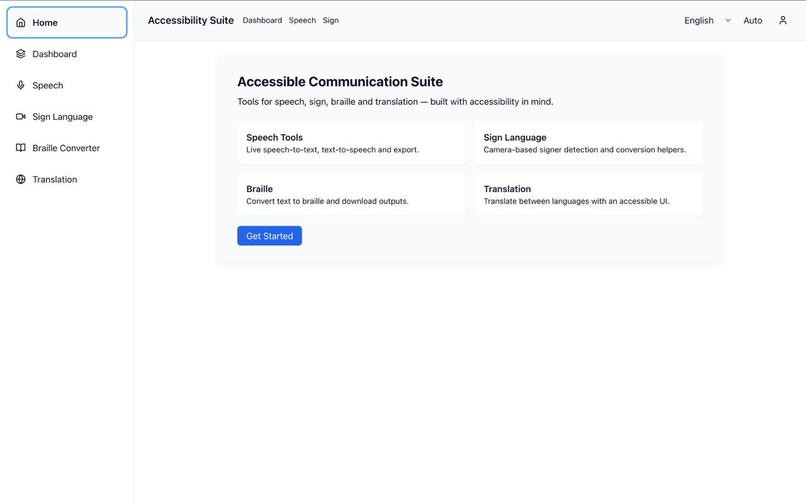
This is the home page
-
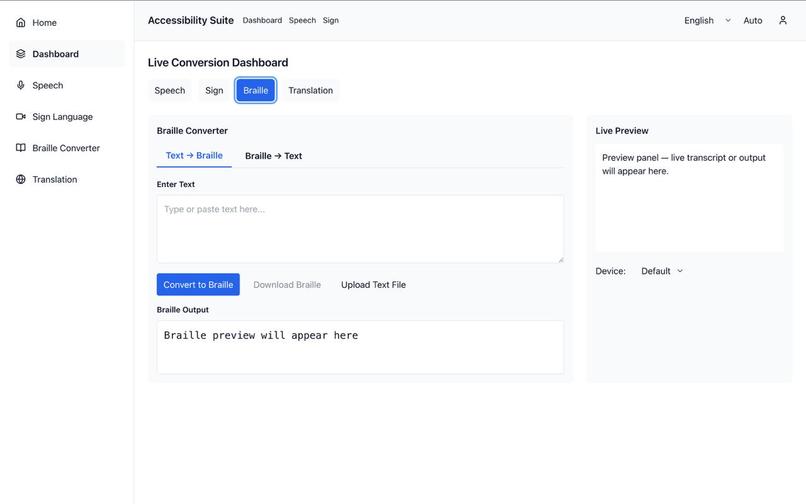
This is the page conver to braille
-
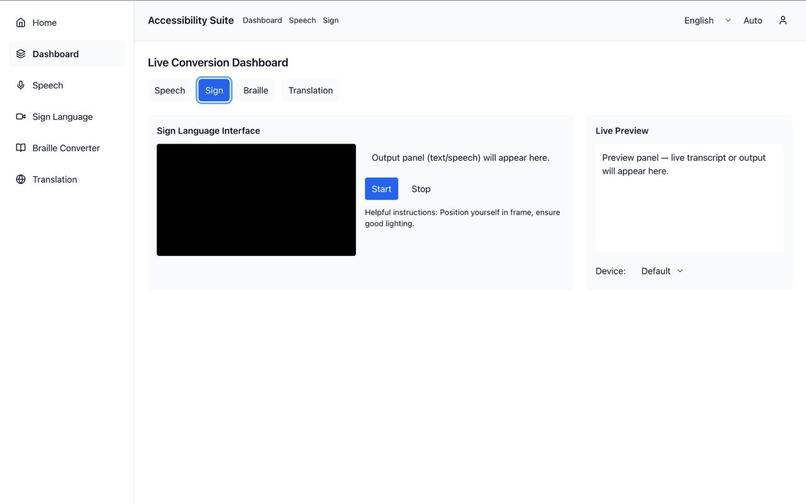
This is phase or page used for sign language convertion
-
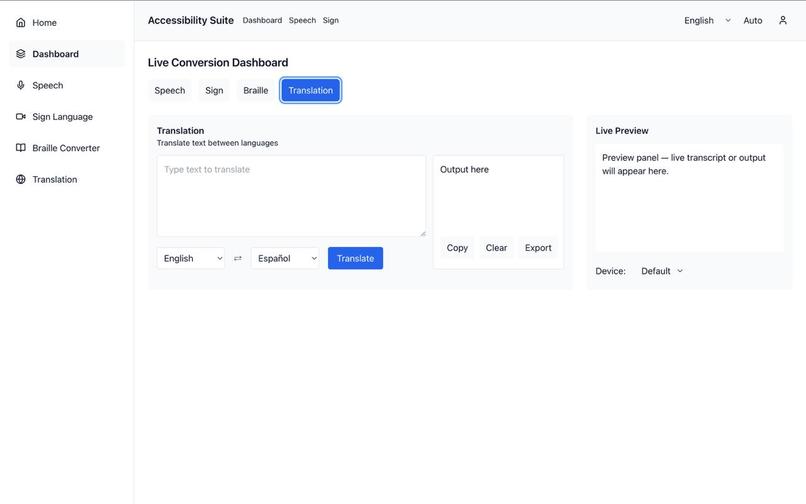
this is used to translate to multiple language
-
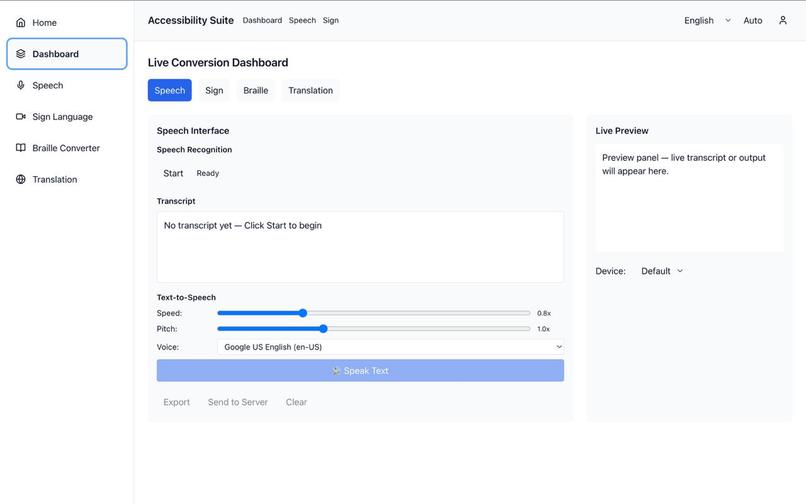
Basic dashbord withdifferent option


Inspiration
Millions of people across the world still struggle to use technology because digital systems assume one thing: everyone can hear, speak, read, or type perfectly. But real life isn’t like that. We were inspired by people who rely on: Sign language instead of speech Audio instead of text Simplified language instead of complex instructions Multiple languages instead of English-only systems
This vision led to LinguoBridge.
What it does
LinguoBridge is an AI-powered accessibility assistant that enables real-time, two-way communication across abilities and languages.
It can: Convert speech → sign language Convert sign language → text or voice Convert images (forms, labels, signboards) → simplified audio/text Translate between multiple Indian and global languages Adapt output for users who are deaf, mute, visually impaired, or low-literate Automatically choose the best mode based on environment and disability context It acts as a communication bridge for anyone who faces barriers using traditional interfaces.
How we built it
We built LinguoBridge using a multimodal AI pipeline:
🔹 Speech Processing Lightweight ASR models for multilingual speech-to-text 🔹 Sign Language Recognition MediaPipe hand tracking + gesture classifiers + custom ISL dataset. 🔹 Sign Language Generation 3D avatar animations triggered by translated text output. 🔹 OCR + Simplification Tesseract OCR + NLP transformers for simplifying complex text. 🔹 Translation Transformer-based multilingual translation models. 🔹 Adaptive Accessibility Engine A context-aware logic layer that analyzes: Noise Lighting User’s input mode Disability profile automatically adjusts output as audio, text, or sign animation.
The backend uses FastAPI/Node.js, and the frontend is built with React Native.
Challenges we ran into
1.Multimodal Synchronization Handling speech, signs, images, and translations simultaneously without lag was difficult.
Limited ISL Data Indian Sign Language datasets are small and inconsistent, so we had to create and label our own samples.
- Latency Real-time translation required model optimization, quantization, and asynchronous processing.
Privacy Concerns Cameras and mics require strong privacy measures. We solved this using edge-processing and encrypted channels.
Environmental Variability Low light, background noise, and fast movements made gesture detection inconsistent—we added adaptive fallback modes.
Accomplishments that we're proud of
Built a fully functional real-time interpreter between speech and sign Achieved fluent sign-to-speech conversion with gesture detection Created a custom Indian Sign Language dataset Designed a context-aware accessibility engine Enabled offline mode for low-network rural regions Made an interface usable by deaf, mute, visually impaired, and low-literate users Developed a unified, multi-input, multi-output system that truly helps people communicate
What we learned
Accessibility requires empathy-driven design, not just programming. Multimodal AI is powerful when carefully synchronized. Small optimizations (quantization, batching, caching) dramatically improve latency. Real users with disabilities have different needs, and systems must adapt to them. Sign language is not just hand gestures—it has grammar, emotion, and context. The future of technology lies in inclusive and adaptive interfaces.
What's next for LinguoBridge
- Full ISL Dictionary Expansion Add more gestures, phrases, and regional sign variants.
- Browser Extension Accessibility tools for government, education, banking websites.
- AR-Based Sign Projection Use AR glasses to project live captions or sign instructions.
- Personalized Disability Profiles
AI learns the user’s preferred mode and adapts automatically.
- Deploy in Schools & Hospitals Partner with deaf schools, NGOs, and public institutions.
Environmental Sound-to-Visual Alerts Doorbell → flash Baby cry → vibration Emergency siren → red icon
Fully Offline Mode Run all models on-device for rural and low-internet regions.
