-
-
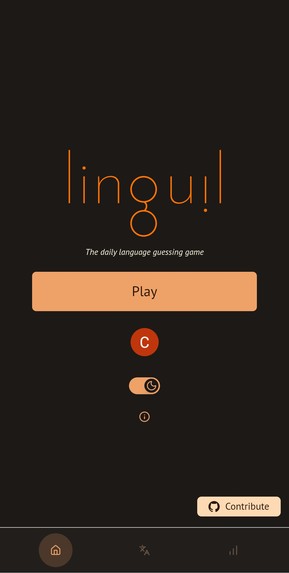
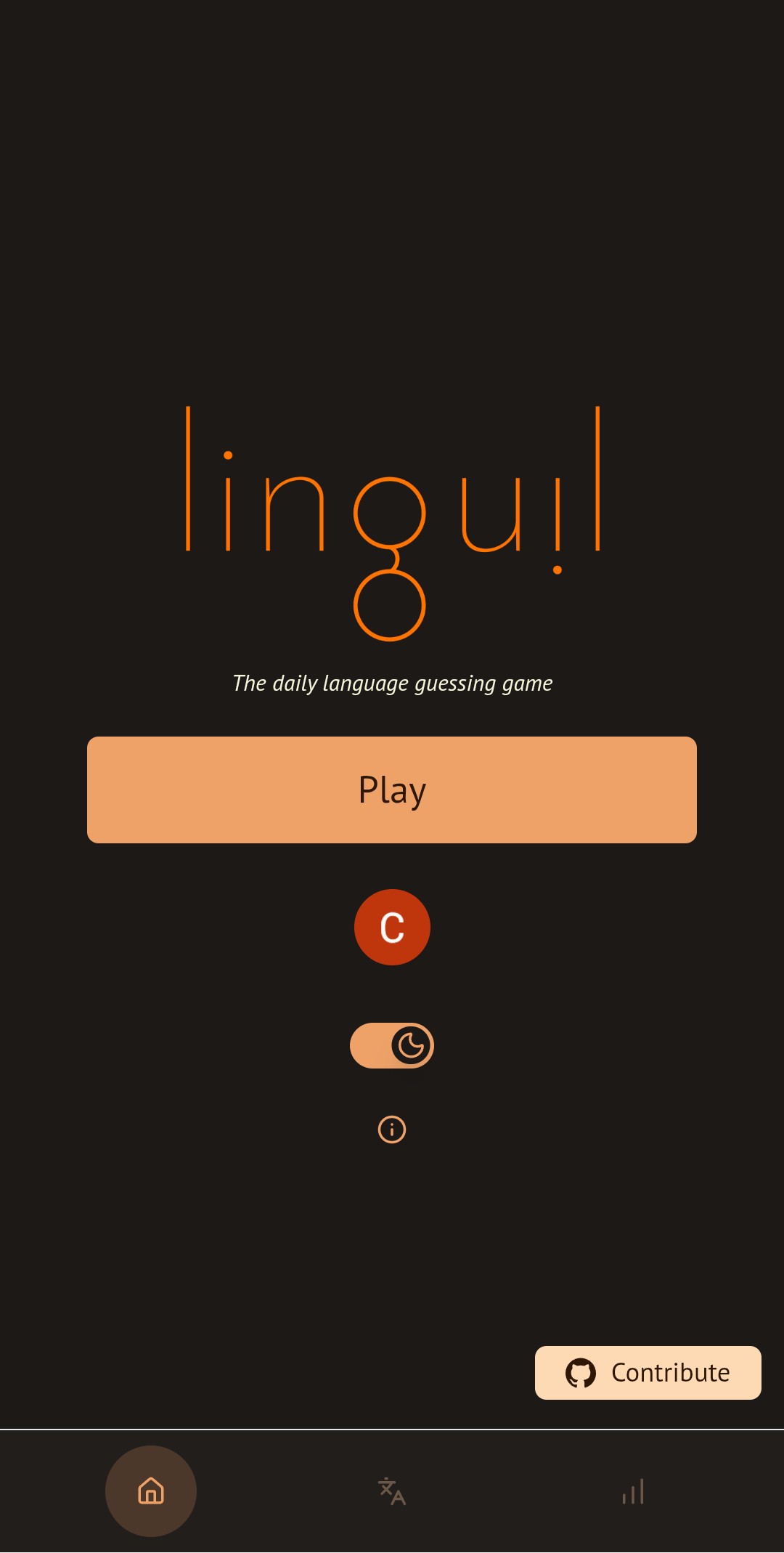
Mobile home page (dark mode)
-
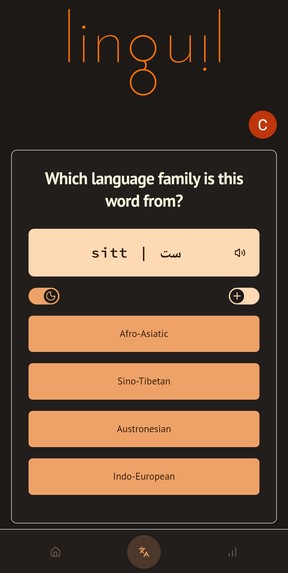
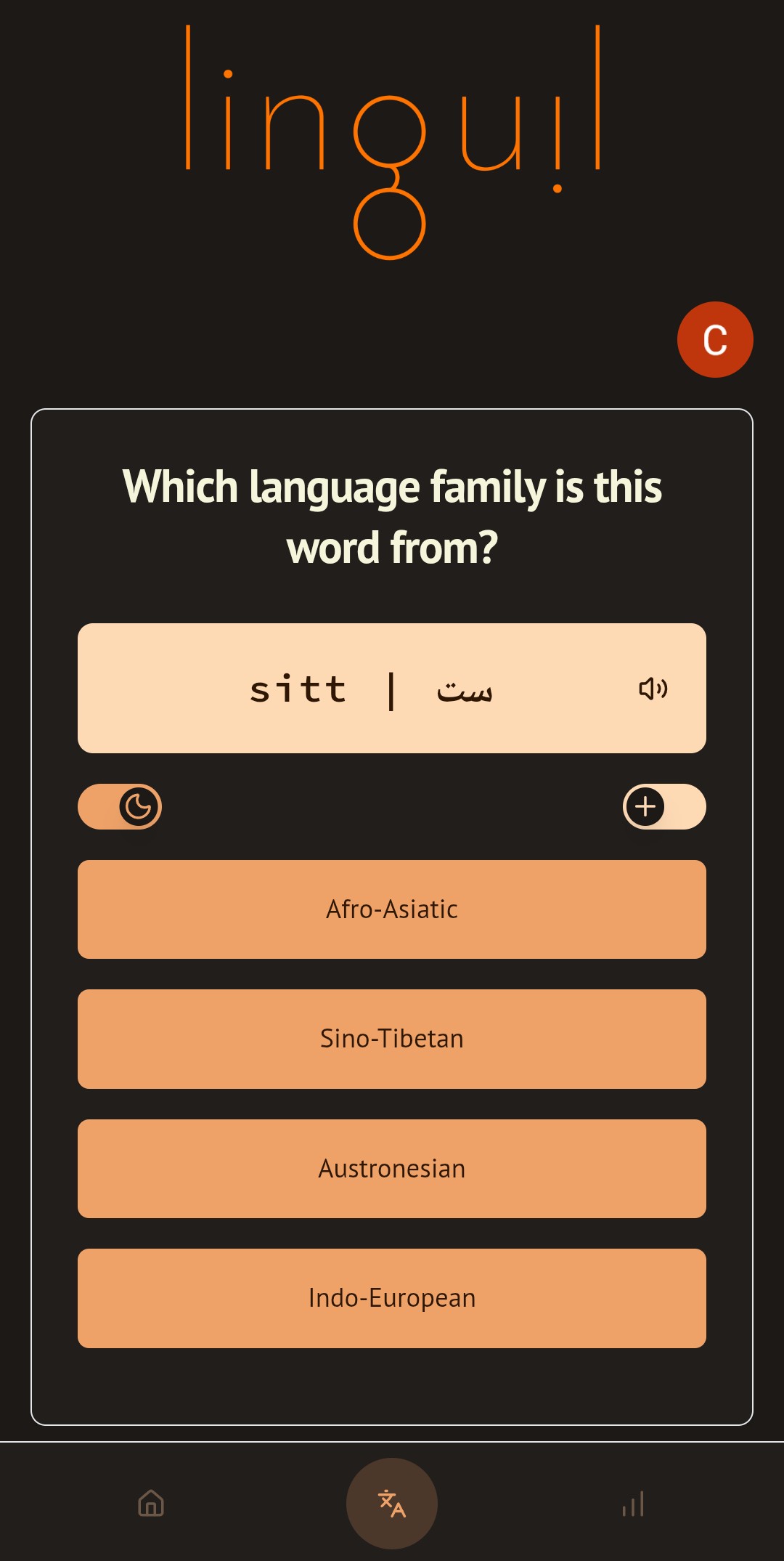
Mobile game page (dark mode)
-
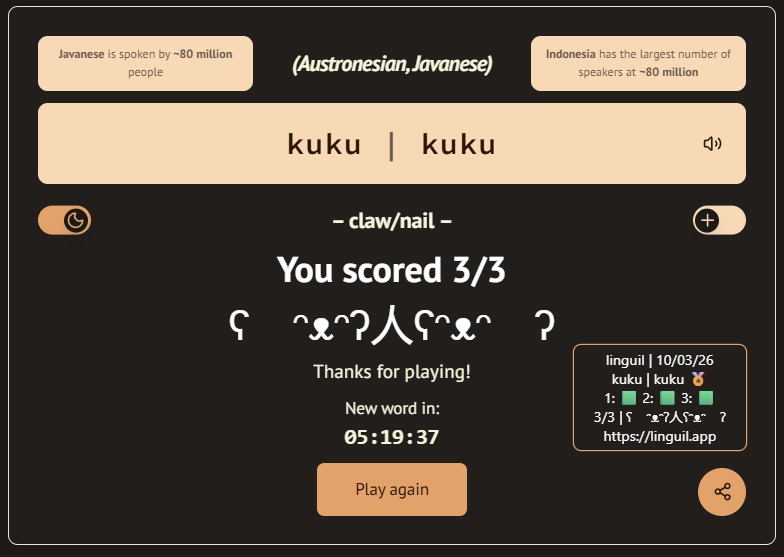
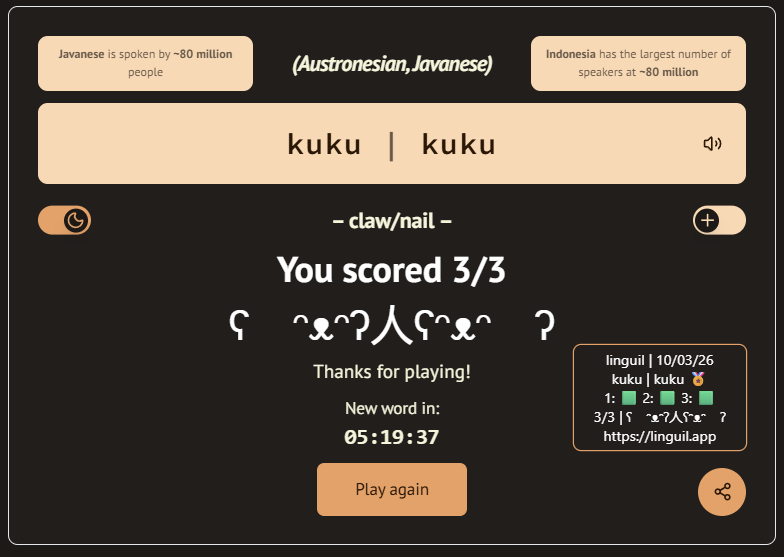
Desktop results page (dark mode)
-
Desktop leaderboard page (dark mode)
-
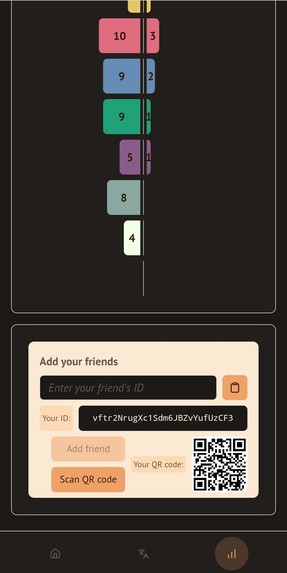
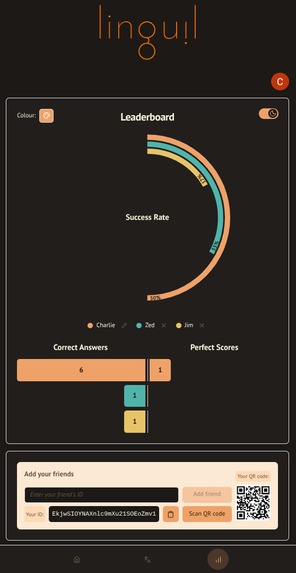
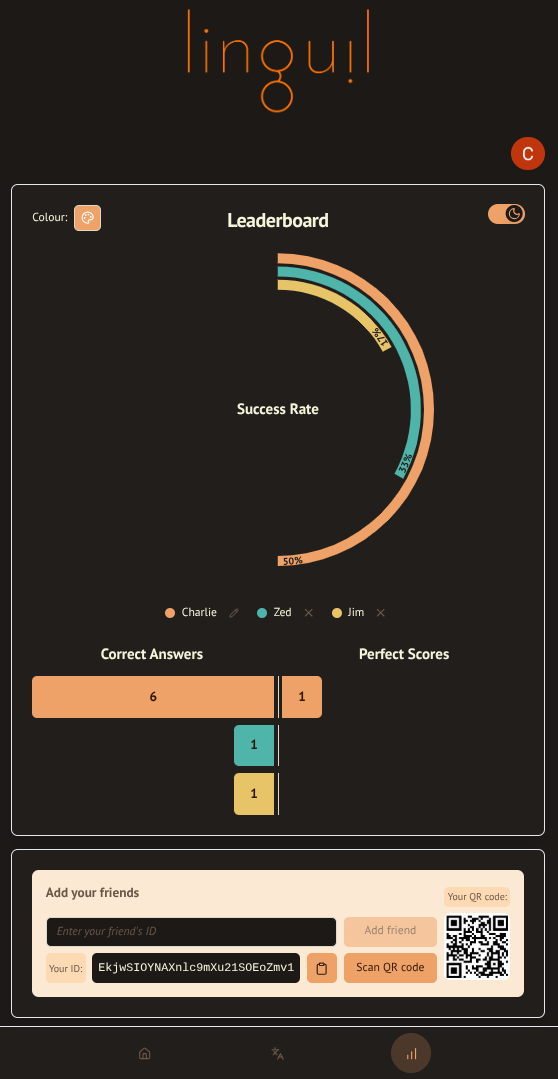
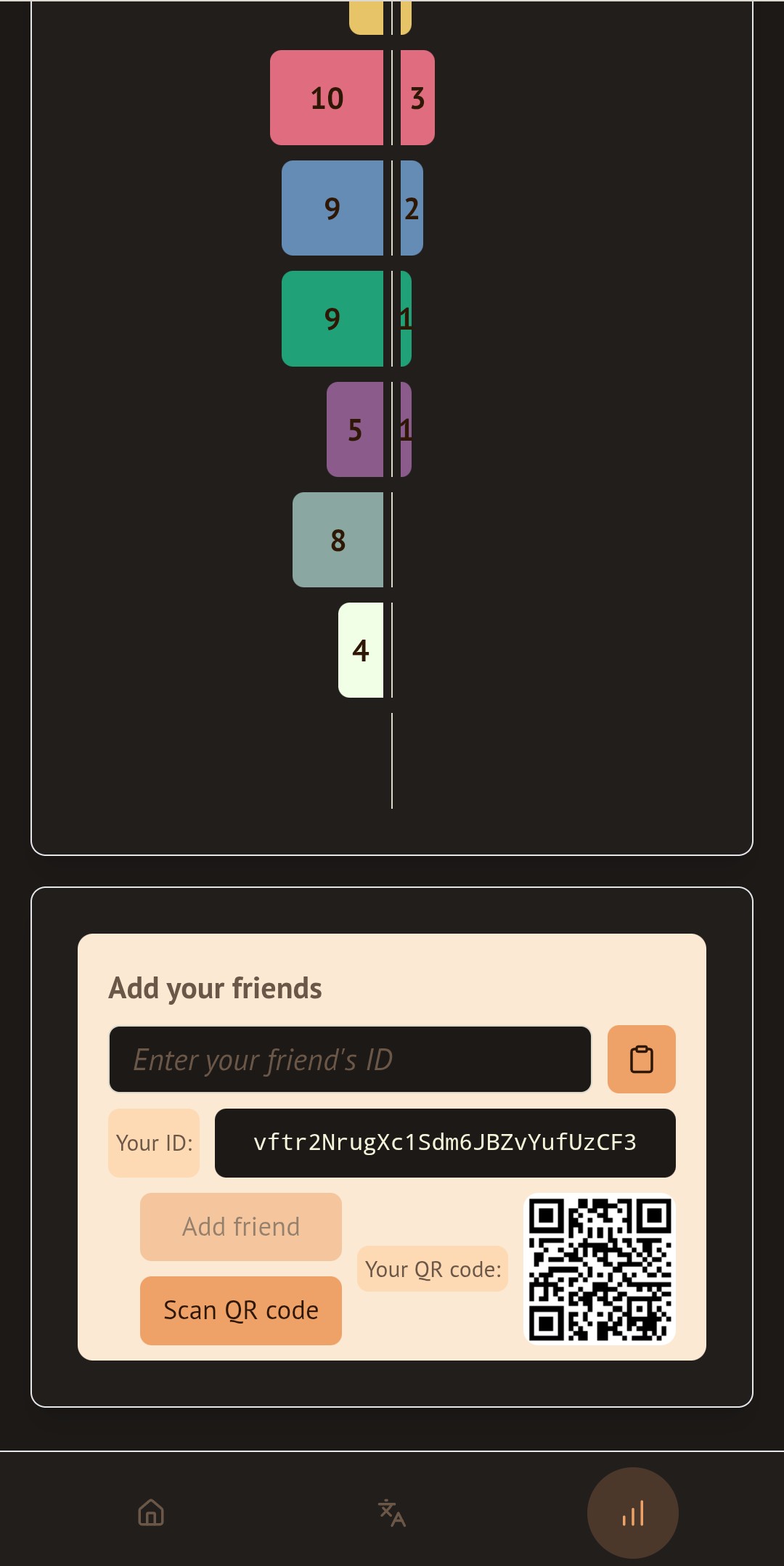
Mobile leaderboard page (dark mode)
Inspiration
As a first-time developer and linguistics enthusiast, I created linguil both as an opportunity to build my development skills and because I wanted a Wordle-style daily mini-game I could play with friends, family and fellow linguistics nerds. I wanted it to be cross-platform so users could play in their preferred environment (including web, mobile, Discord, Reddit) while still being able to compare and compete with one another, which was a challenging but exciting task.
What it does
linguil is the daily language guessing game. Guess the language family, language and meaning of a new word from the 100-word Swadesh list in a random language each day, add friends to your leaderboard, share scores and compete with your community, and add new languages to the game—all while learning about linguistics. linguil automatically posts a new game every day on subreddits with the app installed, and auto-authenticates signed-in Reddit users.
How we built it
- Next.js-based web application (adapted to use Vite & Hono for Devvit)
- Frontend: Tailwind CSS (styling), Radix (UI) & Recharts (custom user leaderboards)
- Backend: Google Cloud (compute, TTS), Firebase (authentication, storage, app hosting, performance monitoring, analytics), Devvit (Games on Reddit app, Devvit Journeys, linguil+ payments)
Challenges we ran into
I needed to connect the game to a database of linguistic data for its daily word logic. Initially, I tried interacting with the Wiktionary and Google Translate APIs to pull a truly ‘random’ word from their datasets, however I encountered insurmountable issues with cross-language data normalisation and incompleteness, and therefore resolved to create the database myself. I obviously could not hope to replicate the depth of the Wiktionary/Google Translate APIs dataset and I wanted to prioritise linguistic accuracy, so blindly trusting an LLM to produce the data was not an option.
In doing research on how best to resolve this question, I discovered the Swadesh list, a list of universal concepts every human culture has a word for, used in comparative linguistics to assess language relationships. Using the 100-word Swadesh list would enable me to perfectly balance my erstwhile incompatible priorities of accuracy, practicality and uniformity. However, manually compiling such a large database of words from the world’s 37 most spoken languages (those with 50m+ speakers) would still involve collecting 3,700 words (in both the native orthography and transliterated into Latin), a monumental task.
I therefore designed and implemented a multi-step data pipeline that automated the most time-consuming work without compromising on quality. Utilising Gemini and ChatGPT Deep Research alongside data from structured academic sources like Wiktionary, Ethnologue and Glottolog, I prepared initial Swadesh lists for each of the languages before checking their accuracy with multiple LLMs and language speaker communities on Reddit and Discord in order to maintain native-level accuracy. Finally, I open-sourced linguil’s production code to enable community contributors to edit existing language data and add new languages to the game. This represented an ideal solution with the added benefit of built-in community engagement. As a result, I was able to successfully build and ship a production-ready, scalable, multi-language database that powers the linguil app. Community members have since added Hungarian, Finnish, Estonian, Czech and Slovak to the game completely of their own volition—evidence of its success.
Navigating the unique limitations of the Devvit environment and meeting its strict fetch domain policy requirements was also frequently a challenge in rebuilding linguil for Reddit, as was sometimes inaccurate or unclear documentation.
Accomplishments that we're proud of
I created linguil solo from ideation to release, handling full-stack development of the mobile-first app—from authentication and storage to the UI, TTS and payments—with Firebase, GCP, Gemini & Devvit, optimising all code for performance, security and viral scalability. I developed personalised user leaderboards, as well as social score sharing and QR code-based friend-adding to support word-of-mouth marketing; custom-built integrations with Reddit (including automatic daily posting), and compiled databases for supported languages (now 50), their top-level language families, global & national speaker data, and Google TTS API voice codes.
What we learned
I learned how to vibe-code a full-stack application from scratch; how to use, navigate and interact with a whole host of platforms, frameworks, and tools; how to design organic growth and retention loops, as well as a huge amount about linguistics and the various languages I added.
What's next for linguil
- Get the single domain it requires to function (us-central1-linguil.cloudfunctions.net) approved as an approved fetch domain exception
- Finalise testing all parts of the app
- Verify the accuracy of the newly added languages on their respective language subreddits
- Approach linguistics community moderation teams about integration
- Run paid Reddit marketing campaign
- Add more languages from the https://github.com/linguil/linguil/wiki/Language-Wishlist
Built With
- devvit
- firebase
- firestore
- gcp
- hono
- next.js
- radix
- react
- recharts
- tailwind
- typescript
- vite
