💡 Inspiration
As a junior majoring in Linguistics, I took a course in Computational Linguistics and gradually realized the potential of combining vibe coding with traditional programming.
Growing up in a region with limited educational resources, my English skills were initially weak. It took immense effort to go from the bottom of my class to the top after entering university.
Later, I overcame this language barrier and earned the opportunity to participate in a collaborative study program at the University of Manchester.
During the COVID-19 pandemic, many of my courses moved online, which made me reflect on how technology — especially AI — could help students around the world access advanced knowledge regardless of geography.
These experiences inspired me to create LinguaMate AI, a project that helps learners break through English barriers using intelligent, interactive tools.
🚀 What It Does
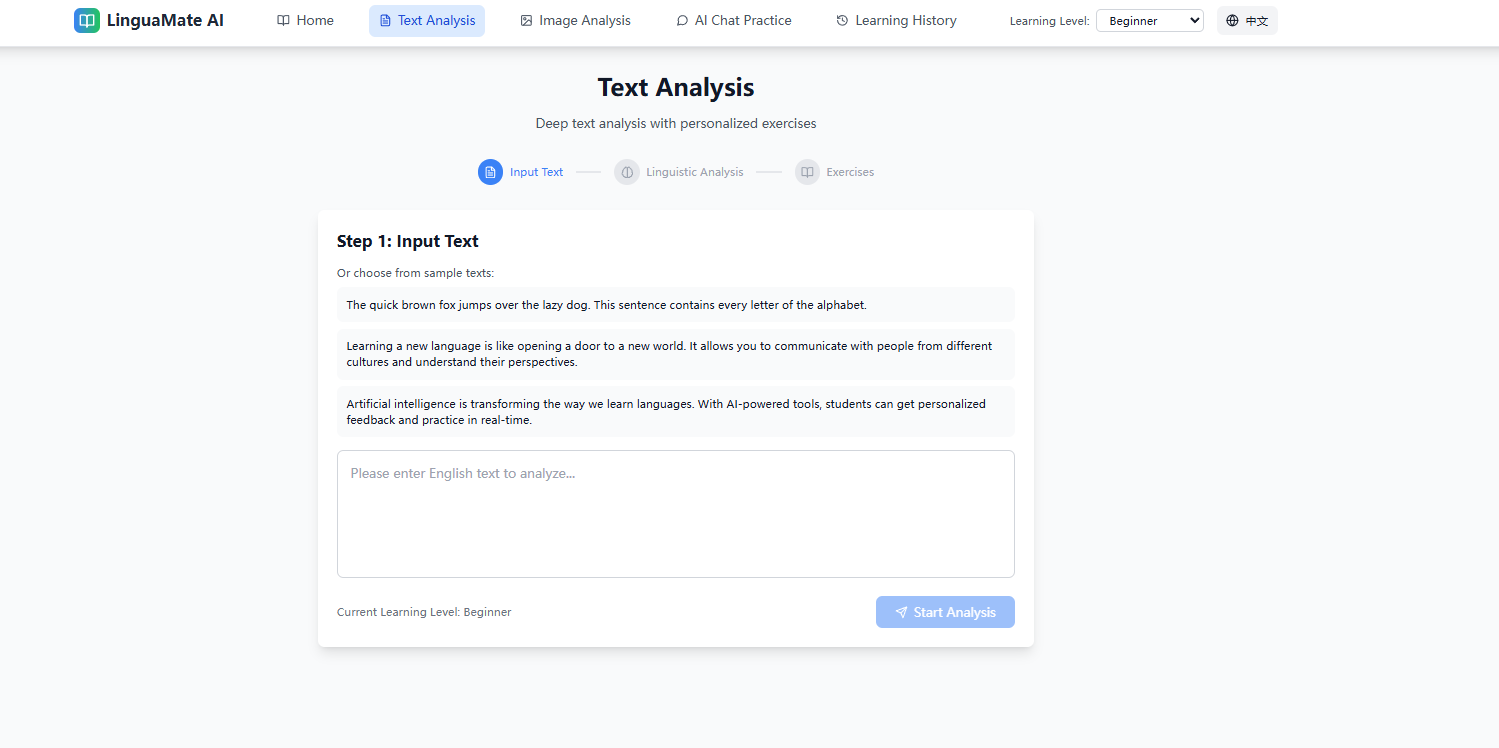
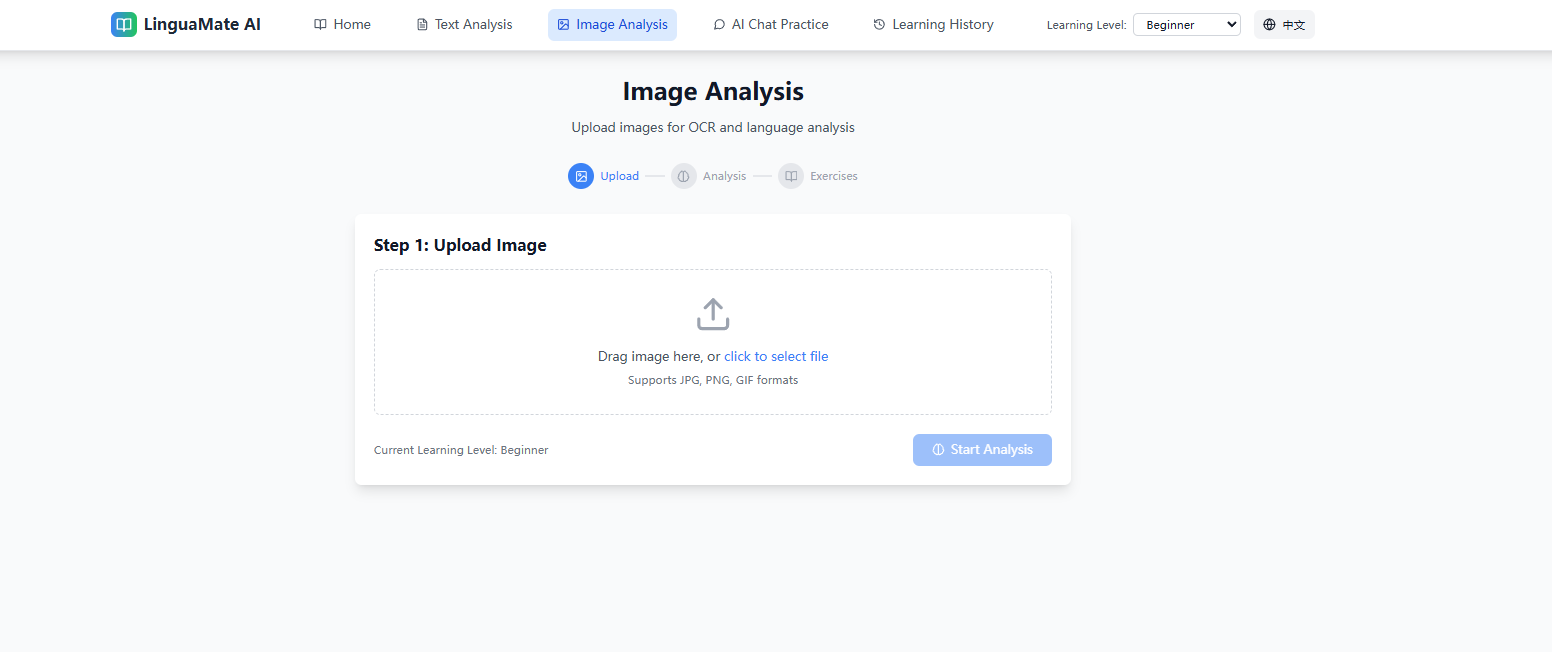
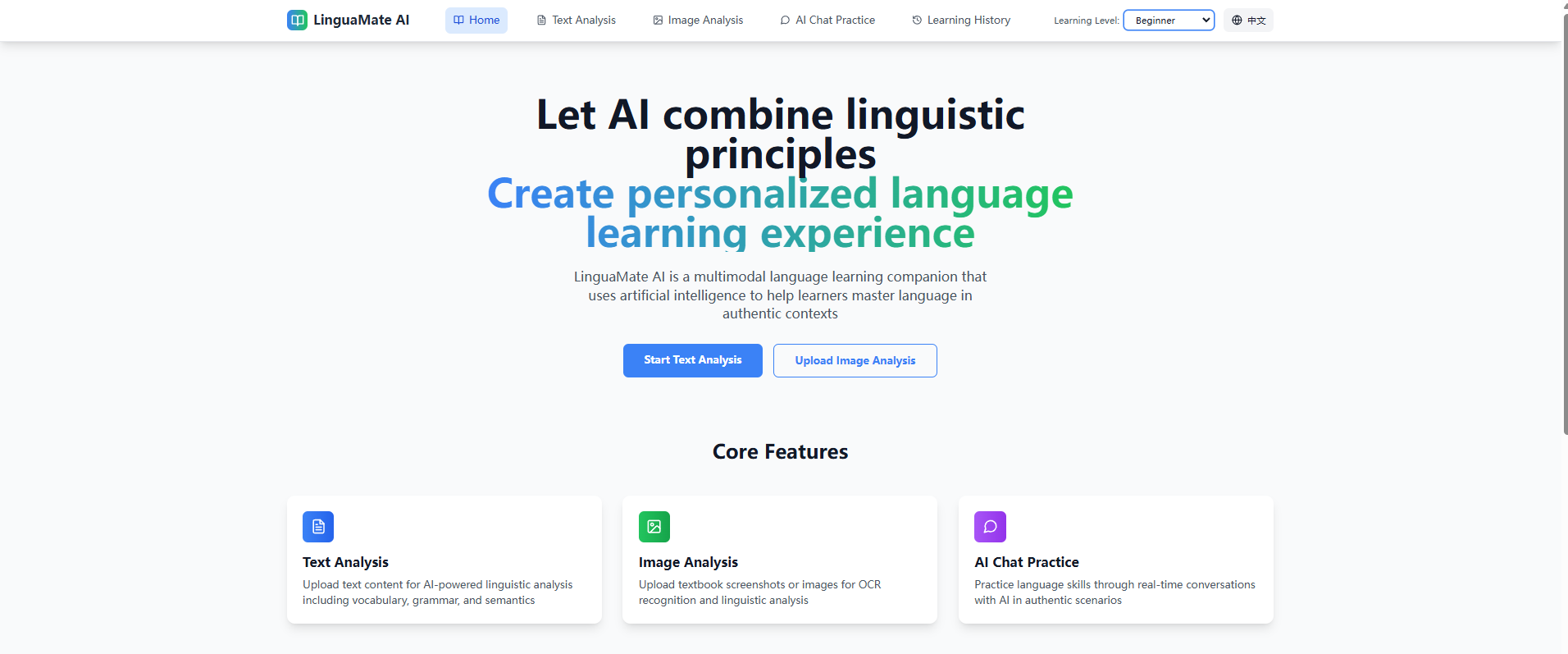
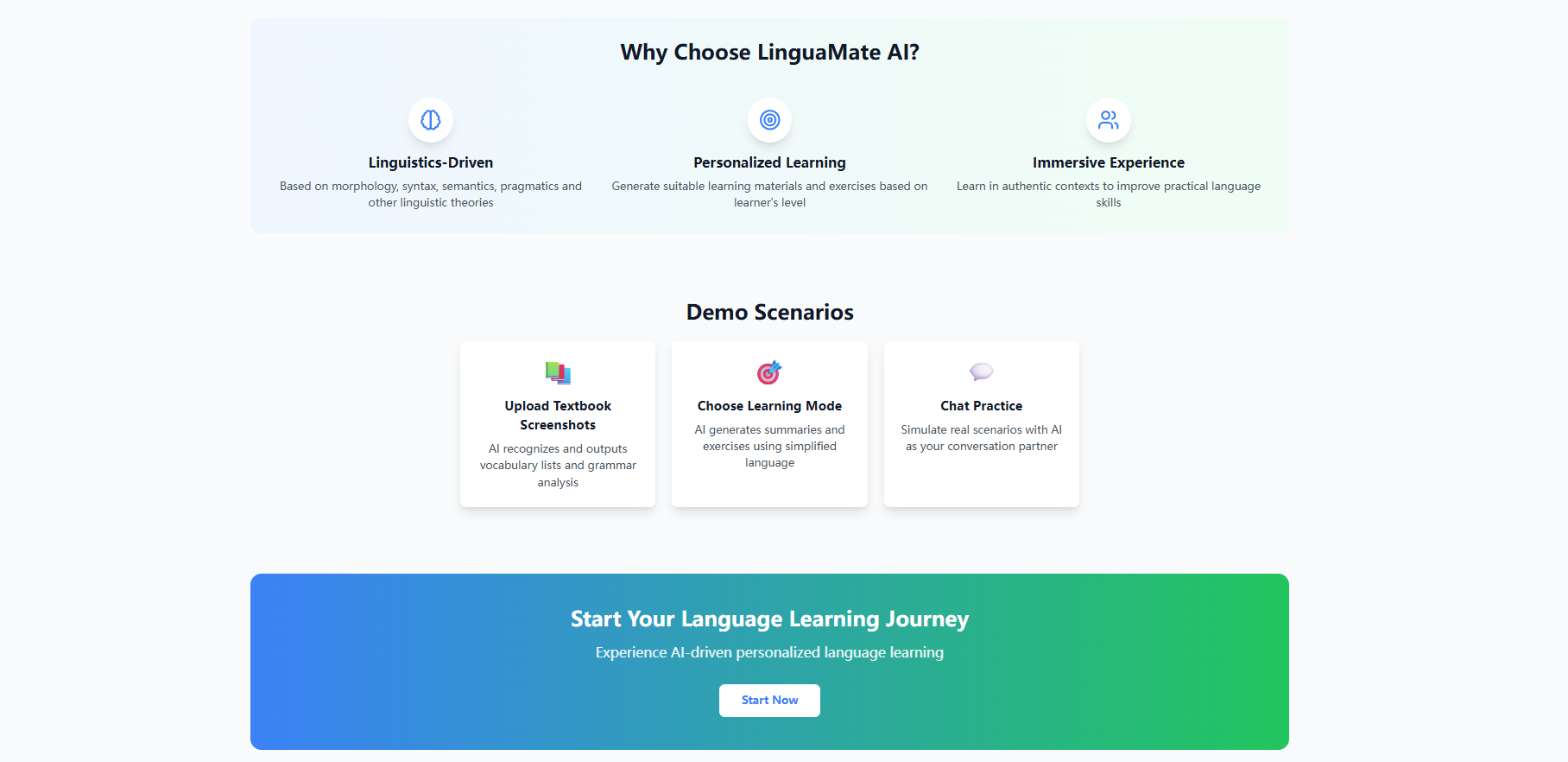
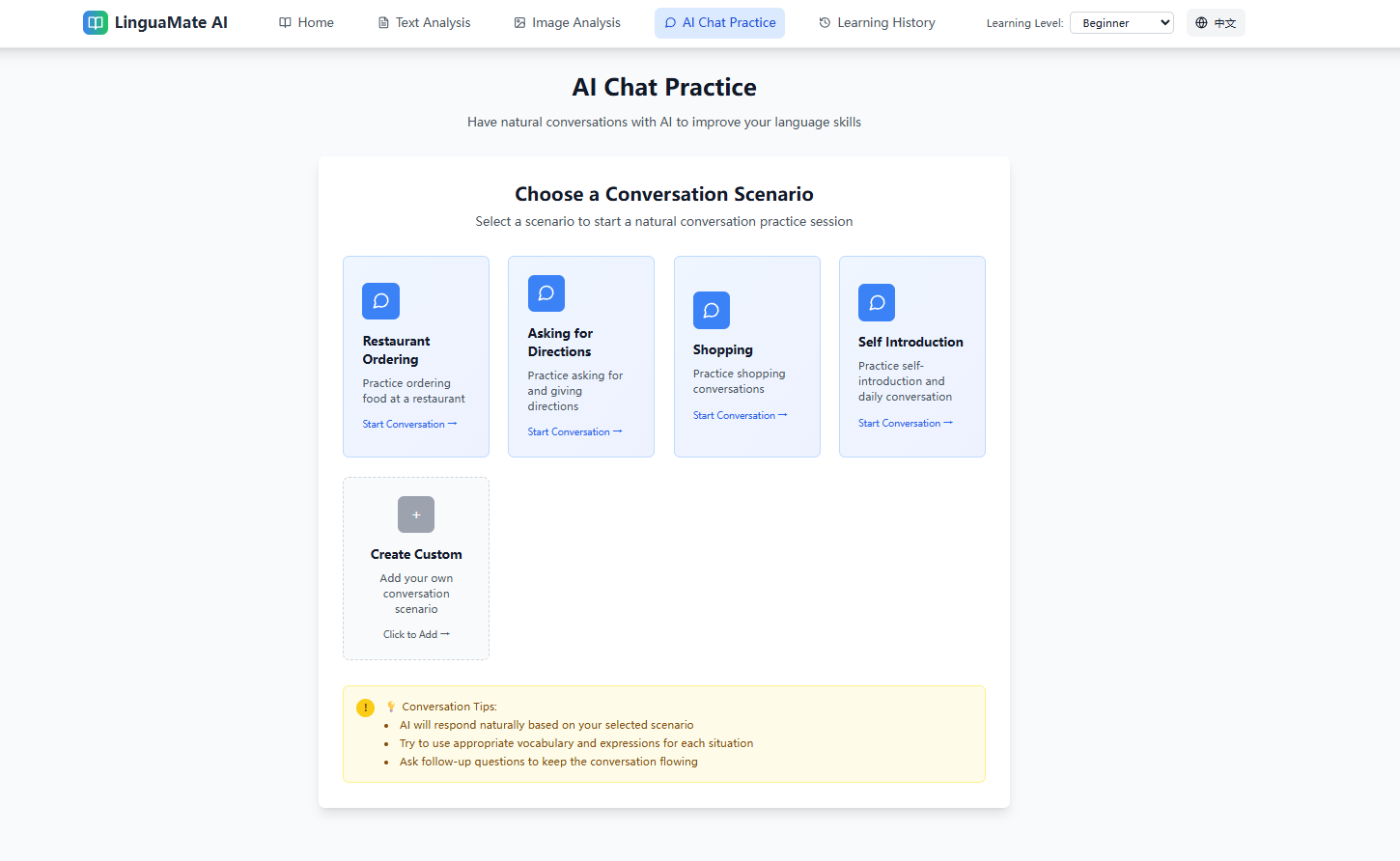
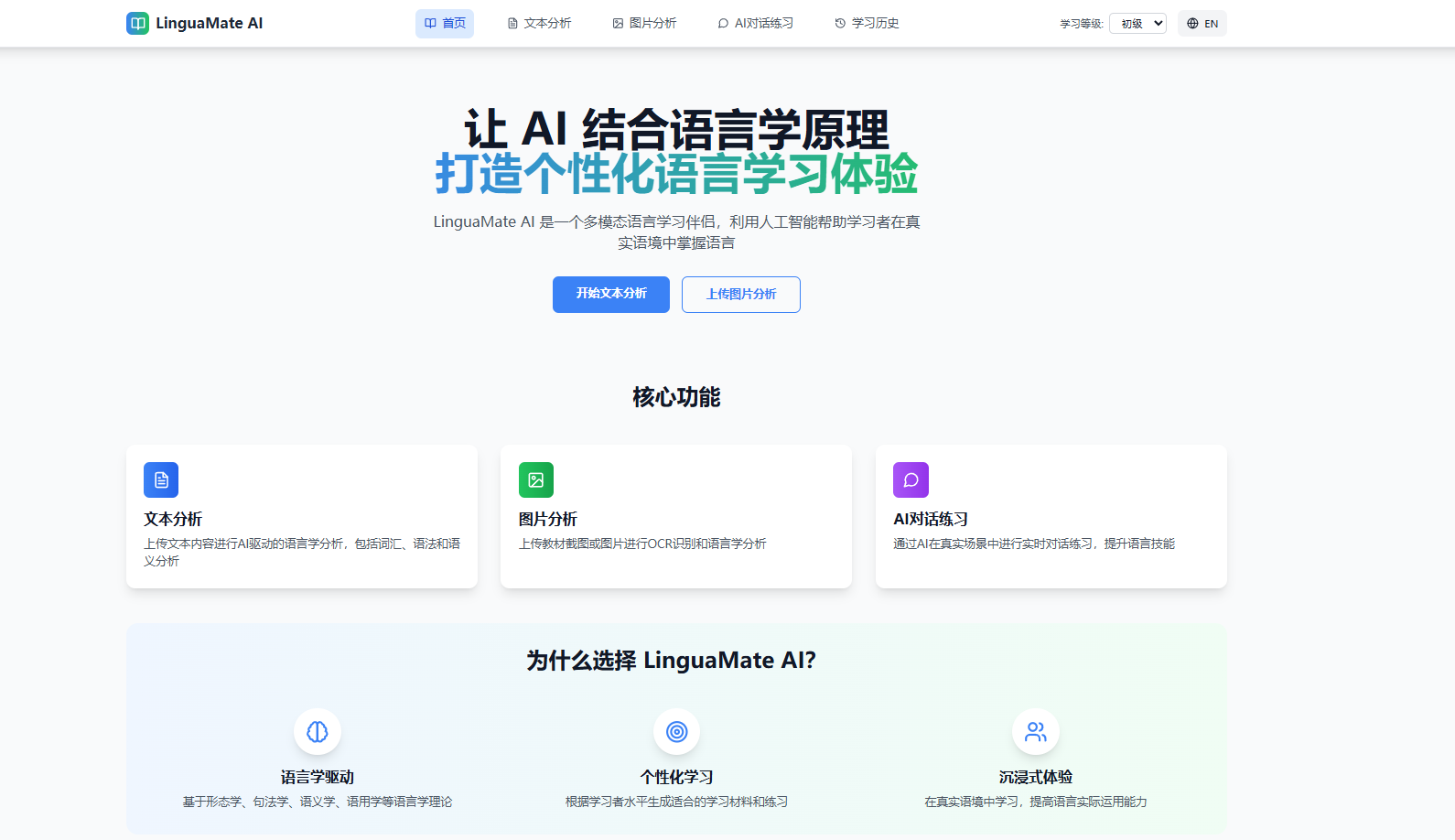
LinguaMate AI is a multi-modal language learning companion that helps learners practice English through text, conversation, and image-based exercises.
By integrating AI-driven feedback with interactive learning activities, users can strengthen vocabulary, grammar, and conversational fluency. The platform adapts to individual learning needs — making learning more personalized, engaging, and effective.
🛠️ How We Built It
The system combines a React-based frontend with a Python backend, leveraging modern frameworks and AI integration.
In the implementation process, I completed design refinement and optimization with the assistance of Cursor and ChatGPT, which streamlined code development and interface improvements.
My prior experience in educational product design and teaching internships guided the inclusion of practical learning features that mirror real classroom needs.
⚡ Challenges We Ran Into
- Integrating AI feedback into a seamless learning experience across multiple modes (text, conversation, image).
- As a non-CS student and solo participant, I faced the dual challenge of learning coding and UI design simultaneously.
- The tight timeline required balancing course work, debugging, and design — all on my own.
Despite the difficulties, this process strengthened my ability to problem-solve, stay persistent, and self-learn quickly.
🏆 Accomplishments That We’re Proud Of
Many believe that liberal arts students can’t handle programming projects — but I’ve proven otherwise. I’m proud that I built this project independently, from design to deployment.
Regardless of the competition outcome, this was a brave and meaningful attempt.
This experience makes me proud and confident — whether it was studying in the UK during a pandemic or diving into a new field like AI, I’ve learned to move forward with enthusiasm and courage.
📚 What We Learned
Through building LinguaMate AI, I learned how computational linguistics and AI can enhance education. Key takeaways include:
- The importance of user-centered design.
- How to balance AI capability with usability.
- Building resilience through rapid iteration.
Mathematically speaking, learning growth can be seen as exponential:
$$ \text{Progress}(t) = e^{(\text{effort} \times \text{time})} $$
🔮 What’s Next for LinguaMate AI
The next steps include:
- Expanding to support multiple languages beyond English.
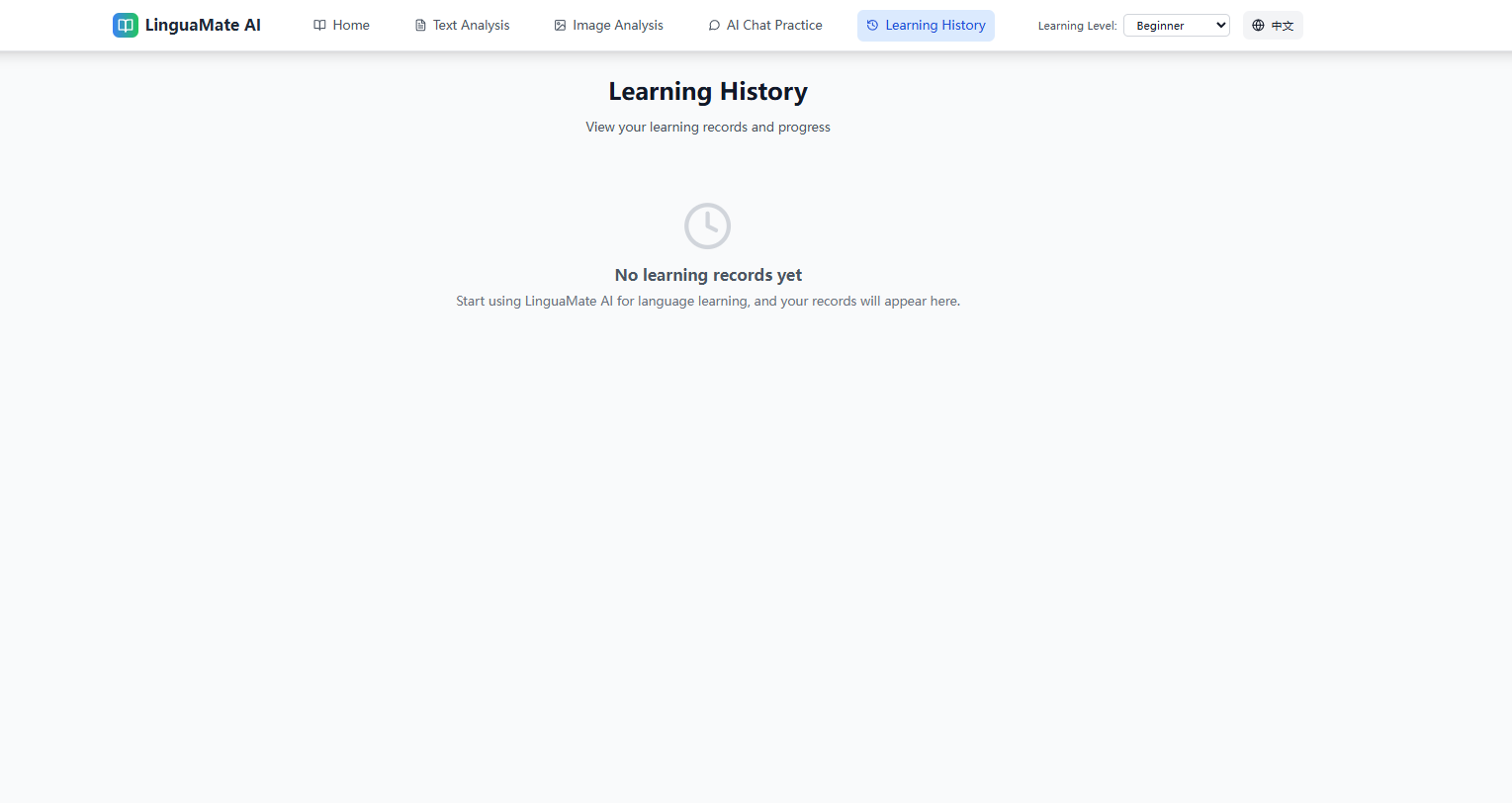
- Adding gamified learning and AI-driven progress tracking.
- Refining AI’s feedback to become more context-aware and personalized.
Ultimately, LinguaMate AI aims to empower learners worldwide — helping them explore knowledge freely, without being limited by language.

Log in or sign up for Devpost to join the conversation.