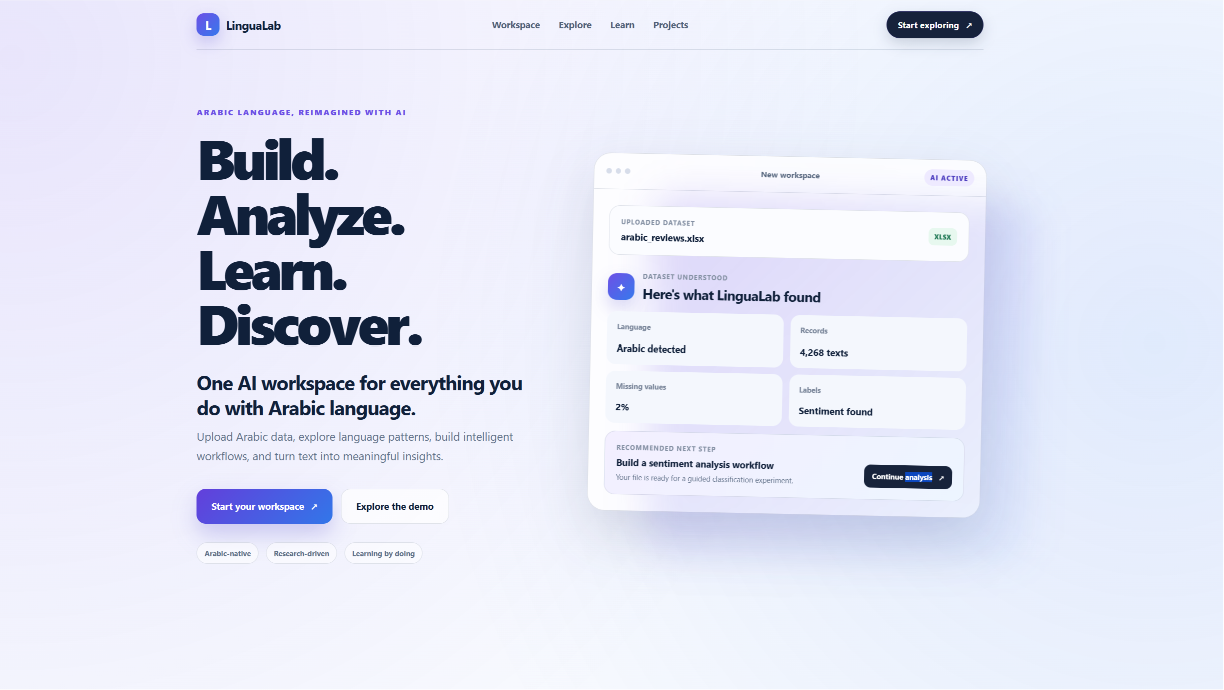
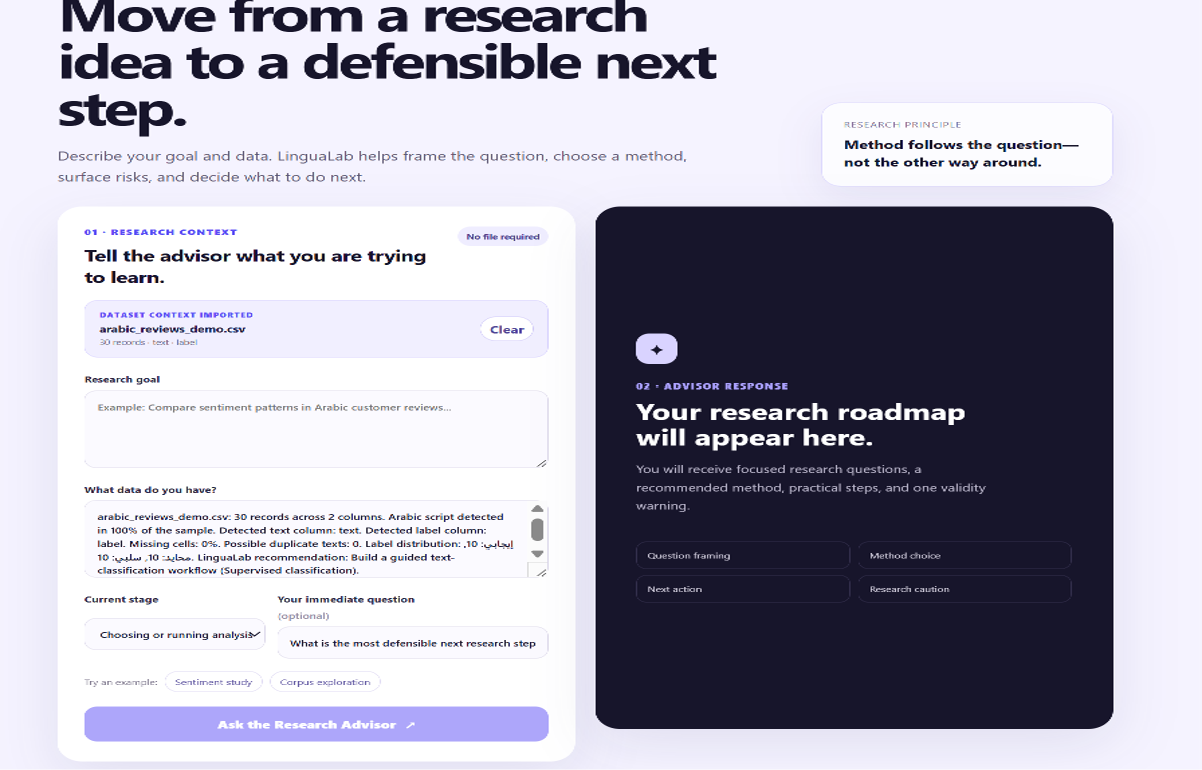
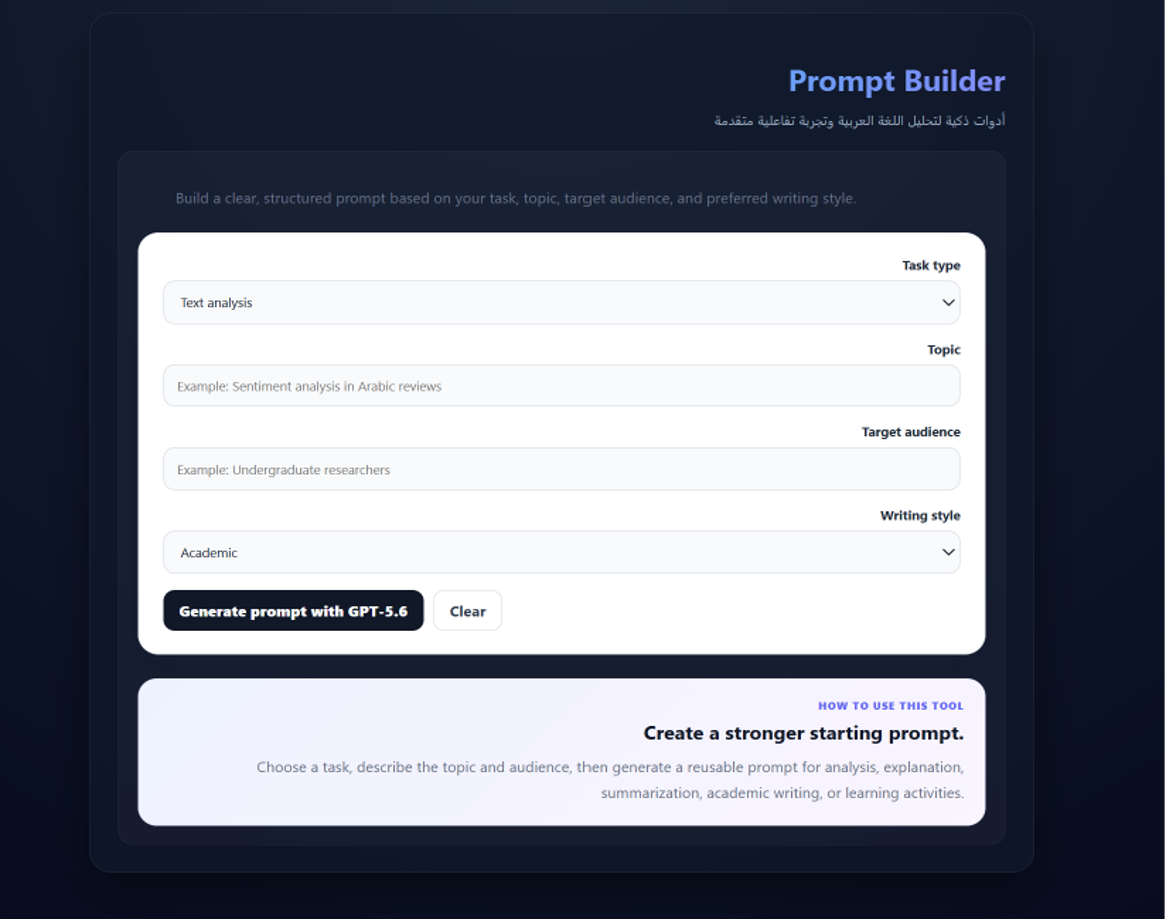
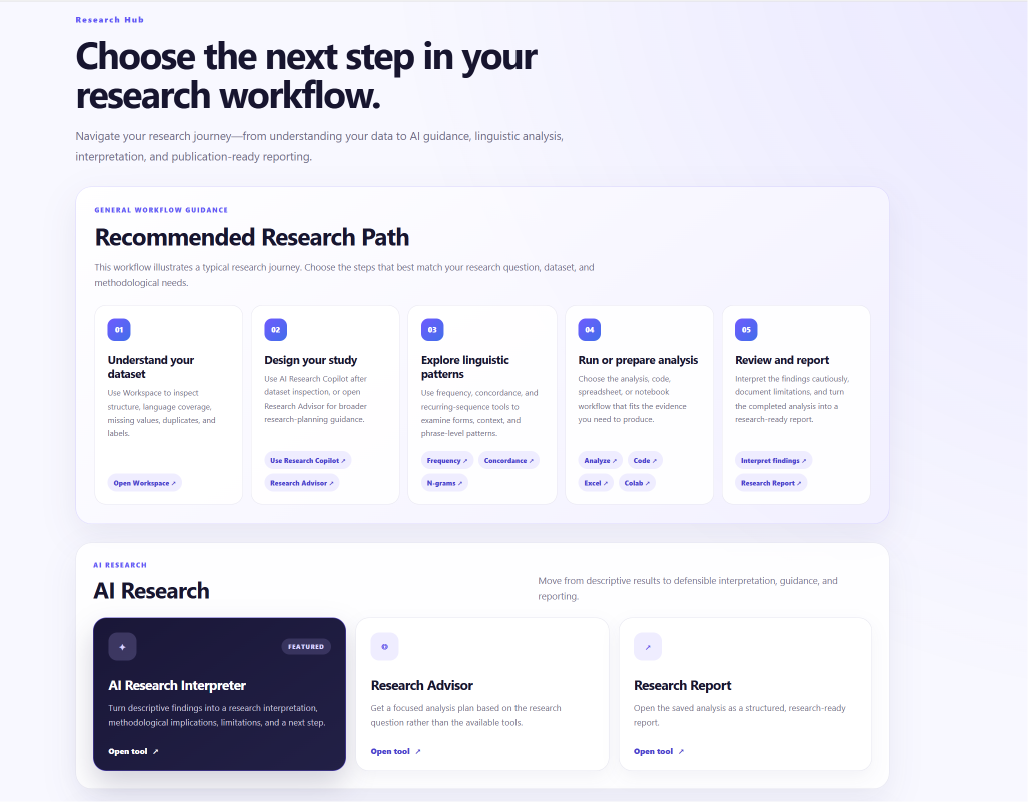
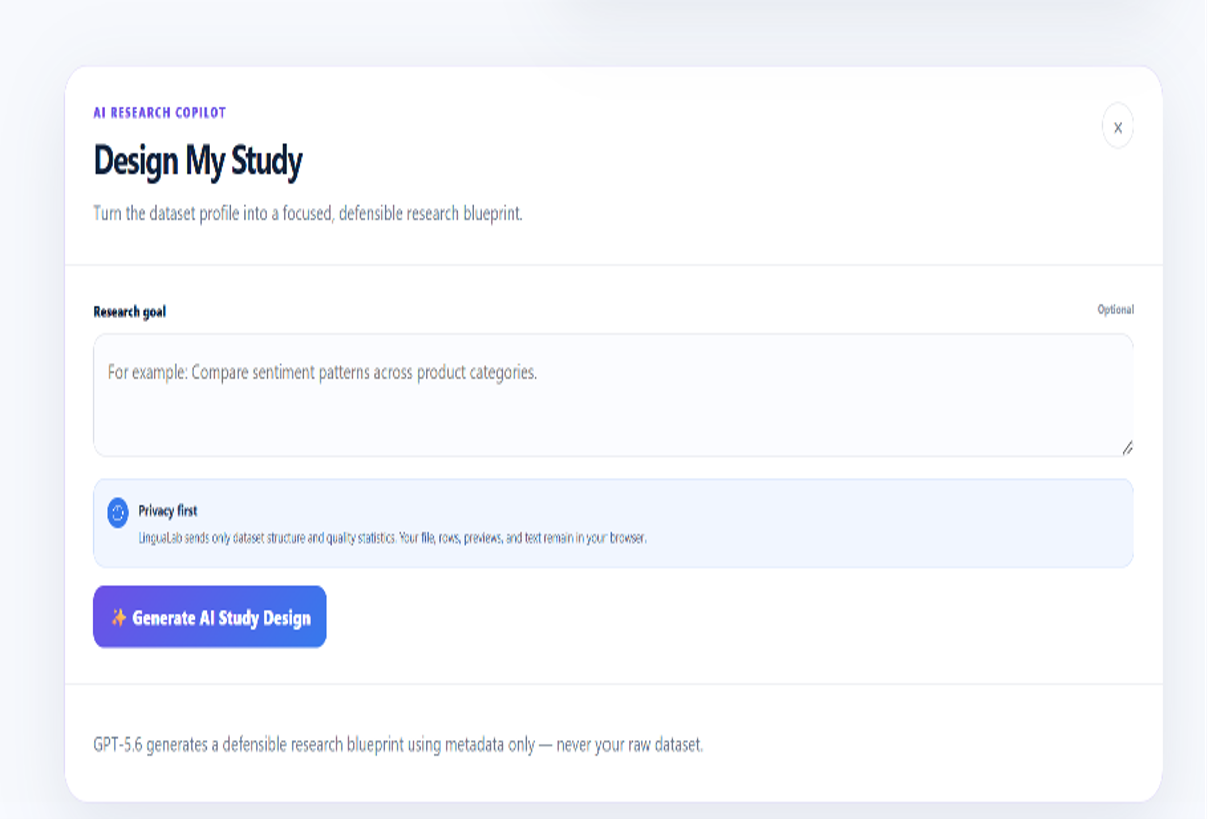
LinguaLab is an AI-powered corpus linguistics research platform designed to simplify Arabic computational linguistics research. It combines built-in corpus analysis tools, dataset understanding, AI-guided research planning, and GPT-5.6 reasoning into a unified research workflow that helps researchers move from raw corpora to publication-ready research.
Unlike traditional corpus analysis platforms that primarily help researchers extract linguistic patterns, LinguaLab continues the research journey. Researchers can analyze Arabic corpora using integrated tools such as Concordance, KWIC (Key Word in Context), Frequency Lists, N-grams, Collocations, POS Tagging, Lemmatization, Corpus Query Language, and other research utilities. GPT-5.6 then transforms those analytical findings into research questions, study designs, methodological recommendations, result interpretations, and research reports within the same workspace.
LinguaLab began as an early research prototype exploring AI-assisted workflows for Arabic language research. During OpenAI Build Week, the platform was significantly redesigned and expanded into a complete AI-powered research environment with a new homepage, guided research workflow, GPT-5.6-powered research assistants, and major architectural, usability, and product improvements.
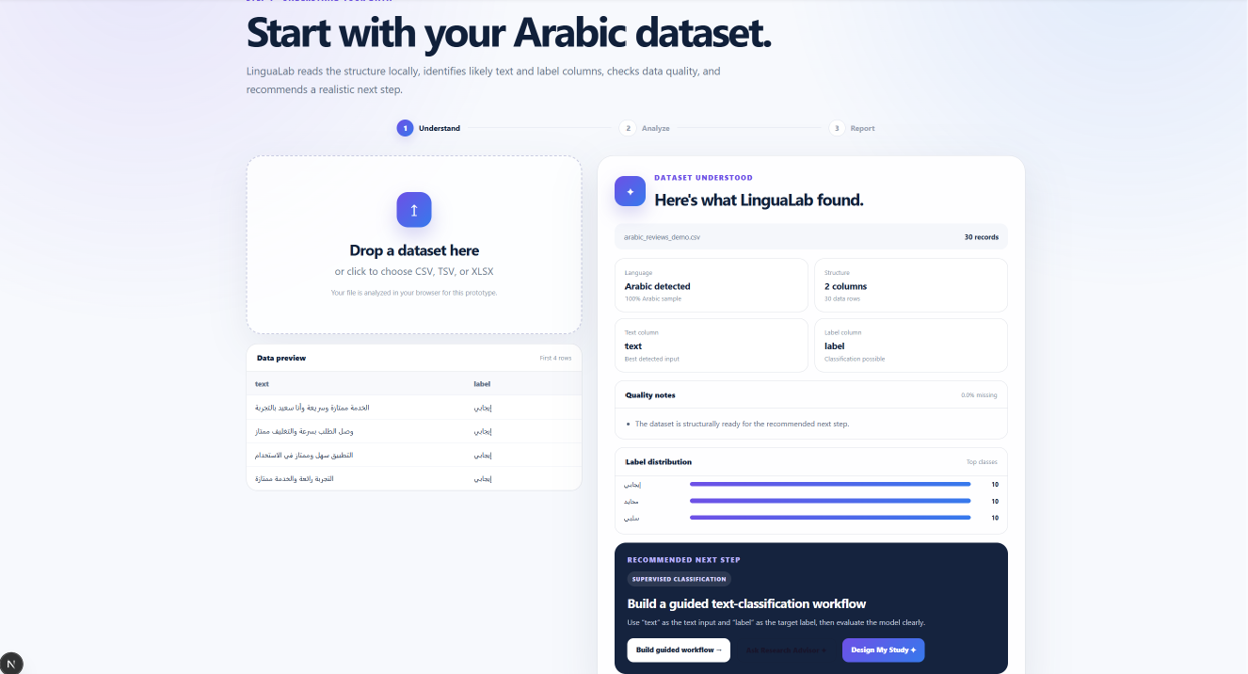
Researchers working with Arabic language datasets often face challenges long before model development begins. Understanding unfamiliar datasets, selecting appropriate research questions, designing methodology, choosing evaluation strategies, interpreting corpus analysis results, and connecting dataset characteristics to meaningful research outcomes typically requires multiple disconnected tools. LinguaLab addresses this challenge by bringing the entire research workflow together within a single platform.
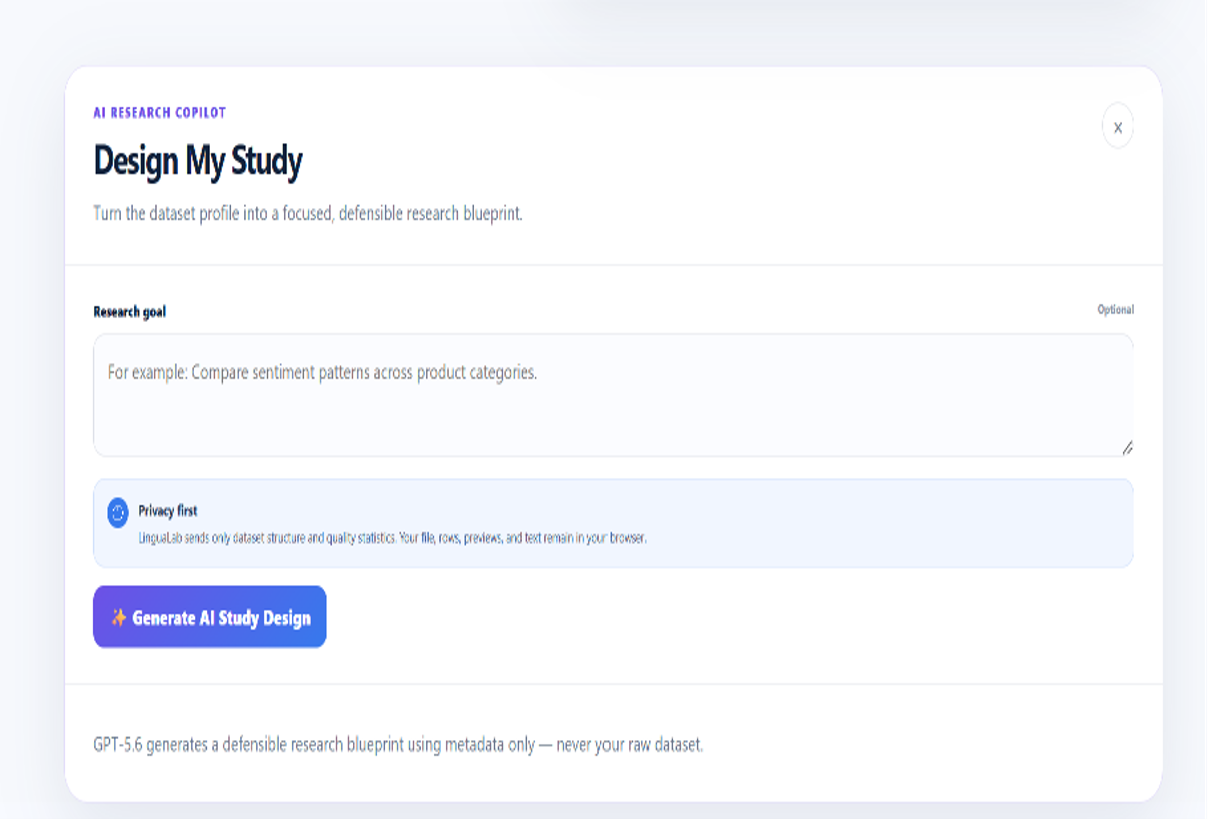
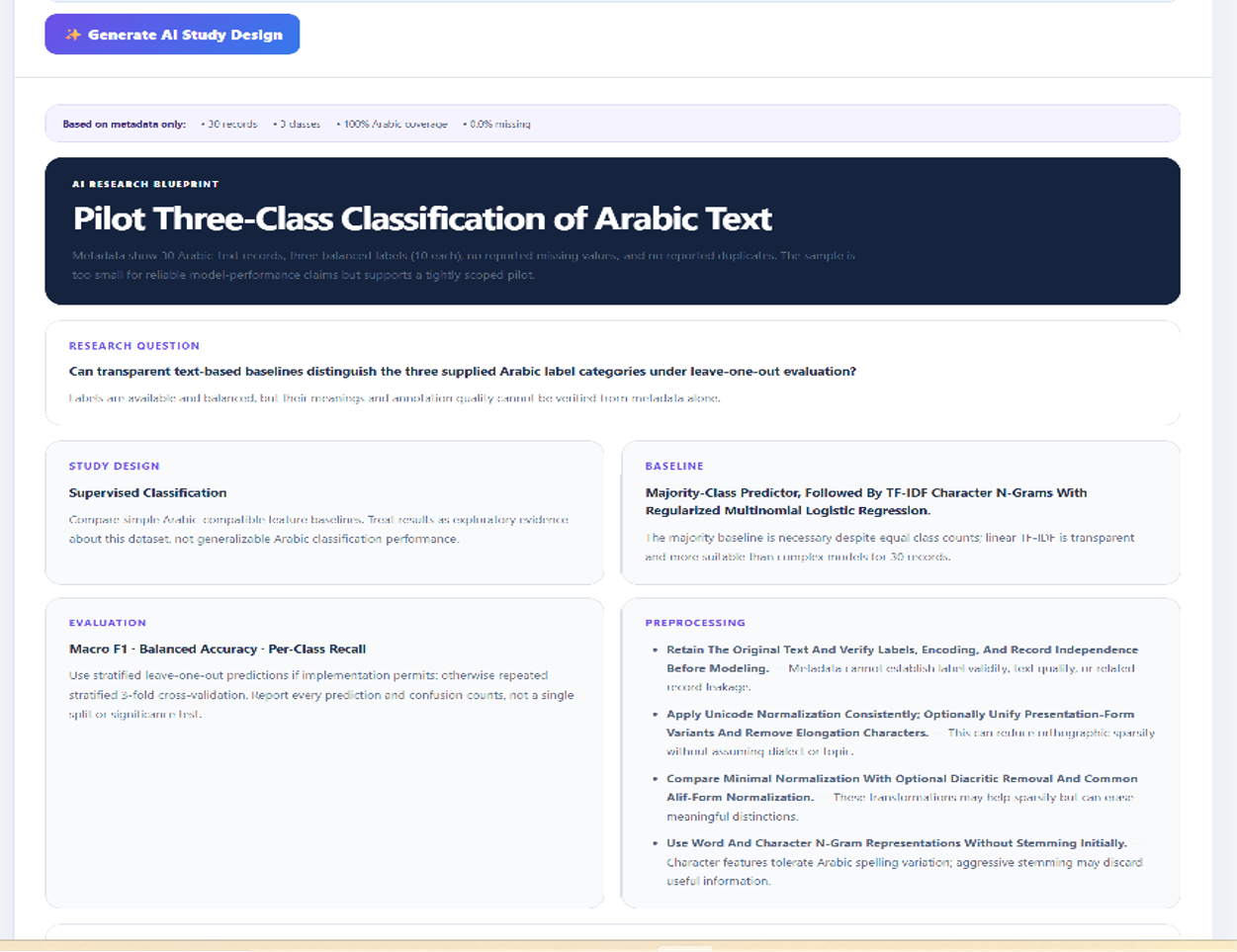
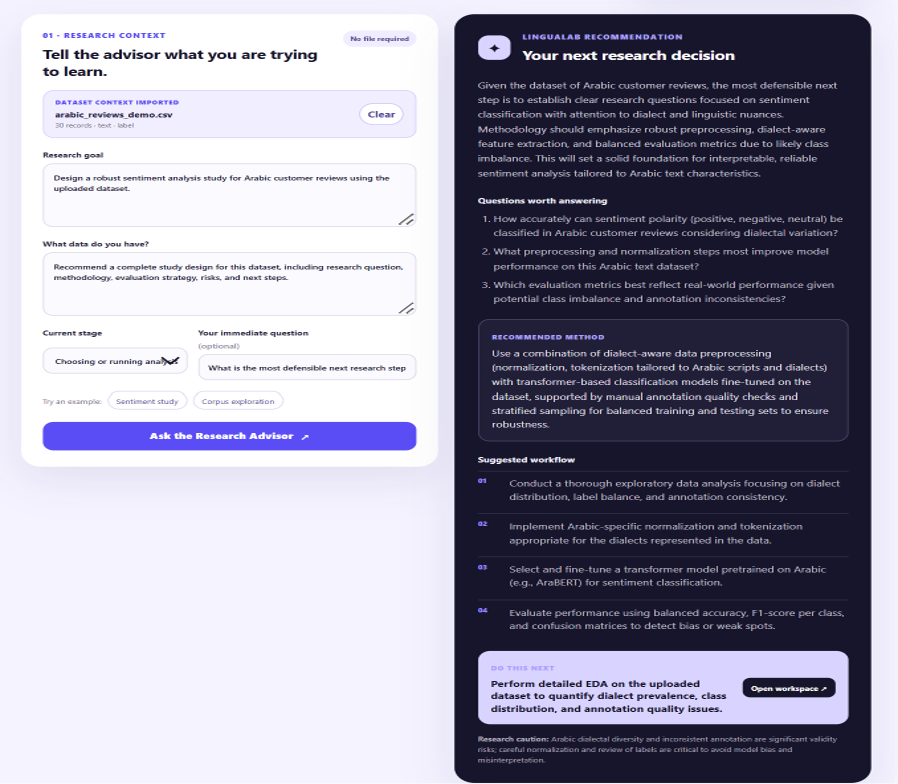
The workflow begins by analyzing uploaded datasets to extract structured metadata such as dataset size, language coverage, missing values, duplicate records, column types, and class distribution. Instead of relying solely on raw datasets, GPT-5.6 reasons over this structured metadata together with corpus analysis results to generate research questions, study-design recommendations, evaluation strategies, methodological guidance, dataset limitations, and practical next steps while keeping researchers in control of every decision.
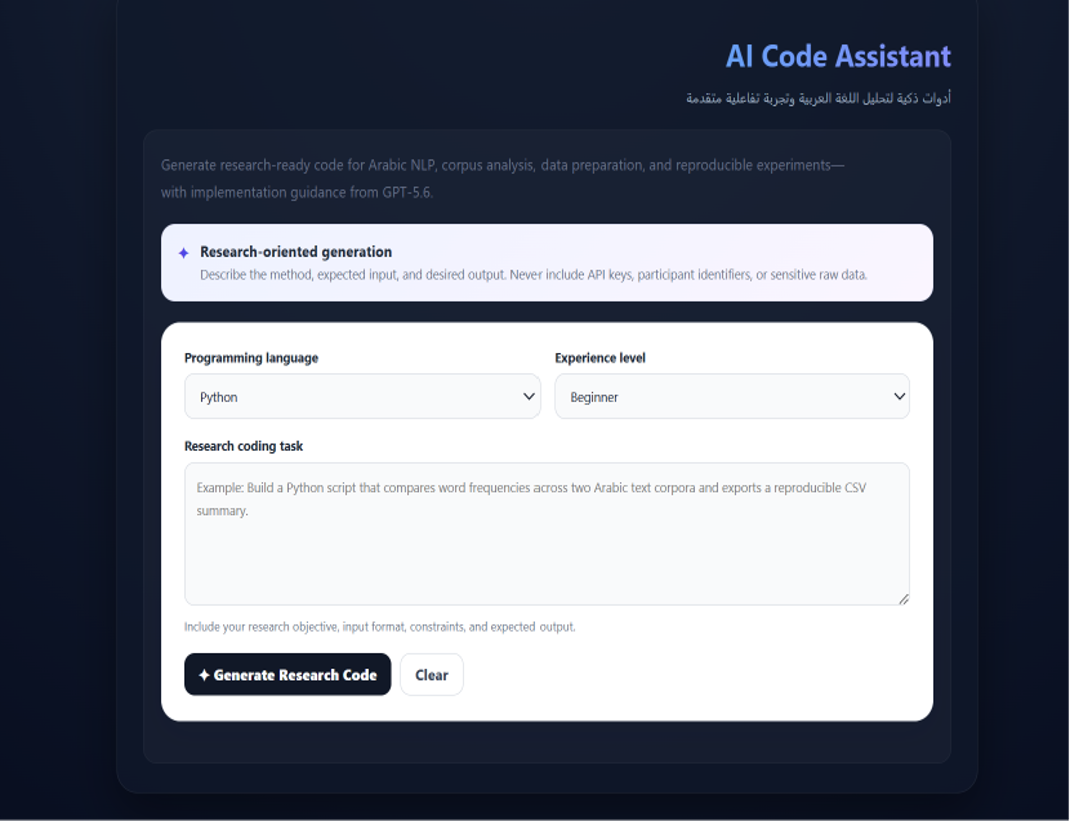
Beyond AI-assisted planning, LinguaLab integrates corpus linguistics tools, Spreadsheet Explorer, AI Research Advisor, AI Code Assistant, AI Prompt Builder, Recommended Research Path, Deterministic Research Outcomes, and automated research guidance into one cohesive research environment rather than a collection of isolated NLP utilities.
During Build Week, GPT-5.6 was integrated for higher-level research reasoning across multiple platform components, while OpenAI Codex supported codebase exploration, implementation, debugging, refactoring, integration, and build validation. All research methodology, system architecture, product decisions, and workflow design remained developer-driven.
LinguaLab also follows a privacy-first architecture. Whenever possible, the AI Research Copilot operates on structured dataset metadata instead of transmitting complete raw datasets, reducing unnecessary data exposure while still providing meaningful research guidance.
Ultimately, LinguaLab aims to bridge the gap between corpus analysis and AI-assisted research. Rather than stopping at linguistic analysis, it helps students, researchers, and educators transform corpus evidence into well-designed, interpretable, and publication-ready computational linguistics research
Built With
- ai
- analysis
- arabic
- codex
- computational
- corpus
- css
- data
- education
- generative
- google-spreadsheets
- gpt
- gpt-5.6
- html
- javascript
- linguistics
- machine-learning
- natural-language-processing
- next
- node.js
- openai
- react
- responses
- tool
- vercel

Log in or sign up for Devpost to join the conversation.