-
-
Checkmark
🧠 Lingua Learn 💡 Inspiration
We were inspired by the communication gap that still exists between Deaf and hearing communities. While millions of people want to learn sign language, most current learning methods — like videos or flashcards — don’t provide real-time feedback.
We wanted to create a tool that doesn’t just teach signs, but actually interacts with learners, helping them practice accurately and confidently.
🚀 What it does
Lingua Learn is an AI-powered web app that helps users learn sign language interactively.
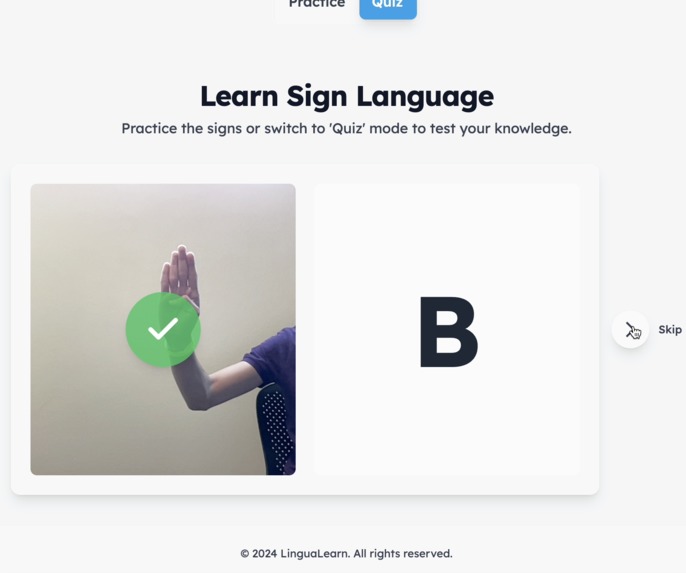
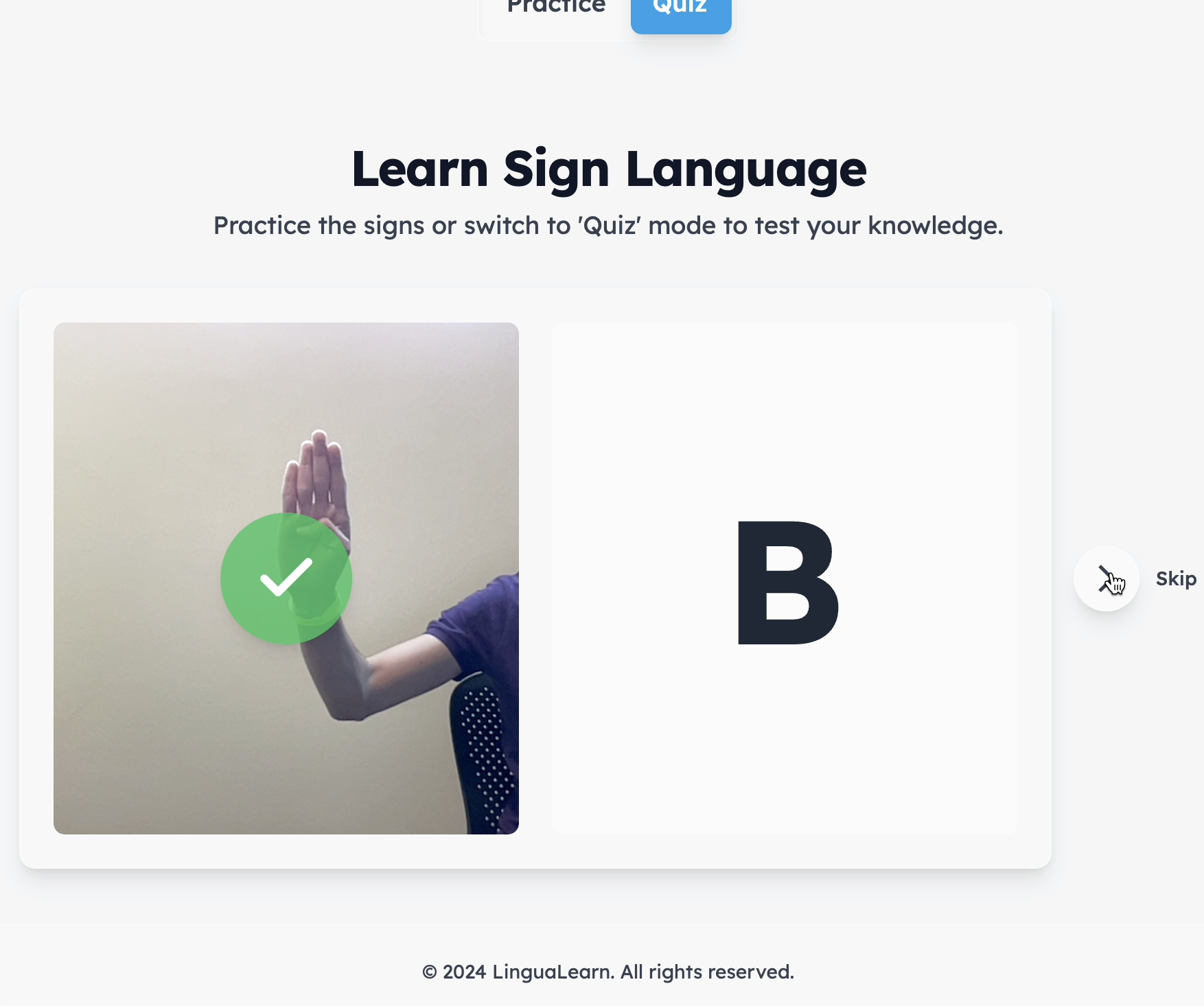
Using a webcam, it recognizes hand shapes, movements, and positions, then compares them to correct ASL signs to give instant feedback and accuracy scores.
Learners progress through flashcard-style quizzes, earning points and tracking improvement as they go. The system adapts to each user’s performance, helping them improve fluency and precision over time — bridging the gap between static lessons and real conversation practice.
🛠️ How we built it
We used a combination of computer vision, AI modeling, and web technologies:
🖐️ MediaPipe + OpenCV for real-time hand detection and tracking
🤖 Computer Vision for sign recognition using fine-tuned pretrained models
💻 React.js for an accessible, responsive frontend
⚙️ Flask / FastAPI for the backend handling webcam input and model inference
We followed an agile development process, creating rapid prototypes and refining both the AI and UX through user testing.
⚡ Challenges we ran into
Dataset limitations: Public ASL datasets are limited, inconsistent, and often lack dynamic motion sequences.
Real-time inference: Maintaining low latency for webcam-based detection required GPU acceleration and efficient data pipelines.
Gesture ambiguity: Many signs look similar; improving model precision demanded motion-based analysis.
Accessibility design: Balancing simplicity, inclusivity, and visual feedback for both Deaf and hearing users required thoughtful UI/UX iteration.
🏆 Accomplishments that we're proud of
Developed a functional MVP that recognizes ASL signs and gives AI-driven confidence feedback.
Built a visually intuitive, inclusive interface accessible across devices.
Showcased how AI can enhance accessibility and education, not just spoken-language learning.
Fostered a diverse, mission-driven team combining tech, design, and social impact expertise.
📚 What we learned
True accessibility design starts with understanding human diversity, not just coding features.
Even small UX choices — like clear visual cues and progress indicators — can significantly boost engagement.
Effective sign detection requires temporal context (motion analysis), not just static classification.
Cross-cultural collaboration enriches both the technical and human sides of product development.
🔮 What's next for Lingua Learn
Our next milestone focuses on certification, analytics, and community growth:
🎓 Certification Pathway
Offer official ASL proficiency exams, tiered by skill level, enabling users to validate their learning and unlock professional opportunities.
📊 Performance Dashboard
Provide detailed analytics showing progress over time — accuracy, fluency, and learning speed.
🌍 Community Features
Introduce peer practice rooms, leaderboards, and mentorship programs connecting Deaf and hearing learners globally.
🧠 Model Expansion
Train models for additional sign languages, improve temporal recognition, and expand datasets through ethical data partnerships.
🕊️ Our Vision
Communication is a human right. By merging AI technology with inclusive design, Lingua Learn aims to make sign language learning accessible, interactive, and empowering — connecting people across barriers through empathy and innovation.


Log in or sign up for Devpost to join the conversation.