-
-
3
-
4
-
1
-
2
-
5
Inspiration
Access to quality STEM and vocational education remains one of the most reliable vehicles for economic mobility, yet millions of global learners face an invisible barrier. Standard educational resources rely heavily on dry, Western-centric technical terminology and English-centric instruction. Traditional machine translation platforms merely translate words literally, failing to bridge the conceptual and cultural gaps that prevent deep understanding. We were inspired by Dario Amodei's essay "Machines of Loving Grace" to create a tool that centers human dignity by breaking down linguistic and pedagogical barriers, ensuring that technical knowledge is accessible to anyone, anywhere, in a context that makes sense to them.
What it does
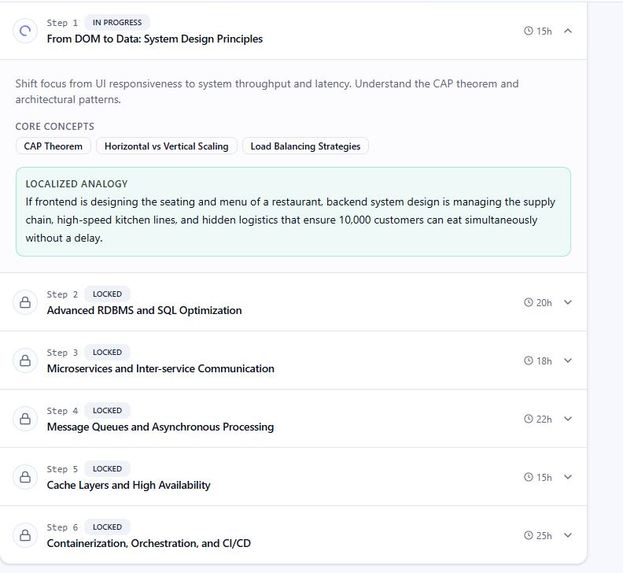
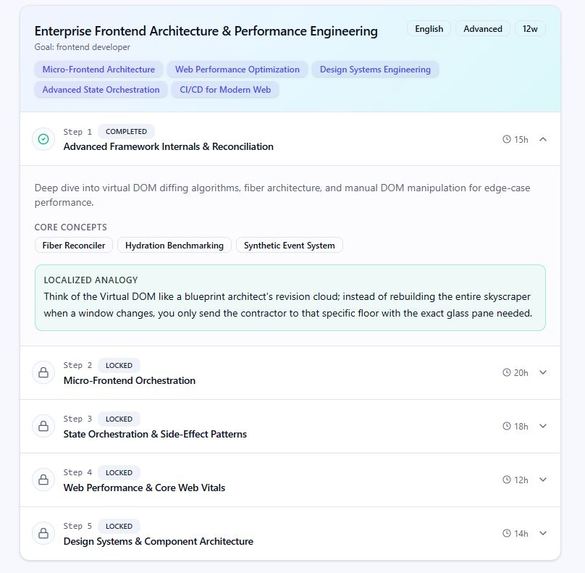
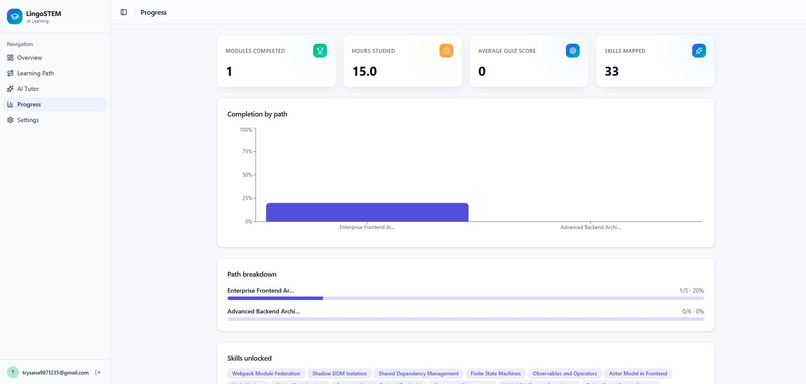
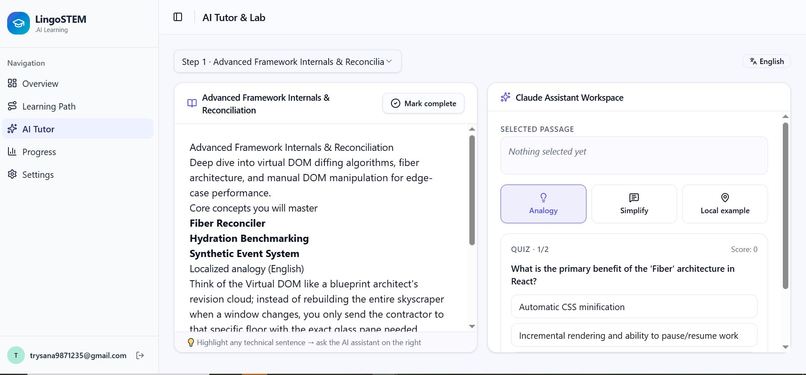
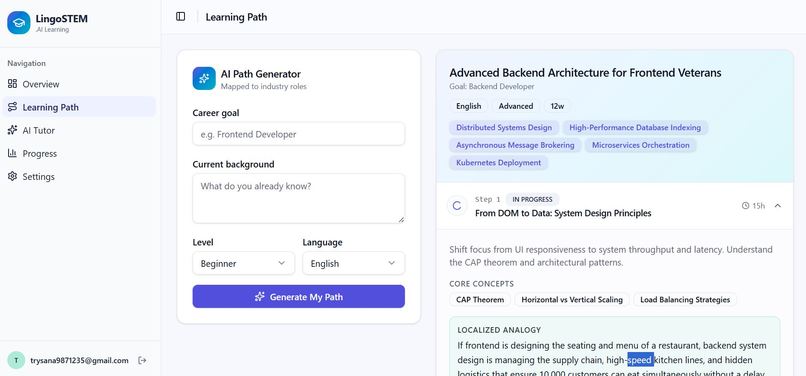
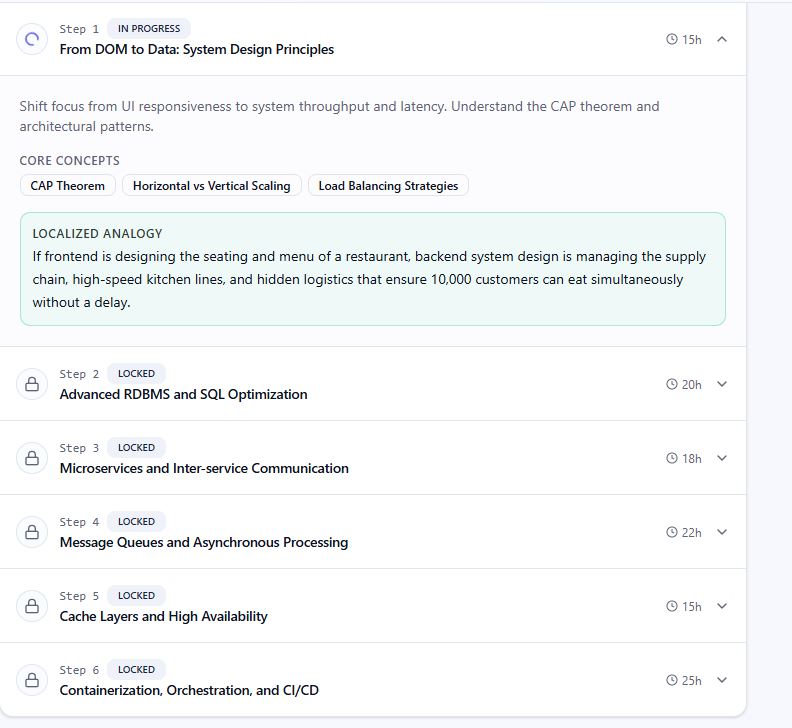
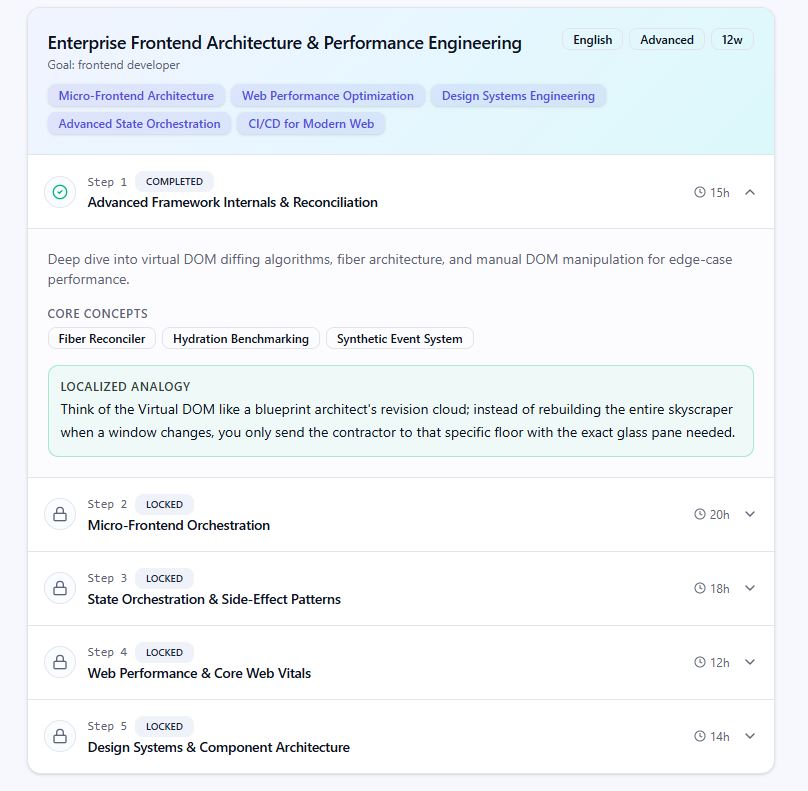
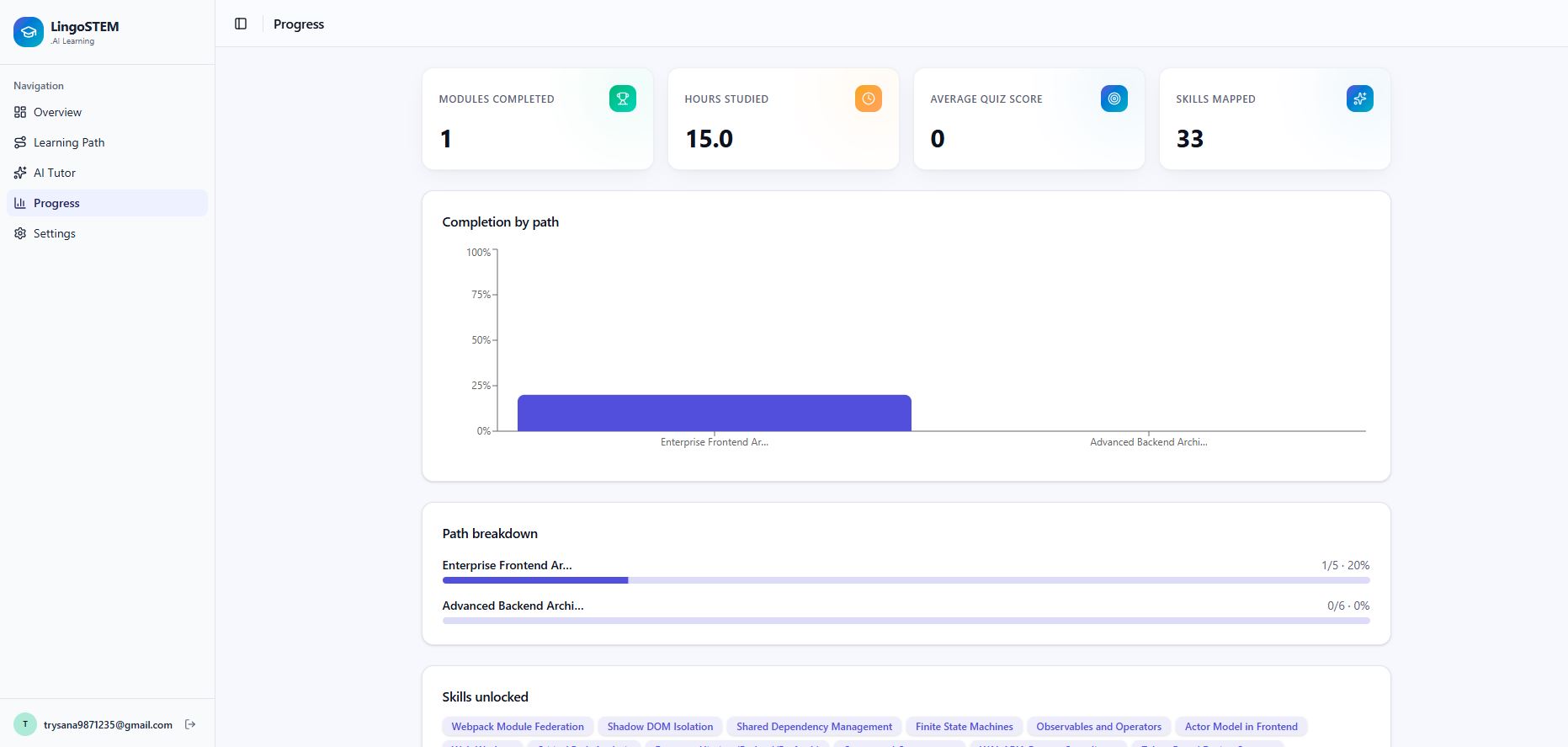
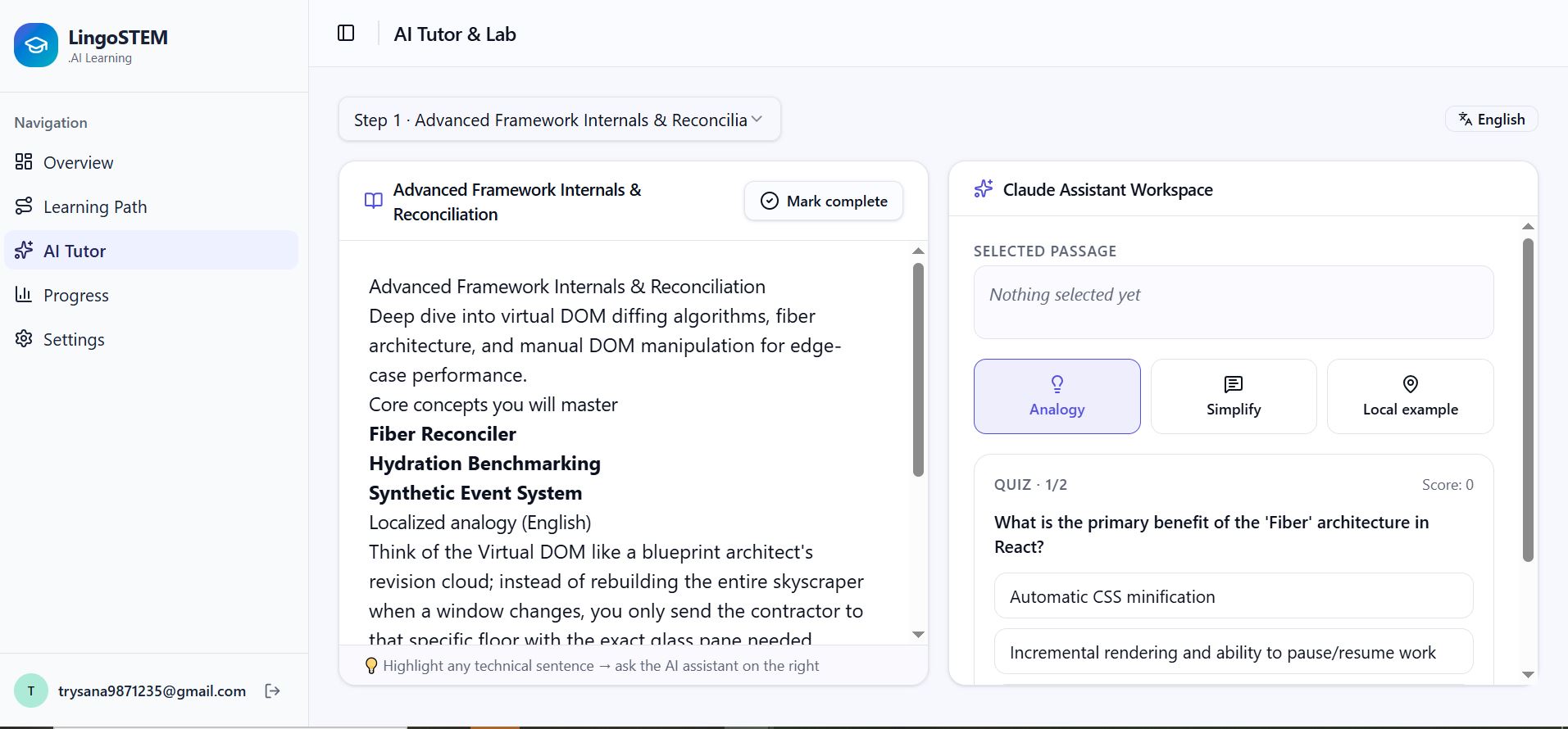
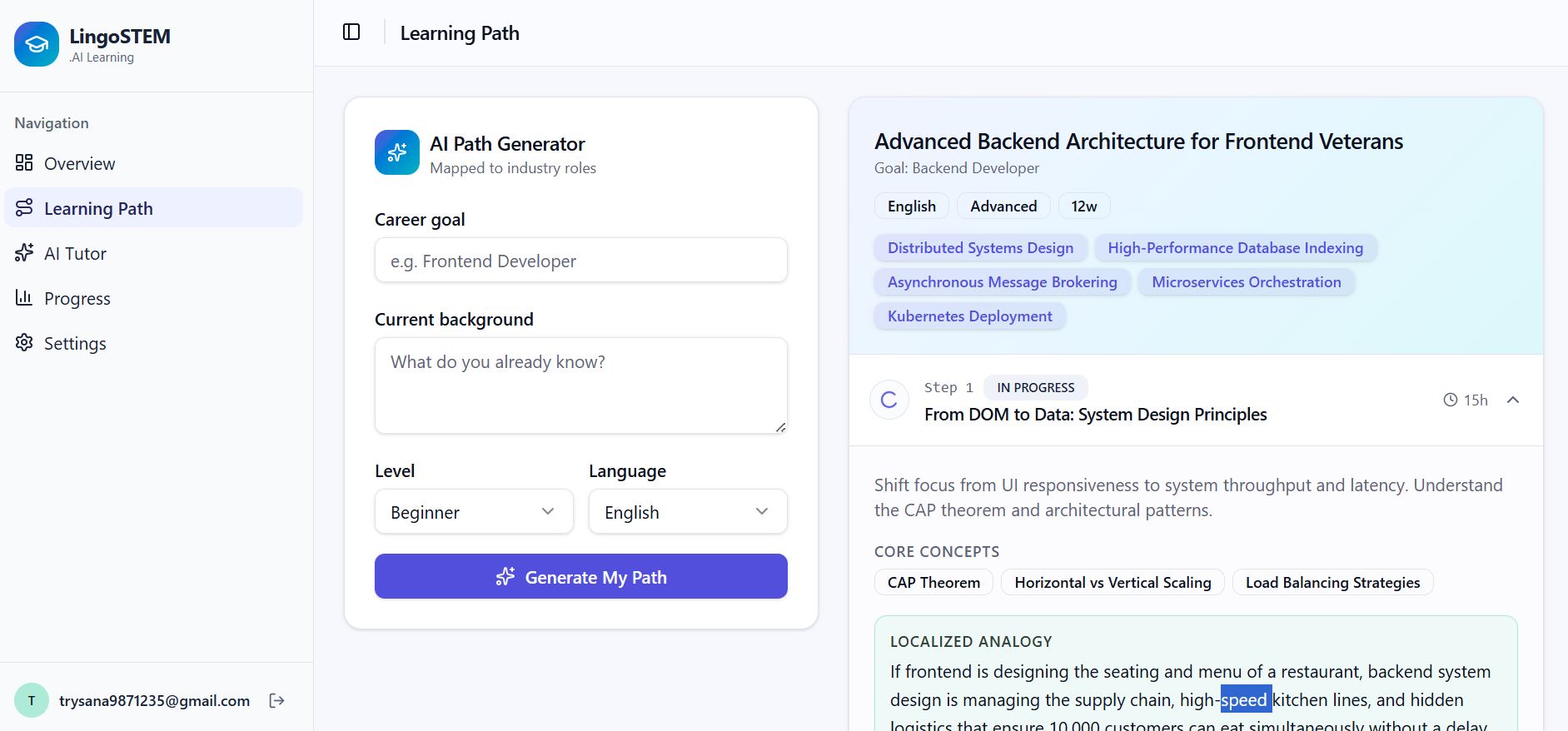
LingoSTEM.AI is an intelligent, full-stack educational platform that shifts learning from generic interfaces to a structured, personalized ecosystem. Users input their career goals, baseline experience, and regional language or cultural context. The platform maps these inputs into a comprehensive, step-by-step modular curriculum. Instead of basic translations, LingoSTEM.AI features a specialized workspace where complex technical concepts are dynamically translated into highly relatable, regional, real-world analogies. It also generates modular, adaptive micro-quizzes to test retention and logs student progress on a centralized analytics dashboard.
How we built it
The core application architecture was engineered using React and Vite for a highly scalable frontend, with Tailwind CSS ensuring an accessible, scannable user interface. We utilized Lovable to accelerate full-stack scaffolding and UI state management. The backend is powered by a Supabase PostgreSQL database architecture that governs user profiles, curriculum paths, modular states, and real-time analytical telemetry. AI orchestration is handled by connecting the client application directly to the Claude API, leveraging Claude 3.5 Sonnet to serve as the structural pedagogical engine.
Challenges we ran into
One of our primary technical hurdles was moving away from the standard chatbot wrapper pattern to build a deterministic educational system. We had to ensure that the Claude API returned highly structured, valid JSON outputs that our frontend could map into UI elements like timelines, modules, and quiz components without crashing. Perfecting the schema engineering to enforce correct answer indices and accurate completion timelines took rigorous testing. Additionally, tuning the model to generate accurate cultural analogies rather than simple word translations required deep systemic prompt constraints.
Accomplishments that we're proud of
We are incredibly proud of building a fully functional, full-stack platform within a tight four-day sprint. We successfully rejected the basic chatbot wrapper design, creating a platform where Claude acts as a true backend architect, rendering complex data dynamically. Securing full data persistence with Supabase means that student progress, unlocked skills, and customized paths are preserved seamlessly across sessions, mimicking a production-ready application.
What we learned
Participating in this sprint taught us the massive potential of structured AI outputs using JSON mode. We learned how to write precise schema assertions that make LLMs highly reliable components of a software stack. On a human level, exploring how Claude can reframe abstract software engineering or mathematical concepts through local marketplace or regional transit analogies highlighted how AI can be used as a tool for genuine educational equity and empathy.
What's next for LingoSTEM.AI
We plan to transition LingoSTEM.AI into a multimodal platform by integrating speech-to-text and text-to-speech features, allowing low-literacy or visually impaired learners to interact verbally in their native languages. We also want to introduce offline sync capabilities to support students in low-bandwidth regions, and expand our Supabase schema to allow peer-to-peer collaboration, enabling local mentors to review AI-generated learning milestones.
Built With
- api
- claude
- css
- html5
- javascript
- json
- sql
- typescript

Log in or sign up for Devpost to join the conversation.