-
-
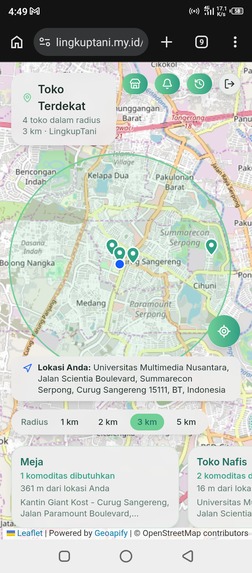
mobile ui
-
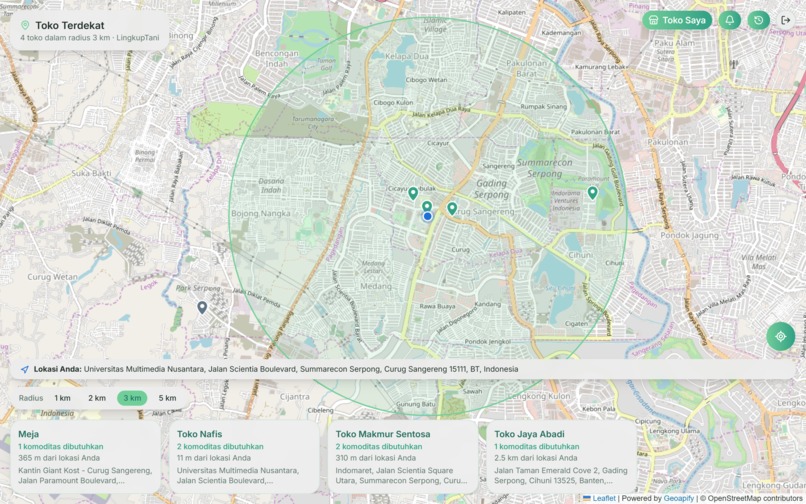
web ui
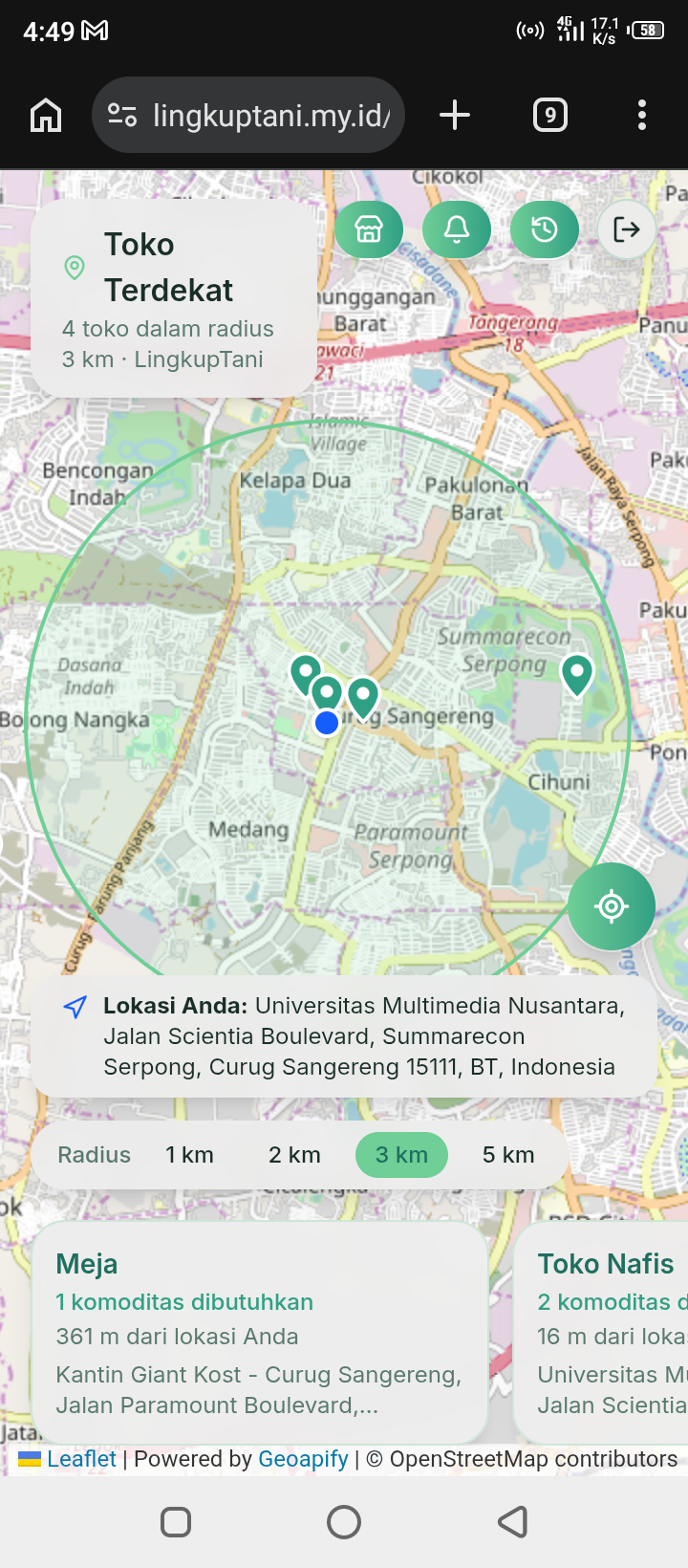
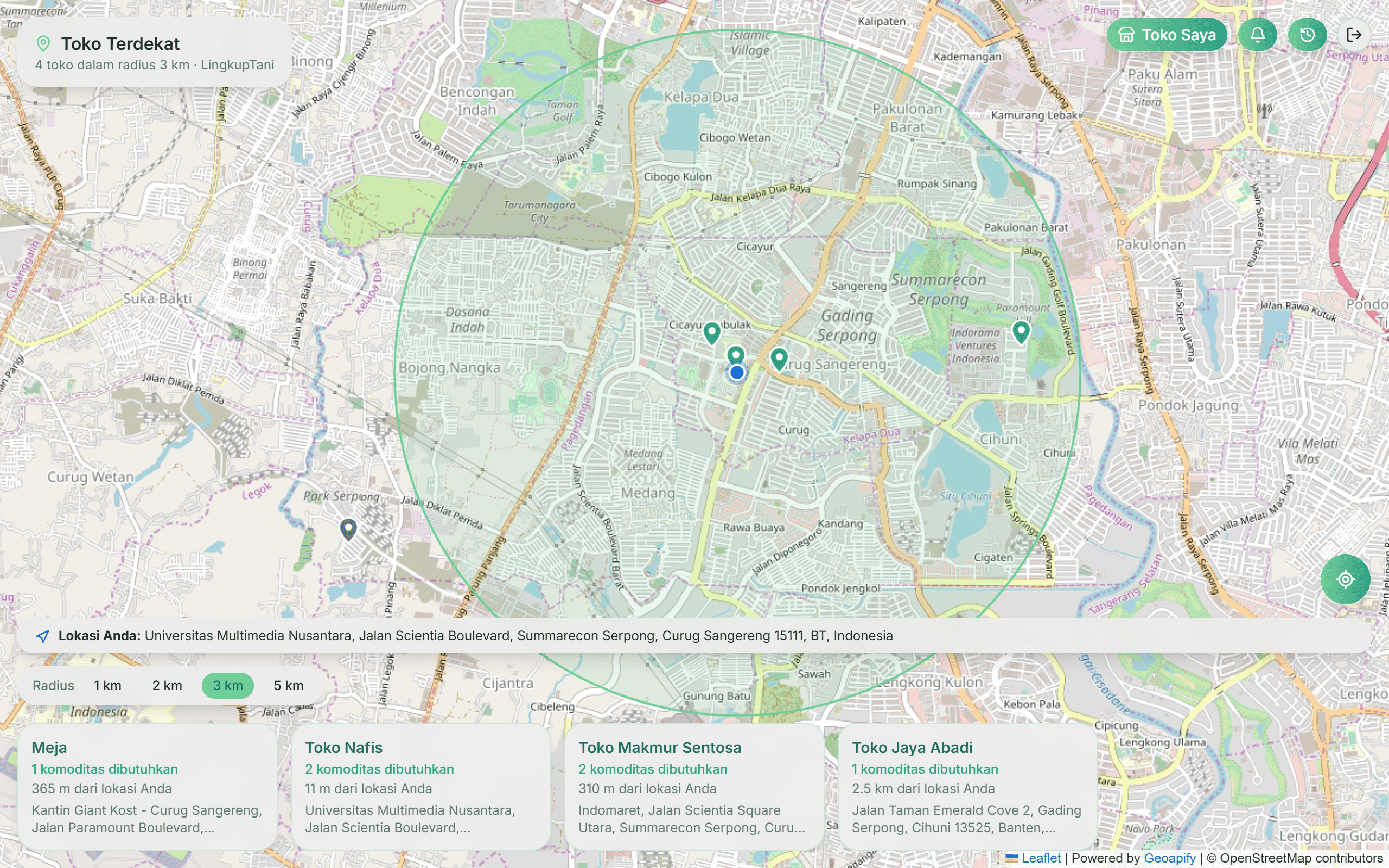
In early 2023, a farmer in West Lampung went viral for dumping hundreds of kilograms of ripe tomatoes into a ravine after prices crashed to Rp600–800/kg the crate, he said, cost more than the tomatoes inside. That scene is not an exception: in Indonesia, fruits and vegetables are the most lost and wasted food category in the entire food chain, and nationally around 14% of food is lost after harvest and 17% wasted at the table roughly 31% in total, worth about Rp550 trillion a year, equal to 4–5% of GDP and enough to feed an estimated 29–47% of the population. Yet this is a connection problem more than a production one: the chain from farmer to buyer is too long, farmers are blind to who needs their harvest nearby, and every hour of waiting wilts perishable produce until it can't be sold with farmers, among the country's most economically vulnerable citizens, bearing the loss. We built LingkupTani to close that gap: a map-first app that shows farmers which stores and buyers within a 1–3 km radius need their harvest right now, so produce sells fast and local while still fresh because good food should reach a plate, not a ravine
What it does
LingkupTani lets farmers find nearest buyer, discover the right market, and create the best offer. Features includec in this app:
- Store Map: Find the nearest buyers by radius
- Store Demands: Understand the market demands to formulate better offers
- Negotiation Offer: Haggle the price to increase profit.
- Transaction History: Track incoming/outcoming approved transactions.
How we built it
We built LingkupTani as a mobile-first web app on Next.js with shadcn/ui for a clean, consistent interface. Instead of a traditional dashboard, we made the experience map-first: the core screen is an interactive map rendered with Leaflet, using free OpenStreetMap tiles (with Geoapify as an upgrade path for nicer basemaps and geocoding). On sign-up, we use the browser's Geolocation API to capture the user's coordinates and reverse geocoding to auto-fill their address, so even low-literacy users can register in seconds without hunting for their location on the map. On the backend, we used Supabase (PostgreSQL + Auth) as our single source of truth. The key design decision was a single, general user account by default — from that same account, a user can optionally create a Store, with no separate logins, so one person can be a plain user, a farmer who also runs a store, or purely a store owner.
Challenges we ran into
We struggled with the map implementation, but we're proud to be able to finish the project with minimal bugs.
What's next for LingkupTani
LingkupTani can grow bigger with the contributions of farmers and buyers alike to build an ecosystem of digital farm production chain. Integrating buyers' supply chain with the app to simplify delivery of commodities for farmers.
Built With
- geoapify
- leaflet.js
- nextjs
- supabase

Log in or sign up for Devpost to join the conversation.