Inspiration
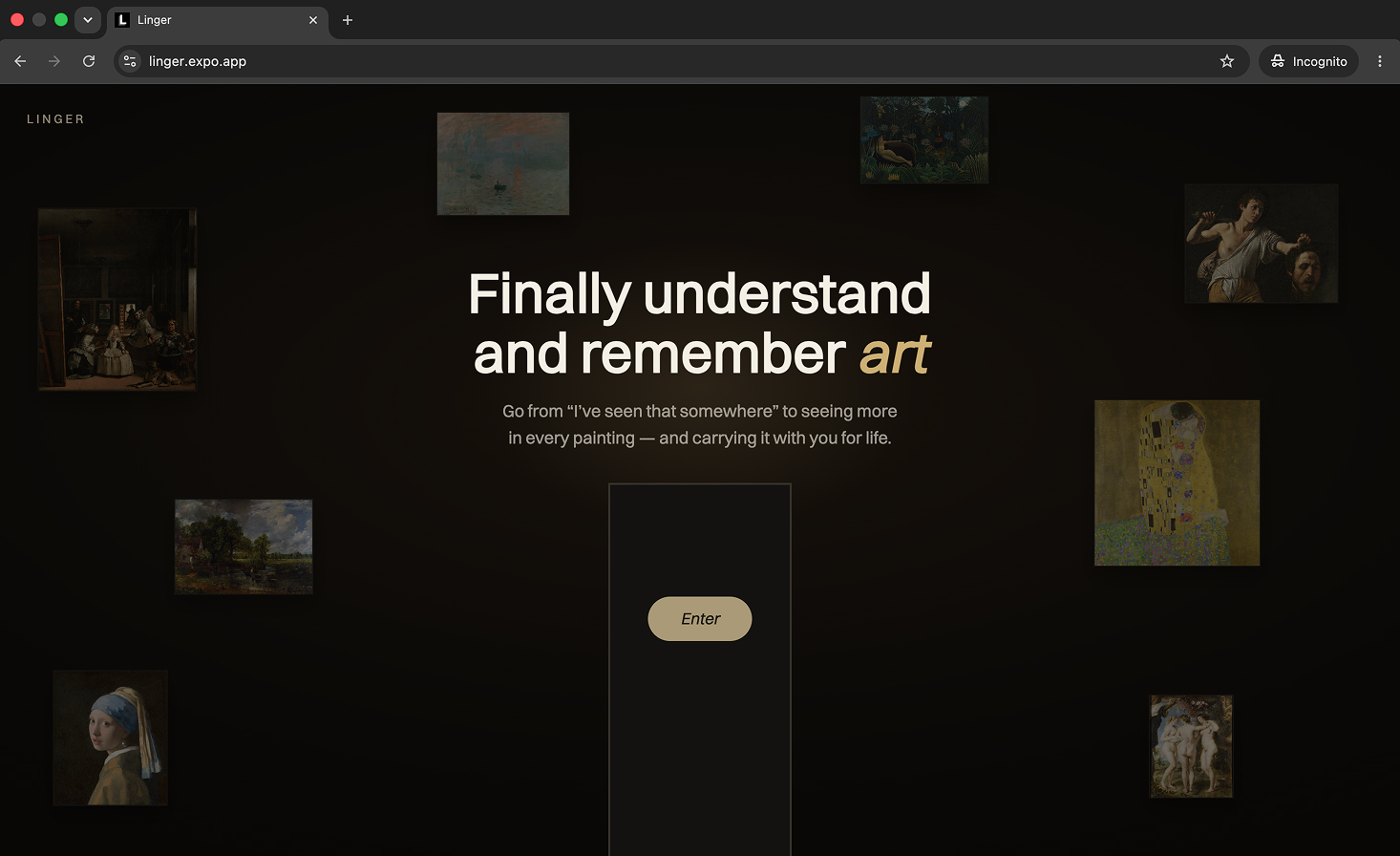
A few years ago I was genuinely curious about art. Recently I took part in a quiz and was disappointed to realise I'd forgotten most of the famous paintings I once knew. So I wanted something to help me refresh my memory of the great artworks, understand them deeper, and discover new ones.
I also can't help noticing that great art can feel exclusive. So I wanted to help people open the door to what makes great art great — without the long articles that demand more attention than most of us have to spare.
There's a bigger reason, too. As AI gets better at making things, it feels more meaningful than ever to cherish something deeply human — and to make it welcoming to people who don't "get it" on the first look.
I wanted the experience to feel physical and pleasurable — less like just another app. The guiding metaphor is opening a door into something you don't yet know, and leaving the room carrying something that's now truly yours. I looked for inspiration in photographs of museum interiors and in the little descriptor cards beside real paintings.
This isn't for people who study art professionally. It's for those who are curious, but not yet confident in the world of art.
What it does
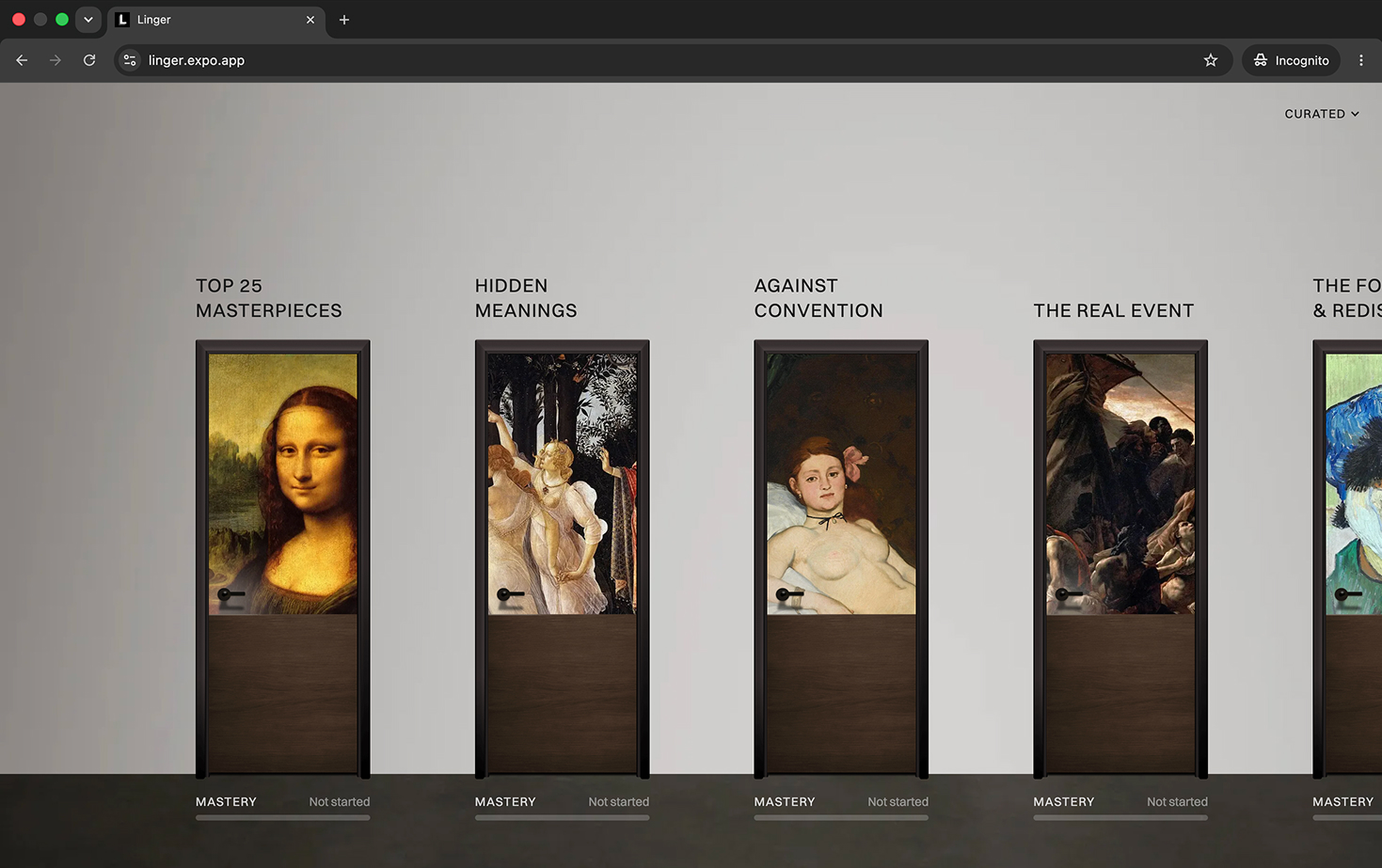
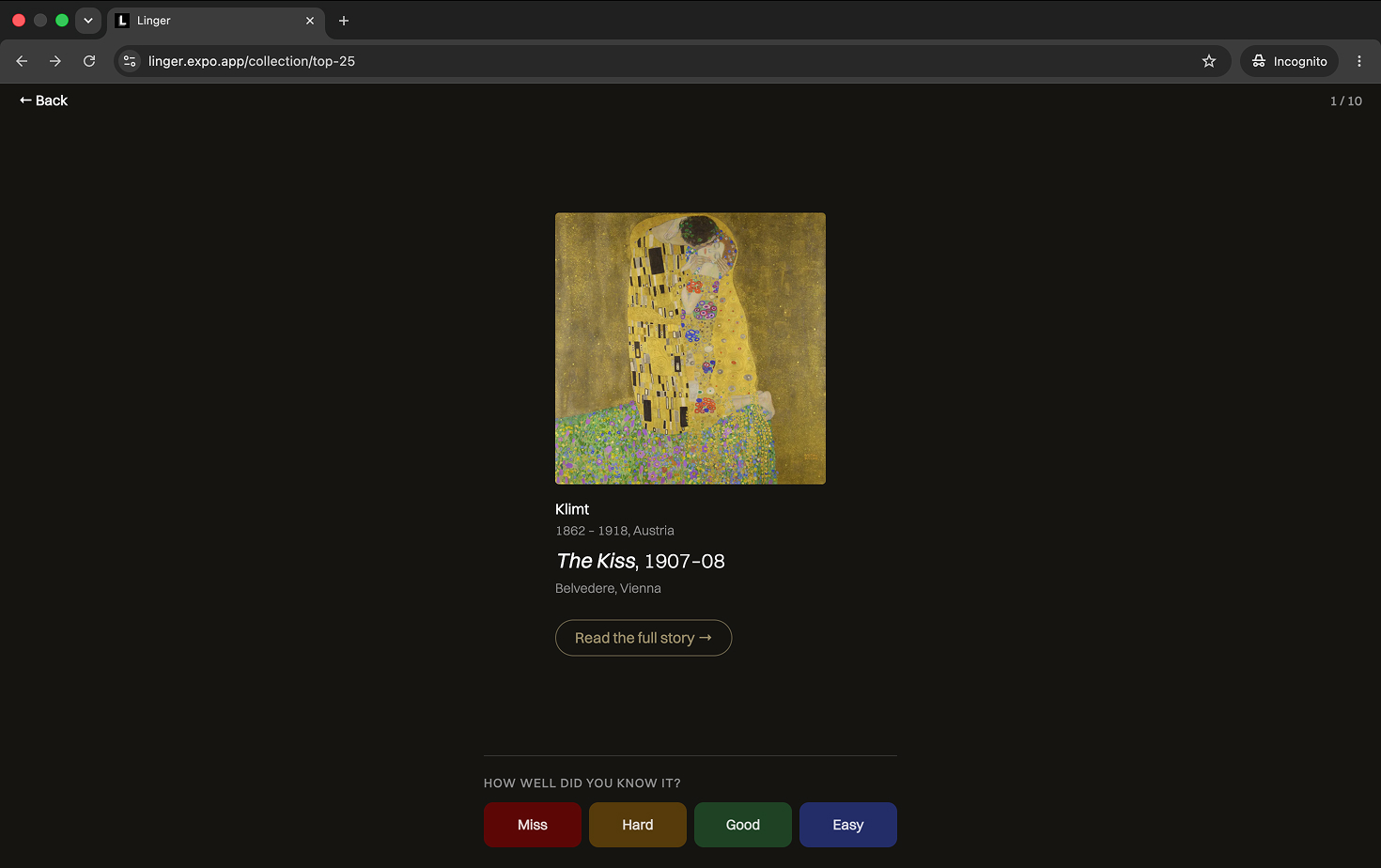
Linger is built around curated collections. Some are easy on-ramps, like Top 25 Masterpieces; others are more curious angles — Hidden Meanings, The Real Event, How Artists Saw Themselves.
There's also a Museums view. You can explore the works held in a specific museum, so that when you finally visit, you arrive looking forward to certain paintings — and you can truly savour the moment you stand before the original, understanding what the artist meant, what they might have felt, and the journey the work has taken over (sometimes) hundreds of years.
There are also Movements and Countries views, if you'd rather explore by style or by place.
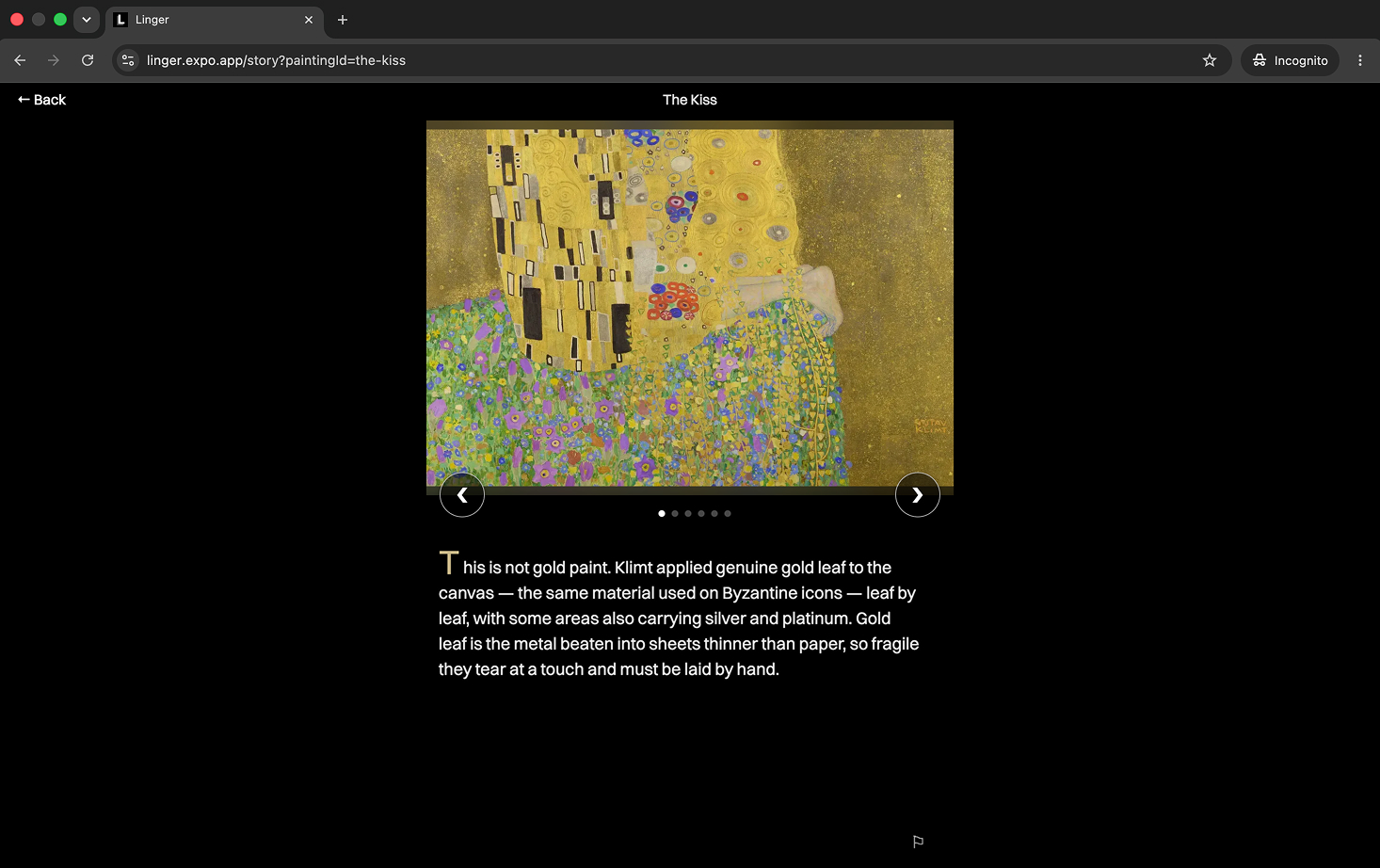
Other apps give you a single article about a whole canvas, but it's hard to map onto what you're actually looking at. So I split each painting into crops: one crop, one piece of meaning. I hoped this would be easier to follow for people with dyslexia or a short attention span — small, digestible moments instead of a wall of text.
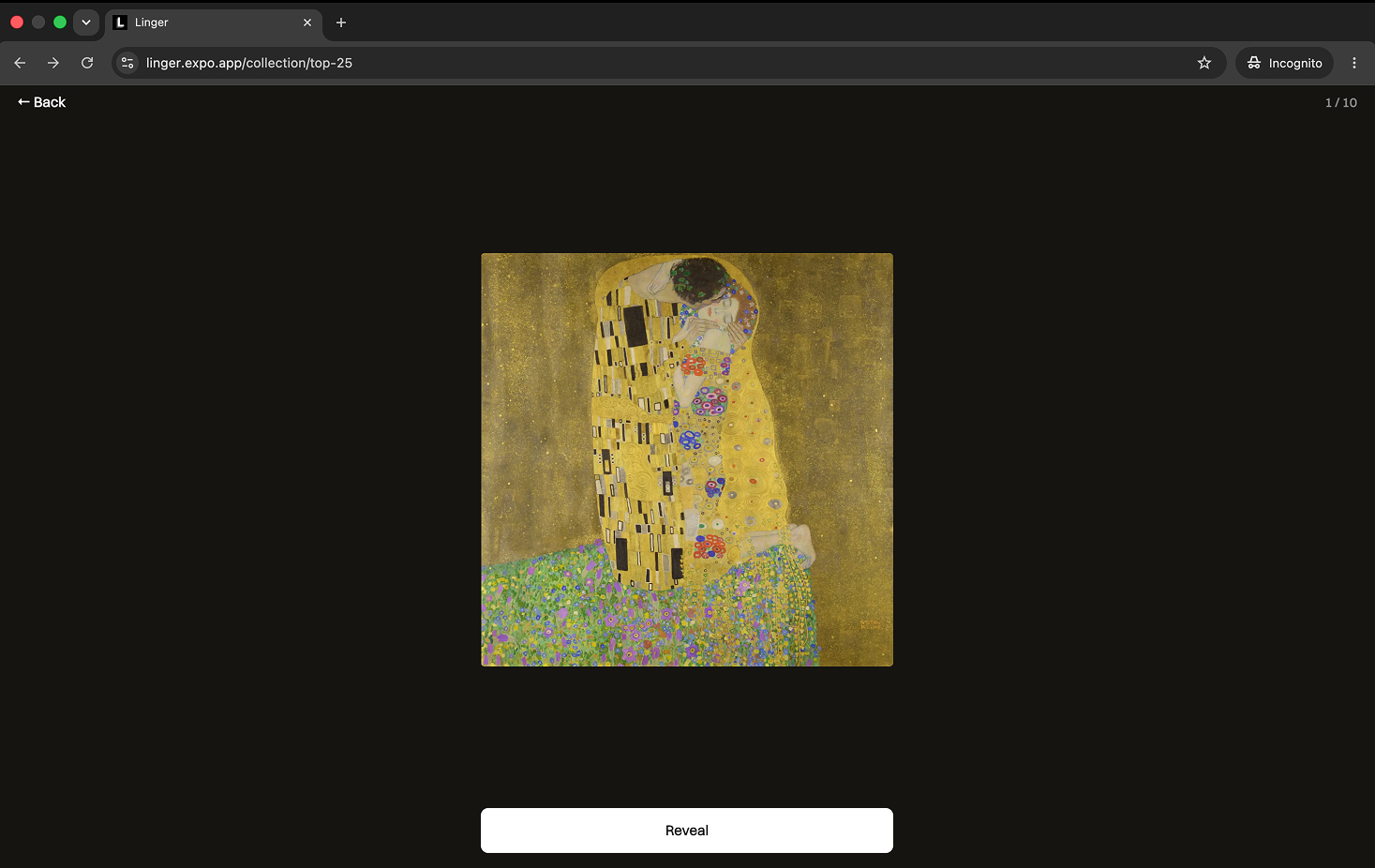
But Linger doesn't stop at introducing you to great art — it helps you make it yours, in understanding and in memory. What we don't revisit, we forget. So the app lets you earn mastery of a collection through spaced repetition, using a self-adjusting algorithm: the works you're least confident about come back more often, so they stick.
How I built it
I had a strong conviction about what a good explanation needs: it should say what's actually being depicted (often the first barrier to understanding, as it's often events, myths, or specific stories), point out any hidden symbolism (lots of paintings carry it), and dig for the surprising or unexpected — the detail that earns a painting a place in your heart and memory.
Credibility mattered to me, so I leaned on open, copyright-free material from trustworthy sources like museums and institutes. I built a set of Claude skills encoding my own rules: how images should be cropped (I was fascinated to learn that Claude can crop images based on text descriptions of the objects), how facts should be checked against primary sources, and how each story should be structured.
The technical build went smoothly. The hard part was the content. Claude would split each painting into 5–8 slides with a drafted mini-story for each, and then I'd go through around 400 slides line by line, pushing back:
- "The crop cuts off the hand holding the knife — that's the whole point of the scene. Widen it."
- "You've cropped the wrong woman — the one you're describing is on the right, not the left."
- "You claim the Medici commissioned it — I can't find that anywhere. Cite it or cut it."
- "You say there's symbolism here but never explain what the cat actually means."
- "You're telling a legend as if it's fact. Make clear this is a story people tell, not documented history."
- "Don't drop 'sfumato' without explaining it — half the audience won't know the word."
I also compared two memory algorithms before settling on the one that drives the spaced-repetition system.
Challenges I ran into
I believe people increasingly use their phones for this blend of entertainment and learning, so I designed Linger as a mobile app first. I'd shipped an iOS/Android app before for my employer, so I knew it was doable — last time, both stores approved within a day. This time, the surprises piled up.
Android. I learned that individual publishers now need to own an Android device. I only have an iPhone, so I bought a £20 Samsung from 2017 — only to find it ran Android 5, below the required Android 10, with no way to upgrade. After borrowing a friend's phone to finish verification, I hit the next rule: 12 testers using the app for 14 days before you can publish. I didn't have two weeks.
App Store. Despite the promised 48-hour review, Apple went quiet for more than four days while my hackathon clock ran down. (As of writing, it's in its sixth day of review — I've included the App Store link in case it clears before the deadline.) So I made a last-day pivot and shipped to the web as a bulletproof fallback — something I never planned to build. Honestly, I'm glad it went this way: web is also the lowest-barrier medium for people to try something.
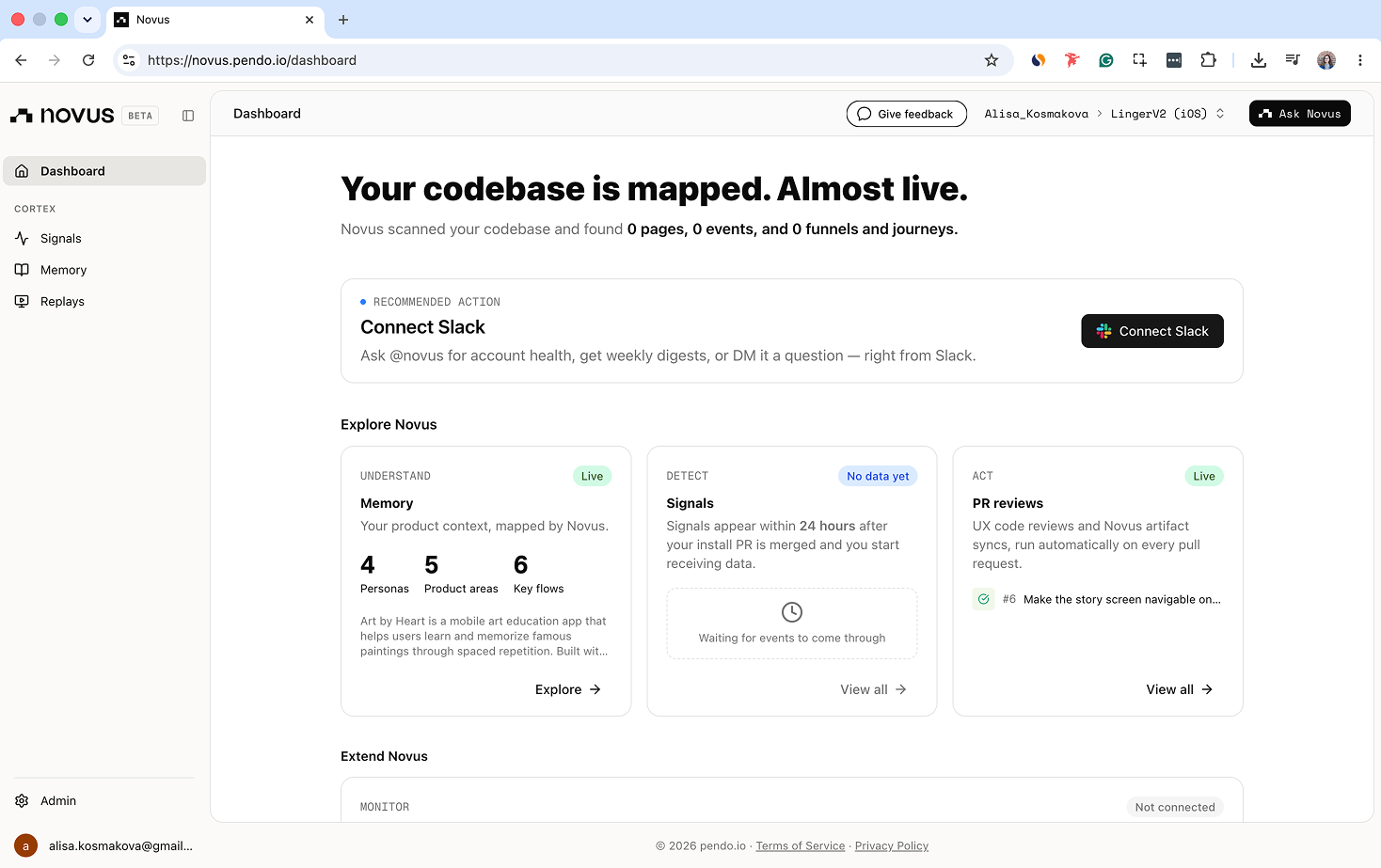
Novus. Over the week I think I found most of its edge cases — however, most of them were my own fault.
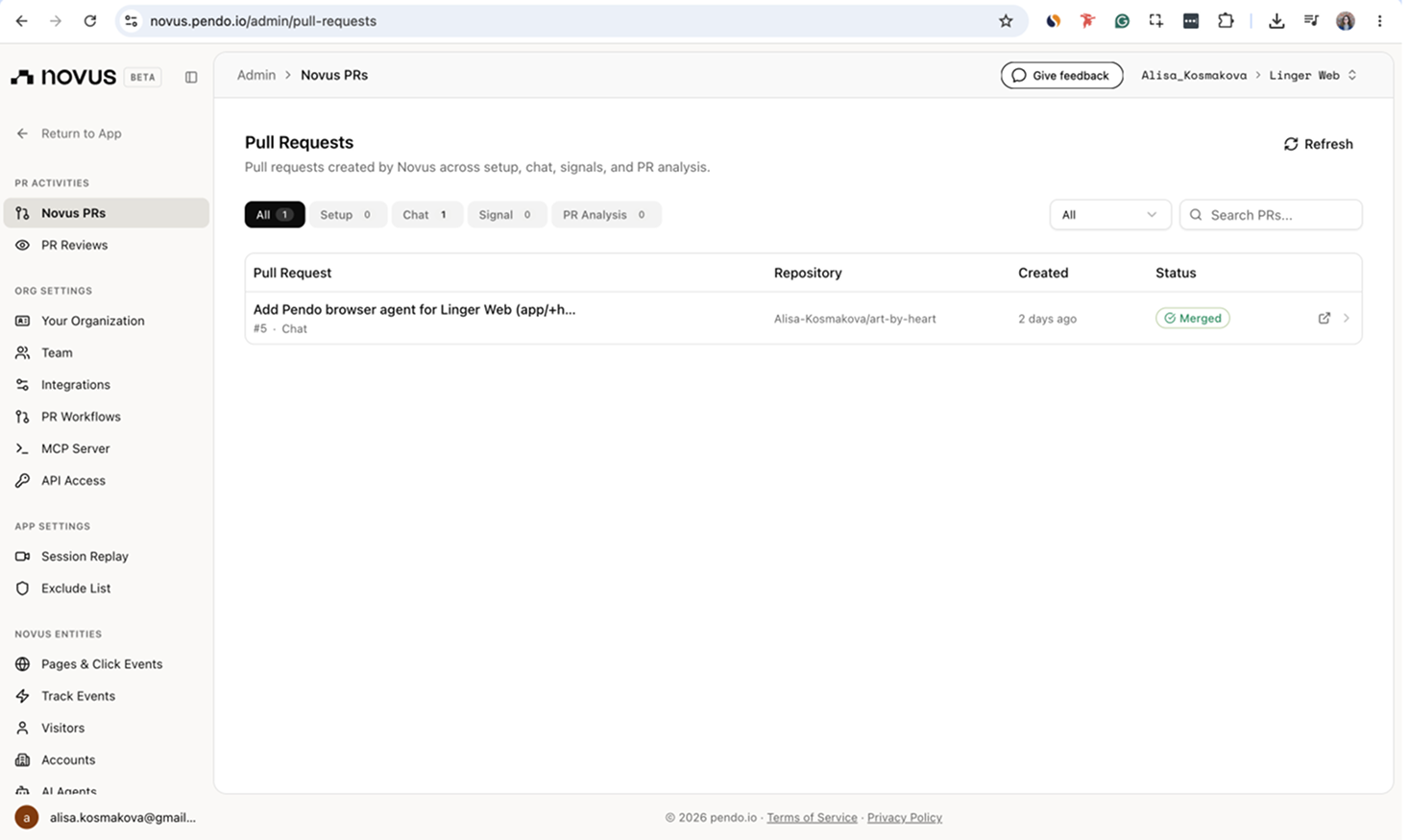
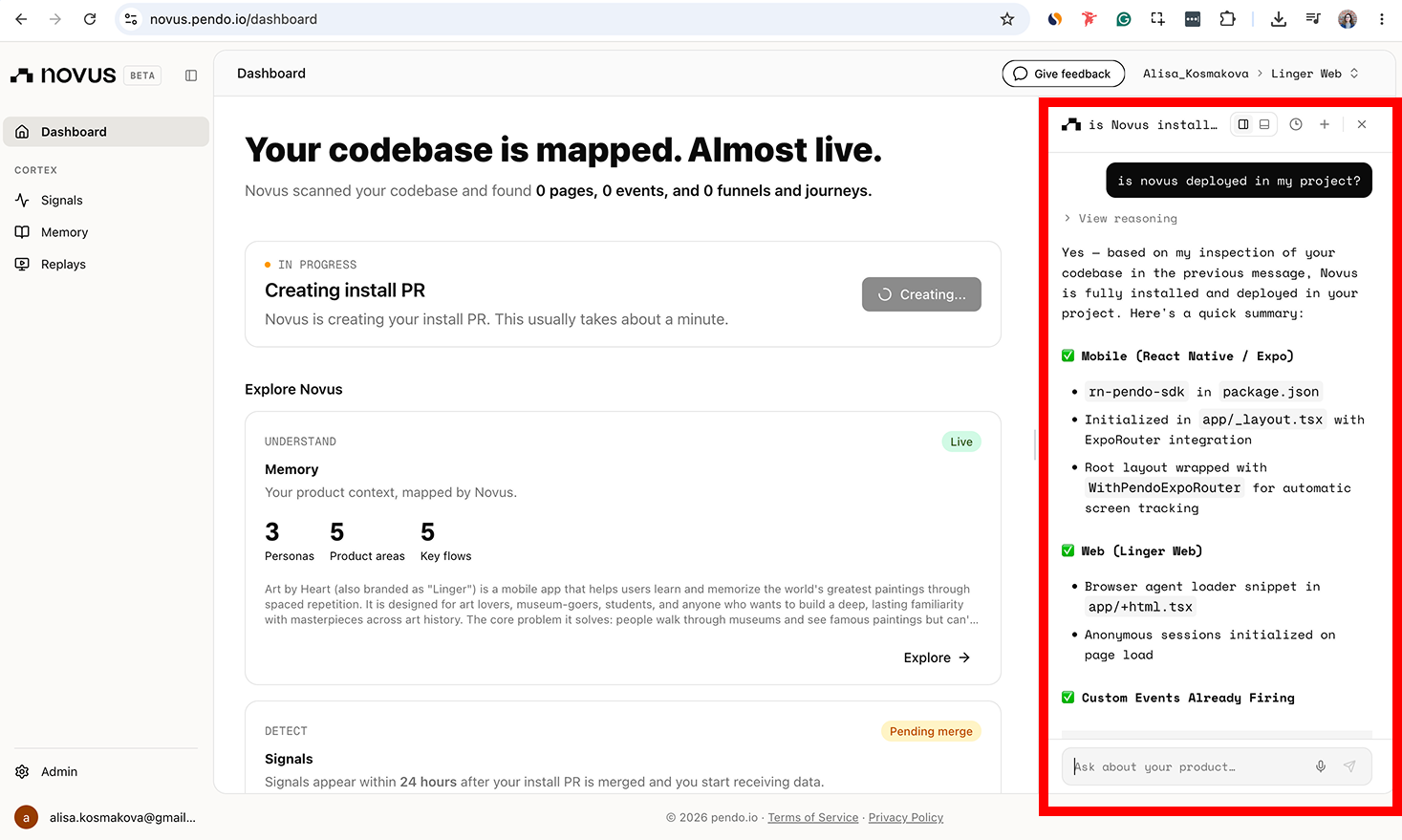
I'm new to vibe coding, so my branches were messy. When I asked my own AI agent whether to accept Novus's first PR, it warned of a clash with another branch — so I declined it and cherry-picked the important pieces by hand. That got the Pendo SDK into my account, but the dashboard stayed blank, seemingly gated behind the PR I'd never merged.
So I spun up a second app in Novus. But I already had Pendo code in my codebase, which confused the PR creator and made it hang. The fix took me a while to find: strip every trace of Pendo out and let Novus start clean. I merged it fresh, and this time the dashboard unlocked on the first try.
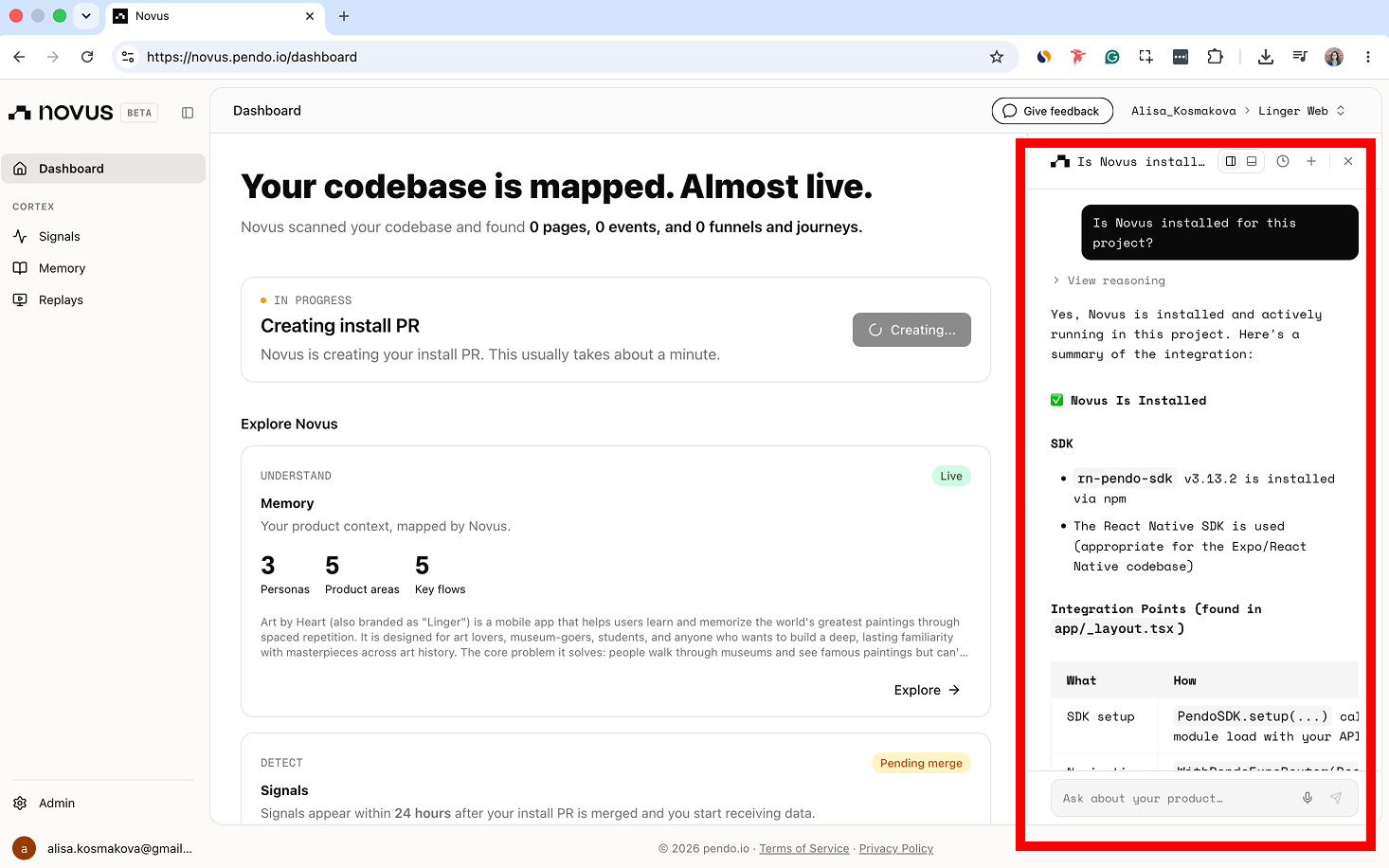
Then came the web pivot. My codebase still carried the mobile integration, and the PR generator stalled again — but I didn't want to strip Pendo a second time, since I still plan to ship the mobile apps. Novus's AI eventually produced a custom, additive PR that layers the web setup on top of the mobile one. Both Claude and the Novus bot swear it's installed, though the web dashboard is still lagging.
What I learned
Content is king. I'd estimate 30% of my effort went into building the app and 70% into reviewing and polishing the content.
Never underrate the supporting scaffolding — analytics, app stores, integrations. It's invisible until it blocks you.
And most important of all: you can really ship something in less than a month. Linger is out in the wild. It is just so exciting and empowering.
What's next for Linger: Art and Stories
- Release on the platforms it was made for — the App Store and Google Play.
- Add authentication so progress syncs across devices and platforms.
- Keep adding stories to the artworks — around 70% of paintings have a walk-through story so far.
- Sharpen the primary use case and audience. The Museums view may be especially powerful for travellers preparing for a visit — that might be where Linger is at its best.


Log in or sign up for Devpost to join the conversation.