
TeleGrid: Real-Time Power Line Fault Detection
Inspiration
Power line failures can cause million-dollar outages and have been linked to major wildfires, yet they are often only detected after significant damage has occurred. Current inspection cycles can take weeks or months, leaving dangerous faults undetected in real time. Existing inspection methods are periodic, labor-intensive, and expensive, leaving gaps in monitoring. We were inspired to create a system that provides continuous, real-time insight into grid health in a low-cost and scalable way.
What it does
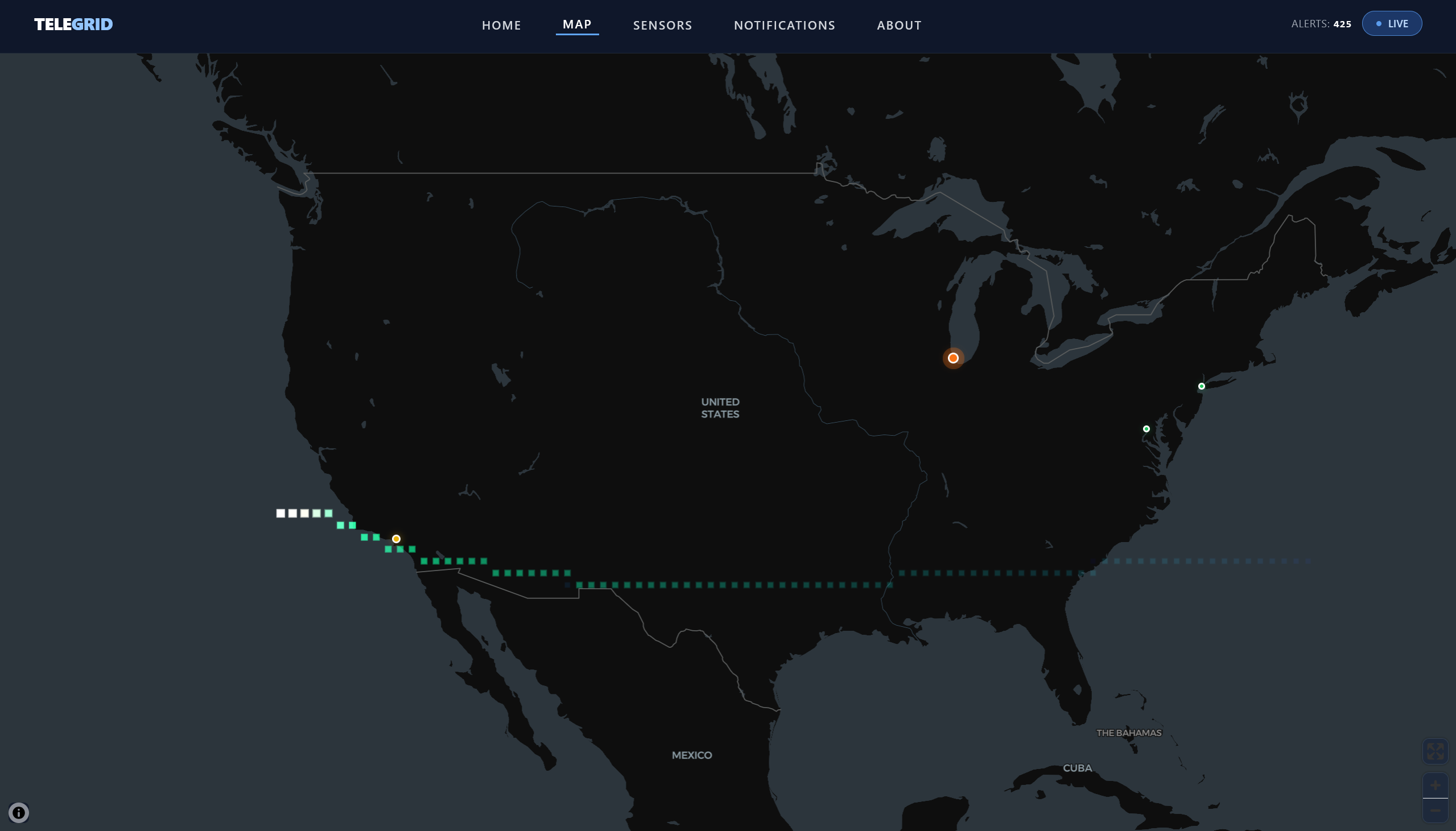
TeleGrid is a real-time, affordable monitoring system that detects corona discharge * , an early indicator of power line faults. It continuously listens for the unique sound signature of electrical discharge and sends this data to a web dashboard, allowing users to remotely monitor grid health and receive early alerts.
Unlike traditional inspection methods, TeleGrid uses low-cost acoustic sensing for continuous, real-time monitoring. Instead of relying on expensive thermal or labor-intensive visual inspection, TeleGrid uses the corona discharge's unique sound signature. By combining FFT-based feature extraction with a lightweight Random Forest model, we turn noisy field audio into a real-time fault indicator.
*Corona discharge is when electricity leaks into the air around a high-voltage conductor, causing the air to ionize, glow, and produce a faint buzzing or hissing sound.
How we built it
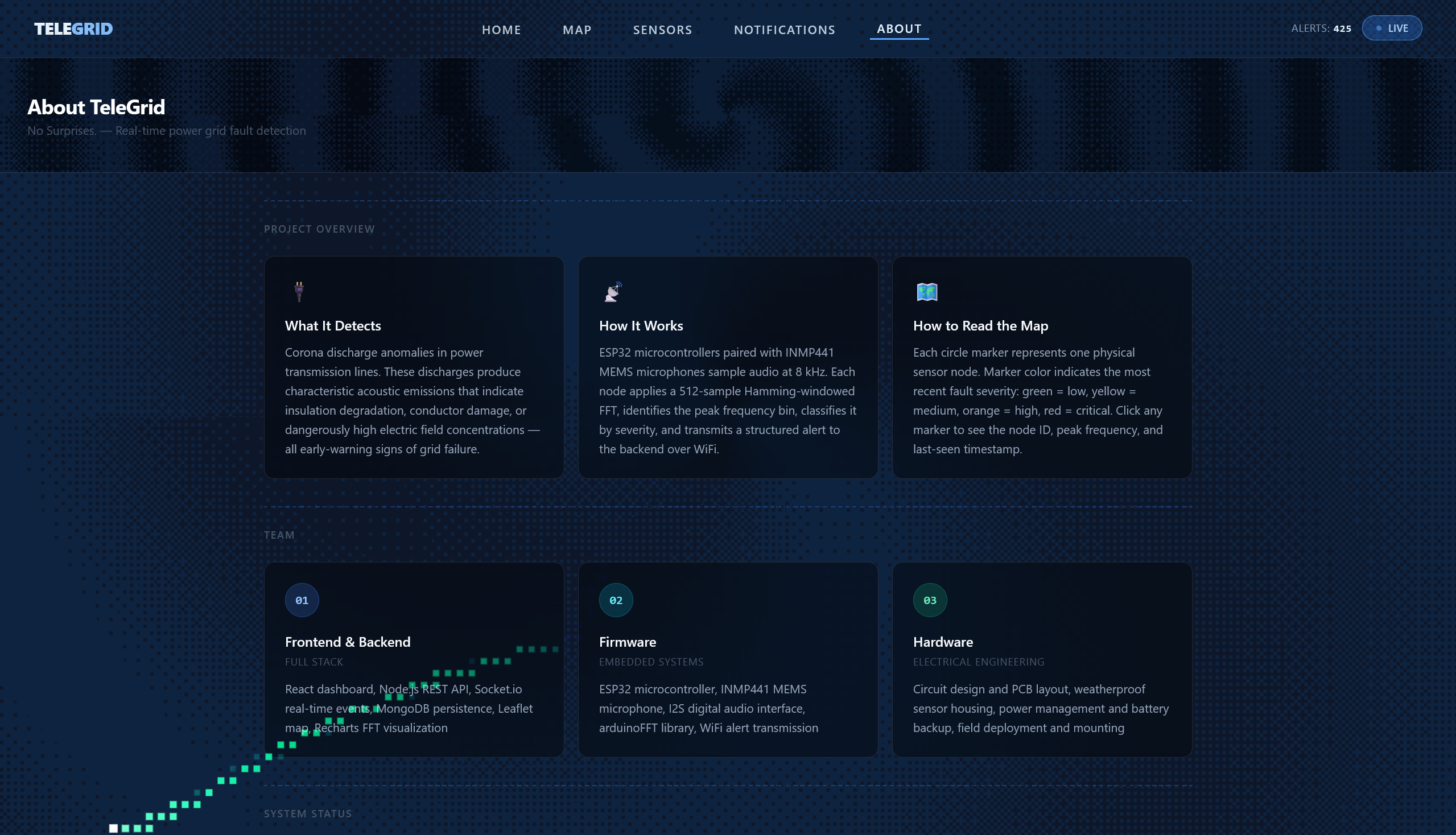
TeleGrid combines embedded hardware with wireless communication and a visualization platform:
- Sensing: An INMP441 digital microphone captures acoustic signals near power lines.
- Processing: An ESP32 microcontroller processes incoming audio data and identifies potential discharge patterns. -> extract frequency features using Fast Fourier Transform (FFT) to separate the complex signal -> random forest model analyzes the resulting signals and makes predictions.
- Communication: The ESP32 transmits data over WiFi to a remote server.
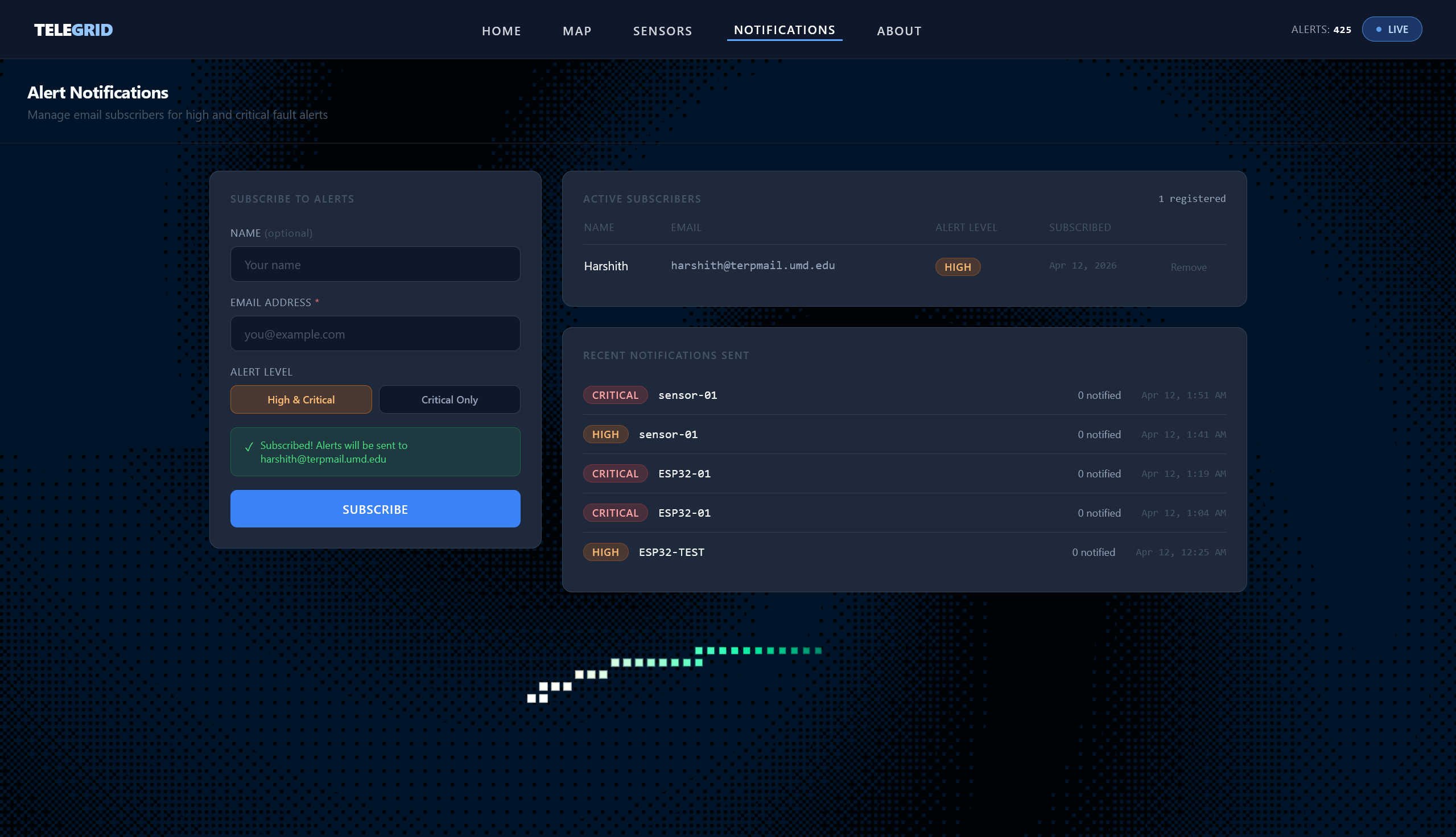
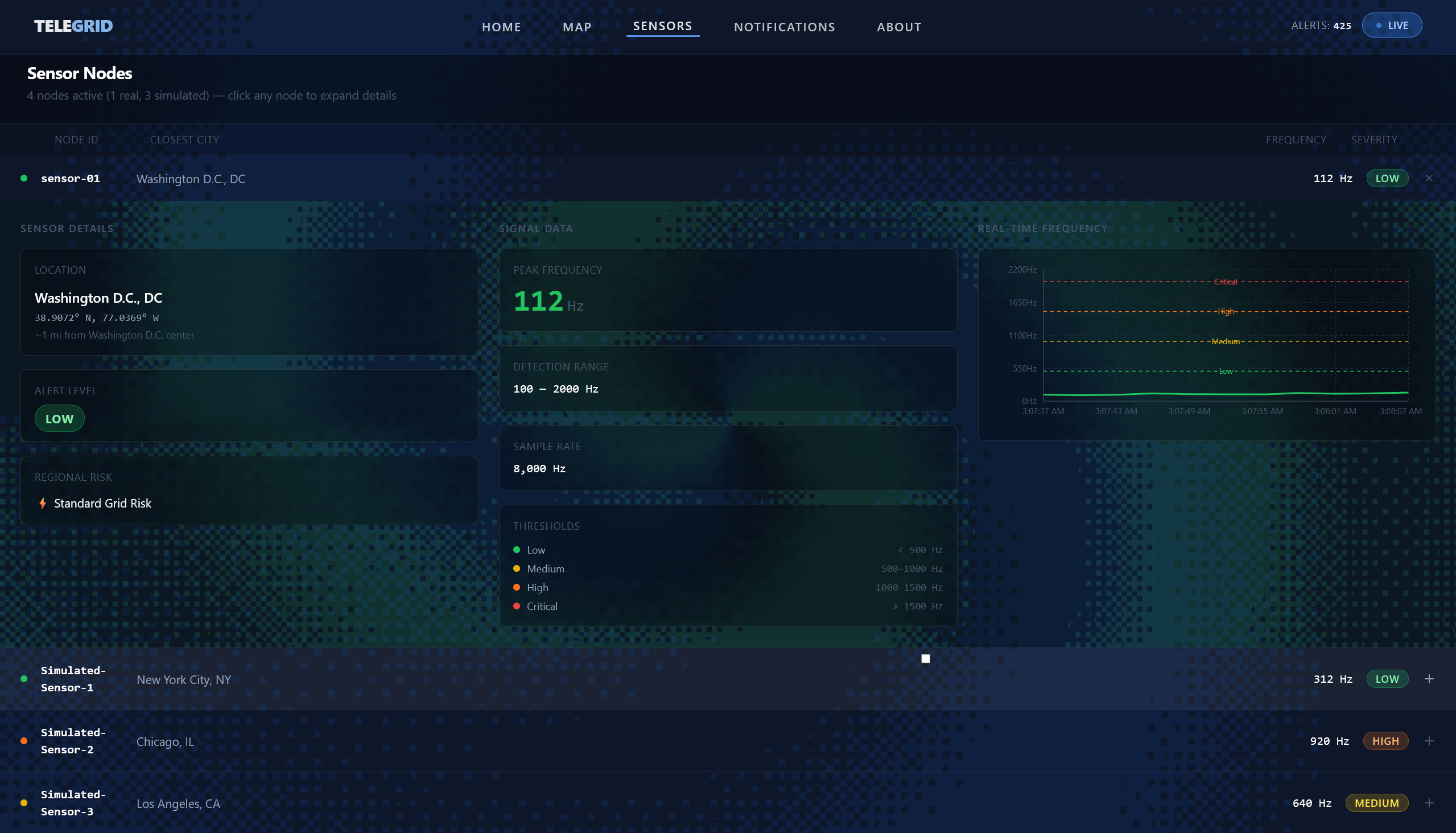
- Visualization: A web-based dashboard displays real-time data and system status. The system integrates embedded programming, signal processing, and IoT-based communication into a single pipeline.
Challenges we ran into
We faced difficulties in distinguishing corona discharge signals from background noise. There weren't many corona discharge audio samples available online, and we don't want to make a discharge and start a fire in The Armory, so we have to work around the lack of data. We constructed a small labeled dataset, trained our own lightweight machine learning model, and validated performance using controlled audio samples and environmental noise conditions.
Accomplishments that we're proud of
We identified a problem that has not yet been solved and successfully developed a fully functional prototype that detects acoustic anomalies and streams live predictions to a web dashboard. We created a low-cost, scalable solution that demonstrates a practical approach to early fault detection using sound and integrates both hardware and software into a cohesive system. In our demo, when a corona discharge sound is detected, the dashboard updates in real time and triggers an alert.
What we learned
We gained hands-on experience with embedded systems, real-time signal processing, and IoT communication. We learned how to work with digital microphones, manage noisy sensor data, and optimize performance on constrained hardware. Additionally, we strengthened our ability to rapidly prototype and collaborate effectively under hackathon pressure. And we learned to use AI effectively to aid our development process.
What's next for TeleGrid
Next, we plan to turn TeleGrid into a small, modular device that can be attached directly to existing power lines and towers. Future versions will combine data from multiple sensors and use built-in AI to analyze it on the spot, allowing utility companies to continuously monitor large parts of the power grid without needing manual inspections.
TeleGrid has the potential to affordably turn previously invisible electrical faults into detectable ones, enabling quick response before these faults turn into disasters.


Log in or sign up for Devpost to join the conversation.