-
-
Lines
-
Lines puzzle 1
-
Lines puzzle 2
-
Lines puzzle 3
-
Lines puzzle 4
-
Lines puzzle 5
Inspiration
We always loved dot-to-dot puzzles. A sheet of paper, little numbers scattered around, you connect them one by one and suddenly there's a picture. That moment when the image appears was always the best part.
Back in the ActionScript 3 (Flash) days Andrei had an idea for a game where you connect stars to build constellations. Since then he tried it in a few different technologies, but he never got what he wanted. Either it wasn't fun enough, or it wasn't engaging enough, or, when Andrei aimed it at teaching, it just wasn't educational enough.
Then hand tracking in XR got really good, and it clicked: what if you could just reach out and draw the lines in the air with your fingers? No mouse, no controller, just your hands and the dots floating in your room. So we decided to give the old idea one more go, this time together with a friend.
What it does
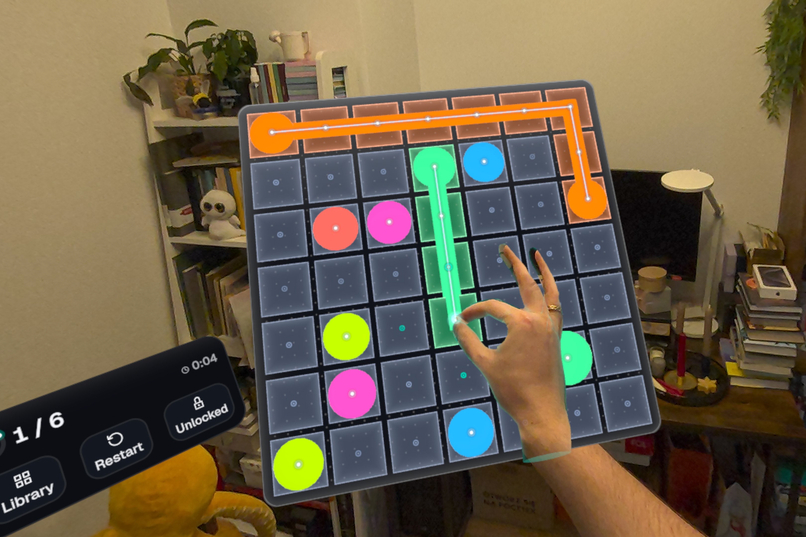
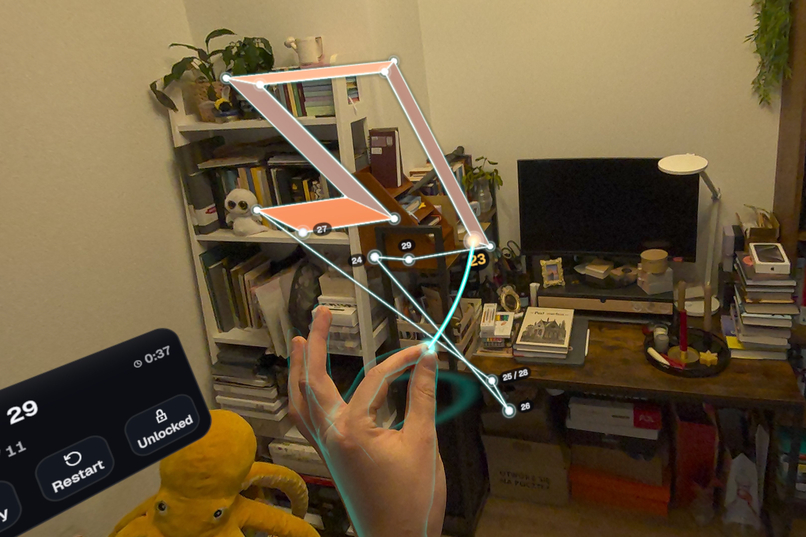
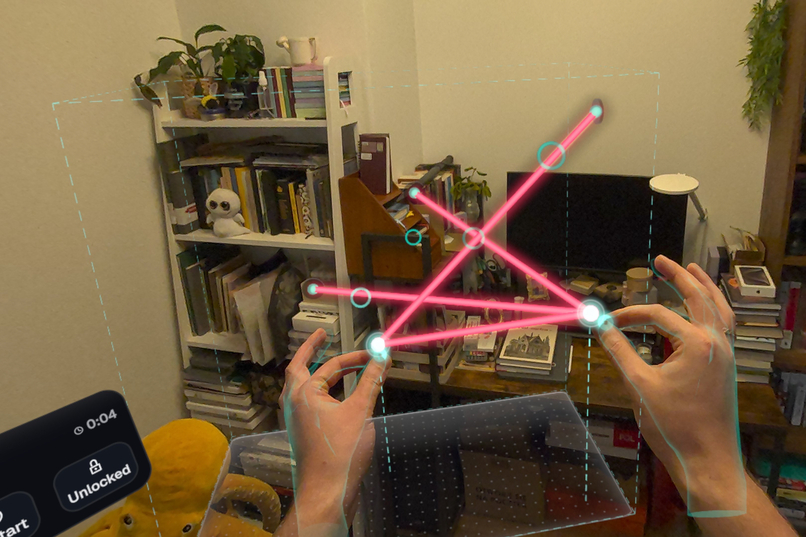
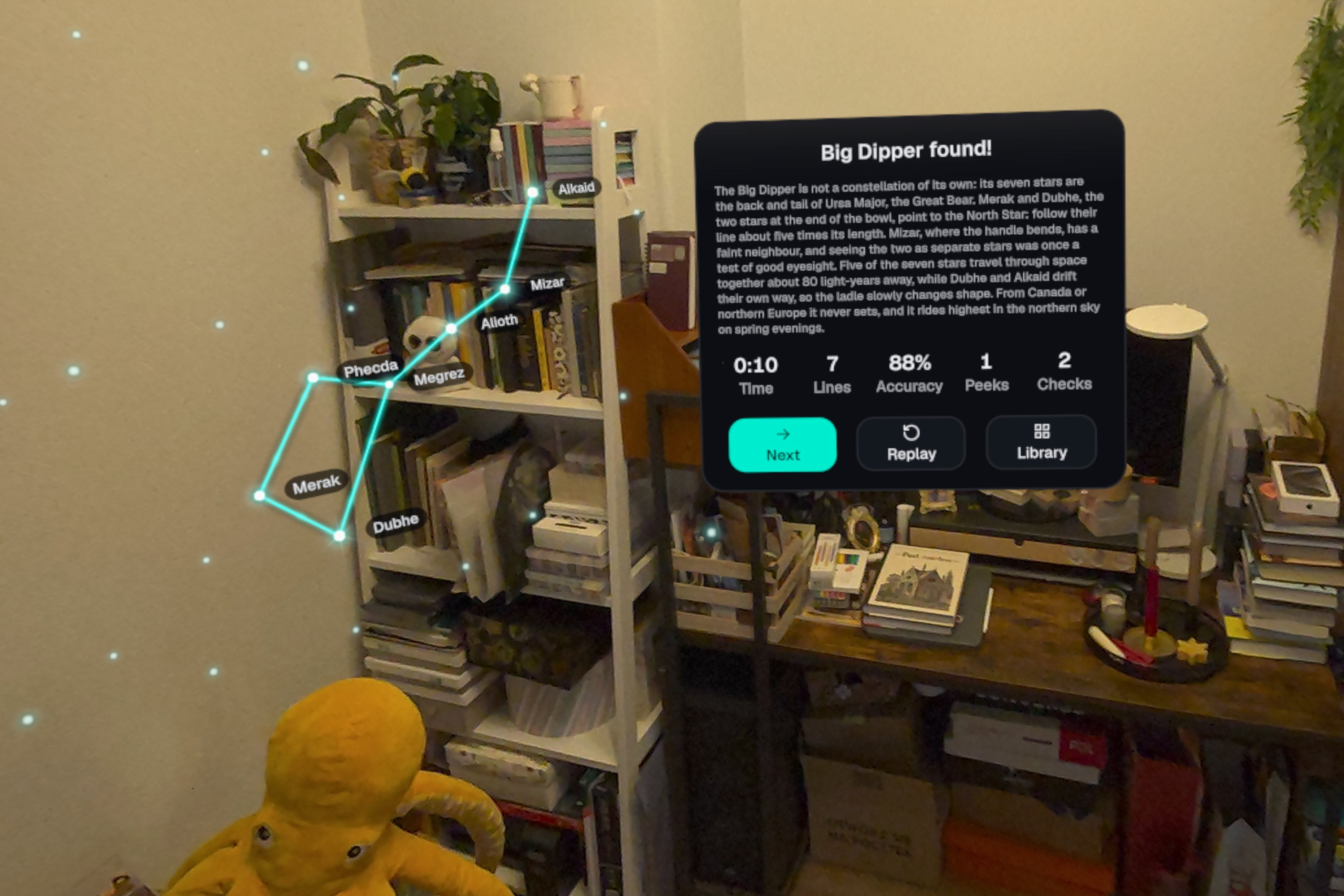
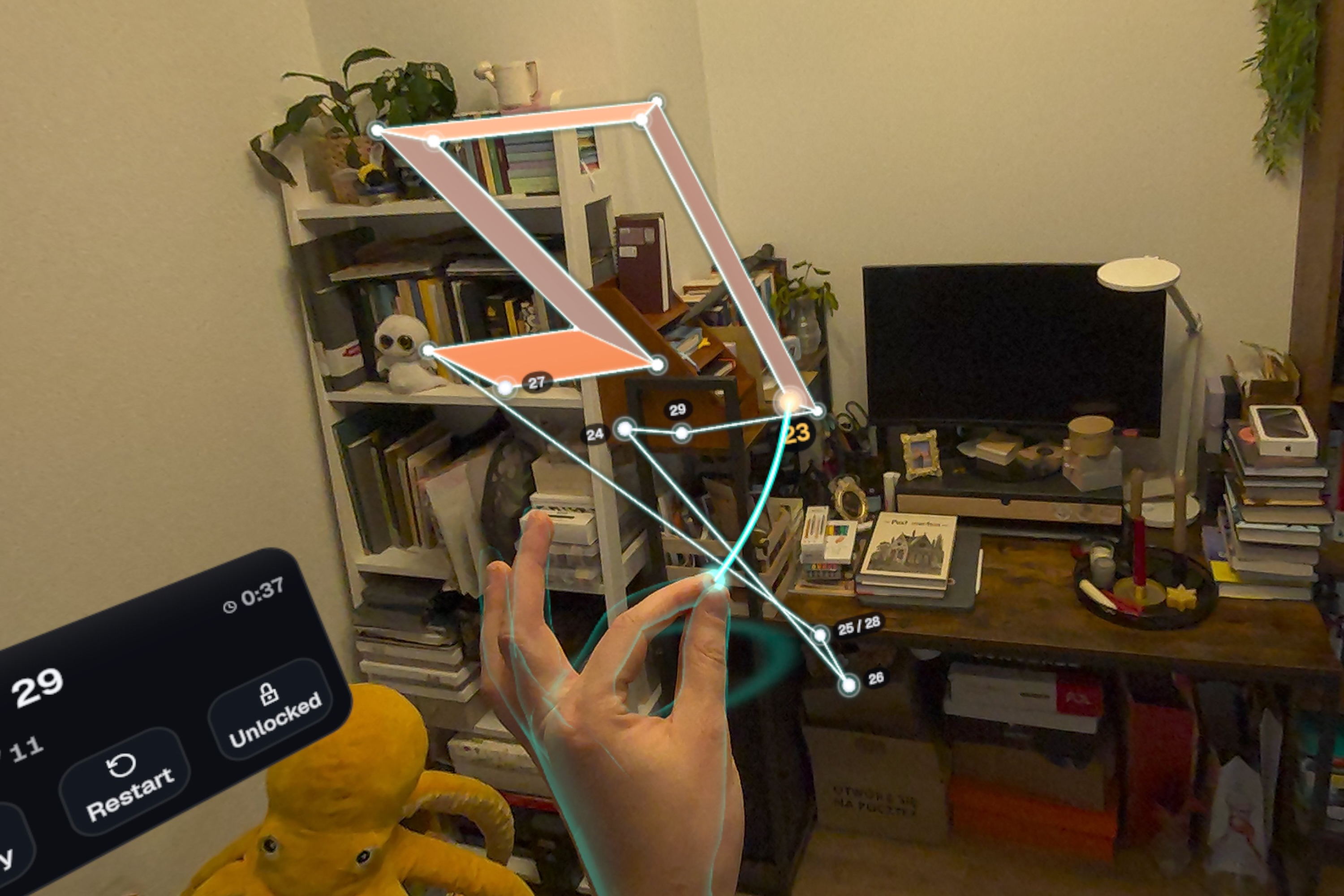
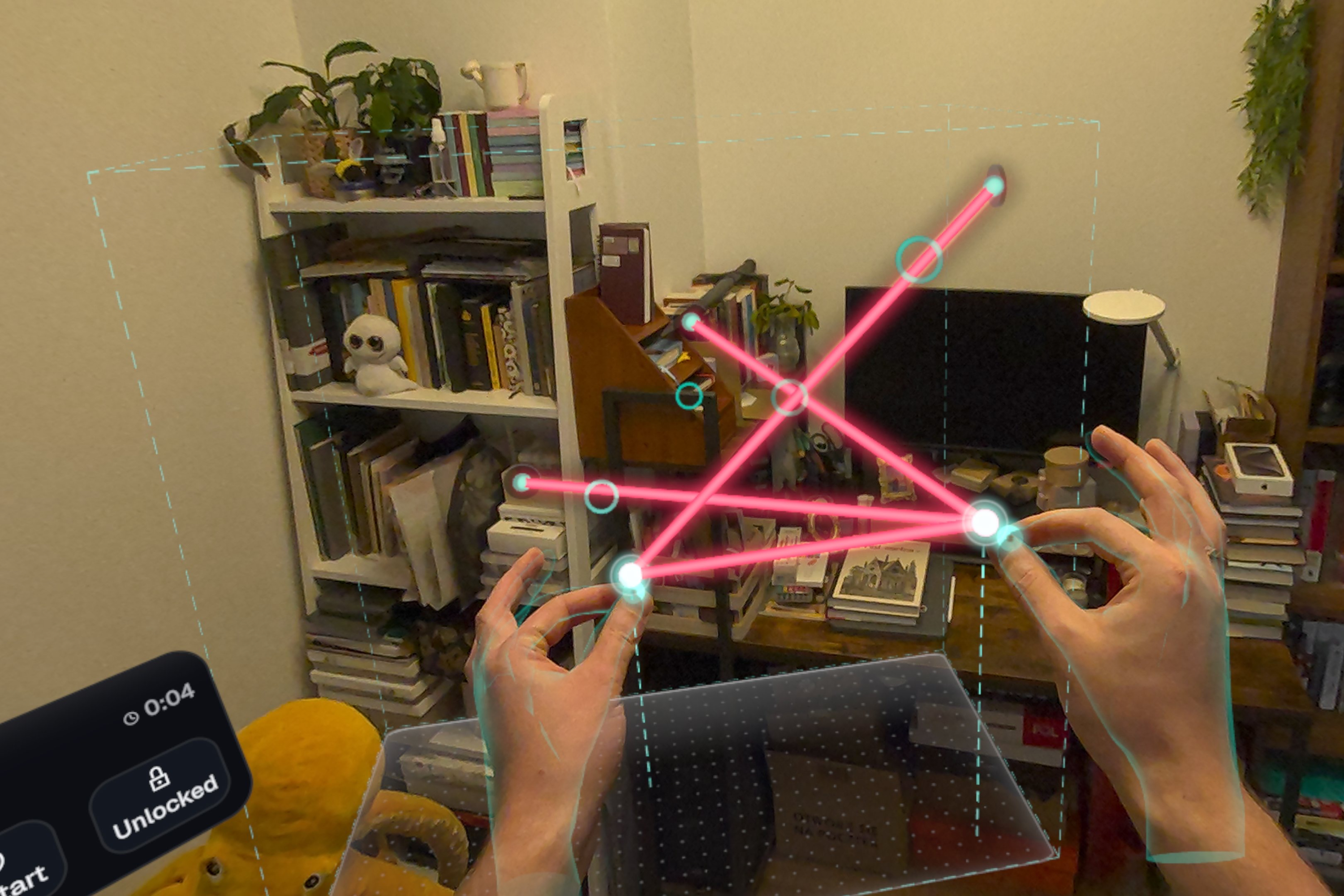
Lines is a hands-first mixed-reality puzzle game. You pinch near a glowing dot, drag to the next one, and lines of light connect them. Close a shape and the figure comes to life right in your room. You can grab it, turn it around, and look at it from any side.
Around that core there's a bunch of modes and games:
- Trace: follow a ghost blueprint, the classic relaxed mode
- Numbers: real dot-to-dot, no hints
- One Stroke: draw the whole figure without lifting your fingers or going over a line twice
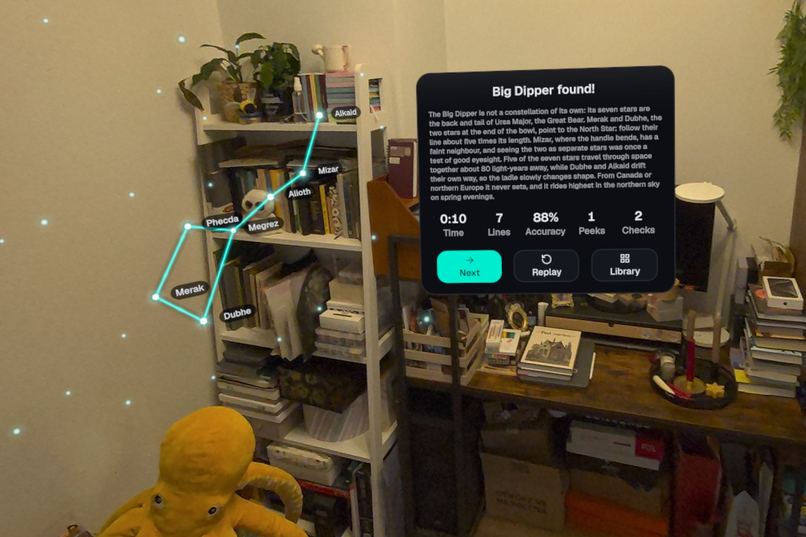
- Night Sky: real constellations, first traced as a story, then found among their real neighbouring stars
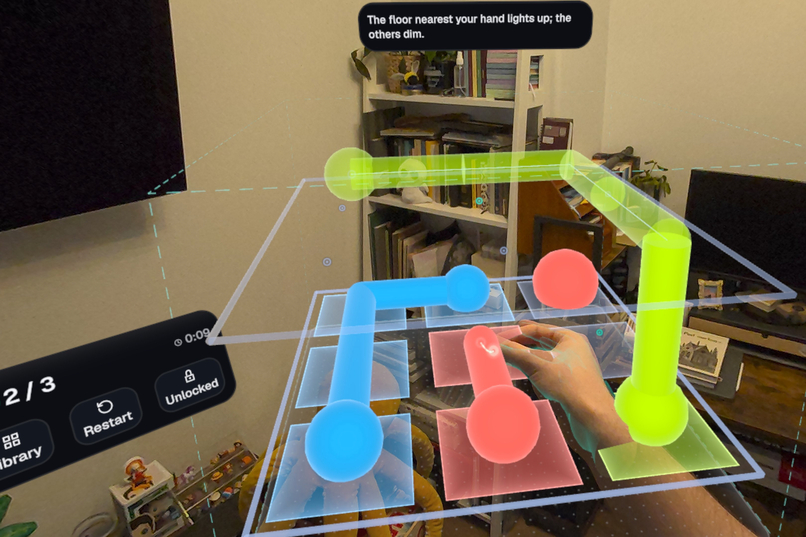
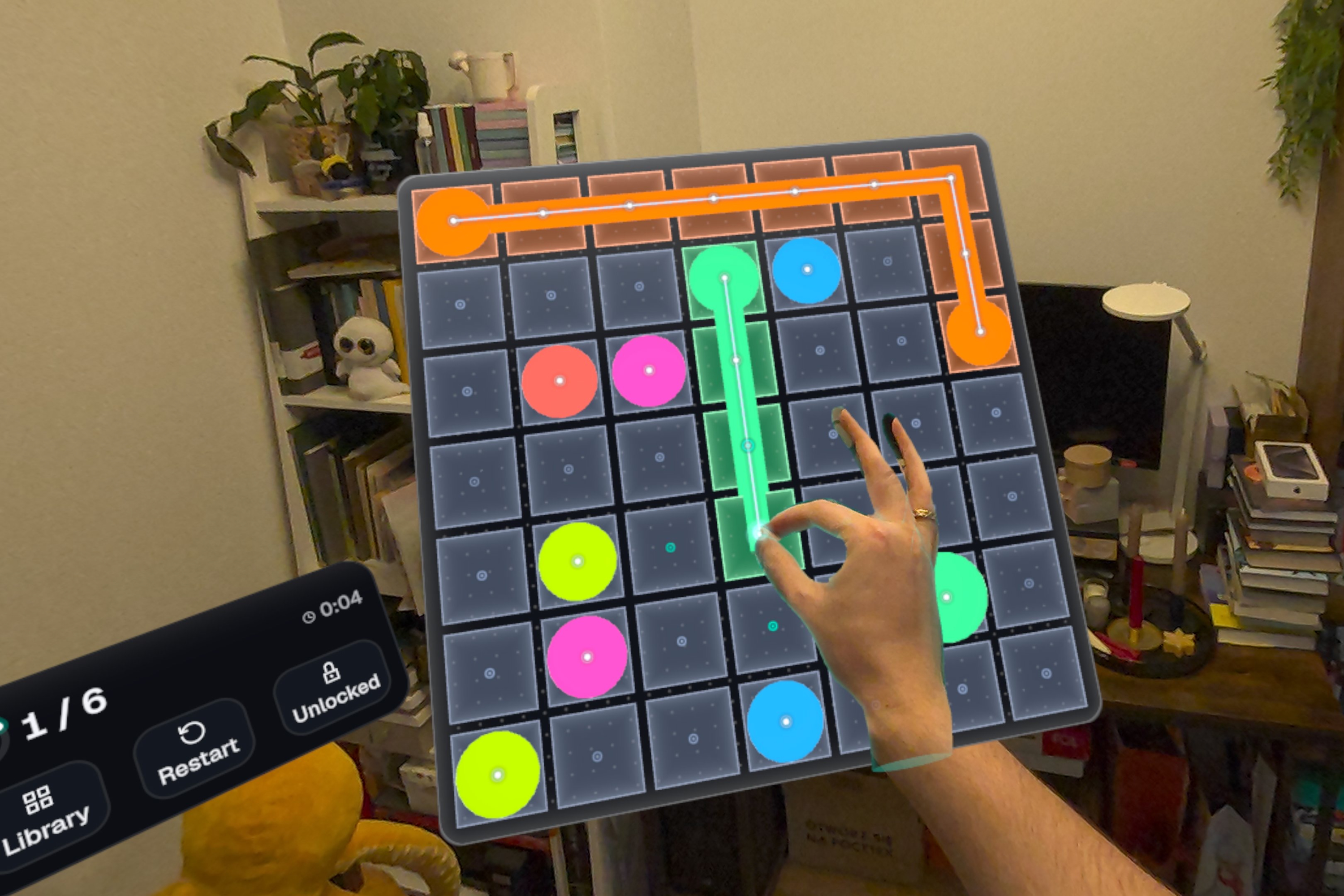
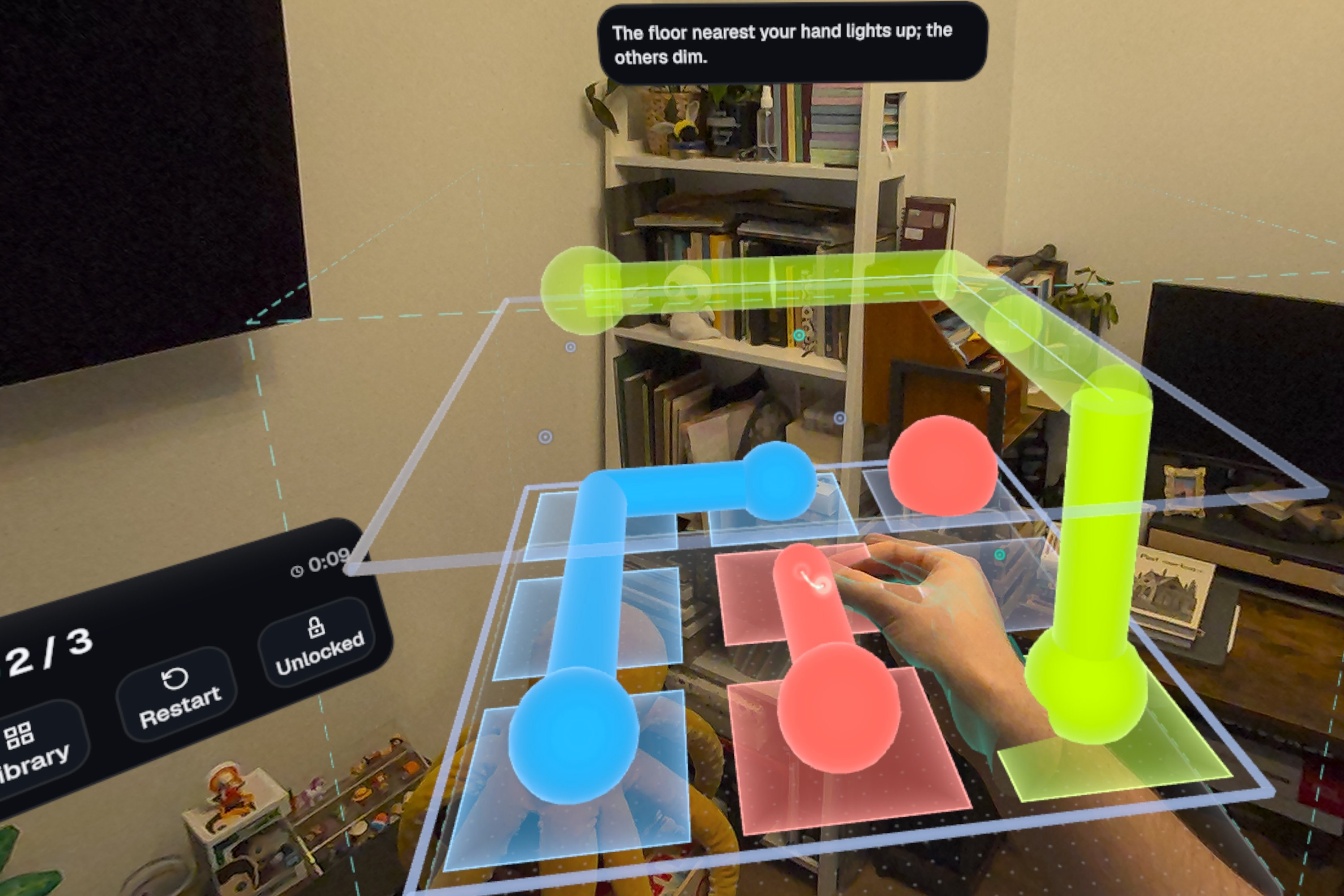
- Untangle, Zip, Flow, Bloom, Sprout and a few 3D puzzles that only make sense when the board floats in front of you
- Create: draw your own figures and share them as a short code
Controllers work too, but they're optional.
How we built it
Unity 6 with URP, OpenXR and XR Hands, built for Meta Quest 3.
Early on we made one decision that paid off a lot: all the game rules (the graph of dots and lines, sessions, puzzle checks) live in a plain C# core with no Unity in it. That code runs and gets tested on regular .NET in seconds, without opening the editor or putting on the headset. Unity is only the shell: rendering, input and sound on top.
Even the sounds are generated in code. There's a small procedural synth instead of a folder of audio files, so every connection can sound slightly different depending on what you're drawing.
Some modes needed a bit of math. One Stroke, for example, is only fair if the figure can actually be drawn in one go. That's Euler's old bridge problem: a connected figure can be drawn in one stroke only if the number of dots with an odd number of lines is
$$|{\, v : \deg(v) \text{ is odd} \,}| \in {0, 2}$$
So we check every figure with that before it ever reaches the player.
Challenges we ran into
- Depth. Pinching a dot in the air is much harder than it sounds. Your eyes and your hand don't agree on where the dot is, especially on boards with many dots close together. We spent a lot of time on tuning: how near a pinch has to be, which dot you "meant", filtering out tracking jitter, and even a depth bias setting for people who keep missing a little short or a little far.
- One gesture, many meanings. Pinch draws a line. But you also want to move and rotate the figure. Mixing those up is super frustrating, so we went through a few versions until we settled on pinch to draw, and fist or pinch on empty space to grab.
- Readable in your own room. In passthrough your room is the background, and it can be anything: bright window, white wall, messy desk. The look went through a full redesign (from paper to glowing light on dark glass) until it read well everywhere.
- Making it actually fun. That was always the problem with this idea. Connecting dots alone gets boring fast. What made the difference was variety, small rewards (the figure appearing, the sound, the little celebration) and the progression that slowly opens new modes and games.
What we learned
- Hand tracking is amazing, but you have to design for it from day one. A design made for controllers and then moved to hands doesn't feel right.
- Test the logic outside the engine. Being able to check rules in seconds instead of building to the headset every time saved us weeks.
- Old ideas are worth coming back to. Sometimes the idea is fine and the technology just wasn't there yet.
What's next
More figures and constellations, more puzzle types, and other headsets as well. We believe this kind of game fits any XR device with hand tracking, and we'd love to see it everywhere.
Built With
- claude
- openxr
- unity
- urp
- xrhands


