Inspiration
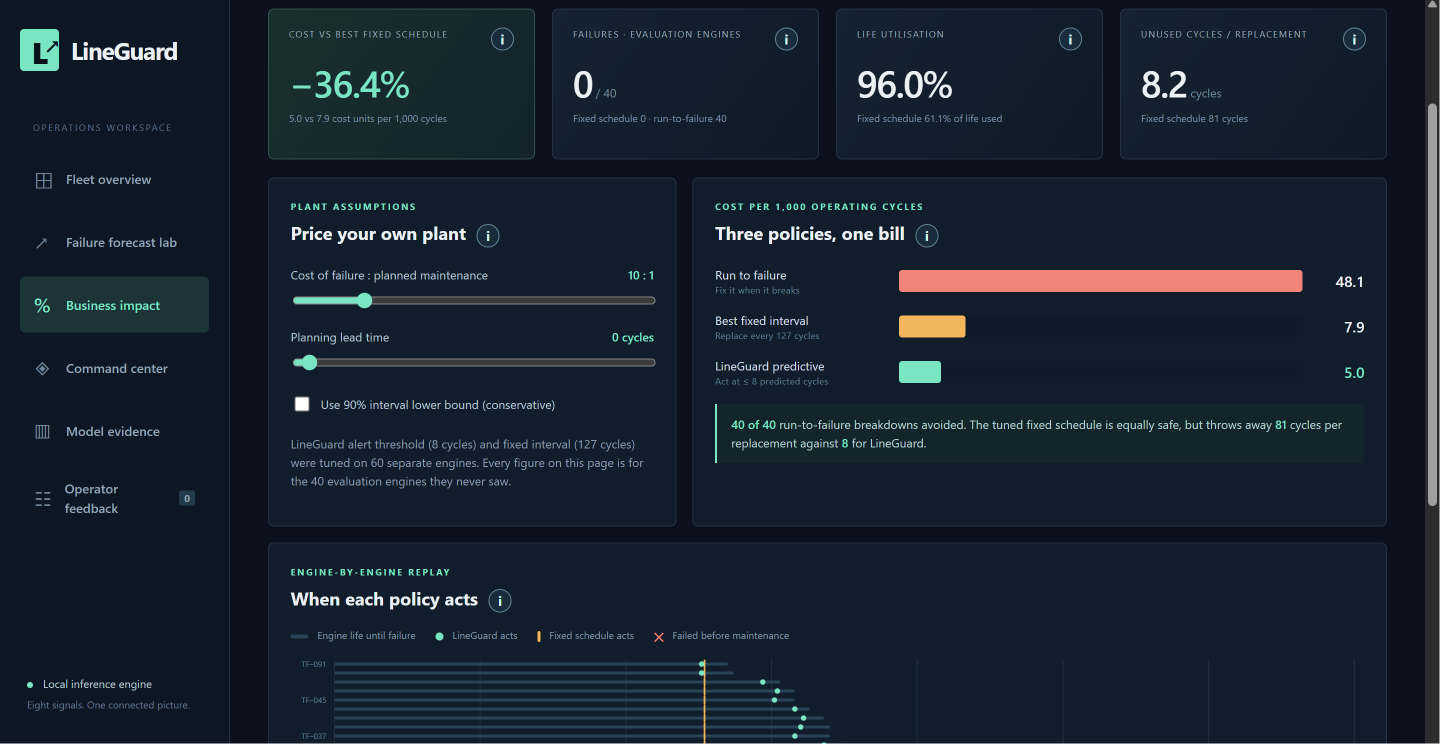
Most factories fix machines in one of two ways. They replace parts on a fixed schedule, which throws away parts that still had plenty of life left. Or they wait until something breaks, which stops the whole production line and costs far more. We wanted a tool that tells you the right time to fix a machine, and explains why.
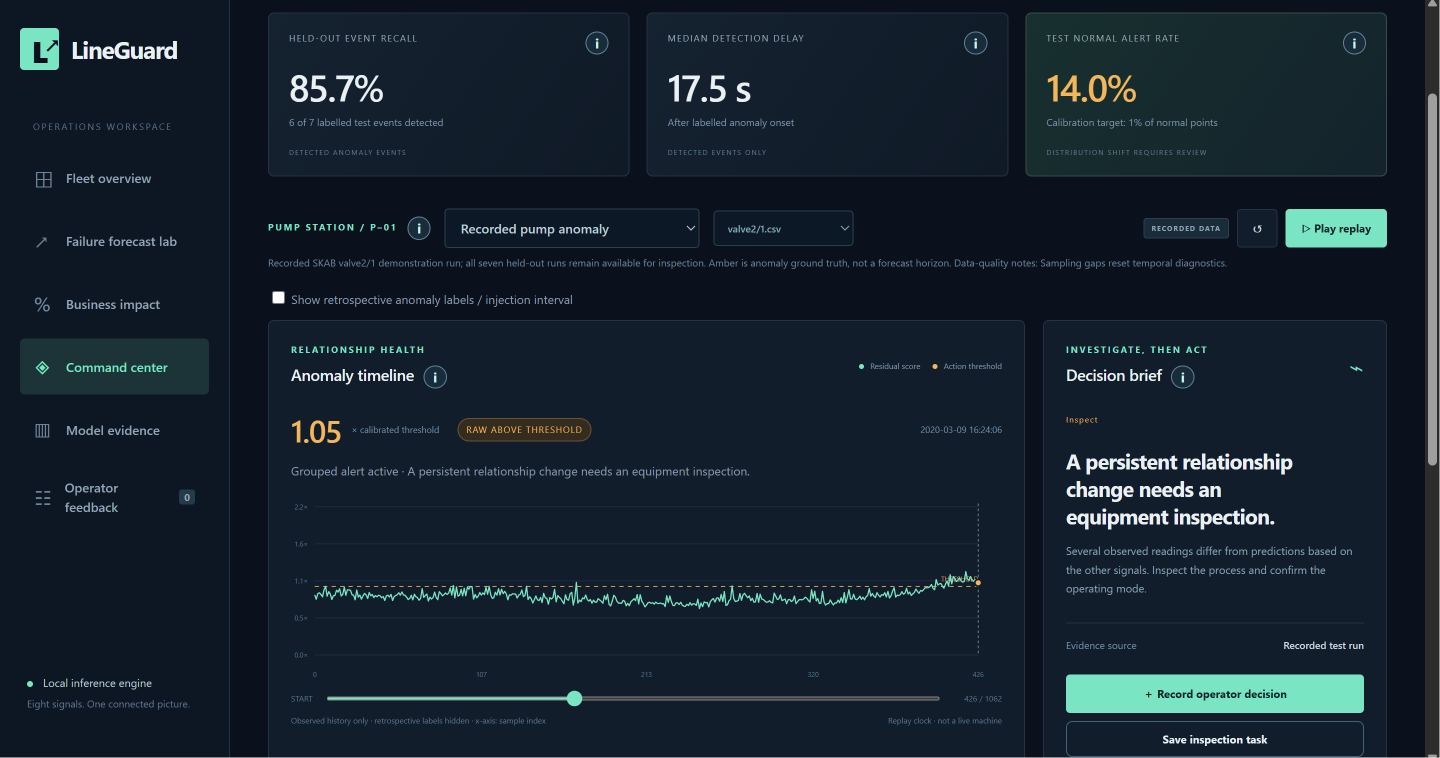
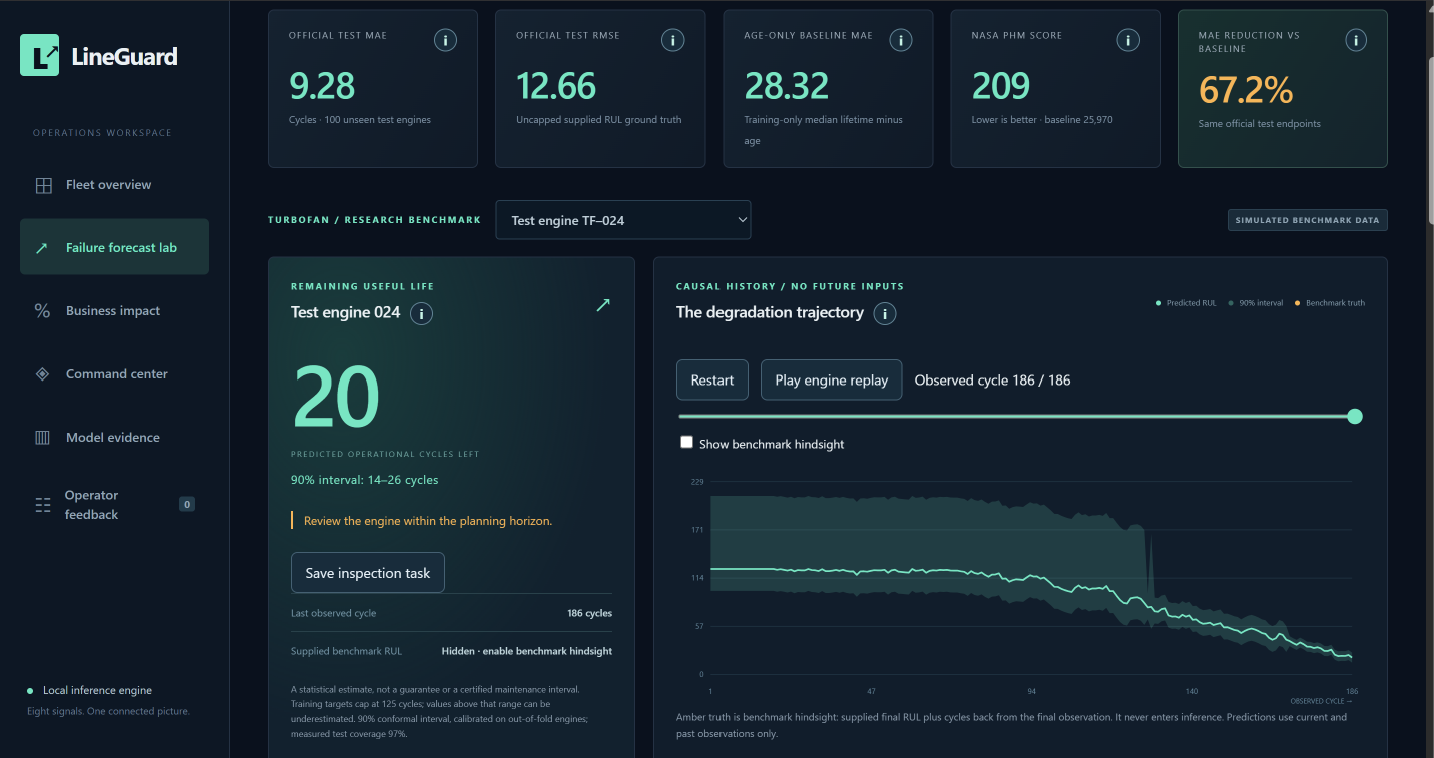
What it does Predicts how much life a machine has left, and how sure it is about that. Explains the prediction by showing which sensors are causing the warning. Spots unusual behaviour in a working pump and shows which readings changed. Shows the money saved by fixing machines at the right time instead of on a fixed schedule. Turns warnings into a to-do list for the maintenance team, with a report for each job. How we built it
We trained it on real public data: engines that were run until they failed, and a water pump with recorded faults. The key idea was to compare each machine with its own normal behaviour instead of with other machines. Every engine is slightly different, so this made the predictions much more accurate.
We tested it on engines it had never seen, using the official test set, and we checked the result only once so we couldn’t tune it to look better. Everything runs on an ordinary laptop, with no internet needed.
Challenges we ran into No two machines are exactly alike. Comparing each machine with its own normal readings solved this. Machines run in different conditions, like different speeds and loads, which confused the predictions. Adjusting for each condition cut the error roughly in half on the hardest test sets. The pump gave too many alerts at first. We grouped related alerts together and cut the noise by about 75%, and we show the remaining limits openly. Accomplishments that we’re proud of Average error of about 9 cycles in predicting when an engine will fail. That’s 67% better than guessing from age alone. Caught 23 out of 25 engines that were about to fail, with only 1 false alarm out of 75 healthy ones. 36% lower maintenance cost than the best fixed schedule, with zero breakdowns. Used 96% of each part’s life, compared with 61% on a fixed schedule. Works on four different engine test sets without changes. What we learned
A simple, smart idea beat a bigger, more complex model. Testing honestly on unseen data matters more than a high score. And showing the money saved convinces people faster than accuracy numbers.
What’s next for LineGuard
Testing it on real machines in a local factory, connecting it to the tools maintenance teams already use, and running it on a small device right next to the machine.
Built With
- css
- fastapi
- html
- javascript
- numpy
- pandas
- playwright
- python
- scikit-learn
- sqlite
