-
-
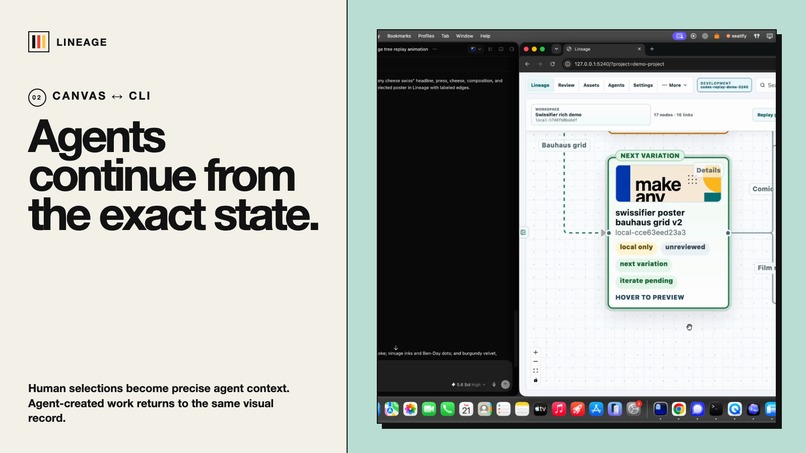
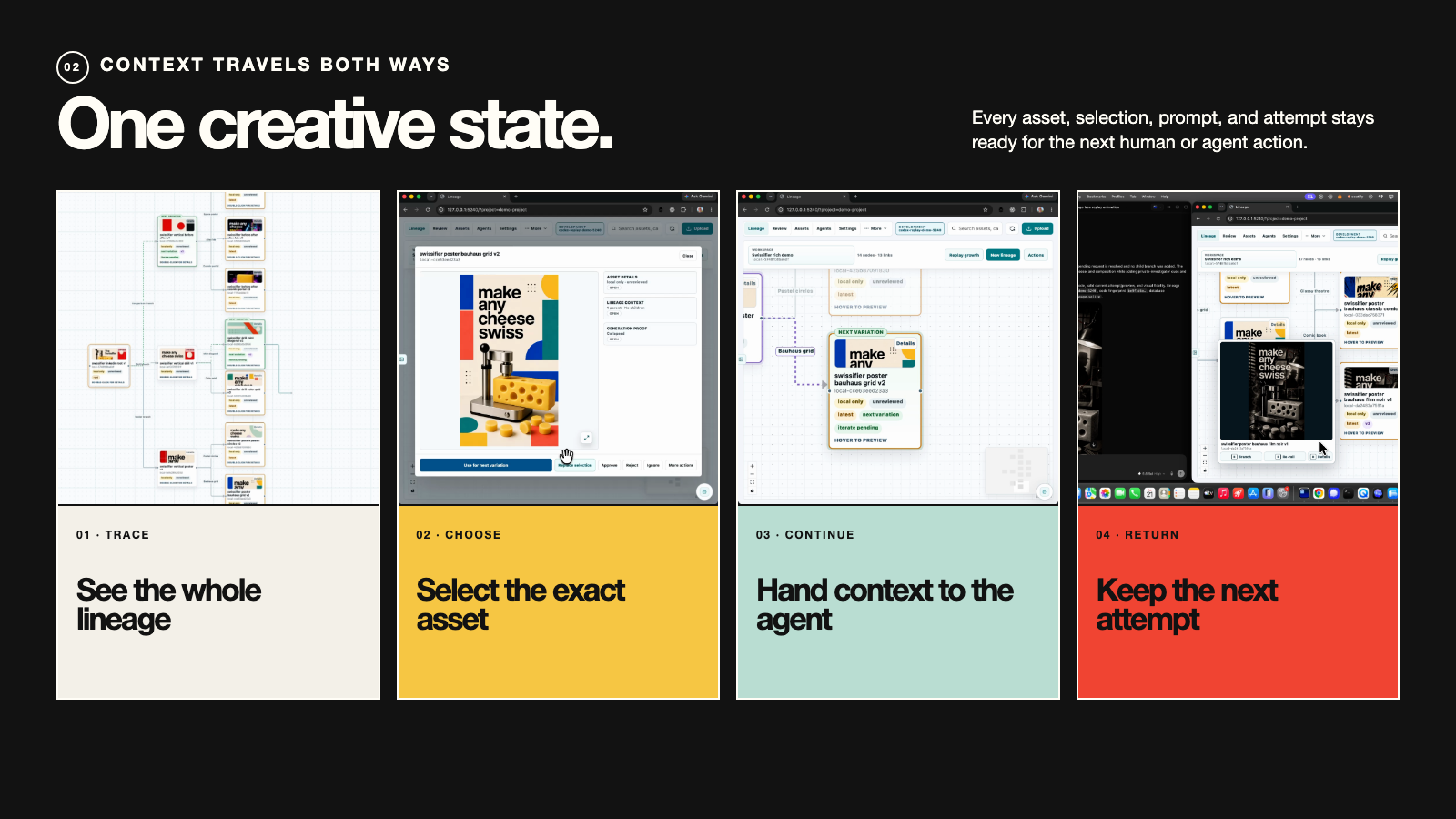
Shared State: Humans and agents work from the same creative state.
-
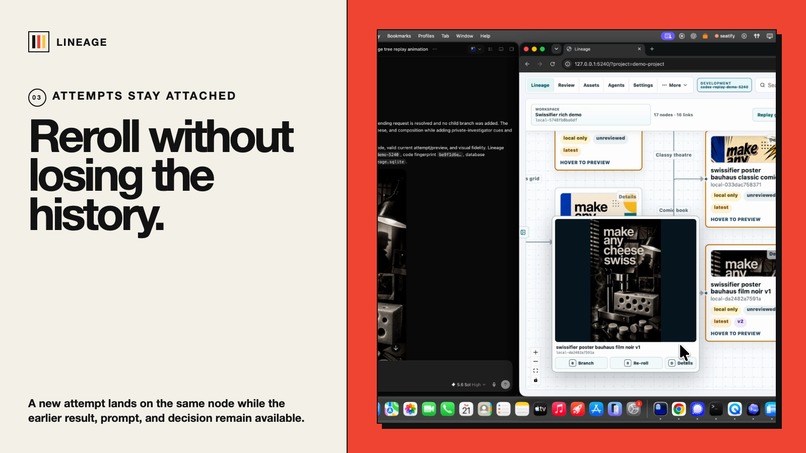
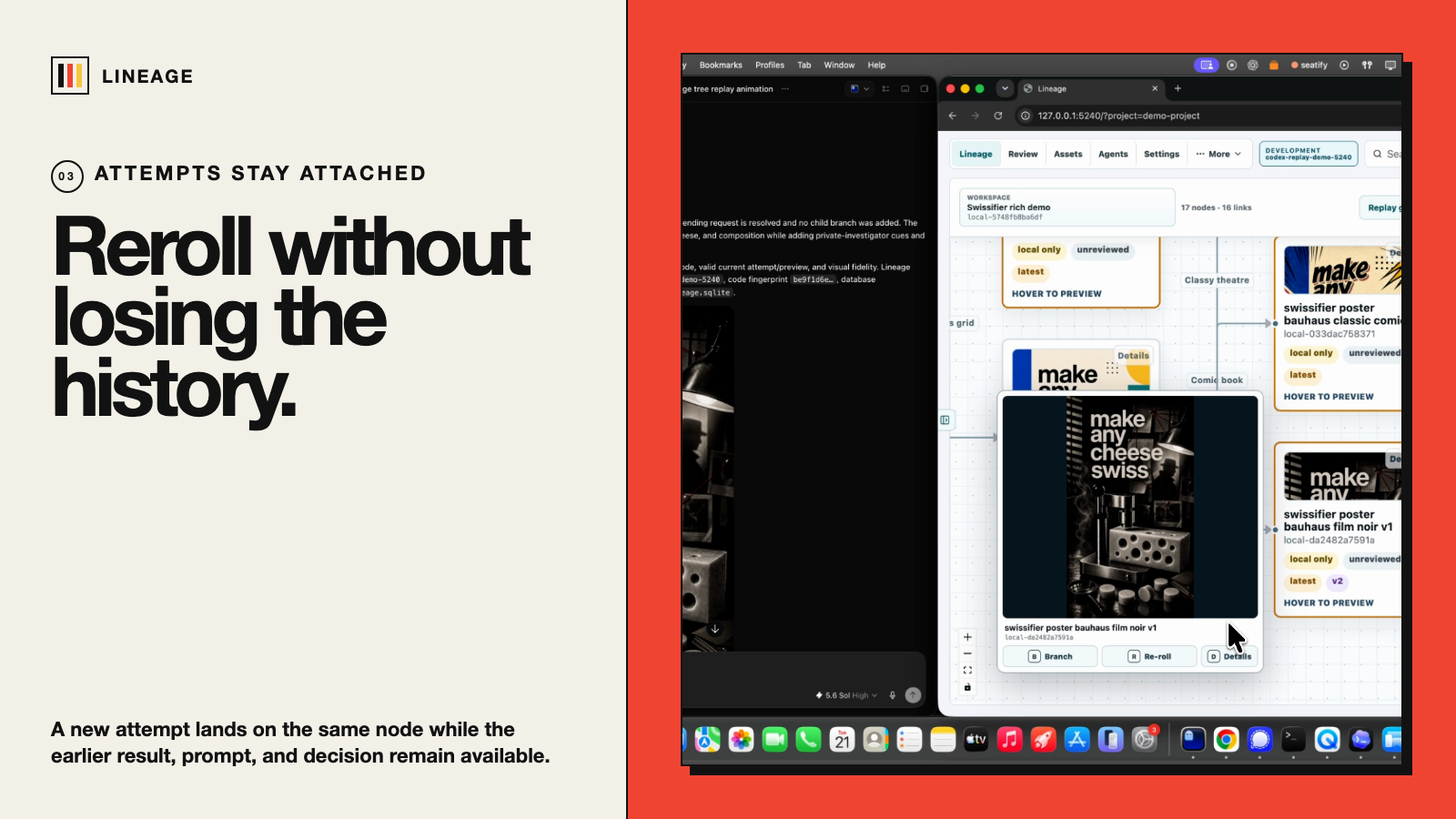
Reroll History: Reroll freely without losing earlier attempts.
-
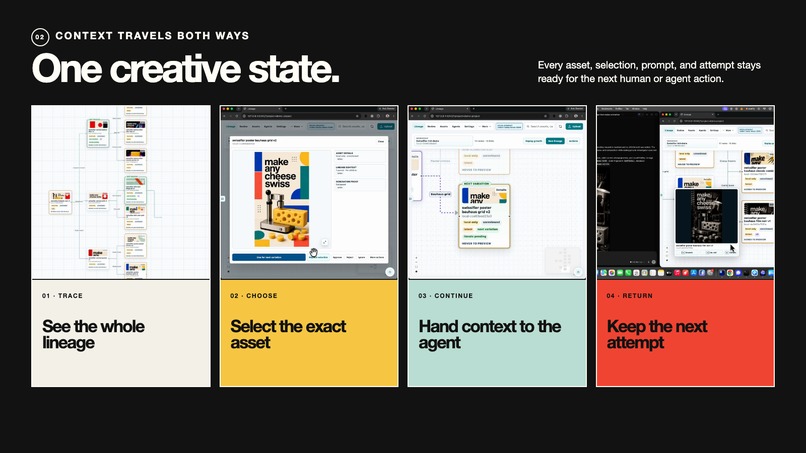
Workflow: Select, direct, and iterate from one shared canvas.
-
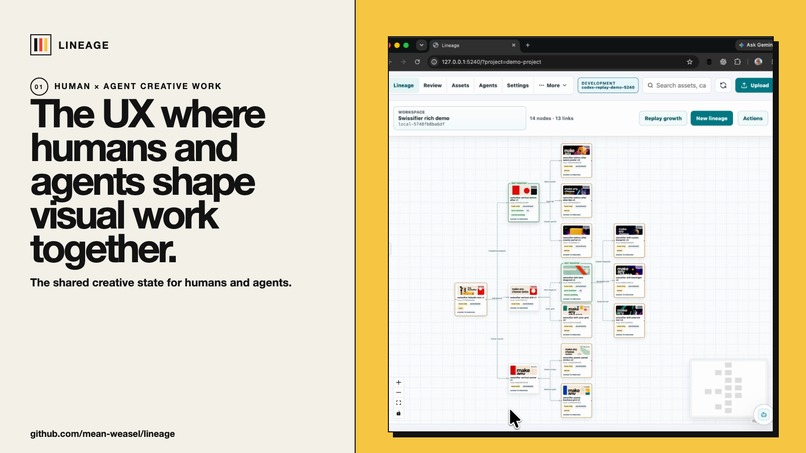
Cover: Humans and agents shaping visual work together.
-
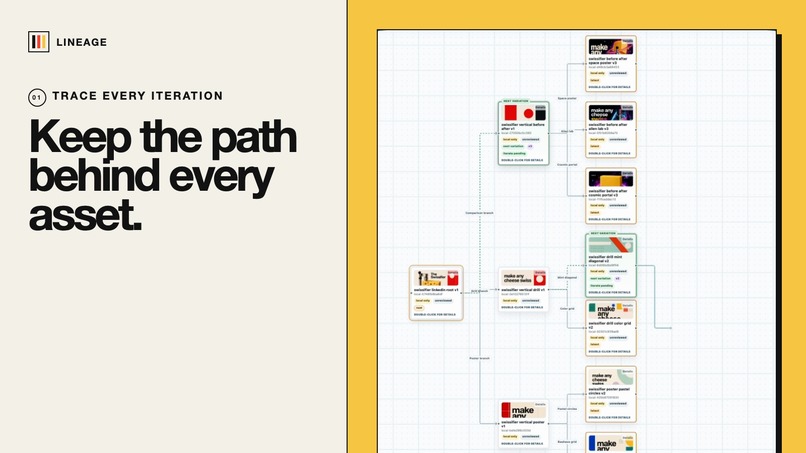
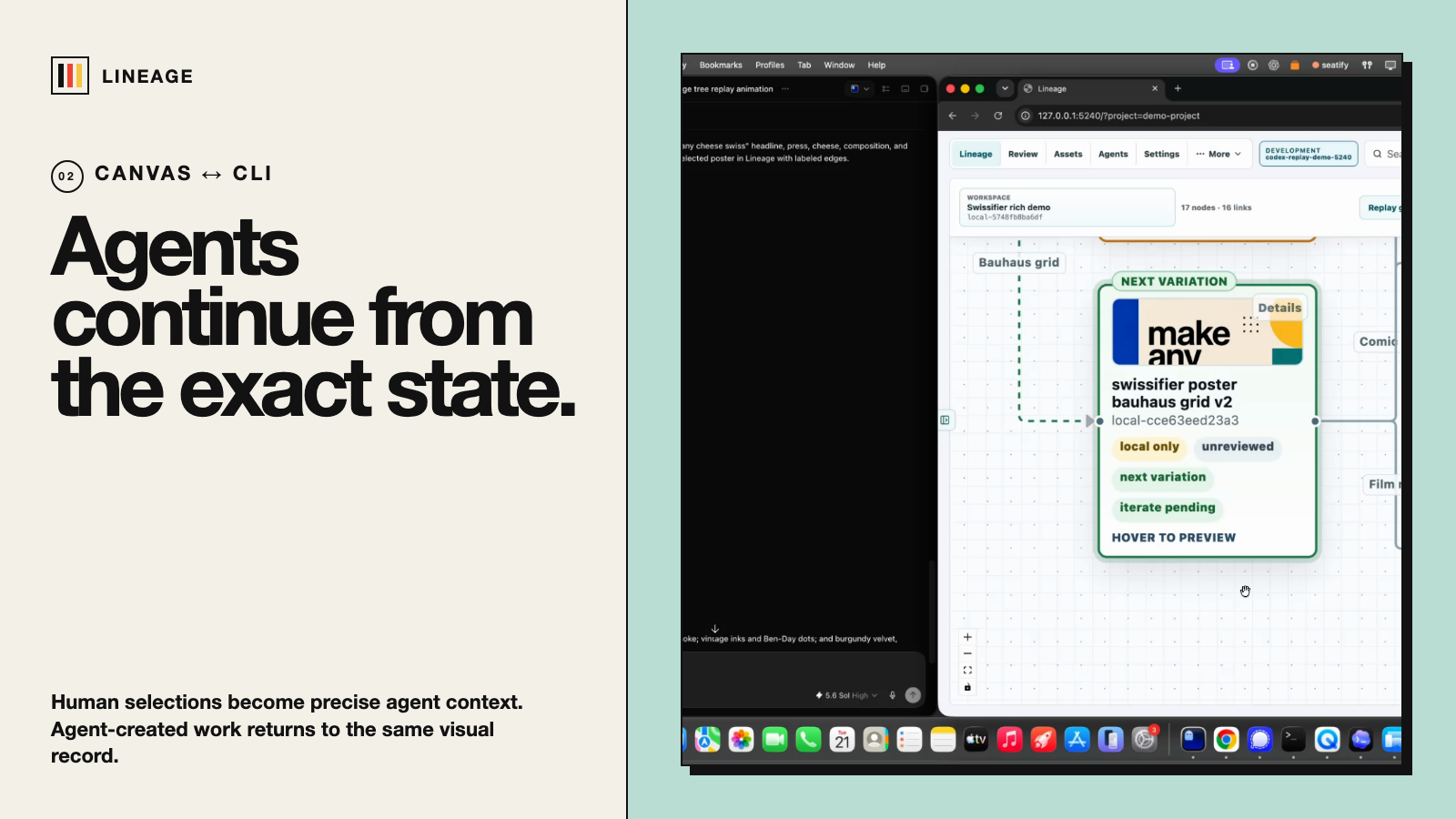
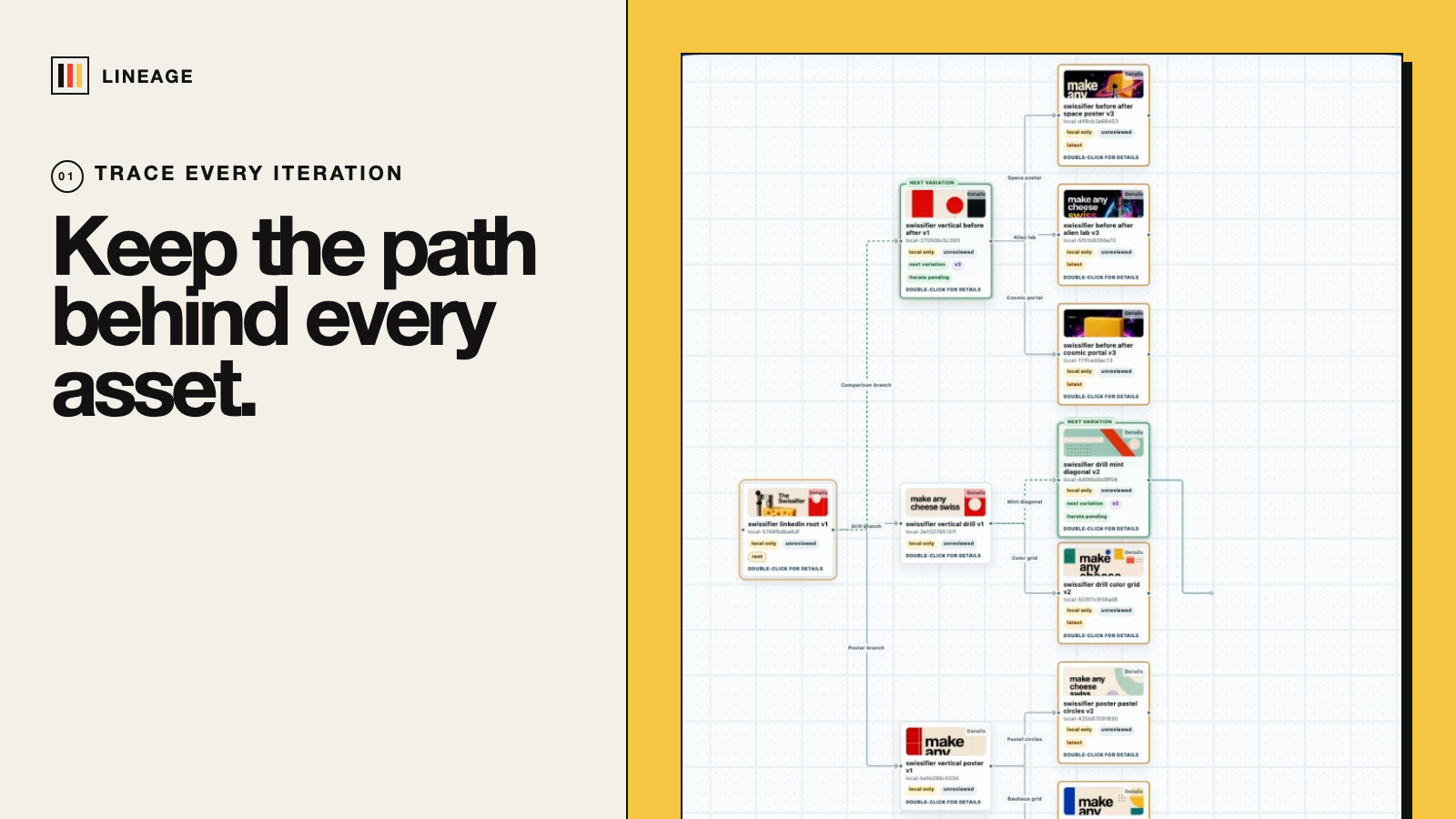
Trace Iterations: Every creative decision remains visible and traceable.Shared State: Humans and agents work from the same creative state.
Inspiration
Creative teams increasingly work with AI agents, but the context behind an asset often gets scattered across chats, folders, prompts, and disconnected iterations. We wanted a workspace where creative work could stay understandable to people while remaining precise enough for an agent to continue accurately.
What it does
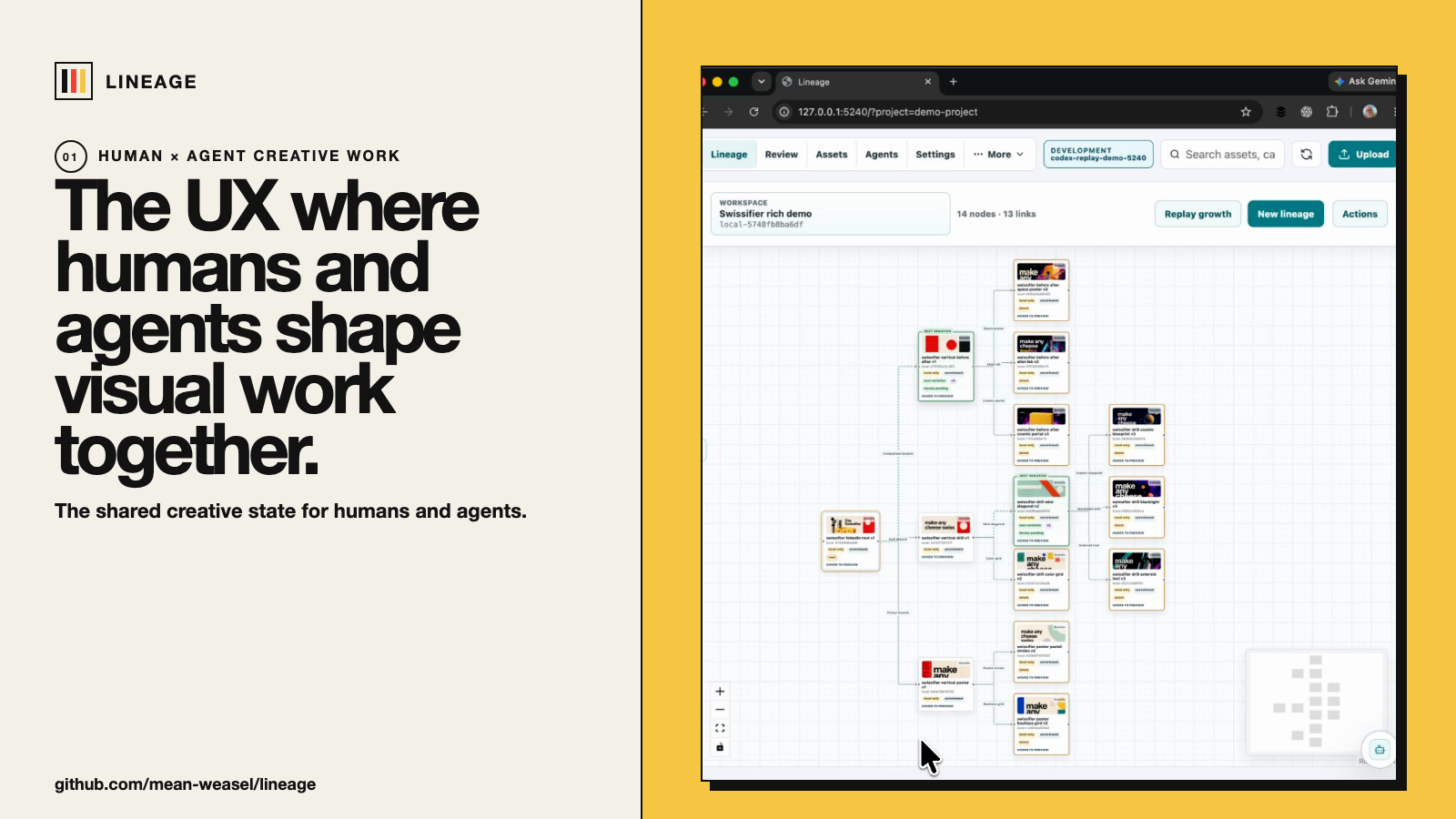
Lineage is the shared visual workspace where humans and agents create, review, and evolve creative assets together. It keeps every asset, prompt, path, relationship, iteration, selection, annotation, and decision connected in one creative state.
Humans can trace an asset from its origin through branches, re-roll attempts, selected directions, and final campaign formats. Agents can retrieve the exact asset, prompt, relationships, selections, and instructions through the CLI, rather than restarting from a vague chat summary. A human selection becomes precise context for the next Codex session, and the result returns to the same visual record for review.
How we built it
We built Lineage as a local-first TypeScript and React application, with a Node.js/Express service and SQLite-backed workspace state. It includes visual lineage graphs, re-roll history, target-scoped agent claims, task queues, durable selection packets, and isolated stable, preview, and development runtime channels.
Codex with GPT-5.6 Sol (cranked to High) was our development collaborator: it helped design, implement, test, and harden the human-agent workflow; build the React/TypeScript product and CLI tooling; and pressure-test runtime identity, SQLite ownership, agent write claims, and safe public demos.
Challenges we ran into
The hard part was not only making the interface useful; it was making collaboration reliable. We needed a model where a human could direct the next move without losing creative history, while agents could access the correct context without overwriting each other's work or operating against the wrong environment. This took a lot of iteration and pruning.
Accomplishments that we're proud of
We created a visual, local-first collaboration loop that gives people durable creative history and gives agents exact, actionable context—without treating either as an afterthought.
What we learned
Human-agent creative work needs more than a better chat log. It needs a shared, durable creative state: visual enough for people to review and direct, and structured enough for agents to retrieve and act on.
What's next for Lineage
We are continuing to make the human-to-agent loop more fluid, with richer review workflows, reliable handoffs, and durable local-first foundations for creative teams.
Built With
- codex
- gpt
- node.js
- react
- sqlite
- typescript

Log in or sign up for Devpost to join the conversation.